When Leadership Becomes the Single Point of Failure

Some leaders wear the line outside their door like a badge of honor. People waiting with questions, approvals, decisions.

It feels like proof of trust. Proof of competence. Proof of necessity. If the team can’t move forward without your judgment, surely that means you are at the center of the work.

In many ways, you are.

But there’s a second truth hidden inside that scene. When every decision depends on you, you become the one point your organization can’t outrun.

The line reveals the fragility that forms when decisions stay in one place instead of growing across the organization.

At a certain level of responsibility, leadership effectiveness isn’t measured by the number of good decisions you make. It’s measured by whether the organization can make good decisions without you having to approve each one.

Leadership at this level is staying at the wheel while helping others learn to steer.

High-pressure operators know instinctively that a bad decision leaves a mark. A slow decision leaves a gap. Most organizations struggle more with waiting than with trying. That line at your door, day after day, is the quiet proof. The whole operation can only move as fast as the person at the center of its decisions.

There’s a time in every leader’s career when the instinct to take control is the right one. When the team is inexperienced, when stakes are high, when the risk is real and present, you become the center of gravity because someone has to be.

But later, if the business grows and the structure doesn’t change, this habit of control becomes limiting. What protected the organization early can start to quietly cap its potential, because your bandwidth is finite.

There’s a moment when the senior leader’s job shifts from “Do we have the right answer today?”to “Will we have the right judgment tomorrow?”

That shift feels slow. It feels inefficient. It feels like a luxury.

It isn’t.

It’s a protective move.

Teaching someone how to make a decision can feel like taking the long way around the problem. You could make the call in 30 seconds. Walking someone through the context and reasoning might take half an hour.

It’s natural to skip teaching and just decide. It feels faster. And today, it is.

But tomorrow it isn’t. Because they come back with the next decision. And the next. And the line gets longer.

Here’s a simple practice that changes the arc of your relationship without exposing the business to risk. When someone comes to you with a decision, don’t give the answer first. Ask them, “What would you do?”

You’re not surrendering the decision. You’re building their capacity to make it. You’re seeing how they think. You’re catching errors before they matter. You’re adding the perspective that builds judgment.

It is controlled delegation, not abandonment. Nothing is handed off recklessly.

When someone brings an answer that is close to right, you supply the context they don’t have, and then you say something specific and concrete:

“Next time this situation comes up, you can make that decision.”

Not in general. Not theoretically. For this exact decision, with a shared understanding of why it works.

Over time, the pattern shifts. Fewer decisions reach you. The ones that do are larger, higher consequence, more strategic. The team develops in the shadow of your reasoning, not separate from it. And the bench of judgment widens beneath you.

This is what protects the business from single-threaded leadership. Not a gesture toward empowerment, but a strategy of risk reduction.

Leaders don’t become less important by creating decision-makers. They become less fragile.

The organization becomes capable of sound judgment when you’re not there. The most durable form of control a leader creates.

If the business only works at full strength when you are present, you haven’t reduced the risk. You’ve concentrated it.

At the top levels of leadership, the question is rarely, “Can you decide?”Of course you can.

The real question is, “Can others decide well when you aren’t in the room?”

That’s the difference between being the operator and building the operation.

It begins quietly. A question reflected back. A recommendation explored. A context added. A decision shared. A leader shaped, one situation at a time.

The line at your door gets shorter and your organization gains strength. Not because you step away from accountability, but because you’ve built accountability into the people who stand in that line.

Leadership Homework

One question to sit with, without rationalizing it away:

If you disappeared for 30 days, what decisions would the organization be unable to make without you?

Not decisions they might make differently, different is acceptable. Decisions they could not make.

That answer will show you where the real bottleneck lives.

And where the next generation of leadership needs your attention.

Photo by Mal Collins on Unsplash – it’s time to help your team take flight.

Always Be Coaching

In sales, there’s an old saying that has echoed through offices and training rooms for decades.

Always be closing.

It’s meant to keep the salesperson focused on their end goal. Keep the deal moving forward. Stay alert to opportunity. Maintain momentum.

Over the years, I’ve come to believe leaders need a different version of that advice.

Always be coaching.

As a leader, your mission is to develop the people who will come after you. You lift others through quiet, daily work that helps them grow. Your job is to bring out the best in yourself and in the people who will eventually step into your role. Coaching drives growth and keeps it moving forward.

Coaching your team is a way of saying, “Your future matters to me.” Coaching your children says, “I believe you have more inside you than you can see today.” And coaching yourself acknowledges the simple truth that growth must continue throughout life, especially for the leader.

Great coaches do more than explain ideas. They create space for practice. They help others turn new knowledge into muscle memory. They offer challenges sized just right for the moment. They ask questions that change how a person thinks about a problem. They reveal a new angle or a new path forward when something feels unsolvable.

Coaching takes learning to the next level. You learn something. You put it into practice. Then you pass it on. Teaching anchors the lesson. It deepens the insight. It turns wisdom into a gift you can hand to others.

Coaching doesn’t require perfect knowledge. It requires humble generosity. Share the insight you gained from yesterday’s challenge. Share the questions that helped you see an issue more clearly. Share the perspective that lifted your confidence when you needed it most.

Leadership is a relay. Someone handed the baton to you. One day you’ll hand it to someone else. The best leaders prepare the people who will run ahead long after they’ve finished their leg of the race.

Who have you coached today?
This week?
This month?

This is your responsibility. Your opportunity. Your mission.

Always be coaching.

Photo by Sylvain Mauroux on Unsplash – who are you helping to climb their next mountain?

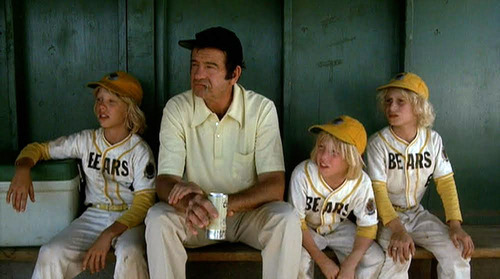
Hand me the ball…Life Lessons from Park League Baseball

Park league baseball season came to an end recently.  We had four grandsons between the ages of 8 and 10 playing on teams.  The teams had a few “veteran” players, but for most of the players this was their first experience playing organized baseball.  They had a lot to learn…and we saw amazing improvements in all the players in one short season.   

It’s clear that the lessons they learned can extend far beyond the field, if we are willing to pay attention. 

Panicking When the Ball Comes

My most vivid memory from the season is seeing the panic for many of the kids when the ball would come their way. Will they catch the ball?  Where will they throw it once they have it?  Do they know why they’re throwing it in a particular direction?  Will the player they’re throwing to catch the ball?

The drama was real.  It was clear that a lot of the kids didn’t expect the ball to come toward them.  I saw a few kids jump away from the ball to avoid fielding it.

As a spectator, it’s easy to see what’s happening.  It’s easy to assume that surely, we’d field the ball properly, and immediately know where to go with the play. 

It’s not always as easy as it looks.  Unexpected situations arise, and our response (or lack thereof) can significantly impact what happens next.  Learning to stay calm and doing some pre-thinking about our actions (before the play) will significantly improve our chance of success.

Understanding Game Situations

Many young players struggle with understanding the game situation—who’s on base, how many outs are there, what’s the best play to make when the ball comes to them, and how to act strategically.

This lack of situational awareness highlights a crucial lesson: the importance of context and awareness in decision-making. Understanding the bigger picture allows for more informed and effective actions. The coaches encouraged the kids to think ahead (pre-thinking) and consider various outcomes.  Whether the kids listened and embraced their advice was another thing entirely.

Are you thinking about your “game” situation?  The macro and micro aspects of the challenges you and your organization are facing.  Are you thinking ahead and considering various outcomes as part of your decision-making process? 

Learning the Basics: Throwing and Catching

It’s not uncommon for young players to throw the ball the wrong way or miss it entirely. These fundamental skills require practice and patience. This aspect of the game underscores the importance of mastering basics before tackling more complex tasks. In any field, solid foundational skills are essential for success. Nearly every pursuit or profession has basic foundational skills that need to be mastered along the way toward more advanced skills.  A football analogy fits well here…it’s important to understand the blocking and tackling part of the game before you can advance to running with the ball. 

Position-Specific Skills and Aspiration

In youth park league baseball, most of the hits stay in the infield.  This leaves the outfielders without much to do.  I heard lots of outfielders wishing they could play an infield position like second base, or catcher.  None of them understood what those positions entailed, but they knew that those positions had more action. 

A few of them took the time to learn about the infield positions from their coach.  They showed their interest and willingness to work their way to the infield.  This shows the value of preparation and skills development. It’s important to work on the necessary skills before aiming for a specific role, whether in sports or any other endeavor. It also emphasizes the value of seeing a goal and then taking the concrete steps to learn, grow, and achieve that goal. 

Strikeouts Aren’t Failures

Consider that an excellent hitter in the big leagues gets a hit about 30% of the time.  They may get walked occasionally, but the rest of their at bats result in fly outs, ground outs, or strikeouts. 

We saw a ton of strikeouts this past season.  I was always impressed with the kids who struck out and immediately came back to the dugout to ask their coach what they should be doing to avoid striking out next time.  Each strikeout was a learning opportunity…but only if the player saw it that way. 

We saw a few kids melt down in disappointment and embarrassment.  One kid from an opposing team stomped off the field and took himself out of the game (an extremely negative response to be sure). 

When things go wrong, or we don’t get the result we want, that’s the time to buckle down and learn why it happened.  Consider ways to improve so the results can improve next time.  It’s only a failure if you give up. 

Teamwork and Collective Goals

We are all self-centered.  As we mature, we usually learn how to control our self-centeredness or at least how to channel it productively.  Ten-year-old kids are no different.  Their focus is on their own performance.  Whether or not they’re hitting the ball.  Whether or not they made the right play. 

They often forget that the goal is for their team to win.  They can help the team achieve that goal by having a strong performance, but also by helping and supporting their teammates.  This is a powerful reminder of the importance of teamwork and the collective effort required to achieve a common goal. It’s easy to get caught up in individual performance, but true success usually comes from working together and supporting each other. Collaboration and shared successes build strong teams.  Strong teams create successful outcomes.

Consistency Matters

Ask an excellent bowler, pitcher, batter, shooter (basketballs or bullets), pole vaulter, or pickle ball player how they deliver such excellent results.  They’ll mention practice, dedication, and a strong mental approach.  Eventually they’ll talk about consistency.  Each of these pursuits (and countless others) require consistency above all else.  The exact motions, body positions, eye contact, and calmness of breath that they can count on happening whether they consciously think about it or not. 

Their practice process is all about achieving repeatable actions that their body remembers…every time.  They also know that they aren’t swinging for the fences every time they’re at bat, not trying to set the world record or do something extraordinary with every outing. 

They are working to become a steady and consistent performer at the highest level possible…and always reaching a little higher.

Consistency, patience, and incremental progress should be the goals…repeatable excellent outcomes will happen as a result of achieving these goals. 

Park league baseball is a ton of fun.  The drama is real.  Teams experienced the “thrill of victory and the agony of defeat” throughout the season.  We saw players improving and gaining confidence as the season unfolded.

I don’t know where the teams ended up in the standings at the end of the season. 

I know the kids learned a lot and hopefully they’ll incorporate some of what they learned well beyond the game.