An employee uses ChatGPT to draft a proposal and sends it to a colleague. The colleague feeds it into their ChatGPT for an evaluation and sends back the feedback. The first employee asks ChatGPT to incorporate it and returns the revision.
A few rounds later, everyone agrees the work is finished. Success. Two people produced a proposal in a fraction of the usual time.
Notice that nobody asked the other person a question. They only exchanged answers.
Did they actually collaborate? Did they challenge each other’s thinking or understand the problem any better? Or did they trade AI-generated work until both systems agreed it was good enough?
I see this pattern a lot.
For decades, organizations have rewarded productivity. More output, less waste, less time. AI is very good at exactly that. Work that took hours now takes minutes.
The obvious move is to do the same work with fewer people. The savings are immediate and measurable, and companies do have to survive.
The alternative is to point the reclaimed time at the business itself. Imagine a team that uses its saved hours to interview ten customers a month and discovers a need no one had on the roadmap. Or a manager who replaces weekly status reports with a weekly session to brainstorm new solutions to problems we didn’t have time to explore in the past.
That all sounds great, but it’s harder than assigning tasks and measuring their completion.
It’s unstructured. It demands curiosity, judgment, and a willingness to take risks. It runs on conversations rather than statuses and finished assignments. It doesn’t produce neat deliverables or impressive slides.
We’ve become far more comfortable measuring completed work than evaluating the benefits of creative thinking.
And employees have adapted. Many have spent years accepting assignments, completing them, and moving on to the next task. They learned to wait for direction rather than offering opinions or challenging assumptions.
We’ve conditioned people to deliver answers. Now we need them to start asking questions.
That’s a challenge for managers and employees alike. Leaders have to create room for independent thinking, and employees have to rekindle their curiosity and the confidence to use it.
AI can serve either goal. It can write the proposal faster, or it can help us test assumptions and explore ideas. The first makes the business we have more efficient. The second builds a better one.
Ask your team what question they’d explore with five extra hours. Their initial reaction will tell you something about your culture. But their answers might tell you something important about your future.
Doing what we’ve always done more efficiently is now the price of admission. Discovering what we should be doing next is the real prize.
And getting there before our competitors do is how we win it.
A friend showed me some old family photos a couple weeks ago.
An uncle of his is getting older and had given him a collection of family photos and other memorabilia he’d accumulated over the years. He knew some stories, and his uncle had told him even more stories about the people in those photos.
We turned a few of them over, hoping someone had written a name or a date on the back.
Nothing.
My friend knew these were his people. Grandparents, uncles, aunts, cousins, maybe great-uncles. He knew some remarkable family stories, including stories from World War II.
But we couldn’t connect the people in the pictures with the stories.
Somewhere along the way, the thread between the stories and the photos had disappeared.
I’ve been thinking lately about my grandpa on my dad’s side.
I know a few things about his history.
He was in World War II. He was stationed in England for at least part of the war. My grandma was English (Welsh actually) and worked as an infectious disease nurse. Apparently, Grandpa was allergic to everything and had to report for treatment regularly.
Somewhere in there, they fell in love. Grandma told me some stories about their time in England. She told me about her trip over to the US after the war on the Queen Mary, alone with her first child, my aunt. She’d eventually meet back up with Grandpa when she got stateside, since he came home via some sort of military transport.
That’s a pretty good beginning to a family story.
My dad was born in Michigan, but I don’t know what brought them to Michigan.
Then there’s a blank section of the story.
At some point they moved to Southern California, where they spent the rest of their lives.
Why did they move? I don’t know.
Grandpa was an operating engineer, operating heavy equipment.
What kind?
Bulldozers? Cranes? Graders?
What sort of projects did he work on?
Roads? Buildings? Dams?
Did he like his work? Was he good at it?
Did he ever come home and tell my dad about something interesting that happened that day?
I have no idea.
There was a time when I could have asked one of them.
My parents and grandparents are gone now. So are all the other people I can think of who might have known.
Lots of memories survive.
Wars. Marriages. A child’s birth.
England survives. Michigan. California.
But a regular Tuesday afternoon disappears.
I’ve caught myself wondering what Grandpa’s mornings were like.
What time did he get up? Did he drink coffee?
Did he pack a lunch? Did he have a thermos?
What kind of truck did he drive?
What did he do on his days off?
Was moving to California some big adventure, or did he simply hear about a job and say, “Let’s go”?
I don’t actually need to know that Grandpa drank coffee in the morning. What I’d want is the coffee itself. The smell of it in a kitchen at five-thirty in the morning before anyone else was up. Their dog trying to get attention in the quiet of their house right before his workday started. Nobody thought to write any of that down, because why would they. It was just another day.
We’ve never had more ways to record our lives than we do now.
I have thousands of photos on my phone. So does almost everyone I know.
We post pictures. Send them through family group texts. Put them in shared albums. Our phones occasionally remind us what we were doing eight years ago today.
We may be the most photographed generation in human history.
I’m not sure that means anyone will know us particularly well in the future.
Someone could someday inherit 14,000 photographs of us and wonder what we were like.
I think you get to know someone differently when you stay at their house for a few days.
You wake up when they wake up. You have more time to hear what’s really happening in their lives. You learn which chair they always sit in. You find out that somebody who seems perfectly organized can’t find their keys three mornings in a row.
Traveling with someone does the same thing, only faster.
Someone is always hungry. Someone needs the bathroom fifteen minutes after you stop. Flights get delayed. Reservations disappear. It rains. You get lost. The restaurant is closed.
People reveal themselves quickly in these situations.
Thinking about all of this makes me think of something very particular about my dad.
When I was a kid, we camped a lot. We went to Lake Havasu with our boat. We went to off-road races.
Dad was meticulous about preparation.
If a trip was four weeks away, he’d point out that he didn’t really have four weeks to get ready.
He worked six days a week. That meant he only had four Sundays.
That was how he thought about it. Four Sundays to get ready.
As the trip got closer, gear began appearing.
Camping equipment. Tools. Boxes. Supplies. Spare parts for the boat. Motorcycle parts, and tools.
He was methodical about storing everything so it could be staged in modules.
For weeks, there’d be a growing pile of gear waiting to go…ready to be packed into the truck.
Dad liked being ready.
Then there was departure time.
If our plan was to leave early Friday morning, there was a very good chance that sometime on Tuesday or Wednesday, Dad would begin reconsidering the wisdom of this plan.
Why wait until Friday morning? I’m already taking Friday off. We could leave the night before. I could cut out of work early on Thursday so we can get a jump on our trip.
Who knew what might go wrong along the way? If something did, we’d have extra time.
And if nothing went wrong, we’d arrive early. Being early was useful.
You get your choice of campsites.
You weren’t rushing. We could be fully set up when everyone else arrives.
It made complete sense to him.
Mom didn’t see the genius of this plan in quite the same way.
Dad had the truck and equipment ready.
Mom had the food. And clothes. And two boys. And all the domestic stuff (Mom and Dad used to talk about Mom being in charge of domestics) to get ready.
For Mom, leaving Thursday night mostly meant she’d just lost twelve hours of prep time.
There was no father-son conversation where he explained the importance of preparation and leaving early.
I just watched (and usually helped) him get everything ready.
And now I like getting up early. I like arriving before other people. I like being prepared.
Once in a while, I find myself thinking that maybe we should leave tonight instead of tomorrow morning.
We probably inherit all kinds of things this way.
Ways of preparing. Ways of worrying. Little phrases. Expectations.
The way we organize our garage.
The way we react when we’re running late.
Nobody announces that these things are being handed down. Years later, we discover them in ourselves.
I wonder what I inherited from my grandfather without knowing it.
Maybe that’s why the missing details about him intrigue me.
I’d like to know how he thought long before I came along.
I’d like to know what he did when a trip was four weeks away.
I recently heard about another kind of writing that seems almost unrelated. Writing about grief or trauma. The basic idea is that putting painful experiences into words can help us process them.
I don’t pretend to understand all the neuroscience involved, and I’m suspicious of explanations that make our brains sound like a filing cabinet where we simply move an experience from one drawer to another. But the idea itself interests me.
Something happens.
It’s overwhelming.
Eventually we sit down and try to describe it…to ourselves.
What happened? What did I feel? What am I still feeling?
Even if nobody ever reads it.
Writing like this can give shape to something that didn’t have much shape before.
It’s almost the reverse of what I’ve been thinking about Grandpa’s mornings. There, I wanted someone to have written down the feeling of an ordinary day before it disappeared entirely. Here, writing takes something that’s still painfully vivid and makes it a little easier to understand.
I’ve written for years now.
Most of what I write begins with whatever captured my attention at that moment.
Something I read. Something that happened at work. Something one of my grandkids did.
Something I’m building.
Something that annoyed me.
Something I suddenly understand differently than I did before.
I don’t usually think of it as preserving history.
I’m just enjoying writing things down.
Sometimes I wonder what someone in my family might find in all my writing fifty or a hundred years from now.
Not because my writing is important.
Because the little things in it might be.
A future member of my family can probably find my birth date.
They may know where I lived and what I did for work…maybe as little as I know about my own grandparents.
They’ll almost certainly have photos. A ridiculous number of them.
But something I wrote about pouring concrete with my grandkids may tell them something the photos don’t.
Or building a campsite. Or struggling with some idea that’s stuck in my head.
Or remembering my dad getting ready for a trip.
They might get a glimpse of what caught my attention on a particular Thursday.
I’ve heard people talk romantically about ancient societies gathering around fire pits at night listening to the elders tell stories about their ancestors.
Fireside stories notwithstanding, I suspect a lot of human history has always been lost.
Someone dies unexpectedly. Nobody ever thought to ask.
The grandchildren weren’t paying attention. The one person who knew the story assumed everyone else knew it too.
A photo gets put in a box. Fifty years later, somebody turns it over.
Blank.
We tend to think of history as big events.
The things printed in books.
But I’m more interested lately in the smaller history.
Why Michigan? Why California?
Who’s the man standing on the left side of that picture?
And what was everybody laughing about?
We’re surrounded by history while it still looks like ordinary life. It’s so easy to miss.
I keep thinking about those old photos my friend and I turned over.
Someone took them. Someone kept them. Someone else kept them after that.
Eventually an aging uncle carefully hands them to my friend because he wants someone in the family to have them.
Unfortunately, most of the stories didn’t make the trip.
From yourself. Expect to learn, grow, contribute, follow through, and occasionally surprise yourself.
From your relationships. Cultivate depth, honesty, presence, and care. Treasure the people who know you well, but don’t let your full life become a closed circle.
From your curiosity. Keep asking questions. Keep learning things you don’t understand. Stay willing to be a beginner.
From your body. Expect your body to do what it reasonably can, but don’t be afraid to push against its limits. Protect your strength, mobility, endurance, and ability to do things for yourself.
From your work. The things you choose to work on should be useful, meaningful, interesting, and worth doing well.
From your courage. Admit when you’re wrong, try things you might fail at, and choose the less comfortable path when it’s the right one.
From your attention. Decide what deserves your attention instead of surrendering it to whatever is loudest, newest, or easiest.
From your ability to contribute. Always look for ways to be useful. Teach, encourage, help, listen, solve a problem, share what you know, give your time, or carry part of the load.
From what’s still ahead. Don’t assume the most interesting parts of life have already happened. Leave room for new work, new friendships, new places, new ideas, and versions of yourself you haven’t met yet.
From your standards. Don’t let convenience or laziness redefine what you consider good enough, especially in the areas you care about most.
From your sense of wonder. Keep noticing beauty, craftsmanship, nature, music, ideas, people. Familiarity can make remarkable things seem ordinary if you let it.
From your sense of possibility. Don’t become too quick to decide what can’t happen, what won’t work, or what’s no longer for you. Some doors close. Others are easy to overlook because you’ve stopped checking them.
From the life you have now. Don’t wait for everything to be settled before you fully engage with your life. There will always be another problem to solve. Problems aren’t interruptions to the life you’re trying to get to. They’re part of the life you’re living.
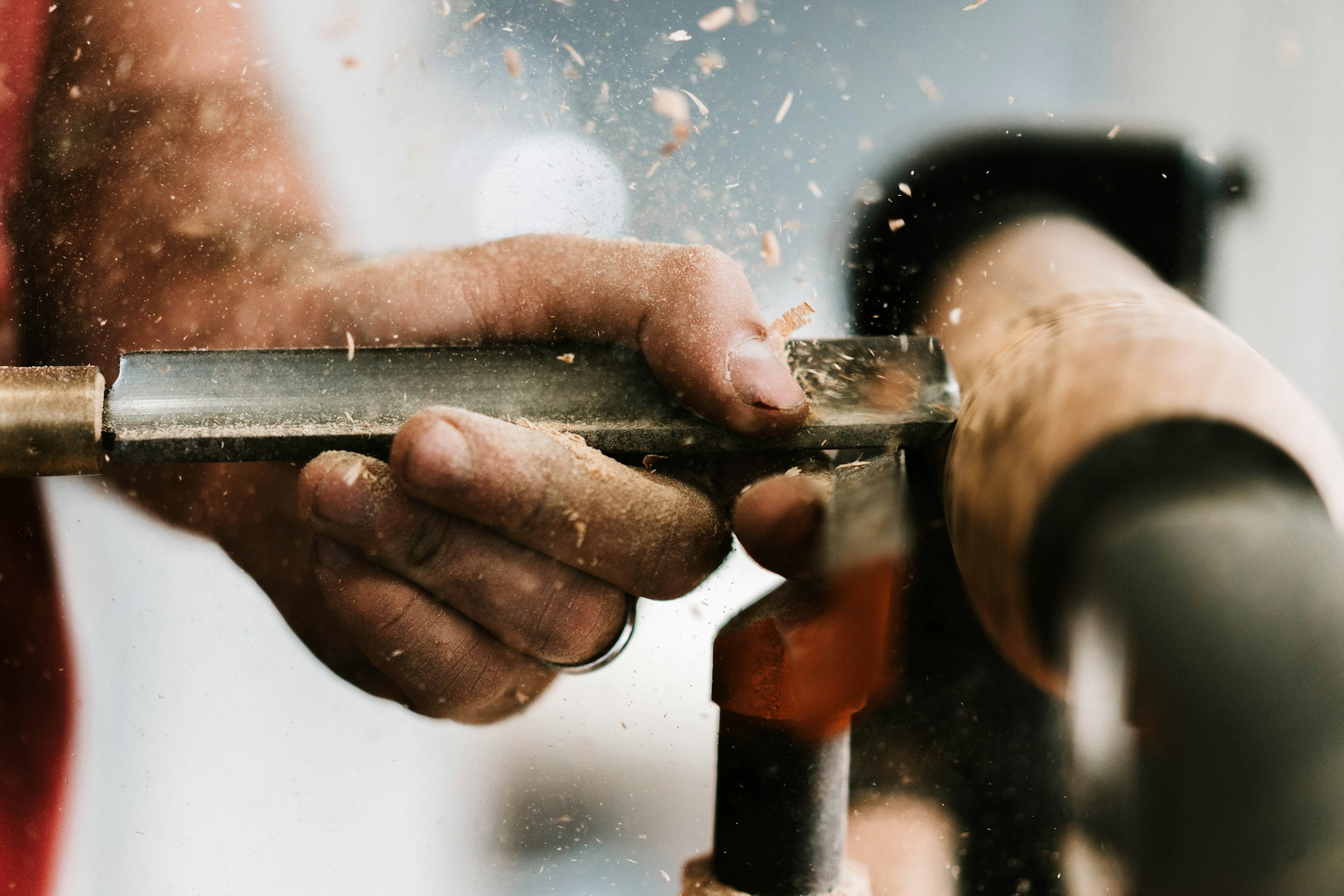
Photo by Austin Ramsey on Unsplash – With every revolution, something new is revealed.
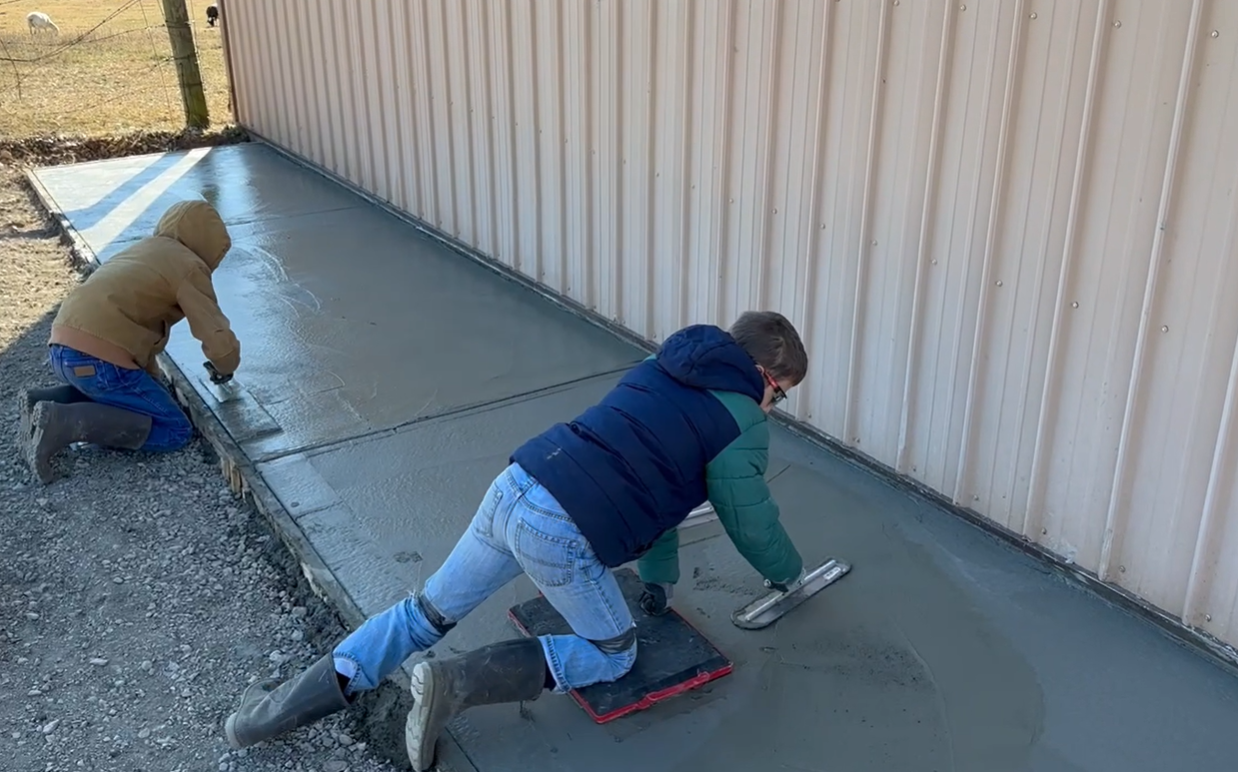
You can watch someone prepare and pour a concrete slab.
You can see how they set the forms, grade the dirt, calculate the concrete they’ll need, screed it, float it, edge it, and apply a perfect broom finish. You can study the tools. Watch videos explaining every step.
That’s still a long way from doing it yourself.
Doing it requires moving every shovel of dirt by hand. You have to decide how the grade should run and where the water will drain. You wonder if the forms are strong enough, if the slope is right, and whether the finished slab will look terrible.
Then the truck arrives. The clock starts.
Tools that looked simple in someone else’s hands feel entirely different in your own. The concrete is heavy. It pushes back. Your shoulders hurt. Your back aches. The clock is ticking.
You begin to see things you couldn’t see before. Low spots. Ridges. Edges that need attention. Sections that are ready for the next step and others that need to be left alone.
Maybe the slab turns out great. Maybe it’ll suck.
Either way, you’ll know a lot more at the end of the day than you knew that morning. The work changes your eye, your hands, and your judgment.
An AI tool can help you prepare. It can list the materials, calculate the volume, explain the tools, identify common mistakes, and suggest videos.
But it can’t simulate the way the trowel feels moving across the concrete. It can’t tell you when you’ve worked it enough and it’s ready to broom.
I’ve been thinking about that distinction after reading a piece by Shawn Smucker that Tim Ferriss highlighted in his Friday email.
Smucker wrote about what we may lose when we turn to AI too quickly. Instead of calling a friend who knows how to cook, camp, fix something, or solve a problem, we can ask an AI tool and have an answer in seconds.
The answer may be good. It might even be clearer than what our friend would’ve told us. But the answer is probably the least valuable part. Calling our friend could lead to a story, an old memory, some unexpected advice, or a forty-five-minute conversation about what’s happening in their life.
Ferriss also shared Kurt Vonnegut’s story about going out to buy one envelope rather than ordering a hundred online. Vonnegut wanted the trip. He wanted to see people, notice things, and have whatever little encounters came with buying that one envelope. The inefficiency was part of the experience.
We spend a lot of time trying to remove friction in the pursuit of efficiency, especially the friction that drains us. Repetitive paperwork. Unnecessary steps. Work that adds very little value.
But some friction asks more of us. Forcing us to pay attention, make new decisions, correct our mistakes, and develop judgment we didn’t have before.
The tricky thing is that both types of friction feel exhausting while we’re experiencing them.
AI is great at removing friction. It can research an unfamiliar topic, organize an idea, compare alternatives, create a first draft, write code, build a prototype, or break a daunting project into manageable steps.
That’s good stuff.
But AI can also produce polished-looking work long before the person using it can see what’s missing. That polish can create confidence the work hasn’t fully earned.
A lot of what we recognize as “AI slop” grows out of that premature confidence.
Friction develops the eye that can see past the polish. When we’ve felt low spots under a trowel, we can see them in someone else’s slab. When we’ve fought a stubborn argument into shape on the page, we can see the soft spot in someone else’s paragraph.
Skip that resistance and we skip more than the difficulty. We skip the experience that teaches us how to judge the work.
A working software prototype is a long way from a dependable product. A quick draft is a long way from a finished piece of writing. The distance between them is filled with the kind of friction AI helps us postpone but can’t remove entirely.
Remember wax on, wax off?
Daniel LaRusso thought he was doing random chores. Mr. Miyagi knew the repetition was developing movements and instincts Daniel would need later.
A lot of formative work is like that. We understand what it was building in us only after we’ve stayed with it long enough to grow.
Friction builds more than the finished product.
It builds the person who can tell when the product is finished.
Photo – My four grandsons were my crew for this job. This was their first concrete project. The two older boys got their first chance to finish concrete, while their younger brothers are already looking forward to taking a turn on the next one. That was a fun day and that little sidewalk turned out great!
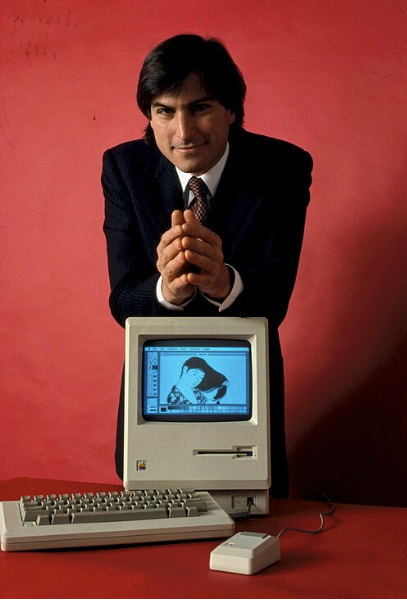
Jobs was speaking at Lund University in Sweden, long before smartphones, search engines, or the AI tools we use every day. His hope was that someday we might capture the underlying worldview of a great thinker like Aristotle within a computer, so a future student could ask him questions and get answers.
It sounded futuristic then, but that future is here today.
We can open an AI tool and ask it to explain Aristotle, compare him to another thinker, or respond in a way that tries to reflect his philosophy.
That doesn’t mean we’re talking to Aristotle. We’re talking to a machine-generated synthesis, built from writings, interpretations, and patterns available to the model. Worth remembering, especially in a minute.
Jobs saw computers becoming more than storage devices. He saw interactive learning companions that could move us from consuming information to questioning it, testing our understanding, and entering into a dialogue with the past.
So, I ran a little experiment. I asked an AI tool to respond as if it were Aristotle, drawing on his known writings and philosophy, then I asked three questions…two about leadership, one about relationships.
Here’s what I learned, before you even read the answers. The AI handed me answers that sounded wise. It couldn’t do anything with what the answers asked of me. That work stayed mine, every time. Keep that in mind as you read the three exchanges below. Each quote is the AI’s synthesis, in Aristotle’s voice, not a historical record of what he actually said:
Question 1: Aristotle, what makes someone a good leader?
A good leader must first be governed within himself. He cannot guide others well if his own desires, fears, and ambitions are disordered.
Leadership is not merely a matter of authority or skill. It is a matter of virtue. A leader needs practical wisdom to judge what should be done, courage to do it, justice to give others what they are due, and temperance to restrain his own appetite for power, praise, or comfort.
The good leader does not seek the good of himself alone. He seeks the good of the community entrusted to him.
That answer sounds about right. Confidence, drive, decisiveness, and the ability to win can carry a person a long way. But without character or virtue, those same strengths eventually start working against the people they’re supposed to serve.
Whether it’s true of me is a separate question.
Question 2: Aristotle, how should a leader make decisions when the right answer isn’t obvious?
In uncertain matters, the leader needs prudence. No rule can fully replace wise judgment, because human affairs are too varied and particular.
The prudent person considers the purpose of the decision, the facts of the situation, the people affected, and the likely consequences. He also considers his own motives. A decision can appear reasonable while still being driven by pride, fear, anger, or vanity.
Good judgment is formed over time. It comes through experience, reflection, correction, and the habit of choosing what is noble rather than merely what is easy.
Most leaders want clarity. We want the right answer to announce itself. The spreadsheet, the policy, the consultant, the precedent that makes the decision obvious.
Unfortunately, difficult decisions usually live where the information is incomplete, the tradeoffs are real, and the consequences land on people who are more than names on an org chart.
But, he asks an even harder question. What’s happening inside me as I make this call? Am I deciding from courage or fear? Justice or favoritism? Humility, or the need to be seen being right?
AI can organize the options. It can summarize the arguments. It can show me possibilities I might have missed.
But it won’t clean up my motives. That responsibility remains with me.
Question 3: Aristotle, what makes a friendship or relationship worthy of trust?
The highest friendship is rooted in virtue. Some relationships exist for usefulness. Others exist for pleasure. These are not necessarily bad, but they are fragile because they depend on what the other person provides.
A deeper friendship is different. It is based on willing the good of the other person. Such a relationship is steady because it rests on character, not convenience.
To be worthy of trust, a person must be truthful, faithful, and committed to the good of the other. A trustworthy relationship helps both people become better than they would be alone.
We understand relationships of usefulness. Work relationships, customer relationships, networking relationships, even friendships that lean heavily on shared convenience.
But, are we willing the good of the other person? Do we want what’s good for them, or only what’s useful to us? Do we want them to become better, or only to make our life easier?
Seeing this short exercise, I think Mr. Jobs would celebrate how close we’ve come to his 1985 vision. We have more access to information than any generation before us. We can retrieve facts instantly, summarize books in seconds, compare ideas across centuries before lunch.
That’s amazing!
Yet the more powerful the tool gets, the more responsibility shifts back to the person using it.
Ask Aristotle about leadership, and I have to ask whether I can govern myself.
Ask him about prudence, and I must examine my own motives before I decide.
Ask him about friendship, and the real question is whether I’m willing the good of the other person or just protecting what’s useful to me.
AI tools can generate answers. Wisdom starts when we let those answers question us back.
The machine can help us ask Aristotle a question.
It can’t make us become the kind of person who can live the answer.
We were driving south in my parents’ Toyota 4×4, following them along the bumpy, rocky dirt roads of Baja toward Gonzaga Bay.
The girl who would become the love of my life was sitting beside me. She’d known me for only about six weeks. Still, she said yes.
Yes to Baja. Yes to the road less traveled. Yes to the unknown
Always a quiet adventurer.
Dust hung in the air. Our windows were down. The Beach Boys played on the stereo as the long road unfolded mile after mile.
We warmed ourselves in the sand and swayed together in our neighbor’s hammock. We snorkeled just offshore and rode the small swells that rolled into the bay most afternoons.
Time felt generous.
Under the moonlight, we walked hand in hand, just the two of us and that beautiful bay.
I knew then what I know today.
She is the woman of my dreams.
I’ve been blessed to live this dream with her every day since.
She’s my loving wife, the mother of our two beautiful and caring daughters, and Grandma to our nine amazing grandchildren.
Some places hold a moment from your life. Others hold a truth you’ll carry forever.
Tomorrow, we’ll celebrate thirty-eight years of marriage.
Through every challenge we’ve faced and every joy we’ve shared, our lives have been joined as one.
The life we’ve built, the family we love, and the road we’re still traveling have become our shared story, woven together and sustained by the grace of God.
This memory came rushing back as I listened to Dennis Doyle sing “Connemara Bay.” He was singing about a place in Ireland, but I was transported to Gonzaga Bay.
There’s a big difference between having an opinion about what’s broken and taking responsibility for making something better.
We live in a time when commentary is easy.
We can criticize from the sidelines. We can point out what’s wrong. We can explain why the system is broken, why the leaders failed, why the plan won’t work, or why the people in charge should have known better.
And much of that criticism may be true.
Something really may be broken. People may have failed. The system may need to change.
But is criticism going to be our only contribution?
Creating rather than complaining is an act of disciplined hope. It says I can see what’s wrong, but I’m still willing to work.
Complaining usually says, “Someone should fix this.”
Creating says, “I can improve one piece of this.”
That shift moves us from the sidelines onto the field.
Some problems aren’t ours to carry. We shouldn’t excuse the people who caused them. We don’t pretend the risks aren’t real or the damage doesn’t exist.
But we refuse to stop at frustration.
We must ask better questions.
What can I build? What can I repair? What can I encourage? What can I organize? What can I make clearer, stronger, more honest, more useful, more human?
And what can I do even if I didn’t create the problem?
That’s leadership.
Leadership isn’t only authority or title, position, budget, or permission.
Leadership is seeing a gap and stepping into it.
It’s making the call no one wants to make. Writing the note. Cleaning up the mess. Telling the truth. Taking the first small step.
We don’t have to fix everything to make something better.
That’s important to understand, because the size of the problem can become an excuse for doing nothing.
If I can’t fix the whole system, why bother? If I can’t change the whole culture, why try?
But that’s spectator thinking.
Builders think differently. Builders understand that every useful thing starts smaller than the problem it hopes to address.
A bridge starts with a first beam. A book starts with a first sentence.
A movement starts with a first conversation.
A better future starts when someone decides their contribution will be more than complaint.
It says I may not be responsible for the whole problem, but I am responsible for what I do next.
It says tomorrow can be better than today, and I’m willing to put something in motion.
The invitation is simple.
Don’t let your only contribution be commentary.
Find one thing you can improve.
One process. One relationship. One decision. One conversation. One neglected corner of the work.
Start there. Build there. Serve there.
The system may still be broken. The leaders may still have failed.
But the future belongs to the ones who choose to create anyway.
Photo by Alex Gruber on Unsplash – The future is shaped by people willing to begin.
One day, someone will describe your life in a sentence.
Think about that.
Thousands of days. Millions of decisions. Victories. Failures. Friendships. Heartbreaks. Quiet acts of kindness no one else ever noticed.
Ordinary moments that turned out to matter far more than anyone realized.
One sentence.
Last week I heard someone say, “Your goal should be to die young at an old age.”
I didn’t come up with it. I don’t even know who did.
At first, it sounds backwards.
Then you realize it may be the best definition of a life well lived.
We spend enormous effort trying to add years to our lives. Maybe we should spend just as much effort adding life to our years.
Aging takes something from all of us. Our body reminds us of that every morning.
We move a little slower. We feel the miles we’ve traveled. Recovery takes a little longer.
We gradually surrender abilities we once took for granted.
None of us escape this reality.
But somewhere along the way we’ve confused physical aging with becoming old. They’re not the same thing.
Our physical abilities may decline.
Our capacity to think, reason, create, encourage, inspire, and love can continue to rise.
In fact, they should.
Judgment should become steadier. Perspective should become broader. Patience and compassion should become easier. Humility should become more natural. Our wisdom should become richer.
The tragedy isn’t growing old, but growing stale.
We’ve all met people who became old at forty.
They stopped asking questions. They stopped taking risks. Somewhere along the way, they chose to stop learning and lost their sense of wonder.
They became experts on yesterday while quietly withdrawing from tomorrow.
And we’ve all met people in their seventies, eighties, and nineties who make us feel like we’re the old ones.
They’re curious, joyful, building, mentoring, reading, writing, learning new technology, planning new adventures.
They’re planting trees whose shade they’ll never sit beneath. They expect tomorrow to matter.
They don’t have smooth skin or endless energy.
But they know life still has something left to teach.
Don’t tell me your age.
Tell me what you’re learning, what you’re building. Tell me whose life is better because you’re in it.
Tell me the dream that still excites you. Tell me what prayer you’re still praying.
Tell me what you’ve started that you may never see completed. Tell me who you’re investing in with no expectation of being repaid.
Then I’ll have a much better idea of how old you really are.
Time is a poor teacher. It doesn’t make us wiser…it just makes us older.
Reflection makes us wiser. Humility keeps us teachable. Gratitude keeps us joyful. Purpose keeps us moving.
The calendar measures the years of our life. Our character measures the life within our years.
Life eventually gives all of us the same raw materials.
Graduation has a way of making ordinary questions feel enormous.
What are you going to do next?Where are you going to school?What trade are you going into?Where are you going to work?What are you going to do with your life?
That last question is the one that sneaks into our subconscious. It turns our celebration into a test. It makes a young person feel like their next decision carries the weight of the next fifty years.
Trust me. It doesn’t.
You’re not choosing your whole life this year. You’re choosing the next step.
That next step still deserves careful thought. Some choices will open doors; others will close them…and some will make the road harder than it needs to be.
But don’t hand this one decision more power than it deserves.
Your first job isn’t a life sentence. Your major isn’t your permanent identity. Your first trade, internship, military assignment, certification, apprenticeship, or business idea marks where the road begins, not where it ends.
Most lives travel roads we couldn’t have mapped in advance. One small opportunity today may connect you to a person who changes your direction entirely. One ordinary job may teach you something that becomes useful ten years later. A disappointment may save you from staying on the wrong road for too long.
You may move around. You might take a job that makes sense now and later discover it doesn’t fit who you are or what your life requires. Your priorities will change. The economy will change. A job can be a great opportunity, but it is rarely a lifetime guarantee.
Employers may invest in you when you serve their needs and (fairly or unfairly) move on when they believe you no longer do. Doors may close for reasons having little to do with your effort or character. That doesn’t mean you failed. It means you’re living in a world that keeps moving. Knowing that can help you walk into each opportunity with your eyes open.
Character, hard work, and skills all carry weight, but many opportunities come through people. The people who trust you, teach you, recommend you, challenge you, and remember how you treated them may influence your future in ways no resume ever could.
Build your life on something stronger than the assumption that one company, one industry, one credential, or one carefully written plan will carry you safely from here to retirement.
Learn how to add value. That phrase sounds like a business platitude, but strip away the jargon and it’s the oldest human question. Can people count on you for something real?
Can you solve a problem? Can you make something better? Can you be trusted with responsibility? Can you communicate clearly? Can you tell the truth when it would be easier to hide? Can you learn something new without treating the need to learn as an insult?
Can you help the people around you succeed? Can you walk into a messy situation and leave it better than you found it?
People who can do these things will usually find a way forward. Maybe not on the exact timeline they imagined. But useful, trustworthy, curious, steady people tend to create options for themselves over time.
Graduates hear a lot about jobs, majors, trades, degrees, salaries, and careers. All are serious things, and they deserve real thought. It’s good to learn skills. It’s good to earn your living and eventually support a family if that becomes part of your life. It’s good to contribute useful work to the world.
But your career isn’t your whole life.
A great resume with a lonely heart is still a lonely life. A strong paycheck with shallow relationships won’t feel as rich as you think it will.
A respected title can’t sit with you at the kitchen table. It won’t laugh with you around a campfire. It can’t pray for you, forgive you, challenge you, remember old stories with you, or show up when things are going wrong.
Much of your deepest joy will come from the relationships you cultivate. The people you love. The people who love you. The friends who walk with you. The family you stay connected to. The conversations you remember years later. The long drives. The late night talks.
The unexpected kindness. The forgiveness given and received.
By the time you graduate, you may already know some of the people who will still be part of your life fifty years from now. You won’t know which ones yet. Some will drift away. Some will surprise you and stay.
And after graduation, you’ll meet more. Pay attention. One may become your spouse. Some will teach you. Some will test you. Some will need your help. Some may help save you from yourself.
The world will ask what you do. But life will eventually ask better questions.
Who do you love? Who can count on you? Who tells you the truth? Who do you encourage? Who do you forgive? Who have you helped carry a burden they couldn’t carry alone? What are you doing with your soul?
These questions will stay with you long after the name of your first employer has faded into the background.
Choose the school, the job, the trade, the service path, or the next assignment with as much wisdom as you can gather. Ask questions. Do research. Talk to people who have walked farther down the road.
Listen to your parents, even when you think they don’t fully understand the world you’re entering. They may not understand every tool or pressure you face, but they know more than you think about disappointment, responsibility, sacrifice, and love.
Then move.
Do the work in front of you. Show up on time (which is 15 minutes early). Tell the truth. Be easy to trust. Learn the tools. Respect the people. Ask better questions. Pay attention to what gives you energy and what drains it. Notice where your abilities meet someone else’s needs. Be willing to change direction without turning that change into a personal crisis.
A wise life is rarely built from one perfect decision made at eighteen or twenty-two. It’s built from thousands of smaller decisions made over time. Some will be mistakes and that’s part of the deal.
The goal isn’t to live without mistakes. It’s to tell the truth when they happen, learn what they have to teach, repair what you can, and keep walking with a little more knowledge than before.
Graduation is worth celebrating. You finished something difficult, and finishing should be honored. Enjoy the moment. Thank the people who helped you get here.
Then take a deep breath.
You don’t have to solve your whole life before the celebration is over. You won’t know every turn, every job, every friendship, every disappointment, or every joy waiting along the way.
You have enough to take the next step with care, humility, gratitude, and hope, trusting that life will teach you more as you walk.
AI can prototype our workflow. It can draft our requirements. It can generate our user stories. But it has no idea how our business actually works.
It can’t tell us where the bottlenecks in the process are. Our loan officer knows that. It can’t explain why the workaround exists. Our operations manager knows that. It doesn’t know which shortcuts blow up in an audit. Our compliance analyst knows that. It has no idea where customers rage-quit. Our customer service supervisor knows that.
Our best people, the ones who actually know how the work works, often have trouble translating what’s in their heads into something a developer can build. They know where the friction is. They know which exceptions happen every Thursday afternoon even though the procedure says they shouldn’t. They know which approval step matters, and which one is just a bureaucratic leftover from a reorg three years ago.
For the first time, the people who do the work and understand the problems they’re trying to solve can start shaping the solutions. AI gives their expertise a doorway it never had before.
These subject matter experts can sit down with an AI tool and start turning what they know into something visible. Plain language in. Workflow out. Prototype sketched. Edge cases surfaced. User stories drafted.
And when they do that, something shifts. They realize software development isn’t magic. It’s a thousand small decisions that someone has to make. That realization alone is worth the exercise.
Instead of walking into a meeting saying, “we need a dashboard” or “can we automate this?” they walk in with something tangible. Rough? Sure. Wrong in places? Probably. But it doesn’t have to be production-ready. It has to be conversation-ready.
That changes everything.
Developers, architects, and project leaders can see the idea. They ask sharper questions. They spot what already exists, what creates risk, what can ship fast. The subject matter expert starts understanding what building a solution actually involves. The dependencies. The data quality landmines. The difference between a slick mockup and something that holds up in production.
That shared understanding transforms the relationship between business and technology.
We know the old pattern. Business has a need that’s difficult to explain, the technology team tries to interpret it, weeks pass, something appears, the business says, “close but not what we meant,” the cycle repeats. Everyone gets frustrated. Nothing ships.
AI doesn’t kill that cycle. It compresses and turbo charges it. When developers start with a real prototype and a real conversation, iterations can take hours or days instead of weeks.
The AI win is getting people in the same room faster, with something real to react to.
If more people can generate ideas, workflows, and prototypes, we’ll start getting more possibilities than we can pursue. A good problem to have, but still a problem.
Bottom-up energy is powerful. It surfaces solutions from the people closest to the work. It finds problems leadership didn’t know existed.
But without focus, we’ll drown in prototypes. The bottleneck doesn’t disappear. It moves from “we don’t have enough ideas” to “we have no idea which ideas deserve investment.”
That’s on leadership.
Executives, your job isn’t to be the gatekeeper of imagination. Play that role and the old problems come back fast. Good ideas will die in departments, in notebooks, in hallway conversations that never go anywhere. You become the reason nothing changes.
Your job is to be the steward of focus. Create the channel. Invite ideas up. Encourage people to explore, prototype, get specific. Then make the call on what moves forward.
Bottom-up imagination. Technical refinement. Executive focus. That’s a model that AI tools make possible.
Subject matter experts bring better ideas because AI helps them say what they know. Technical teams sharpen those ideas because they understand what durable software is. Executives look across the whole landscape and ask the hard questions nobody else is positioned to ask.
Does this solve a real problem or just an annoying one? Does it scale? Does it duplicate something we already own? Does it create risks we can’t absorb? Is this a strategic investment or a distraction dressed up as innovation?
Not every prototype becomes a project. Not every project deserves to live in our permanent technology environment. That’s not a failure of imagination. That’s how imagination gets distilled down to create tangible business value.
The future advantage won’t go to the fastest movers or the biggest tool buyers. It won’t go to the organizations that treat AI like a cure-all and wonder why nothing changes.
It’ll go to the ones that know their business well, listen hard to the people doing the work, and never confuse creating more things with creating better things.
AI can help us build faster. That’s the easy part.
Knowing what to build and why. That’s still on us.
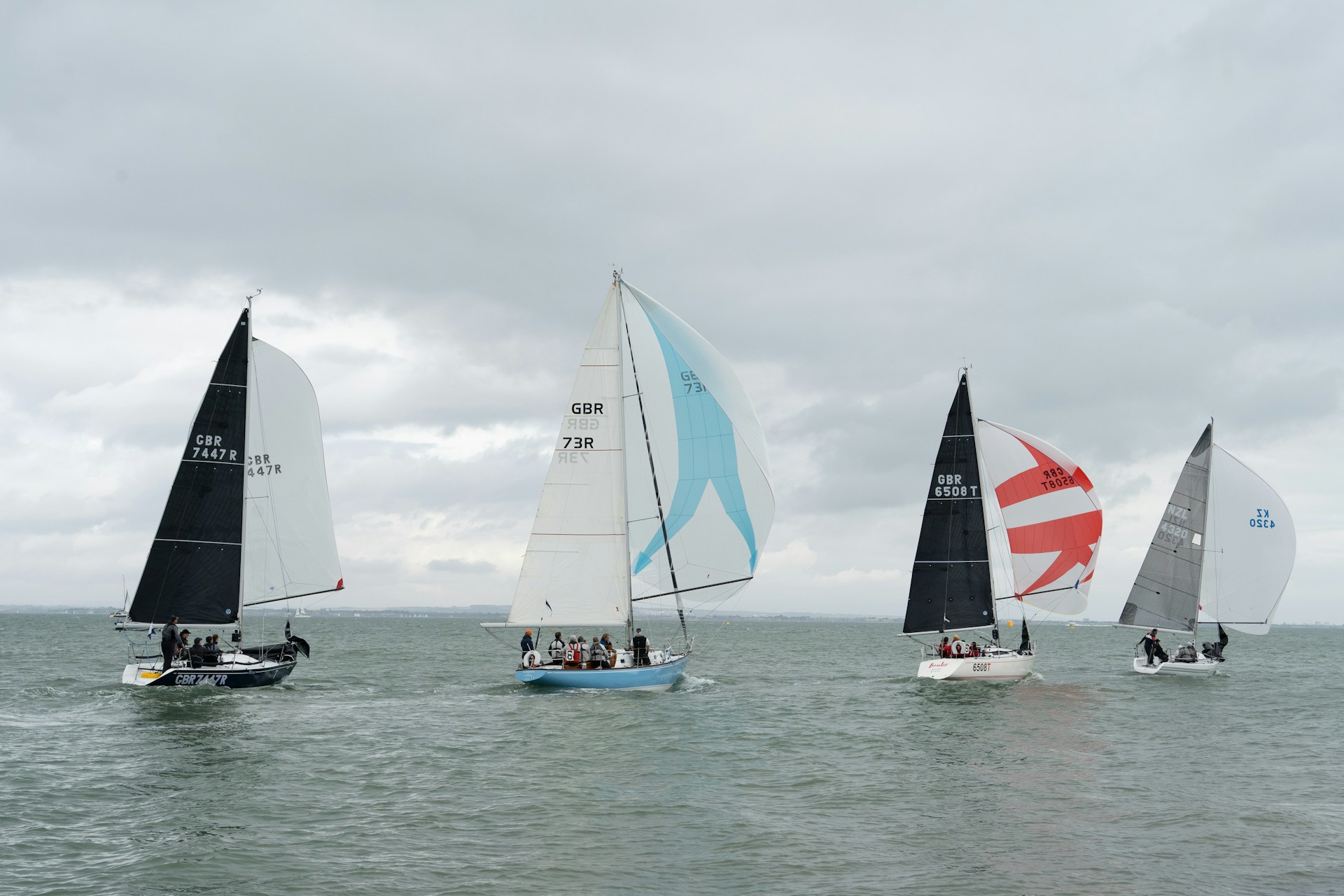
Photo by BEN ELLIOTT on Unsplash – This is a downwind leg, spinnakers out, boats grabbing everything the wind has to offer. A good metaphor for AI. It can give us remarkable speed. But we’re still in a race, there’s still a course to navigate, and the turns are still ours to make.








You must be logged in to post a comment.