

Picture a committee meeting.
Some people are sitting together in a conference room. Others are joining remotely. Some cameras are on, some are off. Microphones are muted. A few people are listening closely. Others are answering email, reading messages, or looking at whatever happens to be open on another screen.
A simple question comes before the group. It has little strategic importance. No customer will ever know what this group decides.
The committee simply needs to agree on how to handle a small part of a recurring process.
The discussion that follows is an amalgam drawn from years of committee meetings, planning sessions, governance discussions, and executive conversations. The details change, but the dynamics are remarkably consistent.
Someone introduces the question.
Someone else asks whether an existing procedure covers it.
A person lower in the organization looks around to see what a person higher in the organization thinks.
Nobody wants to get too far ahead of the room. People qualify their statements. Suggestions are floated as questions, offered softly enough to be withdrawn later.
The senior person tries to avoid dominating the conversation. They ask what others think. They may even be hoping someone on the team will step forward, offer a recommendation, and take ownership of the next step.
Some stay on mute as if they’re watching a livestream podcast.
Eventually, the opinion of the most senior person becomes clear, and the room begins moving toward agreement.
The decision is made.
Even then, it isn’t firm. We may change it at our next meeting.
When I’m in this type of meeting, I wonder what would happen if this same group had to make a decision that actually mattered. One that determined the future of their company.
This isn’t just a corporate thing. It’s a human thing.
Get a group of friends together and ask where they want to go for dinner.
Everyone says they’re flexible. One person suggests Mexican food. Someone else had Mexican food yesterday.
Another person suggests barbecue. Someone is trying to eat healthier, so that’s out. Italian sounds good, but the good Italian place will probably be crowded.
Someone says, “I really don’t care. Whatever everyone else wants.”
Of course, that person will usually care quite a bit once the choice has been made.
No one is willing to own the choice. They’d rather evaluate a decision someone else makes than be the one making it.
Organizations take this ordinary human tendency and surround it with hierarchy, titles, politics, performance reviews, and memories of what happened the last time someone took a risk.
Sometimes people hesitate because their organization conditioned them to hesitate. A manager tells people to take ownership, then second-guesses every choice they make. Work is delegated, but authority remains at the top.
After a while, the team learns the rules.
Don’t decide too quickly.
Sound out the boss first.
Find out what the boss’s boss thinks.
Ask for more information. Schedule another discussion.
Use words like alignment, validation, and further review.
Above all, avoid being the person whose fingerprints appear on a decision the senior leaders might dislike.
That explains a lot of the hesitation. But it doesn’t explain all of it.
Sometimes the authority is available. The decision boundaries are clear. The organization genuinely wants people to think, act, and lead.
People still hesitate.
Avoiding embarrassment becomes more important than the decision. Their recommendation might be challenged. Their strategy may fail. The plan they present might expose their incomplete thinking. They may be criticized.
It feels safer to ask another question or merely stay on mute.
Committees bring together experience, technical knowledge, and organizational perspective that one person might overlook. All of us are smarter than one of us, as the saying goes.
But shared deliberation can quietly become distributed ownership.
Everyone contributes a sentence. Nobody owns the paragraph.
If the outcome is good, the committee made a wise choice. If it goes badly, the decision belongs to the process, or to the group as a whole.
There’s an opportunity hidden within all this hesitation.
When a room is circling a decision, watching the hierarchy, qualifying every opinion, and searching for ways to avoid ownership, one clear voice can change the conversation.
That person doesn’t have to be the most senior person in the room. They don’t need to dominate the discussion or pretend uncertainty has disappeared.
They need to listen, understand what’s being debated, and separate the important concerns from the noise surrounding them.
Then they can say something like:
“Here’s what I’m hearing. Here’s the decision we’re trying to make. Here’s the path I recommend, and here’s why.”
That’s leadership.
The willingness to place a reasoned judgment before the group when everyone else is waiting to see where the room will go.
Your recommendation may be challenged. The group may improve it or choose another path. Either outcome moves the group forward. All of it was made possible by one small act of leadership.
Leadership helps people move from uncertainty toward clarity, and from discussion to action.
In rooms filled with capable and experienced people, ownership and leadership are often the scarce resources.
The next time a decision is dancing around the room, pay attention. What looks like a search for more information is usually a search for someone willing to accept ownership.
The group is waiting for someone to lead them.
That someone may be you.
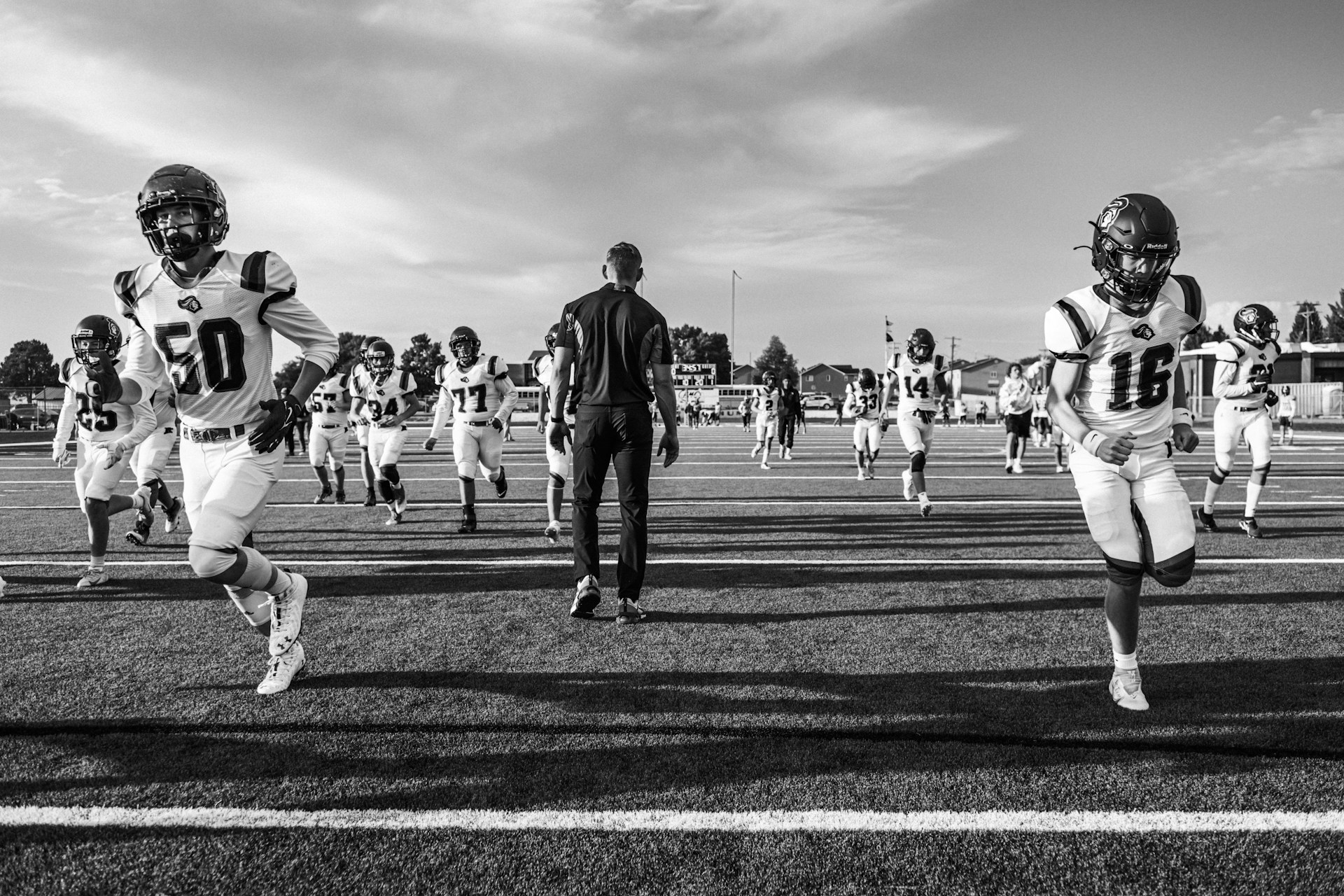
Photo by Marc Wieland on Unsplash – This post has nothing to do with sailing, but I love this image. A clear view ahead begins with someone willing to take ownership, chart the course, and help others see the way forward.



You must be logged in to post a comment.