A friend posted a short video this week asking about the “when” of things. When do you act? When do you wait? When do you pivot?
I just turned 60, so that probably changed how I heard his questions.
I can’t think of many important decisions where I thought, I’m completely ready for this. And I’m increasingly convinced we have readiness backward.
It’s easy to imagine that first we’ll prepare, then gain confidence, our uncertainty will disappear, and finally we’ll be ready to take action.
Life doesn’t always work that way.
Sometimes, the only way to gain confidence in something is to do it. The doing becomes part of the preparation. It creates clarity we can’t get from thinking alone.
Does that mean we should always move first and prepare later?
Nothing is that simple.
Preparation and thinking are important. But past a certain point, more analysis is just another excuse for waiting.
The harder part of these “when” questions may be determining our level of commitment.
Being ready isn’t the same as being casually willing to try. It means I’ve prepared as well as I reasonably can, accepted that I may still be uncomfortable, and decided that uncertainty no longer gets the deciding vote.
But if I’m not willing to bring the commitment required to see something through, I shouldn’t start.
Turning 60 is a reminder that our time is finite, whether we think much about it or not. Every decision to wait is also a decision about how we’ll spend that precious time.
I have no idea what the next decade will bring. The best parts of my first six were mostly unpredictable.
There’ll be more opportunities, more decisions, more things worth building. Also, more uncertainty, doubt, and hesitation.
Wisdom isn’t knowing exactly what to do, or precisely when to do it.
It’s recognizing when we’ve thought enough, prepared enough, listened enough, prayed enough, and waited enough.
Then committing to move.
Photo by Gennady Zakharin on Unsplash – Sometimes we have to start moving before the path makes sense.
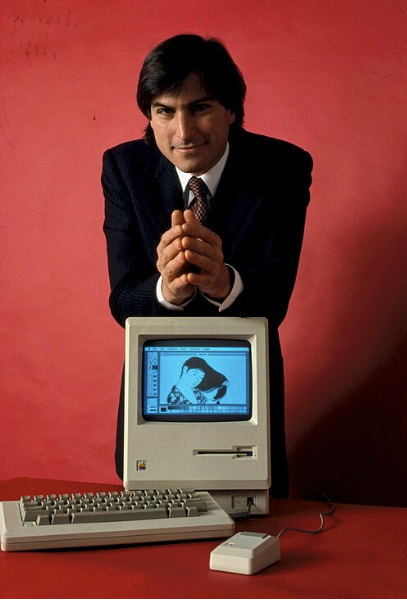
Jobs was speaking at Lund University in Sweden, long before smartphones, search engines, or the AI tools we use every day. His hope was that someday we might capture the underlying worldview of a great thinker like Aristotle within a computer, so a future student could ask him questions and get answers.
It sounded futuristic then, but that future is here today.
We can open an AI tool and ask it to explain Aristotle, compare him to another thinker, or respond in a way that tries to reflect his philosophy.
That doesn’t mean we’re talking to Aristotle. We’re talking to a machine-generated synthesis, built from writings, interpretations, and patterns available to the model. Worth remembering, especially in a minute.
Jobs saw computers becoming more than storage devices. He saw interactive learning companions that could move us from consuming information to questioning it, testing our understanding, and entering into a dialogue with the past.
So, I ran a little experiment. I asked an AI tool to respond as if it were Aristotle, drawing on his known writings and philosophy, then I asked three questions…two about leadership, one about relationships.
Here’s what I learned, before you even read the answers. The AI handed me answers that sounded wise. It couldn’t do anything with what the answers asked of me. That work stayed mine, every time. Keep that in mind as you read the three exchanges below. Each quote is the AI’s synthesis, in Aristotle’s voice, not a historical record of what he actually said:
Question 1: Aristotle, what makes someone a good leader?
A good leader must first be governed within himself. He cannot guide others well if his own desires, fears, and ambitions are disordered.
Leadership is not merely a matter of authority or skill. It is a matter of virtue. A leader needs practical wisdom to judge what should be done, courage to do it, justice to give others what they are due, and temperance to restrain his own appetite for power, praise, or comfort.
The good leader does not seek the good of himself alone. He seeks the good of the community entrusted to him.
That answer sounds about right. Confidence, drive, decisiveness, and the ability to win can carry a person a long way. But without character or virtue, those same strengths eventually start working against the people they’re supposed to serve.
Whether it’s true of me is a separate question.
Question 2: Aristotle, how should a leader make decisions when the right answer isn’t obvious?
In uncertain matters, the leader needs prudence. No rule can fully replace wise judgment, because human affairs are too varied and particular.
The prudent person considers the purpose of the decision, the facts of the situation, the people affected, and the likely consequences. He also considers his own motives. A decision can appear reasonable while still being driven by pride, fear, anger, or vanity.
Good judgment is formed over time. It comes through experience, reflection, correction, and the habit of choosing what is noble rather than merely what is easy.
Most leaders want clarity. We want the right answer to announce itself. The spreadsheet, the policy, the consultant, the precedent that makes the decision obvious.
Unfortunately, difficult decisions usually live where the information is incomplete, the tradeoffs are real, and the consequences land on people who are more than names on an org chart.
But, he asks an even harder question. What’s happening inside me as I make this call? Am I deciding from courage or fear? Justice or favoritism? Humility, or the need to be seen being right?
AI can organize the options. It can summarize the arguments. It can show me possibilities I might have missed.
But it won’t clean up my motives. That responsibility remains with me.
Question 3: Aristotle, what makes a friendship or relationship worthy of trust?
The highest friendship is rooted in virtue. Some relationships exist for usefulness. Others exist for pleasure. These are not necessarily bad, but they are fragile because they depend on what the other person provides.
A deeper friendship is different. It is based on willing the good of the other person. Such a relationship is steady because it rests on character, not convenience.
To be worthy of trust, a person must be truthful, faithful, and committed to the good of the other. A trustworthy relationship helps both people become better than they would be alone.
We understand relationships of usefulness. Work relationships, customer relationships, networking relationships, even friendships that lean heavily on shared convenience.
But, are we willing the good of the other person? Do we want what’s good for them, or only what’s useful to us? Do we want them to become better, or only to make our life easier?
Seeing this short exercise, I think Mr. Jobs would celebrate how close we’ve come to his 1985 vision. We have more access to information than any generation before us. We can retrieve facts instantly, summarize books in seconds, compare ideas across centuries before lunch.
That’s amazing!
Yet the more powerful the tool gets, the more responsibility shifts back to the person using it.
Ask Aristotle about leadership, and I have to ask whether I can govern myself.
Ask him about prudence, and I must examine my own motives before I decide.
Ask him about friendship, and the real question is whether I’m willing the good of the other person or just protecting what’s useful to me.
AI tools can generate answers. Wisdom starts when we let those answers question us back.
The machine can help us ask Aristotle a question.
It can’t make us become the kind of person who can live the answer.
A decision comes up. It sits right in front of someone. It falls within their role and their authority. And the response comes almost automatically.
“Let me check with my boss.”
Sometimes that’s wise. Alignment matters. Context matters.
That’s not the situation we’re thinking about here.
We’re thinking about the reflex. The lazy habit. The moment a leader has the ball and immediately hands it back up the chain.
“I’ll get back to you.”
“Let me confirm before we move…”
Ownership just left the room.
One instance feels harmless. But a regular occurrence starts to define the culture.
Decisions begin to climb instead of moving forward. Time stretches. Energy fades. Momentum slips away, one small deferral at a time.
Every time a leader defers a decision that belongs to them, the team hears something unspoken.
“I have the title. But I’m still waiting for permission to lead.”
There are reasons this shows up. A leader may have learned that their decisions will be second-guessed. A leader may want to avoid risk. In some cases, the habit settles in because it feels efficient in the moment.
It never is.
Leadership is not a forwarding function. Leadership is a decision function. When decisions don’t happen where they should, everything slows down.
Consider a different kind of decision environment.
Naval destroyers move through the Pacific at night. Visibility is limited. The stakes are high. Decisions carry immediate consequences.
Arleigh Burke commanded Destroyer Squadron 23 during World War II. He pushed his ships to full speed when it mattered, earning the nickname “31-knot Burke.”
He once said, “The difference between a good officer and a great officer is ten seconds.”
Ten seconds.
In that environment, ten seconds could determine who struck first and who absorbed the hit. There was no version of that moment where a commander paused to seek permission for a decision that was already theirs to make.
Burke’s point wasn’t about speed alone. It hinged on readiness.
A ten-second decision is formed long before the moment arrives. It’s shaped through preparation, and thinking clearly about what matters and what doesn’t. When the moment comes, the leader recognizes it and moves.
Most of us aren’t making decisions in the middle of a night battle at sea. We’re making decisions in conference rooms, over email, in conversations with our teams, and in small moments where direction is needed.
A customer is waiting. A team needs clarity. Our decision will either create movement or stall it.
In those moments, the difference comes down to a single response.
“Let me check.”
Or
“Here’s what we’re going to do.”
The gap between these two responses is only ten seconds. But what fills that gap, or fails to, defines the kind of leader you are.
The leaders who move in those moments aren’t guessing. They’re drawing on work they’ve already done. They’ve thought through the tradeoffs. Formed principles that guide their decisions. They understand the scope of their responsibility. They trust their preparation and their judgment.
Because of that, they don’t need to look upward for every answer. They don’t need to defer decisions that belong within their role.
They lead.
Create unnecessary delays, and uncertainty spreads. Energy drains. People begin to fill the gaps with their own assumptions.
A leader who steps forward brings clarity into the room.
The next time that familiar reflex shows up, pause for a moment and ask a better question.
Is this mine to decide?
If it is, then decide. Step forward. Move.
The distance between good and great leadership rarely shows up in dramatic events. It shows up in small decisions, repeated over time, where someone chooses to act, or chooses to wait.
Burke’s destroyers didn’t win the night by waiting for permission. They won it by being ready when the moment came.
Every December, I return to a familiar practice. I reread a few of my older posts, looking for threads that might help clarify my thinking about the year ahead. Last year, on the final day of 2024, I wrote a short post on my goals for 2025:
-Serve the quests of others over my own -Offer insights and advice, not direction -Push beyond my comfort zone and inspire others to do the same -Bring the loaves and fishes, and trust God with the rest
I see that I longed for simplicity without mentioning it directly. I wanted more presence, more clarity, more intention, and a little less noise in a world that seems to generate more every year.
This week, as I listened to Tim Ferriss speak with Derek Sivers, Seth Godin, and Martha Beck about simplifying life, I realized this desire has been with me for a long time. More than a decade ago, I wrote a short post called Becoming a Chief Simplicity Officer, describing how organizations thrive when they remove friction and create clean intuitive paths so people can focus on what truly matters. The idea was straightforward. When systems run smoothly, people flourish.
It turns out this Chief Simplicity Officer role fits in life just as well as leadership. Someone needs to step into the work of reducing complexity, eliminating friction, and clearing space for the things that deserve attention. Someone needs to guard the essentials by shedding the excess.
That someone is me, and it’s you in your life.
From Tim Ferriss’s Podcast
Derek Sivers: Simple Isn’t Easy, but It Is Freedom
Derek Sivers says simplicity requires intention. It doesn’t appear just because we cut a few tasks or say no occasionally. It takes shape when we clear away commitments that no longer belong and choose what contributes to the life we want to live. He often talks about building life from first principles instead of living on top of default settings.
Every recurring obligation fills space that could hold something meaningful. Every dependency adds weight. Every unfinished task pulls at the edges of our attention.
What possibilities would rise if complexity stopped crowding the edges of your life?
Seth Godin: Boundaries Create Clarity
Seth Godin approaches simplicity through the lens of clarity. When you know exactly who your work is for, you stop bending your days around expectations that were never meant to guide your decisions. Clear boundaries turn vague intentions into choices you can actually live out.
Simplicity often follows sharper edges. Define your edges, and the path through each day becomes easier to walk.
Martha Beck: Choose Joy, Not Habit
Martha Beck speaks of simplicity in the language of joy. She tells a story from her twenties when she made a single choice that reshaped her life. She turned toward joy and stepped away from misery, even when the joyful path cost more in the moment. Joy has a way of clearing the fog. It cuts through distraction and highlights what brings life.
Her words invite us to examine the decisions we’ve kept out of habit or comfort. Some habits strengthen our soul. Others only multiply clutter. Joy reveals the difference.
Ten Simplicity Moves for the Start of 2026
These actions are small, but each one lightens the load. They remove stones from a shoe you may have been walking with for years without realizing.
Cancel one subscription that no longer serves you. Even a small change can create a surprising sense of clarity.
Choose one non-negotiable time boundary and honor it. Maybe evening email and scrolling limits or a weekly focus block on your calendar. Small open spaces accumulate over time.
Simplify one recurring decision. Automate it, template it, or eliminate it entirely.
Pause one habit you maintain out of inertia. Give yourself a week to assess its value.
Identify one activity that consistently brings joy and schedule time for it this week.
Unsubscribe from three email lists that add noise instead of value.
Clear one surface you see every day. A calm space refreshes the mind.
Revisit your goals from last year and carry forward only what still matters. Release the rest.
Decide who you are working for. Clarity about your audience sharpens the work you choose to do.
Ask yourself one grounding question: What do I truly need to live the life I want? Let your answer shape what stays and what goes.
Looking Back at 2025 and Forward Into 2026
My goals for 2025 were aimed at deeper alignment with the things I care about. They served me well and opened my heart to possibilities I never would have imagined. I’ll carry these goals into 2026 (and beyond).
For 2026, I’m adding one specific goal to my list. I started working on this goal a few months ago, and it’s pushing me way outside of my comfort zone. While it’s a personal quest (and not one that serves the quests of others over my own), I believe it will serve others on their journey. I’ll be bringing the loaves and fishes and trusting God to do the rest. I’ll share more details later.
A Closing Invitation
Simplicity grows as unnecessary weight falls away and clarity rises in its place. You don’t need a title or a plan to begin.
You only need to choose.
Choose clarity.
Choose boundaries.
Choose joy.
Choose to be the Chief Simplicity Officer in your own life.
Let this be the year you simplify your days and rediscover the freedom and clarity that come from intentional living.





You must be logged in to post a comment.