A wall buried under centuries of soil. Pottery, tools, foundations, scrolls, and whole settlements remain where they were left while the earth slowly covers them.
We live at the surface, standing on everything that came before us, most of it invisible.
Some of the past reached me through stories. More came through school, books, photos, letters, and knowledge gathered by people I’ll never know.
I don’t control where I entered this story or what has already happened. I inherit discoveries, mistakes, questions, and unfinished work. Some of it I can change. Some I can only understand and accept.
The world still holds layers we haven’t reached, truths that were present long before anyone noticed them.
For as long as there have been people, our bodies have carried a genetic text billions of letters long. Our ancestors lived, loved, and died never knowing it was there.
What else is waiting to be revealed? Processes we can’t detect, relationships we haven’t recognized, and questions we don’t know enough to ask. The universe doesn’t explain itself just because we’ve arrived.
I find that humbling and sacred. We enter something already underway, uncover a little of what’s hidden, and leave far more waiting to be found.
My kids will see things I’ll never see. Their kids will ask questions none of us have thought to ask.
I get to add what I can, leave something useful behind, and wonder what those who follow will discover from the layer we share today.
A friend showed me some old family photos a couple weeks ago.
An uncle of his is getting older and had given him a collection of family photos and other memorabilia he’d accumulated over the years. He knew some stories, and his uncle had told him even more stories about the people in those photos.
We turned a few of them over, hoping someone had written a name or a date on the back.
Nothing.
My friend knew these were his people. Grandparents, uncles, aunts, cousins, maybe great-uncles. He knew some remarkable family stories, including stories from World War II.
But we couldn’t connect the people in the pictures with the stories.
Somewhere along the way, the thread between the stories and the photos had disappeared.
I’ve been thinking lately about my grandpa on my dad’s side.
I know a few things about his history.
He was in World War II. He was stationed in England for at least part of the war. My grandma was English (Welsh actually) and worked as an infectious disease nurse. Apparently, Grandpa was allergic to everything and had to report for treatment regularly.
Somewhere in there, they fell in love. Grandma told me some stories about their time in England. She told me about her trip over to the US after the war on the Queen Mary, alone with her first child, my aunt. She’d eventually meet back up with Grandpa when she got stateside, since he came home via some sort of military transport.
That’s a pretty good beginning to a family story.
My dad was born in Michigan, but I don’t know what brought them to Michigan.
Then there’s a blank section of the story.
At some point they moved to Southern California, where they spent the rest of their lives.
Why did they move? I don’t know.
Grandpa was an operating engineer, operating heavy equipment.
What kind?
Bulldozers? Cranes? Graders?
What sort of projects did he work on?
Roads? Buildings? Dams?
Did he like his work? Was he good at it?
Did he ever come home and tell my dad about something interesting that happened that day?
I have no idea.
There was a time when I could have asked one of them.
My parents and grandparents are gone now. So are all the other people I can think of who might have known.
Lots of memories survive.
Wars. Marriages. A child’s birth.
England survives. Michigan. California.
But a regular Tuesday afternoon disappears.
I’ve caught myself wondering what Grandpa’s mornings were like.
What time did he get up? Did he drink coffee?
Did he pack a lunch? Did he have a thermos?
What kind of truck did he drive?
What did he do on his days off?
Was moving to California some big adventure, or did he simply hear about a job and say, “Let’s go”?
I don’t actually need to know that Grandpa drank coffee in the morning. What I’d want is the coffee itself. The smell of it in a kitchen at five-thirty in the morning before anyone else was up. Their dog trying to get attention in the quiet of their house right before his workday started. Nobody thought to write any of that down, because why would they. It was just another day.
We’ve never had more ways to record our lives than we do now.
I have thousands of photos on my phone. So does almost everyone I know.
We post pictures. Send them through family group texts. Put them in shared albums. Our phones occasionally remind us what we were doing eight years ago today.
We may be the most photographed generation in human history.
I’m not sure that means anyone will know us particularly well in the future.
Someone could someday inherit 14,000 photographs of us and wonder what we were like.
I think you get to know someone differently when you stay at their house for a few days.
You wake up when they wake up. You have more time to hear what’s really happening in their lives. You learn which chair they always sit in. You find out that somebody who seems perfectly organized can’t find their keys three mornings in a row.
Traveling with someone does the same thing, only faster.
Someone is always hungry. Someone needs the bathroom fifteen minutes after you stop. Flights get delayed. Reservations disappear. It rains. You get lost. The restaurant is closed.
People reveal themselves quickly in these situations.
Thinking about all of this makes me think of something very particular about my dad.
When I was a kid, we camped a lot. We went to Lake Havasu with our boat. We went to off-road races.
Dad was meticulous about preparation.
If a trip was four weeks away, he’d point out that he didn’t really have four weeks to get ready.
He worked six days a week. That meant he only had four Sundays.
That was how he thought about it. Four Sundays to get ready.
As the trip got closer, gear began appearing.
Camping equipment. Tools. Boxes. Supplies. Spare parts for the boat. Motorcycle parts, and tools.
He was methodical about storing everything so it could be staged in modules.
For weeks, there’d be a growing pile of gear waiting to go…ready to be packed into the truck.
Dad liked being ready.
Then there was departure time.
If our plan was to leave early Friday morning, there was a very good chance that sometime on Tuesday or Wednesday, Dad would begin reconsidering the wisdom of this plan.
Why wait until Friday morning? I’m already taking Friday off. We could leave the night before. I could cut out of work early on Thursday so we can get a jump on our trip.
Who knew what might go wrong along the way? If something did, we’d have extra time.
And if nothing went wrong, we’d arrive early. Being early was useful.
You get your choice of campsites.
You weren’t rushing. We could be fully set up when everyone else arrives.
It made complete sense to him.
Mom didn’t see the genius of this plan in quite the same way.
Dad had the truck and equipment ready.
Mom had the food. And clothes. And two boys. And all the domestic stuff (Mom and Dad used to talk about Mom being in charge of domestics) to get ready.
For Mom, leaving Thursday night mostly meant she’d just lost twelve hours of prep time.
There was no father-son conversation where he explained the importance of preparation and leaving early.
I just watched (and usually helped) him get everything ready.
And now I like getting up early. I like arriving before other people. I like being prepared.
Once in a while, I find myself thinking that maybe we should leave tonight instead of tomorrow morning.
We probably inherit all kinds of things this way.
Ways of preparing. Ways of worrying. Little phrases. Expectations.
The way we organize our garage.
The way we react when we’re running late.
Nobody announces that these things are being handed down. Years later, we discover them in ourselves.
I wonder what I inherited from my grandfather without knowing it.
Maybe that’s why the missing details about him intrigue me.
I’d like to know how he thought long before I came along.
I’d like to know what he did when a trip was four weeks away.
I recently heard about another kind of writing that seems almost unrelated. Writing about grief or trauma. The basic idea is that putting painful experiences into words can help us process them.
I don’t pretend to understand all the neuroscience involved, and I’m suspicious of explanations that make our brains sound like a filing cabinet where we simply move an experience from one drawer to another. But the idea itself interests me.
Something happens.
It’s overwhelming.
Eventually we sit down and try to describe it…to ourselves.
What happened? What did I feel? What am I still feeling?
Even if nobody ever reads it.
Writing like this can give shape to something that didn’t have much shape before.
It’s almost the reverse of what I’ve been thinking about Grandpa’s mornings. There, I wanted someone to have written down the feeling of an ordinary day before it disappeared entirely. Here, writing takes something that’s still painfully vivid and makes it a little easier to understand.
I’ve written for years now.
Most of what I write begins with whatever captured my attention at that moment.
Something I read. Something that happened at work. Something one of my grandkids did.
Something I’m building.
Something that annoyed me.
Something I suddenly understand differently than I did before.
I don’t usually think of it as preserving history.
I’m just enjoying writing things down.
Sometimes I wonder what someone in my family might find in all my writing fifty or a hundred years from now.
Not because my writing is important.
Because the little things in it might be.
A future member of my family can probably find my birth date.
They may know where I lived and what I did for work…maybe as little as I know about my own grandparents.
They’ll almost certainly have photos. A ridiculous number of them.
But something I wrote about pouring concrete with my grandkids may tell them something the photos don’t.
Or building a campsite. Or struggling with some idea that’s stuck in my head.
Or remembering my dad getting ready for a trip.
They might get a glimpse of what caught my attention on a particular Thursday.
I’ve heard people talk romantically about ancient societies gathering around fire pits at night listening to the elders tell stories about their ancestors.
Fireside stories notwithstanding, I suspect a lot of human history has always been lost.
Someone dies unexpectedly. Nobody ever thought to ask.
The grandchildren weren’t paying attention. The one person who knew the story assumed everyone else knew it too.
A photo gets put in a box. Fifty years later, somebody turns it over.
Blank.
We tend to think of history as big events.
The things printed in books.
But I’m more interested lately in the smaller history.
Why Michigan? Why California?
Who’s the man standing on the left side of that picture?
And what was everybody laughing about?
We’re surrounded by history while it still looks like ordinary life. It’s so easy to miss.
I keep thinking about those old photos my friend and I turned over.
Someone took them. Someone kept them. Someone else kept them after that.
Eventually an aging uncle carefully hands them to my friend because he wants someone in the family to have them.
Unfortunately, most of the stories didn’t make the trip.
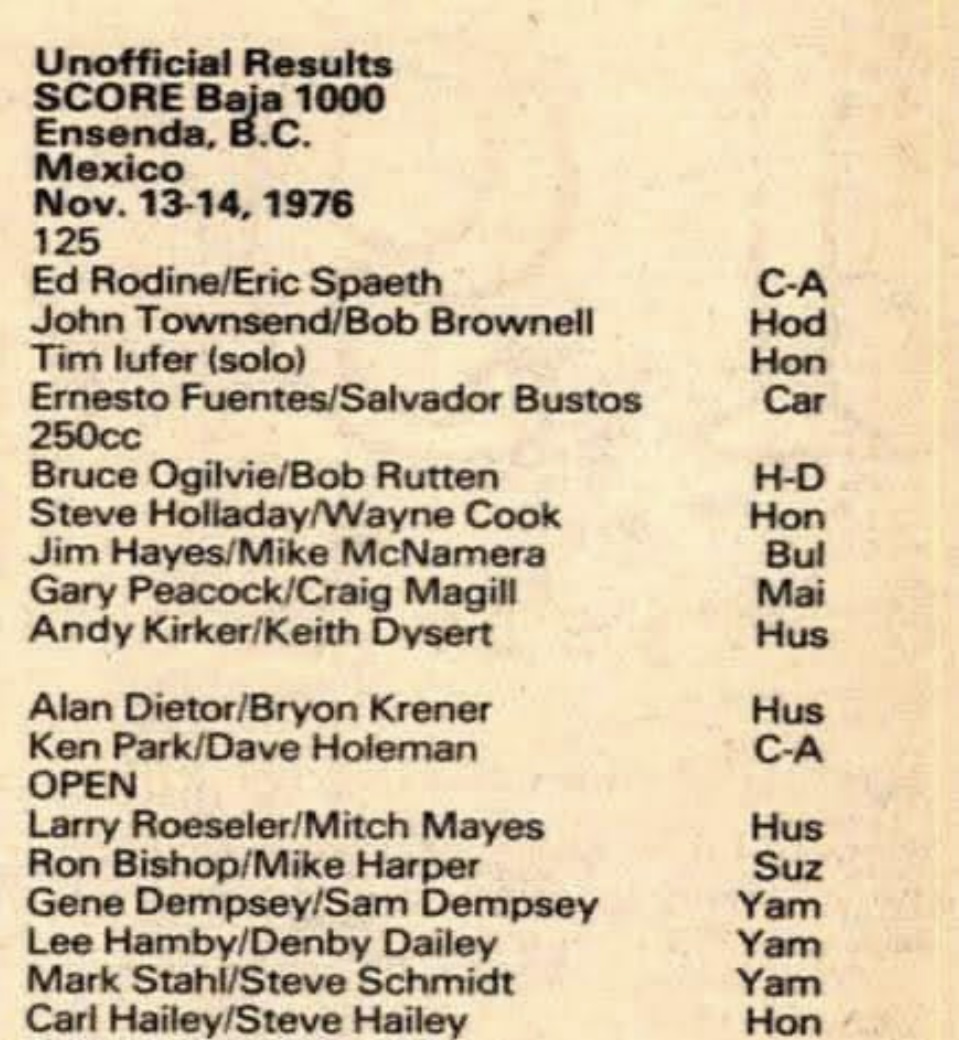
A few days ago, someone posted a results sheet from the November 1976 Baja 1000.
The page was filled with names I recognized. Many went on to become legends in off-road racing. But two names, in particular, caught my attention.
Lee Hamby and Denby Dailey.
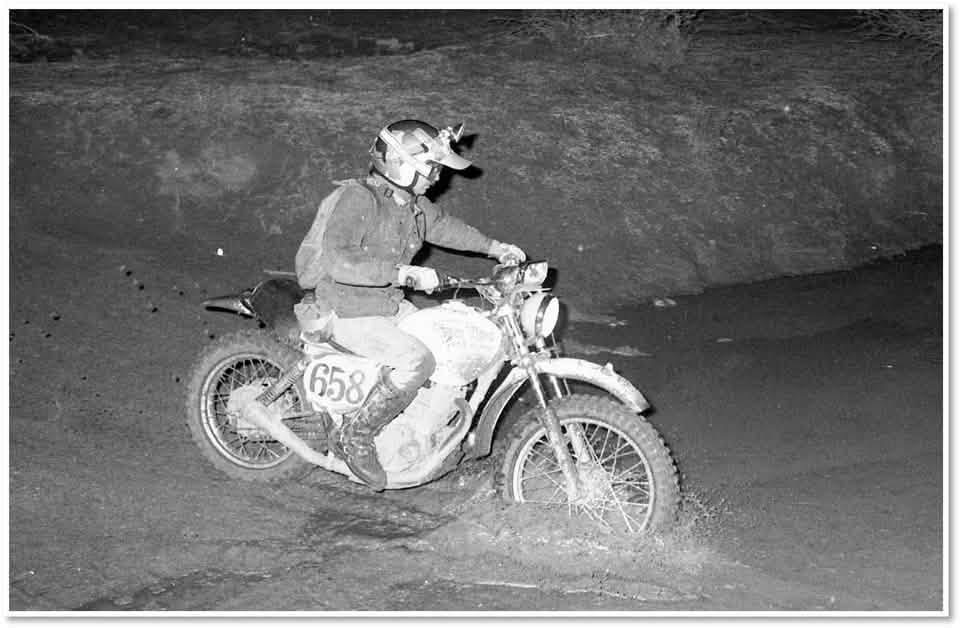
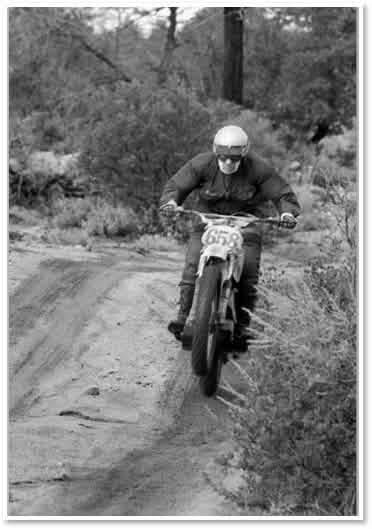
Denby is my uncle, and Lee was his co-rider. Together, they finished fourth in the Open motorcycle class on a Yamaha…a TT 500.
The result is clean and simple.
Two names. A motorcycle. A finishing position.
Fifty years later, that’s what remains on the page.
But I know some of the stories behind that result.
The week of the race, torrential rains hit Baja. Ensenada flooded. At the time, race vehicles were placed in an impound area after tech inspection so teams couldn’t make further modifications before the start.
That year, the impound area flooded.
Riders and crews had to wade into the water, pull out their motorcycles, assess the damage, and get them running again. Before the race had even begun, they were already rescuing their equipment and solving problems they could never have anticipated.
And the flooded impound yard was only the beginning.
My parents were there as part of the support team for Denby and Lee. They spent the race trying to reach pit areas, carrying fuel and supplies, and trying to be ready when the motorcycle arrived.
Their stories were filled with floods, pouring rain, mud, washed-out roads, close calls, and long hours trying to move through Baja while the race continued around them.
I heard the stories many times growing up.
We traveled to Baja to support other races through the late 70s, 80s, 90s, and 00s. Every now and then, while driving one of those roads or waiting at a pit, a story from the ’76 race would come up.
One person would talk about the rain.
Someone else would remember pulling out that van that had flopped over on its side, blocking the only way in and out of a pit area.
Another would remember a river crossing, a mechanical problem, or a moment when it seemed unlikely that anyone would make it to the next pit.
That’s the thing about a race like the Baja 1000. There’s never just one story.
The racers are focused on the course in front of them. They’re watching the terrain, listening to the motorcycle, managing fatigue, and trying to complete their part of the race.
Meanwhile, the pit crew is living a completely different race.
They’re navigating highways and back roads, hauling tools and fuel, finding remote locations, improvising when plans fall apart, and trying to arrive before the racers.
The riders rarely know what the pit crew is going through. The pit crew rarely knows what’s happening to the riders.
Yet they’re all part of the same team, working toward the same goal.
Each person is carrying a different piece of the effort. Each is solving problems the others may never see. Each is building a collection of memories while remaining focused on their next task.
Only afterward does the full story begin to emerge.
The racers finish. The crew gathers. The urgency fades.
Someone finds a shower. The grime starts to wash away. Cuts and bruises are finally noticed. A meal appears. Many beverages are opened.
Then the stories begin.
Did you make it past that washed-out road before they closed it?
How did you get the bike running?
What happened at that river crossing?
You did what?
Only then can everyone begin to understand what the others endured. Only then can the team see the full depth of what they accomplished together.
And if they’re lucky, the racers may receive a trophy and a small check that hardly covers the cost of the fuel burned during the race.
The official result still looks simple. Fourth place.
It says nothing about the mud, the darkness, the fatigue, or the danger.
Nothing about the parents, spouses, friends, mechanics, and volunteers racing from one remote pit to another.
Nothing about the separate struggles that came together to produce that one clean line on a page.
Seeing that results sheet nearly fifty years later brought back more than a racing memory.
My parents have passed away. My Uncle Denby died last year. Lee is still with us, but I haven’t seen or spoken with him in more than a decade.
The people who lived that story are slowly disappearing.
But their story remains.
It remains in the photo Lee’s son, Scott, shared. Racers in their prime, doing what they loved and doing it well.
They couldn’t have known that half a century later, someone would look at those images alongside a yellowed results sheet and remember everything that page could never contain.
We spend much of our lives pursuing results that may someday look just as simple.
A name. A date. A title.
A finished project. A successful deal. A race result.
The record preserves the outcome, but it misses most of the story.
It leaves out the people carrying unseen burdens. The problems that were solved against all odds. The risks taken without fully realizing them. The exhaustion, improvisation, fear, laughter, camaraderie, and relief.
Fifty years later, the results fit neatly on a single page.
But oh, the stories they could tell.
That’s Uncle Denby at a water crossing, probably before sunrise. Notice the small headlight, maybe 8 inches of travel in the shocks, and a battery-powered headlamp on his helmet. I think that was powered by a big cube-shaped lantern battery in his backpack.
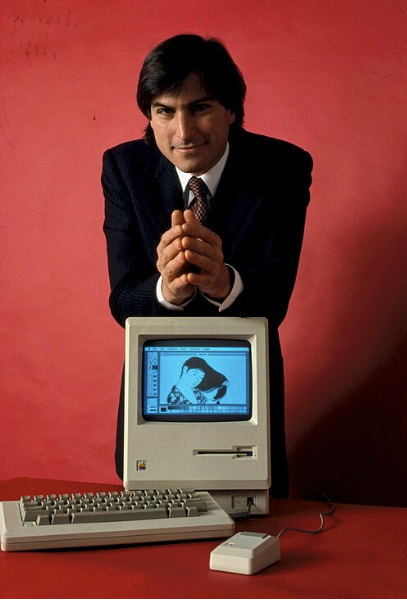
Jobs was speaking at Lund University in Sweden, long before smartphones, search engines, or the AI tools we use every day. His hope was that someday we might capture the underlying worldview of a great thinker like Aristotle within a computer, so a future student could ask him questions and get answers.
It sounded futuristic then, but that future is here today.
We can open an AI tool and ask it to explain Aristotle, compare him to another thinker, or respond in a way that tries to reflect his philosophy.
That doesn’t mean we’re talking to Aristotle. We’re talking to a machine-generated synthesis, built from writings, interpretations, and patterns available to the model. Worth remembering, especially in a minute.
Jobs saw computers becoming more than storage devices. He saw interactive learning companions that could move us from consuming information to questioning it, testing our understanding, and entering into a dialogue with the past.
So, I ran a little experiment. I asked an AI tool to respond as if it were Aristotle, drawing on his known writings and philosophy, then I asked three questions…two about leadership, one about relationships.
Here’s what I learned, before you even read the answers. The AI handed me answers that sounded wise. It couldn’t do anything with what the answers asked of me. That work stayed mine, every time. Keep that in mind as you read the three exchanges below. Each quote is the AI’s synthesis, in Aristotle’s voice, not a historical record of what he actually said:
Question 1: Aristotle, what makes someone a good leader?
A good leader must first be governed within himself. He cannot guide others well if his own desires, fears, and ambitions are disordered.
Leadership is not merely a matter of authority or skill. It is a matter of virtue. A leader needs practical wisdom to judge what should be done, courage to do it, justice to give others what they are due, and temperance to restrain his own appetite for power, praise, or comfort.
The good leader does not seek the good of himself alone. He seeks the good of the community entrusted to him.
That answer sounds about right. Confidence, drive, decisiveness, and the ability to win can carry a person a long way. But without character or virtue, those same strengths eventually start working against the people they’re supposed to serve.
Whether it’s true of me is a separate question.
Question 2: Aristotle, how should a leader make decisions when the right answer isn’t obvious?
In uncertain matters, the leader needs prudence. No rule can fully replace wise judgment, because human affairs are too varied and particular.
The prudent person considers the purpose of the decision, the facts of the situation, the people affected, and the likely consequences. He also considers his own motives. A decision can appear reasonable while still being driven by pride, fear, anger, or vanity.
Good judgment is formed over time. It comes through experience, reflection, correction, and the habit of choosing what is noble rather than merely what is easy.
Most leaders want clarity. We want the right answer to announce itself. The spreadsheet, the policy, the consultant, the precedent that makes the decision obvious.
Unfortunately, difficult decisions usually live where the information is incomplete, the tradeoffs are real, and the consequences land on people who are more than names on an org chart.
But, he asks an even harder question. What’s happening inside me as I make this call? Am I deciding from courage or fear? Justice or favoritism? Humility, or the need to be seen being right?
AI can organize the options. It can summarize the arguments. It can show me possibilities I might have missed.
But it won’t clean up my motives. That responsibility remains with me.
Question 3: Aristotle, what makes a friendship or relationship worthy of trust?
The highest friendship is rooted in virtue. Some relationships exist for usefulness. Others exist for pleasure. These are not necessarily bad, but they are fragile because they depend on what the other person provides.
A deeper friendship is different. It is based on willing the good of the other person. Such a relationship is steady because it rests on character, not convenience.
To be worthy of trust, a person must be truthful, faithful, and committed to the good of the other. A trustworthy relationship helps both people become better than they would be alone.
We understand relationships of usefulness. Work relationships, customer relationships, networking relationships, even friendships that lean heavily on shared convenience.
But, are we willing the good of the other person? Do we want what’s good for them, or only what’s useful to us? Do we want them to become better, or only to make our life easier?
Seeing this short exercise, I think Mr. Jobs would celebrate how close we’ve come to his 1985 vision. We have more access to information than any generation before us. We can retrieve facts instantly, summarize books in seconds, compare ideas across centuries before lunch.
That’s amazing!
Yet the more powerful the tool gets, the more responsibility shifts back to the person using it.
Ask Aristotle about leadership, and I have to ask whether I can govern myself.
Ask him about prudence, and I must examine my own motives before I decide.
Ask him about friendship, and the real question is whether I’m willing the good of the other person or just protecting what’s useful to me.
AI tools can generate answers. Wisdom starts when we let those answers question us back.
The machine can help us ask Aristotle a question.
It can’t make us become the kind of person who can live the answer.
We were driving south in my parents’ Toyota 4×4, following them along the bumpy, rocky dirt roads of Baja toward Gonzaga Bay.
The girl who would become the love of my life was sitting beside me. She’d known me for only about six weeks. Still, she said yes.
Yes to Baja. Yes to the road less traveled. Yes to the unknown
Always a quiet adventurer.
Dust hung in the air. Our windows were down. The Beach Boys played on the stereo as the long road unfolded mile after mile.
We warmed ourselves in the sand and swayed together in our neighbor’s hammock. We snorkeled just offshore and rode the small swells that rolled into the bay most afternoons.
Time felt generous.
Under the moonlight, we walked hand in hand, just the two of us and that beautiful bay.
I knew then what I know today.
She is the woman of my dreams.
I’ve been blessed to live this dream with her every day since.
She’s my loving wife, the mother of our two beautiful and caring daughters, and Grandma to our nine amazing grandchildren.
Some places hold a moment from your life. Others hold a truth you’ll carry forever.
Tomorrow, we’ll celebrate thirty-eight years of marriage.
Through every challenge we’ve faced and every joy we’ve shared, our lives have been joined as one.
The life we’ve built, the family we love, and the road we’re still traveling have become our shared story, woven together and sustained by the grace of God.
This memory came rushing back as I listened to Dennis Doyle sing “Connemara Bay.” He was singing about a place in Ireland, but I was transported to Gonzaga Bay.
I spent an evening recently with a group of old friends. Some of us have known each other for nearly forty years.
We sat around an old poker table, laughing like no time had passed at all. The betting was fierce, of course. Quarter bets. Fifty-cent raises. The occasional dollar wager from the high rollers at the table.
As the cards moved around the table, so did the stories.
We talked about back surgeries and strange new ailments. About retirement and semi-retirement. After all the years of working, preparing, striving, building, and planning, some of us are finally approaching this new stage of life. Others are already there. We compared notes on life after full-time careers and our changing focus from building wealth to stewarding time.
We talked about the crazy new toys (tools) some of us have acquired since we were last together. Tractors, airplanes, boats, trailers, CNC machines, and 3D printers. The kinds of purchases that make complete sense when practicality and childhood fascination peacefully coexist.
We talked about trips around the world. Cruises through the Panama Canal. Journeys to India and South America, Thailand, New Zealand, Australia and Malaysia, Greece and the Canary Islands. Places we probably never imagined visiting when we first knew each other.
We shared tragic updates too. Losses. Wounds. Stories that carry real pain even when told calmly. The room would go quiet. Respectful. The kind of quiet that only comes when people trust each other enough to say the hard things out loud.
And then there were the stories of redemption. Recovery. Healing. The moments where life knocked someone down and, somehow, they found their footing again.
The conversation moved naturally between laughter and seriousness the way it often does when people have enough history together.
We traded lines like “You haven’t changed,” and “My God, you’ve gotten old.”
Both statements are somehow true at the same time.
Old friends see something unique in each other. They remember earlier versions of us that still exist somewhere underneath the gray hair, reading glasses, surgeries, accomplishments, disappointments, and miles traveled. Old friends carry evidence of our lives in our shared memories.
It’s comforting to realize we’ve all aged together. Nobody escaped it. We all crossed the years side by side, whether we saw each other often or not.
The poker game became a kind of metaphor for life. Checking. Raising. Calling. Bluffing a little. Winning a few. Losing a few. Staying in the game long enough to laugh about it afterward.
It’s probably a stretch to call the games we played “real poker.” The bets were small. The real stakes had nothing to do with money.
We left carrying fresh memories, renewed connections, and that warm sense that our lives are tied together across past, present, and future. Even after long gaps between gatherings, we can still sit down and pick up the conversation almost exactly where we left it.
Not everyone gets friendships that last thirty or forty years. That kind of shared history is one of life’s greatest treasures.
Sometimes it shows up around an old poker table. A deck of cards. Some unhealthy snacks. And decades of history that nobody can explain.
Our oldest grandson turned 13 this week. In honor of this auspicious occasion, here’s some advice from a grandpa’s perspective…
Turning 13 feels important because it is.
You’re not a little kid anymore, but you’re not grown either. You’re standing in that in-between place where life starts opening up in new ways. You begin to think more for yourself. You start noticing the world differently. You begin asking bigger questions.
Who am I? What am I good at? What do I want to do with my life?
All excellent questions, and you don’t need perfect answers yet. In fact, you’ll ask the same questions at 18, at 25, at 40, and again at 60. Life keeps moving and we keep growing. The answer you give today isn’t supposed to be your final answer.
So don’t panic if you don’t know exactly what you want to do with your life. Most people don’t.
Having your whole future mapped out right now isn’t the priority. Becoming the person who can handle that future is.
Hold on to your integrity.
Tell the truth. Keep your word. Do the right thing, especially when there’s nothing in it for you. That last part matters more than most people realize. It’s easy to do the right thing when someone’s keeping score. The real test is what you do when no one is.
Don’t trade your character for attention, approval, popularity, or convenience. A lot can be rebuilt in life. Trust is hard to rebuild once you break it.
Stay close to God.
You won’t understand everything all at once. Nobody does. But keep your heart turned toward Him. Pray. Ask for wisdom. Pay attention. Learn to trust that there’s more going on in life than whatever feels big in the moment. Your faith will steady you when your feelings don’t. It’ll remind you who you are when the world tries to define you by something smaller.
Stay in a service mindset.
Look beyond yourself. Learn to help. Learn to notice when someone needs encouragement. Learn to carry your share. Learn to be useful. Be someone people can count on.
A life built only around what do I want gets very small in a hurry. A life that asks how can I help or how can I add value grows deeper and more meaningful. You’ll find a lot of what matters in life while serving, building, learning, and staying faithful in ordinary things.
Work with everything you have, even when no one is watching.
Somewhere along the way our culture started treating hard work as just a means to an end, something we do to get paid or get ahead. But there’s a much older and better way to think about it.
Quality work builds character. It builds discipline. It builds something larger than the task in front of you. Every time you give full effort to something ordinary, you’re quietly shaping the excellent person you can be. That adds up in ways that are hard to see at 13 but impossible to miss at 30.
Half-effort becomes a habit just as easily as full effort does. The habits you build at 13, 14, and 15 will be the ones carrying you at 25 and 35.
Don’t wait for someone to be watching before you give your best. Work hard at school. Work hard at home. Learn to finish what you start. Learn to be corrected without falling apart. Learn to keep showing up even when it’s hard and nobody’s clapping.
None of this sounds flashy because it isn’t. A lot of what makes a strong life is built quietly.
You’ll fail at things. Do it anyway.
At some point, you’re going to try hard at something and still come up short. You’ll miss the cut. You’ll bomb a test you studied for. You’ll lose a game that matters. You’ll say something wrong at the worst moment. That’s part of being alive and actually trying. It says nothing about whether you’re good enough.
What happens after you fail is the part that defines you. You can let it pull you back, make you more careful, more afraid to try. Or you can let it teach you something and keep going.
Most of the people worth looking up to in life have a longer list of failures than you’d expect. They just didn’t stop.
Don’t be so afraid of failing that you stop reaching. And when you do fail, get back up, figure out what you can learn from it, and go again.
Don’t compare yourself to everyone else.
You’ll be tempted to measure your life against what everyone else seems to have, seem to be, or seems to be doing.
Comparison is a thief. It steals your happiness. It distracts your focus from your own path and wastes your attention on someone else’s highlight reel. The person you’re comparing yourself to is probably doing the same thing in a different direction.
Run your own race. You’re not behind. You’re not ahead. You’re exactly where you should be. The question isn’t why do they have what I don’t. It’s what am I going to do with what I’ve been given.
Stop assuming the world is against you.
This one is worth learning early so you don’t waste years that could have been spent building. When things go wrong, and they will, your first instinct will be to look for someone to blame. A teacher. A coach. An umpire. A parent. Your boss. The system. Sometimes that blame might even be partly true.
None of that matters. You don’t control what other people do. You control what you do. The moment you decide that your success or failure is mostly someone else’s responsibility, you hand over the most powerful thing you have. Your own effort and your own choices.
Work on what you can control. Improve your attitude. Improve your skills. Improve your effort. Stop waiting for circumstances to be fair before you try. Life isn’t always fair. The people who accomplish things don’t wait for it to be.
About your parents.
They really do want what’s best for you. That may be hard to believe sometimes. They won’t always explain things perfectly or get every decision right. They’re human, just like you. Beyond the rules, the questions, the concern, and the occasional frustration is something very simple. They want you to have a good life.
Try to remember that when you feel misunderstood. Talk to them. Listen to them. Let them help you.
And one day, if life takes you far away geographically, stay connected. Call home. Answer texts. Show up when you can. These relationships are worth more than most people realize when they’re young.
About your brothers and sisters.
Yes, they may annoy you. Yes, they may know exactly how to push your buttons. That’s part of the deal. But they’re also part of the very small group of people who know your whole story, where you came from, and what you’ve been through. They know parts of you the rest of the world never sees.
Be there for them. Don’t let small things turn into long separations. Give grace. Stay loyal. Repair things when you can. A strong family is one of life’s great blessings. Don’t treat it casually.
Pay attention to who you spend your time with.
We tend to become a version of the people we’re closest to. Not instantly, and not completely, but over time the people around us shape how we think, what we tolerate, what we aim for, and the person we grow into. Look at the five or ten people you spend the most time with and you’ll get a pretty honest picture of the direction you’re heading.
That doesn’t mean you have to be cold or calculating about friendship. But you should choose your close friends carefully. Find people who are honest with you, who push you to be better, who you actually respect. Be the kind of friend who does the same for them. And if you find yourself around people who consistently pull you toward things you know aren’t right, it’s okay to create some distance. Let them go. That’s not disloyalty. That’s wisdom.
Your words have more weight than you realize.
What you say about people, how you say it, and what you say behind their backs follows you longer than you’d think. At your age, a lot of the cruelty that happens between people happens through words. It often feels small in the moment, like just joking around or venting. But words land hard, and sometimes they leave marks that last a long time.
Be someone known for building people up more than tearing them down. Speak honestly but speak with care. Don’t traffic in gossip. Don’t pile on when someone’s already down. You won’t always get this right, but making it a habit to think before you speak is one of the best habits you can build right now.
Take care of your body. It affects everything else.
We only get one body. Take care of it as if your life depends on it (because it does).
This doesn’t need to be complicated. Sleep matters more than most teenagers believe it does. What you eat affects how you feel and how clearly you think.
Regular exercise probably isn’t a challenge at your age. But as you get older and take on more responsibilities, making this a priority will be difficult. Moving your body regularly, whether that’s a sport, working out, or just staying active, will serve you well for decades to come.
You’re building habits right now that will follow you into adulthood. The kids who learn to get enough sleep, stay reasonably active, and not wreck themselves with junk will have a real advantage over the ones who don’t. That gap grows over time.
Your body is going to carry you through a long life. Treat it accordingly.
One more thing.
You don’t need to impress everybody. You don’t need to look older than you are. You don’t need to rush into every version of growing up just because the world makes it look cool.
There’s no prize for becoming cynical early. There’s no prize for being hardened before your time.
Real strength tells the truth. Real strength keeps going. Real strength is teachable. Real strength can laugh, can apologize, can be trusted.
You don’t need to become everything right now. You just need to keep growing, one good choice at a time, one hard thing faced instead of avoided. One day at a time.
And when you don’t know exactly what comes next, go back to the basics. Stay honest. Stay close to God. Love your family. Help where you can. Work hard. Keep learning.
This path may not answer every question immediately, but it’ll keep carrying you toward a life that means something.
Many of us have felt it. That quiet, persistent yearning for life to just settle down for a while.
We imagine a stretch of road where the strain lets up, the demands lighten, and we can move forward without so much weight on our shoulders. We tell ourselves that after enough years, enough lessons, enough work, and enough milestones, there ought to be a time when things begin to coast.
That hope is understandable. We carry a lot. We get tired. We get worn down.
But easy rarely waits for us around the bend. More often, what comes instead is something better.
Perspective. Wisdom. A clearer sense of what’s worth our energy and what’s worth leaving behind.
With time, we may carry life with more grace. We may stop pouring ourselves into things that never deserved that much from us. We may learn the wisdom of laying down false guilt, unnecessary fear, stale resentment, and the crushing expectations that come from trying to live someone else’s life.
A good bit of suffering comes from carrying weight we were never meant to bear.
Of course, knowing what to set down is its own kind of work. It takes honesty to name what we’ve been carrying needlessly. It takes courage to actually let it go.
But even after we set those things down, effort remains. That’s a feature, rather than a flaw, in life’s design.
Work requires our attention. Relationships ask for our patience. Growth brings discomfort. Purpose calls for sacrifice, and faith asks for trust.
Effort remains part of a life that’s awake and engaged.
Sometimes what we call easy is really just familiarity. We know the terrain. We know the language. We know how to move around in it. That can feel easier, but familiar things can still cost us. They can still ask for endurance, humility, steadiness, and resilience.
Maybe relief is the most honest word for what we’re seeking.
We want a little less pressure. A little less uncertainty. A little less disappointment. A little less striving. We want room to breathe.
There’s nothing wrong with that. Relief is human. Rest is holy. Recovery matters.
But relief differs from a life free of demands. And deep down, most of us would find such a life unsatisfying.
We may say we want to coast. We may fantasize about “easy street.” We may imagine how nice it would be if everything just ran smoothly for a while. But too much ease has a way of hollowing us out, leaving us restless, a little purposeless, quietly bored with ourselves.
We were made for engagement. We want to build, help, solve, shape, encourage, contribute, and grow. We want to know that our presence still counts for something.
That’s why a completely easy life, if such a thing existed, would probably disappoint us pretty quickly.
We were made for meaningful effort, and that’s where we find ourselves most alive.
The question, then, is less about whether life will ever become easy and more about whether we’re giving ourselves to things that build something in us and around us. Things connected to purpose, love, responsibility, service, growth, and calling.
Giving ourselves to the right things helps us stop feeling sorry for ourselves and start paying attention again. It steadies us for the chapter we’re in, rather than the imaginary one we hope will arrive.
As long as we’re here, there’ll be something in front of us asking for effort.






You must be logged in to post a comment.