Some goals are big enough to carry us for a long time.
They lift our eyes. They fill ordinary days with meaning, connecting our work to something larger than the moment in front of us.
That vision matters.
It gives shape to sacrifice. It helps us endure hard things because we can see where we’re trying to go.
But big goals have a way of becoming heavy.
Sometimes the distance feels too great. The work takes too long. The gap between where we are and where we want to be can leave us discouraged before we’ve gone very far at all.
That’s when it helps to bring the goal down to just the next step. The next mile. The next call. The next page. The next hour of honest work.
We don’t accomplish great things all at once. We get there by doing the next thing that needs doing.
The small task gives us traction. It pulls us out of vague ambition and back into motion.
But this has its own challenge.
Sometimes the next step feels too small. Repetitive. Disconnected. We can lose heart in the middle of faithful effort simply because the work in front of us seems too ordinary or meaningless.
That’s when we need to lift our eyes again. Remember why we started. Who this serves. The person we’re trying to become.
Focusing only on the big vision, we risk becoming dreamers who admire the mountain and never climb it. Living only in the next task, we can become people who just keep moving and slowly forget why.
Our strength comes from learning to move between the two.
When the goal feels too big, narrow the focus. When the next step feels too small, widen the focus.
The vision gives meaning. The step gives traction. We need both.
Not the person gripping the handles. Not the people leaning over the table. Not the ones watching from the side, reacting to every near miss and lucky bounce.
I mean the little player on the rod.
The one fixed in place. The one locked into one line. The one who can slide back and forth, but only so far. The one who can affect the game, but only if the ball comes close enough to matter.
They don’t choose the strategy. They don’t choose the timing. They don’t choose the pace.
Most of the time, they wait.
Then the ball comes their way, and suddenly everything matters. Angle. Timing. Readiness. Contact.
That sounds a little like work to me.
A lot of people spend their days in roles that aren’t all that different. They work inside boundaries they didn’t create. They carry responsibility inside systems they don’t control. They try to do their part well, even when they can’t see the whole field or understand everything that sent the work their way.
They may not know the whole game, or how the score is being kept. They may not even know what happened two lines back that sent the ball in their direction.
Still, when it reaches them, their moment is real.
There’s something important in that.
We don’t need to control the whole table to be responsible for our part of the play. We don’t have that kind of control in most of life. We’re asked something simpler and harder. Be ready. Pay attention. Do the best you can with what reaches you.
That alone is worth contemplating.
But what if we add artificial intelligence to the picture?
Imagine that same foosball player being given access to a system that sees patterns faster. A system that recognizes angles sooner. A system that can suggest where the ball is likely to go before the player fully sees it unfold.
At first, that sounds like help. And often it is.
The player reacts faster. The contact gets cleaner. The scoring chances improve.
AI helps people create faster, sort faster, summarize faster, and respond faster. It removes friction. It can make a capable person more effective inside the lane they’ve always occupied.
That is the promising side of it.
But there is also an uncomfortable part.
Once the system starts seeing faster and suggesting more accurately, someone above the table is eventually going to wonder why they still need the player. That question doesn’t always get asked out loud. But it’s there. You can feel it. Pretending otherwise doesn’t make it go away.
That unease is legitimate.
The question is what to do with it.
Here’s where I think the real work begins.
What separates a great foosball player from an automated one isn’t reaction time. Machines will win that contest.
The deeper difference is harder to name. Knowing when not to take the obvious shot. Recognizing that the ball coming from a certain direction is a trap, not an opportunity. Sensing that something is off and adjusting before the moment fully reveals why. Coordinating with the players on the other rods in ways that don’t require a word.
That’s judgment. That’s situational awareness. That’s the kind of thing that lives in the player, not the system.
AI can help with speed. It can help with prediction. It can surface options. But it doesn’t carry responsibility the way a person does. It doesn’t feel the weight of consequences. It doesn’t care about the human being on the other end of the decision. It doesn’t wrestle with what should be done. Only what can be done.
That still belongs to us.
I want to be honest about the limits of that claim. The argument that human judgment is safe from automation isn’t permanently settled. AI is advancing in that direction too. Anyone who draws that line with complete confidence is overconfident.
But if I define my value only by output and routine execution, I’ll always be vulnerable to something faster.
If my value includes judgment, trust, discernment, adaptability, and the ability to connect my small part of the field to a larger purpose, then the picture changes. AI becomes a tool I use, not a definition of who I am, or an immediate replacement for the work I do.
For some people, this reframing will feel like genuine good news. Their roles have always required judgment, and AI can finally free them from the parts that didn’t.
For others, the harder truth is that their role may need to change. Some work is primarily mechanical. Some lanes will be redesigned or eliminated in this process.
The courage in that moment isn’t pretending the role is something it isn’t. It’s being willing to grow. To move toward the parts of the field where human judgment still has the most to offer.
That is a hard ask. Unfortunately, for many people, it’s becoming a necessary one.
I also want to be honest about who fits this reframing the most. If you have domain knowledge, a network, and some runway, the opportunities ahead are genuine. If you are mid-career in a role that has been primarily mechanical, the path from insight to action looks different. That doesn’t make the direction wrong. It means the journey looks different depending on where you’re starting from.
But here’s something else worth considering, especially if uncertainty feels more like a threat than an opportunity.
The same tools raising these questions are also lowering barriers in ways we have never really seen before. Starting something new used to require capital, staff, infrastructure, and years of groundwork before the first real result.
That is still true for some things. But for many others, the gap between I have an idea and I have something real has collapsed in ways that are genuinely new.
The foosball player who spent years developing judgment, domain knowledge, and an instinct for the game now has access to tools that can help them build something of their own…not just execute better inside someone else’s system.
That’s a different kind of power than speed or efficiency.
It’s agency, if we choose to use it.
And it doesn’t have to be a solo venture. Some of the most interesting things happening right now involve small groups of people — two, three, maybe five — who share domain knowledge, complementary judgment, and a problem worth solving. With the help of these AI tools, they can pool their capabilities in ways that would have required a full company to attempt a decade ago.
Not everyone will go this route. Not everyone should.
But the option is more available than it has ever been. And for the person who has been quietly wondering whether there’s a different game they should be playing, this moment may be less of a threat and more of an opening.
The foosball player is still fixed to the rod. Still limited. Still dependent on timing. Still part of a game they don’t fully control.
That hasn’t changed.
What may need to change is the story the player tells about themselves. A bigger, truer one. One with more possibilities.
Use the AI tools. Learn how to maximize your position with them.
But don’t let AI reduce you.
You were never only the motion. You were never only the output. You were never only the kick.
You were the one responsible for what to do when the ball came your way, and that’s still true.
And now, for the first time, you may have more say than ever in choosing your table.
Photo by Stefan Steinbauer on Unsplash – I’ve only played foosball a few times. I’m terrible at it and haven’t played it enough to feel like the game is anything more than randomness and chaos. Funny thing is that lots of workers have a similar perspective on the job they’re doing for their employer.
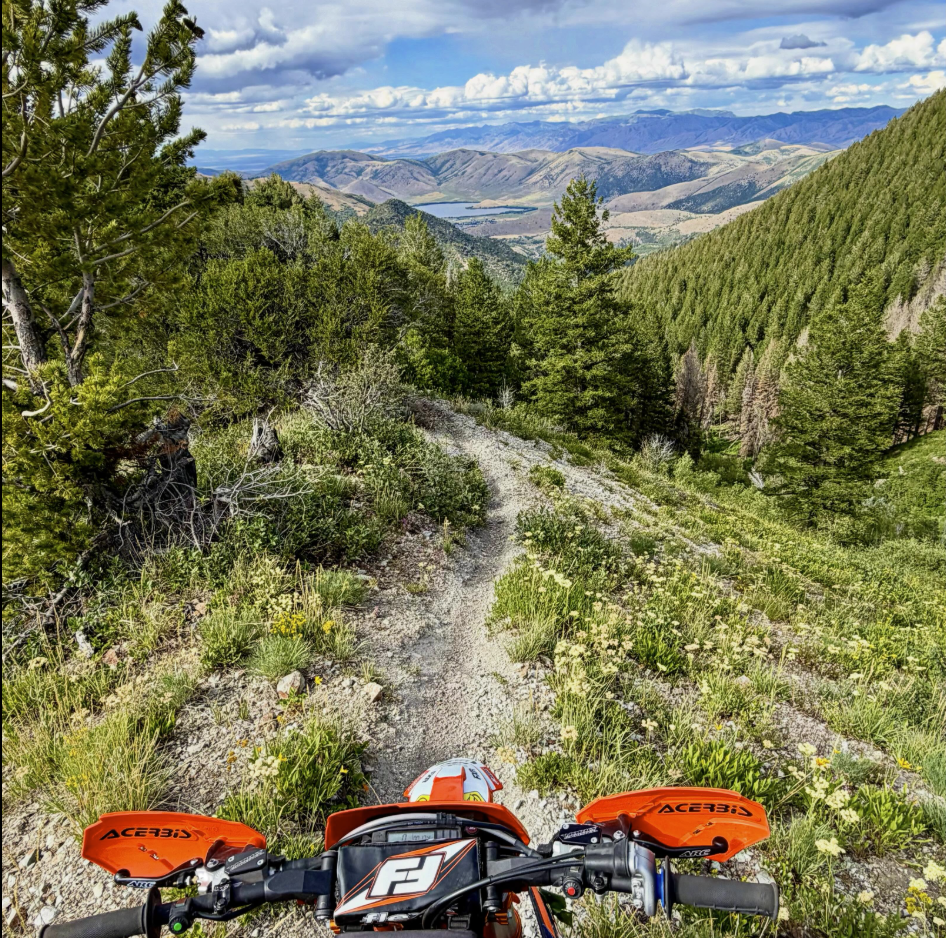
From thirty thousand feet, the land below looks like a patchwork of roads and fields. Each marks a choice someone once made about where to go. Some stretch straight and steady. Others twist through hills or fade out of sight. Together they form a map of movement and direction, a living story of people who kept choosing the next road.
Life feels the same way. The routes change, but the invitation stays the same. Keep moving to find greater meaning.
The most rewarding paths often pass through three places. Serving others, staying curious, and daring to pursue new goals.
Service opens our heart. When we give to something beyond ourselves, our life expands. For the younger generation, it teaches them that purpose grows through generosity and connection. Helping a friend, joining a cause, or showing up for someone who needs encouragement builds an identity rooted in contribution. Later in life, service transforms experience into legacy. It turns lessons into guidance and presence into impact. Every act of service whispers that we still matter.
Curiosity keeps that whisper alive. It invites discovery and reminds us that wonder never expires. For young adults, curiosity shifts attention from comparison to possibility. It fuels creativity and builds resilience (because nobody said it would be easy). For those further down the road, curiosity revives joy. Learning something new, exploring unfamiliar tools, or asking deeper questions renews their spirit.
Big goals complete the trio. Ambition alone can fade, but big dreams shaped by purpose bring hope to life. For the young, bold goals turn uncertainty into motion. For the experienced, they rekindle the thrill of becoming. The thrill of pursuing. Every goal, whether to build, create, teach, or grow, reminds the soul that movement still matters. Hope rises with every goal we dare to pursue.
Many people never take these paths. Fear of failure, fear of embarrassment, fear of losing face…they each build fences where we can hide. Quiet excuses convincing us to play small and call it wisdom.
Fear says, “Stay comfortable.” Curiosity says, “Let’s see what happens.”
When fear wins, both young and old lose sight of their forward motion. The young adult who fears being judged easily drifts into hopelessness. The older adult who hesitates to dream again slips into quiet surrender. The reasons sound different, yet the root feels the same. Fear has taken the wheel. Stagnation and hopelessness follow.
Purpose waits just ahead. It lives in the next act of kindness, the next mystery to be solved, the next dream still worth chasing.
The pathways to a rewarding life have no finish line. Every act of service, every curious step, every daring goal breathes new life into our soul.
When we explore these paths, joy and fulfillment will be our companion.
Photo by Line Kjær on Unsplash – I wonder what’s in the next valley. Let’s go find out.
I recently turned 59. Not the big 60 milestone but knocking on the door. In honor of this “almost-milestone” birthday, here are 59 lessons or truths I’ve picked up along the way that may be helpful for you:
Family is the greatest treasure. I’ve learned this from countless dinners, phone calls, and quiet moments of simply being together.
Love grows when you give it away.
Small kindnesses matter more than big speeches. Holding a door, writing a note, or showing up means more than most people will admit.
A campfire has a way of pulling people closer. Some of our best conversations happened with smoke in our face and stars overhead.
Walks in the woods teach patience. The trail never hurries, but it always leads you somewhere good, even if the trail leads back to where you started.
Listening is often better than speaking.
Start, even if you don’t know the finish line.
Forgiveness frees the forgiver.
Work hard, but not so hard you miss the laughter at the dinner table. That laughter is life fuel.
Friendships need tending like gardens.
A calm mind shapes a calm day. How you manage your thoughts sets the tone for how you live, not just how you lead.
Prayer steadies shaky ground.
Scars are inevitable but can become footholds.
Your children and grandchildren remember the times you kept your word. Integrity is how love earns trust over a lifetime.
Music can heal a weary spirit.
Laughter with grandchildren is holy ground. Even the silliest joke can create amazing memories.
Take pictures but also put your phone down.
The best conversations happen unplanned, often on the way to somewhere else.
God shows up in ordinary moments.
Start with what you have, not what you lack.
Be quick to encourage. A word of encouragement can feel like oxygen to someone gasping for air.
Time with your spouse is the best investment you’ll ever make.
A sunrise reminds us the story isn’t over.
Be generous with money, with time, and with grace.
Don’t underestimate a good meal shared…even a bad meal shared.
Patience is a form of love.
Read good books slowly. And read them aloud. I’ll never forget the nights of reading Harry Potter chapters to my kids, one voice carrying us all to another world.
Children teach us as much as we teach them.
A soft answer turns away wrath.
Slow down for sunsets.
Stay curious, even at 59.
Hold babies gently, but often.
Let go of what you can’t control.
Keep your promises, even the small ones. If you can’t be trusted in the little things, no one will trust you with the big ones.
Coffee or a meal with a friend beats any meeting.
Rest is productive.
Gratitude doesn’t just brighten the day. It multiplies joy in ways you can’t measure. It shifts ordinary moments into holy ones.
The journey matters more than the finish line.
Never be too proud to say, “I was wrong.” Or “I don’t know.”
Faith isn’t about knowing all the answers.
Celebrate progress, not perfection.
Trails are better with company. I’ve seen some of the deepest conversations unfold at mile three.
Be the first to say “thank you.”
Find work you believe in, but don’t let it define you.
Love is the legacy worth leaving.
Don’t compare. Contentment is wealth.
Your words can build or break. Choose to build. Always.
A long hug can mend a broken heart. I’ve felt that healing in the arms of family.
Keep learning, keep growing. Continuous improvement matters. Even the smallest step forward is still forward.
Tradition ties generations together, especially if that tradition involves an old family recipe that takes hours and lots of teamwork to make.
Tell stories. Your family needs them. Stories pass down more than facts. They carry history and identity.
Choose wonder over cynicism.
You can’t outgive God, but you can follow His example.
Every season has its beauty. Even Oklahoma summers with their heat and humidity have sunsets worth pausing for (clearly I appreciate sunrises and sunsets).
Be present. Tomorrow isn’t promised.
Family trust is sacred. Break it once, and it may never return the same. Protect it as carefully as you protect your home.
Celebrate the small wins. A child’s smile, a project finished, or a quiet evening with family. Cherish these moments.
Joy often hides in the small, ordinary things.
Life is a gift. At every age, unwrap it with wonder.
4 Bonus Lessons (which means I came up with four more that I didn’t want to exclude)
Adapt or be left behind. If you’re the best buggy whip maker, prepare to adapt when automobiles come out. Don’t cling to the past so tightly that you miss the future.
The quiet miracle of savings and compound interest. Einstein was right. Compound interest is the most amazing thing. Steadily and quietly setting aside a portion of your income builds your wealth over time. It also provides peace of mind and freedom for your future self.
Learn outside your lane. Take time to study things that don’t seem connected to your work. The most important lessons often come from entirely different fields.
Travel opens two windows. When you visit a new country, you learn about their culture, their food, their people. But you also return seeing your own home differently…with gratitude, with perspective, and with fresh eyes.
Tim Ferris has a weekly newsletter – 5 Bullet Friday. In last Friday’s update, he highlighted a quote from The Way to Love, by Anthony de Mello. This post isn’t related to that quote (although it could be). It’s based on the rabbit hole I dove into, reading other parts of the book. Right out of the gate, de Mello offers a short parable that’s simple at first glance but goes deeper the longer you sit with it.
“A group of tourists sits on a bus that is passing through gorgeously beautiful country, lakes and mountains and green fields and rivers. But the shades of the bus are pulled down. They don’t have the slightest idea of what lies beyond the windows of the bus. All the time of their journey is spent in squabbling over who will have the seat of honor in the bus, who will be applauded, who will be well considered. And so they remain until the journey’s end.”
It’s not a long parable, but it says a lot.
We are each on this ride. This one journey through life. And all around us is beauty: the people we love, small joys, the smell of fresh rain, a child’s laughter, songbirds chirping right outside our window, the warmth of a good cup of coffee in the morning.
But our shades are down. We don’t see any beauty, because we’re too busy with things that don’t matter.
We’re measuring. Comparing. Ranking. Arguing about position, prestige, attention. Scrolling, reacting. Meanwhile, the scenery goes by. Gorgeous, wild, and fleeting. We barely glance out the window.
What struck me about de Mello’s story wasn’t the travelers’ arguments. It’s the view that was always there. The view never stopped being beautiful. The issue wasn’t the lack of beauty. The issue was where they were looking.
This parable is a quiet reminder to lift the shade. To let in the light. To remember that it’s not about getting the “best seat on the bus.” It’s about not missing the view.
So today, maybe take a breath. Look around. Listen a little longer. Smile at someone. Appreciate a small thing that usually passes by unnoticed.
Another of de Mello’s insights that’s in line with his parable:
“The most difficult thing in the world is to listen, to see. We don’t want to look, because if we do, we may change. We don’t want to look, because we may discover that the world is not what we thought it was.”
Sometimes the shades stay down not because we’re distracted, but because we’re afraid. If we truly see what matters, we might have to stop chasing things that don’t. We might have to let go of the version of ourselves that depends on being applauded or admired or seen in a certain way.
But what if that’s the invitation? Not to force ourselves to change, but to wake up to what’s real in our lives. To notice the world again. To feel the wonder again.
The awareness de Mello points to is freeing, like the child’s creativity in my previous post.
It’s the kind of awareness that reminds us we’re not stuck in the noise unless we choose to be. We can pull up the shade. We can look.
Because the ride is short. The view is worth seeing.
And in that beauty, we can see we are never really far from joy.
When you watch a five-year-old, a ten-year-old, even a twelve-year-old create, you see what unfettered creative freedom really looks like. Whether it’s a drawing, a Lego tower, or a clay sculpture, they throw themselves into the process with joyous abandon. In their mind, they can see clearly what they’re making. They know why they’re making it. And there’s almost always a story behind it.
They aren’t self-conscious. They aren’t trying to impress anyone. Sure, they like to show their creations to parents, grandparents, and teachers. But their motivation isn’t just about approval. It’s about expression.
Most children are free from the baggage of expectation. They don’t wonder if what they’re making is good enough. And when they finish, they move right on to the next thing. Their self-worth isn’t tied to the outcome. The value of the work comes from their own perspective, not from what others think.
But around age thirteen (sometimes earlier) things change.
After years of chasing approval, learning the “right” way to do things, being graded and corrected by well-meaning adults, something fundamental happens. Their freedom to create without judgment slowly gets buried. Doubt takes root. Worry about what others might think starts to shape their process. Fear of looking foolish holds them back.
And as the years pass, it only gets worse.
Tell someone you’re going to take up oil painting, stained glass, sculpture, or any new creative pursuit as an adult, and they’ll likely have two reactions: a polite smile of encouragement, and quiet skepticism that anything worthwhile will ever come of it.
Starting something creative as an adult feels strange. It’s outside the bounds of what “normal” people do. It’s far easier to stay in line, avoid looking foolish, and sidestep the discomfort of being a beginner again.
But we are all beginners at birth. Even the rare prodigies had to take their first step (the one that happens long before we see the gifted 5-year-old who can play a piano concerto). For the rest of us, every new skill—whether it’s creative, practical, or professional—requires courage, repetition, failure, and patience.
I’ve learned that when I let go of expectations (not easy) and stop worrying about looking foolish (also not easy), the magic happens. With this new frame of reference, trying something new, something creative, or something unfamiliar, brings a new energy having nothing to do with the outcomes.
It doesn’t seek approval or chase productivity. It simply opens the door to wonder—something we often unlearn as we grow older.
I’m lucky. I get to spend time with my grandchildren, who remind me what fearless creativity looks like. They show me that learning and creating, and the fun we have along the way, are all that matters.
There was a time I made a big leap “out the window.” I walked away from something I thought I had to escape. I didn’t have a detailed plan, just a deep sense that staying where I was would burn me out.
What I should have realized at the time was that while I was escaping one fire, I was just trading for another.
That’s the thing about decisions. They rarely come with clarity. They come wrapped in burdens and hope and urgency, all dressed up to look like certainty. But certainty is often just a story we tell ourselves to keep moving.
I’ve gone back and questioned plenty of decisions. I’ve hit pause, looked around, and asked, “Was that the right thing to do?”
Sometimes the answer is no. And that’s okay.
I’ve made wrong turns. I’ve said yes when I shouldn’t have. I’ve said no when I was afraid. But here’s something I’ve learned the hard way: wrong turns can still move us forward. Even the “mistakes” taught me something. Sometimes they were the only way I could learn the lessons I needed to learn.
Side note: If you can learn from watching someone else’s journey, that’s often preferable to taking the hard knocks that accompany most of the big lessons in life.
The truth is, not every decision will hold up to hindsight. And not every success will look like success right away. Some answers show themselves slowly. They show up only after struggle, reflection, and time. They need hardship to help them mature. Sometimes they even need failure.
I’m lucky. Along the way, there were people who didn’t try to fix me. They just stood with me while I figured it out. They gave me space to question, to re-route, to second guess. That kind of support is rare. And I’m grateful.
To those people: thank you. You helped me see what I wasn’t ready to see. You let me grow into the answers I didn’t even know I was seeking.
These days, I’ve learned to forgive myself for the detours. For the second thoughts. For the “what ifs” I’ll probably carry forever. I’ve changed my mind, more than once. With every shift, I’ve learned to find moments of peace.
Here’s the point: Maybe wandering is the way.
Wisdom doesn’t show up all at once. It grows, shifts, even contradicts itself. Sometimes it stumbles. Sometimes it starts over.
One thing I know for sure: What I thought I knew was only the beginning.
You must be logged in to post a comment.