The Stories Behind the Results

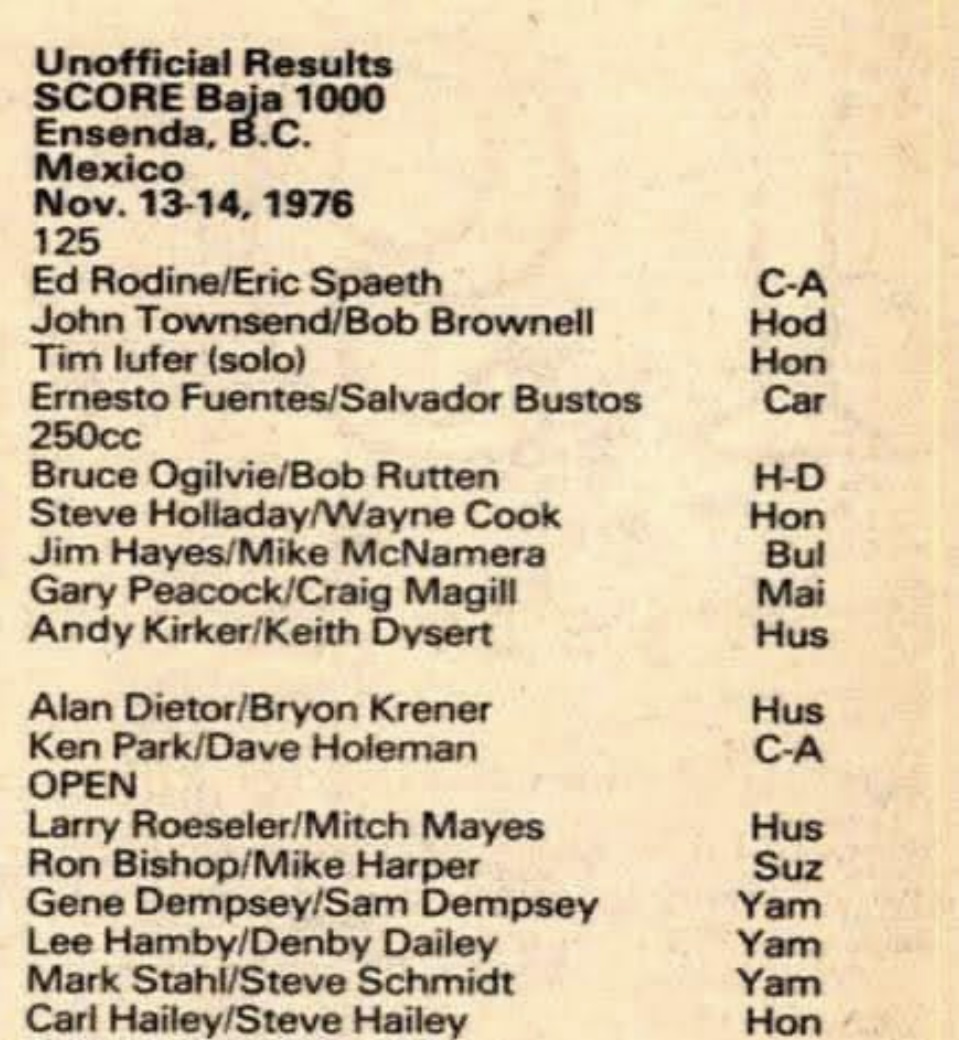
A few days ago, someone posted a results sheet from the November 1976 Baja 1000.

The page was filled with names I recognized. Many went on to become legends in off-road racing. But two names, in particular, caught my attention.

Lee Hamby and Denby Dailey.

Denby is my uncle, and Lee was his co-rider. Together, they finished fourth in the Open motorcycle class on a Yamaha…a TT 500.

The result is clean and simple.

Two names. A motorcycle. A finishing position.

Fifty years later, that’s what remains on the page.

But I know some of the stories behind that result.

The week of the race, torrential rains hit Baja. Ensenada flooded. At the time, race vehicles were placed in an impound area after tech inspection so teams couldn’t make further modifications before the start.

That year, the impound area flooded.

Riders and crews had to wade into the water, pull out their motorcycles, assess the damage, and get them running again. Before the race had even begun, they were already rescuing their equipment and solving problems they could never have anticipated.

And the flooded impound yard was only the beginning.

My parents were there as part of the support team for Denby and Lee. They spent the race trying to reach pit areas, carrying fuel and supplies, and trying to be ready when the motorcycle arrived.

Their stories were filled with floods, pouring rain, mud, washed-out roads, close calls, and long hours trying to move through Baja while the race continued around them.

I heard the stories many times growing up.

We traveled to Baja to support other races through the late 70s, 80s, 90s, and 00s. Every now and then, while driving one of those roads or waiting at a pit, a story from the ’76 race would come up.

One person would talk about the rain.

Someone else would remember pulling out that van that had flopped over on its side, blocking the only way in and out of a pit area.

Another would remember a river crossing, a mechanical problem, or a moment when it seemed unlikely that anyone would make it to the next pit.

That’s the thing about a race like the Baja 1000. There’s never just one story.

The racers are focused on the course in front of them. They’re watching the terrain, listening to the motorcycle, managing fatigue, and trying to complete their part of the race.

Meanwhile, the pit crew is living a completely different race.

They’re navigating highways and back roads, hauling tools and fuel, finding remote locations, improvising when plans fall apart, and trying to arrive before the racers.

The riders rarely know what the pit crew is going through. The pit crew rarely knows what’s happening to the riders.

Yet they’re all part of the same team, working toward the same goal.

Each person is carrying a different piece of the effort. Each is solving problems the others may never see. Each is building a collection of memories while remaining focused on their next task.

Only afterward does the full story begin to emerge.

The racers finish. The crew gathers. The urgency fades.

Someone finds a shower. The grime starts to wash away. Cuts and bruises are finally noticed. A meal appears. Many beverages are opened.

Then the stories begin.

Did you make it past that washed-out road before they closed it?

How did you get the bike running?

What happened at that river crossing?

You did what?

Only then can everyone begin to understand what the others endured. Only then can the team see the full depth of what they accomplished together.

And if they’re lucky, the racers may receive a trophy and a small check that hardly covers the cost of the fuel burned during the race.

The official result still looks simple. Fourth place.

It says nothing about the mud, the darkness, the fatigue, or the danger.

Nothing about the parents, spouses, friends, mechanics, and volunteers racing from one remote pit to another.

Nothing about the separate struggles that came together to produce that one clean line on a page.

Seeing that results sheet nearly fifty years later brought back more than a racing memory.

My parents have passed away. My Uncle Denby died last year. Lee is still with us, but I haven’t seen or spoken with him in more than a decade.

The people who lived that story are slowly disappearing.

But their story remains.

It remains in the photo Lee’s son, Scott, shared. Racers in their prime, doing what they loved and doing it well.

They couldn’t have known that half a century later, someone would look at those images alongside a yellowed results sheet and remember everything that page could never contain.

We spend much of our lives pursuing results that may someday look just as simple.

A name. A date. A title.

A finished project. A successful deal. A race result.

The record preserves the outcome, but it misses most of the story.

It leaves out the people carrying unseen burdens. The problems that were solved against all odds. The risks taken without fully realizing them. The exhaustion, improvisation, fear, laughter, camaraderie, and relief.

Fifty years later, the results fit neatly on a single page.

But oh, the stories they could tell.

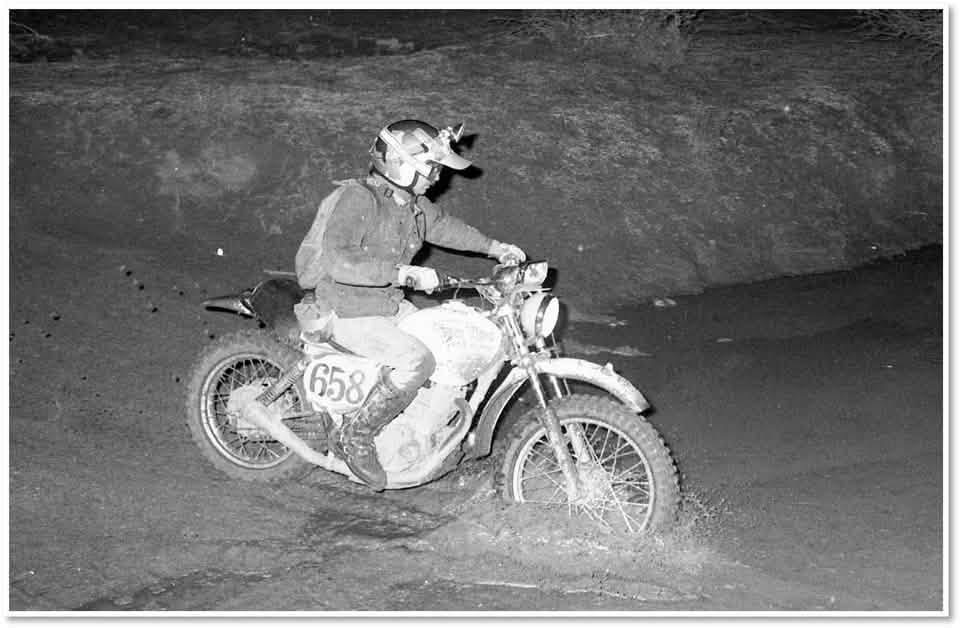
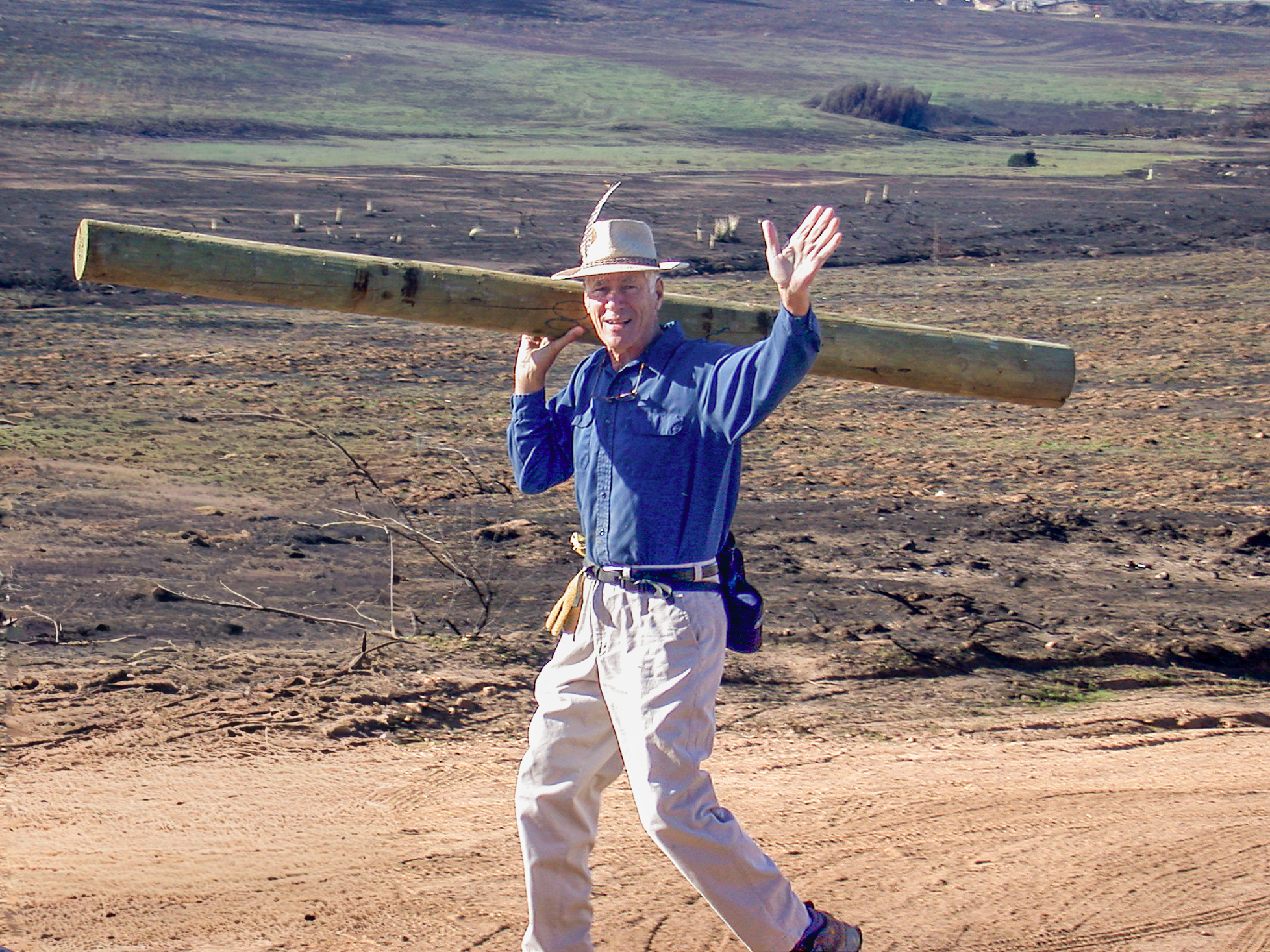
That’s Uncle Denby at a water crossing, probably before sunrise. Notice the small headlight, maybe 8 inches of travel in the shocks, and a battery-powered headlamp on his helmet. I think that was powered by a big cube-shaped lantern battery in his backpack.

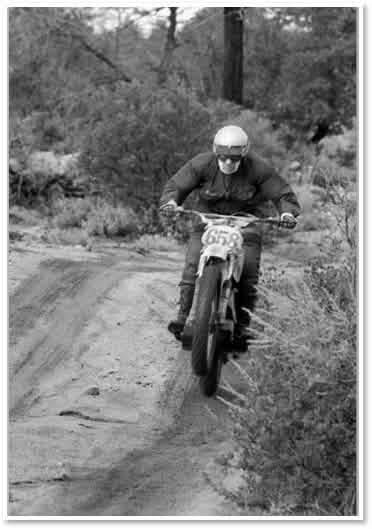
That’s Lee looking smooth!

Hand in Hand in Gonzaga Bay

It was 1985.

We were driving south in my parents’ Toyota 4×4, following them along the bumpy, rocky dirt roads of Baja toward Gonzaga Bay.

The girl who would become the love of my life was sitting beside me. She’d known me for only about six weeks. Still, she said yes.

Yes to Baja. Yes to the road less traveled. Yes to the unknown

Always a quiet adventurer.

Dust hung in the air. Our windows were down. The Beach Boys played on the stereo as the long road unfolded mile after mile.

We warmed ourselves in the sand and swayed together in our neighbor’s hammock. We snorkeled just offshore and rode the small swells that rolled into the bay most afternoons.

Time felt generous.

Under the moonlight, we walked hand in hand, just the two of us and that beautiful bay.

I knew then what I know today.

She is the woman of my dreams.

I’ve been blessed to live this dream with her every day since.

She’s my loving wife, the mother of our two beautiful and caring daughters, and Grandma to our nine amazing grandchildren.

And always, The Finest Gift.

Some places hold a moment from your life. Others hold a truth you’ll carry forever.

Tomorrow, we’ll celebrate thirty-eight years of marriage.

Through every challenge we’ve faced and every joy we’ve shared, our lives have been joined as one.

The life we’ve built, the family we love, and the road we’re still traveling have become our shared story, woven together and sustained by the grace of God.

This memory came rushing back as I listened to Dennis Doyle sing “Connemara Bay.” He was singing about a place in Ireland, but I was transported to Gonzaga Bay.

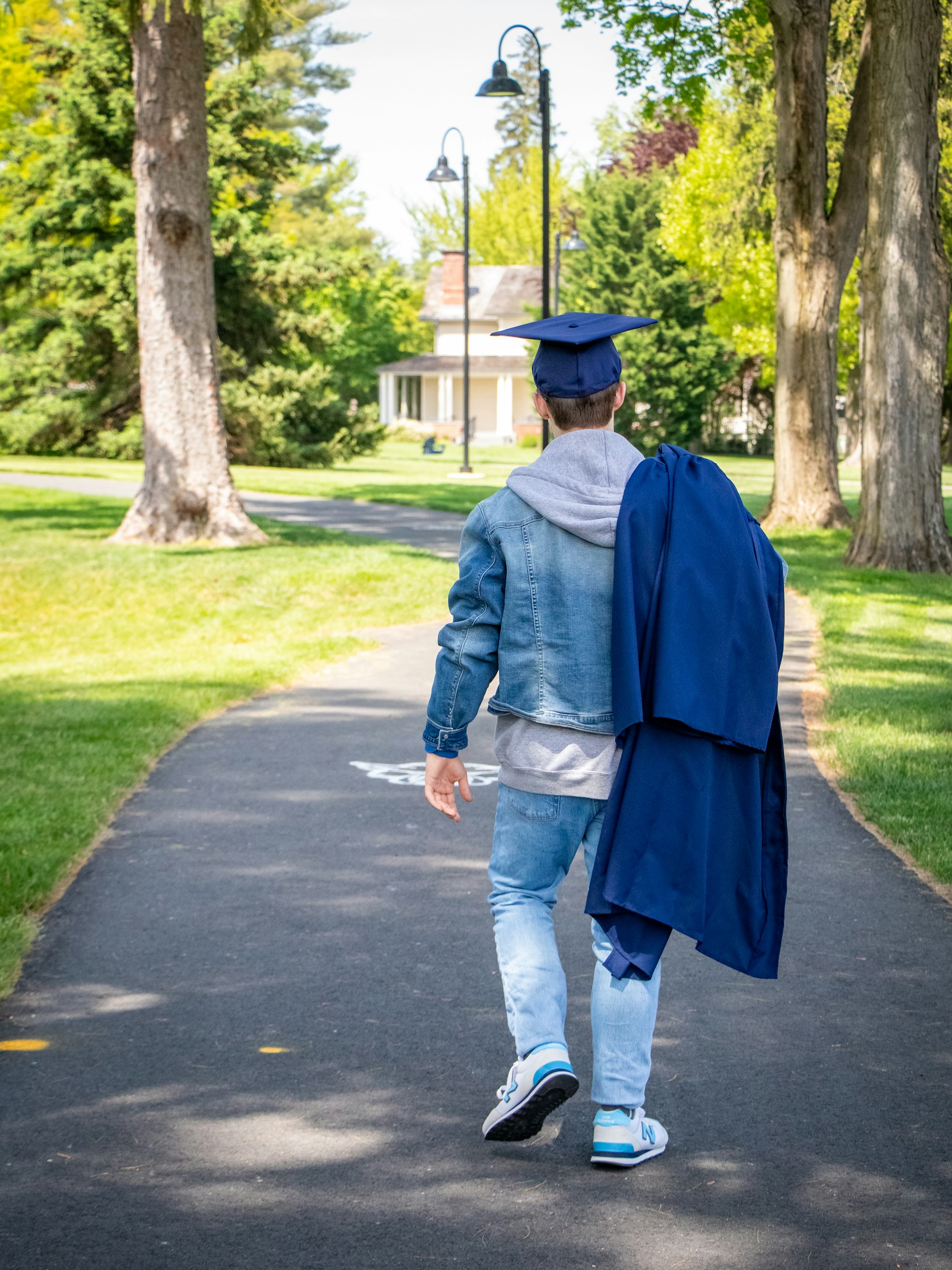
Photo by Mks Mkss on Unsplash

You’re Not Choosing Your Whole Life This Year – A Graduation Message

Graduation has a way of making ordinary questions feel enormous.

What are you going to do next? Where are you going to school? What trade are you going into? Where are you going to work? What are you going to do with your life?

That last question is the one that sneaks into our subconscious. It turns our celebration into a test. It makes a young person feel like their next decision carries the weight of the next fifty years.

Trust me. It doesn’t.

You’re not choosing your whole life this year. You’re choosing the next step.

That next step still deserves careful thought. Some choices will open doors; others will close them…and some will make the road harder than it needs to be.

But don’t hand this one decision more power than it deserves.

Your first job isn’t a life sentence. Your major isn’t your permanent identity. Your first trade, internship, military assignment, certification, apprenticeship, or business idea marks where the road begins, not where it ends.

Most lives travel roads we couldn’t have mapped in advance. One small opportunity today may connect you to a person who changes your direction entirely. One ordinary job may teach you something that becomes useful ten years later. A disappointment may save you from staying on the wrong road for too long.

You may move around. You might take a job that makes sense now and later discover it doesn’t fit who you are or what your life requires. Your priorities will change. The economy will change. A job can be a great opportunity, but it is rarely a lifetime guarantee.

Employers may invest in you when you serve their needs and (fairly or unfairly) move on when they believe you no longer do. Doors may close for reasons having little to do with your effort or character. That doesn’t mean you failed. It means you’re living in a world that keeps moving. Knowing that can help you walk into each opportunity with your eyes open.

Character, hard work, and skills all carry weight, but many opportunities come through people. The people who trust you, teach you, recommend you, challenge you, and remember how you treated them may influence your future in ways no resume ever could.

Build your life on something stronger than the assumption that one company, one industry, one credential, or one carefully written plan will carry you safely from here to retirement.

Learn how to add value. That phrase sounds like a business platitude, but strip away the jargon and it’s the oldest human question. Can people count on you for something real?

Can you solve a problem? Can you make something better? Can you be trusted with responsibility? Can you communicate clearly? Can you tell the truth when it would be easier to hide? Can you learn something new without treating the need to learn as an insult?

Can you help the people around you succeed? Can you walk into a messy situation and leave it better than you found it?

People who can do these things will usually find a way forward. Maybe not on the exact timeline they imagined. But useful, trustworthy, curious, steady people tend to create options for themselves over time.

Graduates hear a lot about jobs, majors, trades, degrees, salaries, and careers. All are serious things, and they deserve real thought. It’s good to learn skills. It’s good to earn your living and eventually support a family if that becomes part of your life. It’s good to contribute useful work to the world.

But your career isn’t your whole life.

A great resume with a lonely heart is still a lonely life. A strong paycheck with shallow relationships won’t feel as rich as you think it will.

A respected title can’t sit with you at the kitchen table. It won’t laugh with you around a campfire. It can’t pray for you, forgive you, challenge you, remember old stories with you, or show up when things are going wrong.

Much of your deepest joy will come from the relationships you cultivate. The people you love. The people who love you. The friends who walk with you. The family you stay connected to. The conversations you remember years later. The long drives. The late night talks.

The unexpected kindness. The forgiveness given and received.

By the time you graduate, you may already know some of the people who will still be part of your life fifty years from now. You won’t know which ones yet. Some will drift away. Some will surprise you and stay.

And after graduation, you’ll meet more. Pay attention. One may become your spouse. Some will teach you. Some will test you. Some will need your help. Some may help save you from yourself.

The world will ask what you do. But life will eventually ask better questions.

Who do you love? Who can count on you? Who tells you the truth? Who do you encourage? Who do you forgive? Who have you helped carry a burden they couldn’t carry alone? What are you doing with your soul?

These questions will stay with you long after the name of your first employer has faded into the background.

Choose the school, the job, the trade, the service path, or the next assignment with as much wisdom as you can gather. Ask questions. Do research. Talk to people who have walked farther down the road.

Listen to your parents, even when you think they don’t fully understand the world you’re entering. They may not understand every tool or pressure you face, but they know more than you think about disappointment, responsibility, sacrifice, and love.

Then move.

Do the work in front of you. Show up on time (which is 15 minutes early). Tell the truth. Be easy to trust. Learn the tools. Respect the people. Ask better questions. Pay attention to what gives you energy and what drains it. Notice where your abilities meet someone else’s needs. Be willing to change direction without turning that change into a personal crisis.

A wise life is rarely built from one perfect decision made at eighteen or twenty-two. It’s built from thousands of smaller decisions made over time. Some will be mistakes and that’s part of the deal.

The goal isn’t to live without mistakes. It’s to tell the truth when they happen, learn what they have to teach, repair what you can, and keep walking with a little more knowledge than before.

Graduation is worth celebrating. You finished something difficult, and finishing should be honored. Enjoy the moment. Thank the people who helped you get here.

Then take a deep breath.

You don’t have to solve your whole life before the celebration is over. You won’t know every turn, every job, every friendship, every disappointment, or every joy waiting along the way.

You have enough to take the next step with care, humility, gratitude, and hope, trusting that life will teach you more as you walk.

Photo by Carson Vara on Unsplash

Pursuing Tranquility of Order

Peace is often defined as the absence of something.

The absence of conflict. The absence of noise. The absence of pressure. The absence of the next problem.

But peace is less about absence and more about order.

I recently heard peace described as tranquility of order, a phrase with roots going back to Augustine. In City of God, he wrote that “the peace of all things is the tranquility of order.”

This doesn’t suggest that peace only arrives when every problem has been solved, every relationship has been repaired, every task has been completed, and every loose end has been tied off.

That version of peace is impossible to sustain.

Life keeps moving. There’s always another hurdle to clear, another obstacle to navigate, another decision to make, another issue waiting around the corner. Just when we think things are finally settling down, something changes.

The pursuit of peace isn’t the pursuit of a trouble-free life.

It’s the pursuit of a rightly ordered life.

Priorities in the right order. Relationships in the right order. Responsibilities in the right order. Ambition in the right order. Rest in the right order. Attention in the right order.

That kind of peace doesn’t just happen to us.

We create it when we decide what deserves our attention and what doesn’t.

We create it when we stop letting every urgent thing pretend to be the most important thing.

We create it when we clean up a workspace, finish a lingering obligation, repair a strained conversation, or finally admit that something has been taking up more room in our life than it deserves.

We create it when we make the next good decision, even when everything around us is still imperfect.

I’ve always found real satisfaction in this kind of work. A confused or stalled project. A messy process. A cluttered schedule. A team that needs direction. A home project waiting for the right next step. A piece of land slowly shaped into something useful and beautiful.

There’s something deeply rewarding about creating enough order for people to breathe again.

That doesn’t mean controlling everything. In fact, the best kind of order often requires us to hold things loosely, leaving room for the unexpected, and trusting that people, plans, and possibilities are better tended than controlled.

Order, at its best, creates room for life.

It clears enough space for thought. It creates enough structure for trust to build. It gives people enough confidence to move. It helps us see what belongs, what doesn’t, and what needs attention next.

And then, occasionally, we experience it.

A quiet morning. A settled room. A finished project. A table full of people we love. A trail cleared through the woods. A plan that starts to come together. A day where the pieces seem to fit, even if only for a while.

Those moments may not last forever, but they remind us what we’re aiming for.

Pursuing tranquility of order is the steady work of arranging our lives around what is good, true, useful, loving, and worth carrying.

When life feels too overwhelming to arrange all at once, we can start small. The next right step, the next honest action. The next one thing that brings even a corner of our life back into order.

We won’t always get it right.

There will always be disruptions. There will always be pressure. There will always be something that knocks our papers off the desk just after we get them stacked.

But we can keep returning to order.

We can return to our priorities. We can return to our responsibilities. We can return to the people we love. We can return to the work that has been entrusted to us. We can return to the kind of person we’re trying to be.

Peace isn’t found by escaping the noise.

It’s built, little by little, when we keep putting the most important things back where they belong.

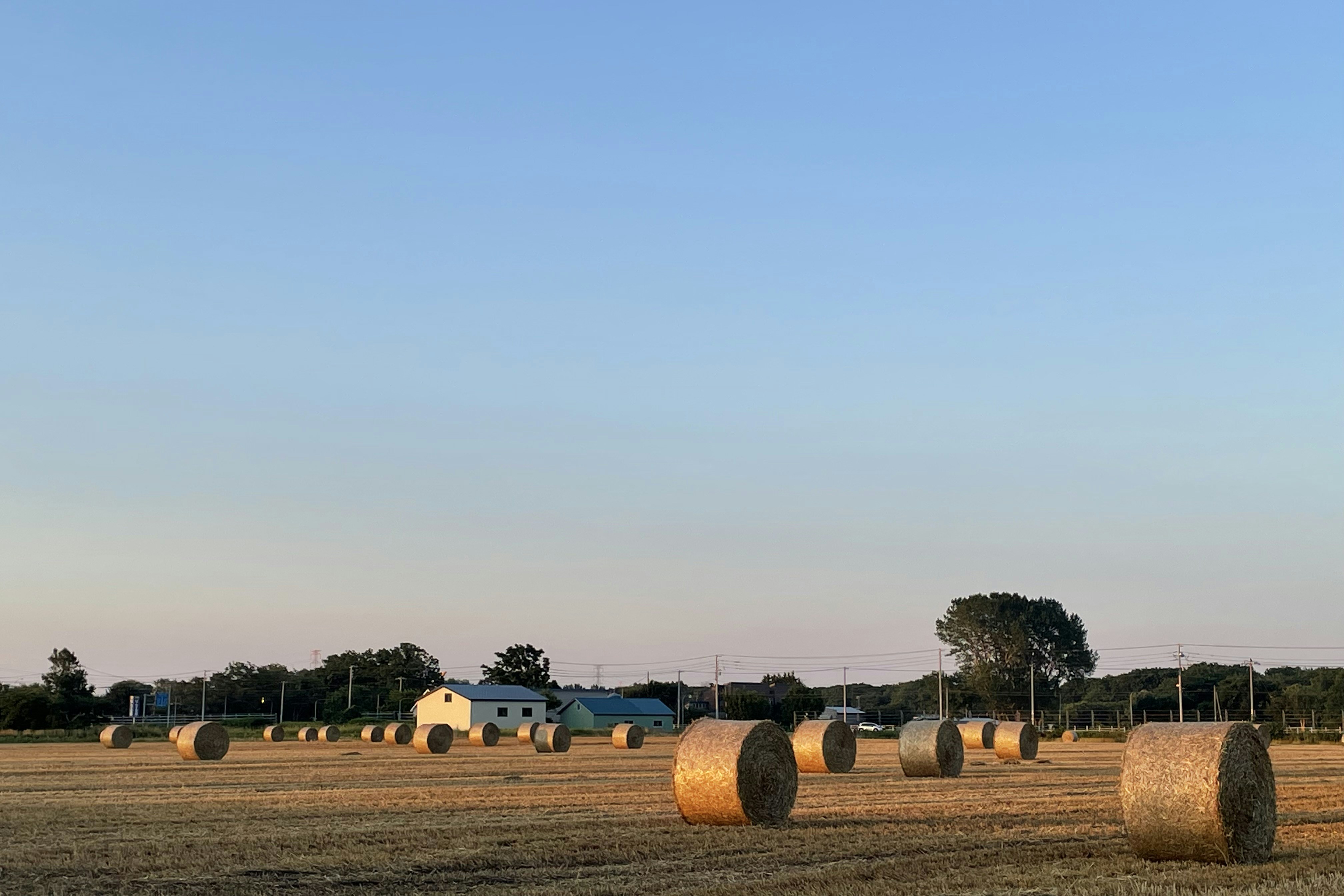
Photo by AO NURA on Unsplash – There’s more to this peaceful image than it appears. Growing. Cutting. Drying. Raking. Baling. Each step in its right order. Each making the next possible, leading to this image. The work isn’t finished. Those bales still need to be moved and stored.

But we can enjoy this. The proper order. A moment of tranquility.

For Uncle Lou

Uncle Lou lived a life that, on paper, sounds larger than life.

He was a thoracic surgeon who quite literally saved lives on a regular basis. He could have filled every family gathering with stories of operating rooms, impossible cases, and professional milestones. But that’s not the way Uncle Lou did things.

Uncle Lou was far more interested in our stories than his own. He wanted to know what we were learning, what we were building, what we were excited about. He led with curiosity and humility when he had every reason to lead with his own accomplishments.

He was a craftsman in the truest sense of the word. One of his hobbies, passion really, was working in his woodshop. His healing hands created fine wood furniture that he mostly gave away to family and friends. We are blessed to have a miniature grandfather clock that he made for us, and a wooden inlaid box that sits on my nightstand.

He was an excellent golfer. I wasn’t good enough to golf in his circle, although I think he may have caught video of me hitting a tee shot backwards once (that’s a story for another time).

I learned how to play a mean air trombone from Uncle Lou. A skill he showed off many times.

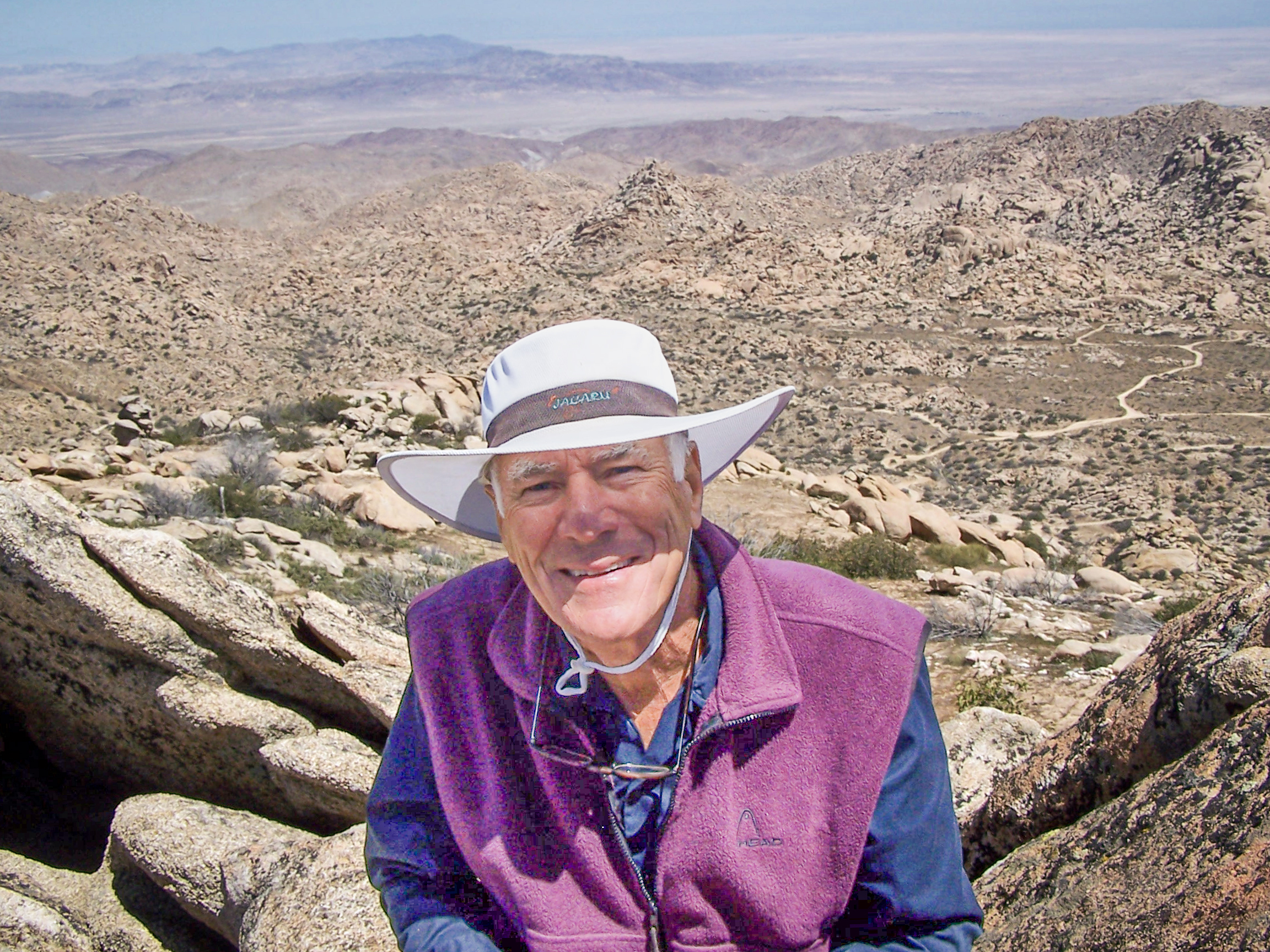
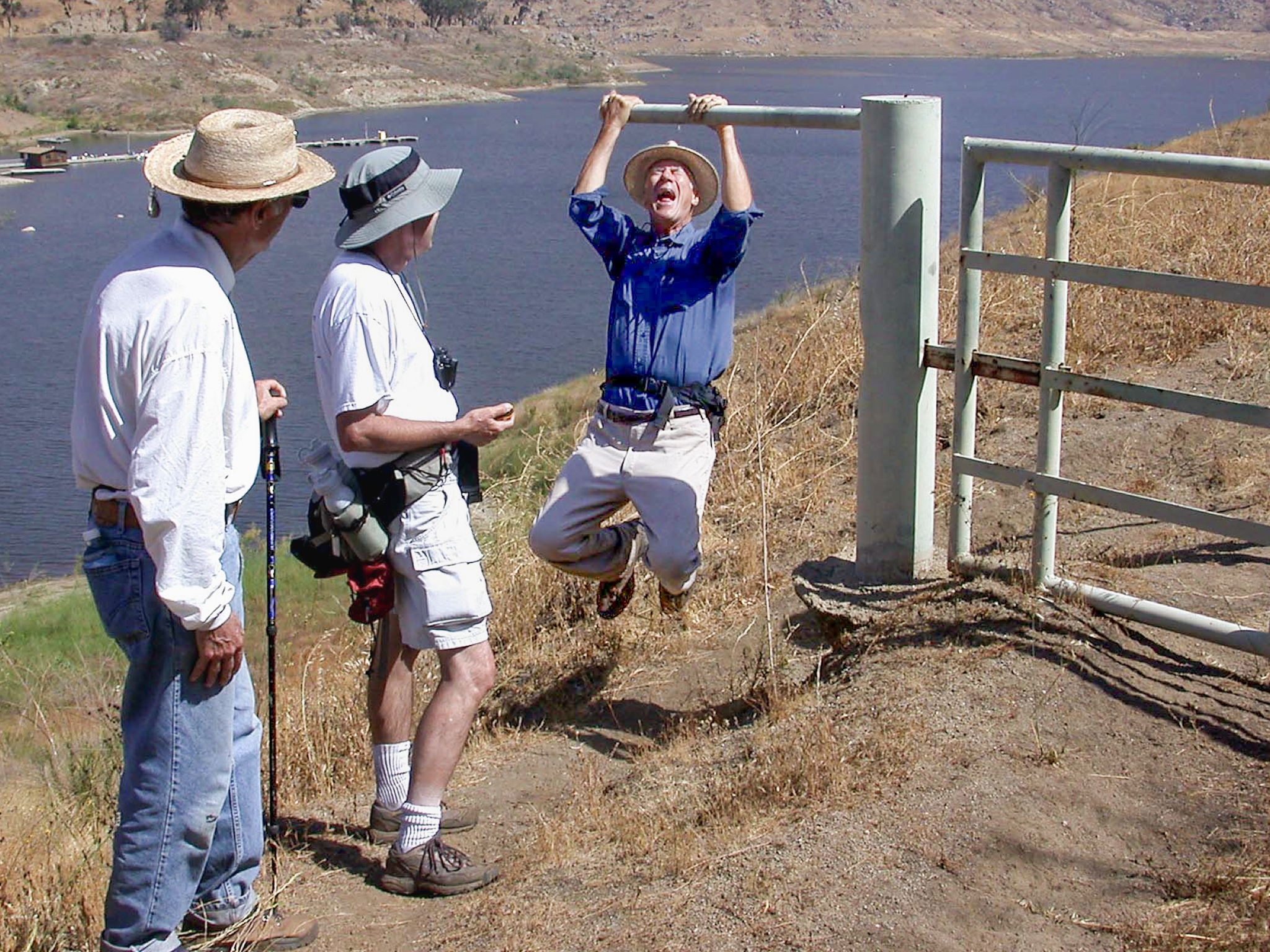
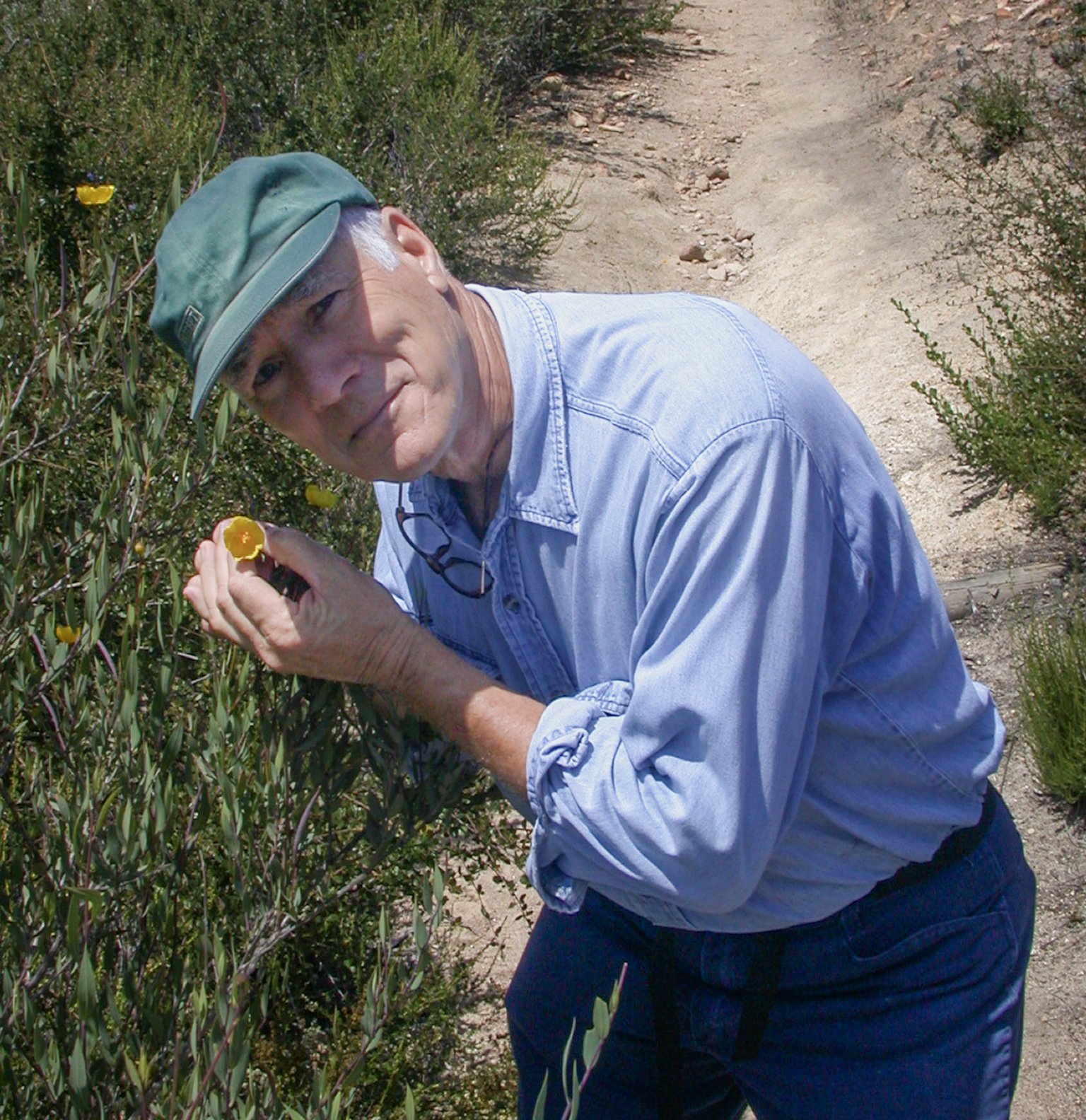
Did I mention that he was an avid hiker? His retiree group, the Kaiser Retired Association of Physicians (KRAP) hiked all over the greater San Diego area. It’s clear that the KRAP group is filled with like-minded super talented, but humble, individuals who get a well-earned kick out of the acronym for their group.

His curiosity never retired. Even as his body slowed in recent years, his mind never did. I remember recent conversations with him about computers, AI technology, and rockets. He approached new ideas the same way he approached everything else…with interest, openness, and the quiet confidence of a lifelong learner. I suspect he was still reading about something new right up until the end.

As I was putting the finishing touches on this post, I realized I had left out one more facet of Uncle Lou’s amazing life. He was also a pilot. He flew his plane far and wide, often to sample the cuisine at a distant airport diner, but always for the simple joy of seeing the world from above. It seems perfectly fitting for someone so curious and alive to experience life from every vantage point. A true Renaissance man if ever I knew one.

Uncle Lou’s legacy isn’t only in the lives he saved, the furniture he built, the miles he hiked, the miles he flew, or the videos he recorded of family moments. He always made you feel you were worthy of his full attention.

Uncle Lou reminds us that a life of great achievement shines even brighter when it’s paired with humility, curiosity, and genuine interest in others.

I’ll miss his wry grin, and that twinkle in his eye that let you know he was a very serious person who didn’t take himself too seriously.

Godspeed, Uncle Lou.

My Friend, Paul

When I heard that my friend Paul was in the hospital and things weren’t looking good, I can’t say I was shocked. When he passed away a few days later, what stayed with me most was the loss of everything he still had ahead of him.

Paul had been in a self-destructive pattern for a while. I recognized it early, having seen something similar play out in my own family years before. Still, knowing the path doesn’t make the ending any easier.

Paul was my brother’s best friend since high school. More than that really…another brother. Like brothers often do, they didn’t agree on everything, but they agreed they were in it together, and that wasn’t going to change.

I first met Paul when he was probably a sophomore or junior in high school. I was home visiting from my freshman year in college. I remember that mullet like it was yesterday. Business up front, party in the back. He wore it with absolute confidence, as if it were the only reasonable hairstyle.

He was quick-witted and cocky, but in a good way. Sure of himself, without yet knowing what his future held. Which, in hindsight, makes him a lot like the rest of us at almost any age.

Paul had a way of knowing everyone. If he didn’t already know you, he would by the end of the day. His personality filled whatever space he walked into. He remembered names after meeting someone once, a gift I’ve always envied. He asked questions, was genuinely curious about people, and he made everyone feel seen. Paul appreciated people, and people felt that.

He was always ready to dive into big ideas and big projects. He liked to say, “I don’t have a stop sign on my chest.” While others talked about racing off-road “someday,” Paul made it real. With my brother and a group of equally committed friends, he jumped headfirst into building and racing a Class 10 buggy.

What did Paul know about off-road fabrication or racing at speed in the desert? Not much. That didn’t stop him. He’d figure it out along the way. Thursday nights in his garage turned into a ritual. Fabricating, wrenching, laughing, getting ready. Lots of Saturdays were spent in the desert testing and tuning, trying to make the car race ready.

My brother was his co-driver, mentor, and probably the unofficial crew chief. I don’t know how many races they finished, maybe one or two, but they often led the first lap and looked great until something small failed. A cheap part. A loose wire. A power steering pump. One tiny thing ending the day.

They were frustrated, but they didn’t quit. Eventually the Class 10 car gave way to a Class 8 truck. Everything got bigger. More horsepower, bigger suspension, more parts, higher speeds. More complexity. More commitment. More Thursdays. More Saturdays. More races.

Paul used to joke that the only things standing between him and winning were experience, capability, and funding. All probably true. Where most people would see that as a reason to stop, Paul saw it as part of the adventure. He believed he’d learn as he went, and he’d have fun doing it.

I was lucky to pit for Paul at a few of his races. But where I really got to see him shine was pitting for Team Honda in Baja and Team Kawasaki in Nevada. I learned that Paul knew the words to every Metallica song, and nearly every other song that came on the radio…rap, country, classic rock. He knew them all.

One Nevada race stands out. We were assigned the first pit of the day, then relocated to be the final pit later the same day. It’s always fun to be able to do two pits in the same day.

We scouted the location the day before. A desolate stretch of desert about 50 miles from the start. We rolled out early from our little motel the next morning in the dark to get set up.

We thought it would be cool to have an official Kawasaki awning over the spot where the bikes would stop for gas and service. It looked great. We forgot one detail. Securing that awning.

As the first rider, a Kawasaki (of course), came rolling in, Paul had the fuel dump can ready. We could fill a tank in about ten seconds. Everything was smooth. Then the desert wind kicked up, and the awning took off, cartwheeling across the landscape in spectacular fashion right as fueling began.

There was nothing to do but keep going. Rider one laughed as he pulled out. Did I mention there was film crew there? They laughed. We laughed. Thirty seconds later, rider two came in and out just as fast.

When we finally went to retrieve the awning that had rolled about a half mile away, we expected wreckage. Instead, it was mostly fine. Scratched, dusty, but intact. At the final pit of the day, we remembered to tie it down.

When I think of Paul, that’s what comes to mind. The sprinkling of chaos. The laughter. The way nothing ever quite went according to plan, and how little that bothered him or any of us. We were having fun together and that’s what mattered.

I’ll miss Paul’s infectious grin, his laugh, and his refusal to wait for perfect conditions. He left too early. But he left us with stories, friendships, and a reminder that life isn’t meant to be watched from the sidelines.

Rest in peace, my friend.

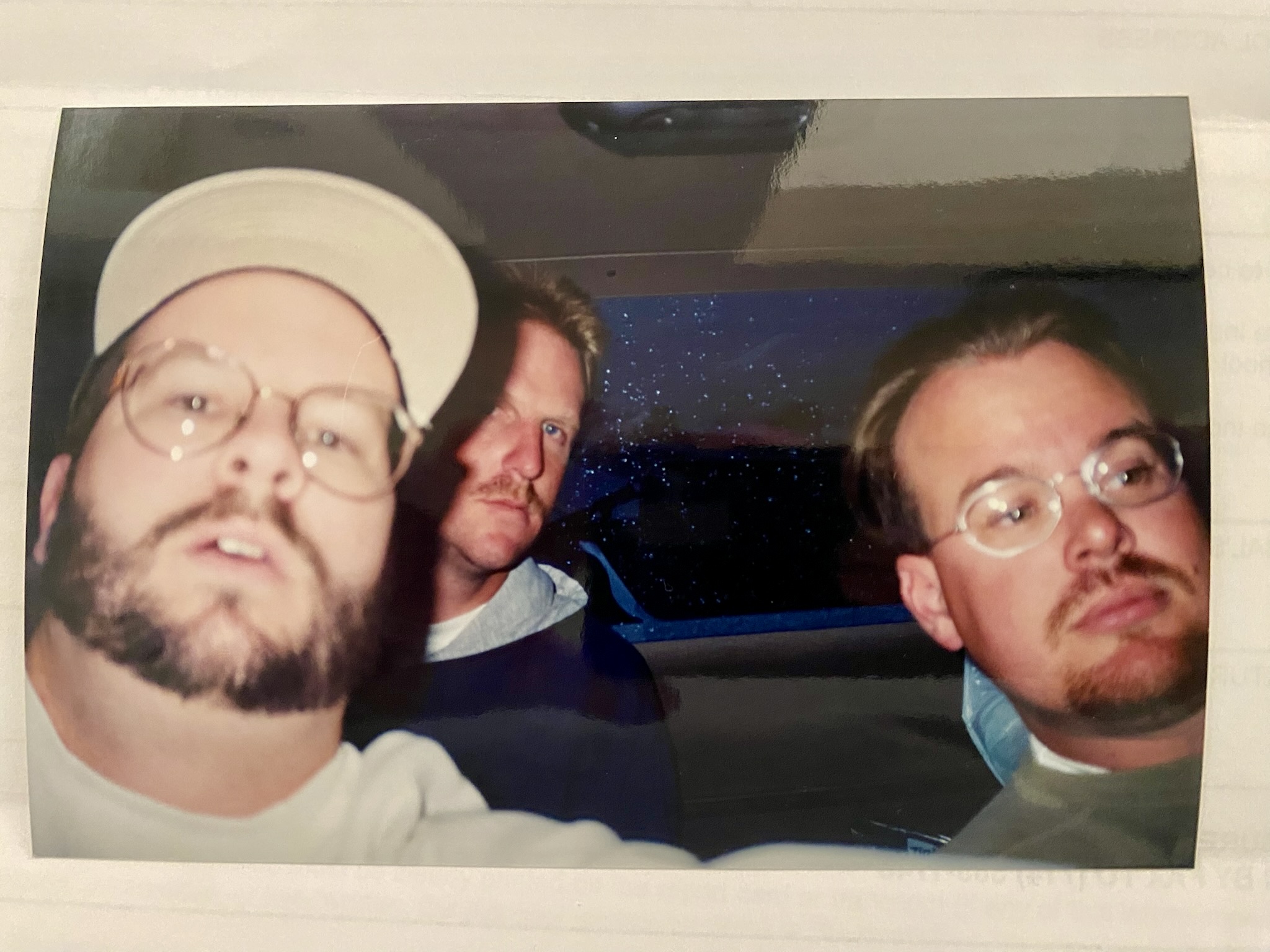
Photo – a selfie back when selfies were taken with film cameras, at least 30 years ago. Three knuckleheads driving to the desert way too early. That’s my brother and I on the left and my brother’s other brother, Paul, on the right. We’ll miss you, Paul.

Words Around Christmas

December turns our words to gold,
Tidings, joy, and peace foretold.
Lights like stars along our eaves,
Hope returns on winter’s leaves.

Forgotten words begin to rise,
Childlike wonder in our eyes.
Tinsel, sleigh bells, candle-glow,
Songs of Christmas we all know.

Jingle bells and sleighs take flight,
Rudolph glows through frosted night.
Elves and workshops, North Pole cheer,
Santa’s laughter draws us near.

Snickerdoodles and mulling spice,
Our kitchen’s warmth feels soft and nice.
Welch cakes, pasties, stories told,
Trimmings bright against the cold.

Village lights and carols ring,
Wishes whispered, children sing.
Holly, ornaments, and good cheer
Mark the turning of the year.

Laughter spills from room to room,
Chasing winter’s early gloom.
A gift is only paper bright
Till love folds edges soft and tight.

Traditions bloom in winter air
When generations gather there.
Past and present intertwined,
Stories passed from heart to mind.

Nutcrackers guard, reindeer in flight,
Stockings, holly, silent night.
Sacred stillness gently kept,
In the hours while we slept.

Speak with warmth in every line,
Merry heart and joy divine.
Let kindness shape the songs we sing,
for Christ is born, our promised King.

Let peace on earth be more than art,
let joy take root in every heart.
Let words become the lives we live,
hope to hold, and grace we give.

For all these phrases loved and dear
return to us but once a year.
They point us toward God’s Word,
the sweetest story ever heard.

Love made its dwelling in the hay,
a Child who gave the world its way.
We speak these golden words because
He came to live His love through us.

Photo by Rafał Danhoffer on Unsplash

Always Improve Your Position

A few days ago, I was listening to Jocko Willink speak about the quiet discipline behind Brazilian jiu-jitsu. I’m not a jiu-jitsu person, but one idea landed for me. It’s a truth I already knew but had never heard spoken so simply:

Always improve your position.

In jiu-jitsu, nothing happens all at once. A submission arrives like lightning, but only to the untrained eye. What looks like a sudden victory is really the final expression of dozens of subtle movements that came before it. A hip shifts. A grip tightens. An elbow gains an inch of space. Most of these moves go unnoticed. Each small adjustment creates a little more room, a little more leverage, a little more advantage.

I’ve always believed real progress works this way. It’s rarely dramatic. It’s quiet and patient. The accumulated effect of showing up, learning something new, adding a bit more care, and preparing a little more than required.

Breakthroughs rarely come from a single moment of inspiration. They come from the quiet work no one sees. The thoughtful practice that sharpens your skills, the trust built over months of ordinary conversations, the time spent learning before making a decision. When opportunity arrives, it looks sudden to others. To you, it feels like the next logical step.

This truth showed up clearly for me after a derecho tore through our property on Father’s Day weekend a few years ago. Ninety-mile-per-hour winds knocked down at least thirty trees across multiple acres. When I walked our land the next morning, everything felt broken and overwhelming. The cleanup looked like a project that would take months. I didn’t have months to devote to it.

But I did have mornings. So, I decided to work for an hour and a half every day before work. I cleared a small section each morning. It was incredibly slow. I dragged branches, cut trunks, chipped debris, split firewood, and made countless trips to our local dump. Small steps, small progress, one morning at a time.

Over the course of a year (maybe more), I worked my way across our entire property. Along the way, I cut in new hiking trails and removed a number of unhealthy trees. What started as a mess became a healthier stand of trees and a network of paths that look like they’ve been here forever.

Out of destruction came a daily habit that changed my life. I still work outside every morning. Clearing brush, trimming trees, expanding trails, building chicken coops, restoring a rustic barn. All in small ninety-minute bites. It’s like a time-lapse video created through countless quiet mornings of small improvements.

The pattern I saw on my land is exactly what Jocko described on the mat. I didn’t need a grand plan or a burst of superhuman effort. I needed to improve my position every day, just by a little.

Improve your position today, even by an inch, and tomorrow becomes easier. Improve it again tomorrow, and the day after that reveals options that didn’t exist before. You don’t need surges of motivation or dramatic reinvention. You only need the willingness to keep moving, always improving.

Careers grow this way. Trust grows this way. Faith deepens this way. Families strengthen this way.

Progress won’t always be linear. Some days distractions will pull us off course, or setbacks will undo work we thought was finished. All of this is part of the journey. Even then, the way forward still comes through small steps. Imperfect, uneven, but the work of always improving our position remains the same.

We improve our position slowly, almost without noticing. That’s enough. Tomorrow, we’ll improve again. Then one day, we’ll find ourselves able to take a step that would have felt impossible a year ago.

Focus on the next inch. The miles will take care of themselves.

Photo by Walter Martin on Unsplash – a great rendition of my early morning work environment for at least a year.

A Parenting Prayer

Parenting is one of the clearest places where faith meets daily life. It calls us to humility, patience, courage, generosity, and the kind of love that stretches us far beyond what we believed we could give.

It invites us to trust God with the people most precious to us, even when the path ahead is uncertain and far beyond our view.

The prayer below is one I’ve been working on for a while. It’s a prayer for parents at every stage of life…those just beginning, and those watching their grown children take their first steps into adulthood. It’s also for those whose children are becoming parents and carrying this calling into a new generation.

It is a reminder that God accompanies us in the noise and the silence, the ordinary and the holy, the days that feel long and the years that pass so quickly.

May this prayer strengthen your heart and deepen your hope as you walk this sacred calling.

A Parenting Prayer

God, please grant me
The wisdom to guide my children with patience, clarity, and love
And the humility to grow alongside them as they grow.
Teach me to choose presence over hurry,
Trust over fear, and connection over control.

Give me the courage to admit when I am wrong
And the grace to show my children that learning never ends,
Not at 7, not at 17, not at 70.

Help me see the world through their eyes,
Eyes that understand wonder,
Eyes that welcome the new with unguarded joy.
Let their curiosity rekindle my own,
So our home becomes a place where questions are celebrated
And imagination roams freely.

Give me integrity in the quiet moments,
When my child is learning from what I do.
Give me a heart strong enough to support them
And gentle enough that they always feel safe coming to me.

Teach me to treasure the small things:
The bedtime stories,
The long drives,
The conversations over tacos,
The ordinary afternoons that turn into lifelong memories.
Remind me that these simple moments
Will matter far more than the schedules we keep
Or the outcomes we chase.

Loving God,
Free me from comparing my family to others.
You did not design my children to fit anyone’s timeline but Yours.
Help me trust the pace of their becoming
And see their strengths even when they are wrapped in struggle.

Guard me from chasing achievements that impress the world
But neglect the souls under my roof.
Let our home be defined by gratitude, peace, and laughter,
With the quiet confidence that love is our foundation.

Help me pass down what truly endures:
Character over perfection,
Kindness over victory,
Service over status,
Gratitude over entitlement.

May the stories I tell, the choices I make,
And the way I show up each day
Become part of the heritage my children carry forward.
Help me become an example worth following,
One who lives with faithfulness, honesty, and a willingness to learn.

Give me strength for the hard times
And calm for the anxious nights.
Give me a long view of parenting,
Seeing not just who my children are today
But who they are becoming by Your grace.

Teach me to listen more than I lecture,
To encourage more than I correct,
And to guide without stifling the person
You created them to be.

Grant me the courage to give responsibility as they mature
And the faith to let them walk their own path,
Even when that path stretches beyond my view.

Lord, may our home reflect Your kingdom,
A place of welcome, forgiveness, generosity, and joy.
Let my children feel seen, valued, and deeply loved,
Not for what they do, but for who they are.

I invite You into every step of this sacred calling.
Walk with me in the noise and the silence,
In the exhaustion and the celebration,
In the days that feel long
And the years that pass too quickly.

Grant me the peace that comes from Your eternal and infinite love,
Now and forever.

Amen.

Photo by Hu Chen on Unsplash

The Day We Visited the Taj Mahal and Never Saw It

There are certain destinations in the world that feel larger than life. The Taj Mahal is one of those places. For many travelers, seeing it with their own eyes is a once-in-a-lifetime moment.

We were finally there. We had made it to Agra. All that remained was to step inside the gates and witness the iconic white marble glowing in the sun.

Only one problem.

There was no sun. There was no white marble. There was no Taj Mahal.

There was only fog.

We woke that morning filled with hope. The rooftop restaurant gave us a commanding view of… absolutely nothing. We stared into a wall of haze, sipping coffee and laughing at the absurdity of our timing. Surely the fog would lift. Surely the Taj Mahal would reveal itself.

Our guide, Kuldeep, assured us everything would be fine. He had led more than 500 tours of the Taj Mahal. He knew everything there was to know about its history and its beauty. We boarded our bus, grabbing our special cloth bags with a picture of the Taj printed on them. These were designed to hold the single water bottle we were allowed to bring inside the property. And we set off with excitement.

Fog. All the way there. Fog in the parking lot. Fog at the security lines. Fog as we walked the long approach toward the main viewing area. Each time Kuldeep stopped to point out an “excellent vantage point,” we nodded with wide eyes, imagining the magnificent structure hidden somewhere in the mist.

We took photos pointing at the picture on our water bottle bags. That was the only Taj Mahal available to us from any vantage point.

As we walked toward the building, we eventually reached the outer wall and finally saw something. White marble appeared just a few feet above our heads. Then the stone vanished again into the haze. The grand dome. The sweeping arches. The delicate inlays. All shrouded in fog.

We were standing beside one of the wonders of the world and could only see a sliver of it.

Our group laughed so much that day. Not because we had traveled halfway around the world only to miss the view. We laughed because we were sharing something unforgettable and slightly ridiculous. We were experiencing a story that would last much longer than a postcard-perfect photograph.

Kuldeep shook his head with disbelief. In all his tours, he had never experienced this. He told us we were a very select group of visitors who could claim something few on Earth could say. We visited the Taj Mahal, but we have never actually seen it.

He was right. I still have never seen the Taj Mahal in person.

The destination was never the prize

You might think this would be a disappointment. But when I look back on that trip, the fog made everything richer.

The destination was never the prize. The people were.

We shared meals and conversations and inside jokes. We tried foods that were new to us. We navigated chaos and beauty side by side. We saw India’s contrasts and colors and kindness. We saw devotion expressed in temples and marketplaces. We saw how history and modern life can exist on top of each other without barriers.

The Taj Mahal is extraordinary. I would love to see it someday with clear skies and a rising sun. Yet I already have what I came for.

When I think about all the amazing places I have been blessed to visit, a pattern appears. I never say, “Remember when we saw that famous landmark.” I say things like:

– Remember how we got lost trying to find it?
– Remember the tiny restaurant we discovered afterward?
– Remember the guide who became a friend?
– Remember that amazing gelato place in the middle of nowhere?

I have my memory of that rooftop breakfast. I have the echo of laughter on the bus. I have the photos of my family and friends pointing to a water bottle bag as if it were the crown jewel of Indian architecture.

The world is full of wonders. But relationships are the wonders that stay with us.

The real bucket list

If someday I return to the Taj Mahal and finally see it, I’ll smile and take it in. But I know the picture etched into my heart is already complete. It’s filled with faces and voices and laughter. It has the beauty of our shared experience.

Checklists are fine for airplanes. But our lives deserve something better.

The best adventures can’t be captured by a camera or a perfect view. What lasts are the relationships made stronger by shared surprises, setbacks, and moments of wonder.

This story, fog and all, remains one of my favorites.

Photo by Mark Harpur on Unsplash showing the majestic beauty of the Taj without fog. 

The photos below are mine showing what we actually saw.  Unfortunately, the amazing water bottle bag photos are stored on a drive I can’t see…a little bit like that morning in Agra more than a decade ago.