Pursuing Tranquility of Order

Peace is often defined as the absence of something.

The absence of conflict. The absence of noise. The absence of pressure. The absence of the next problem.

But peace is less about absence and more about order.

I recently heard peace described as tranquility of order, a phrase with roots going back to Augustine. In City of God, he wrote that “the peace of all things is the tranquility of order.”

This doesn’t suggest that peace only arrives when every problem has been solved, every relationship has been repaired, every task has been completed, and every loose end has been tied off.

That version of peace is impossible to sustain.

Life keeps moving. There’s always another hurdle to clear, another obstacle to navigate, another decision to make, another issue waiting around the corner. Just when we think things are finally settling down, something changes.

The pursuit of peace isn’t the pursuit of a trouble-free life.

It’s the pursuit of a rightly ordered life.

Priorities in the right order. Relationships in the right order. Responsibilities in the right order. Ambition in the right order. Rest in the right order. Attention in the right order.

That kind of peace doesn’t just happen to us.

We create it when we decide what deserves our attention and what doesn’t.

We create it when we stop letting every urgent thing pretend to be the most important thing.

We create it when we clean up a workspace, finish a lingering obligation, repair a strained conversation, or finally admit that something has been taking up more room in our life than it deserves.

We create it when we make the next good decision, even when everything around us is still imperfect.

I’ve always found real satisfaction in this kind of work. A confused or stalled project. A messy process. A cluttered schedule. A team that needs direction. A home project waiting for the right next step. A piece of land slowly shaped into something useful and beautiful.

There’s something deeply rewarding about creating enough order for people to breathe again.

That doesn’t mean controlling everything. In fact, the best kind of order often requires us to hold things loosely, leaving room for the unexpected, and trusting that people, plans, and possibilities are better tended than controlled.

Order, at its best, creates room for life.

It clears enough space for thought. It creates enough structure for trust to build. It gives people enough confidence to move. It helps us see what belongs, what doesn’t, and what needs attention next.

And then, occasionally, we experience it.

A quiet morning. A settled room. A finished project. A table full of people we love. A trail cleared through the woods. A plan that starts to come together. A day where the pieces seem to fit, even if only for a while.

Those moments may not last forever, but they remind us what we’re aiming for.

Pursuing tranquility of order is the steady work of arranging our lives around what is good, true, useful, loving, and worth carrying.

When life feels too overwhelming to arrange all at once, we can start small. The next right step, the next honest action. The next one thing that brings even a corner of our life back into order.

We won’t always get it right.

There will always be disruptions. There will always be pressure. There will always be something that knocks our papers off the desk just after we get them stacked.

But we can keep returning to order.

We can return to our priorities. We can return to our responsibilities. We can return to the people we love. We can return to the work that has been entrusted to us. We can return to the kind of person we’re trying to be.

Peace isn’t found by escaping the noise.

It’s built, little by little, when we keep putting the most important things back where they belong.

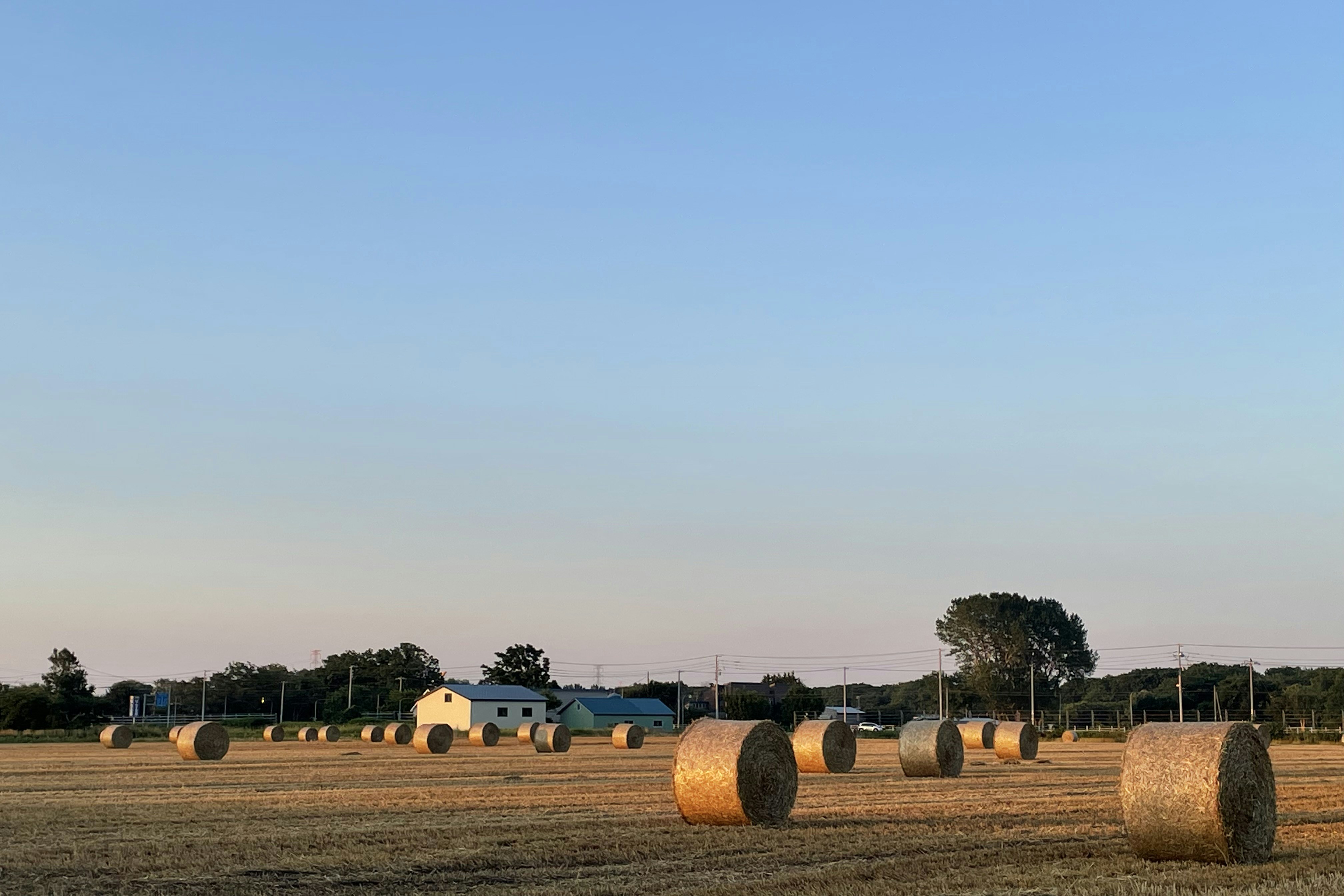
Photo by AO NURA on Unsplash – There’s more to this peaceful image than it appears. Growing. Cutting. Drying. Raking. Baling. Each step in its right order. Each making the next possible, leading to this image. The work isn’t finished. Those bales still need to be moved and stored.

But we can enjoy this. The proper order. A moment of tranquility.

A Parenting Prayer

Parenting is one of the clearest places where faith meets daily life. It calls us to humility, patience, courage, generosity, and the kind of love that stretches us far beyond what we believed we could give.

It invites us to trust God with the people most precious to us, even when the path ahead is uncertain and far beyond our view.

The prayer below is one I’ve been working on for a while. It’s a prayer for parents at every stage of life…those just beginning, and those watching their grown children take their first steps into adulthood. It’s also for those whose children are becoming parents and carrying this calling into a new generation.

It is a reminder that God accompanies us in the noise and the silence, the ordinary and the holy, the days that feel long and the years that pass so quickly.

May this prayer strengthen your heart and deepen your hope as you walk this sacred calling.

A Parenting Prayer

God, please grant me
The wisdom to guide my children with patience, clarity, and love
And the humility to grow alongside them as they grow.
Teach me to choose presence over hurry,
Trust over fear, and connection over control.

Give me the courage to admit when I am wrong
And the grace to show my children that learning never ends,
Not at 7, not at 17, not at 70.

Help me see the world through their eyes,
Eyes that understand wonder,
Eyes that welcome the new with unguarded joy.
Let their curiosity rekindle my own,
So our home becomes a place where questions are celebrated
And imagination roams freely.

Give me integrity in the quiet moments,
When my child is learning from what I do.
Give me a heart strong enough to support them
And gentle enough that they always feel safe coming to me.

Teach me to treasure the small things:
The bedtime stories,
The long drives,
The conversations over tacos,
The ordinary afternoons that turn into lifelong memories.
Remind me that these simple moments
Will matter far more than the schedules we keep
Or the outcomes we chase.

Loving God,
Free me from comparing my family to others.
You did not design my children to fit anyone’s timeline but Yours.
Help me trust the pace of their becoming
And see their strengths even when they are wrapped in struggle.

Guard me from chasing achievements that impress the world
But neglect the souls under my roof.
Let our home be defined by gratitude, peace, and laughter,
With the quiet confidence that love is our foundation.

Help me pass down what truly endures:
Character over perfection,
Kindness over victory,
Service over status,
Gratitude over entitlement.

May the stories I tell, the choices I make,
And the way I show up each day
Become part of the heritage my children carry forward.
Help me become an example worth following,
One who lives with faithfulness, honesty, and a willingness to learn.

Give me strength for the hard times
And calm for the anxious nights.
Give me a long view of parenting,
Seeing not just who my children are today
But who they are becoming by Your grace.

Teach me to listen more than I lecture,
To encourage more than I correct,
And to guide without stifling the person
You created them to be.

Grant me the courage to give responsibility as they mature
And the faith to let them walk their own path,
Even when that path stretches beyond my view.

Lord, may our home reflect Your kingdom,
A place of welcome, forgiveness, generosity, and joy.
Let my children feel seen, valued, and deeply loved,
Not for what they do, but for who they are.

I invite You into every step of this sacred calling.
Walk with me in the noise and the silence,
In the exhaustion and the celebration,
In the days that feel long
And the years that pass too quickly.

Grant me the peace that comes from Your eternal and infinite love,
Now and forever.

Amen.

Photo by Hu Chen on Unsplash

The Noonday Devil and the Lie of Boredom

Psalm 91 promises safety from dangers both visible and invisible, from “the terror by night” to “the arrow that flieth by day.”

In verse 6, we read: “Nor for the pestilence that walketh in darkness; nor for the destruction that wasteth at noonday.”

The Desert Fathers, those early Christians who left the cities around the third and fourth centuries to live in the desert, drew on this verse to describe one of their deepest spiritual struggles. They called it the noonday devil.

This devil represents an interior battle, a weariness of the soul that crept in at midday when the sun beat down, the silence grew heavy, and the temptation to abandon their prayer and vocation felt overwhelming.

They named this struggle acedia. Sometimes it’s translated as sloth, but it is much more than that.

How many kids have said to their parents, “I’m bored.” We remind them that boredom is in their heads. They can use their imagination, find a book, or play outside. And if that doesn’t land, we parents always have another cure for their boredom: chores.

It’s amazing how quickly boredom vanishes when a child is handed a rake, a shovel, or a basket of laundry to fold.

Boredom is what happens when we can’t see the meaning in what we’re doing. Acedia is boredom’s older cousin. Spiritual weariness with much deeper stakes.

It’s restlessness, a refusal to care, a loss of joy in the very things that give life meaning. It can show up as distraction or busyness. Acedia tempts us to walk away when the middle of the journey feels too long and too heavy.

I think of the countless days spent inching along in rush-hour traffic, morning after morning, just to get to work. I’d put in a full day’s work, then crawl through another hour or more of brake lights to get home. The next day brought the same routine. After a while, it was easy to think maybe the whole thing had no meaning.

That’s the noonday devil at work.

The midpoints of life test us in a similar way. Paying bills, the daily grind of a career without clear progress, responsibilities that seem to grow heavier without much relief. Our internal voice asks, “How can I escape? Should I look for something easier?”

Jean-Charles Nault’s The Noonday Devil: Acedia, the Unnamed Evil of Our Times says this ancient struggle is alive and well today. It shows up in constant scrolling, in working ourselves to exhaustion to avoid deeper questions, in chasing novelty because the present moment feels too heavy.

The Desert Fathers found the answer was to persevere through, but with far more than sheer willpower. Keep praying, even when prayer feels dry. Stay faithful to commitments, even when they feel heavy. Lean into your community rather than isolating from it. Practice humility and remember that perseverance is possible only by God’s grace.

What does this look like? When we feel the pull toward endless scrolling, we might instead text a friend or call a family member. When work feels meaningless, we can remember the people our efforts serve, even if indirectly. When prayer feels empty, we show up anyway, trusting that faithfulness itself has value beyond our feelings in the moment.

The noonday devil tempts us to think that only extraordinary lives matter. But as Oliver Burkeman points out in his idea of “cosmic insignificance therapy,” recognizing our smallness frees us to find profound meaning in ordinary acts.

The daily work of caring for children, preparing meals, or showing up for neighbors and friends carries as much weight as anything could. These acts may never make headlines, but in God’s eyes they shine with eternal value.

Persevering in small, steady commitments resists acedia and helps us discover joy in the very places where meaning often hides.

Psalm 91 carries a promise, “He shall cover thee with his feathers, and under his wings shalt thou trust.”

God invites us to rest beneath His wings, to trust Him in the heat of the day, and to discover joy at the very heart of our journey.

Faithfulness in the ordinary is never wasted. Under His wings, even the smallest acts take on eternal meaning.

h/t – Hallow app – Noonday Devil; Tim Ferris – Oliver Burkeman’s Cosmic Insignificance Therapy

Photo by Mauro Lima on Unsplash

Finding Hope at the Manger: A Christmas Poem

The winds arrive, sharp-edged with frost,
Carrying whispers of all we’ve lost.
Yet still, we gather where light abides,
Tracing joys where memory hides.

The manger waits beneath the sky,
Its humble wood holds heaven’s cry.
A Child is born, both meek and bold,
To mend the hearts that grow cold.

Here at the manger, shadow and light,
Joy interwoven with sorrow’s might.
A promise breathes where silence stirs:
“Fear not—for I have heard your cry.”

Words awaken, dormant long,
Noel and tidings weave their song.
Through flickering trees and spiced perfumes,
Old faces linger in quiet rooms.

Empty chairs hold stories near,
A laughter faint, a single tear.
Yet love persists where loss has tread,
Its echoes call where angels led.

Here at the manger, shadow and light,
Joy interwoven with sorrow’s might.
A promise breathes where silence stirs:
“Fear not—for I am sending my Child.”

O silverware that gleams with fire,
O fragile ornaments that inspire.
In every sparkle, a truth takes hold:
The story that’s not fully told.

For every shadow cast by light,
There burns a flame against the night.
And every sorrow, every tear,
Is met by love that lingers near.

Here at the manger, shadow and light,
Joy interwoven with sorrow’s might.
A promise breathes where silence stirs:
“Fear not—for the Child is here.”

Across the miles, through time and space,
The ties of love refuse to break.
Each prayer, each carol, each whispered word
Carries the weight of the Hope we’ve heard.

The Child has come, and so we sing,
For in His hands rest everything.
The hollow aches, the brightest cheer—
All held in grace, all gathered here.

Here at the manger, shadow and light,
Joy interwoven with sorrow’s might.
A promise breathes where silence stirs:
“Fear not—for I AM with you until the end of time.”

The bells resound with heaven’s cheer,
For Christ is born, and love draws near.
The angels sing, the nations rise,
A holy joy fills earth and skies.

O love that soars, O joy that stays,
We join the hymn of endless praise.
In manger low, our hearts proclaim:
The world redeemed by Jesus’ name.

Here at the manger, shadow and light,
Joy interwoven with sorrow’s might.
A promise breathes where silence stirs:
“Fear not—for the Child Jesus is Born.”

Photo by Mariana B. on Unsplash