There’s a big difference between having an opinion about what’s broken and taking responsibility for making something better.
We live in a time when commentary is easy.
We can criticize from the sidelines. We can point out what’s wrong. We can explain why the system is broken, why the leaders failed, why the plan won’t work, or why the people in charge should have known better.
And much of that criticism may be true.
Something really may be broken. People may have failed. The system may need to change.
But is criticism going to be our only contribution?
Creating rather than complaining is an act of disciplined hope. It says I can see what’s wrong, but I’m still willing to work.
Complaining usually says, “Someone should fix this.”
Creating says, “I can improve one piece of this.”
That shift moves us from the sidelines onto the field.
Some problems aren’t ours to carry. We shouldn’t excuse the people who caused them. We don’t pretend the risks aren’t real or the damage doesn’t exist.
But we refuse to stop at frustration.
We must ask better questions.
What can I build? What can I repair? What can I encourage? What can I organize? What can I make clearer, stronger, more honest, more useful, more human?
And what can I do even if I didn’t create the problem?
That’s leadership.
Leadership isn’t only authority or title, position, budget, or permission.
Leadership is seeing a gap and stepping into it.
It’s making the call no one wants to make. Writing the note. Cleaning up the mess. Telling the truth. Taking the first small step.
We don’t have to fix everything to make something better.
That’s important to understand, because the size of the problem can become an excuse for doing nothing.
If I can’t fix the whole system, why bother? If I can’t change the whole culture, why try?
But that’s spectator thinking.
Builders think differently. Builders understand that every useful thing starts smaller than the problem it hopes to address.
A bridge starts with a first beam. A book starts with a first sentence.
A movement starts with a first conversation.
A better future starts when someone decides their contribution will be more than complaint.
It says I may not be responsible for the whole problem, but I am responsible for what I do next.
It says tomorrow can be better than today, and I’m willing to put something in motion.
The invitation is simple.
Don’t let your only contribution be commentary.
Find one thing you can improve.
One process. One relationship. One decision. One conversation. One neglected corner of the work.
Start there. Build there. Serve there.
The system may still be broken. The leaders may still have failed.
But the future belongs to the ones who choose to create anyway.
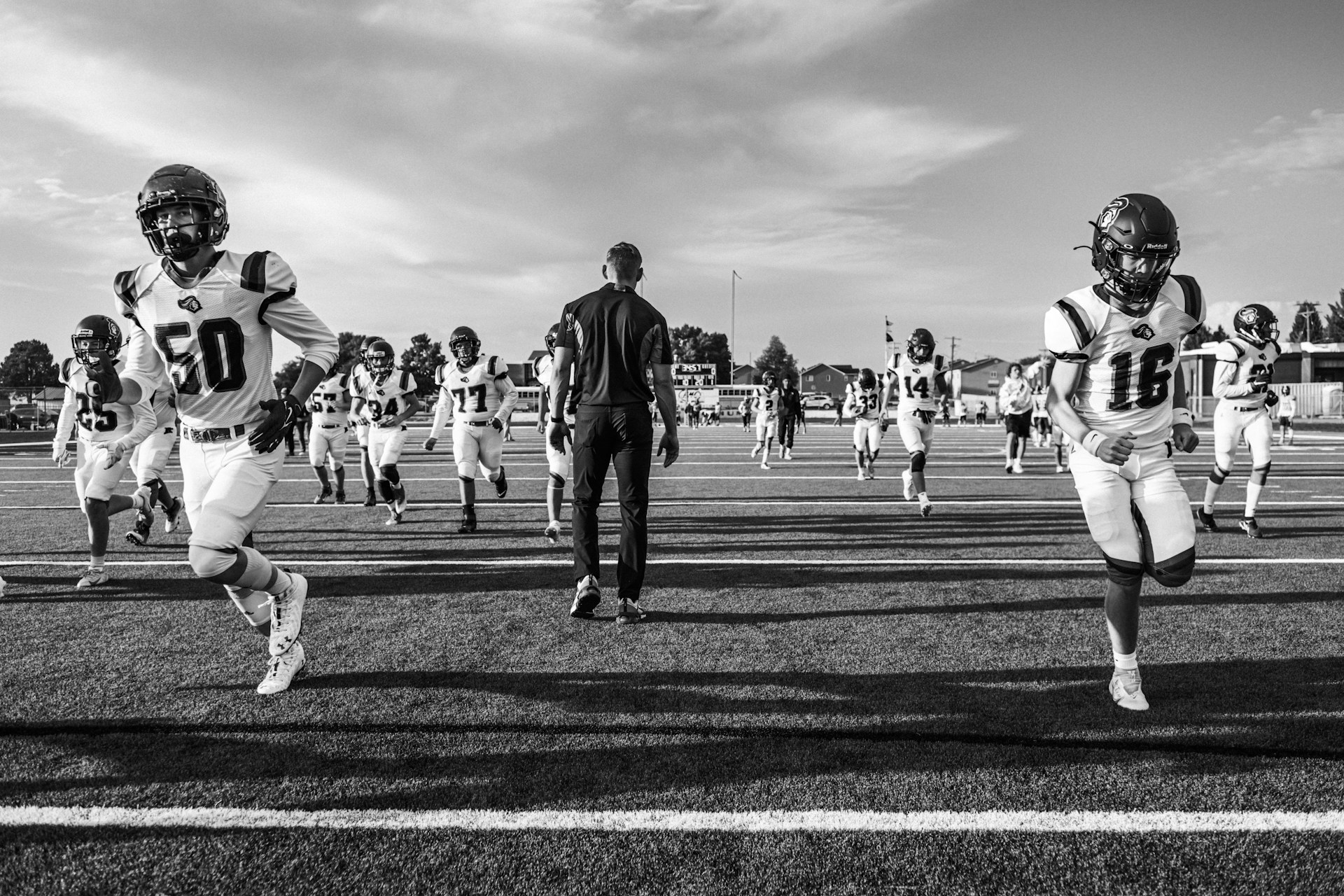
Photo by Alex Gruber on Unsplash – The future is shaped by people willing to begin.
Graduation has a way of making ordinary questions feel enormous.
What are you going to do next?Where are you going to school?What trade are you going into?Where are you going to work?What are you going to do with your life?
That last question is the one that sneaks into our subconscious. It turns our celebration into a test. It makes a young person feel like their next decision carries the weight of the next fifty years.
Trust me. It doesn’t.
You’re not choosing your whole life this year. You’re choosing the next step.
That next step still deserves careful thought. Some choices will open doors; others will close them…and some will make the road harder than it needs to be.
But don’t hand this one decision more power than it deserves.
Your first job isn’t a life sentence. Your major isn’t your permanent identity. Your first trade, internship, military assignment, certification, apprenticeship, or business idea marks where the road begins, not where it ends.
Most lives travel roads we couldn’t have mapped in advance. One small opportunity today may connect you to a person who changes your direction entirely. One ordinary job may teach you something that becomes useful ten years later. A disappointment may save you from staying on the wrong road for too long.
You may move around. You might take a job that makes sense now and later discover it doesn’t fit who you are or what your life requires. Your priorities will change. The economy will change. A job can be a great opportunity, but it is rarely a lifetime guarantee.
Employers may invest in you when you serve their needs and (fairly or unfairly) move on when they believe you no longer do. Doors may close for reasons having little to do with your effort or character. That doesn’t mean you failed. It means you’re living in a world that keeps moving. Knowing that can help you walk into each opportunity with your eyes open.
Character, hard work, and skills all carry weight, but many opportunities come through people. The people who trust you, teach you, recommend you, challenge you, and remember how you treated them may influence your future in ways no resume ever could.
Build your life on something stronger than the assumption that one company, one industry, one credential, or one carefully written plan will carry you safely from here to retirement.
Learn how to add value. That phrase sounds like a business platitude, but strip away the jargon and it’s the oldest human question. Can people count on you for something real?
Can you solve a problem? Can you make something better? Can you be trusted with responsibility? Can you communicate clearly? Can you tell the truth when it would be easier to hide? Can you learn something new without treating the need to learn as an insult?
Can you help the people around you succeed? Can you walk into a messy situation and leave it better than you found it?
People who can do these things will usually find a way forward. Maybe not on the exact timeline they imagined. But useful, trustworthy, curious, steady people tend to create options for themselves over time.
Graduates hear a lot about jobs, majors, trades, degrees, salaries, and careers. All are serious things, and they deserve real thought. It’s good to learn skills. It’s good to earn your living and eventually support a family if that becomes part of your life. It’s good to contribute useful work to the world.
But your career isn’t your whole life.
A great resume with a lonely heart is still a lonely life. A strong paycheck with shallow relationships won’t feel as rich as you think it will.
A respected title can’t sit with you at the kitchen table. It won’t laugh with you around a campfire. It can’t pray for you, forgive you, challenge you, remember old stories with you, or show up when things are going wrong.
Much of your deepest joy will come from the relationships you cultivate. The people you love. The people who love you. The friends who walk with you. The family you stay connected to. The conversations you remember years later. The long drives. The late night talks.
The unexpected kindness. The forgiveness given and received.
By the time you graduate, you may already know some of the people who will still be part of your life fifty years from now. You won’t know which ones yet. Some will drift away. Some will surprise you and stay.
And after graduation, you’ll meet more. Pay attention. One may become your spouse. Some will teach you. Some will test you. Some will need your help. Some may help save you from yourself.
The world will ask what you do. But life will eventually ask better questions.
Who do you love? Who can count on you? Who tells you the truth? Who do you encourage? Who do you forgive? Who have you helped carry a burden they couldn’t carry alone? What are you doing with your soul?
These questions will stay with you long after the name of your first employer has faded into the background.
Choose the school, the job, the trade, the service path, or the next assignment with as much wisdom as you can gather. Ask questions. Do research. Talk to people who have walked farther down the road.
Listen to your parents, even when you think they don’t fully understand the world you’re entering. They may not understand every tool or pressure you face, but they know more than you think about disappointment, responsibility, sacrifice, and love.
Then move.
Do the work in front of you. Show up on time (which is 15 minutes early). Tell the truth. Be easy to trust. Learn the tools. Respect the people. Ask better questions. Pay attention to what gives you energy and what drains it. Notice where your abilities meet someone else’s needs. Be willing to change direction without turning that change into a personal crisis.
A wise life is rarely built from one perfect decision made at eighteen or twenty-two. It’s built from thousands of smaller decisions made over time. Some will be mistakes and that’s part of the deal.
The goal isn’t to live without mistakes. It’s to tell the truth when they happen, learn what they have to teach, repair what you can, and keep walking with a little more knowledge than before.
Graduation is worth celebrating. You finished something difficult, and finishing should be honored. Enjoy the moment. Thank the people who helped you get here.
Then take a deep breath.
You don’t have to solve your whole life before the celebration is over. You won’t know every turn, every job, every friendship, every disappointment, or every joy waiting along the way.
You have enough to take the next step with care, humility, gratitude, and hope, trusting that life will teach you more as you walk.
Our oldest grandson turned 13 this week. In honor of this auspicious occasion, here’s some advice from a grandpa’s perspective…
Turning 13 feels important because it is.
You’re not a little kid anymore, but you’re not grown either. You’re standing in that in-between place where life starts opening up in new ways. You begin to think more for yourself. You start noticing the world differently. You begin asking bigger questions.
Who am I? What am I good at? What do I want to do with my life?
All excellent questions, and you don’t need perfect answers yet. In fact, you’ll ask the same questions at 18, at 25, at 40, and again at 60. Life keeps moving and we keep growing. The answer you give today isn’t supposed to be your final answer.
So don’t panic if you don’t know exactly what you want to do with your life. Most people don’t.
Having your whole future mapped out right now isn’t the priority. Becoming the person who can handle that future is.
Hold on to your integrity.
Tell the truth. Keep your word. Do the right thing, especially when there’s nothing in it for you. That last part matters more than most people realize. It’s easy to do the right thing when someone’s keeping score. The real test is what you do when no one is.
Don’t trade your character for attention, approval, popularity, or convenience. A lot can be rebuilt in life. Trust is hard to rebuild once you break it.
Stay close to God.
You won’t understand everything all at once. Nobody does. But keep your heart turned toward Him. Pray. Ask for wisdom. Pay attention. Learn to trust that there’s more going on in life than whatever feels big in the moment. Your faith will steady you when your feelings don’t. It’ll remind you who you are when the world tries to define you by something smaller.
Stay in a service mindset.
Look beyond yourself. Learn to help. Learn to notice when someone needs encouragement. Learn to carry your share. Learn to be useful. Be someone people can count on.
A life built only around what do I want gets very small in a hurry. A life that asks how can I help or how can I add value grows deeper and more meaningful. You’ll find a lot of what matters in life while serving, building, learning, and staying faithful in ordinary things.
Work with everything you have, even when no one is watching.
Somewhere along the way our culture started treating hard work as just a means to an end, something we do to get paid or get ahead. But there’s a much older and better way to think about it.
Quality work builds character. It builds discipline. It builds something larger than the task in front of you. Every time you give full effort to something ordinary, you’re quietly shaping the excellent person you can be. That adds up in ways that are hard to see at 13 but impossible to miss at 30.
Half-effort becomes a habit just as easily as full effort does. The habits you build at 13, 14, and 15 will be the ones carrying you at 25 and 35.
Don’t wait for someone to be watching before you give your best. Work hard at school. Work hard at home. Learn to finish what you start. Learn to be corrected without falling apart. Learn to keep showing up even when it’s hard and nobody’s clapping.
None of this sounds flashy because it isn’t. A lot of what makes a strong life is built quietly.
You’ll fail at things. Do it anyway.
At some point, you’re going to try hard at something and still come up short. You’ll miss the cut. You’ll bomb a test you studied for. You’ll lose a game that matters. You’ll say something wrong at the worst moment. That’s part of being alive and actually trying. It says nothing about whether you’re good enough.
What happens after you fail is the part that defines you. You can let it pull you back, make you more careful, more afraid to try. Or you can let it teach you something and keep going.
Most of the people worth looking up to in life have a longer list of failures than you’d expect. They just didn’t stop.
Don’t be so afraid of failing that you stop reaching. And when you do fail, get back up, figure out what you can learn from it, and go again.
Don’t compare yourself to everyone else.
You’ll be tempted to measure your life against what everyone else seems to have, seem to be, or seems to be doing.
Comparison is a thief. It steals your happiness. It distracts your focus from your own path and wastes your attention on someone else’s highlight reel. The person you’re comparing yourself to is probably doing the same thing in a different direction.
Run your own race. You’re not behind. You’re not ahead. You’re exactly where you should be. The question isn’t why do they have what I don’t. It’s what am I going to do with what I’ve been given.
Stop assuming the world is against you.
This one is worth learning early so you don’t waste years that could have been spent building. When things go wrong, and they will, your first instinct will be to look for someone to blame. A teacher. A coach. An umpire. A parent. Your boss. The system. Sometimes that blame might even be partly true.
None of that matters. You don’t control what other people do. You control what you do. The moment you decide that your success or failure is mostly someone else’s responsibility, you hand over the most powerful thing you have. Your own effort and your own choices.
Work on what you can control. Improve your attitude. Improve your skills. Improve your effort. Stop waiting for circumstances to be fair before you try. Life isn’t always fair. The people who accomplish things don’t wait for it to be.
About your parents.
They really do want what’s best for you. That may be hard to believe sometimes. They won’t always explain things perfectly or get every decision right. They’re human, just like you. Beyond the rules, the questions, the concern, and the occasional frustration is something very simple. They want you to have a good life.
Try to remember that when you feel misunderstood. Talk to them. Listen to them. Let them help you.
And one day, if life takes you far away geographically, stay connected. Call home. Answer texts. Show up when you can. These relationships are worth more than most people realize when they’re young.
About your brothers and sisters.
Yes, they may annoy you. Yes, they may know exactly how to push your buttons. That’s part of the deal. But they’re also part of the very small group of people who know your whole story, where you came from, and what you’ve been through. They know parts of you the rest of the world never sees.
Be there for them. Don’t let small things turn into long separations. Give grace. Stay loyal. Repair things when you can. A strong family is one of life’s great blessings. Don’t treat it casually.
Pay attention to who you spend your time with.
We tend to become a version of the people we’re closest to. Not instantly, and not completely, but over time the people around us shape how we think, what we tolerate, what we aim for, and the person we grow into. Look at the five or ten people you spend the most time with and you’ll get a pretty honest picture of the direction you’re heading.
That doesn’t mean you have to be cold or calculating about friendship. But you should choose your close friends carefully. Find people who are honest with you, who push you to be better, who you actually respect. Be the kind of friend who does the same for them. And if you find yourself around people who consistently pull you toward things you know aren’t right, it’s okay to create some distance. Let them go. That’s not disloyalty. That’s wisdom.
Your words have more weight than you realize.
What you say about people, how you say it, and what you say behind their backs follows you longer than you’d think. At your age, a lot of the cruelty that happens between people happens through words. It often feels small in the moment, like just joking around or venting. But words land hard, and sometimes they leave marks that last a long time.
Be someone known for building people up more than tearing them down. Speak honestly but speak with care. Don’t traffic in gossip. Don’t pile on when someone’s already down. You won’t always get this right, but making it a habit to think before you speak is one of the best habits you can build right now.
Take care of your body. It affects everything else.
We only get one body. Take care of it as if your life depends on it (because it does).
This doesn’t need to be complicated. Sleep matters more than most teenagers believe it does. What you eat affects how you feel and how clearly you think.
Regular exercise probably isn’t a challenge at your age. But as you get older and take on more responsibilities, making this a priority will be difficult. Moving your body regularly, whether that’s a sport, working out, or just staying active, will serve you well for decades to come.
You’re building habits right now that will follow you into adulthood. The kids who learn to get enough sleep, stay reasonably active, and not wreck themselves with junk will have a real advantage over the ones who don’t. That gap grows over time.
Your body is going to carry you through a long life. Treat it accordingly.
One more thing.
You don’t need to impress everybody. You don’t need to look older than you are. You don’t need to rush into every version of growing up just because the world makes it look cool.
There’s no prize for becoming cynical early. There’s no prize for being hardened before your time.
Real strength tells the truth. Real strength keeps going. Real strength is teachable. Real strength can laugh, can apologize, can be trusted.
You don’t need to become everything right now. You just need to keep growing, one good choice at a time, one hard thing faced instead of avoided. One day at a time.
And when you don’t know exactly what comes next, go back to the basics. Stay honest. Stay close to God. Love your family. Help where you can. Work hard. Keep learning.
This path may not answer every question immediately, but it’ll keep carrying you toward a life that means something.
Many of us have felt it. That quiet, persistent yearning for life to just settle down for a while.
We imagine a stretch of road where the strain lets up, the demands lighten, and we can move forward without so much weight on our shoulders. We tell ourselves that after enough years, enough lessons, enough work, and enough milestones, there ought to be a time when things begin to coast.
That hope is understandable. We carry a lot. We get tired. We get worn down.
But easy rarely waits for us around the bend. More often, what comes instead is something better.
Perspective. Wisdom. A clearer sense of what’s worth our energy and what’s worth leaving behind.
With time, we may carry life with more grace. We may stop pouring ourselves into things that never deserved that much from us. We may learn the wisdom of laying down false guilt, unnecessary fear, stale resentment, and the crushing expectations that come from trying to live someone else’s life.
A good bit of suffering comes from carrying weight we were never meant to bear.
Of course, knowing what to set down is its own kind of work. It takes honesty to name what we’ve been carrying needlessly. It takes courage to actually let it go.
But even after we set those things down, effort remains. That’s a feature, rather than a flaw, in life’s design.
Work requires our attention. Relationships ask for our patience. Growth brings discomfort. Purpose calls for sacrifice, and faith asks for trust.
Effort remains part of a life that’s awake and engaged.
Sometimes what we call easy is really just familiarity. We know the terrain. We know the language. We know how to move around in it. That can feel easier, but familiar things can still cost us. They can still ask for endurance, humility, steadiness, and resilience.
Maybe relief is the most honest word for what we’re seeking.
We want a little less pressure. A little less uncertainty. A little less disappointment. A little less striving. We want room to breathe.
There’s nothing wrong with that. Relief is human. Rest is holy. Recovery matters.
But relief differs from a life free of demands. And deep down, most of us would find such a life unsatisfying.
We may say we want to coast. We may fantasize about “easy street.” We may imagine how nice it would be if everything just ran smoothly for a while. But too much ease has a way of hollowing us out, leaving us restless, a little purposeless, quietly bored with ourselves.
We were made for engagement. We want to build, help, solve, shape, encourage, contribute, and grow. We want to know that our presence still counts for something.
That’s why a completely easy life, if such a thing existed, would probably disappoint us pretty quickly.
We were made for meaningful effort, and that’s where we find ourselves most alive.
The question, then, is less about whether life will ever become easy and more about whether we’re giving ourselves to things that build something in us and around us. Things connected to purpose, love, responsibility, service, growth, and calling.
Giving ourselves to the right things helps us stop feeling sorry for ourselves and start paying attention again. It steadies us for the chapter we’re in, rather than the imaginary one we hope will arrive.
As long as we’re here, there’ll be something in front of us asking for effort.
One second the play is moving. The runner has the ball. The blockers are engaged. The drive has life. Then suddenly the ball hits the ground, bodies are diving, momentum has shifted, and what was yours a moment ago is theirs.
A fumble tests everyone.
The one who dropped the ball.
The coach.
The team.
For the player who fumbled, the moment is immediate and personal. He cost his team field position, momentum, or more. He’ll think about that play long after the whistle.
His pain rarely comes from the mistake alone. It also comes from the exposure. He was carrying something important, and now everyone can see that he mishandled it.
He comes to the sideline knowing what he did.
He doesn’t need it explained. He doesn’t need the replay. He felt the ball leave his hands. He already knows what it cost.
What he doesn’t know is what comes next.
That depends largely on who’s standing on the sideline with him.
A weak coach sees only the mistake. A careless coach brushes past it. But a strong coach understands something both miss. This player, in this moment, is deciding, maybe without knowing it, whether he can still trust himself.
Correction matters. Accountability matters. But there’s a difference between a coach who corrects and a coach who restores. One addresses what happened. The other addresses what happens next.
Real leadership does both.
It says, “Yes, that mattered. Yes, you need to learn from it. And yes, you’re still capable of more than this moment.”
Correction is the easy part. The rest is belief.
People rise to the level of belief placed in them after they’ve failed. That’s one of the most dependable things about human beings. A good coach knows this. A great one acts on it.
What about the team?
They saw it.
That fumble belongs to everyone now.
Do they quietly create distance from the one who dropped the ball? Do they look away? Do they let frustration show in ways that make him feel more alone?
Or does someone move toward him?
Not to fix it. Not to instruct. Just to be close enough that he knows he hasn’t been cut loose.
Great teams are built by people who know what to do when somebody fumbles. That knowledge is built over time. Through the kind of culture a team creates long before the ball hits the ground.
That’s true in every organization, every family, every group trying to do meaningful things together.
Eventually someone will drop the ball. Someone will let something important get away. Someone will have a moment they wish they could take back.
Failure doesn’t create a team’s culture. It exposes it.
A lot of people carry the weight of old fumbles.
A business decision that went wrong.
A missed opportunity.
A sentence that should have stayed unspoken.
A responsibility handled poorly.
A relationship moment they wish they could take back.
That weight is real. The costs were real. The embarrassment was real. There’s no use pretending otherwise.
But the fumble doesn’t have to be the end of the story.
Sometimes the growth that follows a mistake runs deeper than anything that came before it. Failure exposes what needs to be seen. A weakness, a blind spot, a lapse in discipline. It creates a moment that can be used, or wasted.
That moment rarely turns on the person who fumbled. It depends on what they find when they look up.
The leader who steps in with exactly the right mix of truth and trust. The teammate who moves toward them instead of away. The voice that says you’re still capable of more than this moment.
What looks like the end of the drive is sometimes the moment the real game begins.
The idea was simple. If you look closely at life, you’ll see that everyone is climbing something.
A career. A relationship. A difficult time in their lives. A personal challenge.
Life has a way of placing mountains in front of us. Or maybe…we’re just good at finding them.
As I wrote back then, the climb only makes sense from the inside. Watching others or hearing their stories are no substitute for taking it on yourself.
There was another part of the metaphor that mattered even more.
Many of us start the climb with backpacks full of things that make our journey harder than it needs to be. Old resentments. Lingering disappointments. Criticism that stuck with us longer than it should have. Sometimes we even carry baggage that belongs to someone else.
Years later, I came across a Buddhist parable that gave a new wrapper to this idea. It described people walking through life carrying large boulders. Anger. Ego. Grudges. The suffering didn’t come from the boulders themselves. It came from choosing to pick them up.
Whenever a hill approached, I had a habit of shifting into an easier gear before the climb even began. It felt like preparation. It felt like the smart thing to do.
One day I tried something different. Instead of downshifting, I shifted to a higher gear and pushed harder.
To my surprise, I climbed much faster than before, without bonking like I thought might happen.
Sometimes growth means discovering we’re stronger than we realize.
That experience raised questions I still ask myself.
Where else in life do I downshift before the hill arrives?
Am I protecting myself from difficulty…or underestimating what I’m capable of?
Recently, I read a post by Tim Ferriss about the “self-help trap.” He described sitting around a campfire one evening with a small group of close friends, the kind of unhurried night where the conversation slows down enough for truths to surface. He found himself thinking about the fire, and then realizing the fire wasn’t the point. The people sitting around it were.
He described how easily we can become so absorbed in optimizing ourselves, tracking progress, chasing improvement, climbing toward our next summit, that we lose sight of why we started climbing in the first place.
Summits will eventually fade. Our achievements will blur with time. Recognition disappears quicker than we expect.
Perhaps the real work of self-improvement is simpler than we think.
The rocks we’re carrying were never necessary.
The hills we fear are usually smaller than we imagine, or remember.
And the fire, the one worth tending, isn’t the one powering our ambition. It’s the one we gather around with the people we love.
Over the last 15 years, I’ve written a lot of words.
Words shaped by work and leadership challenges.
Words that grew out of quiet reflection or things that caught my attention at just the right moment.
Many of them were also shaped by family, faith, mistakes, and moments that stayed with me longer than I expected.
More than a few people have suggested I start a podcast. They’d tell me it’s a lot easier to listen than it is to keep up with a bunch of new reading assignments each week.
While my mom was still alive and living with significant vision loss from macular degeneration, I gave the idea serious thought. Listening would have been the only practical way for her to “read” my posts.
Unfortunately, that “serious thought” didn’t turn into action in time for her to benefit.
Ironically, for someone who usually believes in starting, then figuring things out along the way, I let all the steps required to set up a podcast get in the way of beginning.
Until now.
So today, I’m launching a new podcast:
Grandpa Bob Encouraging Leadership
This podcast is a series of short reflections on leadership, life, and learning. I’m sharing them first and foremost with my grandchildren…and with anyone else who might be listening in.
The episodes are intentionally brief, thoughtful, and unhurried.
They’re the kind of reflections you can listen to on a walk, during a quiet drive, or at the start or end of your day.
They’re meant to create space, not fill it.
Who it’s for
At its heart, this podcast is for my grandkids.
Someday, years from now, I want them to be able to hear my voice and know what mattered to me.
The things I noticed. What I learned the hard way. What I hope they carry with them as they find their own way in the world.
But leadership lessons rarely belong to just one audience.
So, if you’re listening, as a parent, a leader, a teacher, or simply someone trying to live well, you’re welcome here too.
What we’ll talk about
Each episode explores a simple idea. Here are some examples:
-Showing up when progress feels slow
-Letting go of certainty
-Choosing gratitude over entitlement
-Learning to wait without drifting
-Leading with trust, humility, and patience
-Paying attention to what’s quietly shaping us
There won’t be hype. There won’t be slogans. There certainly won’t be any fancy edits.
I’ll discuss questions worth talking about, and observations a loving grandfather hopes to pass along to his grandkids.
An invitation
You can find Grandpa Bob Encouraging Leadership wherever you listen to podcasts.
Don’t worry if you can’t listen to every episode.
Please feel free to disagree with anything I say. I don’t have a monopoly on the right answers.
If even one episode helps you pause, notice something new, or steady yourself a little, then it’s doing what it was meant to do.
Thanks for listening.
And if you’re one of my grandkids reading this someday, know that I believe in you and I’m always rooting for you.
If you’re listening alongside them, the same is true for you.
Parenting is one of the clearest places where faith meets daily life. It calls us to humility, patience, courage, generosity, and the kind of love that stretches us far beyond what we believed we could give.
It invites us to trust God with the people most precious to us, even when the path ahead is uncertain and far beyond our view.
The prayer below is one I’ve been working on for a while. It’s a prayer for parents at every stage of life…those just beginning, and those watching their grown children take their first steps into adulthood. It’s also for those whose children are becoming parents and carrying this calling into a new generation.
It is a reminder that God accompanies us in the noise and the silence, the ordinary and the holy, the days that feel long and the years that pass so quickly.
May this prayer strengthen your heart and deepen your hope as you walk this sacred calling.
A Parenting Prayer
God, please grant me The wisdom to guide my children with patience, clarity, and love And the humility to grow alongside them as they grow. Teach me to choose presence over hurry, Trust over fear, and connection over control.
Give me the courage to admit when I am wrong And the grace to show my children that learning never ends, Not at 7, not at 17, not at 70.
Help me see the world through their eyes, Eyes that understand wonder, Eyes that welcome the new with unguarded joy. Let their curiosity rekindle my own, So our home becomes a place where questions are celebrated And imagination roams freely.
Give me integrity in the quiet moments, When my child is learning from what I do. Give me a heart strong enough to support them And gentle enough that they always feel safe coming to me.
Teach me to treasure the small things: The bedtime stories, The long drives, The conversations over tacos, The ordinary afternoons that turn into lifelong memories. Remind me that these simple moments Will matter far more than the schedules we keep Or the outcomes we chase.
Loving God, Free me from comparing my family to others. You did not design my children to fit anyone’s timeline but Yours. Help me trust the pace of their becoming And see their strengths even when they are wrapped in struggle.
Guard me from chasing achievements that impress the world But neglect the souls under my roof. Let our home be defined by gratitude, peace, and laughter, With the quiet confidence that love is our foundation.
Help me pass down what truly endures: Character over perfection, Kindness over victory, Service over status, Gratitude over entitlement.
May the stories I tell, the choices I make, And the way I show up each day Become part of the heritage my children carry forward. Help me become an example worth following, One who lives with faithfulness, honesty, and a willingness to learn.
Give me strength for the hard times And calm for the anxious nights. Give me a long view of parenting, Seeing not just who my children are today But who they are becoming by Your grace.
Teach me to listen more than I lecture, To encourage more than I correct, And to guide without stifling the person You created them to be.
Grant me the courage to give responsibility as they mature And the faith to let them walk their own path, Even when that path stretches beyond my view.
Lord, may our home reflect Your kingdom, A place of welcome, forgiveness, generosity, and joy. Let my children feel seen, valued, and deeply loved, Not for what they do, but for who they are.
I invite You into every step of this sacred calling. Walk with me in the noise and the silence, In the exhaustion and the celebration, In the days that feel long And the years that pass too quickly.
Grant me the peace that comes from Your eternal and infinite love, Now and forever.
I saw an inspirational sign over the weekend. It said…
I saw an inspirational sign over the weekend. It said:
One Hundred Years from now it will not matter what kind of house I lived in, how much money I had, nor what my clothes were like, but the world may be a little better because I was important in the life of a child.
All of us are children, some just older than others. We each have the capacity to inspire, and to be inspired. We each have the capacity to challenge, and to be challenged. We certainly have the capacity to teach, and to be taught.
Our openness to both sides of the equation is what’s most important.
When talking to your friends, family, employees, or anyone else, do you use encouraging words, or discouraging words?
When talking to your friends, family, employees, or anyone else, do you use encouraging words, or discouraging words?
The words and tone you choose matter. They reflect, and impact, your attitude. Your words are the window into your perspective on the world.
Choose discouraging words, and you actively create a discouraging environment for those around you.
Choose encouraging words, use encouraging questions, and guess what…you create an encouraging environment.
The power to create an encouraging environment, an encouraging attitude, is in your hands everyday.
Here’s an exercise for you. Seek out three people to encourage today. Encourage them with your words, your questions, and your actions. Show them that you are genuinely interested in what they have to say. Be appreciative of their unique efforts and skills. Actively consider how to help them be more successful in achieving their goals. Repeat this exercise everyday.
Does this exercise make you uncomfortable? If so, maybe you should be the first person you seek out to encourage.








You must be logged in to post a comment.