In Four Thousand Weeks, Oliver Burkeman questions the idea that freedom means having complete control over our time.
He points out that many of the things that make life worthwhile require us to share our time with other people and coordinate our lives with theirs.
That suggests true freedom isn’t having an empty calendar. It’s choosing who we’re willing to give our time to.
Think of a friend we can always count on, a volunteer who keeps showing up for others, or a leader who accepts responsibility for other people. These commitments limit their freedom in one sense, but also create depth, trust, and belonging.
Choosing who we’ll give our time to is only the beginning. The attention we give them is what makes that time meaningful.
Being present. Making time. Listening well. Giving someone our full attention. These are the ways we turn a commitment into something lived rather than merely chosen.
Commitment gives others a claim on our freedom. Attention is how we honor it.
From yourself. Expect to learn, grow, contribute, follow through, and occasionally surprise yourself.
From your relationships. Cultivate depth, honesty, presence, and care. Treasure the people who know you well, but don’t let your full life become a closed circle.
From your curiosity. Keep asking questions. Keep learning things you don’t understand. Stay willing to be a beginner.
From your body. Expect your body to do what it reasonably can, but don’t be afraid to push against its limits. Protect your strength, mobility, endurance, and ability to do things for yourself.
From your work. The things you choose to work on should be useful, meaningful, interesting, and worth doing well.
From your courage. Admit when you’re wrong, try things you might fail at, and choose the less comfortable path when it’s the right one.
From your attention. Decide what deserves your attention instead of surrendering it to whatever is loudest, newest, or easiest.
From your ability to contribute. Always look for ways to be useful. Teach, encourage, help, listen, solve a problem, share what you know, give your time, or carry part of the load.
From what’s still ahead. Don’t assume the most interesting parts of life have already happened. Leave room for new work, new friendships, new places, new ideas, and versions of yourself you haven’t met yet.
From your standards. Don’t let convenience or laziness redefine what you consider good enough, especially in the areas you care about most.
From your sense of wonder. Keep noticing beauty, craftsmanship, nature, music, ideas, people. Familiarity can make remarkable things seem ordinary if you let it.
From your sense of possibility. Don’t become too quick to decide what can’t happen, what won’t work, or what’s no longer for you. Some doors close. Others are easy to overlook because you’ve stopped checking them.
From the life you have now. Don’t wait for everything to be settled before you fully engage with your life. There will always be another problem to solve. Problems aren’t interruptions to the life you’re trying to get to. They’re part of the life you’re living.
Photo by Austin Ramsey on Unsplash – With every revolution, something new is revealed.
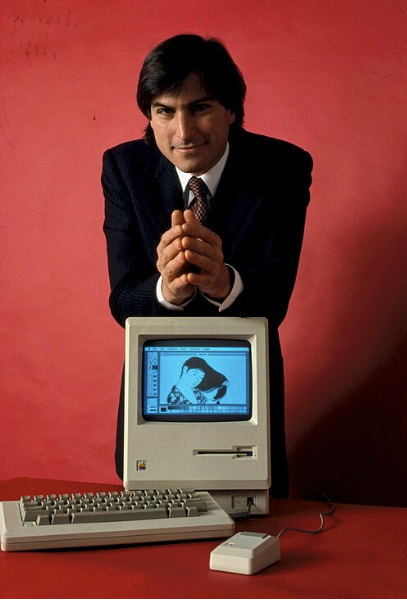
Jobs was speaking at Lund University in Sweden, long before smartphones, search engines, or the AI tools we use every day. His hope was that someday we might capture the underlying worldview of a great thinker like Aristotle within a computer, so a future student could ask him questions and get answers.
It sounded futuristic then, but that future is here today.
We can open an AI tool and ask it to explain Aristotle, compare him to another thinker, or respond in a way that tries to reflect his philosophy.
That doesn’t mean we’re talking to Aristotle. We’re talking to a machine-generated synthesis, built from writings, interpretations, and patterns available to the model. Worth remembering, especially in a minute.
Jobs saw computers becoming more than storage devices. He saw interactive learning companions that could move us from consuming information to questioning it, testing our understanding, and entering into a dialogue with the past.
So, I ran a little experiment. I asked an AI tool to respond as if it were Aristotle, drawing on his known writings and philosophy, then I asked three questions…two about leadership, one about relationships.
Here’s what I learned, before you even read the answers. The AI handed me answers that sounded wise. It couldn’t do anything with what the answers asked of me. That work stayed mine, every time. Keep that in mind as you read the three exchanges below. Each quote is the AI’s synthesis, in Aristotle’s voice, not a historical record of what he actually said:
Question 1: Aristotle, what makes someone a good leader?
A good leader must first be governed within himself. He cannot guide others well if his own desires, fears, and ambitions are disordered.
Leadership is not merely a matter of authority or skill. It is a matter of virtue. A leader needs practical wisdom to judge what should be done, courage to do it, justice to give others what they are due, and temperance to restrain his own appetite for power, praise, or comfort.
The good leader does not seek the good of himself alone. He seeks the good of the community entrusted to him.
That answer sounds about right. Confidence, drive, decisiveness, and the ability to win can carry a person a long way. But without character or virtue, those same strengths eventually start working against the people they’re supposed to serve.
Whether it’s true of me is a separate question.
Question 2: Aristotle, how should a leader make decisions when the right answer isn’t obvious?
In uncertain matters, the leader needs prudence. No rule can fully replace wise judgment, because human affairs are too varied and particular.
The prudent person considers the purpose of the decision, the facts of the situation, the people affected, and the likely consequences. He also considers his own motives. A decision can appear reasonable while still being driven by pride, fear, anger, or vanity.
Good judgment is formed over time. It comes through experience, reflection, correction, and the habit of choosing what is noble rather than merely what is easy.
Most leaders want clarity. We want the right answer to announce itself. The spreadsheet, the policy, the consultant, the precedent that makes the decision obvious.
Unfortunately, difficult decisions usually live where the information is incomplete, the tradeoffs are real, and the consequences land on people who are more than names on an org chart.
But, he asks an even harder question. What’s happening inside me as I make this call? Am I deciding from courage or fear? Justice or favoritism? Humility, or the need to be seen being right?
AI can organize the options. It can summarize the arguments. It can show me possibilities I might have missed.
But it won’t clean up my motives. That responsibility remains with me.
Question 3: Aristotle, what makes a friendship or relationship worthy of trust?
The highest friendship is rooted in virtue. Some relationships exist for usefulness. Others exist for pleasure. These are not necessarily bad, but they are fragile because they depend on what the other person provides.
A deeper friendship is different. It is based on willing the good of the other person. Such a relationship is steady because it rests on character, not convenience.
To be worthy of trust, a person must be truthful, faithful, and committed to the good of the other. A trustworthy relationship helps both people become better than they would be alone.
We understand relationships of usefulness. Work relationships, customer relationships, networking relationships, even friendships that lean heavily on shared convenience.
But, are we willing the good of the other person? Do we want what’s good for them, or only what’s useful to us? Do we want them to become better, or only to make our life easier?
Seeing this short exercise, I think Mr. Jobs would celebrate how close we’ve come to his 1985 vision. We have more access to information than any generation before us. We can retrieve facts instantly, summarize books in seconds, compare ideas across centuries before lunch.
That’s amazing!
Yet the more powerful the tool gets, the more responsibility shifts back to the person using it.
Ask Aristotle about leadership, and I have to ask whether I can govern myself.
Ask him about prudence, and I must examine my own motives before I decide.
Ask him about friendship, and the real question is whether I’m willing the good of the other person or just protecting what’s useful to me.
AI tools can generate answers. Wisdom starts when we let those answers question us back.
The machine can help us ask Aristotle a question.
It can’t make us become the kind of person who can live the answer.
Graduation has a way of making ordinary questions feel enormous.
What are you going to do next?Where are you going to school?What trade are you going into?Where are you going to work?What are you going to do with your life?
That last question is the one that sneaks into our subconscious. It turns our celebration into a test. It makes a young person feel like their next decision carries the weight of the next fifty years.
Trust me. It doesn’t.
You’re not choosing your whole life this year. You’re choosing the next step.
That next step still deserves careful thought. Some choices will open doors; others will close them…and some will make the road harder than it needs to be.
But don’t hand this one decision more power than it deserves.
Your first job isn’t a life sentence. Your major isn’t your permanent identity. Your first trade, internship, military assignment, certification, apprenticeship, or business idea marks where the road begins, not where it ends.
Most lives travel roads we couldn’t have mapped in advance. One small opportunity today may connect you to a person who changes your direction entirely. One ordinary job may teach you something that becomes useful ten years later. A disappointment may save you from staying on the wrong road for too long.
You may move around. You might take a job that makes sense now and later discover it doesn’t fit who you are or what your life requires. Your priorities will change. The economy will change. A job can be a great opportunity, but it is rarely a lifetime guarantee.
Employers may invest in you when you serve their needs and (fairly or unfairly) move on when they believe you no longer do. Doors may close for reasons having little to do with your effort or character. That doesn’t mean you failed. It means you’re living in a world that keeps moving. Knowing that can help you walk into each opportunity with your eyes open.
Character, hard work, and skills all carry weight, but many opportunities come through people. The people who trust you, teach you, recommend you, challenge you, and remember how you treated them may influence your future in ways no resume ever could.
Build your life on something stronger than the assumption that one company, one industry, one credential, or one carefully written plan will carry you safely from here to retirement.
Learn how to add value. That phrase sounds like a business platitude, but strip away the jargon and it’s the oldest human question. Can people count on you for something real?
Can you solve a problem? Can you make something better? Can you be trusted with responsibility? Can you communicate clearly? Can you tell the truth when it would be easier to hide? Can you learn something new without treating the need to learn as an insult?
Can you help the people around you succeed? Can you walk into a messy situation and leave it better than you found it?
People who can do these things will usually find a way forward. Maybe not on the exact timeline they imagined. But useful, trustworthy, curious, steady people tend to create options for themselves over time.
Graduates hear a lot about jobs, majors, trades, degrees, salaries, and careers. All are serious things, and they deserve real thought. It’s good to learn skills. It’s good to earn your living and eventually support a family if that becomes part of your life. It’s good to contribute useful work to the world.
But your career isn’t your whole life.
A great resume with a lonely heart is still a lonely life. A strong paycheck with shallow relationships won’t feel as rich as you think it will.
A respected title can’t sit with you at the kitchen table. It won’t laugh with you around a campfire. It can’t pray for you, forgive you, challenge you, remember old stories with you, or show up when things are going wrong.
Much of your deepest joy will come from the relationships you cultivate. The people you love. The people who love you. The friends who walk with you. The family you stay connected to. The conversations you remember years later. The long drives. The late night talks.
The unexpected kindness. The forgiveness given and received.
By the time you graduate, you may already know some of the people who will still be part of your life fifty years from now. You won’t know which ones yet. Some will drift away. Some will surprise you and stay.
And after graduation, you’ll meet more. Pay attention. One may become your spouse. Some will teach you. Some will test you. Some will need your help. Some may help save you from yourself.
The world will ask what you do. But life will eventually ask better questions.
Who do you love? Who can count on you? Who tells you the truth? Who do you encourage? Who do you forgive? Who have you helped carry a burden they couldn’t carry alone? What are you doing with your soul?
These questions will stay with you long after the name of your first employer has faded into the background.
Choose the school, the job, the trade, the service path, or the next assignment with as much wisdom as you can gather. Ask questions. Do research. Talk to people who have walked farther down the road.
Listen to your parents, even when you think they don’t fully understand the world you’re entering. They may not understand every tool or pressure you face, but they know more than you think about disappointment, responsibility, sacrifice, and love.
Then move.
Do the work in front of you. Show up on time (which is 15 minutes early). Tell the truth. Be easy to trust. Learn the tools. Respect the people. Ask better questions. Pay attention to what gives you energy and what drains it. Notice where your abilities meet someone else’s needs. Be willing to change direction without turning that change into a personal crisis.
A wise life is rarely built from one perfect decision made at eighteen or twenty-two. It’s built from thousands of smaller decisions made over time. Some will be mistakes and that’s part of the deal.
The goal isn’t to live without mistakes. It’s to tell the truth when they happen, learn what they have to teach, repair what you can, and keep walking with a little more knowledge than before.
Graduation is worth celebrating. You finished something difficult, and finishing should be honored. Enjoy the moment. Thank the people who helped you get here.
Then take a deep breath.
You don’t have to solve your whole life before the celebration is over. You won’t know every turn, every job, every friendship, every disappointment, or every joy waiting along the way.
You have enough to take the next step with care, humility, gratitude, and hope, trusting that life will teach you more as you walk.
I spent an evening recently with a group of old friends. Some of us have known each other for nearly forty years.
We sat around an old poker table, laughing like no time had passed at all. The betting was fierce, of course. Quarter bets. Fifty-cent raises. The occasional dollar wager from the high rollers at the table.
As the cards moved around the table, so did the stories.
We talked about back surgeries and strange new ailments. About retirement and semi-retirement. After all the years of working, preparing, striving, building, and planning, some of us are finally approaching this new stage of life. Others are already there. We compared notes on life after full-time careers and our changing focus from building wealth to stewarding time.
We talked about the crazy new toys (tools) some of us have acquired since we were last together. Tractors, airplanes, boats, trailers, CNC machines, and 3D printers. The kinds of purchases that make complete sense when practicality and childhood fascination peacefully coexist.
We talked about trips around the world. Cruises through the Panama Canal. Journeys to India and South America, Thailand, New Zealand, Australia and Malaysia, Greece and the Canary Islands. Places we probably never imagined visiting when we first knew each other.
We shared tragic updates too. Losses. Wounds. Stories that carry real pain even when told calmly. The room would go quiet. Respectful. The kind of quiet that only comes when people trust each other enough to say the hard things out loud.
And then there were the stories of redemption. Recovery. Healing. The moments where life knocked someone down and, somehow, they found their footing again.
The conversation moved naturally between laughter and seriousness the way it often does when people have enough history together.
We traded lines like “You haven’t changed,” and “My God, you’ve gotten old.”
Both statements are somehow true at the same time.
Old friends see something unique in each other. They remember earlier versions of us that still exist somewhere underneath the gray hair, reading glasses, surgeries, accomplishments, disappointments, and miles traveled. Old friends carry evidence of our lives in our shared memories.
It’s comforting to realize we’ve all aged together. Nobody escaped it. We all crossed the years side by side, whether we saw each other often or not.
The poker game became a kind of metaphor for life. Checking. Raising. Calling. Bluffing a little. Winning a few. Losing a few. Staying in the game long enough to laugh about it afterward.
It’s probably a stretch to call the games we played “real poker.” The bets were small. The real stakes had nothing to do with money.
We left carrying fresh memories, renewed connections, and that warm sense that our lives are tied together across past, present, and future. Even after long gaps between gatherings, we can still sit down and pick up the conversation almost exactly where we left it.
Not everyone gets friendships that last thirty or forty years. That kind of shared history is one of life’s greatest treasures.
Sometimes it shows up around an old poker table. A deck of cards. Some unhealthy snacks. And decades of history that nobody can explain.
The idea was simple. If you look closely at life, you’ll see that everyone is climbing something.
A career. A relationship. A difficult time in their lives. A personal challenge.
Life has a way of placing mountains in front of us. Or maybe…we’re just good at finding them.
As I wrote back then, the climb only makes sense from the inside. Watching others or hearing their stories are no substitute for taking it on yourself.
There was another part of the metaphor that mattered even more.
Many of us start the climb with backpacks full of things that make our journey harder than it needs to be. Old resentments. Lingering disappointments. Criticism that stuck with us longer than it should have. Sometimes we even carry baggage that belongs to someone else.
Years later, I came across a Buddhist parable that gave a new wrapper to this idea. It described people walking through life carrying large boulders. Anger. Ego. Grudges. The suffering didn’t come from the boulders themselves. It came from choosing to pick them up.
Whenever a hill approached, I had a habit of shifting into an easier gear before the climb even began. It felt like preparation. It felt like the smart thing to do.
One day I tried something different. Instead of downshifting, I shifted to a higher gear and pushed harder.
To my surprise, I climbed much faster than before, without bonking like I thought might happen.
Sometimes growth means discovering we’re stronger than we realize.
That experience raised questions I still ask myself.
Where else in life do I downshift before the hill arrives?
Am I protecting myself from difficulty…or underestimating what I’m capable of?
Recently, I read a post by Tim Ferriss about the “self-help trap.” He described sitting around a campfire one evening with a small group of close friends, the kind of unhurried night where the conversation slows down enough for truths to surface. He found himself thinking about the fire, and then realizing the fire wasn’t the point. The people sitting around it were.
He described how easily we can become so absorbed in optimizing ourselves, tracking progress, chasing improvement, climbing toward our next summit, that we lose sight of why we started climbing in the first place.
Summits will eventually fade. Our achievements will blur with time. Recognition disappears quicker than we expect.
Perhaps the real work of self-improvement is simpler than we think.
The rocks we’re carrying were never necessary.
The hills we fear are usually smaller than we imagine, or remember.
And the fire, the one worth tending, isn’t the one powering our ambition. It’s the one we gather around with the people we love.
For the next two weeks, I’ll be doing something new.
Marshall Goldsmith is encouraging people to ask themselves six questions every day. That’s the whole experiment.
Six questions. Asked at night. Answered honestly.
They all start the same way:
Did I do my best to…
The questions don’t ask what happened to me today. They ask what I did with today.
During his webinar introducing the experiment, Mr. Goldsmith referred to the Rigveda, an ancient poem from India that he described as being thousands of years old. He just mentioned it and moved on.
I had never heard of the Rigveda, so down the rabbit hole I went after his webinar ended.
The Rigveda is a collection of hymns. A lot of it is about everyday things. The sun rising. Fire. Breath. Life continuing. There’s a sense that daily life matters. That how we live each day counts.
People have been trying to figure out how to live a good life for a long time. Way before self-help and leadership books. Way before webinars and podcasts.
St. Ignatius of Loyola comes to mind. He developed something called the Daily Examen. It’s a review of the day. You look back. You notice where you were grateful. You notice where you fell short. You think about tomorrow.
Different times. Different traditions. Same basic ideas.
At the end of the day, pause and ask, “How did I live today?”
Goldsmith’s six questions fit right into that pattern.
Did I do my best to be happy today?
The question hits differently when the day is already over. I can see clearly whether I purposely enjoyed the day or just rushed through it.
Did I do my best to build positive relationships?
Now I’m thinking about the way I spoke to someone. Whether I listened. Whether I gave someone my full attention.
The questions are short. The reflections take some time.
Goldsmith describes happiness as “enjoyment with the process of life itself.” Happiness lives inside the day. It grows out of our engagement with what’s already in front of us.
The writers of the Rigveda seemed to understand that. Ignatius understood it too. They’re asking us to pay attention to our life and actively engage in it.
I’m only a few days into this experiment. Nothing dramatic has happened. No big breakthroughs.
But I know I’ll be answering these six questions later. I move through the day with more awareness. I catch myself sooner. I stay present a little longer. I think twice before reacting.
It’s a small shift…but small shifts repeated over time shape our lives.
Thousands of years have passed since the Rigveda was written. Centuries since Ignatius taught people to examine their day.
Our modern life looks very different, but the question remains the same.
How did I live today?
Here are Goldsmith’s six questions:
–Did I do my best to set clear goals today?
-Did I do my best to make progress towards my goals today?
-Did I do my best to find meaning today?
-Did I do my best to be happy today?
-Did I do my best to build positive relationships today?
There are certain destinations in the world that feel larger than life. The Taj Mahal is one of those places. For many travelers, seeing it with their own eyes is a once-in-a-lifetime moment.
We were finally there. We had made it to Agra. All that remained was to step inside the gates and witness the iconic white marble glowing in the sun.
Only one problem.
There was no sun. There was no white marble. There was no Taj Mahal.
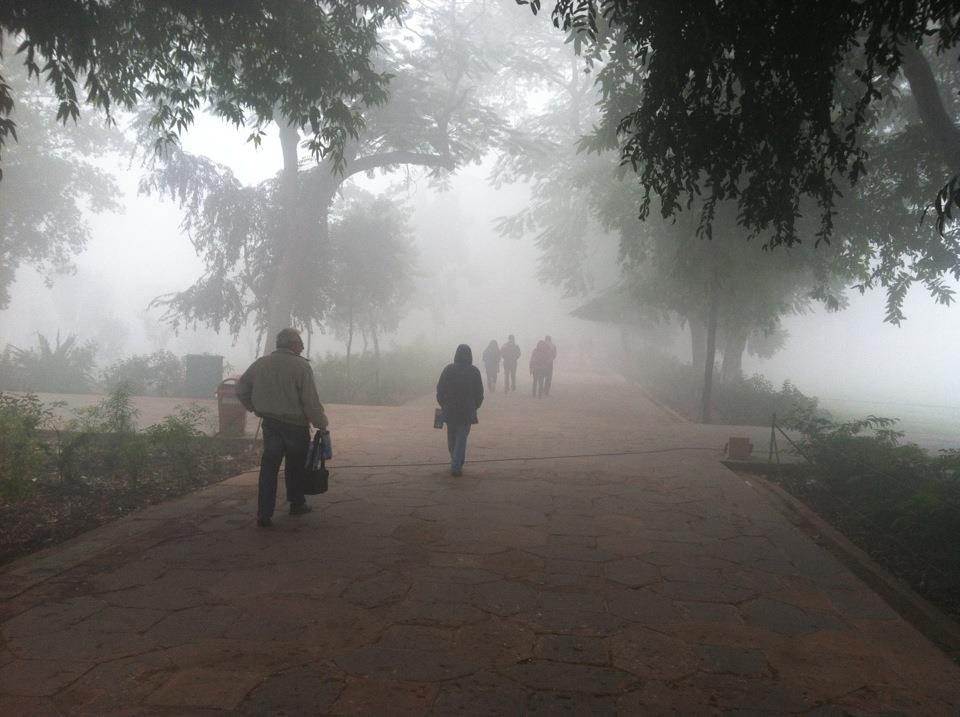
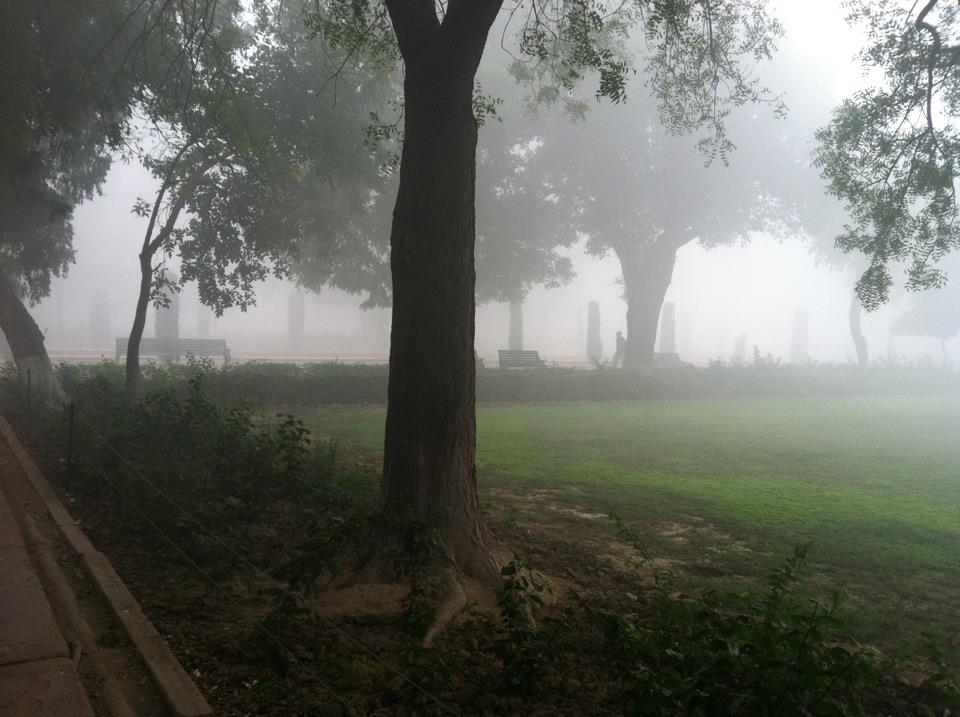
There was only fog.
We woke that morning filled with hope. The rooftop restaurant gave us a commanding view of… absolutely nothing. We stared into a wall of haze, sipping coffee and laughing at the absurdity of our timing. Surely the fog would lift. Surely the Taj Mahal would reveal itself.
Our guide, Kuldeep, assured us everything would be fine. He had led more than 500 tours of the Taj Mahal. He knew everything there was to know about its history and its beauty. We boarded our bus, grabbing our special cloth bags with a picture of the Taj printed on them. These were designed to hold the single water bottle we were allowed to bring inside the property. And we set off with excitement.
Fog. All the way there. Fog in the parking lot. Fog at the security lines. Fog as we walked the long approach toward the main viewing area. Each time Kuldeep stopped to point out an “excellent vantage point,” we nodded with wide eyes, imagining the magnificent structure hidden somewhere in the mist.
We took photos pointing at the picture on our water bottle bags. That was the only Taj Mahal available to us from any vantage point.
As we walked toward the building, we eventually reached the outer wall and finally saw something. White marble appeared just a few feet above our heads. Then the stone vanished again into the haze. The grand dome. The sweeping arches. The delicate inlays. All shrouded in fog.
We were standing beside one of the wonders of the world and could only see a sliver of it.
Our group laughed so much that day. Not because we had traveled halfway around the world only to miss the view. We laughed because we were sharing something unforgettable and slightly ridiculous. We were experiencing a story that would last much longer than a postcard-perfect photograph.
Kuldeep shook his head with disbelief. In all his tours, he had never experienced this. He told us we were a very select group of visitors who could claim something few on Earth could say. We visited the Taj Mahal, but we have never actually seen it.
He was right. I still have never seen the Taj Mahal in person.
The destination was never the prize
You might think this would be a disappointment. But when I look back on that trip, the fog made everything richer.
The destination was never the prize. The people were.
We shared meals and conversations and inside jokes. We tried foods that were new to us. We navigated chaos and beauty side by side. We saw India’s contrasts and colors and kindness. We saw devotion expressed in temples and marketplaces. We saw how history and modern life can exist on top of each other without barriers.
The Taj Mahal is extraordinary. I would love to see it someday with clear skies and a rising sun. Yet I already have what I came for.
When I think about all the amazing places I have been blessed to visit, a pattern appears. I never say, “Remember when we saw that famous landmark.” I say things like:
– Remember how we got lost trying to find it? – Remember the tiny restaurant we discovered afterward? – Remember the guide who became a friend? – Remember that amazing gelato place in the middle of nowhere?
I have my memory of that rooftop breakfast. I have the echo of laughter on the bus. I have the photos of my family and friends pointing to a water bottle bag as if it were the crown jewel of Indian architecture.
The world is full of wonders. But relationships are the wonders that stay with us.
The real bucket list
If someday I return to the Taj Mahal and finally see it, I’ll smile and take it in. But I know the picture etched into my heart is already complete. It’s filled with faces and voices and laughter. It has the beauty of our shared experience.
Checklists are fine for airplanes. But our lives deserve something better.
The best adventures can’t be captured by a camera or a perfect view. What lasts are the relationships made stronger by shared surprises, setbacks, and moments of wonder.
This story, fog and all, remains one of my favorites.
Photo by Mark Harpur on Unsplash showing the majestic beauty of the Taj without fog.
The photos below are mine showing what we actually saw. Unfortunately, the amazing water bottle bag photos are stored on a drive I can’t see…a little bit like that morning in Agra more than a decade ago.
There it is!Can you see the Taj in the background?Can you see the Taj on the right?
There are times when we are firmly in the right. The facts are clear. The other person made a mistake or caused harm. In that moment, we face a choice. We can leverage our position of strength and press our advantage. Or we can give grace.
Grace is the strength to let go of proving a point. The willingness to give someone space to recognize what went wrong and find their way back. Every one of us needs that space, because every one of us makes mistakes.
Grace holds truth in one hand and love in the other. It sees what happened and names it honestly. It also holds out the invitation to begin again. In this way, grace strengthens relationships and helps keep them whole.
Grace looks to the future. A person rarely grows when held down by another’s righteousness. They grow when they feel the freedom to face their mistakes with dignity. Grace creates space for that freedom.
The flow of grace is a gift that we depend on. It honors truth. It protects relationships. When we give grace, we often find that it changes us as well.
We may discover that the person we extend grace to carries burdens we never knew about. When we choose grace over vindication, we become more human, more aware of our own weaknesses, and more capable of genuine compassion.
“Put on then, as God’s chosen ones, holy and beloved, heartfelt compassion, kindness, humility, gentleness, and patience, bearing with one another and forgiving one another, if one has a grievance against another; as the Lord has forgiven you, so must you also do.” – Col 3:12–13
Ask someone how their day went, and odds are, they’ll say, “Busy.”
Dig a little deeper, and you’ll hear about the fires they had to put out, the urgent requests from their boss, or the upset customers they had to talk in off the ledge. Everyone’s racing from task to task, reacting to whatever pops up next.
What you don’t hear—at least not often—is someone saying, “Today I worked on our 30-day goals,” or, “I spent the afternoon exploring how AI might streamline our operations,” or, “I studied what our competitors are doing better than we are.”
Most people are caught in an infinite response loop. The big questions get pushed to tomorrow, especially if the boss isn’t asking about them anyway. And often, he’s just as busy reacting to his own list of urgent problems.
Response mode is easy. You don’t have to choose what matters most. Just deal with what’s in front of you. There’s no time for stepping back, rethinking the process, or preventing tomorrow’s fires today. You stay busy. That way, you can tell yourself you’re still needed.
And when the day ends, you can point to everything you handled and feel like you earned your paycheck.
But the real questions are: Did you move any of your monthly, quarterly, or annual goals forward? Do you even know what they are?
For many, the answers are no and definitely no.
Working in the business is the default. It’s safe and familiar. It keeps your hands full.
Working on the business is different. It takes time, thought, and courage. It means facing questions without clear answers. It means exploring new tools, unlearning old habits, and imagining better ways to serve your customers.
No fires today? Is your boss on vacation? Sounds like an easy day.
But if no one thinks about what’s next, if no one is asking what should change or improve, and if no one is steering the ship, that ship will eventually drift. Maybe into a storm. Maybe into the rocks.
And no one will notice until it’s too late.
So, ask yourself: Are you steering, or just responding?
Side note: These questions apply outside of work. If we’re not actively steering in our personal lives, we can just as easily find ourselves in a storm we could have avoided, running aground on some rocks, or drifting aimlessly out to sea.











You must be logged in to post a comment.