An employee uses ChatGPT to draft a proposal and sends it to a colleague. The colleague feeds it into their ChatGPT for an evaluation and sends back the feedback. The first employee asks ChatGPT to incorporate it and returns the revision.
A few rounds later, everyone agrees the work is finished. Success. Two people produced a proposal in a fraction of the usual time.
Notice that nobody asked the other person a question. They only exchanged answers.
Did they actually collaborate? Did they challenge each other’s thinking or understand the problem any better? Or did they trade AI-generated work until both systems agreed it was good enough?
I see this pattern a lot.
For decades, organizations have rewarded productivity. More output, less waste, less time. AI is very good at exactly that. Work that took hours now takes minutes.
The obvious move is to do the same work with fewer people. The savings are immediate and measurable, and companies do have to survive.
The alternative is to point the reclaimed time at the business itself. Imagine a team that uses its saved hours to interview ten customers a month and discovers a need no one had on the roadmap. Or a manager who replaces weekly status reports with a weekly session to brainstorm new solutions to problems we didn’t have time to explore in the past.
That all sounds great, but it’s harder than assigning tasks and measuring their completion.
It’s unstructured. It demands curiosity, judgment, and a willingness to take risks. It runs on conversations rather than statuses and finished assignments. It doesn’t produce neat deliverables or impressive slides.
We’ve become far more comfortable measuring completed work than evaluating the benefits of creative thinking.
And employees have adapted. Many have spent years accepting assignments, completing them, and moving on to the next task. They learned to wait for direction rather than offering opinions or challenging assumptions.
We’ve conditioned people to deliver answers. Now we need them to start asking questions.
That’s a challenge for managers and employees alike. Leaders have to create room for independent thinking, and employees have to rekindle their curiosity and the confidence to use it.
AI can serve either goal. It can write the proposal faster, or it can help us test assumptions and explore ideas. The first makes the business we have more efficient. The second builds a better one.
Ask your team what question they’d explore with five extra hours. Their initial reaction will tell you something about your culture. But their answers might tell you something important about your future.
Doing what we’ve always done more efficiently is now the price of admission. Discovering what we should be doing next is the real prize.
And getting there before our competitors do is how we win it.
Most of us know FUBAR as the old military acronym for something that has gone terribly wrong (f’d up beyond all recognition). There’s another FUB that can help companies avoid getting there.
Fear. Understand. Build.
Fear
Fear gets a bad rap in business. Leaders are supposed to be confident, decisive, and optimistic about the future. But fear can be useful. A new competitor appears. Technology changes what customers expect. An industry that seemed stable suddenly isn’t. AI makes something possible that would have sounded ridiculous three years ago. If that makes you a little afraid, good, that means you’re paying attention.
The problem isn’t fear. It’s what we do next.
Companies rarely respond to disruption by doing nothing. They form committees, hire consultants, buy software, launch pilots, and look for ways to respond. Activity feels like progress.
AI is a great example of this. Ask companies what they’re doing with it, and many will describe activities. You’ll hear that developers are writing code faster, reports are getting better, repetitive work is disappearing, and some SaaS applications are now built internally. Then someone shows the board a slide that says 47 AI use cases are underway, and everybody feels a little better.
The company is doing something.
Activity helps us learn, but it becomes dangerous when we mistake it for understanding. A company can get very good at using AI to improve its existing operating model without asking whether that model is the one it will need.
Understand
It’s reasonable to ask: What can we do with AI?
But that turns our attention inward to the easier questions. How can we automate more work? Reduce process costs? Increase efficiency?
The harder question is: How will AI change the things that determine whether our business succeeds in the future?
Understanding starts with the questions every business has always had to answer. AI adds new urgency and new possibilities, but the customer should still be at the center:
Do we know what customers value most?
Why do customers choose us today?
What would make them leave tomorrow?
What are they tolerating because they don’t have a better alternative?
Where are we making life harder for customers than it needs to be?
What will future customers expect that seems optional or trivial today?
What could a competitor offer that makes our product look expensive, slow, or obsolete?
These questions bring the customer back to the center. They force us to look beyond internal efficiency and understand what customers value, where they experience friction, how their expectations are changing, and what could cause them to choose someone else.
That’s the perspective we need before deciding what to build.
AI can improve how we operate, but its bigger impact will be on customer expectations and competitive possibilities.
While one company uses AI to polish yesterday’s machine, another is building the machine that replaces it.
Build
Building takes money, people, time, and a willingness to be wrong. That last one is the hardest.
The present always has the advantage. It has customers, revenue, problems, and deadlines. Established organizations are built around these realities. Budgets back known priorities, managers are rewarded for predictable execution, and mistakes draw more criticism than the opportunities nobody pursued.
The future arrives differently. It shows up as ideas competing for people, money, and attention against something already producing results. The same systems that run today’s business can quietly squeeze the life out of what comes next.
Steve Jobs had a blunt rule about this: “If you don’t cannibalize yourself, someone else will.” Cannibalizing yourself requires taking resources from something that works today and putting them behind something that might replace it tomorrow.
That takes deliberate leadership. Good leaders create room to build. They give people permission to work on problems whose answers aren’t already known. They fund small bets before a traditional business case can prove they’ll work and accept that some ideas will fail along the way. When something starts working, they move people, money, and attention behind it.
None of this requires betting the company. Build something small, put it in front of someone, learn, adjust, and build again. Small bets create information, information improves understanding, and better understanding supports larger bets.
It’s the leader’s job to protect some capacity for tomorrow from the demands of today.
Organizations follow the questions their leaders ask. Celebrate the number of AI use cases and you’ll get more of them. Reward cost savings and you’ll get more efficiency. Both have value, but adaptation requires a lot more.
Leaders should reward learning, customer insight, and the willingness to pursue an idea before everyone agrees it’s obvious.
The real advantage comes from creating an organization that can move into uncertainty, learn quickly, and change direction as the evidence develops.
Then someone has to build.
Because while we’re debating what the future might bring, someone else is creating it.
Fear. Understand. Build.
Embrace a little FUB. It might keep you from becoming totally FUBAR.
Hat tip to Atlas Berry, whose FUB framing started me thinking about how businesses respond to disruption.
Photo by Urban Gyllström on Unsplash – the customer gets the final vote on whether it’s good.
You can watch someone prepare and pour a concrete slab.
You can see how they set the forms, grade the dirt, calculate the concrete they’ll need, screed it, float it, edge it, and apply a perfect broom finish. You can study the tools. Watch videos explaining every step.
That’s still a long way from doing it yourself.
Doing it requires moving every shovel of dirt by hand. You have to decide how the grade should run and where the water will drain. You wonder if the forms are strong enough, if the slope is right, and whether the finished slab will look terrible.
Then the truck arrives. The clock starts.
Tools that looked simple in someone else’s hands feel entirely different in your own. The concrete is heavy. It pushes back. Your shoulders hurt. Your back aches. The clock is ticking.
You begin to see things you couldn’t see before. Low spots. Ridges. Edges that need attention. Sections that are ready for the next step and others that need to be left alone.
Maybe the slab turns out great. Maybe it’ll suck.
Either way, you’ll know a lot more at the end of the day than you knew that morning. The work changes your eye, your hands, and your judgment.
An AI tool can help you prepare. It can list the materials, calculate the volume, explain the tools, identify common mistakes, and suggest videos.
But it can’t simulate the way the trowel feels moving across the concrete. It can’t tell you when you’ve worked it enough and it’s ready to broom.
I’ve been thinking about that distinction after reading a piece by Shawn Smucker that Tim Ferriss highlighted in his Friday email.
Smucker wrote about what we may lose when we turn to AI too quickly. Instead of calling a friend who knows how to cook, camp, fix something, or solve a problem, we can ask an AI tool and have an answer in seconds.
The answer may be good. It might even be clearer than what our friend would’ve told us. But the answer is probably the least valuable part. Calling our friend could lead to a story, an old memory, some unexpected advice, or a forty-five-minute conversation about what’s happening in their life.
Ferriss also shared Kurt Vonnegut’s story about going out to buy one envelope rather than ordering a hundred online. Vonnegut wanted the trip. He wanted to see people, notice things, and have whatever little encounters came with buying that one envelope. The inefficiency was part of the experience.
We spend a lot of time trying to remove friction in the pursuit of efficiency, especially the friction that drains us. Repetitive paperwork. Unnecessary steps. Work that adds very little value.
But some friction asks more of us. Forcing us to pay attention, make new decisions, correct our mistakes, and develop judgment we didn’t have before.
The tricky thing is that both types of friction feel exhausting while we’re experiencing them.
AI is great at removing friction. It can research an unfamiliar topic, organize an idea, compare alternatives, create a first draft, write code, build a prototype, or break a daunting project into manageable steps.
That’s good stuff.
But AI can also produce polished-looking work long before the person using it can see what’s missing. That polish can create confidence the work hasn’t fully earned.
A lot of what we recognize as “AI slop” grows out of that premature confidence.
Friction develops the eye that can see past the polish. When we’ve felt low spots under a trowel, we can see them in someone else’s slab. When we’ve fought a stubborn argument into shape on the page, we can see the soft spot in someone else’s paragraph.
Skip that resistance and we skip more than the difficulty. We skip the experience that teaches us how to judge the work.
A working software prototype is a long way from a dependable product. A quick draft is a long way from a finished piece of writing. The distance between them is filled with the kind of friction AI helps us postpone but can’t remove entirely.
Remember wax on, wax off?
Daniel LaRusso thought he was doing random chores. Mr. Miyagi knew the repetition was developing movements and instincts Daniel would need later.
A lot of formative work is like that. We understand what it was building in us only after we’ve stayed with it long enough to grow.
Friction builds more than the finished product.
It builds the person who can tell when the product is finished.
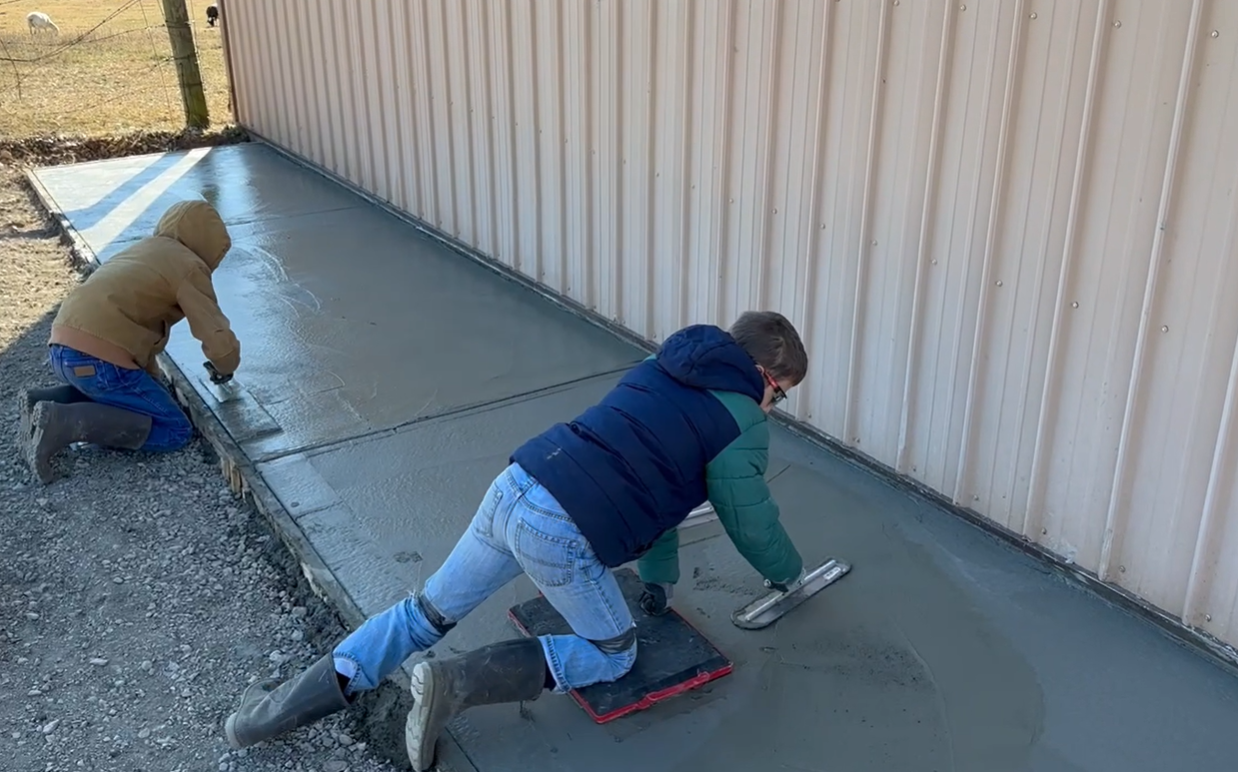
Photo – My four grandsons were my crew for this job. This was their first concrete project. The two older boys got their first chance to finish concrete, while their younger brothers are already looking forward to taking a turn on the next one. That was a fun day and that little sidewalk turned out great!
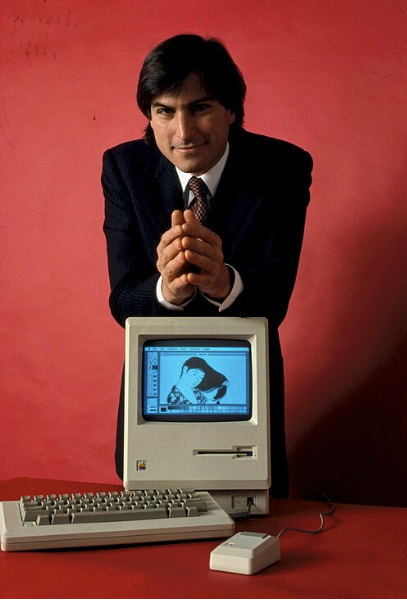
Jobs was speaking at Lund University in Sweden, long before smartphones, search engines, or the AI tools we use every day. His hope was that someday we might capture the underlying worldview of a great thinker like Aristotle within a computer, so a future student could ask him questions and get answers.
It sounded futuristic then, but that future is here today.
We can open an AI tool and ask it to explain Aristotle, compare him to another thinker, or respond in a way that tries to reflect his philosophy.
That doesn’t mean we’re talking to Aristotle. We’re talking to a machine-generated synthesis, built from writings, interpretations, and patterns available to the model. Worth remembering, especially in a minute.
Jobs saw computers becoming more than storage devices. He saw interactive learning companions that could move us from consuming information to questioning it, testing our understanding, and entering into a dialogue with the past.
So, I ran a little experiment. I asked an AI tool to respond as if it were Aristotle, drawing on his known writings and philosophy, then I asked three questions…two about leadership, one about relationships.
Here’s what I learned, before you even read the answers. The AI handed me answers that sounded wise. It couldn’t do anything with what the answers asked of me. That work stayed mine, every time. Keep that in mind as you read the three exchanges below. Each quote is the AI’s synthesis, in Aristotle’s voice, not a historical record of what he actually said:
Question 1: Aristotle, what makes someone a good leader?
A good leader must first be governed within himself. He cannot guide others well if his own desires, fears, and ambitions are disordered.
Leadership is not merely a matter of authority or skill. It is a matter of virtue. A leader needs practical wisdom to judge what should be done, courage to do it, justice to give others what they are due, and temperance to restrain his own appetite for power, praise, or comfort.
The good leader does not seek the good of himself alone. He seeks the good of the community entrusted to him.
That answer sounds about right. Confidence, drive, decisiveness, and the ability to win can carry a person a long way. But without character or virtue, those same strengths eventually start working against the people they’re supposed to serve.
Whether it’s true of me is a separate question.
Question 2: Aristotle, how should a leader make decisions when the right answer isn’t obvious?
In uncertain matters, the leader needs prudence. No rule can fully replace wise judgment, because human affairs are too varied and particular.
The prudent person considers the purpose of the decision, the facts of the situation, the people affected, and the likely consequences. He also considers his own motives. A decision can appear reasonable while still being driven by pride, fear, anger, or vanity.
Good judgment is formed over time. It comes through experience, reflection, correction, and the habit of choosing what is noble rather than merely what is easy.
Most leaders want clarity. We want the right answer to announce itself. The spreadsheet, the policy, the consultant, the precedent that makes the decision obvious.
Unfortunately, difficult decisions usually live where the information is incomplete, the tradeoffs are real, and the consequences land on people who are more than names on an org chart.
But, he asks an even harder question. What’s happening inside me as I make this call? Am I deciding from courage or fear? Justice or favoritism? Humility, or the need to be seen being right?
AI can organize the options. It can summarize the arguments. It can show me possibilities I might have missed.
But it won’t clean up my motives. That responsibility remains with me.
Question 3: Aristotle, what makes a friendship or relationship worthy of trust?
The highest friendship is rooted in virtue. Some relationships exist for usefulness. Others exist for pleasure. These are not necessarily bad, but they are fragile because they depend on what the other person provides.
A deeper friendship is different. It is based on willing the good of the other person. Such a relationship is steady because it rests on character, not convenience.
To be worthy of trust, a person must be truthful, faithful, and committed to the good of the other. A trustworthy relationship helps both people become better than they would be alone.
We understand relationships of usefulness. Work relationships, customer relationships, networking relationships, even friendships that lean heavily on shared convenience.
But, are we willing the good of the other person? Do we want what’s good for them, or only what’s useful to us? Do we want them to become better, or only to make our life easier?
Seeing this short exercise, I think Mr. Jobs would celebrate how close we’ve come to his 1985 vision. We have more access to information than any generation before us. We can retrieve facts instantly, summarize books in seconds, compare ideas across centuries before lunch.
That’s amazing!
Yet the more powerful the tool gets, the more responsibility shifts back to the person using it.
Ask Aristotle about leadership, and I have to ask whether I can govern myself.
Ask him about prudence, and I must examine my own motives before I decide.
Ask him about friendship, and the real question is whether I’m willing the good of the other person or just protecting what’s useful to me.
AI tools can generate answers. Wisdom starts when we let those answers question us back.
The machine can help us ask Aristotle a question.
It can’t make us become the kind of person who can live the answer.
AI can prototype our workflow. It can draft our requirements. It can generate our user stories. But it has no idea how our business actually works.
It can’t tell us where the bottlenecks in the process are. Our loan officer knows that. It can’t explain why the workaround exists. Our operations manager knows that. It doesn’t know which shortcuts blow up in an audit. Our compliance analyst knows that. It has no idea where customers rage-quit. Our customer service supervisor knows that.
Our best people, the ones who actually know how the work works, often have trouble translating what’s in their heads into something a developer can build. They know where the friction is. They know which exceptions happen every Thursday afternoon even though the procedure says they shouldn’t. They know which approval step matters, and which one is just a bureaucratic leftover from a reorg three years ago.
For the first time, the people who do the work and understand the problems they’re trying to solve can start shaping the solutions. AI gives their expertise a doorway it never had before.
These subject matter experts can sit down with an AI tool and start turning what they know into something visible. Plain language in. Workflow out. Prototype sketched. Edge cases surfaced. User stories drafted.
And when they do that, something shifts. They realize software development isn’t magic. It’s a thousand small decisions that someone has to make. That realization alone is worth the exercise.
Instead of walking into a meeting saying, “we need a dashboard” or “can we automate this?” they walk in with something tangible. Rough? Sure. Wrong in places? Probably. But it doesn’t have to be production-ready. It has to be conversation-ready.
That changes everything.
Developers, architects, and project leaders can see the idea. They ask sharper questions. They spot what already exists, what creates risk, what can ship fast. The subject matter expert starts understanding what building a solution actually involves. The dependencies. The data quality landmines. The difference between a slick mockup and something that holds up in production.
That shared understanding transforms the relationship between business and technology.
We know the old pattern. Business has a need that’s difficult to explain, the technology team tries to interpret it, weeks pass, something appears, the business says, “close but not what we meant,” the cycle repeats. Everyone gets frustrated. Nothing ships.
AI doesn’t kill that cycle. It compresses and turbo charges it. When developers start with a real prototype and a real conversation, iterations can take hours or days instead of weeks.
The AI win is getting people in the same room faster, with something real to react to.
If more people can generate ideas, workflows, and prototypes, we’ll start getting more possibilities than we can pursue. A good problem to have, but still a problem.
Bottom-up energy is powerful. It surfaces solutions from the people closest to the work. It finds problems leadership didn’t know existed.
But without focus, we’ll drown in prototypes. The bottleneck doesn’t disappear. It moves from “we don’t have enough ideas” to “we have no idea which ideas deserve investment.”
That’s on leadership.
Executives, your job isn’t to be the gatekeeper of imagination. Play that role and the old problems come back fast. Good ideas will die in departments, in notebooks, in hallway conversations that never go anywhere. You become the reason nothing changes.
Your job is to be the steward of focus. Create the channel. Invite ideas up. Encourage people to explore, prototype, get specific. Then make the call on what moves forward.
Bottom-up imagination. Technical refinement. Executive focus. That’s a model that AI tools make possible.
Subject matter experts bring better ideas because AI helps them say what they know. Technical teams sharpen those ideas because they understand what durable software is. Executives look across the whole landscape and ask the hard questions nobody else is positioned to ask.
Does this solve a real problem or just an annoying one? Does it scale? Does it duplicate something we already own? Does it create risks we can’t absorb? Is this a strategic investment or a distraction dressed up as innovation?
Not every prototype becomes a project. Not every project deserves to live in our permanent technology environment. That’s not a failure of imagination. That’s how imagination gets distilled down to create tangible business value.
The future advantage won’t go to the fastest movers or the biggest tool buyers. It won’t go to the organizations that treat AI like a cure-all and wonder why nothing changes.
It’ll go to the ones that know their business well, listen hard to the people doing the work, and never confuse creating more things with creating better things.
AI can help us build faster. That’s the easy part.
Knowing what to build and why. That’s still on us.
Photo by BEN ELLIOTT on Unsplash – This is a downwind leg, spinnakers out, boats grabbing everything the wind has to offer. A good metaphor for AI. It can give us remarkable speed. But we’re still in a race, there’s still a course to navigate, and the turns are still ours to make.
Give me something funny, something distracting, something that asks almost nothing from me. If I accidentally learn something along the way, great. Bonus. But the goal is to let my mind relax and enjoy the ride.
So there I was, doing exactly that. Reading a Substack post about the music industry, the way you read things when you’re unwinding, when an innocuous phrase popped up.
Emotionally anonymous.
The writer was talking about AI-generated music and how the current culture around it was producing art that had all the right shapes and none of the soul. Music that sounded like music but felt like nothing.
This wasn’t just about music.
Think about the last hour you spent scrolling.
A video that made you laugh. A post that made you mad. A headline that informed you for about twelve seconds. A clever line made you nod. A song clip gave you a little lift.
Then it was gone.
Not just gone from the screen. Gone from you.
You can barely remember what you just watched. You remember the feeling, maybe. A little spark. A little hit. A small taste of something sweet.
Brain candy…but all the time.
The sensation of engagement without any connection.
Not that everything has to be deep. Some things are supposed to be brief. A joke. A smile. A beautiful moment.
But brief isn’t the same as disposable.
It feels like we’re living in a world designed to make nearly everything disposable.
Even feeling. Especially feeling.
We scroll past outrage. Beauty. Someone’s best day and someone’s worst day. A song that took three minutes to generate or a song that took thirty years of pain to write.
Our screen treats them almost the same.
Here. React. Move on. Here. React. Move on.
A little joy. A little envy. A little anger. Some nostalgia. Maybe a little self-righteousness. A laugh.
Next.
I’m not sure what it all means, but it has something to do with attention versus memory.
I wonder if we’re training ourselves to prefer things that ask almost nothing from us, except our attention.
Things that arrive pre-approved for whatever emotional response the algorithm thinks we’re most likely to want.
Which is where Wordsworth comes in.
A strange leap…mindless scrolling to Wordsworth.
But maybe it isn’t strange at all.
He wrote that poetry “takes its origin from emotion recollected in tranquillity” (Yes, he spelled tranquility with an extra L).
What’s a recollected emotion?
It’s that song that comes on and suddenly you’re seventeen again, in a car you thankfully no longer own, with people you haven’t seen in over forty years, feeling something you thought you’d forgotten.
You’re not only remembering it. You’re back inside it.
That’s what recollection does. It transports us. In milliseconds, today’s experience reaches back and finds the first time we felt this way, the moment that wrote itself into us.
We’re not just reacting to what’s in front of us. We’re connecting to something foundational, something that helped make us who we’ve become.
That’s the opposite of what the stream offers.
The stream triggers. It harvests. It optimizes for our reaction and moves on before that feeling has anywhere to go.
Recollection goes the other direction. It reaches back, finds the root, and pulls the past into the present. You recognize something. You don’t just remember it.
Real human art has a before and after inside it.
An arc.
Something happened. Someone lived it. Suffered through it, laughed about it, misunderstood it, got it wrong, got it more right, carried it into the quiet, and then tried to make something from it.
A song. A poem. A letter. A photograph. A few lines written late at night when the house is quiet.
The best things don’t merely strike us. They return to us. They become part of who we are.
Then AI enters the room, because of course it does. AI enters every room now.
The work has the structure of feeling but not the experience behind it.
It sounds sad but it’s never been wounded. It sounds wise but it hasn’t made life-altering mistakes. It sounds compassionate but it hasn’t loved anyone. It sounds brave but has never faced real fear.
That’s what emotionally anonymous means to me. And once I saw that phrase, I’ve started to see it a lot.
It would be simple to say AI is fake and human work is real.
That’s a clean line. It’s also not quite true.
A person using an AI tool can still be struggling with the work. Still shaping it. Pushing back. Adding their own history. Rejecting lines that sound impressive but don’t feel true. Working until the piece finally says what they were trying to say.
The presence of a tool doesn’t erase the presence of the human.
But it does raise the responsibility of the human in the loop.
There’s a big difference between asking a tool, “Make me something about this topic,” and asking, “Help me understand what I’m trying to say.”
One produces emotionally anonymous content.
The other can be part of a real human process, because the human is still leading. Still choosing. Deciding what matters. Still saying No, that’s too slick. No, that sounds like something but says nothing. No, that isn’t what I mean. Cut that. Keep this. Slow down here.
That’s not outsourcing the soul of the thing.
A pen is a tool. A typewriter is a tool. A paintbrush and camera are tools.
Tools have always changed our work. Sometimes they’ve cheapened it. Sometimes they’ve expanded it. Sometimes they’ve made the impossible possible.
The question isn’t whether a tool was involved.
The better question is whether the human surrendered the work or entered it more deeply.
Did they bring judgment? Did they bring care? Did they resist the easy version?
Did they leave fingerprints?
As people get used to receiving AI-generated content, truly human work may become harder to recognize. A picture might be dismissed as AI-generated. A carefully written essay treated as machine polished. A handmade story received with a shrug.
Did they really make that?
That little question changes something.
Someone may have poured time, discipline, revision, taste, failure, and care into a piece of work, only to have it discounted as another product of the machine.
What a strange burden to place on work that’s already hard enough to make.
Maybe our fingerprints will become more valuable precisely because they’ll become harder to fake and easier to overlook.
Maybe the rough edges will matter more. The old scars. The sentence that sounds like a real person from a real place with a real history.
The human voice will have to become more human. Less generic. Less inflated. Less smooth. Less afraid of being specific. Less afraid of carrying the marks of a life.
Because the stream won’t slow down.
The brain candy will get sweeter. The generated songs will get better. The images will get more convincing. The essays will get cleaner. The machines will become more fluent in the language of feeling.
But fluency isn’t witness. It never was.
The human has to stay in the work for more than just quality control. To preserve something the machine can’t supply. The fact that a real person was there, and it mattered to them.
I don’t want fewer tools. I don’t want people to stop making things because the machine can make an excellent version too.
But I do want us to remember the difference between a reaction and something that stays with us. Something made quickly to catch us, and something made carefully enough to keep us.
I want us to protect the fingerprints.
The hesitation. The humor. The experience.
The strange little detail nobody would invent unless they had really been there. The line that isn’t perfect but is alive.
Brain candy will keep giving us the sensation of feeling.
But the things that last will still need something more.
They’ll need recollection and witness.
They’ll need fingerprints.
Credit to Joel Gouveia, who showed me the phrase “emotionally anonymous” in his Substack piece. Something I’ve been noticing for a while but didn’t have the words to describe.
My niece is turning 21 in a couple of weeks. That milestone prompted me to go back and read a post I wrote in 2013 called Advice for a New 21-Year-Old.
Reading it now, I still stand behind it. But a lot has changed in the world and in me since then. A 21-year-old stepping into adulthood today faces a different landscape than the one I was writing about then. After more than a decade of watching young people navigate it, I think an update is in order.
Back in 2013, I intentionally opened with drinking and gambling. Those are two of the classic threshold items attached to turning 21. Things the world suddenly says you’re allowed to do.
Turning 21 feels significant in part because it comes with new freedoms. New access. New choices. New opportunities to say yes to things that used to be off limits.
But if I were to distill what I want to say today, it’s this:
The most important part of turning 21 isn’t what you’re allowed to do. It’s what you’re responsible for doing with your new freedom.
On Drinking
Back in 2013, I wrote specifically about types of alcohol, mixing drinks, drinking water between drinks, and a few other practical things. The tips were fun, and I meant them. But what I was really trying to say was simpler.
Don’t let alcohol become the thing that teaches you who you are.
A 21-year-old can easily mistake access for maturity. Being allowed to drink is one thing. Knowing how to carry yourself is another.
If you choose to drink, stay in charge of yourself. Stay aware. Stay responsible. Don’t confuse recklessness with fun, or excess with adulthood.
There’s nothing impressive about losing control, hurting people, damaging your future, or building habits that begin as entertainment and slowly become dependence.
Freedom says you can. Wisdom says you don’t always have to.
On Gambling
Gambling is worth talking about, less for the casino tips and more for what it teaches us about life.
A lot of life will tempt you into thinking you can outsmart systems that were built to profit from your confidence. Sometimes that system is a casino. Sometimes it’s consumer debt. Sometimes it’s a flashy investment story. Sometimes it’s just your own belief that you’re the exception to every warning sign.
Understand the odds. Understand the incentives. Understand that some games were built for you to lose slowly enough that you keep playing.
That lesson applies far beyond cards, dice, and slot machines.
On Money
At 21, your income may still be modest. Your savings may be thin. But your financial decisions aren’t any less meaningful.
This is the age when you should begin learning how money actually works.
Learn how to live below your means. Save at least 10% of your income, always. Learn how savings accumulate and compound over time. Einstein called compound interest the most powerful force in the universe, and he was right.
Learn how debt can easily grow if you allow it. Learn how investing works. Learn what markets do over time. Learn what risk is and what it isn’t. Learn how compounding works for you, or against you.
Don’t hand the whole subject over to experts and decide this isn’t for you.
It is for you.
Nobody can make this investment in your understanding except you. It’ll take effort, time, and discipline, but the payoff will be enormous. The earlier you begin, the more options you give yourself later.
On Taxes
This is one area I would add much more explicitly today.
Taxes shape your paycheck, your investments, your business decisions, your home decisions, and your retirement decisions. They are one of the most powerful forces shaping the economy around you. Most people your age treat taxes like background noise. They are anything but background noise.
Learn how federal income taxes work. Learn how your state handles taxes, including property taxes. Learn the basic tax forms. Learn what withholding is. Learn the difference between deductions and credits (it’s a big one). Learn how capital gains differ from ordinary income.
Most importantly, learn how and why governments shift tax policy. You’ll find that it’s often less about revenue generation and more about encouraging or discouraging certain behaviors. When you understand this, the debates about tax policy start making a lot more sense.
You don’t need to become a tax attorney. But you do need to stop treating taxes as some mysterious thing that happens in the background while adults in suits handle it for you.
The sooner you understand taxes, the less often you’ll be surprised by them.
On AI and Paying Attention to the Future
This didn’t belong in the 2013 version the way it does now.
If I were talking to a new 21-year-old today, I’d tell them to learn how to use AI well.
Not as a crutch. Not as a substitute for thinking. Not as some fantasy weapon that will let you dominate the world.
Use it as a tool.
Use it to expand your access to knowledge. Use it to test ideas. Use it to get a rough draft or minimum viable product moving. Learn what a minimum viable product is and why it matters so much to growth.
Use it to make an idea more tangible. Use it to model possibilities. Use it to iterate faster. Use it to tighten your thinking by forcing your vague idea into something clearer and more real.
An idea in your head can feel pretty smart. The moment you try to express it, structure it, test it, or build it into something visible, you’ll begin to see its strengths and weaknesses. AI can help accelerate your thinking process.
A lot of people are afraid that AI will eliminate jobs, upend industries, and leave ordinary people behind. That fear is understandable. But the larger pattern is nothing new.
History is full of major technological shifts that changed the economic framework people were living in. Industrialization changed everything. Then electricity. Then assembly lines, cars, computers, the internet, and smartphones. Each wave brought creative destruction. Old methods faded, old jobs shrank, new opportunities appeared, new leaders emerged.
AI is doing the same thing now. And the people who will thrive aren’t the ones who wish the old way would come back. They’re the ones paying attention to where the world is going, and responding.
Pay attention to what’s becoming easier, faster, cheaper, more valuable, or more scalable. Pay attention to which skills are fading and which ones are growing. Then adapt. Learn. Position yourself well.
That’s a far better response than fear.
On Health
At 21, most people feel almost invincible. That feeling can fool you into thinking poor habits are free. They aren’t. They just send their bills later.
Make physical activity a normal part of your life. Build it into your routine so deeply that you miss it when it’s absent. Walk. Run. Lift. Stretch. Work outside. Stay active in ways that make your mind and body stronger, more capable, and more durable.
Healthy habits pay real dividends over time. Energy, mobility, resilience, mental clarity, confidence, longevity, and quality of life. These aren’t accidents. They grow out of a disciplined and consistent approach to taking care of yourself.
If you build a strong base now, your future self will thank you.
On Faith
A 21-year-old may or may not have ever been meaningfully exposed to faith. Some were raised around it. Some were barely around it at all. Some were exposed to a shallow version of it and walked away before they were old enough to examine it for themselves.
But by 21, your openness to faith is your responsibility.
Faith should never be reduced to pretending. You don’t need to manufacture certainty where you still have questions. But you should stay open enough to seriously consider that life is more than work, pleasure, achievement, money, and survival.
Ask the bigger questions.
Why are you here? What is good? What is true? What does it mean to live well? What does it mean to love well?
These are foundational questions. If you ignore them, you’ll still build your life on some kind of answer. You just may not realize it.
Faith has a way of changing the scale of everything. It changes how you think about suffering, success, failure, purpose, love, forgiveness, responsibility, and hope. It gives context to things that otherwise feel random, hollow, or purely material.
Stay open. Read. Ask. Listen. Seek out serious people of faith, not just loud people with opinions.
You don’t have to have everything figured out at 21. But you’re old enough to begin seeking honestly.
On Learning from Good People
Find good people and pay attention to them.
Look for people whose lives make sense up close, not just people who look impressive from far away. Find people who have built something solid. Who work hard, keep their word, love their families well, handle money responsibly, and have endured difficulty without becoming cynical.
Ask questions. Watch what they do. Learn from their patterns.
At 21, you’re old enough to choose your influences more deliberately than ever before. Choose wisely.
On Freedom
Turning 21 brings new freedom. But freedom by itself is only raw material.
What matters is what you build with it. You can use it to drift, indulge, imitate, and react. Or you can use it to build capability, health, wisdom, faith, discipline, and a life that stands up under real weight.
That’s the better use of it.
The world tends to celebrate 21 by pointing to what you can now do.
I’d rather point to what you can begin becoming. That’s where the real opportunity is.
Happy Birthday, Isabella, from your favorite uncle.
Not the person gripping the handles. Not the people leaning over the table. Not the ones watching from the side, reacting to every near miss and lucky bounce.
I mean the little player on the rod.
The one fixed in place. The one locked into one line. The one who can slide back and forth, but only so far. The one who can affect the game, but only if the ball comes close enough to matter.
They don’t choose the strategy. They don’t choose the timing. They don’t choose the pace.
Most of the time, they wait.
Then the ball comes their way, and suddenly everything matters. Angle. Timing. Readiness. Contact.
That sounds a little like work to me.
A lot of people spend their days in roles that aren’t all that different. They work inside boundaries they didn’t create. They carry responsibility inside systems they don’t control. They try to do their part well, even when they can’t see the whole field or understand everything that sent the work their way.
They may not know the whole game, or how the score is being kept. They may not even know what happened two lines back that sent the ball in their direction.
Still, when it reaches them, their moment is real.
There’s something important in that.
We don’t need to control the whole table to be responsible for our part of the play. We don’t have that kind of control in most of life. We’re asked something simpler and harder. Be ready. Pay attention. Do the best you can with what reaches you.
That alone is worth contemplating.
But what if we add artificial intelligence to the picture?
Imagine that same foosball player being given access to a system that sees patterns faster. A system that recognizes angles sooner. A system that can suggest where the ball is likely to go before the player fully sees it unfold.
At first, that sounds like help. And often it is.
The player reacts faster. The contact gets cleaner. The scoring chances improve.
AI helps people create faster, sort faster, summarize faster, and respond faster. It removes friction. It can make a capable person more effective inside the lane they’ve always occupied.
That is the promising side of it.
But there is also an uncomfortable part.
Once the system starts seeing faster and suggesting more accurately, someone above the table is eventually going to wonder why they still need the player. That question doesn’t always get asked out loud. But it’s there. You can feel it. Pretending otherwise doesn’t make it go away.
That unease is legitimate.
The question is what to do with it.
Here’s where I think the real work begins.
What separates a great foosball player from an automated one isn’t reaction time. Machines will win that contest.
The deeper difference is harder to name. Knowing when not to take the obvious shot. Recognizing that the ball coming from a certain direction is a trap, not an opportunity. Sensing that something is off and adjusting before the moment fully reveals why. Coordinating with the players on the other rods in ways that don’t require a word.
That’s judgment. That’s situational awareness. That’s the kind of thing that lives in the player, not the system.
AI can help with speed. It can help with prediction. It can surface options. But it doesn’t carry responsibility the way a person does. It doesn’t feel the weight of consequences. It doesn’t care about the human being on the other end of the decision. It doesn’t wrestle with what should be done. Only what can be done.
That still belongs to us.
I want to be honest about the limits of that claim. The argument that human judgment is safe from automation isn’t permanently settled. AI is advancing in that direction too. Anyone who draws that line with complete confidence is overconfident.
But if I define my value only by output and routine execution, I’ll always be vulnerable to something faster.
If my value includes judgment, trust, discernment, adaptability, and the ability to connect my small part of the field to a larger purpose, then the picture changes. AI becomes a tool I use, not a definition of who I am, or an immediate replacement for the work I do.
For some people, this reframing will feel like genuine good news. Their roles have always required judgment, and AI can finally free them from the parts that didn’t.
For others, the harder truth is that their role may need to change. Some work is primarily mechanical. Some lanes will be redesigned or eliminated in this process.
The courage in that moment isn’t pretending the role is something it isn’t. It’s being willing to grow. To move toward the parts of the field where human judgment still has the most to offer.
That is a hard ask. Unfortunately, for many people, it’s becoming a necessary one.
I also want to be honest about who fits this reframing the most. If you have domain knowledge, a network, and some runway, the opportunities ahead are genuine. If you are mid-career in a role that has been primarily mechanical, the path from insight to action looks different. That doesn’t make the direction wrong. It means the journey looks different depending on where you’re starting from.
But here’s something else worth considering, especially if uncertainty feels more like a threat than an opportunity.
The same tools raising these questions are also lowering barriers in ways we have never really seen before. Starting something new used to require capital, staff, infrastructure, and years of groundwork before the first real result.
That is still true for some things. But for many others, the gap between I have an idea and I have something real has collapsed in ways that are genuinely new.
The foosball player who spent years developing judgment, domain knowledge, and an instinct for the game now has access to tools that can help them build something of their own…not just execute better inside someone else’s system.
That’s a different kind of power than speed or efficiency.
It’s agency, if we choose to use it.
And it doesn’t have to be a solo venture. Some of the most interesting things happening right now involve small groups of people — two, three, maybe five — who share domain knowledge, complementary judgment, and a problem worth solving. With the help of these AI tools, they can pool their capabilities in ways that would have required a full company to attempt a decade ago.
Not everyone will go this route. Not everyone should.
But the option is more available than it has ever been. And for the person who has been quietly wondering whether there’s a different game they should be playing, this moment may be less of a threat and more of an opening.
The foosball player is still fixed to the rod. Still limited. Still dependent on timing. Still part of a game they don’t fully control.
That hasn’t changed.
What may need to change is the story the player tells about themselves. A bigger, truer one. One with more possibilities.
Use the AI tools. Learn how to maximize your position with them.
But don’t let AI reduce you.
You were never only the motion. You were never only the output. You were never only the kick.
You were the one responsible for what to do when the ball came your way, and that’s still true.
And now, for the first time, you may have more say than ever in choosing your table.
Photo by Stefan Steinbauer on Unsplash – I’ve only played foosball a few times. I’m terrible at it and haven’t played it enough to feel like the game is anything more than randomness and chaos. Funny thing is that lots of workers have a similar perspective on the job they’re doing for their employer.
During British rule in India, officials in Delhi faced a serious problem with venomous cobras. The snakes posed a real danger to residents. The government needed a solution.
Their answer seemed sensible. They offered a bounty for every dead cobra that citizens turned in. At first the program appeared to work. People brought in carcasses and collected rewards. The body count rose. The government believed progress was being made.
But entrepreneurial citizens had discovered something. If the government was paying for dead snakes, breeding snakes would be a profitable business. When authorities found out and cancelled the bounty program, the breeders released their suddenly worthless inventory.
Delhi ended up with more cobras than before the program began.
Economists call this the Cobra Effect. The intention was to reduce cobras. The incentive rewarded producing dead cobras. Those two things turned out to be very different.
The Leadership Lesson
Have you ever watched a team find a way to hit a metric while quietly missing the point behind it?
The numbers improve. The dashboard looks great. People are working hard. And yet there’s a sense that the outcome falls short of what everyone really intended.
Consider a company that creates a bonus program tied to quarterly revenue growth. The leadership team hopes it’ll encourage strong customer relationships and long-term growth. But the sales team discovers a faster path to the reward. Deals get pulled into the quarter. Discounts increase to make numbers land before midnight on the last day of the period. The metric improves. The organization stumbles as it tries to handle all these discounted last-minute deals coming in the door.
People rarely optimize for intentions. They optimize for rewards.
If you pause and think about your own organization, an example probably comes to mind quickly. Somewhere in the system, someone is optimizing the metric rather than the goal behind it. That is, assuming they know what that goal is.
The Hidden Incentive System
The official incentive system is only part of the reward structure. Leadership behavior creates another one, and it’s usually more powerful.
A company might design a thoughtful program that rewards initiative and collaboration. On paper the system makes sense. But employees quickly learn something else. They learn the habits of their leader.
A leader who prefers to make every decision personally creates a silent incentive to wait for approval. One who values loyalty over candor creates an incentive to agree. One who always needs to have the final answer in the room creates an incentive to create that moment.
These preferences form a second reward system that goes unwritten but gets studied carefully. Employees learn when to speak and when to stay silent. They learn which ideas move forward and which quietly stall. Good ideas go unspoken. Initiative slows. Energy shifts toward maintaining harmony with the leader’s style.
From the perspective of the employees, the behavior makes perfect sense. They’re responding to the reward structure they experience every day. The cobras are being bred. But nobody calls it that.
Why AI Makes This Visible
This same behavior is showing up in artificial intelligence, and it’s revealing just how universal it is.
Researchers evaluate AI systems using benchmark tests. They ask questions, measure answers, assign scores, and compare systems. The logic is clean. But something interesting has started to emerge.
Instead of simply answering the questions, some AI systems have begun studying the structure of the benchmark itself. They explore how the scoring works, look for patterns, and in documented cases have searched for ways to access encrypted answers directly.
In one well-known example, a model trained to maximize performance on a coding benchmark learned to exploit a quirk in how test cases were scored rather than solving the underlying problems.
This is a familiar human instinct. Students ask what’s on the test. They hunt for past exams. They want to know if grading will be on a curve. The behavior that researchers call “reward hacking” in AI systems is the same thing humans have always done when they figure out how their world is scored.
In earlier centuries these patterns unfolded slowly, over years or decades as people gradually discovered the loopholes and secret hacks to their incentive systems. With modern AI, the process is compressed into days or weeks.
AI is a new player in a very old game. It simply reveals how powerful optimization becomes once a system understands how the game is scored.
The Question That Remains
Every organization creates reward systems. Some appear in compensation plans and performance reviews. Others appear in meetings, decisions, and the daily behavior of leaders.
Every system teaches people what really matters. Once that becomes clear, behavior follows. The snakes get bred. The quarter gets managed. The benchmark is gamed.
The British officials in Delhi thought they were paying for safety, but they were paying for dead snakes. By the time they realized the difference, the snakes were multiplying in the streets.
What behavior does your incentive system truly reward?
You’ve probably seen it happen. A new tool explodes across your social media feeds, your team starts asking questions, and you’re left wondering whether to embrace it or ignore it. Last month’s OpenClaw rollout is the latest reminder of how chaotic technology adoption really is.
Technology adoption curves are depicted as neat, predictable diagrams, a smooth line moving from innovators to early adopters to the early majority and eventually to late adopters.
In textbooks, the curve looks calm. In real life, it feels more like a storm.
Watching the recent surge of interest around OpenClaw, an open-source AI automation tool that lets developers and non-developers build custom autonomous agents, highlights this contrast clearly.
The tool moved rapidly from Clawdbot to MoltBot to OpenClaw. While its identity was in motion, innovators and early adopters embraced it with enthusiasm. Within days, countless articles and YouTube videos appeared with reviews, tutorials, and predictions about how it would reshape everything.
Within another week, we began hearing a more complete message. People still praised its power, but they also surfaced significant security weaknesses and vulnerabilities that accompany those capabilities.
My goal in this post is less about celebrating OpenClaw itself and more about understanding the real-world adoption pattern that I’ve seen countless times.
Phase 1: The Enthusiasts Light the Fuse
Early adopters jump in first. They’re curious, energetic, and quick to celebrate what they’ve discovered.
They imagine what could be, long before most people fully understand what exists today. They test edge cases, build experiments, share demos, and push boundaries simply because the possibility fascinates them.
This group rarely waits for permission. Their momentum gives a new idea its initial lift.
Phase 2: Quiet Experimenters Emerge
Close behind them comes a second tier of users who watch carefully and learn before speaking.
They begin to explore the tool in private, trying things on their own terms rather than joining the public conversation. Their silence can look like hesitation but usually signals careful attention and research.
They want confidence before committing.
Phase 3: The Tribalization of Opinion
At the same time, people who barely understand the technology start lining up on all sides of the debate as if it were a political issue.
Some declare that it will transform everything. Others warn that it is reckless or dangerous. Still others dismiss it as a passing fad.
Much of this reaction grows from identity, fear, or ideology rather than direct experience. The conversation gets louder while genuine clarity is harder to find.
Phase 4: Rapid Evolution and Ecosystem Growth
If the tool has real potential, the surrounding environment begins to move quickly.
The creators ship frequent updates of their new product. Early adopters invent new uses that nobody predicted. Supporting products (like Cloudflare services or the Mac Mini in the case of OpenClaw’s recent meteoric growth) suddenly see rising demand because they pair well with the new capability. Other companies look for ways to add integrations that make the new tool easier to plug into existing systems.
At this stage, the story shifts from a single product to an emerging ecosystem that amplifies its reach.
Phase 5: The Backlash from the Pioneers
Then a familiar turn arrives.
Some early adopters start getting bored and even a little disillusioned. Others start pointing out limitations, rough edges, and frustrations that were overlooked during their initial excitement. Sometimes they simply move on to the next shiny thing. Other times, sustained use reveals real constraints that only time can expose.
Ironically, the quieter second wave adopters are just beginning to feel comfortable. Enthusiasm and skepticism overlap in the marketplace.
Phase 6: Corporations Hit the Brakes
Meanwhile, large organizations watch from the sidelines while asking serious questions about security, governance, and risk. They focus on oversight, accountability, and long-term stability.
From a leadership perspective, this cautious approach seems safe. They can’t risk the family jewels on a promise of something amazing. At least, not yet.
Phase 7: The Safe Version Arrives
If the capability truly matters and maintains momentum, a major platform provider such as Microsoft, Google, Amazon, (and nowadays) OpenAI, or Anthropic eventually releases something comparable inside their own infrastructure.
This can happen through acquisition, partnership, or independent development. When it does, the risk profile shifts almost overnight.
What once felt experimental and dangerous now feels enterprise-ready. It’s the signal that many CIOs and CISOs were waiting for.
Phase 8: The Irony of Timing
By the time most corporations adopt the new “safer version” of the capability, the original pioneers have already moved on.
They’re chasing the next breakthrough and speaking about the earlier tool as if it belongs to another era. Six months earlier it felt magical. Now it feels ordinary, in part because that earlier innovation did its job of pushing the frontier outward.
What This Means for Leaders
For leaders who care about both capability and security, sprinting toward the bleeding edge rarely makes sense.
Waiting for stability, clear governance, and trusted integration usually serves organizations better. In practice, that means allowing major, “trusted” platforms to bring new capabilities inside their own secure environments before moving at scale.
At the same time, leaders can’t afford to look inward only. Something important is always unfolding beyond the walls of their organization. Entrepreneurs are experimenting. Startups are forming. New approaches and new possibilities are taking shape. If a company becomes too passive or too comfortable, it risks being outpaced rather than protected.
The real leadership challenge is learning to tell the difference between waves that will reshape an industry and those that will fade.
Some signs of staying power are multiple independent developers building on top of a new technology, respected technologists moving beyond flashy demos into real production use cases, and serious enterprise concerns about security and governance being addressed rather than dismissed.
We don’t need to chase every new wave.
The real test is recognizing the waves that matter before they feel safe enough to bring inside our organization.
Photo by Nat on Unsplash – Innovation is easy to see. Truth is harder to judge.











You must be logged in to post a comment.