You’re Not Choosing Your Whole Life This Year – A Graduation Message

Graduation has a way of making ordinary questions feel enormous.

What are you going to do next? Where are you going to school? What trade are you going into? Where are you going to work? What are you going to do with your life?

That last question is the one that sneaks into our subconscious. It turns our celebration into a test. It makes a young person feel like their next decision carries the weight of the next fifty years.

Trust me. It doesn’t.

You’re not choosing your whole life this year. You’re choosing the next step.

That next step still deserves careful thought. Some choices will open doors; others will close them…and some will make the road harder than it needs to be.

But don’t hand this one decision more power than it deserves.

Your first job isn’t a life sentence. Your major isn’t your permanent identity. Your first trade, internship, military assignment, certification, apprenticeship, or business idea marks where the road begins, not where it ends.

Most lives travel roads we couldn’t have mapped in advance. One small opportunity today may connect you to a person who changes your direction entirely. One ordinary job may teach you something that becomes useful ten years later. A disappointment may save you from staying on the wrong road for too long.

You may move around. You might take a job that makes sense now and later discover it doesn’t fit who you are or what your life requires. Your priorities will change. The economy will change. A job can be a great opportunity, but it is rarely a lifetime guarantee.

Employers may invest in you when you serve their needs and (fairly or unfairly) move on when they believe you no longer do. Doors may close for reasons having little to do with your effort or character. That doesn’t mean you failed. It means you’re living in a world that keeps moving. Knowing that can help you walk into each opportunity with your eyes open.

Character, hard work, and skills all carry weight, but many opportunities come through people. The people who trust you, teach you, recommend you, challenge you, and remember how you treated them may influence your future in ways no resume ever could.

Build your life on something stronger than the assumption that one company, one industry, one credential, or one carefully written plan will carry you safely from here to retirement.

Learn how to add value. That phrase sounds like a business platitude, but strip away the jargon and it’s the oldest human question. Can people count on you for something real?

Can you solve a problem? Can you make something better? Can you be trusted with responsibility? Can you communicate clearly? Can you tell the truth when it would be easier to hide? Can you learn something new without treating the need to learn as an insult?

Can you help the people around you succeed? Can you walk into a messy situation and leave it better than you found it?

People who can do these things will usually find a way forward. Maybe not on the exact timeline they imagined. But useful, trustworthy, curious, steady people tend to create options for themselves over time.

Graduates hear a lot about jobs, majors, trades, degrees, salaries, and careers. All are serious things, and they deserve real thought. It’s good to learn skills. It’s good to earn your living and eventually support a family if that becomes part of your life. It’s good to contribute useful work to the world.

But your career isn’t your whole life.

A great resume with a lonely heart is still a lonely life. A strong paycheck with shallow relationships won’t feel as rich as you think it will.

A respected title can’t sit with you at the kitchen table. It won’t laugh with you around a campfire. It can’t pray for you, forgive you, challenge you, remember old stories with you, or show up when things are going wrong.

Much of your deepest joy will come from the relationships you cultivate. The people you love. The people who love you. The friends who walk with you. The family you stay connected to. The conversations you remember years later. The long drives. The late night talks.

The unexpected kindness. The forgiveness given and received.

By the time you graduate, you may already know some of the people who will still be part of your life fifty years from now. You won’t know which ones yet. Some will drift away. Some will surprise you and stay.

And after graduation, you’ll meet more. Pay attention. One may become your spouse. Some will teach you. Some will test you. Some will need your help. Some may help save you from yourself.

The world will ask what you do. But life will eventually ask better questions.

Who do you love? Who can count on you? Who tells you the truth? Who do you encourage? Who do you forgive? Who have you helped carry a burden they couldn’t carry alone? What are you doing with your soul?

These questions will stay with you long after the name of your first employer has faded into the background.

Choose the school, the job, the trade, the service path, or the next assignment with as much wisdom as you can gather. Ask questions. Do research. Talk to people who have walked farther down the road.

Listen to your parents, even when you think they don’t fully understand the world you’re entering. They may not understand every tool or pressure you face, but they know more than you think about disappointment, responsibility, sacrifice, and love.

Then move.

Do the work in front of you. Show up on time (which is 15 minutes early). Tell the truth. Be easy to trust. Learn the tools. Respect the people. Ask better questions. Pay attention to what gives you energy and what drains it. Notice where your abilities meet someone else’s needs. Be willing to change direction without turning that change into a personal crisis.

A wise life is rarely built from one perfect decision made at eighteen or twenty-two. It’s built from thousands of smaller decisions made over time. Some will be mistakes and that’s part of the deal.

The goal isn’t to live without mistakes. It’s to tell the truth when they happen, learn what they have to teach, repair what you can, and keep walking with a little more knowledge than before.

Graduation is worth celebrating. You finished something difficult, and finishing should be honored. Enjoy the moment. Thank the people who helped you get here.

Then take a deep breath.

You don’t have to solve your whole life before the celebration is over. You won’t know every turn, every job, every friendship, every disappointment, or every joy waiting along the way.

You have enough to take the next step with care, humility, gratitude, and hope, trusting that life will teach you more as you walk.

Photo by Carson Vara on Unsplash

Pursuing Tranquility of Order

Peace is often defined as the absence of something.

The absence of conflict. The absence of noise. The absence of pressure. The absence of the next problem.

But peace is less about absence and more about order.

I recently heard peace described as tranquility of order, a phrase with roots going back to Augustine. In City of God, he wrote that “the peace of all things is the tranquility of order.”

This doesn’t suggest that peace only arrives when every problem has been solved, every relationship has been repaired, every task has been completed, and every loose end has been tied off.

That version of peace is impossible to sustain.

Life keeps moving. There’s always another hurdle to clear, another obstacle to navigate, another decision to make, another issue waiting around the corner. Just when we think things are finally settling down, something changes.

The pursuit of peace isn’t the pursuit of a trouble-free life.

It’s the pursuit of a rightly ordered life.

Priorities in the right order. Relationships in the right order. Responsibilities in the right order. Ambition in the right order. Rest in the right order. Attention in the right order.

That kind of peace doesn’t just happen to us.

We create it when we decide what deserves our attention and what doesn’t.

We create it when we stop letting every urgent thing pretend to be the most important thing.

We create it when we clean up a workspace, finish a lingering obligation, repair a strained conversation, or finally admit that something has been taking up more room in our life than it deserves.

We create it when we make the next good decision, even when everything around us is still imperfect.

I’ve always found real satisfaction in this kind of work. A confused or stalled project. A messy process. A cluttered schedule. A team that needs direction. A home project waiting for the right next step. A piece of land slowly shaped into something useful and beautiful.

There’s something deeply rewarding about creating enough order for people to breathe again.

That doesn’t mean controlling everything. In fact, the best kind of order often requires us to hold things loosely, leaving room for the unexpected, and trusting that people, plans, and possibilities are better tended than controlled.

Order, at its best, creates room for life.

It clears enough space for thought. It creates enough structure for trust to build. It gives people enough confidence to move. It helps us see what belongs, what doesn’t, and what needs attention next.

And then, occasionally, we experience it.

A quiet morning. A settled room. A finished project. A table full of people we love. A trail cleared through the woods. A plan that starts to come together. A day where the pieces seem to fit, even if only for a while.

Those moments may not last forever, but they remind us what we’re aiming for.

Pursuing tranquility of order is the steady work of arranging our lives around what is good, true, useful, loving, and worth carrying.

When life feels too overwhelming to arrange all at once, we can start small. The next right step, the next honest action. The next one thing that brings even a corner of our life back into order.

We won’t always get it right.

There will always be disruptions. There will always be pressure. There will always be something that knocks our papers off the desk just after we get them stacked.

But we can keep returning to order.

We can return to our priorities. We can return to our responsibilities. We can return to the people we love. We can return to the work that has been entrusted to us. We can return to the kind of person we’re trying to be.

Peace isn’t found by escaping the noise.

It’s built, little by little, when we keep putting the most important things back where they belong.

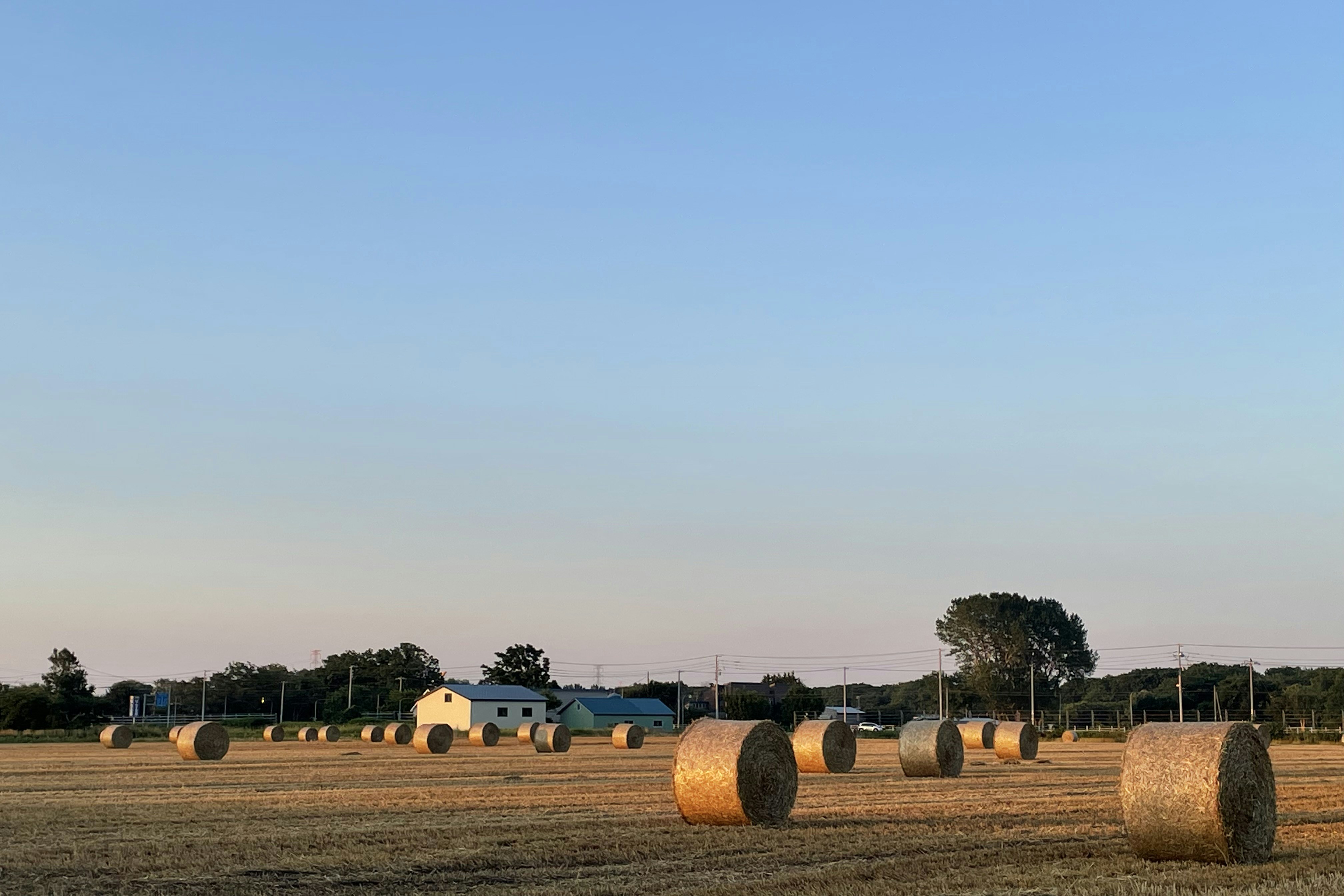
Photo by AO NURA on Unsplash – There’s more to this peaceful image than it appears. Growing. Cutting. Drying. Raking. Baling. Each step in its right order. Each making the next possible, leading to this image. The work isn’t finished. Those bales still need to be moved and stored.

But we can enjoy this. The proper order. A moment of tranquility.

Advice for a 13-Year-Old

Our oldest grandson turned 13 this week. In honor of this auspicious occasion, here’s some advice from a grandpa’s perspective…

Turning 13 feels important because it is.

You’re not a little kid anymore, but you’re not grown either. You’re standing in that in-between place where life starts opening up in new ways. You begin to think more for yourself. You start noticing the world differently. You begin asking bigger questions.

Who am I? What am I good at? What do I want to do with my life?

All excellent questions, and you don’t need perfect answers yet. In fact, you’ll ask the same questions at 18, at 25, at 40, and again at 60. Life keeps moving and we keep growing. The answer you give today isn’t supposed to be your final answer.

So don’t panic if you don’t know exactly what you want to do with your life. Most people don’t.

Having your whole future mapped out right now isn’t the priority. Becoming the person who can handle that future is.

Hold on to your integrity.

Tell the truth. Keep your word. Do the right thing, especially when there’s nothing in it for you. That last part matters more than most people realize. It’s easy to do the right thing when someone’s keeping score. The real test is what you do when no one is.

Don’t trade your character for attention, approval, popularity, or convenience. A lot can be rebuilt in life. Trust is hard to rebuild once you break it.

Stay close to God.

You won’t understand everything all at once. Nobody does. But keep your heart turned toward Him. Pray. Ask for wisdom. Pay attention. Learn to trust that there’s more going on in life than whatever feels big in the moment. Your faith will steady you when your feelings don’t. It’ll remind you who you are when the world tries to define you by something smaller.

Stay in a service mindset.

Look beyond yourself. Learn to help. Learn to notice when someone needs encouragement. Learn to carry your share. Learn to be useful. Be someone people can count on.

A life built only around what do I want gets very small in a hurry. A life that asks how can I help or how can I add value grows deeper and more meaningful. You’ll find a lot of what matters in life while serving, building, learning, and staying faithful in ordinary things.

Work with everything you have, even when no one is watching.

Somewhere along the way our culture started treating hard work as just a means to an end, something we do to get paid or get ahead. But there’s a much older and better way to think about it.

Quality work builds character. It builds discipline. It builds something larger than the task in front of you. Every time you give full effort to something ordinary, you’re quietly shaping the excellent person you can be. That adds up in ways that are hard to see at 13 but impossible to miss at 30.

Half-effort becomes a habit just as easily as full effort does. The habits you build at 13, 14, and 15 will be the ones carrying you at 25 and 35.

Don’t wait for someone to be watching before you give your best. Work hard at school. Work hard at home. Learn to finish what you start. Learn to be corrected without falling apart. Learn to keep showing up even when it’s hard and nobody’s clapping.

None of this sounds flashy because it isn’t. A lot of what makes a strong life is built quietly.

You’ll fail at things. Do it anyway.

At some point, you’re going to try hard at something and still come up short. You’ll miss the cut. You’ll bomb a test you studied for. You’ll lose a game that matters. You’ll say something wrong at the worst moment. That’s part of being alive and actually trying. It says nothing about whether you’re good enough.

What happens after you fail is the part that defines you. You can let it pull you back, make you more careful, more afraid to try. Or you can let it teach you something and keep going.

Most of the people worth looking up to in life have a longer list of failures than you’d expect. They just didn’t stop.

Don’t be so afraid of failing that you stop reaching. And when you do fail, get back up, figure out what you can learn from it, and go again.

Don’t compare yourself to everyone else.

You’ll be tempted to measure your life against what everyone else seems to have, seem to be, or seems to be doing.

Comparison is a thief. It steals your happiness. It distracts your focus from your own path and wastes your attention on someone else’s highlight reel. The person you’re comparing yourself to is probably doing the same thing in a different direction.

Run your own race. You’re not behind. You’re not ahead. You’re exactly where you should be. The question isn’t why do they have what I don’t. It’s what am I going to do with what I’ve been given.

Stop assuming the world is against you.

This one is worth learning early so you don’t waste years that could have been spent building. When things go wrong, and they will, your first instinct will be to look for someone to blame. A teacher. A coach. An umpire. A parent. Your boss. The system. Sometimes that blame might even be partly true.

None of that matters. You don’t control what other people do. You control what you do. The moment you decide that your success or failure is mostly someone else’s responsibility, you hand over the most powerful thing you have. Your own effort and your own choices.

Work on what you can control. Improve your attitude. Improve your skills. Improve your effort. Stop waiting for circumstances to be fair before you try. Life isn’t always fair. The people who accomplish things don’t wait for it to be.

About your parents.

They really do want what’s best for you. That may be hard to believe sometimes. They won’t always explain things perfectly or get every decision right. They’re human, just like you. Beyond the rules, the questions, the concern, and the occasional frustration is something very simple. They want you to have a good life.

Try to remember that when you feel misunderstood. Talk to them. Listen to them. Let them help you.

And one day, if life takes you far away geographically, stay connected. Call home. Answer texts. Show up when you can. These relationships are worth more than most people realize when they’re young.

About your brothers and sisters.

Yes, they may annoy you. Yes, they may know exactly how to push your buttons. That’s part of the deal. But they’re also part of the very small group of people who know your whole story, where you came from, and what you’ve been through. They know parts of you the rest of the world never sees.

Be there for them. Don’t let small things turn into long separations. Give grace. Stay loyal. Repair things when you can. A strong family is one of life’s great blessings. Don’t treat it casually.

Pay attention to who you spend your time with.

We tend to become a version of the people we’re closest to. Not instantly, and not completely, but over time the people around us shape how we think, what we tolerate, what we aim for, and the person we grow into. Look at the five or ten people you spend the most time with and you’ll get a pretty honest picture of the direction you’re heading.

That doesn’t mean you have to be cold or calculating about friendship. But you should choose your close friends carefully. Find people who are honest with you, who push you to be better, who you actually respect. Be the kind of friend who does the same for them. And if you find yourself around people who consistently pull you toward things you know aren’t right, it’s okay to create some distance. Let them go. That’s not disloyalty. That’s wisdom.

Your words have more weight than you realize.

What you say about people, how you say it, and what you say behind their backs follows you longer than you’d think. At your age, a lot of the cruelty that happens between people happens through words. It often feels small in the moment, like just joking around or venting. But words land hard, and sometimes they leave marks that last a long time.

Be someone known for building people up more than tearing them down. Speak honestly but speak with care. Don’t traffic in gossip. Don’t pile on when someone’s already down. You won’t always get this right, but making it a habit to think before you speak is one of the best habits you can build right now.

Take care of your body. It affects everything else.

We only get one body. Take care of it as if your life depends on it (because it does).

This doesn’t need to be complicated. Sleep matters more than most teenagers believe it does. What you eat affects how you feel and how clearly you think.

Regular exercise probably isn’t a challenge at your age. But as you get older and take on more responsibilities, making this a priority will be difficult. Moving your body regularly, whether that’s a sport, working out, or just staying active, will serve you well for decades to come.

You’re building habits right now that will follow you into adulthood. The kids who learn to get enough sleep, stay reasonably active, and not wreck themselves with junk will have a real advantage over the ones who don’t. That gap grows over time.

Your body is going to carry you through a long life. Treat it accordingly.

One more thing.

You don’t need to impress everybody. You don’t need to look older than you are. You don’t need to rush into every version of growing up just because the world makes it look cool.

There’s no prize for becoming cynical early. There’s no prize for being hardened before your time.

Real strength tells the truth. Real strength keeps going. Real strength is teachable. Real strength can laugh, can apologize, can be trusted.

You don’t need to become everything right now. You just need to keep growing, one good choice at a time, one hard thing faced instead of avoided. One day at a time.

And when you don’t know exactly what comes next, go back to the basics. Stay honest. Stay close to God. Love your family. Help where you can. Work hard. Keep learning.

This path may not answer every question immediately, but it’ll keep carrying you toward a life that means something.

And that is a very good way to begin.

Photo by Arifur Rahman on Unsplash

Nothing Is Easy

Many of us have felt it. That quiet, persistent yearning for life to just settle down for a while.

We imagine a stretch of road where the strain lets up, the demands lighten, and we can move forward without so much weight on our shoulders. We tell ourselves that after enough years, enough lessons, enough work, and enough milestones, there ought to be a time when things begin to coast.

That hope is understandable. We carry a lot. We get tired. We get worn down.

But easy rarely waits for us around the bend. More often, what comes instead is something better.

Perspective. Wisdom. A clearer sense of what’s worth our energy and what’s worth leaving behind.

With time, we may carry life with more grace. We may stop pouring ourselves into things that never deserved that much from us. We may learn the wisdom of laying down false guilt, unnecessary fear, stale resentment, and the crushing expectations that come from trying to live someone else’s life.

A good bit of suffering comes from carrying weight we were never meant to bear.

Of course, knowing what to set down is its own kind of work. It takes honesty to name what we’ve been carrying needlessly. It takes courage to actually let it go.

But even after we set those things down, effort remains. That’s a feature, rather than a flaw, in life’s design.

Work requires our attention. Relationships ask for our patience. Growth brings discomfort. Purpose calls for sacrifice, and faith asks for trust.

Effort remains part of a life that’s awake and engaged.

Sometimes what we call easy is really just familiarity. We know the terrain. We know the language. We know how to move around in it. That can feel easier, but familiar things can still cost us. They can still ask for endurance, humility, steadiness, and resilience.

Maybe relief is the most honest word for what we’re seeking.

We want a little less pressure. A little less uncertainty. A little less disappointment. A little less striving. We want room to breathe.

There’s nothing wrong with that. Relief is human. Rest is holy. Recovery matters.

But relief differs from a life free of demands. And deep down, most of us would find such a life unsatisfying.

We may say we want to coast. We may fantasize about “easy street.” We may imagine how nice it would be if everything just ran smoothly for a while. But too much ease has a way of hollowing us out, leaving us restless, a little purposeless, quietly bored with ourselves.

We were made for engagement. We want to build, help, solve, shape, encourage, contribute, and grow. We want to know that our presence still counts for something.

That’s why a completely easy life, if such a thing existed, would probably disappoint us pretty quickly.

We were made for meaningful effort, and that’s where we find ourselves most alive.

The question, then, is less about whether life will ever become easy and more about whether we’re giving ourselves to things that build something in us and around us. Things connected to purpose, love, responsibility, service, growth, and calling.

Giving ourselves to the right things helps us stop feeling sorry for ourselves and start paying attention again. It steadies us for the chapter we’re in, rather than the imaginary one we hope will arrive.

As long as we’re here, there’ll be something in front of us asking for effort.

That’s our life inviting us in.

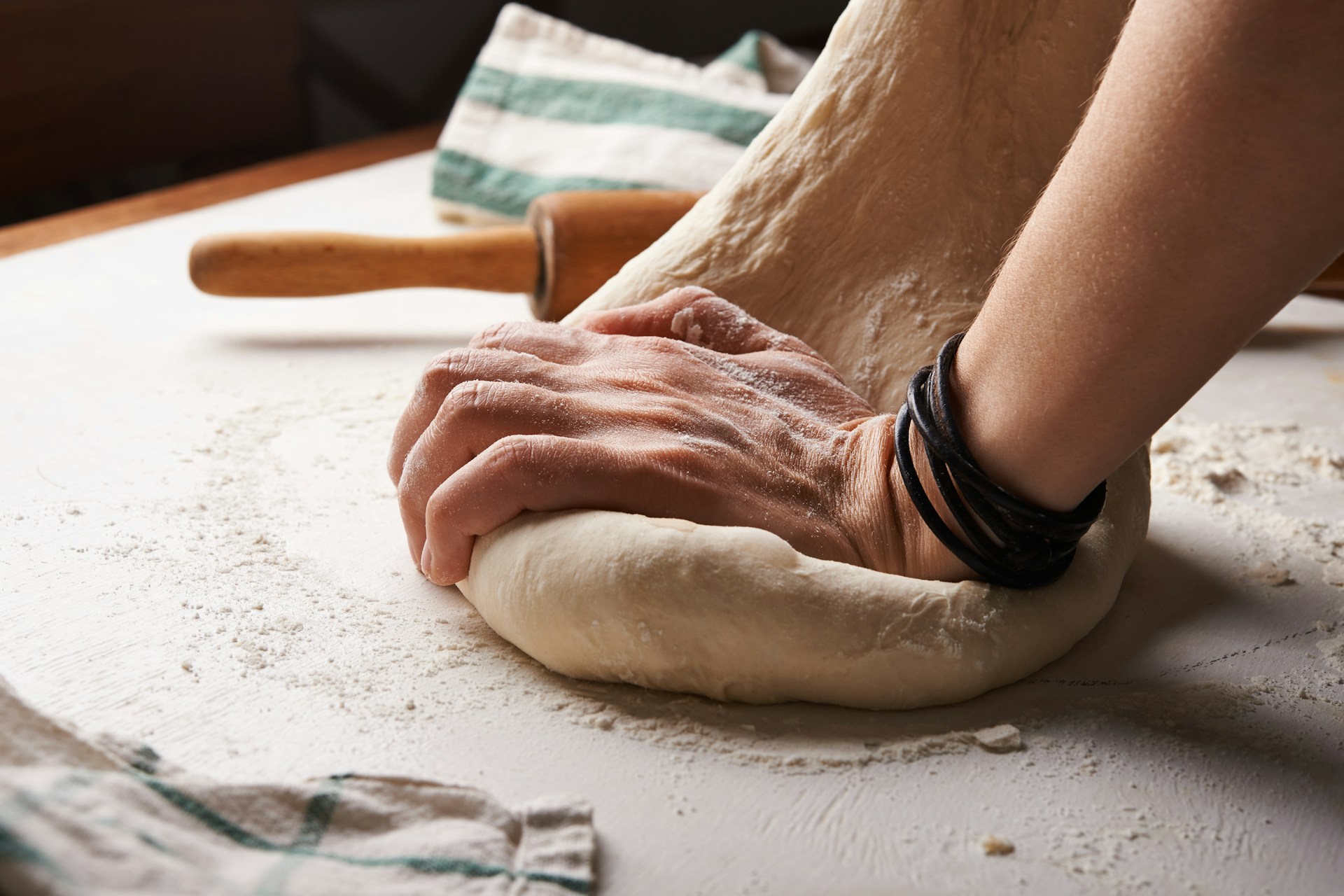
Photo by Nadya Spetnitskaya on Unsplash – Bread doesn’t rise without the work. Neither do we.

What I’d Tell a 21-Year-Old Now

My niece is turning 21 in a couple of weeks. That milestone prompted me to go back and read a post I wrote in 2013 called Advice for a New 21-Year-Old.

Reading it now, I still stand behind it. But a lot has changed in the world and in me since then. A 21-year-old stepping into adulthood today faces a different landscape than the one I was writing about then. After more than a decade of watching young people navigate it, I think an update is in order.


Back in 2013, I intentionally opened with drinking and gambling. Those are two of the classic threshold items attached to turning 21. Things the world suddenly says you’re allowed to do.

Turning 21 feels significant in part because it comes with new freedoms. New access. New choices. New opportunities to say yes to things that used to be off limits.

But if I were to distill what I want to say today, it’s this:

The most important part of turning 21 isn’t what you’re allowed to do. It’s what you’re responsible for doing with your new freedom.


On Drinking

Back in 2013, I wrote specifically about types of alcohol, mixing drinks, drinking water between drinks, and a few other practical things. The tips were fun, and I meant them. But what I was really trying to say was simpler.

Don’t let alcohol become the thing that teaches you who you are.

A 21-year-old can easily mistake access for maturity. Being allowed to drink is one thing. Knowing how to carry yourself is another.

If you choose to drink, stay in charge of yourself. Stay aware. Stay responsible. Don’t confuse recklessness with fun, or excess with adulthood.

There’s nothing impressive about losing control, hurting people, damaging your future, or building habits that begin as entertainment and slowly become dependence.

Freedom says you can. Wisdom says you don’t always have to.


On Gambling

Gambling is worth talking about, less for the casino tips and more for what it teaches us about life.

A lot of life will tempt you into thinking you can outsmart systems that were built to profit from your confidence. Sometimes that system is a casino. Sometimes it’s consumer debt. Sometimes it’s a flashy investment story. Sometimes it’s just your own belief that you’re the exception to every warning sign.

Understand the odds. Understand the incentives. Understand that some games were built for you to lose slowly enough that you keep playing.

That lesson applies far beyond cards, dice, and slot machines.


On Money

At 21, your income may still be modest. Your savings may be thin. But your financial decisions aren’t any less meaningful.

This is the age when you should begin learning how money actually works.

Learn how to live below your means. Save at least 10% of your income, always. Learn how savings accumulate and compound over time. Einstein called compound interest the most powerful force in the universe, and he was right.

Learn how debt can easily grow if you allow it. Learn how investing works. Learn what markets do over time. Learn what risk is and what it isn’t. Learn how compounding works for you, or against you.

Don’t hand the whole subject over to experts and decide this isn’t for you.

It is for you.

Nobody can make this investment in your understanding except you. It’ll take effort, time, and discipline, but the payoff will be enormous. The earlier you begin, the more options you give yourself later.


On Taxes

This is one area I would add much more explicitly today.

Taxes shape your paycheck, your investments, your business decisions, your home decisions, and your retirement decisions. They are one of the most powerful forces shaping the economy around you. Most people your age treat taxes like background noise. They are anything but background noise.

Learn how federal income taxes work. Learn how your state handles taxes, including property taxes. Learn the basic tax forms. Learn what withholding is. Learn the difference between deductions and credits (it’s a big one). Learn how capital gains differ from ordinary income.

Most importantly, learn how and why governments shift tax policy. You’ll find that it’s often less about revenue generation and more about encouraging or discouraging certain behaviors. When you understand this, the debates about tax policy start making a lot more sense.

You don’t need to become a tax attorney. But you do need to stop treating taxes as some mysterious thing that happens in the background while adults in suits handle it for you.

The sooner you understand taxes, the less often you’ll be surprised by them.


On AI and Paying Attention to the Future

This didn’t belong in the 2013 version the way it does now.

If I were talking to a new 21-year-old today, I’d tell them to learn how to use AI well.

Not as a crutch. Not as a substitute for thinking. Not as some fantasy weapon that will let you dominate the world.

Use it as a tool.

Use it to expand your access to knowledge. Use it to test ideas. Use it to get a rough draft or minimum viable product moving. Learn what a minimum viable product is and why it matters so much to growth.

Use it to make an idea more tangible. Use it to model possibilities. Use it to iterate faster. Use it to tighten your thinking by forcing your vague idea into something clearer and more real.

An idea in your head can feel pretty smart. The moment you try to express it, structure it, test it, or build it into something visible, you’ll begin to see its strengths and weaknesses. AI can help accelerate your thinking process.

A lot of people are afraid that AI will eliminate jobs, upend industries, and leave ordinary people behind. That fear is understandable. But the larger pattern is nothing new.

History is full of major technological shifts that changed the economic framework people were living in. Industrialization changed everything. Then electricity. Then assembly lines, cars, computers, the internet, and smartphones. Each wave brought creative destruction. Old methods faded, old jobs shrank, new opportunities appeared, new leaders emerged.

AI is doing the same thing now. And the people who will thrive aren’t the ones who wish the old way would come back. They’re the ones paying attention to where the world is going, and responding.

Pay attention to what’s becoming easier, faster, cheaper, more valuable, or more scalable. Pay attention to which skills are fading and which ones are growing. Then adapt. Learn. Position yourself well.

That’s a far better response than fear.


On Health

At 21, most people feel almost invincible. That feeling can fool you into thinking poor habits are free. They aren’t. They just send their bills later.

Make physical activity a normal part of your life. Build it into your routine so deeply that you miss it when it’s absent. Walk. Run. Lift. Stretch. Work outside. Stay active in ways that make your mind and body stronger, more capable, and more durable.

Healthy habits pay real dividends over time. Energy, mobility, resilience, mental clarity, confidence, longevity, and quality of life. These aren’t accidents. They grow out of a disciplined and consistent approach to taking care of yourself.

If you build a strong base now, your future self will thank you.


On Faith

A 21-year-old may or may not have ever been meaningfully exposed to faith. Some were raised around it. Some were barely around it at all. Some were exposed to a shallow version of it and walked away before they were old enough to examine it for themselves.

But by 21, your openness to faith is your responsibility.

Faith should never be reduced to pretending. You don’t need to manufacture certainty where you still have questions. But you should stay open enough to seriously consider that life is more than work, pleasure, achievement, money, and survival.

Ask the bigger questions.

Why are you here? What is good? What is true? What does it mean to live well? What does it mean to love well?

These are foundational questions. If you ignore them, you’ll still build your life on some kind of answer. You just may not realize it.

Faith has a way of changing the scale of everything. It changes how you think about suffering, success, failure, purpose, love, forgiveness, responsibility, and hope. It gives context to things that otherwise feel random, hollow, or purely material.

Stay open. Read. Ask. Listen. Seek out serious people of faith, not just loud people with opinions.

You don’t have to have everything figured out at 21. But you’re old enough to begin seeking honestly.


On Learning from Good People

Find good people and pay attention to them.

Look for people whose lives make sense up close, not just people who look impressive from far away. Find people who have built something solid. Who work hard, keep their word, love their families well, handle money responsibly, and have endured difficulty without becoming cynical.

Ask questions. Watch what they do. Learn from their patterns.

At 21, you’re old enough to choose your influences more deliberately than ever before. Choose wisely.


On Freedom

Turning 21 brings new freedom. But freedom by itself is only raw material.

What matters is what you build with it. You can use it to drift, indulge, imitate, and react. Or you can use it to build capability, health, wisdom, faith, discipline, and a life that stands up under real weight.

That’s the better use of it.

The world tends to celebrate 21 by pointing to what you can now do.

I’d rather point to what you can begin becoming. That’s where the real opportunity is.

Happy Birthday, Isabella, from your favorite uncle.

Photo by Shai Pal on Unsplash

Living Inside History

Every generation believes it’s living through extraordinary change.

And in a way, every generation is right.

Economic strain, political division, conflict, and rapid technological change appear in different forms, but the underlying tension remains the same.

Ray Dalio describes what he calls the Big Cycle. The rise and decline of nations shaped by debt, money, internal division, and shifting global power. He would say we’re late in that cycle, marked by high debt, widening wealth gaps, and growing competition among world powers.

Harry Dent approaches history through demographics, studying population growth, and generational spending patterns. From his view, today’s economic strain reflects aging populations, slower growth, and the unwinding of decades of expansion.

Different perspectives. Similar conclusions.

Neither claim to predict the future with precision. Debt cycles, demographic waves, generational moods, technological revolutions, and geopolitical tensions move simultaneously. Understanding these forces and their patterns helps us recognize the currents. How we live within them is still our responsibility.

I remember the OPEC oil embargo of the 1970s and gas lines stretching for blocks. I was in elementary school as interest rates climbed above twenty percent. I watched the Reagan Revolution reshape economic thinking and bring supply-side theory into the mainstream.

I lived through the Iranian Revolution in 1979, the taking of US hostages, and the subsequent spread of militant extremism across parts of the Muslim world over the next four decades. I watched an airplane strike the World Trade Center in real time.

I grew up under the shadow of the Cold War, when nuclear conflict felt possible at any moment. I saw the optimism that followed the fall of the Soviet Union and then watched China open to the world after decades of isolation. I remember the theories about how expanding capitalism in China might soften their communist approach to governing.

I witnessed the savings and loan collapse, multiple stock market crashes, the Great Recession, and a global pandemic that disrupted economies, institutions, and families alike. I watched how strongly governments grasp control when certainty disappears.

I saw personal computers and then the internet transform daily life, followed by the digital economy, smartphones, social media, and now artificial intelligence reshaping work itself.

I can think of countless other historical events that have happened in the span of one life. Each moment felt unprecedented. Each reshaped the world, sometimes positively, sometimes negatively.

And yet, life continued.

When history is written, it focuses almost entirely on macro events. The narratives are dominated by wars, collapses, elections, revolutions, and markets. What rarely appears are the countless individual lives unfolding quietly alongside these events.

History does not record families eating dinner together during times of high inflation. Nor does it record weddings that took place during recessions or children born during wars. It overlooks the laughter that survived fear and the quiet courage required to just keep going.

But these individual experiences of life form the definition of humanity.

For every name preserved in textbooks, millions of people were doing what people have always done. They worked. They loved. They raised children. They cared for neighbors. They hoped tomorrow might be a little better than today.

Macro forces shape conditions. They influence opportunity and may narrow our options. They may, unfortunately, end our life or the lives of someone we love. But they don’t define a life.

Inside every macro upheaval exists our “micro” life. The life lived within the headlines rather than dictated by them.

The world may determine interest rates. It does not decide whether we act with kindness. It may influence careers, but it does not control our integrity. It may introduce hardship, but it does not determine how we respond.

Our response is where freedom still lives.

Viktor Frankl understood this more clearly than almost anyone. After enduring unimaginable suffering in Nazi concentration camps, he observed that nearly all external freedoms can be taken from a person. One freedom remains intact. The ability to choose one’s attitude and response to circumstances.

Events may constrain us. They may demand adaptation. They will never own our human spirit.

In my office, I have a wall filled with photographs. Family gatherings. Wedding days. Trips taken together. Beautiful places. Ordinary moments that became lasting memories.

When I step back and look at this wall, patterns appear.

We worked hard.

We made time for one another.

We traveled together.

We celebrated milestones.

We were living out our hopes and dreams, and we still are.

My wall has no charts or financial forecasts. No macro trend lines. But it tells the story of what matters most.

None of these moments waited for ideal conditions. They unfolded alongside inflation, recessions, political change, and uncertainty. The photographs capture lives shaped by ordinary but important choices made amid extraordinary times.

As we traveled, we met families across many countries. Different customs. Different faiths. Different governments. Yet everywhere we went, the hopes sounded familiar. Parents wanting the best for their children. Families striving for opportunity. Communities longing to contribute and belong.

The differences emphasized by the world shrink quickly when people speak about those they love.

Human aspirations remain remarkably consistent.

History changes its outward form. The heart changes very little.

You will live through upheavals of your own. Some will be frightening. Some will be unfair. Some will test your trust in institutions or leaders.

Remember this.

You are not responsible for controlling history. You are responsible for how you live inside it.

You will not choose the history that surrounds you. You will choose the values you carry through it.

You choose how you treat people.

You choose how to adapt.

You choose how you show up for your family.

You choose whether uncertainty hardens you or deepens your compassion.

You choose whether fear leads or faith steadies you.

These are your choices. Always.

Humanity endures because ordinary people continue to build their lives amid uncertainty. They love, they work, they fail, they adapt, and they hope, even while larger forces move around them.

While empires rise and fall, families persist.

That is the quiet march you belong to. Rarely captured by historians yet carried forward by generations.

History happens around you.

Life happens within you.

Live your life well. Love deeply. Work honestly. Stay flexible. Hold your faith. Care for one another.

If you do that, you will live a meaningful life regardless of when you were born.

As I was finishing this post, I found these quotes from George Bernard Shaw. The words come from two different writings of his from the early 1900’s. Together they express something important about what it means to live well within whatever history hands us.

“This is the true joy in life, the being used for a purpose recognized by yourself as a mighty one; the being a force of Nature instead of a feverish, selfish little clod of ailments and grievances complaining that the world will not devote itself to making you happy. “

“I am of the opinion that my life belongs to the whole community, and as long as I live it is my privilege to do for it whatsoever I can. I want to be thoroughly used up when I die, for the harder I work the more I live. I rejoice in life for its own sake. Life is no ‘brief candle’ for me. It is a sort of splendid torch, which I have got hold of for the moment; and I want to make it burn as brightly as possible before handing it on to future generations.”

h/t – Atkins Bookshelf

Photo by Federico Giampieri on Unsplash

If this post resonated with you, feel free to share it with someone who might appreciate it as well.

You can also listen to the Grandpa Bob Encouraging Leadership Podcast, where I share short reflections on leadership, life, and learning.

Thanks for reading!

Words Around Christmas

December turns our words to gold,
Tidings, joy, and peace foretold.
Lights like stars along our eaves,
Hope returns on winter’s leaves.

Forgotten words begin to rise,
Childlike wonder in our eyes.
Tinsel, sleigh bells, candle-glow,
Songs of Christmas we all know.

Jingle bells and sleighs take flight,
Rudolph glows through frosted night.
Elves and workshops, North Pole cheer,
Santa’s laughter draws us near.

Snickerdoodles and mulling spice,
Our kitchen’s warmth feels soft and nice.
Welch cakes, pasties, stories told,
Trimmings bright against the cold.

Village lights and carols ring,
Wishes whispered, children sing.
Holly, ornaments, and good cheer
Mark the turning of the year.

Laughter spills from room to room,
Chasing winter’s early gloom.
A gift is only paper bright
Till love folds edges soft and tight.

Traditions bloom in winter air
When generations gather there.
Past and present intertwined,
Stories passed from heart to mind.

Nutcrackers guard, reindeer in flight,
Stockings, holly, silent night.
Sacred stillness gently kept,
In the hours while we slept.

Speak with warmth in every line,
Merry heart and joy divine.
Let kindness shape the songs we sing,
for Christ is born, our promised King.

Let peace on earth be more than art,
let joy take root in every heart.
Let words become the lives we live,
hope to hold, and grace we give.

For all these phrases loved and dear
return to us but once a year.
They point us toward God’s Word,
the sweetest story ever heard.

Love made its dwelling in the hay,
a Child who gave the world its way.
We speak these golden words because
He came to live His love through us.

Photo by Rafał Danhoffer on Unsplash

Always Improve Your Position

A few days ago, I was listening to Jocko Willink speak about the quiet discipline behind Brazilian jiu-jitsu. I’m not a jiu-jitsu person, but one idea landed for me. It’s a truth I already knew but had never heard spoken so simply:

Always improve your position.

In jiu-jitsu, nothing happens all at once. A submission arrives like lightning, but only to the untrained eye. What looks like a sudden victory is really the final expression of dozens of subtle movements that came before it. A hip shifts. A grip tightens. An elbow gains an inch of space. Most of these moves go unnoticed. Each small adjustment creates a little more room, a little more leverage, a little more advantage.

I’ve always believed real progress works this way. It’s rarely dramatic. It’s quiet and patient. The accumulated effect of showing up, learning something new, adding a bit more care, and preparing a little more than required.

Breakthroughs rarely come from a single moment of inspiration. They come from the quiet work no one sees. The thoughtful practice that sharpens your skills, the trust built over months of ordinary conversations, the time spent learning before making a decision. When opportunity arrives, it looks sudden to others. To you, it feels like the next logical step.

This truth showed up clearly for me after a derecho tore through our property on Father’s Day weekend a few years ago. Ninety-mile-per-hour winds knocked down at least thirty trees across multiple acres. When I walked our land the next morning, everything felt broken and overwhelming. The cleanup looked like a project that would take months. I didn’t have months to devote to it.

But I did have mornings. So, I decided to work for an hour and a half every day before work. I cleared a small section each morning. It was incredibly slow. I dragged branches, cut trunks, chipped debris, split firewood, and made countless trips to our local dump. Small steps, small progress, one morning at a time.

Over the course of a year (maybe more), I worked my way across our entire property. Along the way, I cut in new hiking trails and removed a number of unhealthy trees. What started as a mess became a healthier stand of trees and a network of paths that look like they’ve been here forever.

Out of destruction came a daily habit that changed my life. I still work outside every morning. Clearing brush, trimming trees, expanding trails, building chicken coops, restoring a rustic barn. All in small ninety-minute bites. It’s like a time-lapse video created through countless quiet mornings of small improvements.

The pattern I saw on my land is exactly what Jocko described on the mat. I didn’t need a grand plan or a burst of superhuman effort. I needed to improve my position every day, just by a little.

Improve your position today, even by an inch, and tomorrow becomes easier. Improve it again tomorrow, and the day after that reveals options that didn’t exist before. You don’t need surges of motivation or dramatic reinvention. You only need the willingness to keep moving, always improving.

Careers grow this way. Trust grows this way. Faith deepens this way. Families strengthen this way.

Progress won’t always be linear. Some days distractions will pull us off course, or setbacks will undo work we thought was finished. All of this is part of the journey. Even then, the way forward still comes through small steps. Imperfect, uneven, but the work of always improving our position remains the same.

We improve our position slowly, almost without noticing. That’s enough. Tomorrow, we’ll improve again. Then one day, we’ll find ourselves able to take a step that would have felt impossible a year ago.

Focus on the next inch. The miles will take care of themselves.

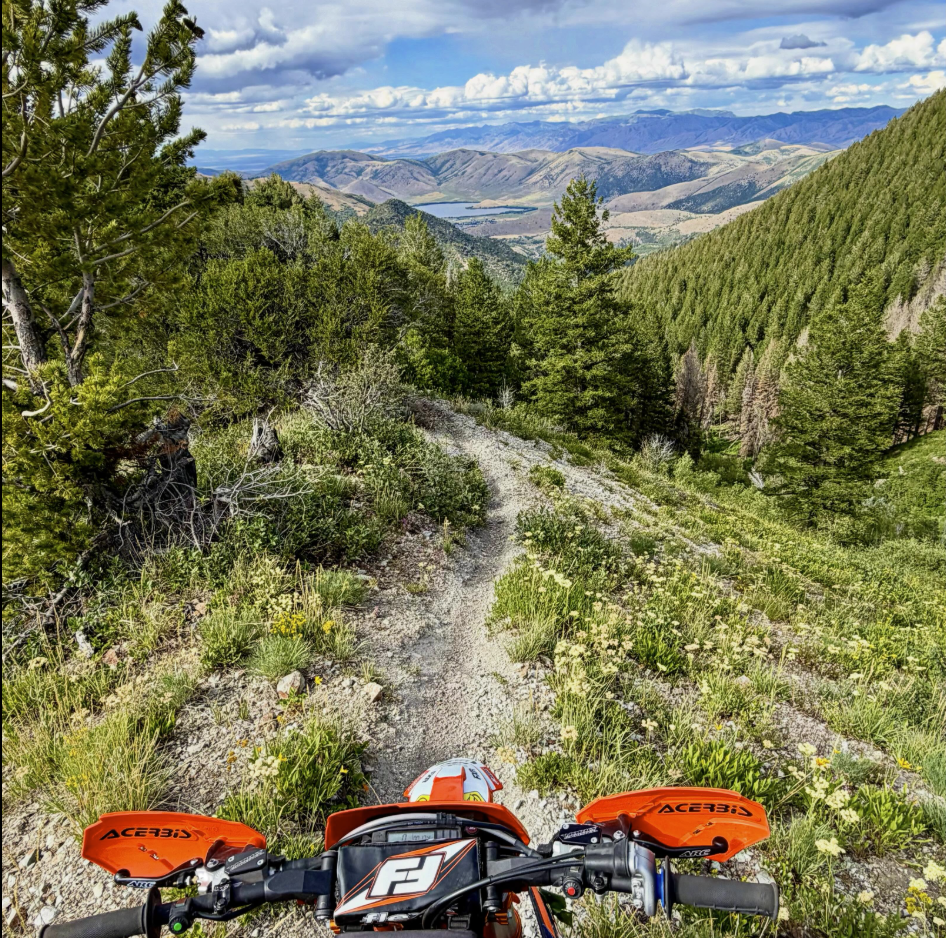
Photo by Walter Martin on Unsplash – a great rendition of my early morning work environment for at least a year.

A Parenting Prayer

Parenting is one of the clearest places where faith meets daily life. It calls us to humility, patience, courage, generosity, and the kind of love that stretches us far beyond what we believed we could give.

It invites us to trust God with the people most precious to us, even when the path ahead is uncertain and far beyond our view.

The prayer below is one I’ve been working on for a while. It’s a prayer for parents at every stage of life…those just beginning, and those watching their grown children take their first steps into adulthood. It’s also for those whose children are becoming parents and carrying this calling into a new generation.

It is a reminder that God accompanies us in the noise and the silence, the ordinary and the holy, the days that feel long and the years that pass so quickly.

May this prayer strengthen your heart and deepen your hope as you walk this sacred calling.

A Parenting Prayer

God, please grant me
The wisdom to guide my children with patience, clarity, and love
And the humility to grow alongside them as they grow.
Teach me to choose presence over hurry,
Trust over fear, and connection over control.

Give me the courage to admit when I am wrong
And the grace to show my children that learning never ends,
Not at 7, not at 17, not at 70.

Help me see the world through their eyes,
Eyes that understand wonder,
Eyes that welcome the new with unguarded joy.
Let their curiosity rekindle my own,
So our home becomes a place where questions are celebrated
And imagination roams freely.

Give me integrity in the quiet moments,
When my child is learning from what I do.
Give me a heart strong enough to support them
And gentle enough that they always feel safe coming to me.

Teach me to treasure the small things:
The bedtime stories,
The long drives,
The conversations over tacos,
The ordinary afternoons that turn into lifelong memories.
Remind me that these simple moments
Will matter far more than the schedules we keep
Or the outcomes we chase.

Loving God,
Free me from comparing my family to others.
You did not design my children to fit anyone’s timeline but Yours.
Help me trust the pace of their becoming
And see their strengths even when they are wrapped in struggle.

Guard me from chasing achievements that impress the world
But neglect the souls under my roof.
Let our home be defined by gratitude, peace, and laughter,
With the quiet confidence that love is our foundation.

Help me pass down what truly endures:
Character over perfection,
Kindness over victory,
Service over status,
Gratitude over entitlement.

May the stories I tell, the choices I make,
And the way I show up each day
Become part of the heritage my children carry forward.
Help me become an example worth following,
One who lives with faithfulness, honesty, and a willingness to learn.

Give me strength for the hard times
And calm for the anxious nights.
Give me a long view of parenting,
Seeing not just who my children are today
But who they are becoming by Your grace.

Teach me to listen more than I lecture,
To encourage more than I correct,
And to guide without stifling the person
You created them to be.

Grant me the courage to give responsibility as they mature
And the faith to let them walk their own path,
Even when that path stretches beyond my view.

Lord, may our home reflect Your kingdom,
A place of welcome, forgiveness, generosity, and joy.
Let my children feel seen, valued, and deeply loved,
Not for what they do, but for who they are.

I invite You into every step of this sacred calling.
Walk with me in the noise and the silence,
In the exhaustion and the celebration,
In the days that feel long
And the years that pass too quickly.

Grant me the peace that comes from Your eternal and infinite love,
Now and forever.

Amen.

Photo by Hu Chen on Unsplash

Teachers, Mentors, and the Grace That Carries Us

“There is no Frigate like a Book / To take us Lands away.”

Emily Dickinson wrote these words in her quiet room, understanding something I didn’t grasp for decades. The greatest journeys begin within.

I know her poem only because of my 11th grade AP English teacher, Mr. Cox. As a rambunctious and cocky 11th grader, would I have taken any of my “super valuable” time to read poems, sonnets, short stories, even books? No way.

But because of his work (and the work of countless other teachers along the way), I did read. A lot. I learned tons of material and information that didn’t matter to me at the time…but matter a lot today.

My focus back then was simple. Be the best student, get the highest test scores, pass as many AP tests as possible, and earn varsity letters in multiple sports. Mostly, I wanted to beat everyone else, pure and simple. It helped that I was blessed with an almost photographic memory and could recall facts and formulas with ease (sadly, not so much nowadays).

I carried that mindset into college. I loved being the student who defined the grading curve for the class. I was annoyed if I didn’t get every single point on an assignment, midterm, or final. I had an almost uncontrollable drive to outshine everyone…as if that was all that mattered.

I was completely wrong.

On the bright side, that drive and motivation made me a successful student and propelled me into my early career.

On the other hand, seeing everyone as my competition, and less as people, meant I probably missed out on a lot of fun. And lots of friendships that never happened. I was so focused on the destination that I forgot to notice who was traveling with me.

That realization connects me back to Dickinson’s frigate in ways I never expected. She saw the book as a vessel capable of carrying anyone, anywhere, without cost or permission. But what I’ve learned over nearly fifty years since high school is that I was asking the wrong question. It was never “How far can I go?” It was “Who am I becoming, and who’s helping me understand?”

My journey from that hyper-competitive teenager to what I hope is a much more caring, thoughtful, empathetic, nuanced, and life-giving person has been propelled by those same teachers I mentioned earlier, and a longer line of guides who keep showing up at the right time in my life.

I didn’t realize it then, but those books, poems, and teachers were all part of my fleet of frigates. Each one quietly helped me close the distance between knowledge and understanding, between my ambition and wisdom.

My mentors, family, and friends have all been vessels that carried me through changing seas. Some taught me to sail straight into the wind. Others reminded me that drifting for a while can be part of my journey as well. Each lesson mattered, even the ones that didn’t make sense at the time…especially those.

Over time, life has a way of sanding down our sharper edges, revealing something deeper underneath. My focus slowly shifted from being the best at something to becoming the best version of myself.

Now, when I think about Emily Dickinson’s frigate, I picture something far greater than a book. I picture a lifetime of learning, carried by the people who invested their time, wisdom, and patience in me. Mr. Cox, and others who gave freely of their time and wisdom, helped me see that the destination isn’t solely becoming the top of the class. It’s finding a profound depth of understanding, the expansion of empathy, and the ability to see beauty and meaning in small, unexpected places.

If I could go back and talk to that 16-year-old version of myself, I’d tell him the real tests aren’t scored on paper. They’re graded every day in how we treat people, how we listen, and how we show grace.

I’d tell him that the frigate he thinks he’s steering alone has always been guided by grace. The true measure of his voyage will be how much space he makes for others to come aboard.

We’re all learning to sail, carried by the steady hand of God.

We never really travel alone.

Photo by Rafael Garcin on Unsplash