Nothing Is Easy

Many of us have felt it. That quiet, persistent yearning for life to just settle down for a while.

We imagine a stretch of road where the strain lets up, the demands lighten, and we can move forward without so much weight on our shoulders. We tell ourselves that after enough years, enough lessons, enough work, and enough milestones, there ought to be a time when things begin to coast.

That hope is understandable. We carry a lot. We get tired. We get worn down.

But easy rarely waits for us around the bend. More often, what comes instead is something better.

Perspective. Wisdom. A clearer sense of what’s worth our energy and what’s worth leaving behind.

With time, we may carry life with more grace. We may stop pouring ourselves into things that never deserved that much from us. We may learn the wisdom of laying down false guilt, unnecessary fear, stale resentment, and the crushing expectations that come from trying to live someone else’s life.

A good bit of suffering comes from carrying weight we were never meant to bear.

Of course, knowing what to set down is its own kind of work. It takes honesty to name what we’ve been carrying needlessly. It takes courage to actually let it go.

But even after we set those things down, effort remains. That’s a feature, rather than a flaw, in life’s design.

Work requires our attention. Relationships ask for our patience. Growth brings discomfort. Purpose calls for sacrifice, and faith asks for trust.

Effort remains part of a life that’s awake and engaged.

Sometimes what we call easy is really just familiarity. We know the terrain. We know the language. We know how to move around in it. That can feel easier, but familiar things can still cost us. They can still ask for endurance, humility, steadiness, and resilience.

Maybe relief is the most honest word for what we’re seeking.

We want a little less pressure. A little less uncertainty. A little less disappointment. A little less striving. We want room to breathe.

There’s nothing wrong with that. Relief is human. Rest is holy. Recovery matters.

But relief differs from a life free of demands. And deep down, most of us would find such a life unsatisfying.

We may say we want to coast. We may fantasize about “easy street.” We may imagine how nice it would be if everything just ran smoothly for a while. But too much ease has a way of hollowing us out, leaving us restless, a little purposeless, quietly bored with ourselves.

We were made for engagement. We want to build, help, solve, shape, encourage, contribute, and grow. We want to know that our presence still counts for something.

That’s why a completely easy life, if such a thing existed, would probably disappoint us pretty quickly.

We were made for meaningful effort, and that’s where we find ourselves most alive.

The question, then, is less about whether life will ever become easy and more about whether we’re giving ourselves to things that build something in us and around us. Things connected to purpose, love, responsibility, service, growth, and calling.

Giving ourselves to the right things helps us stop feeling sorry for ourselves and start paying attention again. It steadies us for the chapter we’re in, rather than the imaginary one we hope will arrive.

As long as we’re here, there’ll be something in front of us asking for effort.

That’s our life inviting us in.

Photo by Nadya Spetnitskaya on Unsplash – Bread doesn’t rise without the work. Neither do we.

After the Fumble

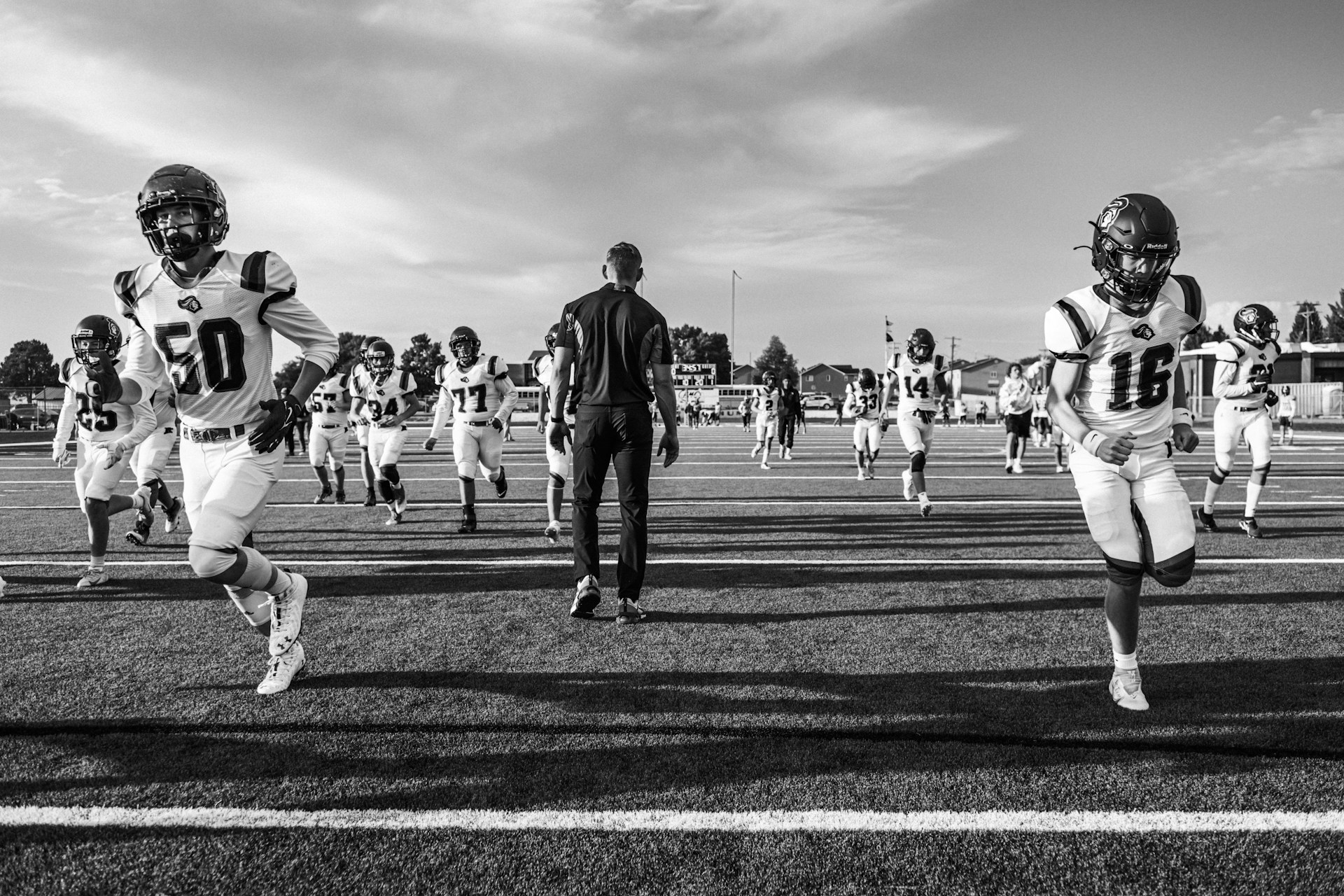
A fumble changes everything.

One second the play is moving. The runner has the ball. The blockers are engaged. The drive has life. Then suddenly the ball hits the ground, bodies are diving, momentum has shifted, and what was yours a moment ago is theirs.

A fumble tests everyone.

The one who dropped the ball.

The coach.

The team.

For the player who fumbled, the moment is immediate and personal. He cost his team field position, momentum, or more. He’ll think about that play long after the whistle.

His pain rarely comes from the mistake alone. It also comes from the exposure. He was carrying something important, and now everyone can see that he mishandled it.

He comes to the sideline knowing what he did.

He doesn’t need it explained. He doesn’t need the replay. He felt the ball leave his hands. He already knows what it cost.

What he doesn’t know is what comes next.

That depends largely on who’s standing on the sideline with him.

A weak coach sees only the mistake. A careless coach brushes past it. But a strong coach understands something both miss. This player, in this moment, is deciding, maybe without knowing it, whether he can still trust himself.

Correction matters. Accountability matters. But there’s a difference between a coach who corrects and a coach who restores. One addresses what happened. The other addresses what happens next.

Real leadership does both.

It says, “Yes, that mattered. Yes, you need to learn from it. And yes, you’re still capable of more than this moment.”

Correction is the easy part. The rest is belief.

People rise to the level of belief placed in them after they’ve failed. That’s one of the most dependable things about human beings. A good coach knows this. A great one acts on it.

What about the team?

They saw it.

That fumble belongs to everyone now.

Do they quietly create distance from the one who dropped the ball? Do they look away? Do they let frustration show in ways that make him feel more alone?

Or does someone move toward him?

Not to fix it. Not to instruct. Just to be close enough that he knows he hasn’t been cut loose.

Great teams are built by people who know what to do when somebody fumbles. That knowledge is built over time. Through the kind of culture a team creates long before the ball hits the ground.

That’s true in every organization, every family, every group trying to do meaningful things together.

Eventually someone will drop the ball. Someone will let something important get away. Someone will have a moment they wish they could take back.

Failure doesn’t create a team’s culture. It exposes it.

A lot of people carry the weight of old fumbles.

A business decision that went wrong.

A missed opportunity.

A sentence that should have stayed unspoken.

A responsibility handled poorly.

A relationship moment they wish they could take back.

That weight is real. The costs were real. The embarrassment was real. There’s no use pretending otherwise.

But the fumble doesn’t have to be the end of the story.

Sometimes the growth that follows a mistake runs deeper than anything that came before it. Failure exposes what needs to be seen. A weakness, a blind spot, a lapse in discipline. It creates a moment that can be used, or wasted.

That moment rarely turns on the person who fumbled. It depends on what they find when they look up.

The leader who steps in with exactly the right mix of truth and trust. The teammate who moves toward them instead of away. The voice that says you’re still capable of more than this moment.

What looks like the end of the drive is sometimes the moment the real game begins.

Photo by Tim Mossholder on Unsplash