Advice for a 13-Year-Old

Our oldest grandson turned 13 this week. In honor of this auspicious occasion, here’s some advice from a grandpa’s perspective…

Turning 13 feels important because it is.

You’re not a little kid anymore, but you’re not grown either. You’re standing in that in-between place where life starts opening up in new ways. You begin to think more for yourself. You start noticing the world differently. You begin asking bigger questions.

Who am I? What am I good at? What do I want to do with my life?

All excellent questions, and you don’t need perfect answers yet. In fact, you’ll ask the same questions at 18, at 25, at 40, and again at 60. Life keeps moving and we keep growing. The answer you give today isn’t supposed to be your final answer.

So don’t panic if you don’t know exactly what you want to do with your life. Most people don’t.

Having your whole future mapped out right now isn’t the priority. Becoming the person who can handle that future is.

Hold on to your integrity.

Tell the truth. Keep your word. Do the right thing, especially when there’s nothing in it for you. That last part matters more than most people realize. It’s easy to do the right thing when someone’s keeping score. The real test is what you do when no one is.

Don’t trade your character for attention, approval, popularity, or convenience. A lot can be rebuilt in life. Trust is hard to rebuild once you break it.

Stay close to God.

You won’t understand everything all at once. Nobody does. But keep your heart turned toward Him. Pray. Ask for wisdom. Pay attention. Learn to trust that there’s more going on in life than whatever feels big in the moment. Your faith will steady you when your feelings don’t. It’ll remind you who you are when the world tries to define you by something smaller.

Stay in a service mindset.

Look beyond yourself. Learn to help. Learn to notice when someone needs encouragement. Learn to carry your share. Learn to be useful. Be someone people can count on.

A life built only around what do I want gets very small in a hurry. A life that asks how can I help or how can I add value grows deeper and more meaningful. You’ll find a lot of what matters in life while serving, building, learning, and staying faithful in ordinary things.

Work with everything you have, even when no one is watching.

Somewhere along the way our culture started treating hard work as just a means to an end, something we do to get paid or get ahead. But there’s a much older and better way to think about it.

Quality work builds character. It builds discipline. It builds something larger than the task in front of you. Every time you give full effort to something ordinary, you’re quietly shaping the excellent person you can be. That adds up in ways that are hard to see at 13 but impossible to miss at 30.

Half-effort becomes a habit just as easily as full effort does. The habits you build at 13, 14, and 15 will be the ones carrying you at 25 and 35.

Don’t wait for someone to be watching before you give your best. Work hard at school. Work hard at home. Learn to finish what you start. Learn to be corrected without falling apart. Learn to keep showing up even when it’s hard and nobody’s clapping.

None of this sounds flashy because it isn’t. A lot of what makes a strong life is built quietly.

You’ll fail at things. Do it anyway.

At some point, you’re going to try hard at something and still come up short. You’ll miss the cut. You’ll bomb a test you studied for. You’ll lose a game that matters. You’ll say something wrong at the worst moment. That’s part of being alive and actually trying. It says nothing about whether you’re good enough.

What happens after you fail is the part that defines you. You can let it pull you back, make you more careful, more afraid to try. Or you can let it teach you something and keep going.

Most of the people worth looking up to in life have a longer list of failures than you’d expect. They just didn’t stop.

Don’t be so afraid of failing that you stop reaching. And when you do fail, get back up, figure out what you can learn from it, and go again.

Don’t compare yourself to everyone else.

You’ll be tempted to measure your life against what everyone else seems to have, seem to be, or seems to be doing.

Comparison is a thief. It steals your happiness. It distracts your focus from your own path and wastes your attention on someone else’s highlight reel. The person you’re comparing yourself to is probably doing the same thing in a different direction.

Run your own race. You’re not behind. You’re not ahead. You’re exactly where you should be. The question isn’t why do they have what I don’t. It’s what am I going to do with what I’ve been given.

Stop assuming the world is against you.

This one is worth learning early so you don’t waste years that could have been spent building. When things go wrong, and they will, your first instinct will be to look for someone to blame. A teacher. A coach. An umpire. A parent. Your boss. The system. Sometimes that blame might even be partly true.

None of that matters. You don’t control what other people do. You control what you do. The moment you decide that your success or failure is mostly someone else’s responsibility, you hand over the most powerful thing you have. Your own effort and your own choices.

Work on what you can control. Improve your attitude. Improve your skills. Improve your effort. Stop waiting for circumstances to be fair before you try. Life isn’t always fair. The people who accomplish things don’t wait for it to be.

About your parents.

They really do want what’s best for you. That may be hard to believe sometimes. They won’t always explain things perfectly or get every decision right. They’re human, just like you. Beyond the rules, the questions, the concern, and the occasional frustration is something very simple. They want you to have a good life.

Try to remember that when you feel misunderstood. Talk to them. Listen to them. Let them help you.

And one day, if life takes you far away geographically, stay connected. Call home. Answer texts. Show up when you can. These relationships are worth more than most people realize when they’re young.

About your brothers and sisters.

Yes, they may annoy you. Yes, they may know exactly how to push your buttons. That’s part of the deal. But they’re also part of the very small group of people who know your whole story, where you came from, and what you’ve been through. They know parts of you the rest of the world never sees.

Be there for them. Don’t let small things turn into long separations. Give grace. Stay loyal. Repair things when you can. A strong family is one of life’s great blessings. Don’t treat it casually.

Pay attention to who you spend your time with.

We tend to become a version of the people we’re closest to. Not instantly, and not completely, but over time the people around us shape how we think, what we tolerate, what we aim for, and the person we grow into. Look at the five or ten people you spend the most time with and you’ll get a pretty honest picture of the direction you’re heading.

That doesn’t mean you have to be cold or calculating about friendship. But you should choose your close friends carefully. Find people who are honest with you, who push you to be better, who you actually respect. Be the kind of friend who does the same for them. And if you find yourself around people who consistently pull you toward things you know aren’t right, it’s okay to create some distance. Let them go. That’s not disloyalty. That’s wisdom.

Your words have more weight than you realize.

What you say about people, how you say it, and what you say behind their backs follows you longer than you’d think. At your age, a lot of the cruelty that happens between people happens through words. It often feels small in the moment, like just joking around or venting. But words land hard, and sometimes they leave marks that last a long time.

Be someone known for building people up more than tearing them down. Speak honestly but speak with care. Don’t traffic in gossip. Don’t pile on when someone’s already down. You won’t always get this right, but making it a habit to think before you speak is one of the best habits you can build right now.

Take care of your body. It affects everything else.

We only get one body. Take care of it as if your life depends on it (because it does).

This doesn’t need to be complicated. Sleep matters more than most teenagers believe it does. What you eat affects how you feel and how clearly you think.

Regular exercise probably isn’t a challenge at your age. But as you get older and take on more responsibilities, making this a priority will be difficult. Moving your body regularly, whether that’s a sport, working out, or just staying active, will serve you well for decades to come.

You’re building habits right now that will follow you into adulthood. The kids who learn to get enough sleep, stay reasonably active, and not wreck themselves with junk will have a real advantage over the ones who don’t. That gap grows over time.

Your body is going to carry you through a long life. Treat it accordingly.

One more thing.

You don’t need to impress everybody. You don’t need to look older than you are. You don’t need to rush into every version of growing up just because the world makes it look cool.

There’s no prize for becoming cynical early. There’s no prize for being hardened before your time.

Real strength tells the truth. Real strength keeps going. Real strength is teachable. Real strength can laugh, can apologize, can be trusted.

You don’t need to become everything right now. You just need to keep growing, one good choice at a time, one hard thing faced instead of avoided. One day at a time.

And when you don’t know exactly what comes next, go back to the basics. Stay honest. Stay close to God. Love your family. Help where you can. Work hard. Keep learning.

This path may not answer every question immediately, but it’ll keep carrying you toward a life that means something.

And that is a very good way to begin.

Photo by Arifur Rahman on Unsplash

Nothing Is Easy

Many of us have felt it. That quiet, persistent yearning for life to just settle down for a while.

We imagine a stretch of road where the strain lets up, the demands lighten, and we can move forward without so much weight on our shoulders. We tell ourselves that after enough years, enough lessons, enough work, and enough milestones, there ought to be a time when things begin to coast.

That hope is understandable. We carry a lot. We get tired. We get worn down.

But easy rarely waits for us around the bend. More often, what comes instead is something better.

Perspective. Wisdom. A clearer sense of what’s worth our energy and what’s worth leaving behind.

With time, we may carry life with more grace. We may stop pouring ourselves into things that never deserved that much from us. We may learn the wisdom of laying down false guilt, unnecessary fear, stale resentment, and the crushing expectations that come from trying to live someone else’s life.

A good bit of suffering comes from carrying weight we were never meant to bear.

Of course, knowing what to set down is its own kind of work. It takes honesty to name what we’ve been carrying needlessly. It takes courage to actually let it go.

But even after we set those things down, effort remains. That’s a feature, rather than a flaw, in life’s design.

Work requires our attention. Relationships ask for our patience. Growth brings discomfort. Purpose calls for sacrifice, and faith asks for trust.

Effort remains part of a life that’s awake and engaged.

Sometimes what we call easy is really just familiarity. We know the terrain. We know the language. We know how to move around in it. That can feel easier, but familiar things can still cost us. They can still ask for endurance, humility, steadiness, and resilience.

Maybe relief is the most honest word for what we’re seeking.

We want a little less pressure. A little less uncertainty. A little less disappointment. A little less striving. We want room to breathe.

There’s nothing wrong with that. Relief is human. Rest is holy. Recovery matters.

But relief differs from a life free of demands. And deep down, most of us would find such a life unsatisfying.

We may say we want to coast. We may fantasize about “easy street.” We may imagine how nice it would be if everything just ran smoothly for a while. But too much ease has a way of hollowing us out, leaving us restless, a little purposeless, quietly bored with ourselves.

We were made for engagement. We want to build, help, solve, shape, encourage, contribute, and grow. We want to know that our presence still counts for something.

That’s why a completely easy life, if such a thing existed, would probably disappoint us pretty quickly.

We were made for meaningful effort, and that’s where we find ourselves most alive.

The question, then, is less about whether life will ever become easy and more about whether we’re giving ourselves to things that build something in us and around us. Things connected to purpose, love, responsibility, service, growth, and calling.

Giving ourselves to the right things helps us stop feeling sorry for ourselves and start paying attention again. It steadies us for the chapter we’re in, rather than the imaginary one we hope will arrive.

As long as we’re here, there’ll be something in front of us asking for effort.

That’s our life inviting us in.

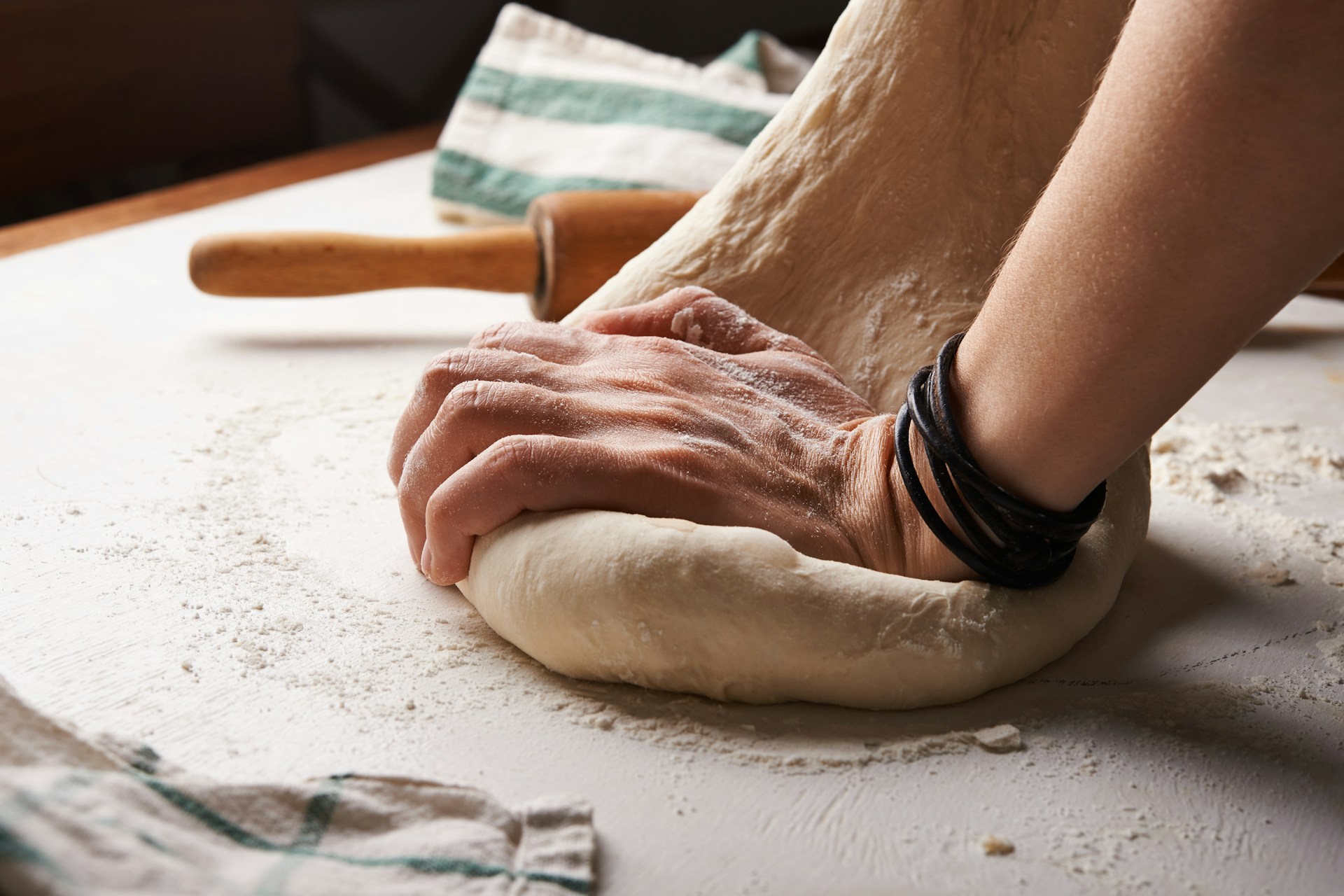
Photo by Nadya Spetnitskaya on Unsplash – Bread doesn’t rise without the work. Neither do we.

Just Show Up

As we enter 2026, it’s tempting to look for a new system, a better plan, or the perfect moment to begin.

Most of the time, the real answer is simpler.

Just show up.

The secret to progress isn’t brilliance or motivation. It isn’t certainty or confidence. It’s presence.

Show up every day.
Show up when it’s easy.
Show up when it’s uncomfortable.
Show up when you don’t know what comes next.

Show up and be present.
Show up and handle your business.
Show up and figure it out as you go.
Show up for the people you love.
Show up for the work that matters.
Show up for yourself.

When you’re unsure what to do next, don’t overthink it. Show up and take the next step. Clarity usually follows movement.

The alternative is standing down. Waiting. Drifting. Quietly giving up ground you were meant to claim.

You’re stronger than that.

Progress is rarely dramatic. It’s built through consistency. Through ordinary days stacked on top of each other. Choosing to show up when no one is watching.

The hard things happen because you showed up.
The meaningful things happen because you stayed.
The impossible things only happen when you refuse to disappear.

There’s another truth hidden in showing up.

When you show up, you give others permission to do the same. Your presence becomes proof. Your consistency becomes encouragement. People notice. They realize they can take the next step too.

So how do you crush your goals in 2026?

You don’t wait for the perfect plan.
You don’t wait to feel ready.

You show up.
You make it happen.

Because that’s what you do.
And this is how things get done.

Photo by NEOM on Unsplash

Please share this post with someone if you found it helpful. Thanks!

Always Improve Your Position

A few days ago, I was listening to Jocko Willink speak about the quiet discipline behind Brazilian jiu-jitsu. I’m not a jiu-jitsu person, but one idea landed for me. It’s a truth I already knew but had never heard spoken so simply:

Always improve your position.

In jiu-jitsu, nothing happens all at once. A submission arrives like lightning, but only to the untrained eye. What looks like a sudden victory is really the final expression of dozens of subtle movements that came before it. A hip shifts. A grip tightens. An elbow gains an inch of space. Most of these moves go unnoticed. Each small adjustment creates a little more room, a little more leverage, a little more advantage.

I’ve always believed real progress works this way. It’s rarely dramatic. It’s quiet and patient. The accumulated effect of showing up, learning something new, adding a bit more care, and preparing a little more than required.

Breakthroughs rarely come from a single moment of inspiration. They come from the quiet work no one sees. The thoughtful practice that sharpens your skills, the trust built over months of ordinary conversations, the time spent learning before making a decision. When opportunity arrives, it looks sudden to others. To you, it feels like the next logical step.

This truth showed up clearly for me after a derecho tore through our property on Father’s Day weekend a few years ago. Ninety-mile-per-hour winds knocked down at least thirty trees across multiple acres. When I walked our land the next morning, everything felt broken and overwhelming. The cleanup looked like a project that would take months. I didn’t have months to devote to it.

But I did have mornings. So, I decided to work for an hour and a half every day before work. I cleared a small section each morning. It was incredibly slow. I dragged branches, cut trunks, chipped debris, split firewood, and made countless trips to our local dump. Small steps, small progress, one morning at a time.

Over the course of a year (maybe more), I worked my way across our entire property. Along the way, I cut in new hiking trails and removed a number of unhealthy trees. What started as a mess became a healthier stand of trees and a network of paths that look like they’ve been here forever.

Out of destruction came a daily habit that changed my life. I still work outside every morning. Clearing brush, trimming trees, expanding trails, building chicken coops, restoring a rustic barn. All in small ninety-minute bites. It’s like a time-lapse video created through countless quiet mornings of small improvements.

The pattern I saw on my land is exactly what Jocko described on the mat. I didn’t need a grand plan or a burst of superhuman effort. I needed to improve my position every day, just by a little.

Improve your position today, even by an inch, and tomorrow becomes easier. Improve it again tomorrow, and the day after that reveals options that didn’t exist before. You don’t need surges of motivation or dramatic reinvention. You only need the willingness to keep moving, always improving.

Careers grow this way. Trust grows this way. Faith deepens this way. Families strengthen this way.

Progress won’t always be linear. Some days distractions will pull us off course, or setbacks will undo work we thought was finished. All of this is part of the journey. Even then, the way forward still comes through small steps. Imperfect, uneven, but the work of always improving our position remains the same.

We improve our position slowly, almost without noticing. That’s enough. Tomorrow, we’ll improve again. Then one day, we’ll find ourselves able to take a step that would have felt impossible a year ago.

Focus on the next inch. The miles will take care of themselves.

Photo by Walter Martin on Unsplash – a great rendition of my early morning work environment for at least a year.

Doing the Thing

Writing a song is like fishing, Kenny Chesney once said. Some days you catch something beautiful. The melody, the moment, the truth. Other days, you sit there all day with nothing but frustration and a stubborn belief that it’s still worth being out there.

That kind of wisdom transcends genres. Ernest Hemingway spent his life circling the same idea. That real art happens when we show up. Whether facing a blank page, a marlin that wouldn’t bite, or a battle that couldn’t be won, he believed the only way to live fully was to move, to act, to engage.

His work embodied a simple truth. The shortest answer is doing the thing. For him, wisdom wasn’t found in thinking about life, but in living it. No clever phrasing. No shortcuts. Just the act itself. Simple, honest, alive.

We spend so much of life thinking about what we might do, planning what we should do, waiting until we feel ready to begin. But readiness rarely arrives on its own. The line stays slack until you cast it. The song stays silent until you play it. The story remains untold until you write it.

Sometimes we catch something incredible. Other times, nothing.

Either way, we were there. Present. Awake. Participating in the work and wonder of life.

Maybe that’s the whole point.

A life well-lived must first be lived.

Photo by Shojol Islam on Unsplash – I wonder if he’ll catch something on this cast. Maybe. Maybe not. But, he’s in the game, giving it his best shot and that’s what matters.

The Noonday Devil and the Lie of Boredom

Psalm 91 promises safety from dangers both visible and invisible, from “the terror by night” to “the arrow that flieth by day.”

In verse 6, we read: “Nor for the pestilence that walketh in darkness; nor for the destruction that wasteth at noonday.”

The Desert Fathers, those early Christians who left the cities around the third and fourth centuries to live in the desert, drew on this verse to describe one of their deepest spiritual struggles. They called it the noonday devil.

This devil represents an interior battle, a weariness of the soul that crept in at midday when the sun beat down, the silence grew heavy, and the temptation to abandon their prayer and vocation felt overwhelming.

They named this struggle acedia. Sometimes it’s translated as sloth, but it is much more than that.

How many kids have said to their parents, “I’m bored.” We remind them that boredom is in their heads. They can use their imagination, find a book, or play outside. And if that doesn’t land, we parents always have another cure for their boredom: chores.

It’s amazing how quickly boredom vanishes when a child is handed a rake, a shovel, or a basket of laundry to fold.

Boredom is what happens when we can’t see the meaning in what we’re doing. Acedia is boredom’s older cousin. Spiritual weariness with much deeper stakes.

It’s restlessness, a refusal to care, a loss of joy in the very things that give life meaning. It can show up as distraction or busyness. Acedia tempts us to walk away when the middle of the journey feels too long and too heavy.

I think of the countless days spent inching along in rush-hour traffic, morning after morning, just to get to work. I’d put in a full day’s work, then crawl through another hour or more of brake lights to get home. The next day brought the same routine. After a while, it was easy to think maybe the whole thing had no meaning.

That’s the noonday devil at work.

The midpoints of life test us in a similar way. Paying bills, the daily grind of a career without clear progress, responsibilities that seem to grow heavier without much relief. Our internal voice asks, “How can I escape? Should I look for something easier?”

Jean-Charles Nault’s The Noonday Devil: Acedia, the Unnamed Evil of Our Times says this ancient struggle is alive and well today. It shows up in constant scrolling, in working ourselves to exhaustion to avoid deeper questions, in chasing novelty because the present moment feels too heavy.

The Desert Fathers found the answer was to persevere through, but with far more than sheer willpower. Keep praying, even when prayer feels dry. Stay faithful to commitments, even when they feel heavy. Lean into your community rather than isolating from it. Practice humility and remember that perseverance is possible only by God’s grace.

What does this look like? When we feel the pull toward endless scrolling, we might instead text a friend or call a family member. When work feels meaningless, we can remember the people our efforts serve, even if indirectly. When prayer feels empty, we show up anyway, trusting that faithfulness itself has value beyond our feelings in the moment.

The noonday devil tempts us to think that only extraordinary lives matter. But as Oliver Burkeman points out in his idea of “cosmic insignificance therapy,” recognizing our smallness frees us to find profound meaning in ordinary acts.

The daily work of caring for children, preparing meals, or showing up for neighbors and friends carries as much weight as anything could. These acts may never make headlines, but in God’s eyes they shine with eternal value.

Persevering in small, steady commitments resists acedia and helps us discover joy in the very places where meaning often hides.

Psalm 91 carries a promise, “He shall cover thee with his feathers, and under his wings shalt thou trust.”

God invites us to rest beneath His wings, to trust Him in the heat of the day, and to discover joy at the very heart of our journey.

Faithfulness in the ordinary is never wasted. Under His wings, even the smallest acts take on eternal meaning.

h/t – Hallow app – Noonday Devil; Tim Ferris – Oliver Burkeman’s Cosmic Insignificance Therapy

Photo by Mauro Lima on Unsplash

Two Steps Forward, One Step Back…

Is still progress.

Pick any project—it doesn’t matter if it’s something you’ve assigned to yourself or something your boss has given you. It could be a huge, long-term project, or something that should take less than a week.

Chances are, that project will turn out to be harder than expected.  It will require effort that nobody saw during the planning process (whether planning consisted of a 5-minute conversation, or a multi-month series of meetings and discussions). 

Here’s something else about projects: even when we’re given full ownership, most of us will try to find ways to make sure we’re not fully responsible for the outcome.

But no matter what, the project remains. We own it. We also own the goal of getting it done right.

“The man who moves a mountain begins by carrying away small stones.” – Chinese Proverb

Progress is made through consistent effort, one step at a time. Then another. Then another. It’s the steps toward the goal that matter, almost as much as the goal itself. 

What if some of the steps we take are the wrong ones?  What if we have to go back and redo some of our work?  What if somebody sees us make mistakes along the way?

Each of these are (almost) guaranteed to happen. 

Embrace it.  Learn from it.  Carry on.

Keep stepping forward.  Learn along the way and give yourself permission to take a step (or two) back from time to time. 

The progress you’re making is the reward.    

Photo by NEOM on Unsplash