Advice for a 13-Year-Old

Our oldest grandson turned 13 this week. In honor of this auspicious occasion, here’s some advice from a grandpa’s perspective…

Turning 13 feels important because it is.

You’re not a little kid anymore, but you’re not grown either. You’re standing in that in-between place where life starts opening up in new ways. You begin to think more for yourself. You start noticing the world differently. You begin asking bigger questions.

Who am I? What am I good at? What do I want to do with my life?

All excellent questions, and you don’t need perfect answers yet. In fact, you’ll ask the same questions at 18, at 25, at 40, and again at 60. Life keeps moving and we keep growing. The answer you give today isn’t supposed to be your final answer.

So don’t panic if you don’t know exactly what you want to do with your life. Most people don’t.

Having your whole future mapped out right now isn’t the priority. Becoming the person who can handle that future is.

Hold on to your integrity.

Tell the truth. Keep your word. Do the right thing, especially when there’s nothing in it for you. That last part matters more than most people realize. It’s easy to do the right thing when someone’s keeping score. The real test is what you do when no one is.

Don’t trade your character for attention, approval, popularity, or convenience. A lot can be rebuilt in life. Trust is hard to rebuild once you break it.

Stay close to God.

You won’t understand everything all at once. Nobody does. But keep your heart turned toward Him. Pray. Ask for wisdom. Pay attention. Learn to trust that there’s more going on in life than whatever feels big in the moment. Your faith will steady you when your feelings don’t. It’ll remind you who you are when the world tries to define you by something smaller.

Stay in a service mindset.

Look beyond yourself. Learn to help. Learn to notice when someone needs encouragement. Learn to carry your share. Learn to be useful. Be someone people can count on.

A life built only around what do I want gets very small in a hurry. A life that asks how can I help or how can I add value grows deeper and more meaningful. You’ll find a lot of what matters in life while serving, building, learning, and staying faithful in ordinary things.

Work with everything you have, even when no one is watching.

Somewhere along the way our culture started treating hard work as just a means to an end, something we do to get paid or get ahead. But there’s a much older and better way to think about it.

Quality work builds character. It builds discipline. It builds something larger than the task in front of you. Every time you give full effort to something ordinary, you’re quietly shaping the excellent person you can be. That adds up in ways that are hard to see at 13 but impossible to miss at 30.

Half-effort becomes a habit just as easily as full effort does. The habits you build at 13, 14, and 15 will be the ones carrying you at 25 and 35.

Don’t wait for someone to be watching before you give your best. Work hard at school. Work hard at home. Learn to finish what you start. Learn to be corrected without falling apart. Learn to keep showing up even when it’s hard and nobody’s clapping.

None of this sounds flashy because it isn’t. A lot of what makes a strong life is built quietly.

You’ll fail at things. Do it anyway.

At some point, you’re going to try hard at something and still come up short. You’ll miss the cut. You’ll bomb a test you studied for. You’ll lose a game that matters. You’ll say something wrong at the worst moment. That’s part of being alive and actually trying. It says nothing about whether you’re good enough.

What happens after you fail is the part that defines you. You can let it pull you back, make you more careful, more afraid to try. Or you can let it teach you something and keep going.

Most of the people worth looking up to in life have a longer list of failures than you’d expect. They just didn’t stop.

Don’t be so afraid of failing that you stop reaching. And when you do fail, get back up, figure out what you can learn from it, and go again.

Don’t compare yourself to everyone else.

You’ll be tempted to measure your life against what everyone else seems to have, seem to be, or seems to be doing.

Comparison is a thief. It steals your happiness. It distracts your focus from your own path and wastes your attention on someone else’s highlight reel. The person you’re comparing yourself to is probably doing the same thing in a different direction.

Run your own race. You’re not behind. You’re not ahead. You’re exactly where you should be. The question isn’t why do they have what I don’t. It’s what am I going to do with what I’ve been given.

Stop assuming the world is against you.

This one is worth learning early so you don’t waste years that could have been spent building. When things go wrong, and they will, your first instinct will be to look for someone to blame. A teacher. A coach. An umpire. A parent. Your boss. The system. Sometimes that blame might even be partly true.

None of that matters. You don’t control what other people do. You control what you do. The moment you decide that your success or failure is mostly someone else’s responsibility, you hand over the most powerful thing you have. Your own effort and your own choices.

Work on what you can control. Improve your attitude. Improve your skills. Improve your effort. Stop waiting for circumstances to be fair before you try. Life isn’t always fair. The people who accomplish things don’t wait for it to be.

About your parents.

They really do want what’s best for you. That may be hard to believe sometimes. They won’t always explain things perfectly or get every decision right. They’re human, just like you. Beyond the rules, the questions, the concern, and the occasional frustration is something very simple. They want you to have a good life.

Try to remember that when you feel misunderstood. Talk to them. Listen to them. Let them help you.

And one day, if life takes you far away geographically, stay connected. Call home. Answer texts. Show up when you can. These relationships are worth more than most people realize when they’re young.

About your brothers and sisters.

Yes, they may annoy you. Yes, they may know exactly how to push your buttons. That’s part of the deal. But they’re also part of the very small group of people who know your whole story, where you came from, and what you’ve been through. They know parts of you the rest of the world never sees.

Be there for them. Don’t let small things turn into long separations. Give grace. Stay loyal. Repair things when you can. A strong family is one of life’s great blessings. Don’t treat it casually.

Pay attention to who you spend your time with.

We tend to become a version of the people we’re closest to. Not instantly, and not completely, but over time the people around us shape how we think, what we tolerate, what we aim for, and the person we grow into. Look at the five or ten people you spend the most time with and you’ll get a pretty honest picture of the direction you’re heading.

That doesn’t mean you have to be cold or calculating about friendship. But you should choose your close friends carefully. Find people who are honest with you, who push you to be better, who you actually respect. Be the kind of friend who does the same for them. And if you find yourself around people who consistently pull you toward things you know aren’t right, it’s okay to create some distance. Let them go. That’s not disloyalty. That’s wisdom.

Your words have more weight than you realize.

What you say about people, how you say it, and what you say behind their backs follows you longer than you’d think. At your age, a lot of the cruelty that happens between people happens through words. It often feels small in the moment, like just joking around or venting. But words land hard, and sometimes they leave marks that last a long time.

Be someone known for building people up more than tearing them down. Speak honestly but speak with care. Don’t traffic in gossip. Don’t pile on when someone’s already down. You won’t always get this right, but making it a habit to think before you speak is one of the best habits you can build right now.

Take care of your body. It affects everything else.

We only get one body. Take care of it as if your life depends on it (because it does).

This doesn’t need to be complicated. Sleep matters more than most teenagers believe it does. What you eat affects how you feel and how clearly you think.

Regular exercise probably isn’t a challenge at your age. But as you get older and take on more responsibilities, making this a priority will be difficult. Moving your body regularly, whether that’s a sport, working out, or just staying active, will serve you well for decades to come.

You’re building habits right now that will follow you into adulthood. The kids who learn to get enough sleep, stay reasonably active, and not wreck themselves with junk will have a real advantage over the ones who don’t. That gap grows over time.

Your body is going to carry you through a long life. Treat it accordingly.

One more thing.

You don’t need to impress everybody. You don’t need to look older than you are. You don’t need to rush into every version of growing up just because the world makes it look cool.

There’s no prize for becoming cynical early. There’s no prize for being hardened before your time.

Real strength tells the truth. Real strength keeps going. Real strength is teachable. Real strength can laugh, can apologize, can be trusted.

You don’t need to become everything right now. You just need to keep growing, one good choice at a time, one hard thing faced instead of avoided. One day at a time.

And when you don’t know exactly what comes next, go back to the basics. Stay honest. Stay close to God. Love your family. Help where you can. Work hard. Keep learning.

This path may not answer every question immediately, but it’ll keep carrying you toward a life that means something.

And that is a very good way to begin.

Photo by Arifur Rahman on Unsplash

My Friend, Paul

When I heard that my friend Paul was in the hospital and things weren’t looking good, I can’t say I was shocked. When he passed away a few days later, what stayed with me most was the loss of everything he still had ahead of him.

Paul had been in a self-destructive pattern for a while. I recognized it early, having seen something similar play out in my own family years before. Still, knowing the path doesn’t make the ending any easier.

Paul was my brother’s best friend since high school. More than that really…another brother. Like brothers often do, they didn’t agree on everything, but they agreed they were in it together, and that wasn’t going to change.

I first met Paul when he was probably a sophomore or junior in high school. I was home visiting from my freshman year in college. I remember that mullet like it was yesterday. Business up front, party in the back. He wore it with absolute confidence, as if it were the only reasonable hairstyle.

He was quick-witted and cocky, but in a good way. Sure of himself, without yet knowing what his future held. Which, in hindsight, makes him a lot like the rest of us at almost any age.

Paul had a way of knowing everyone. If he didn’t already know you, he would by the end of the day. His personality filled whatever space he walked into. He remembered names after meeting someone once, a gift I’ve always envied. He asked questions, was genuinely curious about people, and he made everyone feel seen. Paul appreciated people, and people felt that.

He was always ready to dive into big ideas and big projects. He liked to say, “I don’t have a stop sign on my chest.” While others talked about racing off-road “someday,” Paul made it real. With my brother and a group of equally committed friends, he jumped headfirst into building and racing a Class 10 buggy.

What did Paul know about off-road fabrication or racing at speed in the desert? Not much. That didn’t stop him. He’d figure it out along the way. Thursday nights in his garage turned into a ritual. Fabricating, wrenching, laughing, getting ready. Lots of Saturdays were spent in the desert testing and tuning, trying to make the car race ready.

My brother was his co-driver, mentor, and probably the unofficial crew chief. I don’t know how many races they finished, maybe one or two, but they often led the first lap and looked great until something small failed. A cheap part. A loose wire. A power steering pump. One tiny thing ending the day.

They were frustrated, but they didn’t quit. Eventually the Class 10 car gave way to a Class 8 truck. Everything got bigger. More horsepower, bigger suspension, more parts, higher speeds. More complexity. More commitment. More Thursdays. More Saturdays. More races.

Paul used to joke that the only things standing between him and winning were experience, capability, and funding. All probably true. Where most people would see that as a reason to stop, Paul saw it as part of the adventure. He believed he’d learn as he went, and he’d have fun doing it.

I was lucky to pit for Paul at a few of his races. But where I really got to see him shine was pitting for Team Honda in Baja and Team Kawasaki in Nevada. I learned that Paul knew the words to every Metallica song, and nearly every other song that came on the radio…rap, country, classic rock. He knew them all.

One Nevada race stands out. We were assigned the first pit of the day, then relocated to be the final pit later the same day. It’s always fun to be able to do two pits in the same day.

We scouted the location the day before. A desolate stretch of desert about 50 miles from the start. We rolled out early from our little motel the next morning in the dark to get set up.

We thought it would be cool to have an official Kawasaki awning over the spot where the bikes would stop for gas and service. It looked great. We forgot one detail. Securing that awning.

As the first rider, a Kawasaki (of course), came rolling in, Paul had the fuel dump can ready. We could fill a tank in about ten seconds. Everything was smooth. Then the desert wind kicked up, and the awning took off, cartwheeling across the landscape in spectacular fashion right as fueling began.

There was nothing to do but keep going. Rider one laughed as he pulled out. Did I mention there was film crew there? They laughed. We laughed. Thirty seconds later, rider two came in and out just as fast.

When we finally went to retrieve the awning that had rolled about a half mile away, we expected wreckage. Instead, it was mostly fine. Scratched, dusty, but intact. At the final pit of the day, we remembered to tie it down.

When I think of Paul, that’s what comes to mind. The sprinkling of chaos. The laughter. The way nothing ever quite went according to plan, and how little that bothered him or any of us. We were having fun together and that’s what mattered.

I’ll miss Paul’s infectious grin, his laugh, and his refusal to wait for perfect conditions. He left too early. But he left us with stories, friendships, and a reminder that life isn’t meant to be watched from the sidelines.

Rest in peace, my friend.

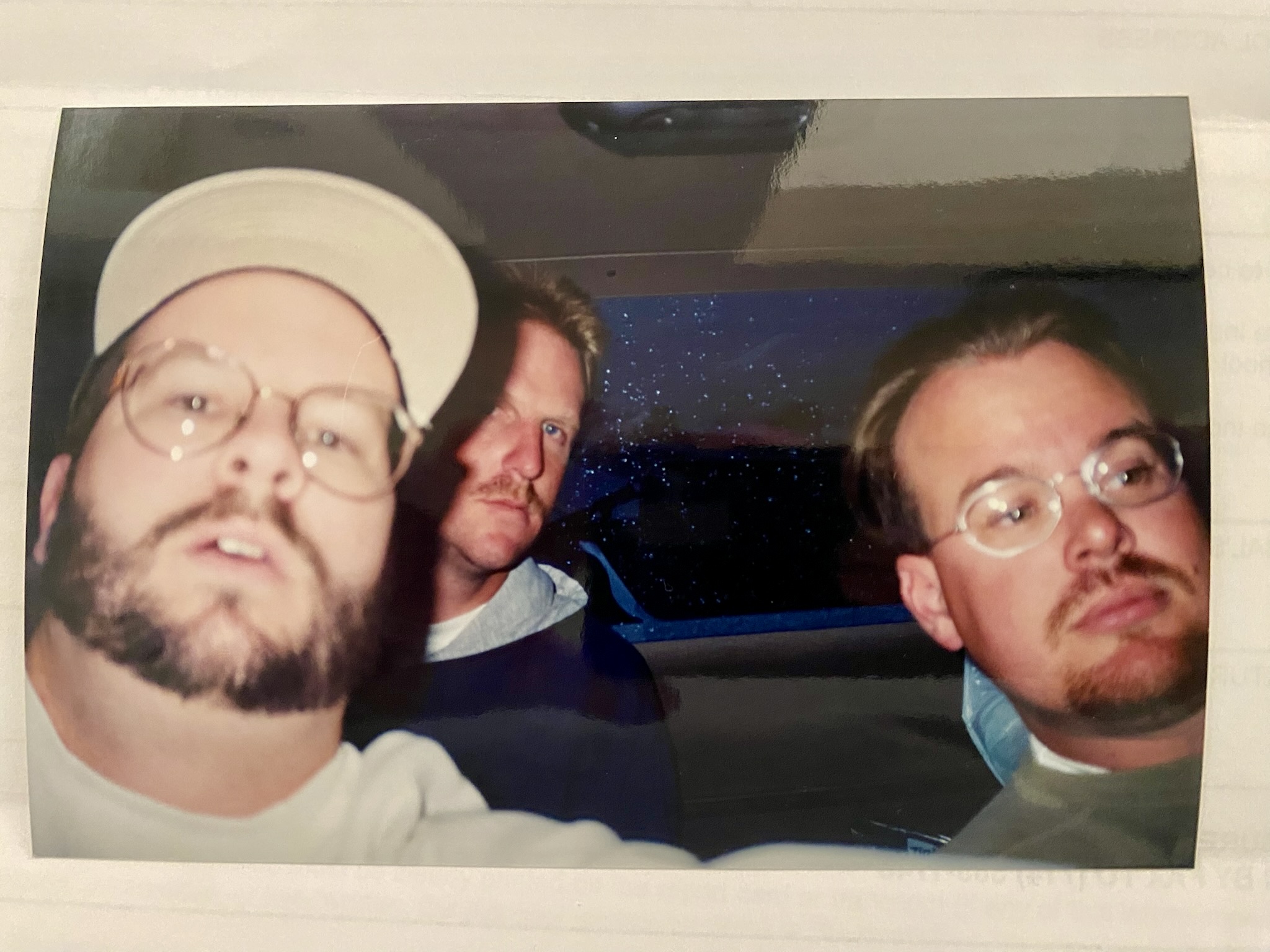
Photo – a selfie back when selfies were taken with film cameras, at least 30 years ago. Three knuckleheads driving to the desert way too early. That’s my brother and I on the left and my brother’s other brother, Paul, on the right. We’ll miss you, Paul.

The Day We Visited the Taj Mahal and Never Saw It

There are certain destinations in the world that feel larger than life. The Taj Mahal is one of those places. For many travelers, seeing it with their own eyes is a once-in-a-lifetime moment.

We were finally there. We had made it to Agra. All that remained was to step inside the gates and witness the iconic white marble glowing in the sun.

Only one problem.

There was no sun. There was no white marble. There was no Taj Mahal.

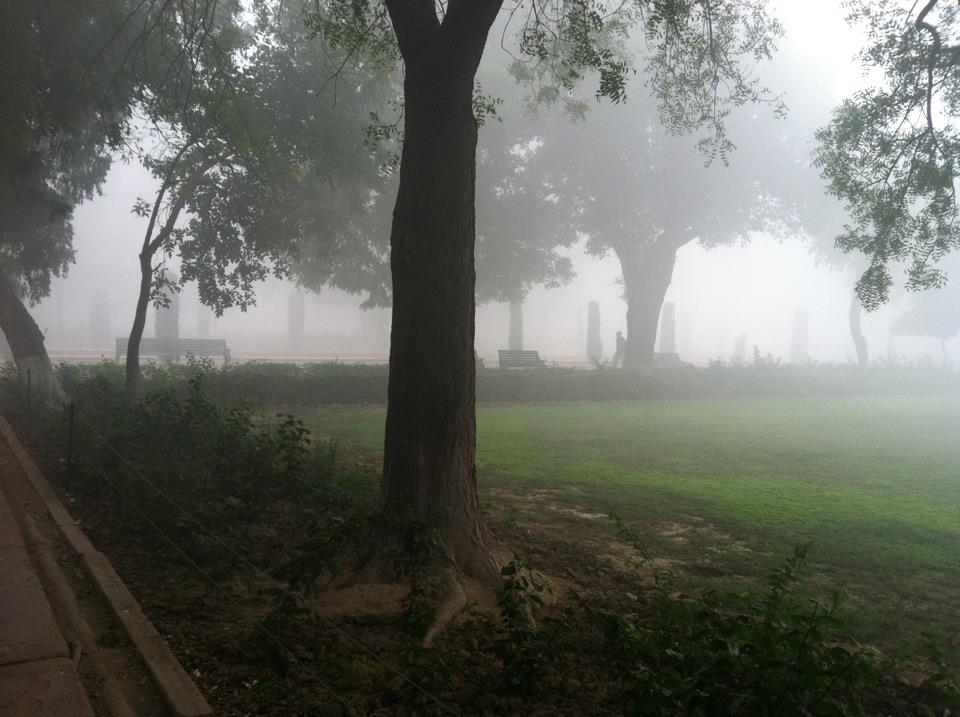
There was only fog.

We woke that morning filled with hope. The rooftop restaurant gave us a commanding view of… absolutely nothing. We stared into a wall of haze, sipping coffee and laughing at the absurdity of our timing. Surely the fog would lift. Surely the Taj Mahal would reveal itself.

Our guide, Kuldeep, assured us everything would be fine. He had led more than 500 tours of the Taj Mahal. He knew everything there was to know about its history and its beauty. We boarded our bus, grabbing our special cloth bags with a picture of the Taj printed on them. These were designed to hold the single water bottle we were allowed to bring inside the property. And we set off with excitement.

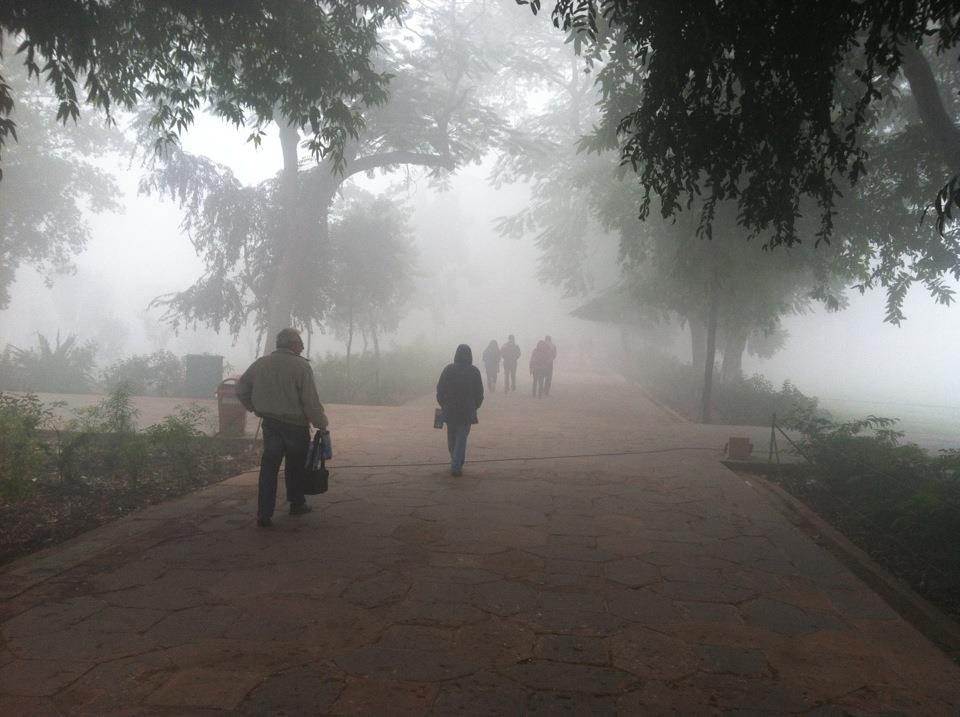
Fog. All the way there. Fog in the parking lot. Fog at the security lines. Fog as we walked the long approach toward the main viewing area. Each time Kuldeep stopped to point out an “excellent vantage point,” we nodded with wide eyes, imagining the magnificent structure hidden somewhere in the mist.

We took photos pointing at the picture on our water bottle bags. That was the only Taj Mahal available to us from any vantage point.

As we walked toward the building, we eventually reached the outer wall and finally saw something. White marble appeared just a few feet above our heads. Then the stone vanished again into the haze. The grand dome. The sweeping arches. The delicate inlays. All shrouded in fog.

We were standing beside one of the wonders of the world and could only see a sliver of it.

Our group laughed so much that day. Not because we had traveled halfway around the world only to miss the view. We laughed because we were sharing something unforgettable and slightly ridiculous. We were experiencing a story that would last much longer than a postcard-perfect photograph.

Kuldeep shook his head with disbelief. In all his tours, he had never experienced this. He told us we were a very select group of visitors who could claim something few on Earth could say. We visited the Taj Mahal, but we have never actually seen it.

He was right. I still have never seen the Taj Mahal in person.

The destination was never the prize

You might think this would be a disappointment. But when I look back on that trip, the fog made everything richer.

The destination was never the prize. The people were.

We shared meals and conversations and inside jokes. We tried foods that were new to us. We navigated chaos and beauty side by side. We saw India’s contrasts and colors and kindness. We saw devotion expressed in temples and marketplaces. We saw how history and modern life can exist on top of each other without barriers.

The Taj Mahal is extraordinary. I would love to see it someday with clear skies and a rising sun. Yet I already have what I came for.

When I think about all the amazing places I have been blessed to visit, a pattern appears. I never say, “Remember when we saw that famous landmark.” I say things like:

– Remember how we got lost trying to find it?
– Remember the tiny restaurant we discovered afterward?
– Remember the guide who became a friend?
– Remember that amazing gelato place in the middle of nowhere?

I have my memory of that rooftop breakfast. I have the echo of laughter on the bus. I have the photos of my family and friends pointing to a water bottle bag as if it were the crown jewel of Indian architecture.

The world is full of wonders. But relationships are the wonders that stay with us.

The real bucket list

If someday I return to the Taj Mahal and finally see it, I’ll smile and take it in. But I know the picture etched into my heart is already complete. It’s filled with faces and voices and laughter. It has the beauty of our shared experience.

Checklists are fine for airplanes. But our lives deserve something better.

The best adventures can’t be captured by a camera or a perfect view. What lasts are the relationships made stronger by shared surprises, setbacks, and moments of wonder.

This story, fog and all, remains one of my favorites.

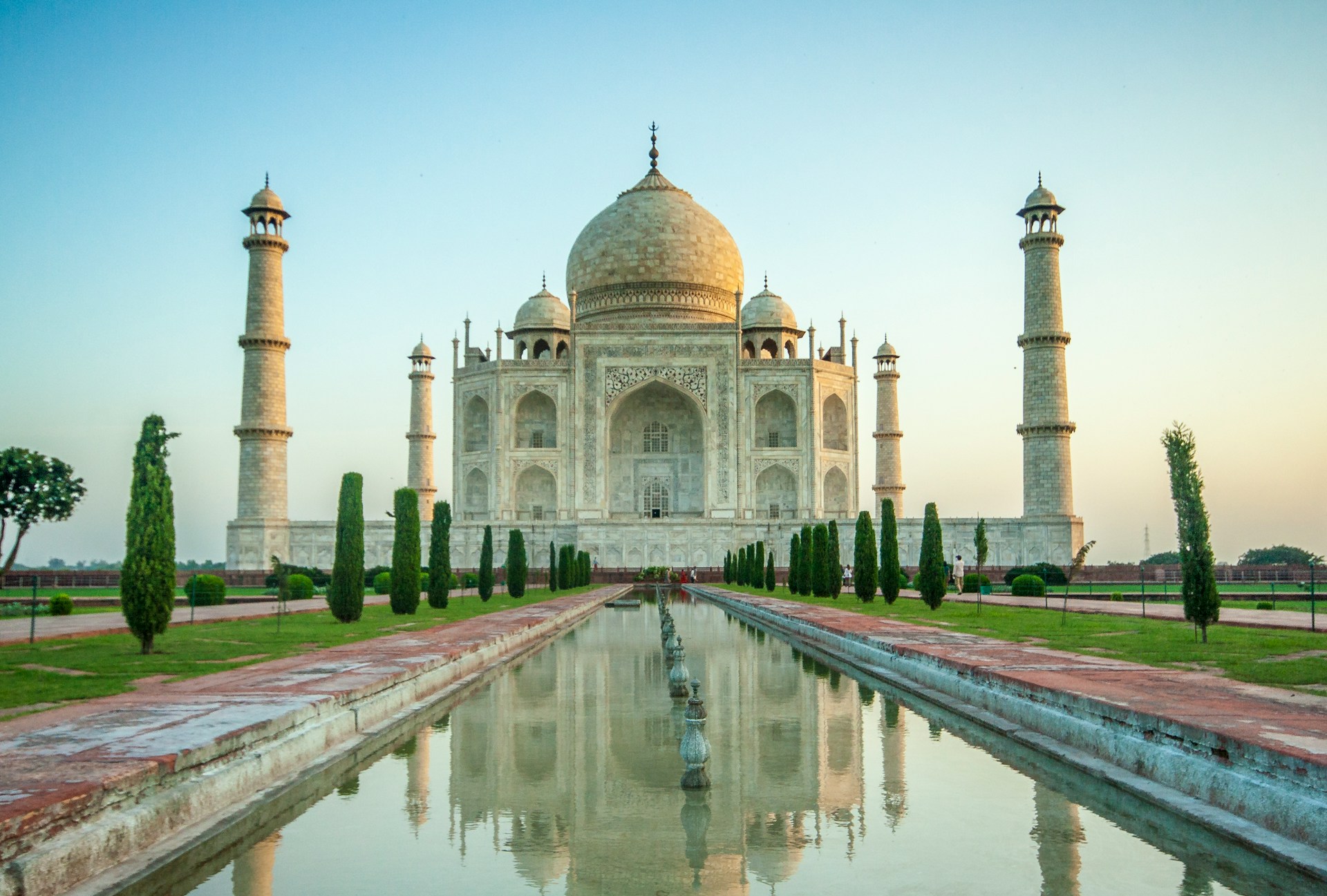
Photo by Mark Harpur on Unsplash showing the majestic beauty of the Taj without fog. 

The photos below are mine showing what we actually saw.  Unfortunately, the amazing water bottle bag photos are stored on a drive I can’t see…a little bit like that morning in Agra more than a decade ago.