
AI can prototype our workflow. It can draft our requirements. It can generate our user stories. But it has no idea how our business actually works.
It can’t tell us where the bottlenecks in the process are. Our loan officer knows that. It can’t explain why the workaround exists. Our operations manager knows that. It doesn’t know which shortcuts blow up in an audit. Our compliance analyst knows that. It has no idea where customers rage-quit. Our customer service supervisor knows that.
Our best people, the ones who actually know how the work works, often have trouble translating what’s in their heads into something a developer can build. They know where the friction is. They know which exceptions happen every Thursday afternoon even though the procedure says they shouldn’t. They know which approval step matters, and which one is just a bureaucratic leftover from a reorg three years ago.
For the first time, the people who do the work and understand the problems they’re trying to solve can start shaping the solutions. AI gives their expertise a doorway it never had before.
These subject matter experts can sit down with an AI tool and start turning what they know into something visible. Plain language in. Workflow out. Prototype sketched. Edge cases surfaced. User stories drafted.
And when they do that, something shifts. They realize software development isn’t magic. It’s a thousand small decisions that someone has to make. That realization alone is worth the exercise.
Instead of walking into a meeting saying, “we need a dashboard” or “can we automate this?” they walk in with something tangible. Rough? Sure. Wrong in places? Probably. But it doesn’t have to be production-ready. It has to be conversation-ready.
That changes everything.
Developers, architects, and project leaders can see the idea. They ask sharper questions. They spot what already exists, what creates risk, what can ship fast. The subject matter expert starts understanding what building a solution actually involves. The dependencies. The data quality landmines. The difference between a slick mockup and something that holds up in production.
That shared understanding transforms the relationship between business and technology.
We know the old pattern. Business has a need that’s difficult to explain, the technology team tries to interpret it, weeks pass, something appears, the business says, “close but not what we meant,” the cycle repeats. Everyone gets frustrated. Nothing ships.
AI doesn’t kill that cycle. It compresses and turbo charges it. When developers start with a real prototype and a real conversation, iterations can take hours or days instead of weeks.
The AI win is getting people in the same room faster, with something real to react to.
If more people can generate ideas, workflows, and prototypes, we’ll start getting more possibilities than we can pursue. A good problem to have, but still a problem.
Bottom-up energy is powerful. It surfaces solutions from the people closest to the work. It finds problems leadership didn’t know existed.
But without focus, we’ll drown in prototypes. The bottleneck doesn’t disappear. It moves from “we don’t have enough ideas” to “we have no idea which ideas deserve investment.”
That’s on leadership.
Executives, your job isn’t to be the gatekeeper of imagination. Play that role and the old problems come back fast. Good ideas will die in departments, in notebooks, in hallway conversations that never go anywhere. You become the reason nothing changes.
Your job is to be the steward of focus. Create the channel. Invite ideas up. Encourage people to explore, prototype, get specific. Then make the call on what moves forward.
Bottom-up imagination. Technical refinement. Executive focus. That’s a model that AI tools make possible.
Subject matter experts bring better ideas because AI helps them say what they know. Technical teams sharpen those ideas because they understand what durable software is. Executives look across the whole landscape and ask the hard questions nobody else is positioned to ask.
Does this solve a real problem or just an annoying one? Does it scale? Does it duplicate something we already own? Does it create risks we can’t absorb? Is this a strategic investment or a distraction dressed up as innovation?
Not every prototype becomes a project. Not every project deserves to live in our permanent technology environment. That’s not a failure of imagination. That’s how imagination gets distilled down to create tangible business value.
The future advantage won’t go to the fastest movers or the biggest tool buyers. It won’t go to the organizations that treat AI like a cure-all and wonder why nothing changes.
It’ll go to the ones that know their business well, listen hard to the people doing the work, and never confuse creating more things with creating better things.
AI can help us build faster. That’s the easy part.
Knowing what to build and why. That’s still on us.
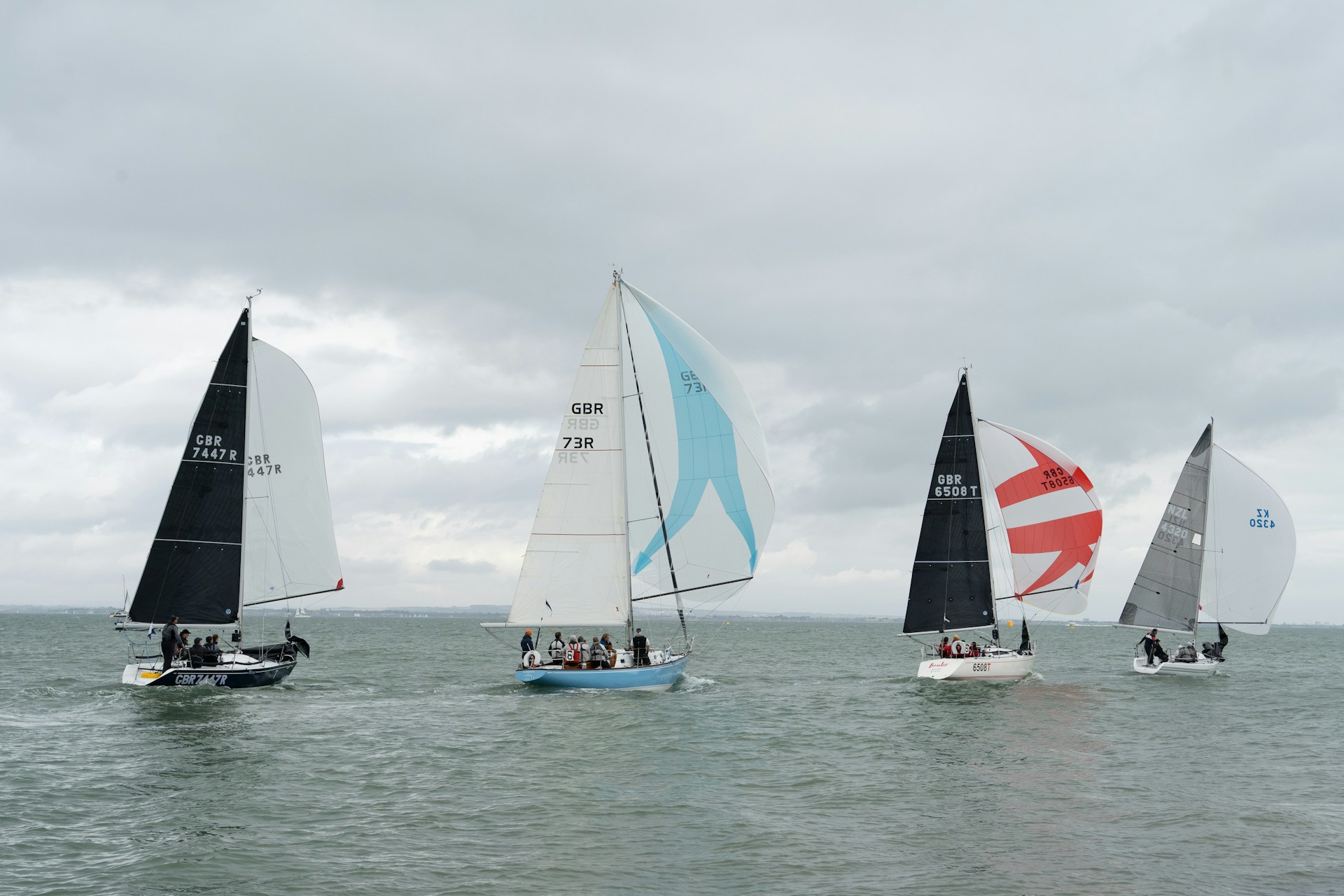
Photo by BEN ELLIOTT on Unsplash – This is a downwind leg, spinnakers out, boats grabbing everything the wind has to offer. A good metaphor for AI. It can give us remarkable speed. But we’re still in a race, there’s still a course to navigate, and the turns are still ours to make.

 Grandpa Bob Encouraging Leadership
You must be logged in to post a comment.