
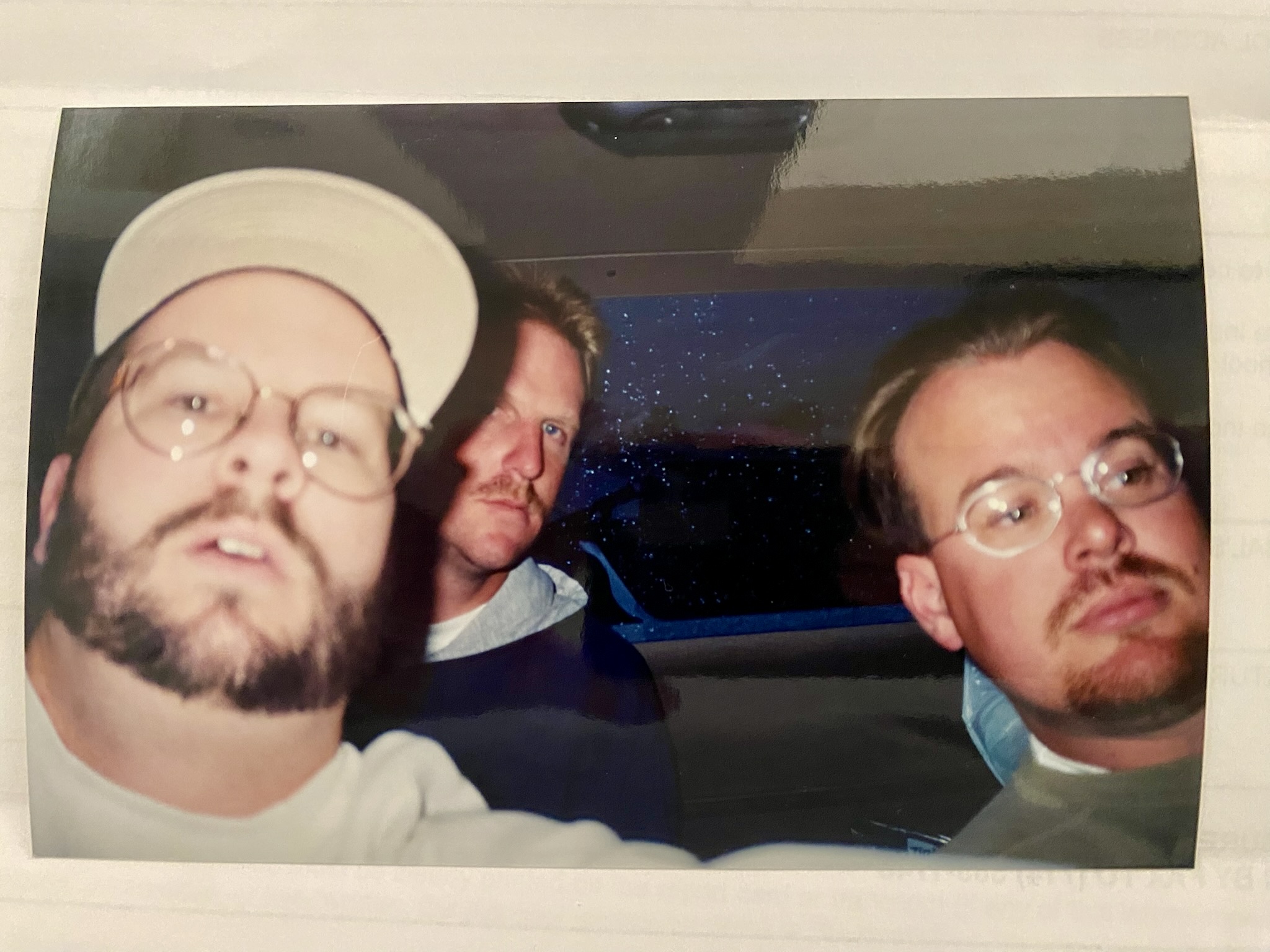
When I heard that my friend Paul was in the hospital and things weren’t looking good, I can’t say I was shocked. When he passed away a few days later, what stayed with me most was the loss of everything he still had ahead of him.
Paul had been in a self-destructive pattern for a while. I recognized it early, having seen something similar play out in my own family years before. Still, knowing the path doesn’t make the ending any easier.
Paul was my brother’s best friend since high school. More than that really…another brother. Like brothers often do, they didn’t agree on everything, but they agreed they were in it together, and that wasn’t going to change.
I first met Paul when he was probably a sophomore or junior in high school. I was home visiting from my freshman year in college. I remember that mullet like it was yesterday. Business up front, party in the back. He wore it with absolute confidence, as if it were the only reasonable hairstyle.
He was quick-witted and cocky, but in a good way. Sure of himself, without yet knowing what his future held. Which, in hindsight, makes him a lot like the rest of us at almost any age.
Paul had a way of knowing everyone. If he didn’t already know you, he would by the end of the day. His personality filled whatever space he walked into. He remembered names after meeting someone once, a gift I’ve always envied. He asked questions, was genuinely curious about people, and he made everyone feel seen. Paul appreciated people, and people felt that.
He was always ready to dive into big ideas and big projects. He liked to say, “I don’t have a stop sign on my chest.” While others talked about racing off-road “someday,” Paul made it real. With my brother and a group of equally committed friends, he jumped headfirst into building and racing a Class 10 buggy.
What did Paul know about off-road fabrication or racing at speed in the desert? Not much. That didn’t stop him. He’d figure it out along the way. Thursday nights in his garage turned into a ritual. Fabricating, wrenching, laughing, getting ready. Lots of Saturdays were spent in the desert testing and tuning, trying to make the car race ready.
My brother was his co-driver, mentor, and probably the unofficial crew chief. I don’t know how many races they finished, maybe one or two, but they often led the first lap and looked great until something small failed. A cheap part. A loose wire. A power steering pump. One tiny thing ending the day.
They were frustrated, but they didn’t quit. Eventually the Class 10 car gave way to a Class 8 truck. Everything got bigger. More horsepower, bigger suspension, more parts, higher speeds. More complexity. More commitment. More Thursdays. More Saturdays. More races.
Paul used to joke that the only things standing between him and winning were experience, capability, and funding. All probably true. Where most people would see that as a reason to stop, Paul saw it as part of the adventure. He believed he’d learn as he went, and he’d have fun doing it.
I was lucky to pit for Paul at a few of his races. But where I really got to see him shine was pitting for Team Honda in Baja and Team Kawasaki in Nevada. I learned that Paul knew the words to every Metallica song, and nearly every other song that came on the radio…rap, country, classic rock. He knew them all.
One Nevada race stands out. We were assigned the first pit of the day, then relocated to be the final pit later the same day. It’s always fun to be able to do two pits in the same day.
We scouted the location the day before. A desolate stretch of desert about 50 miles from the start. We rolled out early from our little motel the next morning in the dark to get set up.
We thought it would be cool to have an official Kawasaki awning over the spot where the bikes would stop for gas and service. It looked great. We forgot one detail. Securing that awning.
As the first rider, a Kawasaki (of course), came rolling in, Paul had the fuel dump can ready. We could fill a tank in about ten seconds. Everything was smooth. Then the desert wind kicked up, and the awning took off, cartwheeling across the landscape in spectacular fashion right as fueling began.
There was nothing to do but keep going. Rider one laughed as he pulled out. Did I mention there was film crew there? They laughed. We laughed. Thirty seconds later, rider two came in and out just as fast.
When we finally went to retrieve the awning that had rolled about a half mile away, we expected wreckage. Instead, it was mostly fine. Scratched, dusty, but intact. At the final pit of the day, we remembered to tie it down.
When I think of Paul, that’s what comes to mind. The sprinkling of chaos. The laughter. The way nothing ever quite went according to plan, and how little that bothered him or any of us. We were having fun together and that’s what mattered.
I’ll miss Paul’s infectious grin, his laugh, and his refusal to wait for perfect conditions. He left too early. But he left us with stories, friendships, and a reminder that life isn’t meant to be watched from the sidelines.
Rest in peace, my friend.
Photo – a selfie back when selfies were taken with film cameras, at least 30 years ago. Three knuckleheads driving to the desert way too early. That’s my brother and I on the left and my brother’s other brother, Paul, on the right. We’ll miss you, Paul.

 Grandpa Bob Encouraging Leadership
You must be logged in to post a comment.