The Obstacles You Think You Know…Don’t Matter

Polynomials suck, but they aren’t the obstacle that matters most…

Polynomial Function

I used to hear one question a lot when I was a kid.

Whether an adult was asking me, or another kid my age, it was always the same:

What are you going to be when you grow up?

In second grade, I knew I wanted to be a doctor.  My friend wanted to be a fireman.  Another friend wanted to be a professional skateboarder.

By high school, I was still thinking doctor, or maybe veterinarian.  One of my friends planned to be an engineer, another wanted to teach, and one planned to go to the Air Force Academy and become a fighter pilot (he just retired from the Air Force a few years ago).

In my senior year in high school I ran into Algebra 2.  More specifically, factoring polynomials.  FOIL method.  Up to that point, math had made sense.  Plug the numbers into the formulas, and get your answer.  X equals 11, Y equals 9.  Pythagorean Theorem?  Piece of cake.  Word problems?  Easy.

But, polynomials made no sense.  The magic of the FOIL method didn’t help.  First, Outside, Inside, Last?  Solving for multiple variables that cancel each other out in some mysterious way?  Arriving at an answer that looks as cryptic as the original question?  What does a polynomial look like if you draw one?  When will we ever use this in real life?  I’d say it was all Greek to me, but I didn’t know Greek either, or Latin.

I hadn’t even reached Calculus (the math all the other brainiacs were taking in their senior year), and I’d hit a wall.
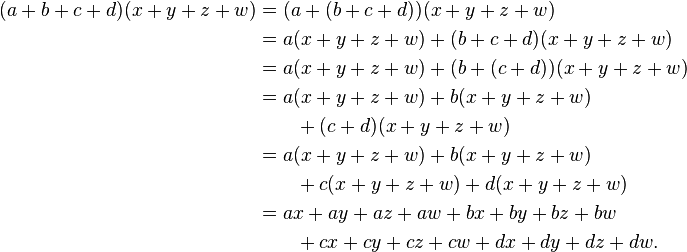
Polynomial Example

I could see the handwriting on the chalkboard (teachers used to write on them before whiteboards were invented).  To become a doctor would require a science degree of some kind.  That science degree would require a ton of math well beyond polynomials…maybe even Calculus.  What comes after Calculus?!  And, what about Latin?  Doctors all seemed to use Latin.  How would I learn that?  It wasn’t even offered at my high school.  And, what about getting into medical school?  Did I have eight years to give up?  How would I pay for all of it?  This was going to be hard!

We each have a strategic thinking instinct.  The ability to prioritize, make deductions, create connections, and map out a direction.  Or, multiple directions.

Unfortunately, more often than not, we either ignore our strategic thinking capability, or we use it to map out why something is impossible.  We visualize all the obstacles while ignoring the path around, over, or through them.  We neatly stack all the obstacles into an impenetrable wall, rather than a series of hurdles to be taken one-at-a-time.

My doctor plans went down in flames…but, I was the one pointing the metaphorical plane into the ground.

Could I have found a way to understand polynomials?  Yes.  Could I have dealt with Calculus?  Yes.  What about Latin?  Yes.  What about getting into medical school?  Yes.  Did I have what it took to become a doctor?  Probably (we will never know).

Did I allow myself to realize any of this at the time?  No.  I was too busy jumping toward another goal that had fewer obstacles, or so I thought.  One that didn’t require Calculus.  One that I could get my head around, and see more clearly.

I now understand something I didn’t back when I was a high school senior.  I’m not sure I understood it by the time I was a college senior either.  Our biggest obstacle, the one that matters more than any of the obstacles we can see, the obstacle that trumps all others, is staring back at us in the mirror.  Find your way around, over, or through yourself, and you are well on your way to overcoming almost any other obstacle in your path…maybe even polynomials.

Want the answer to the crazy equation?  This might (or might not) be it


Photo Credits:  Here and Here


The Trouble with Gauges

Successful flying is much more than air speed…

cockpit-sopwith-1-1_2-strutter

One might argue that air speed is the most important factor in flying.  Not enough and you fall from the sky.  Too much, and your plane suffers catastrophic damage (and may fall from the sky).

I searched for at least three minutes (that’s a long time to be on a wild-Google-chase) to find an image of a simple cockpit instrument panel.  Notice anything?  Even this simple panel has a lot more than an air speed indicator.

In addition to air speed, the pilot can see engine rpm, oil temperature, water temperature, cylinder head temperature, fuel level, battery voltage, whether or not the plane is flying level, and the all-important altitude.

Successful flying is much more than air speed.  Otherwise, there’d only be one gauge.

Flying is much more than monitoring gauges.  Otherwise, what’s the point of windows?

Do you measure your life with one gauge, or a cluster of gauges?

Which gauge do you look at most?  Is it the right one?

Have you noticed where you’re heading, or are you too busy looking at your gauges?


Photo Credit: World of Aircraft Design


Taking Time to Grieve

Grieving is unavoidable, no matter how busy or tough we think we are.

When someone we love dies, we often hear about the grieving process.  We hear that we should take time to grieve.  It’s something we can’t skip.

Grieving is unavoidable, no matter how busy or tough we think we are.

I remember when my Grandma Anne died (over twenty years ago).  My cousin, Devin, told me about DAWA, the four stages of the grieving process that he’d learned as a policeman:

Denial—we deny that the person has died, or that this is really happening.  We may also deny that it’s impacting us emotionally, or deny that we even understand the mix of emotions that are welling-up inside of us.

Anger—we realize this is real.  We wonder what we could have done differently.  We wonder how something like this could have happened.  We may question the justice in the universe, or how God could allow this.  Bargaining phrases like, “if only…” come into our mind.

Withdrawal—sometimes the only way to cope with the reality of our loss, and the emotions we can’t control, is to withdraw.  This may be within ourselves, or to some place where we can be alone.  Denial is giving way to reality.  Anger is turning to sadness.  We look within ourselves for the strength to overcome our sadness.

Acceptance—we begin to get our head wrapped around what is happening.  We start to make peace with this new reality.  Acceptance doesn’t mean we’re “over it,” or that there isn’t an irreparable rip in the fabric of our soul.  It means we start to understand how to go forward with our life.

It’s easy to list these stages and assume grief is a simple process with a beginning, middle, and end.  It doesn’t work that way.  Some people never get through all the stages, or, they may cycle through one or more of the stages numerous times.  It’s a process without a true endpoint…only the hope of eventual acceptance.

The grieving process applies to more than our loved ones passing away.  It can apply to losing just about anything else we love (whether we realize it or not).

Maybe it’s a friend who we don’t get to see anymore, a hobby we can no longer participate in, moving into a new house (and leaving the old one behind), graduating from college and saying goodbye to our friends, losing that job we thought we’d have for many years to come.

It doesn’t matter if we’re the ones driving the change in our life, or if the change is thrust upon us without warning.  It doesn’t matter if our loss is a stepping stone that leads us to something even greater (which is often the case).

The loss is real.

And, so is the grieving process.

The Next Version

The first version may dramatically change, or create new markets. But, it can’t stop there.

intro_originalipod

Just when the caterpillar thought the world was over, it became a butterfly.  ~English Proverb

There’s always a next version.  The latest update.  The new and improved model.  That is, if you sell a product (or service) and hope to remain relevant.

The first version may dramatically change, or create new markets.  But, it can’t stop there.

When Microsoft came out with its first version of MS-DOS (Microsoft disc operating system for those of you born after 1983 or so), they didn’t stop developing what they had.  There was always a new version just around the corner, and then all the versions of Windows after that.

Consider how quickly Apple’s iPod improved, shrank, morphed, and spawned new products and categories (like the iPhone).  The first iPhone was awesome and changed everything.  But, Apple didn’t stop there.  They couldn’t.

Dr. Athey (one of my favorite professors) used to talk about the “ratchet effect” in technology.  With each successive improvement in speed, features, or capability, the expectation level is ratcheted-up, at least one notch.  Each improvement creates a new floor.  A platform for the next leap.

Stop improving, stop inventing, stop pushing, stop creating, stop leaping, and guess what.  Your product begins to wither and die.  What was once amazing becomes the norm.  The markets you created start to shrink.

The same ratchet effect applies to each of us.

I will never forget a conversation I had with Grandpa Clyde.  He was about 90 years old at the time.  He had just started using email, and asked me how he could send an email to more than one recipient.  I gave him some email pointers, but I got a whole lot more in return.  His questions demonstrated a key secret to a happy life:  Continuous exploration…seeking the next version.

What are you curious about?  What scares you?  What seems impossible?  These are the first things to explore.  Choose to take your first step.  Once you take the first step, the next one is easier.

What features will be in your next version?


Photo Credit:  ARS Technica