The Mystery of the Dots

Our lives can seem like a collection of random experiences, decisions, non-decisions, near-misses, lucky chances, chance encounters, crazy ideas…

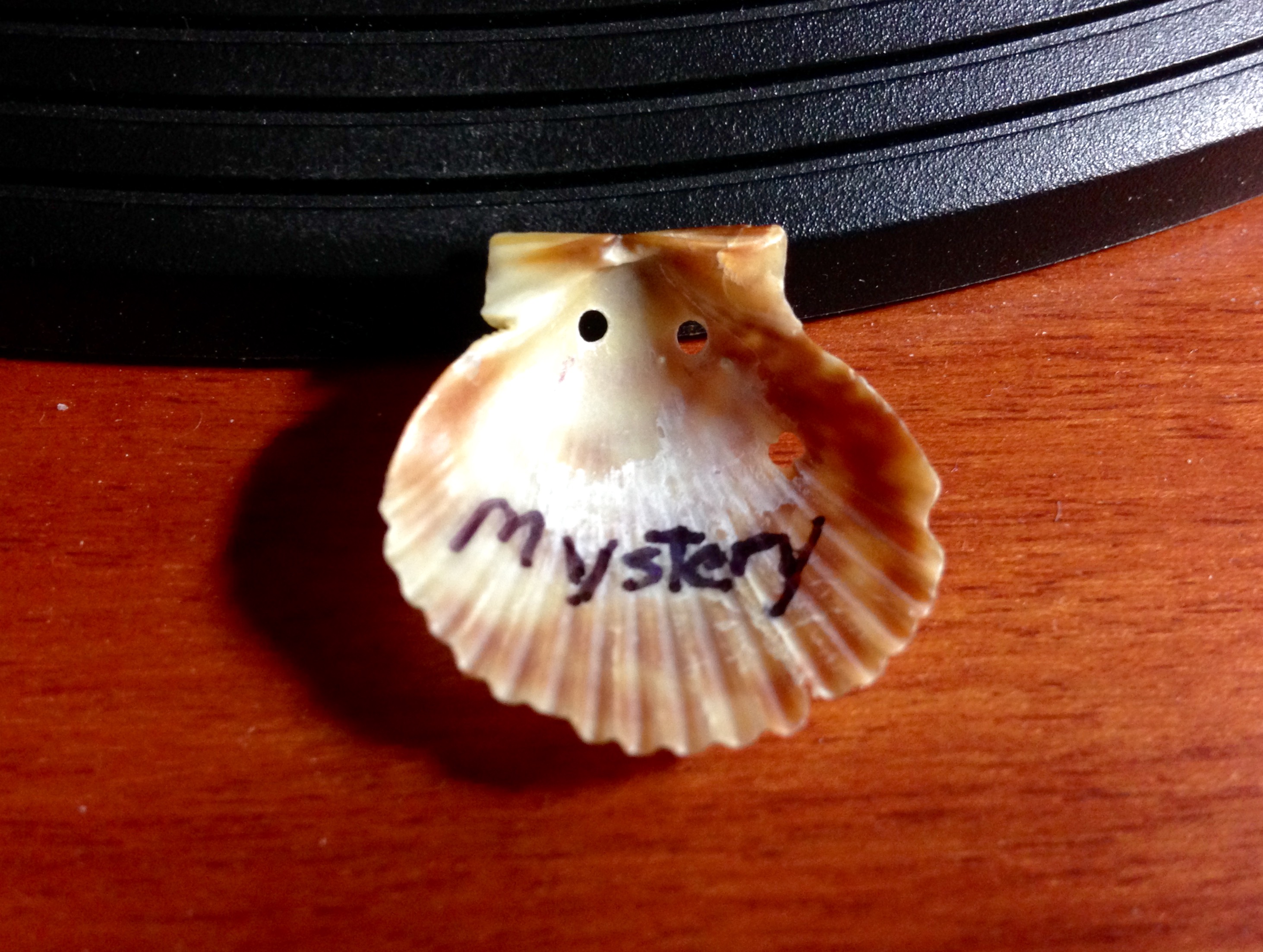
MysterySeashell

I recently participated in my first Church retreat.  It opened with an exercise where each participant drew a seashell out of a pile of seashells.  Written inside each shell was one word.  The facilitator then asked each of us to say how this one word connects with our lives.

My word was Mystery.

As I sat pondering the word, I couldn’t help thinking about all the dots in my life that have connected to bring me here.

Connect-the-dot puzzles are a great way to teach kids how to count, and see that there can be order in the apparent chaos of a bunch of dots on a page.

Our lives can seem like a collection of random experiences, decisions, non-decisions, near-misses, lucky chances, chance encounters, crazy ideas, mundane thoughts, risky ventures, explorations, challenges, victories, losses, successes, failures, limitations, beliefs, non-beliefs, triumphs, heartbreaks, new directions, people, places and things.

These are our dots.

We create some of the dots, but most of them are already there, waiting for us to connect.

Which dot comes next?  Do we choose, or is it chosen for us?  Is there a pattern, or at least some path, in all these dots?  I like to think we have something to do with deciding which dot comes next, but certainly not everything.

Nearly every major turning point in my life (good and bad, but mostly good) was unplanned.  Sure, I may have been prepared to capitalize, but the actual “dot” came out of nowhere, often by chance.

To paraphrase a quote from The Way (a movie I highly recommend, by the way), “You don’t choose a life, you live it.”  We all make plans, and try to map out where we’re headed.  The truth is, we don’t have as much control over things as we’d like to think.

Letting go of the illusion of control is a big step toward happiness.

The happiest people I know live their lives as a verb, rather than something to be controlled, or pondered in the past tense.  They are always seeking, always learning, always renewing.  They usually spend a lot of time serving others.  They don’t know which dot comes next, but they’re open to the possibilities.

I can see some big dots in my future, but I know there are a bunch I don’t see.  That’s the great mystery that makes life so awesome.

Finding the Next Higher Gear

That’s when I noticed my habit of shifting to a lower gear as the trail gets steeper ahead…

4-5-10-mountain-climbing

If you haven’t tried mountain biking, you don’t know what you’re missing.  It combines many of the best things in life:

Being outdoors, hard work, freedom, speed, some risk, and fun.

Like many sports, it’s also a great way to find your limits, and extend them a bit.

Mountain bike trails are either climbing or descending.  They may be smooth, rough, tight, rocky, rutted, or any combination of these.

Steep downhills have always scared me.  Way too fast for my taste.  That impossible battle with gravity, choosing the safest line, avoiding rocks, and leaning far enough back to avoid being pitched over the handlebars, make most steep downhills a game of survival for me.  Definitely outside my comfort zone.

I prefer climbing.  Give me a long, steep climb and I’m happy.  Tired, but happy.  Sure, gravity’s against me, but it’s not trying to throw me over the handlebars, or off the mountain side.  I get to focus on my pedaling rhythm, staying within myself, and seeing how fast I can climb the next steep hill.  It puts my mind in a quiet place.

Until someone goes around, gives a wave, and climbs out of sight!  He may be half my age, but that’s no excuse.  He’s found a way to put both himself and his bike in the next higher gear (or maybe a few higher gears).

That’s when I noticed my habit of shifting to a lower gear as the trail gets steeper ahead.  I haven’t reached the steeper section, and yet I’m already downshifting.  One could call this good preparation.

Or, fear.  Fear of being caught off-guard by the steeper trail.  Fear of actually finding my limits.  Fear that I can’t handle the next higher gear.  Fear that I’ll blow-up and have to stop, gasping for air.

Napolean Hill was right when he said, “the only limitation is that which one sets up in one’s own mind.”

As I watched that guy climb out of sight, I decided to experiment with the next higher gear.  Catching him wasn’t my goal.  That wasn’t going to happen.  Finding my limit became my new goal.  Whenever my habit said I should downshift, I purposely clicked to the next higher gear and left it there.  Suffice it to say, I found my limit a few times.

More often than not, I merely climbed faster, and clicked to even higher gears.

Since I was climbing, I had time to think.  The question that kept rolling around my head was whether I have the same habit of preemptively downshifting in other areas of my life.

Time to find out.


Photo Credit


Two Stories for Lent

As Lent begins, I thought I’d share these two stories…

As Lent begins, I thought I’d share these two stories.  Both are classics, and worthy of contemplation:

The Doctor and the Father

A doctor entered the hospital in a hurry after being called in for an urgent surgery.  He had answered the call, dropped what he was doing, and went directly to the surgery ward.  He found the boy’s father pacing in the hall waiting for the doctor.

On seeing him, the father yelled, “Why did you take all this time to come?  Don’t you know that my son’s life is in danger?  Don’t you have any sense of responsibility?”

The doctor smiled and said, “I am sorry.  I wasn’t in the hospital and I came as fast as I could after receiving the call.  And now, I wish you’d calm down so that I can do my work.”

“Calm down?!  If that was your son in that room, would you calm down?” asked the father angrily.

The doctor smiled again and replied, “I will say what Job said in the Holy Book: ‘From dust we came and to dust we return, blessed be the name of God.’  Doctors cannot prolong lives.  Go and pray for your son, and we will do our best by God’s grace.”

“Giving such advice is easy when you’re not concerned,” murmured the father.

The surgery took many hours, after which the doctor went out happily to greet the father.  “Thank goodness, the surgery was successful, and your son is saved!”  And without waiting for the father’s reply, he carried on his way running down the hall toward the exit, as he yelled, “If you have any further questions, please ask the nurse!”

“Why is he so arrogant?  He couldn’t wait a few minutes so that I could ask about my son’s state?” asked the father when he saw the nurse minutes after the doctor had left.

The nurse answered, tears coming down her face, “His son died yesterday in a car accident.  He was at the funeral when we called him for your son’s surgery.  And now that he saved your son’s life, he left running to attend what’s left of his son’s funeral.”

We go through life, never truly knowing what burdens others are carrying.

Which are you?  The doctor, or the father?


Lunch with God

A little boy wanted to meet God.  He packed his suitcase with dress clothes, and some packets of cakes for his journey.  He walked a long way and felt tired.

As he sat in a park to rest, he opened a packet of cake to eat.  Then he noticed an old woman sitting sadly with hunger nearby, so he offered her a piece of cake.

She gratefully accepted it with a wide look and smiled at him.  Her smile was so pretty that the boy longed to see it again.  After some time, he offered another piece of cake.  Again, she accepted it and smiled at him.

The boy was delighted!  They sat there all afternoon eating and smiling, but they never said a word.

When it grew dark, the boy was frightened and he got up to leave but before he had gone more than a few steps, he ran back and gave her a hug and she kissed him with her prettiest smile.

When the boy got home and opened the door, his mother was surprised by the look of joy on his face.  She asked him, “What did you do today that made you look so happy?”

He replied, “I had lunch with God.”  Before his mother could respond, he added, “You know what?  She’s got the most beautiful smile I’ve ever seen in my life!”

Meanwhile, the old woman, also radiant with joy, returned to her home.  Her son was stunned by the look of peace on her face and asked, “Mom, what did you do today that made you so happy?”

She replied, “I ate cakes in the park with God.”  Before her son responded, she added, “You know, he’s much younger than I expected.”

Too often we underestimate the power of a touch, a smile, a kind word, a listening ear, an honest compliment, or the smallest act of caring.  Each has the potential to turn a life around.

People come into our lives for a reason, for a season, or for a lifetime.  Accept each of them equally, and let them see God in you.


The Four Most Important Letters in Leadership: L-O-V-E

It’s no coincidence that these letters spell out love…

It doesn’t matter whether we’re talking about business, politics, sports, charities, social clubs, or just about any other area where human beings come together to accomplish something.  The most important determining factor in an organization’s success is the quality of its leadership.

What makes a strong leader?  Is it the one with the loudest voice?  The guy who makes the best speeches?  The one who puts in the most hours?  Is it the dude ordering people around the most?

Of course, it’s none of these.

The best leaders focus on the four most important letters in leadership:  L-O-V-E

L—Listen and Learn.  Strong leaders are curious.  They never stop asking questions.  They have two ears and one mouth so they can listen twice as much as they talk.  A strong leader listens to employees, customers, competitors, “the market,” and any other source of information available.  A true leader is constantly learning, and knows he doesn’t have all the answers.

O—Observe and Organize.  Leaders make time to observe what’s really happening.  They don’t rely solely on the stories people tell.  They measure the reality.  Leaders organize for success.  They delegate responsibility and authority to others within their organization.  They define processes that multiply their efforts, and the efforts of those they lead.  Ronald Reagan coined the phrase, “trust, but verify,” and strong leaders live by this maxim to ensure their organization is as efficient and scalable as possible.

V—Visualize.  Where are we going?  How will we get there?  These are the two biggest questions leaders face.  The leader’s ability to visualize the future, define and articulate the mission, and steer toward success will make or break their organization.  Look too far into the future, and they may fail to see the short-term obstacles and challenges.  Look too closely at the short-term obstacles, and they may steer their organization off-course and miss its ultimate objective.  Visualization isn’t an independent activity.  The strong leader makes time to help others take emotional ownership of the vision and connect it to what they do each day.

E—Encourage and Execute.  Ultimately, success is all about execution.  A strong leader knows that nothing happens without the people he’s leading.  Encouraging others to give their maximum effort in pursuit of the organization’s vision and goals is the primary role of the leader.  Encouragement comes from the leader’s words and actions.  People will watch and listen to see if their leader’s values and moral compass are something they can support.  They will learn quickly whether their leader cares about their well-being, as well as that of the organization.  A strong leader is sincere in defining what it will take to succeed, and excels at encouraging their team to make it a reality.

It’s no coincidence that these letters spell out love.  It’s the attitude a strong leader brings to their work each and every day.


Shameless plug:  If you want to improve your leadership game, check out my new book, Leadership Starts (and Ends) in Your Head…the rest is detail.


Life is…

Life is a celebration…

As we end one year and prepare to begin another, it’s a great time to reflect.

What have I completed, and what will I begin?

How did I fail, and how will I succeed?

Who did I help, and who will I help?

What is my true mission?

I found this great reminder (as I often do) in a quote from Mother Teresa:

“Life is an opportunity, benefit from it.

Life is beauty, admire it.

Life is a dream, realize it.

Life is a challenge, meet it.

Life is a duty, complete it.

Life is a game, play it.

Life is a promise, fulfill it.

Life is sorrow, overcome it.

Life is a song, sing it.

Life is a struggle, accept it.

Life is a tragedy, confront it.

Life is an adventure, dare it.

Life is luck, make it.

Life is too precious, do not destroy it.

Life is life, fight for it.”

 To this list, I’d add:

Life is a journey, explore it.

Life is failure, learn from it.

Life is service, give it.

Life is a gift, share it.

Life is a celebration, enjoy it!

© 2014 Bob Dailey.  All rights reserved.

But, was it the Most You Could Do?

It’s easy to do your least…

Hillsdale_Eagle

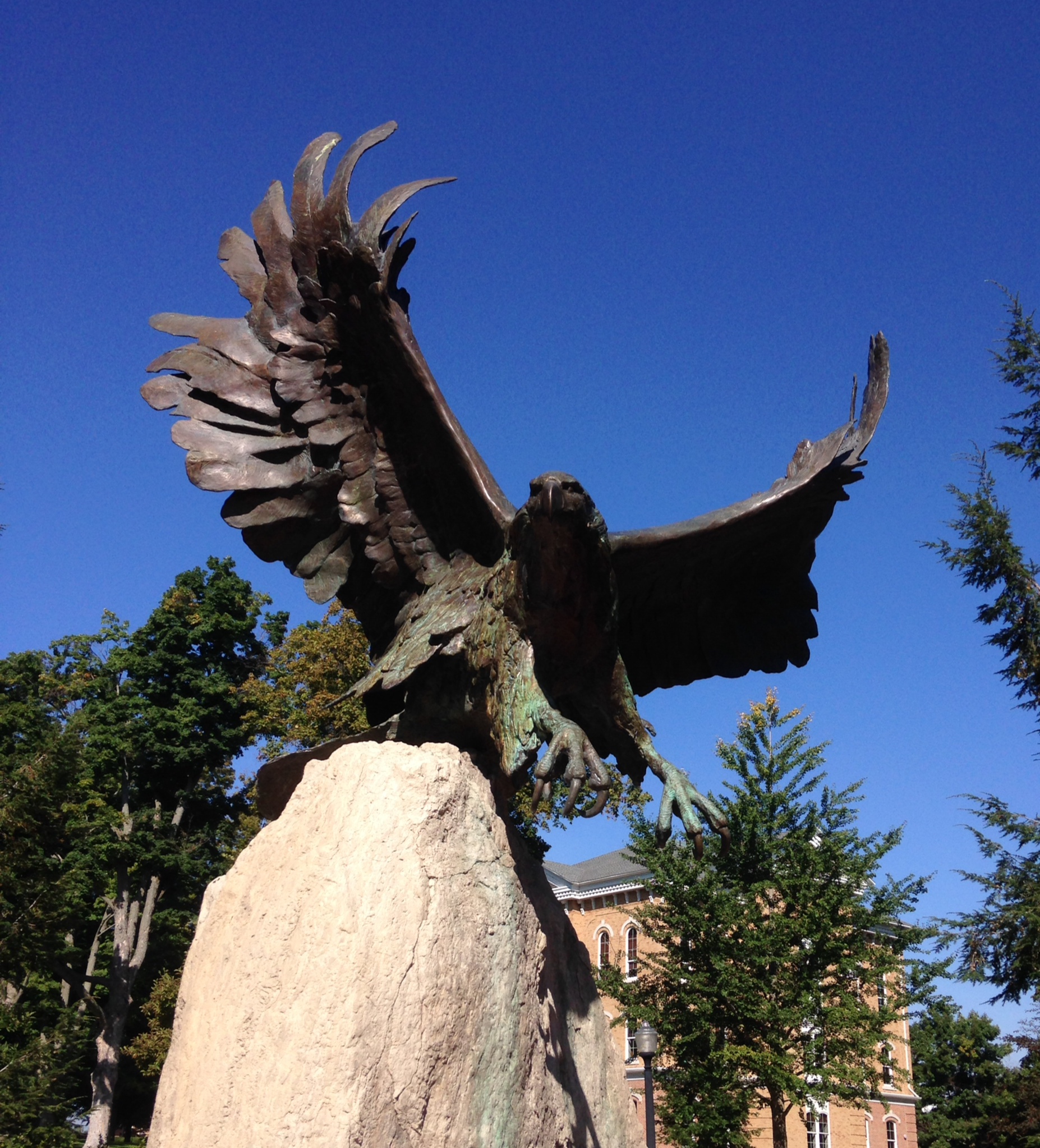
How often do you hear (or say), “It was the least I could do,” in response to someone’s gratitude. Rather than saying, “You are welcome,” or “It was my pleasure,” the gesture’s value is minimized, since it was the least we could do.

It’s easy to do the least. The least amount of work to keep our job. The least amount of studying to ace (or merely pass) the final exam. The minimum exercise to stay in shape (or close enough). The smallest charitable donation to show our support. The minimum level of quality to pass inspection.

The challenge is in defining the most. What is the most you can do?

How about putting in a level of effort and commitment to not just keep your job, but to redefine what your job can be? What’s the level of effort you can put into your studies to not just pass the exam, but to master the topic for your lifetime? What are the limits of your strength and endurance, and where can those limits take you? What can you do to not only support your favorite charity, but multiply your support by engaging others?

When was the last time you focused on the quality of your work, even when you knew few (if any) would see it? The truth is at least one person always sees the work you do. You.

If something is worth your time and attention, treat it that way. Maximize your involvement. Contribute the best version of yourself to the cause. Go all-in, every time.

When you always bring the best version of yourself, the definition of “your best” continually improves.

Do It Anyway

Very few of us will change the (entire) world. But, following the advice in these verses is a great way to change our little corner of it…

I recently came across this poem.  It was painted on the wall of Mother Teresa’s home for children in Calcutta, India.  While it’s well-known to many, it’s new to me.  I like it so much I’ve decided to share it here:

People are often unreasonable, irrational, and self-centered.

Forgive them anyway.

If you are kind, people may accuse you of selfish, ulterior motives.

Be kind anyway.

If you are successful, you will win some unfaithful friends and some genuine enemies.

Succeed anyway.

If you are honest and sincere, people may deceive you.

Be honest and sincere anyway.

What you spend years creating, others could destroy overnight.

Create anyway.

If you find serenity and happiness, some may be jealous.

Be happy anyway.

The good you do today, will often be forgotten.

Do good anyway.

Give the best you have, and it will never be enough.

Give your best anyway.

In the final analysis, it is between you and God.

It was never between you and them anyway.

Very few of us will change the (entire) world. But, following the advice in these verses is a great way to improve our little corner of it.

That’s all that matters anyway.

If It Makes You Happy

There’s a question in life that each of us gets to answer:

JulnJen-Blue


“If it makes you happy, then why the hell are you so sad?”  –Sheryl Crow

I was hiking this week and came across a California Conservation Corps crew. They were clearing brush near the trail. There were probably ten in the crew. I don’t know if they were volunteers, paid workers, or possibly working off community service hours. One thing was certain. None of them were enjoying the work.

I saw a lot of slouchy, half-hearted shoveling. They each looked exhausted. The brush wasn’t fighting back, but it was on the verge of beating this crew. None of the crew members embraced the joy that can come from working outside as the sun rises. I doubt if any were proud of the job they were doing, or the difference they were making.

They weren’t happy because they didn’t want to be happy.

Are you happiest at home? At work? Running trails? Sewing a quilt? Playing Call of Duty? Cooking dinner? Reviewing your finances? Gazing upon the ocean from the balcony of your stateroom? Sitting in quiet meditation? Mowing the lawn? Sipping a Mai Tai? Pulling weeds? Playing hide-and-seek with your kids? Cleaning your toilets? Watching your kids’ soccer games? Doing the dishes? Surfing? Playing guitar?

If you put this list in descending order from happiest to saddest, which activity is your happiest? Saddest?

I submit that each activity (and hundreds more) can be happy or sad, rewarding or frustrating, peaceful or angry, creative or boring. The activity and its location aren’t nearly as important as the one real determining factor:

The attitude we choose to bring.

There’s a question in life that each of us gets to answer:

What makes me happy?

The answer? The third word of the question.

Until you work on yourself, there isn’t much anyone or anything can do to make you happy.

“Most folks are as happy as they make up their minds to be.”  –Abraham Lincoln


In honor of this, my 100th blog post, I thought I’d post a picture of two readers I have in my mind as I write each post.  It’s amazing to me that this photo is nearly twenty years old!  My how time flies.


Two Words

Here are two powerful words you can use every day…

How many times have you heard (or said) something like:

“I used to run until I hurt my knee”

“I remember how fun it was to cook with my kids”

“I like gardening, but I just don’t have time”

“I wish I had the energy to workout”

“I used to practice piano at least an hour a day”

“I loved traveling before the kids were born”

“I had to start working fulltime, so I didn’t have time to finish my degree”

“I’ve always wanted to learn how to play guitar”

“I wish I knew how to draw”
We all have things we used to do, things we wish we could do, or could have done. The question is what’s stopping us from doing these things? What’s stopping us from trying something new?

For the things we used to do, but don’t anymore, here are two powerful words:

Begin again.

For things we wish we could do, there’s an even more powerful version:

Begin.

The easiest failure is failing to begin.

Our greatest success can only happen when we choose to begin.

Or, begin again.


Mountains, Elephants, and Steps (they have more in common than you’d think)

Don’t worry about the mountain…worry about the next turn.

OLYMPUS DIGITAL CAMERAI recently read an interview with James Doti, president of Chapman University. He’s a runner, triathlete, and mountain climber…in addition to his day job.

He mentioned a discussion he had with his mountain guide at the beginning of a big climb (I think it was Kilimanjaro) that went something like this:

Doti: That mountain is going to be tough!

Mountain Guide: Don’t worry about the mountain. Worry about the next turn.

Excellent advice. It made me think of two more quotes:

How do you eat an elephant? One bite at a time.


The journey of a thousand miles begins with one step…and then another.

The sentiments in each of these quotes is the same. Every journey, every project, every career path, every big achievement, and every lifetime are made up of small and seemingly insignificant steps along the way.

I haven’t climbed Mt. Kilimanjaro (yet), but I’ve climbed Mt. Whitney twice. There’s a famous section of that climb called The 99 Switchbacks. It begins at about 12,000 feet. Each turn gets you one step closer to the summit.  After 99 turns, you reach the Trail Crest at about 13,600 feet.

Then the mountain plays a dirty trick and descends down the back side about 800-1,000 feet before turning back up toward the summit at 14,500 feet. That small descent may sound trivial. It’s not! At that altitude, and after making it through the switchbacks, descending on the way to the summit is quite a mind bender. The only response to the mountain’s challenge is to take the next step, and the one after that.    

Funny thing about the triumphant photo at the top of the mountain (or graduation, retirement, etc.) is that it doesn’t show all the small steps that made the photo possible. Those are for the climber (or graduate, or retiree) to remember and appreciate.

The small steps represent our decision to start. To continue. To change direction, or ask for help. To persevere. To achieve.


Photo:  Our crew on the summit of Mt. Whitney, 2009 (time flies!).  I’m the guy on the far right, trying to catch his breath.  I never would have reached the summit without help from everyone in that picture.