
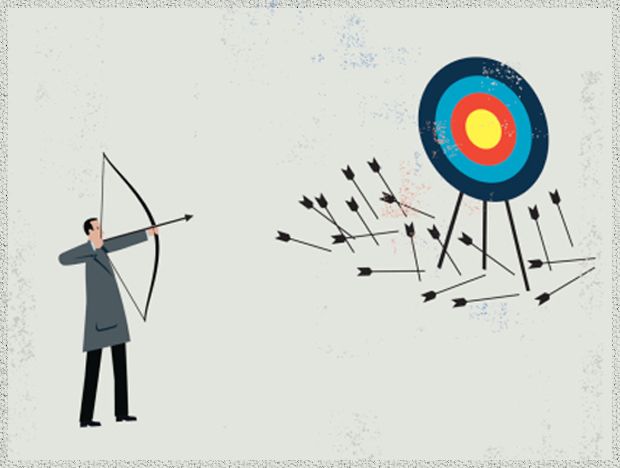
There I was, listening to a Tim Ferris podcast, featuring Seth Godin (a great combination, by the way).
Seth said a lot. When it came to our education system, he said it’s geared toward making compliant workers to serve the industrial complex. I can’t help but agree with that assessment.
He said our education system should instead focus on two things:
- Teaching our children how to solve interesting problems (where the answers can’t be Googled),
and,
- Teaching our children how to lead.
As I listened, I completely agreed.
And then, only one day later, I was presented with an interesting problem.
Kip was telling me about a problem he likes to ask his programming candidates. He gave me the problem with a look that said, “Surely you’ll be interested in this problem, and you’ll be able to figure it out.”
Wrongo!
As he explained the problem, my mind wasn’t looking for a solution. Instead, I started wondering why I’d spend time on this problem, could I Google it (you can), how long would I have to struggle with it before he’d give me the answer, and what would an HR person say about asking this particular question (ever focused on compliance).
Meanwhile, he stood there expecting me to attack the problem, to ask follow-up questions, to start searching for a solution. I gave him nothing.
Disappointed, he realized I wasn’t working the problem. He gave me a hint, trying to get me to engage. No dice. I wasn’t tackling the problem. I wasn’t even curious. I waited for the answer. In fact, I noticed I was thinking about something else (probably having to do with where we’d be eating lunch). I hadn’t even tried.
Here’s the problem (it’s called the three light bulb question):
A windowless room has 3 light bulbs. You are outside the room with 3 switches, each controlling one of the lightbulbs. If you can only enter the room one time, how can you determine which switch controls which light bulb?
An interesting problem. One I had chosen to not solve.
A problem that a younger version of myself would have loved. It requires logic, imagination, a willingness to fail, and enough confidence to know, really know, that I can find the solution.
Here’s a small hint. You’ll need to use all of your senses to find the answer.
For me, the question that’s more interesting than the light bulb problem is why I chose (almost automatically) to give up before trying to solve it.
I can tell myself it’s because I’m not a programming candidate, or that I don’t have to prove myself by solving the puzzle. But, these aren’t the reasons.
Could be a lack of confidence. Somewhere, deep in my subconscious (or maybe right on the surface), I didn’t know that I could solve the problem. Queue the white flag.
That’s not the root cause. In that same subconscious place, my mind saw an opportunity to fail.
Failure is not an option.
Failure is embarrassing.
Failure exposes our weaknesses.
How could it be that the younger version of myself would have tackled this problem with gusto, but the more experienced version sees an opportunity for failure and runs the other way?
I’ve purposely faced failure countless times in my life. I remember being the guy who “poked the bear.” I loved the unsolvable problem. My job often involved turning around “unsolvable” situations. Failure lurked around every corner, but it seemed normal to me.
There must be something else happening.
The narrative. That’s the message we tell ourselves (and others) about our core beliefs. It describes what makes us tick, our mission, why we do all the crazy things we choose to do. It doesn’t matter if the narrative is always true. It’s our narrative, and it drives the way we perceive our place in the world.
Years of status meetings, monthly reports, strategy reviews, and all the rest taught me to avoid failure. Don’t miss the goal. Give yourself some wiggle room. Make sure you have buy-in from everyone before launching that new idea. Don’t take any unnecessary risks. Don’t go out on a limb…you might fall. We have shareholders who expect a return.
Without realizing it, I allowed my narrative to morph. Failure avoidance found its way in.
What’s the easiest way to avoid failure?
Don’t take up the challenge. Avoid the risks. Don’t poke that bear. Let someone else try. Say “No.”
But, failures teach us the most valuable lessons in life. The quickest way to stop learning is to avoid failures.
The truth is, avoiding failure is the biggest failure of all.
Something I’ll remember the next time I’m faced with an interesting problem, or an opportunity to fail (which are often the same things).
Want the answer to the three light bulb question?
Here’s one more hint. Your sense of touch will come into play.
By now, I’m sure you’ve figured it out. If not, here it is:
Turn on two switches (call them A and B) on and leave them on for a few minutes. Then turn one of them off (switch B) and enter the room.
I’ll let you figure out the rest.

 Grandpa Bob Encouraging Leadership
You must be logged in to post a comment.