Being Fazed

How many people do you know who go through life unfazed?

How many people do you know who go through life unfazed?

Nothing gets under their skin. Nothing angers them.

They don’t cry…ever. They chuckle, but rarely laugh.

They can’t be bothered with a new or revolutionary idea.

Composure is their primary goal, above all else.

There’s a degree of power that comes from being unfazed. The unfazed person appears to be in control of the situation…almost above what’s happening.

Being unfazed is appropriate, even ideal, in many situations.

But, the opposite is also true.

Consider the fun that can come from real laughter, especially when it’s shared. The emotional cleansing of a good cry, from joy or sadness. That anger and disappointment we feel when we lose can be channeled into breakthrough improvements that help us win next time.

What about being knocked over by the genius of a new idea, or the next big thing (whatever that is)? I recently saw part of a commercial showing a guy talking about a potential investment with his friend saying, “That’s nice, but what can anyone do with only 140 characters?” I don’t remember what the commercial was selling, but we all know now what can be done with only 140 characters.

As I think about the people who inspire me the most, and famous disrupters throughout history, they’re the ones who allowed themselves to be fazed. The great ones channel their fazed-ness into a passionate pursuit of excellence and innovation, helping each of us to do the same things in our own lives…if only we allow ourselves to be fazed.

Ideas from TEDx ChapmanU–June, 2014

TED started in 1984 as a conference to bring together people from three worlds: Technology, Entertainment, and Design. TED talks are limited to no more than eighteen minutes in length, and cover a wide array of topics, all focused on “ideas worth spreading.” More than 1,400 talks are available for viewing on-line.

Last year’s event was great, and this year’s was even better. Here’s a quick synopsis of what we learned this week from the sixteen speakers (fourteen “live,” and two on video):

Lee Cheng, Chief Legal Officer at NewEgg, Incorporated, told us a little bit about his work fighting patent trolls. He referred to himself as Chief Patent Troll Hunter, taking on those who would stifle innovation and business growth by claiming obscure patent ownership of such common functions as drop-down boxes, search boxes, and shopping cart functions on websites. This wasn’t the main focus of his talk. He focused on Fred Cheng, the founder and CEO of NewEgg (a $2.6 billion, privately held ecommerce site, and number two in the ecommerce space behind Amazon). Fred Cheng works in near anonymity, shunning personal attention, adulation, or PR. Fred focuses on NewEgg’s success, which he believes is the result of the team, and not his own personal work. It reminded me of a seminal quote, “There is no limit to what a man can do or where he can go if he doesn’t mind who gets the credit.”

Stephanie Decker is the quintessential survivor. In March, 2012, a tornado ripped through her home in Henryville, Indiana. She shielded her two young children with her body. The house collapsed and disintegrated around them, crushing Stephanie’s legs. Her kids survived without a scratch. She told us that mental toughness is the key differentiator in life. Each of us will face storms or struggles in our lives. We choose how we handle the storms. Staying positive is a choice. Although she lost her legs in the storm, she found her purpose. Her purpose wasn’t just learning how to walk again. That was just a first step (no pun intended). She and her husband formed the Stephanie Decker Foundation to help children with prosthetics get the best technology available to live the fullest lives possible.

Brian Kessler, founder and president of Maui Toys, talked about curiosity and the spirit of innovation. His father, Milton Kessler, invented the hula hoop. Brian has designed and developed more than 2,600 toys, sporting goods, and consumer products. He defined innovation as a process that has three main parts: creation, application, and execution. Creation is seeing what someone needs or wants, application is defining who will actually want this innovation, and execution is setting about to make it happen. Easy? Hardly. He described the series of small steps and adjustments he made to toy ideas before having the product that people would actually want to buy. He also showed some examples of “new” toys that are merely extensions of other toys. Innovation can be evolutionary, as well as revolutionary.

Laura Glynn, associate professor of Psychology at Chapman University, talked about the maternal brain. Professor Glynn said that 90% of all women worldwide will give birth to at least one child in their lifetime (amazing statistic). She told us about the fundamental physiological changes a woman’s brain goes through during pregnancy. Mother’s brains grow and change during pregnancy, and the effects are cumulative as they have additional children. Mother’s brains have an enhanced ability to identify threats and deal with stressful situations (ideal for new parents!). The old saying about not coming between a mother bear and her cubs seems to be the result of physiological changes in the maternal brain. Scientific research in this area is relatively new. People like Professor Glynn are uncovering new and amazing insights into the miracle of life, and how mom’s brains uniquely adapt to take on the challenges of parenting.                      

Trent Schlom, a twenty-one year old sports reporter and broadcaster for ESPN talked about how he turned his love of sports into a career. He always dreamed of talking about sports, and starting at fifteen, he took steps to make that dream a reality. His secrets? He creates his own opportunities, is always prepared, and keeps showing up. He focuses on learning and views himself as the eternal student. His concluding advice: Don’t just dream. Take the next step to actually get closer to your dream, and keep taking those steps. Trent’s energy and positive attitude are infectious, and may be the biggest secret of all.

Sarah Kaye’s 2011 TED presentation (if I should have a daughter…) streamed into the auditorium. Sarah is a spoken word poet, who started presenting her work when she was fourteen. She describes spoken word poetry as poetry that doesn’t want to sit on paper. It must be performed. She said there are three steps to writing poetry (or just about anything else in life):

  • I can…do this
  • I will…continue to do this
  • I will infuse this with myself and my “backpack full of everywhere else I’ve been in life.”

As a way to get started, she asks her students to write lists:

  • Ten Things I Know to Be True
  • Ten Things I Should Have Learned by Now.

She writes poetry to work things out, and in the process, challenges each of us to do the same thing as we listen.

Iryna Krechkovsky, a prize-winning violinist, played a selection written by Bach on her Stradivarius. In her introduction to the song, she talked about how technology has given us so many ways to communicate with each other, and yet, we are emotionally removed from each other. Classical music is relevant in today’s society, because music is human. It expresses human emotion in ways we can’t explain, and in ways our technology can’t replicate.

Michael Laskin, a professional actor for over 35 years, described his view of the acting profession. While I didn’t learn much about acting, I did take a couple of key points from his talk:

Your talent is a given. Your resume and skills are what get you to the audition (or interview, meeting, or speech). What happens next is all about YOU. Your authenticity will trump your skill set and have more to do with your success than anything else.

Jillian Lauren, a New York Times bestselling author, talked about the experience she and her husband are living after adopting their son from Ethiopia. She, too, was adopted. What lessons does she take from her own adoption, and her son’s? Love is a decision, and a gift. When her son first arrived, he was suffering from post-traumatic stress syndrome. He had uncontrollable temper tantrums, night terrors, and a number of other symptoms that took years to work through. Jillian told her son stories as they walked around the city when he first arrived. As he grew, he came to embrace his journey here as a great adventure. He is subconsciously creating an identity for himself that is part Ethiopian, part Jewish, part Scottish, part American. We all form ourselves, based on our imagination, and the stories we tell about ourselves, regardless of where we came from.

Frank Smith, COO of Anschutz Film Group and Walden Media, discussed change. Change is continuous, no matter what industry (his happens to be film production). He related the history of the studio system in Hollywood, and how the near-monopoly of the five large studios began to break apart after World War II with the advent of television, and other changes. Companies that reacted quickly to the new reality thrived, while those who refused to embrace the changes went in the opposite direction. Change is hard, and sometimes difficult to see at first. Change should be seen as a constant, and can’t be ignored. The ash heap of history is littered with organizations that failed to respond to disruptions and changes in their industry (ironically, some of these got their start by disrupting someone else’s business): Border’s Books, Blockbuster Video, Tower Records, Circuit City, A&P, Washington Mutual Bank, MySpace, and Sears (well, not quite).

Stacey Schuerman, a yoga instructor, took the entire audience through a five-minute exercise to slow down, and focus on our breathing. She called it a chance to reset, renew, and rejuvenate our energy levels. An opportunity to feel the peace and calmness of the present. She recommended that we take at least five minutes every day to recharge. I plan to replay her presentation video at least once a day for my own on-demand recharge session.

Adam Spencer, mathematician and Australian radio host, discussed his passion for finding massive prime numbers. Numbers and math are the musical notes of the universe. His excitement for the pursuit of these elusive numbers is overwhelming. He marvels at how lucky we are to live in an age when mind and machines can work together to expand the frontiers of our knowledge. How amazing is it that a scientist can theorize about something as fundamental and “unprovable” as the Higgs boson in 1964, and then have a machine demonstrate its existence only fifty years later?

Robin Follman is an internationally acclaimed opera singer. She is also the head of strategic planning at her family’s manufacturing company. Even though she didn’t get the lead in her high school play, she did get the lead in a professional opera company while she was still in high school. She credits her success to preparation, perseverance, resiliency, and some luck. Also, rejecting her choir teacher’s advice to “blend.” She wanted her voice to be heard, and she was always ready when a new opportunity presented itself.

Eyal Aronoff is a co-founder of Quest Software, which was sold to Dell for $2.4 billion in 2012. Eyal’s passion now is breaking our addiction to oil as an energy source. He says that while wind and solar are nice, they aren’t a workable large-scale alternative to liquid gasoline for the cars we drive. Public transportation is only viable in certain urban centers. He showed that taxation and other financial incentives or punishments aren’t effective in changing our energy habits. He wants to show how alcohol-based liquid fuels are the best replacement fuel for liquid gasoline. Alcohol-based fuels can be derived from corn, sugar, biomass, and natural gas, to name just a few. Will it work? Are we capable of making this type of switch? Only time will tell. Clearly this idea of breaking our addiction to oil is one worth spreading.

Alison Noel is a New York Times bestselling author of 21 novels, with over seven-million copies in print. She talked about labels…those that others place on us and those we place on ourselves. We all have a yearning to be seen, heard, and understood. The question is how will we be seen, how will we be heard, and will we be understood for what we really are? Our labels often get in the way of understanding. She told us how her childhood was impacted by labels, some accurate, but most inaccurate. Labels don’t always fit, but they usually stick…if we allow them.

Dileep Rao is an actor who asked the question, “Do Movies Matter Anymore?” Some could easily argue that in a world of multitasking, and fragmented attention spans, movies are becoming a relic of the past. Rao argues the exact opposite. He sees the movie theater as the metaphoric dark cave where images and shadows from the campfire mesmerize us. Movie theaters are an almost sacred place where we are immersed in a story (if we allow it), with a bunch of strangers. For that short period of time, we are single-tasking, singularly-focused, and in the present (sounds a little bit like yoga).

Why spend five hours at a TEDx event? It’s all about ideas, and stories. Ideas worth spreading, and the way these ideas impact the stories we tell ourselves.

Father-Daughter Dances

It was awesome, and then it was over as quickly as it began…

JulandJenWeddingPhoto

Call me biased since I have two daughters, but, the Father-Daughter dance is a great wedding tradition. It’s the “first chance” for Dad to dance with his daughter now that she’s married.

I’ve seen some solid dancing in Father-Daughter dances, but more often than not, they’re a bit slow. An opportunity for the father and daughter to have a nice chat about the events of the day while casually dancing around for a few minutes.

For Julianne’s wedding, a couple years ago, we unleashed a surprise. We interrupted the regularly-scheduled dance with some unusual songs and choreography:

http://youtu.be/9wP00Fozwjk

The Circle of Trust for this surprise was five or six people, including Julianne and me. We worked out the songs, the timing, and the choreography a few weeks before her wedding. We enlisted Mike, a tech-savvy member of the Circle, to cut together the songs. We had all the pieces…except for rehearsal time. There are tons of details in any wedding, and the last couple weeks before the wedding are filled with them. Finding secret rehearsal time was a big challenge, but also half of the fun.

I remember our last rehearsal, at about 6am on Julianne’s wedding day. Everyone was sleeping when we made our final run-through (we had about 15 guests sleeping all over the house). There we were, dancing “quietly” in a crowded bedroom, making sure we knew all the moves and song changes.

I didn’t get much time to think about our dance for the rest of the day, until moments before we took the floor. As we started our dance, I wondered if I’d remember all the moves. Looking back, I have a better memory of our rehearsals than I do of our performance.

Fast-forward two years (just a week ago), and it’s time for Jennifer’s wedding. As soon as her engagement to Luke was official, we started talking about what we should do for the Father-Daughter dance. We could do something similar to Julianne’s, but that had already been done. We needed to take things up a notch. The perfect solution: a flash mob!

The logistics of a flash mob are a lot different than a secret set of dance steps shared by two people. We’d need to pick the songs, edit them, come up with choreography, recruit the members of the mob, train everyone on the dance steps, and rehearse as a group (would a group rehearsal even be feasible?) before the wedding. How would the mob assemble, how would they disperse?

The Circle of Trust would be huge! We had a group of about thirty-forty people in the Circle. Fortunately, the internet is perfect for communicating with such a big group.

Here’s the two flash mob training videos that we uploaded to YouTube about five days before the wedding (one for instructions, and the other a “live” demonstration):

Flash Mob Instruction Video: http://youtu.be/e-ZWXzvScAo

Flash Mob Demonstration Video: http://youtu.be/2cdLW_1LXEE

As the big day approached, we didn’t get an opportunity to rehearse. I did review the demonstration video a couple times. Our last chance for an actual rehearsal came the night before the wedding, at about 10:30pm. Five or six of us stepped outside into a grassy area and started up the song on Jennifer’s phone. We worked through the steps in one pass, and declared ourselves ready for the big dance.

With such a large Circle of Trust, greetings just before the wedding were filled with whispered questions about everyone’s readiness for the dance. “Did you get links to the videos?” “Did you rehearse?” “Are you going to rehearse just before the reception starts?” We were as ready as we could be.

Here’s the final product: http://youtu.be/3G89QiP8Qus

As you can see, our Circle grew into a Community of dancers. At least ten percent of the folks who jumped onto the dance floor had no idea this was a “planned” flash mob. They were just excited to join in the dancing. They didn’t know about the choreography, or the plans for dispersing at appointed times in the song. It didn’t matter. It added to the spontaneous energy and excitement of the dance/mob. I’m sure little Clyde was wondering what the heck was going on as everyone left the dance floor.

I remember looking up and seeing Jennifer’s smiling face, surrounded by friends and family who had joined our flash mob. It was awesome, and then it was over as quickly as it began.

Life’s journey is finite, but the memories and connections you can make on that journey are infinite.

Do you wanna dance?! Yeah!!


For Mother’s Day

Who thinks about you every day?

ProFlowers

Who always roots for you, no matter what you try?

Who taught you the important lessons of life, long before your first day of school?

Who is proud of you, even on the days you may not be so proud of yourself?

Who hears what you’re saying, but knows from the tone of your voice, or the look in your eye, what you are really thinking?

Who knows the things that scare you, even better than you do?

Who makes your favorite meal, the one you had as a kid, the right way…every time?

Who thinks about you every day, even if you don’t make the time to call or visit?

If you are as fortunate as I am, the answer to each of these questions is easy. It’s your Mom.

A mother’s love is probably the most powerful force on the planet, and yet it can’t be measured. It is sustaining, and life-giving, and asks for nothing in return. It’s the secret ingredient in that special meal. The one that never tastes quite the same when you make it for yourself.

Mom, thank you for making me the man I am today. I don’t say it enough, but know that I love you and feel the warmth of your love wrapped around me every day.


Photo credit:  ProFlowers.com


Diary of a Competitive Stairclimber

I lasted about three floors before going past my personal “red line.”

I’ve been a competitive stairclimber for about five years. This means I train on a StairMaster pretty much year-round for one or two stairclimb races each year. Races generally start on the ground floor of a skyscraper, and end at the helipad. The Willis Tower race (formerly Sears Tower, in Chicago) finishes on the 103rd floor, where they have crazy observation windows that allow you to step out into “space” outside of the building. [Note to self: next time I compete in the Willis Tower climb, don’t spend the prior day tourist walking with Janet all over Downtown Chicago. Do that after the race!]

Like most sports, there are elite competitors, and then, everyone else. Elite climbers make it to the top in amazing time, often climbing a floor every 8-9 seconds. I’m usually in the top 15-20% of my age group (40-49), with a 12-14 seconds-per-floor pace. Unfortunately, I can’t say my lack of speed is an age thing, since more than a few of the elite climbers are in their mid-40’s.

During my first stairclimb race I was lucky enough to get passed by an elite climber. He had raced earlier in the day, and was taking a “leisurely” training run during my race wave. I took note of his technique as we approached the 40th floor of a 63-floor climb. He took two steps at a time, pulling himself up hand-over-hand on the handrail. He made it look pretty easy as he passed, so I gave it a try.

It was definitely much faster, and got my upper body into the climb. It also meant more muscle groups would need oxygen. I lasted about three floors before going past my personal “red line.” I was forced to stop and catch my breath, before soldiering on with the standard one-step-at-a-time method. I had seen the secret, and knew I’d have to train differently to prepare for the two-at-a-time technique.

People have asked me how I’m able to climb without hurting my knees. Climbing stairs is great for your knees, lower back, and hamstrings. It’s a low-impact, heavily aerobic exercise. We only climb, and never descend. That’s what elevators are for. Climbing creates long and stretching strides, focusing the work onto your muscles and soft tissue, and away from your joints.

Which brings us to today. My fifth year climbing the Aon Tower in Los Angeles, benefitting the American Lung Association. After the question about knees, the next question is some variation of, “Doesn’t it get boring, just climbing stairs? What are you thinking about during a race?” I suppose it’s the same things other endurance athletes think about during their races.

To definitively answer this question, here’s a brain dump of what I was thinking earlier today as I “raced:”

Only three runners in front of me to start. Ten second intervals.

“Good luck on your first race. Do you want to start in front, or behind?” Steven answers that he will take off behind me. I put in my earbuds and fire up my iTunes StairList (thanks to Jennifer for creating this list many years ago).

Ten seconds to start. Remember that I am starting on the 20 minute mark.

I love the quiet just before the start. Go!

Save Ferris! Nice choice, Jennifer!

The start is different than previous years. We entered a different door and hit stairs immediately.

No rhythm for the first 3 or 4 floors, until we get into the main stairwell.

Fifth floor. First person passed.

Two steps at a time. Nice rhythm.

The first ten floors are always the hardest, even though I just did about 20 floors of warm-up before the race.

Tenth floor. Steven is right behind me. Awesome! How cool is it that my son-in-law is running this race with me! He’s gained ten seconds on me already. Stud!

Move to the outside! Why do slower climbers never move to the outside like the instructions say? There goes my nice rhythm.

Back on track. Water stop!

“Sorry, we ran out of cups.” Well, that’s a real mind-f***. It sure is dry in this stairwell! I take a quick swig of water from my hand.

That’s not a very sanitary thing to do. 100’s of climbers are touching these rails, sweating on them, and you just took a swig of water from your hand after using those same rails.

16th floor! Where’s Steven? He must have slowed up.

18th floor! Focus on two-at-a-time.

I wish I hadn’t forgotten my gloves. I’d have better grip on these handrails.

Nice mandolin. Perfect time for a little string quartet music. Nice choice again, Jennifer.

21st floor. One-third done. I wonder how my pace is. I’ve passed a bunch of people.

It would be great if the stairwell would change direction. Turning left over and over is making me dizzy.

Deep breaths. Focus on two-at-a-time. This is comfortable. Passing more people.

30th floor. Nice cheering section. Is that a clapping toy? Cool. It sure is dry in this stairwell. My lungs are burning!

Water stop! Amazing what one Dixie cup of water does. Quick back stretch.

Two-at-a-time. Steady pace.

Takin Care of Business. BTO! Rock on!

1-2-3-4. Turn, 2-3. 1-2-3-4. Turn, 2-3. 1-2-3-4. Two-at-a-time still working!

45th floor. This thing is almost over. Look at that crowd of people ahead…all in pink shirts. That’s a big team!

I see an elite runner as I turn. He’s not close enough to pass yet, but he will be in another floor. Just doing a training run…two-at-a-time, of course. There he goes. Stud!

50th floor. Mark Anthony. Not my favorite song right about now. A bit too slow. Two-at-a-time is still working! Awesome. Only 13 more floors!

52nd floor. My lungs are burning. They named this race right. Fight for Air!

Last water stop before the finish. Big crowd here. Only ten floors to go.

1-2-3-4. Turn, 2-3. 1-2-3-4. Turn, 2-3. 1-2-3-4. Two-at-a-time still working! Not as fast as the elite guy. I’ll just have to train at a higher level. He’s gone.

59th floor. Only four to go. Two-at-a-time working! Move to the outside! What’s the deal? A whole bunch of people all of a sudden. I wonder if I can get past all of them in four floors.

1-2-3-4. Turn, 2-3. 1-2-3-4. Turn, 2-3. 1-2-3-4.

Color change. 61st floor! New direction on the stairwell. Push to the finish!

Last turn. Bright sunlight. Here comes the roof!

Stay focused. Push to the finish. Man, my lungs are burning!

Finish line! Clock minute is 34. What was my start minute? Oh yeah, 20. 14 minutes. Dang it. Slower than last year. Hey, that’s Garth Brooks. The song is almost over.

What a view! First time I can remember it being clear and bright at the finish of this race. Look how clear the Hollywood Sign is.

Next event is in late-September. The US Bank building in Los Angeles. It’s about 75 floors. That event has always conflicted with something else. I plan to climb it this year. Time to ramp up my training. More StairMaster, more trail running, more rope climb, more squats, less ice cream (hey, let’s not get crazy!).

Bring it on!

Bob_and_Steven

Hollywood_Sign

View from the helipad

Searching for Utopia

That elusive place or time where everything is perfect…

Diversity

In Utopia, everyone is an ally. There’s no struggle to determine who will lead, and who will follow. There is no disagreement or dissention among the inhabitants. The definition of what’s important is known and accepted by all. All roles and activities in Utopia are complementary, and synchronized perfectly. Each person knows their role and is happy and content to remain in that role. There is no envy in Utopia. There are no outside influencers with contrary ideas. There are no existential threats to Utopia. In Utopia, there is no competition. Humans live and work in complete harmony and happiness.

Cue the sound of a record scratching!

Put at least three humans together, and watch the non-Utopian dynamics unfold.

The group may be focused on delivering food to the homeless, winning a pick-up basketball game, planning a party, or running a Fortune 500 company. It doesn’t matter whether there are three members in the group, three hundred, or three thousand. The realities of human nature prevent Utopian agreement and synchronicity among the participants. It’s a good thing. Imagine how few new discoveries would happen if everyone were trapped in Utopia.

And yet, many spend their lives searching for it. That elusive place or time where everything is perfect. They bounce from one relationship to another, from one city to another, from one company to another…never quite finding their version of Utopia. A deepening sense of urgency, even profound disappointment, creeps into their subconscious as their fruitless search continues.

Utopia isn’t a place, a time, or a group. It’s what you make for yourself and those you love. It’s how you treat others. It’s how you treat yourself. Utopia is where you are each day, if you get out the way and allow yourself to enjoy it.

One could argue that this view of personal Utopia is, in a word, Utopian, and therefore impossible.

That may be true, and this argument will continue long after my time on the planet.

In the meantime, I’ll focus on enjoying my Utopia while others continue their search.


Photo Credit:  Diane Anderson

Why Oreos and Steaks Matter

I personally never saw the benefit of splitting my Oreos in half, and eating the middle first…

A kid’ll eat the middle of an Oreo cookie, and save the chocolate cookie outside for last…

I personally never saw the benefit of splitting my Oreos in half, and eating the middle first.  Seems like a lot of work.  In fact, the middle is boring without the chocolate cookie, in my humble opinion.

If dissecting the cookie isn’t the best, what’s the best way to eat an Oreo?

If you bite into an Oreo, it’s a challenge to not drop crumbs all over the place.  The cleanest and most effective way to eat an Oreo is in one bite.  Just pop the whole cookie in your mouth and let the taste celebration begin.  To add to the party, take a small sip of milk and let all that flavor mix around as you chew.  Enjoy.

The ideal number of Oreos to eat in one sitting is four…each with one bite, and each with a healthy sip of milk.  Oreo purists will argue that the ideal number is an entire column (purists know what a column is in this context), but that’s a bit much for me.  You’ll have some milk left in the glass after your four cookies, and that’s useful for rinsing everything out of your teeth as you contemplate the goodness of your Oreos.

I always thought it would be fun to eat a few Oreos before a dental hygienist appointment.  I wonder if anyone has actually gone through with this idea.

Steak.  It’s what’s for dinner.

For vegetarians, I apologize in advance…

The smell of steaks on the grill is a little slice of Heaven.  There’s something about the smell of a barbeque grill that permeates a neighborhood.  If your neighbor is cooking steaks, you know it, and you wish you were cooking your own.

Some of the best steakhouses age their beef for thirty, even sixty days.  They say that the longer the aging process, the more tender the meat will be.  I’m not quite so patient.  I’ll give it about three days of aging in the fridge before cooking.

I’ve tried many cuts of beef.  My favorite is the rib eye.  Rub a little olive oil on each side, and then season with Mansmith’s.  Grill it low and slow, about ten minutes on each side for the perfect medium-rare tenderness.  Let the meat rest for a few minutes, and then enjoy with a baked potato and some steamed or sautéed asparagus.  Talk about good eats!

I like nearly every food I’ve tried, except olives and horseradish.  A few favorites come to mind…Salmon.  Eggplant parmesan.  Hot apple pie (with ice cream).  Saag paneer.  Unagi.  Lasagna.  Date shakes.  Vegetarian lamb.  Chocolate chip ice cream.  Chili.  Oatmeal cookies.  Fried chicken.  Carrot cake.  Cornish pasties.  Bacon!

Food is much more than the sustenance we need to live.  It’s more than nutritional value (or lack thereof).  Foods have history.  Many are at the heart of our family traditions.

One thing all foods across the world have in common:  they are best when shared with the people we love.

Explore.  Taste.  Savor.  Share.  Love.  Enjoy!

Unmaking an Oreo:  http://youtu.be/cJyGoGPXTj4

#tbt – Throwback Thursdays

Each #tbt post gives us a glimpse of potential yet to be fulfilled…

It’s fun to see how long (and not grey) our friend’s hair was twenty or thirty years ago…especially if that person has little or no hair now (like me).  It’s neat to see our faces before years of experience (and sun damage) have made their mark.  The clothing styles are always good for a laugh…nice OP shorts, Magnum!

#tbt posts provide a window into who we were, and the things we thought were important.  As we look at a #tbt photo, we know how things turn out for this “stranger” in the picture.  The person in that old photo has years of decisions to make, countless lessons to learn, and many hearts to touch.  Each #tbt post gives us a glimpse of potential yet to be fulfilled.

Look in the mirror.  You get to see your future #tbt photo every day.

What potential do you have that has yet to be fulfilled?  Whose hearts will you touch?  Will you make sound decisions?  What will you learn along the way?  None of us know for certain.

One thing is certain.  Many of the things that seem important today won’t be so important in twenty or thirty years.

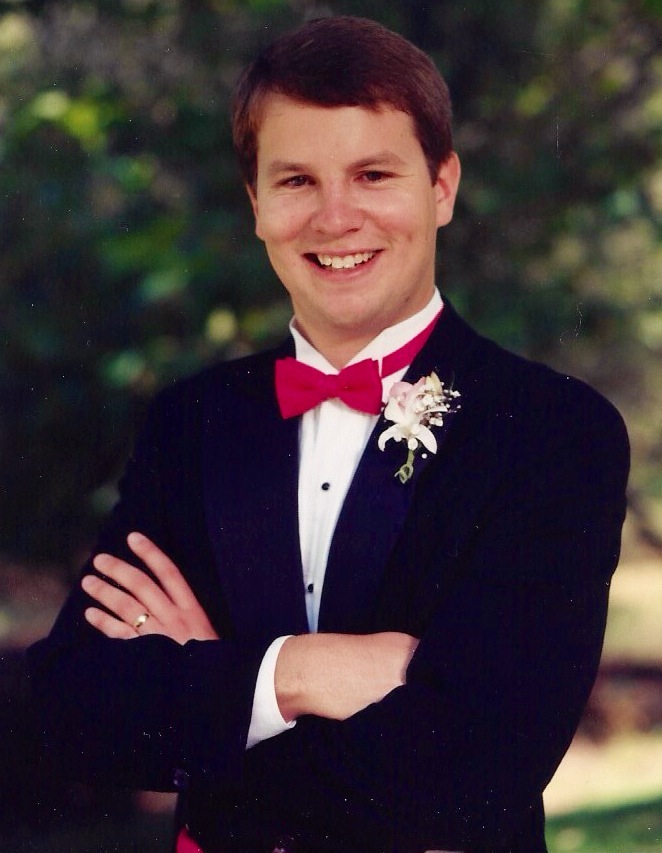
Wedding-Day

Your humble writer, on his wedding day in July, 1988.

Start Anywhere!

Nike’s Just Do It™ slogan was born in an advertising agency meeting in 1988…

According to Wikipedia, Nike’s Just Do It™ slogan was born in an advertising agency meeting in 1988.

For Nike, these words helped propel the company from $877 million in revenue in 1988 to $9.2 billion by 1998.  In 2013, Nike’s revenue was $25.3 billion.

Three simple words.

Of course, it isn’t the words alone.  It’s the call to action implied in these words:

  • Want to run a marathon?  Just do it!
  • Want to run a triathlon?  Just do it!
  • Want to play tennis?  Just do it!
  • Want to learn to oil paint?  Just do it!
  • Want to write?  Just do it!
  • Want to race motorcycles?  Just do it!
  • Want to develop an iPhone app?  Just do it!
  • Want to explore the world?  How about China (where I am this week)?  Just do it!
  • Want to hike the Appalachian Trail?  Just do it!
  • Want to own your own business?  Just do it!
  • Want to try living in New York City (in the winter!)?  Just do it!
  • Want to start a charity to help wounded veterans?  Just do it!
  • Want to build your own house?  How about a tree house?  Just do it!

Three simple words.

Not to be outdone, and to inspire not only Apple employees, but customers they didn’t yet have, Apple came up with a two-word slogan in 1997:  Think Different™.

Two words, grammar error notwithstanding.  Again, it isn’t the words, but the call to action.  If you want to create a new and interesting future, Think Different today.

Think Different.  Just Do It.

To these, I’d add two more words:

Start Anywhere!

Think Different.  Just Do It.  Start Anywhere!

How about two more:  Start today!

What’s Your Personal Net Promoter Score?

Consistent excellence (awesomeness) drives higher NPS…

A customer is the most important visitor on our premises.  He is not dependent on us.  We are dependent on him.  He is not an interruption to our work.  He is the purpose of it.  He is not an outsider to our business.  He is a part of it.  We are not doing him a favour by serving him.  He is doing us a favour by giving us the opportunity to do so.

–Mahatma Gandhi

By now, you’ve probably heard the term Net Promoter Score (NPS).  It’s a system that focuses on the answer to one simple question:

On a scale of 1-10, where 1 is not likely and 10 is very likely, would you recommend this company/product/service to a friend or colleague?

That’s it.  One question that sums up a customer’s entire experience…and also measures their loyalty.  A person who responds with a 9 or 10 is a promoter, 7’s and 8’s are passive, and 1-6 is a detractor.

Promoters are not only loyal buyers, but they go out of their way to spread the good news about a company they like.

Passives are just that, passive.  Their loyalty is weak…a fair-weather friend.  They can be swayed easily to switch to another company if an alternative presents itself.

Detractors will go out of their way to spread bad news about a company.  They’ve had a bad experience, and are happy to tell everyone about it.

Thousands of companies monitor their NPS.  Perennially high NPS companies include Apple, Starbucks, Nordstrom, USAA, Amazon, and Trader Joe’s.  Each invests time, energy, and money to deliver excellence, above all else, to their customers.

Consistent excellence (awesomeness) drives higher NPS.

How much time are you investing in your personal NPS?  Are you paying attention to the impact you have on those around you?  Are you consistently delivering excellence to those you care about the most?

How would the people you serve (family, friends, co-workers, employees, managers, strangers) answer this question about you:

On a scale of 1-10 where 1 is not likely, and 10 is very likely, would you recommend ______your name here_______ to a friend or colleague?

More importantly, how do you answer this question about yourself?