
A fumble changes everything.
One second the play is moving. The runner has the ball. The blockers are engaged. The drive has life. Then suddenly the ball hits the ground, bodies are diving, momentum has shifted, and what was yours a moment ago is theirs.
A fumble tests everyone.
The one who dropped the ball.
The coach.
The team.
For the player who fumbled, the moment is immediate and personal. He cost his team field position, momentum, or more. He’ll think about that play long after the whistle.
His pain rarely comes from the mistake alone. It also comes from the exposure. He was carrying something important, and now everyone can see that he mishandled it.
He comes to the sideline knowing what he did.
He doesn’t need it explained. He doesn’t need the replay. He felt the ball leave his hands. He already knows what it cost.
What he doesn’t know is what comes next.
That depends largely on who’s standing on the sideline with him.
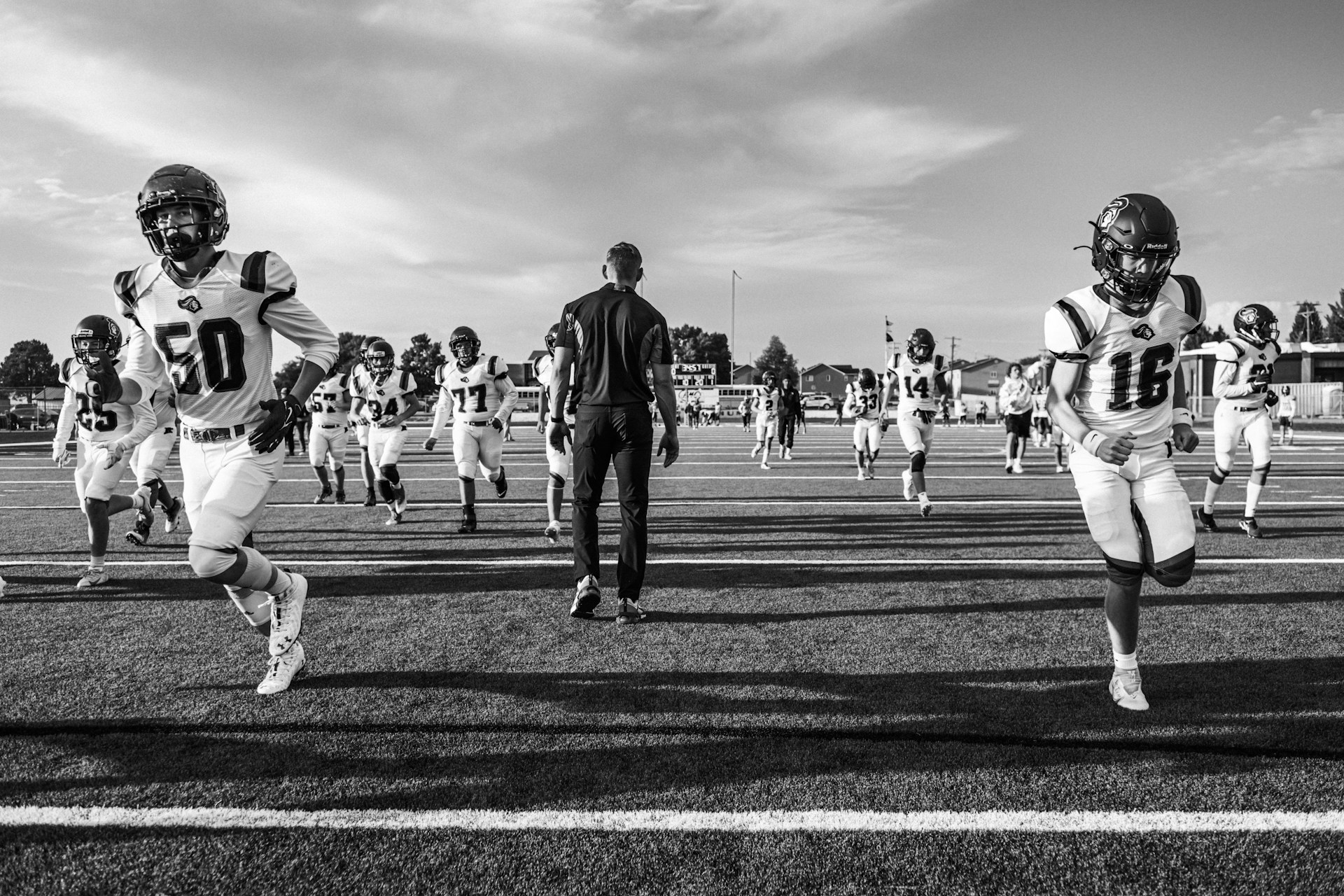
A weak coach sees only the mistake. A careless coach brushes past it. But a strong coach understands something both miss. This player, in this moment, is deciding, maybe without knowing it, whether he can still trust himself.
Correction matters. Accountability matters. But there’s a difference between a coach who corrects and a coach who restores. One addresses what happened. The other addresses what happens next.
Real leadership does both.
It says, “Yes, that mattered. Yes, you need to learn from it. And yes, you’re still capable of more than this moment.”
Correction is the easy part. The rest is belief.
People rise to the level of belief placed in them after they’ve failed. That’s one of the most dependable things about human beings. A good coach knows this. A great one acts on it.
What about the team?
They saw it.
That fumble belongs to everyone now.
Do they quietly create distance from the one who dropped the ball? Do they look away? Do they let frustration show in ways that make him feel more alone?
Or does someone move toward him?
Not to fix it. Not to instruct. Just to be close enough that he knows he hasn’t been cut loose.
Great teams are built by people who know what to do when somebody fumbles. That knowledge is built over time. Through the kind of culture a team creates long before the ball hits the ground.
That’s true in every organization, every family, every group trying to do meaningful things together.
Eventually someone will drop the ball. Someone will let something important get away. Someone will have a moment they wish they could take back.
Failure doesn’t create a team’s culture. It exposes it.
A lot of people carry the weight of old fumbles.
A business decision that went wrong.
A missed opportunity.
A sentence that should have stayed unspoken.
A responsibility handled poorly.
A relationship moment they wish they could take back.
That weight is real. The costs were real. The embarrassment was real. There’s no use pretending otherwise.
But the fumble doesn’t have to be the end of the story.
Sometimes the growth that follows a mistake runs deeper than anything that came before it. Failure exposes what needs to be seen. A weakness, a blind spot, a lapse in discipline. It creates a moment that can be used, or wasted.
That moment rarely turns on the person who fumbled. It depends on what they find when they look up.
The leader who steps in with exactly the right mix of truth and trust. The teammate who moves toward them instead of away. The voice that says you’re still capable of more than this moment.
What looks like the end of the drive is sometimes the moment the real game begins.
Photo by Tim Mossholder on Unsplash
 Grandpa Bob Encouraging Leadership
You must be logged in to post a comment.