The Obstacles You Think You Know…Don’t Matter

Polynomials suck, but they aren’t the obstacle that matters most…

Polynomial Function

I used to hear one question a lot when I was a kid.

Whether an adult was asking me, or another kid my age, it was always the same:

What are you going to be when you grow up?

In second grade, I knew I wanted to be a doctor.  My friend wanted to be a fireman.  Another friend wanted to be a professional skateboarder.

By high school, I was still thinking doctor, or maybe veterinarian.  One of my friends planned to be an engineer, another wanted to teach, and one planned to go to the Air Force Academy and become a fighter pilot (he just retired from the Air Force a few years ago).

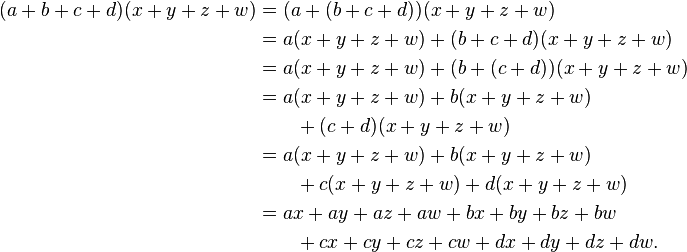
In my senior year in high school I ran into Algebra 2.  More specifically, factoring polynomials.  FOIL method.  Up to that point, math had made sense.  Plug the numbers into the formulas, and get your answer.  X equals 11, Y equals 9.  Pythagorean Theorem?  Piece of cake.  Word problems?  Easy.

But, polynomials made no sense.  The magic of the FOIL method didn’t help.  First, Outside, Inside, Last?  Solving for multiple variables that cancel each other out in some mysterious way?  Arriving at an answer that looks as cryptic as the original question?  What does a polynomial look like if you draw one?  When will we ever use this in real life?  I’d say it was all Greek to me, but I didn’t know Greek either, or Latin.

I hadn’t even reached Calculus (the math all the other brainiacs were taking in their senior year), and I’d hit a wall.

Polynomial Example

I could see the handwriting on the chalkboard (teachers used to write on them before whiteboards were invented).  To become a doctor would require a science degree of some kind.  That science degree would require a ton of math well beyond polynomials…maybe even Calculus.  What comes after Calculus?!  And, what about Latin?  Doctors all seemed to use Latin.  How would I learn that?  It wasn’t even offered at my high school.  And, what about getting into medical school?  Did I have eight years to give up?  How would I pay for all of it?  This was going to be hard!

We each have a strategic thinking instinct.  The ability to prioritize, make deductions, create connections, and map out a direction.  Or, multiple directions.

Unfortunately, more often than not, we either ignore our strategic thinking capability, or we use it to map out why something is impossible.  We visualize all the obstacles while ignoring the path around, over, or through them.  We neatly stack all the obstacles into an impenetrable wall, rather than a series of hurdles to be taken one-at-a-time.

My doctor plans went down in flames…but, I was the one pointing the metaphorical plane into the ground.

Could I have found a way to understand polynomials?  Yes.  Could I have dealt with Calculus?  Yes.  What about Latin?  Yes.  What about getting into medical school?  Yes.  Did I have what it took to become a doctor?  Probably (we will never know).

Did I allow myself to realize any of this at the time?  No.  I was too busy jumping toward another goal that had fewer obstacles, or so I thought.  One that didn’t require Calculus.  One that I could get my head around, and see more clearly.

I now understand something I didn’t back when I was a high school senior.  I’m not sure I understood it by the time I was a college senior either.  Our biggest obstacle, the one that matters more than any of the obstacles we can see, the obstacle that trumps all others, is staring back at us in the mirror.  Find your way around, over, or through yourself, and you are well on your way to overcoming almost any other obstacle in your path…maybe even polynomials.

Want the answer to the crazy equation?  This might (or might not) be it


Photo Credits:  Here and Here


Exceeding Your Vision

The following is not an excerpt from my new book, Leadership Starts (and Ends) in Your Head…the rest is detail.  But, I’d be remiss if I didn’t mention it here (and highly recommend it).


Vision

-What do you want to be when you grow up?

-Now that you’ve graduated, what are your plans?

-Congratulations on your marriage.  Here’s to a long and happy life!  Where are you two planning to live?

-I heard about your new job.  That’s great!  What are your prospects for career growth there?

-I heard you don’t really like your job?  What would you do if money wasn’t an object?

Each of these questions are about goals and vision.  Where do you see yourself today and in the future?  What defines success for you and how will you get there?  What path are you on and will it get you where you want to go?

But, what happens when you reach your future?  Will you know you’ve arrived?  What happens when your vision for the future comes true?

You achieve, even exceed, everything you had in mind when you started.  You exceed your vision.

Sounds like a good problem to have.

Consider the retiree who has no idea what to do with his/her time now that work doesn’t occupy their day.  The stay-at-home mom whose kids are all grown up and moved away.  The thirty-two-year-old internet entrepreneur who just sold his company for $500 million.  They have reached their goal line, that place they’ve dreamed about.

Their vision led them here, but what’s next?

I’m reminded of a quote by Walt Disney:  “All of our dreams can come true, if we have the courage to pursue them.”

For most, the courageous part is the pursuit.  For others, courage is their willingness to find new dreams when the first ones come true.

As we go through our lives, chasing goals, climbing mountains, and living the dream, it might be worthwhile to extend our vision.  Look past our first set of goals; the ones that occupy most of our time.

Look toward the greater goals, and broader definitions of our dreams.  Seek the true definition of our potential.  Our ultimate purpose.

Consult not your fears but your hopes and your dreams. Think not about your frustrations, but about your unfulfilled potential. Concern yourself not with what you tried and failed in, but with what it is still possible for you to do.  -Pope John XXIII


© 2014 Bob Dailey.  All rights reserved. 


The Life We Realize

Was today important? How about tomorrow?

Our Town

EMILY: “Does anyone ever realize life while they live it…every, every minute?”

STAGE MANAGER: “No. Saints and poets maybe…they do some.”

Thornton Wilder, Our Town


“Choose the least important day in your life. It will be important enough.”

Thornton Wilder, Our Town

I never read Thornton Wilder’s play, Our Town. It seems like the type of literature that would be required high school reading. The mundane and simple nature of the play would surely be lost on most high schoolers, so it’s a good thing I didn’t discover the play until recently.

I’ve just started reading it…the first play I’ve read in at least thirty years. What a relief to know I get to read this one for the sheer pleasure of it, and not in preparation for a final exam on the subject.

There are a ton of thought provoking quotes in the play, but these two stand out for me:

Does anyone ever realize life while they live it…every, every minute?

It’s easy for us to see that fish swim in water that sustains their life, but I doubt they realize it. It’s easy for us to understand that we are “swimming” in the air that sustains our life, but I doubt we realize it. Life is all around us, every minute if we choose to notice.

How many of us realize how precious each day is while we are living them. The countless decisions and non-decisions we make each day, the people we impact (hopefully positively). The memories we accumulate along the way.

Instead of continuously looking ahead, chasing our dreams, maybe it’s good to look to the side occasionally. Slow down and check out the scenery that’s whizzing past as we barrel ahead to our futures. Taking time to appreciate the gift of our life, even as we live it.

Choose the least important day in your life. It will be important enough.

If you live to be 100 years old, that’s 36,500 days. How about 75 years? That’s 27,375. Imagine you just turned 48, like me. I’ve used 17,538 of my days, so far. Trust me, I used a calculator to check my math.

Which one was the most important? How about the least important?

What are the criteria you use to define importance? Do you have your criteria all picked out? Are you ready for the days when those things you thought were important suddenly don’t matter?

Each of us can identify important days in our past. Chances are, some of the days you see today as being most important didn’t seem so important when you were living them in real time. Hindsight is good that way.

Was today important? How about tomorrow, or the next day?

Each of them will be important enough, if we take the time to realize it.


Photo Credit:  http://www.theguardian.com


If I knew then what I know now…

Imagine knowing the mistakes to avoid, the real questions to ask…

How often have you heard this phrase, or uttered it yourself?

Imagine if you could attain all of your life’s accumulated knowledge, wisdom, and experience in one day. All of life’s hard lessons in the blink of an eye. You wouldn’t know the future. But, you’d have the wisdom from that future, today.

Imagine knowing the mistakes to avoid, the real questions to ask, how to recognize the best path, the secret about how green the grass really is “over there.”    

Hindsight is 20/20, but the clarity of the past doesn’t always point to the future. Many of history’s greatest triumphs came from someone taking the “wrong path,” or exploring the idea that conventional wisdom says can’t work.

Failures will happen along the way. Having all of life’s wisdom won’t prevent them. Some of our greatest lessons come from failure…ours or someone else’s. Life’s wisdom is valuable, but having it all at once takes away the drive to chase the crazy idea, or make the big hairy mistakes that lead to new discoveries.    

The truth about life is that its truths reveal themselves one at a time. The best path to take is the one that continually seeks these truths, and welcomes their arrival.

Blindness and Elephants

The story of the blind men and the elephant originated in India.

elephant

The story of the blind men and the elephant originated in India.  It then spread across the world and through history in various versions.  Here’s the main story line:

Once upon a time, there lived six blind men in a village. One day the villagers told them, “Hey, there is an elephant in the village today.”  They had no idea what an elephant was. They decided, “Even though we would not be able to see it, let us go and feel it anyway.”

“Hey, the elephant is a pillar,” said the first man, who touched his leg.

“Oh, no! It’s like a rope,” said the second man, who touched the tail.

“Oh, no! It’s like a thick branch of a tree,” said the third man, who touched the trunk of the elephant.

“It’s like a big hand fan” said the fourth man, who touched the ear of the elephant.

“It’s like a huge wall,” said the fifth man, who touched the belly of the elephant.

“It’s like a solid pipe,” said the sixth man, who touched the tusk of the elephant.

They began to argue about the elephant and each of them insisted that he was right. It looked like they were getting agitated.  A wise man was passing by and saw this.  He stopped and asked them, “What is the matter?”

They said, “We cannot agree what the elephant is like.” Each one of them told what he thought the elephant was like.

The wise man calmly explained to them, “All of you are right. The reason every one of you is telling it differently is that each of you touched a different part of the elephant.”

What part of the elephant are you holding onto?

Are you willing to listen to the way others describe the elephant?

Are you aware of your blindness?

Things I Learned in China

Our China trip is what I’d call the “TV highlights tour.”

If my count is correct, I’ve visited seventeen countries, so far.  There’s no better way to learn about a country than being on the ground in that country.  First-hand knowledge cuts away the spin, partial news coverage, opinion, conjecture, half-truths, urban legend, and other forms of information we carry as “truth” about our fellow travelers on this planet.

Visiting foreign countries is also an exercise in adjustment.  There’s jetlag, and the obvious language barriers to overcome (even in countries with English as their official language).  There are differing customs, different transportation rules and systems, differing levels of sanitation, new foods, new spices, hardly any ice (what’s up with that?), and living conditions that range from squalor to opulence.

Each country has its own rich history.  The local people we’ve met are proud of their country and their way of life.  They’re always curious about how we live in the US, our customs, our landmarks, our system of government.  They, like us, have a sprinkling of knowledge about the world outside of their country and are eager to gain a deeper understanding through their visitors’ perspectives.

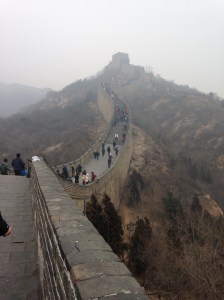
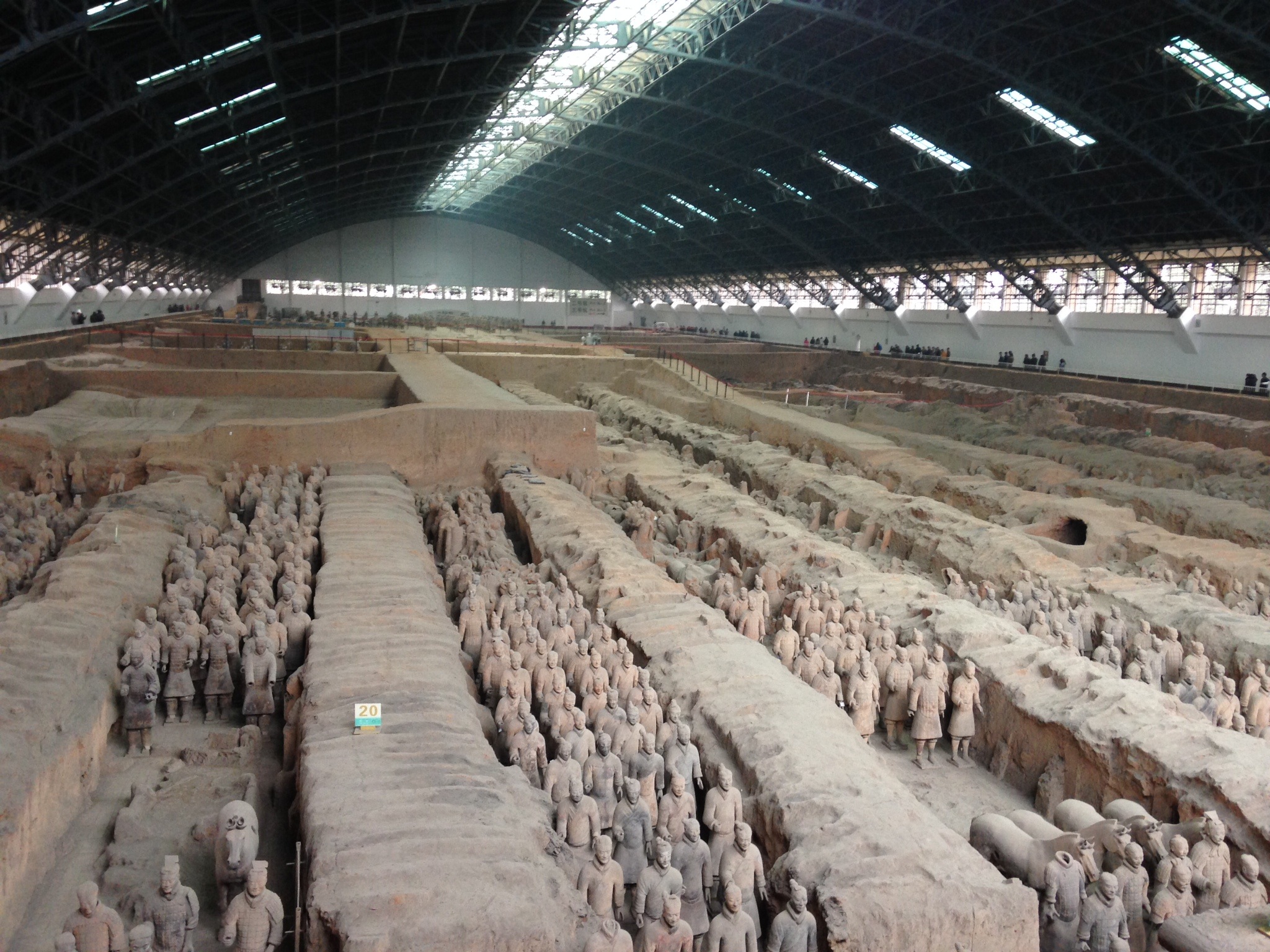
Our China trip is what I’d call the “TV highlights tour.”  If you were to queue a video montage of famous cities and landmarks in China, our tour hit many of them:  In Beijing, we visited The Forbidden City, Tiananmen Square, Lama Temple, The Great Wall, and the Olympic National Stadium (Bird’s Nest).  In Xi’an, we visited The Terra Cotta Warriors, and The (leaning) Wild Goose Pagoda.  In Shanghai, we visited The Bund (waterfront), The Shanghai Museum, and Nanjing Road.  We also took a river cruise on the Huang Po River that runs through Shanghai.  We rounded out our tour with a road trip to Suzhou (the “Venice of the Orient”).  We attended some dinner shows, featuring traditional music and dance, and incredible acrobatics.

China’s airports are awesome.  I dreaded the idea of taking two in-country flights in a seven-day period.  That wouldn’t be a picnic in the US, and I assumed (incorrectly) that it would be worse in China.  The customs process, the flight and baggage check-in, and the baggage claim processes were incredibly efficient.  Shanghai has two airports.  We flew into one, and out the other.  Both were huge, efficient, and well-planned.  It probably helps that all the airports we visited were built within the last 15 years, so they have all the latest design and technology concepts built-in.

We have over 400 photos and a couple hours of video, showing nearly every angle of the places we visited.  The lessons from our China trip run much deeper than what’s captured in our photos.

The massive urbanization that has occurred in China over the past twenty years is amazing.  Nearly 400 million people have moved from the countryside and into cities across China (that’s about 80 million more people than we have in the US).  Billions of square feet of real estate, massive new roadways, tunnels, bridges, railway systems, subway systems, sewer systems, electricity generation, and all the other infrastructure required to support this massive migration have been developed over the past two decades.  More accurately, all of it is still a work-in-process, since the migration continues.

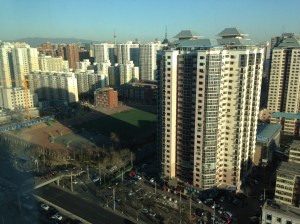
In each city, the skyline is filled with skyscrapers and tower cranes.  I stopped counting tower cranes at about 50 (on our first day in China).  Everywhere we looked, commercial or residential skyscrapers were under construction.  Single-family houses are a rare sight, something we only saw in a small section of Shanghai.  People live mostly in high-rise apartment buildings.  “Pods” of 25 high-rise apartment buildings, spanning many city blocks, are common.  Imagine the entire Los Angeles basin filled with 30-plus-story buildings, instead of just the skyscrapers in the downtown section, and you start to get an idea of how massively sprawling Beijing, Shanghai, and even Xi’an are.

Some statistics may help illustrate just how massive China’s cities are.  The total population in China is 1.35 billion.  The total population in the US is 317.5 million.  The population in Beijing is about 21 million; Shanghai, 23 million; Xi’an, 9 million.  The population in New York, NY is 8.4 million; Los Angeles, 4 million; Chicago, 2.8 million.  One other interesting statistic:  there are more people in China who speak English than there are in the US.

Our guides in each city told us about the huge growth of their cities, and the dramatic improvements in the standard of living across China.  Their apartments average 500-700 square feet.  Our guide in Xi’an talked about how her first apartment, in 1990, didn’t have a bathroom or a kitchen, and yet she and her husband found a way to raise their new son in that environment.  Now she and her husband, and their 24-year old son, live in a 1,000 square foot, 3-bedroom apartment, with two bathrooms.  She beamed with pride while describing such a luxurious apartment and said that she hopes her son will be able to keep living there after she and her husband die.

The government owns all land in China.  Long-term leases allow people to make use of the land.  The lease duration is dependent upon the type of use.  For instance, for urban residential real estate development, lease durations of 75 years are available.  This allows a developer to build a residential apartment building, and then rent or sell the units to private parties.

Citizens used to get annual vouchers strictly allocating the amount of meat, butter, and other products they could buy per year.  Goods and services can now be purchased without government vouchers.  China’s huge economic growth makes goods and services much more readily available to its population.  The only requirement is having enough money to make the purchases.

Car license plates are rewarded by lottery.  If you are lucky enough to win the lottery, you then pay the fee (in the thousands of dollars) for the license plate.  Once you have the license plate, you can shop for a car.  A Canadian ex-pat in Shanghai told us there is a healthy black market for license plates, and that it isn’t uncommon for the plate to be as expensive as the car itself.

March, 2014 is a happy time across China.  The one-child policy that has been the law of the land since about 1979, is being softened.  Violating the one-child policy brings heavy fines to the parents, equaling about 2 ½ times their annual salary.  With the new, softer policy, if you or your spouse are only-children in your parent’s family, you can apply to have a second child, 3-4 years after your first child is born.

We heard consistently about one of the many unintended consequences of the one-child policy.  Consider that each child has two parents, and two sets of grandparents who make that one child the center of their universe.  That one child carries the hopes and dreams of their parents, and their grandparents.  With no siblings and very few (if any) cousins, sharing isn’t part of the child’s upbringing.  Spoiled, un-sharing children is the result, and represents the newest generation of young adults in China.

Ironic that a Communist system that purports to be about fully-shared (communal) ownership created a new generation of citizens who have little experience sharing anything, communally or otherwise.

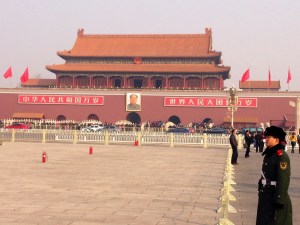
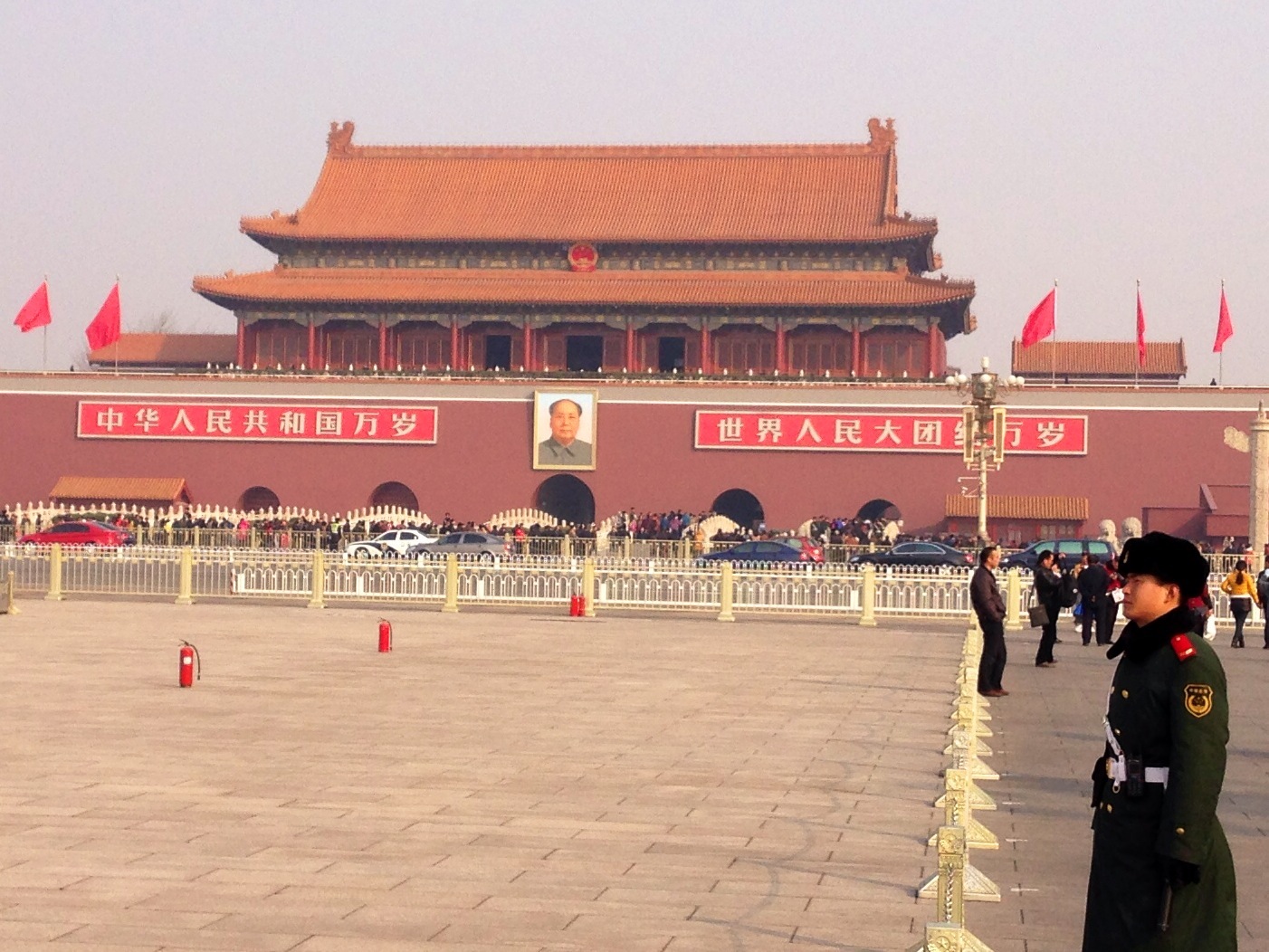
On our first full day in Beijing, we visited Tiananmen Square.  Our guide pointed out that Tiananmen Square is similar to The Mall in Washington, D.C.  It’s where their government officials from around the country meet for two weeks each year.  The square has numerous monuments to the history of new China (since Chairman Mao rose to power in 1949).

As we prepared to exit the bus, our guide’s voice changed tone.  She told us that there are cameras and listening devices everywhere in the square, and that many of the tourists we’d see are actually undercover police or government officials.  She asked us not to ask her where the tank was, or about the protest that took place there.  She officially doesn’t know anything about the protests.  She only knows about it from tourists like us, talking about what happened in 1989.

It’s true.  There are monuments and flags in Tiananmen Square, similar to our Mall in Washington, D.C.  But, that’s where the similarities stop.  As I looked at the monuments, mostly depicting Chairman Mao and the government’s control over the people of China, I couldn’t help contrast that theme to the theme of the monuments in Washington.

We have monuments to many of our Founders as well.  Each monument is not only a tribute to the person, but to a belief system that our greatness comes from freedom and liberty.  Ours is a government of the people, by the people, for the people…not a government whose greatness comes from its control over the governed.  Tiananmen Square is vast, treeless, and austere.  One can’t help but feel insignificant in comparison to the government buildings surrounding the square.

We asked about traveling outside of China.  Two of our three guides had done so.  Both had traveled to the US.  They aren’t allowed to travel with their family.  At least one family member must remain in China while the other is traveling abroad.  They are required to put about $15,000 in an escrow account prior to leaving China.  The funds are returned when the traveler returns.  They are warned that if they choose to remain in another country, their family members will be punished financially, and could lose their jobs.     

I learned quickly what it means to use a restricted and censored internet.  Email worked, but FaceBook, Twitter, YouTube, and Google are all heavily restricted, especially if accessed via a Wi-Fi connection.  I found that if I randomly flipped my phone out of airplane mode while in the cities, FaceBook would “work” about half the time.  I had 90 seconds to post an update or a quick photo.  Then, it would stop working.  Apparently, 90 seconds is the amount of time it took for the censoring protocol to find my phone and shut down the app’s update capability.

China is amazing.  The sheer scale of their development over the past two or three decades is unbelievable.  The people are warm and friendly (as long as they aren’t driving a car, motor scooter or bicycle where you’re trying to walk…pedestrians apparently do not have the right of way, even if your light is green).  The locals we met have the same hopes and dreams for their future that we do.  They want to have a rewarding job, enjoy their life, spend time with their families, and see their children (child) have a better life than they’ve had.

I’ve never visited a country that lacks most of the basic freedoms I take for granted.  China has rapidly “westernized” their economy and their culture, on the surface.  However, they are fundamentally walking a tightrope between the freedoms required to drive their economic growth, and the strict controls and structures of a Communist state.

I can’t help wondering what China will look like twenty years from now.  Will their urbanization continue at the same pace?  What will the “softer” one-child policy mean for the next generation of Chinese?  Will the quasi-freedoms associated with capitalist economic expansion propel the country toward real freedom in the future?  Can China continue to operate one way on the surface, while controlling its population with a velvet-covered fist, beneath that surface?

These questions about China’s future make me think of similar questions for the US.  What will we look like twenty or thirty years from now?  Will we enjoy the same freedoms and liberties that we have today?

Full story of Tank Man from a PBS FrontLine episode in 2006:  http://youtu.be/HNtA8RZ1FAA

No travelogue would be complete without some photos:

Tiananmen_Monument

mao_photo

Tiananmen Square

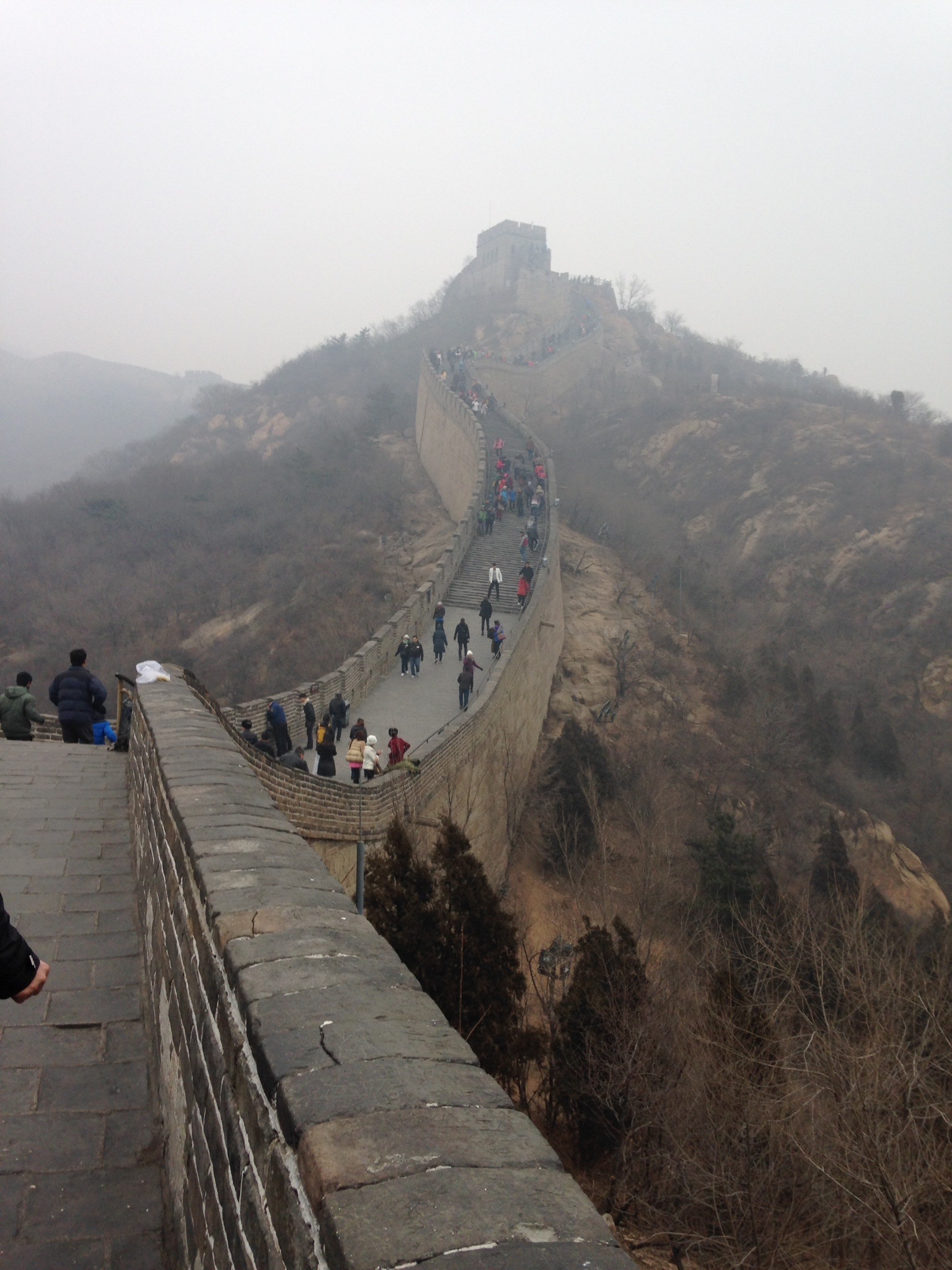
Great_Wall

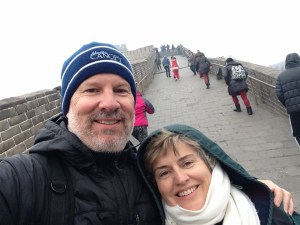
Great_Wall_Selfie

The Great Wall

Beijing_Hotel_View

View from our hotel in Beijing

Terra_Cotta_Warriors

Terra Cotta Warriors

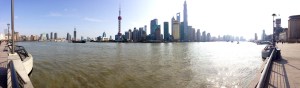
Bund_Panorama

Panorama of the Shanghai Waterfront (The Bund)

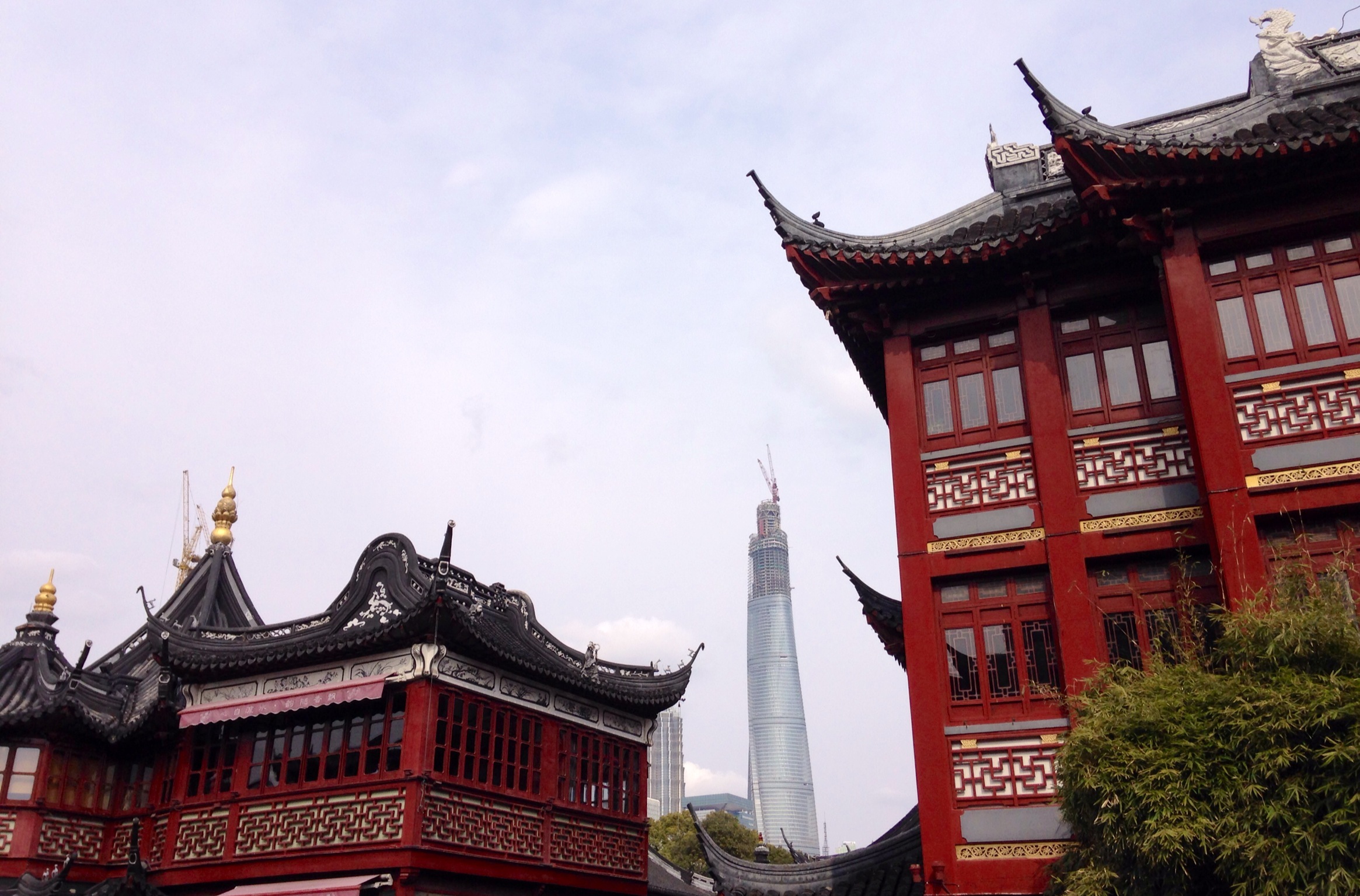
Old_New

Old and New in Shanghai (second tallest building in the world nearly completed)

Venice_Orient

Suzhou (Venice of the Orient)…branding is a little ahead of reality

Searching for Awesomeness

How’s your search going?

How’s your search going?  Have you found the awesomeness you’ve been seeking?

There are a lot of awesome nouns (people, places, things) out there.  A whole bunch of awesome verbs.  And, don’t forget about all the awesome adjectives.  String these together in almost infinite patterns, and you have the makings of a lot of awesomeness.

The sound of steaks sizzling on the grill, a beautiful sunset, the sparkle in someone’s eye when you’ve taught them something they never knew, the quiet stillness of a starting line just before the starter’s gun goes off, the aroma of a perfect cup of coffee as the sun comes up, the crackle of a campfire, watching your daughter roast a marshmallow to perfection.

The search for awesomeness should be an easy one.  It’s all around us.

Sadly, for some, finding awesomeness is impossible.

That’s because they don’t realize that awesomeness isn’t about what’s outside.  It’s not about what we see, touch, or hear.  It isn’t what we smell or taste.  It isn’t even about who is with us.

Our thoughts drive who we are, what we’ll be, where we’re going, and how we look at the world.  To find and experience awesomeness, we must first open ourselves to gratitude and appreciation.  Without gratitude and appreciation, all of the awesomeness in this world (and beyond) are merely nouns, verbs, and adjectives, waiting to be combined.

The search for awesomeness starts and ends within each of us.  Gratitude is our compass.  Appreciation is our map.

[This post marks the first anniversary of my blog.  My goal was to publish one post per week, and limit their length to no more than 500 words.  This is my 58th post, and I think only one went over my self-imposed word limit (but, it was one of my favorites).

I’m grateful and appreciative that you have taken the time to read my posts.  I hope you found them encouraging, informative, and maybe a little thought provoking.]

Everyday is a Surprise

It all started with an earache…

 “Bobby (what anyone who knew me before I was about 13 calls me), it all started with an earache.  The doctor gave me some ear drops.  The pain didn’t stop and seemed to get worse, so he gave me stronger drops.  That still didn’t work.  He ran some tests and told me it’s cancer, and I’m gonna die.  It was an earache, and then I was dying.  He says that I will probably just die in my sleep, so each time I wake up, it’s a surprise.”

Pete_Triumph

In Pete’s case, it took about four months for the cancer specialists to identify the type of cancer that is killing him.  He told me the name, and said it is very rare, untreatable, and fast moving.  I made a mental note to look up the cancer and learn more about it.  As I type this post, I have forgotten its name.

The fact that each of us will die is no surprise.  The timing is the surprising part.  That, and the name of the thing that ultimately causes our death.  There’s always a name.

I remember a conversation I had with Grandpa Clyde (my wife’s grandfather) at least ten years ago.  He was in his late-80’s at the time, showing me how to cook ribs properly on a barbeque.  I asked him what it was like to have lived as long as he had.  I will never forget his response.  “If you live long enough, you say goodbye to a lot of friends and family.  Most of the people I grew up with are dead and gone.  I stopped going to funerals a long time ago.  I spend my time making new friends, and enjoying this time I’ve been given with my family.”

Growing up, Pete was one of my role models for a life worth living.  A firefighter, motorcycle tuner, racer, helmet painter, wheelie king, runner, water skier, speeding ticket magnet, traveler, and a Bluegrass fan.  Although I never actually saw it, he used to say that he also jumped rope, attended three world fairs, and a few other things that are probably better left unmentioned.  Pete never stopped making new friends, or appreciating his old friends.  He grabbed all that life has to offer, and then some.

Pete_Wheelie

Pete wears a patch over his right eye now.  The tumor has grown and prevents that eye from blinking.  He is in a lot of pain, and the pain medications cloud the passage of time.  This hasn’t stopped Pete from grabbing what life has left for him.  He is living each remaining day as a surprise.

In truth, each day is a surprise for all of us.  An opportunity to appreciate our family and friends.  An opportunity to make new friends, and enjoy what little time we’ve been given.

Remembering to Breathe

Nearly all sports are the same (at least on one level).

Nearly all sports are the same (at least on one level).  It doesn’t matter if that sport is soccer, baseball, golf, archery, skeet shooting, curling, downhill skiing, long distance running, ice skating, motorcycle racing, or competitive yodeling.

They each start with the same fundamentals:

  • Relax and stay loose
  • Calm your mind
  • Visualize success
  • Bend your knees
  • Don’t forget to breathe.

One could make a case that each of these fundamentals are of equal importance, but my money is on the last one.  Consciously remembering to breathe puts us in the right state of mind to remember the other fundamentals.

We each face challenges on a daily basis.  Some are small, and some are huge (at least from our perspective).  Here’s a strategy for tackling each of them:

  • Relax and stay loose
  • Calm your mind
  • Visualize success
  • Bend your knees
  • Remember to breathe!

The Perils of Over-thinking

Here’s a little over-thinking on the topic of touch-free paper towel dispensers…

To demonstrate how over-thinking can produce results that are the opposite of stated goals, here’s a little over-thinking on the topic of touch-free paper towel dispensers.

There are two main goals associated with touch-free towel dispensers in public restrooms:

  • Dispense a pre-defined quantity of paper towel, minimizing paper use.
  • Allow patrons to get their towels without coming in contact with someone else’s germs.

Simple, right?  Well, not so fast.

How much paper does a patron need to achieve proper hand drying?  If we use inches of dispensed paper as the measure, is three inches of paper enough?  Six?  Twelve?  What’s too much?  If the goal is to minimize waste, one could set the dispenser to only three inches.  Theoretically, this would minimize paper use.  But, if it’s not enough, the patron will stand there and dispense another three inches.  Possibly, another six inches.

To get the additional inches of paper towel necessary to achieve proper drying, the patron must wait for the machine to cycle.  This second-and-a-half cycle time can seem like an eternity.  After all, we’ve all got other things to do with our time.  The patron vigorously swipes their hand under the machine.  After one or two wand-like swipes that yield no additional paper, they often resort to hitting the machine where the sensor should be.  Oops, there goes that goal of not touching someone else’s germs.

Which setting will yield the least overall paper use (our first goal)?  The first-level thinker would say the lowest setting will do the trick.  But, we’ve established that the lowest setting is probably not enough. The patron will merely wait for at least one more cycle to get the paper they need.

The second-level thinker would say that dispensing more from the beginning will yield less overall paper use and waste.  If the proper amount is dispensed from the beginning, the patron will be less likely to wait for another cycle.  Don’t even get me started on battery use differences associated with the two options.

Why does any of this matter?  Why think so deeply about touch-free towel dispensers?

To illustrate how easy it is to get wrapped up in meaningless minutia and forget about providing the patron (our customer) with an excellent experience.  How much minutia are you focusing on while ignoring your customer’s experience?