Ego and Leadership

“A leader is best when people barely know he exists.  When his work is done, his aim fulfilled, they will say: we did it ourselves.” –Lao Tzu

Which is more important?

Being the leader everyone knows is in charge, or

Being the leader who helps others take charge?

The only way any leader can succeed is to multiply themselves with the help of others.  Only by helping others take charge does the engine of multiplication come to life.

How can you best create ownership within your organization?

Giving commands, or

Asking questions?

This is an easy question.  It’s also one of hardest for many to put into action.  Asking questions is the answer.

What matters most?

Planting your ideas with others, so those seeds of thought take on a life of their own, or

Receiving accolades for your brilliant ideas?

Accolades are nice, but there’s nothing like the quiet satisfaction of seeing your ideas surpass your wildest expectations in the hands of others.

What’s the secret to answering each of these questions correctly?

Realizing the difference between confidence and ego.  Ego is like a wall that separates each of us from truly limitless potential.  Ego is fueled by fear and envy.  Ego worries about embarrassment.

Confidence is what you get when you find a way to leave your ego at the door.  Confidence isn’t afraid, or envious. Confidence loves to explore.  Confidence is happy to let go of itself.  Confidence is willing to be wrong, or look foolish, without embarrassment…especially when pursuing the biggest truths in life

A leader driven by ego is powerless, without realizing it.

“As we look ahead into the next century, leaders will be those who empower others.” –Bill Gates


Finding the Next Higher Gear

That’s when I noticed my habit of shifting to a lower gear as the trail gets steeper ahead…

4-5-10-mountain-climbing

If you haven’t tried mountain biking, you don’t know what you’re missing.  It combines many of the best things in life:

Being outdoors, hard work, freedom, speed, some risk, and fun.

Like many sports, it’s also a great way to find your limits, and extend them a bit.

Mountain bike trails are either climbing or descending.  They may be smooth, rough, tight, rocky, rutted, or any combination of these.

Steep downhills have always scared me.  Way too fast for my taste.  That impossible battle with gravity, choosing the safest line, avoiding rocks, and leaning far enough back to avoid being pitched over the handlebars, make most steep downhills a game of survival for me.  Definitely outside my comfort zone.

I prefer climbing.  Give me a long, steep climb and I’m happy.  Tired, but happy.  Sure, gravity’s against me, but it’s not trying to throw me over the handlebars, or off the mountain side.  I get to focus on my pedaling rhythm, staying within myself, and seeing how fast I can climb the next steep hill.  It puts my mind in a quiet place.

Until someone goes around, gives a wave, and climbs out of sight!  He may be half my age, but that’s no excuse.  He’s found a way to put both himself and his bike in the next higher gear (or maybe a few higher gears).

That’s when I noticed my habit of shifting to a lower gear as the trail gets steeper ahead.  I haven’t reached the steeper section, and yet I’m already downshifting.  One could call this good preparation.

Or, fear.  Fear of being caught off-guard by the steeper trail.  Fear of actually finding my limits.  Fear that I can’t handle the next higher gear.  Fear that I’ll blow-up and have to stop, gasping for air.

Napolean Hill was right when he said, “the only limitation is that which one sets up in one’s own mind.”

As I watched that guy climb out of sight, I decided to experiment with the next higher gear.  Catching him wasn’t my goal.  That wasn’t going to happen.  Finding my limit became my new goal.  Whenever my habit said I should downshift, I purposely clicked to the next higher gear and left it there.  Suffice it to say, I found my limit a few times.

More often than not, I merely climbed faster, and clicked to even higher gears.

Since I was climbing, I had time to think.  The question that kept rolling around my head was whether I have the same habit of preemptively downshifting in other areas of my life.

Time to find out.


Photo Credit


The Obstacles You Think You Know…Don’t Matter

Polynomials suck, but they aren’t the obstacle that matters most…

Polynomial Function

I used to hear one question a lot when I was a kid.

Whether an adult was asking me, or another kid my age, it was always the same:

What are you going to be when you grow up?

In second grade, I knew I wanted to be a doctor.  My friend wanted to be a fireman.  Another friend wanted to be a professional skateboarder.

By high school, I was still thinking doctor, or maybe veterinarian.  One of my friends planned to be an engineer, another wanted to teach, and one planned to go to the Air Force Academy and become a fighter pilot (he just retired from the Air Force a few years ago).

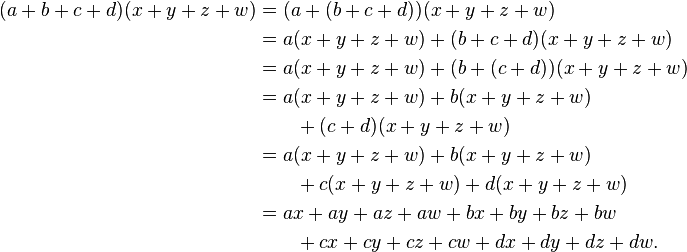
In my senior year in high school I ran into Algebra 2.  More specifically, factoring polynomials.  FOIL method.  Up to that point, math had made sense.  Plug the numbers into the formulas, and get your answer.  X equals 11, Y equals 9.  Pythagorean Theorem?  Piece of cake.  Word problems?  Easy.

But, polynomials made no sense.  The magic of the FOIL method didn’t help.  First, Outside, Inside, Last?  Solving for multiple variables that cancel each other out in some mysterious way?  Arriving at an answer that looks as cryptic as the original question?  What does a polynomial look like if you draw one?  When will we ever use this in real life?  I’d say it was all Greek to me, but I didn’t know Greek either, or Latin.

I hadn’t even reached Calculus (the math all the other brainiacs were taking in their senior year), and I’d hit a wall.

Polynomial Example

I could see the handwriting on the chalkboard (teachers used to write on them before whiteboards were invented).  To become a doctor would require a science degree of some kind.  That science degree would require a ton of math well beyond polynomials…maybe even Calculus.  What comes after Calculus?!  And, what about Latin?  Doctors all seemed to use Latin.  How would I learn that?  It wasn’t even offered at my high school.  And, what about getting into medical school?  Did I have eight years to give up?  How would I pay for all of it?  This was going to be hard!

We each have a strategic thinking instinct.  The ability to prioritize, make deductions, create connections, and map out a direction.  Or, multiple directions.

Unfortunately, more often than not, we either ignore our strategic thinking capability, or we use it to map out why something is impossible.  We visualize all the obstacles while ignoring the path around, over, or through them.  We neatly stack all the obstacles into an impenetrable wall, rather than a series of hurdles to be taken one-at-a-time.

My doctor plans went down in flames…but, I was the one pointing the metaphorical plane into the ground.

Could I have found a way to understand polynomials?  Yes.  Could I have dealt with Calculus?  Yes.  What about Latin?  Yes.  What about getting into medical school?  Yes.  Did I have what it took to become a doctor?  Probably (we will never know).

Did I allow myself to realize any of this at the time?  No.  I was too busy jumping toward another goal that had fewer obstacles, or so I thought.  One that didn’t require Calculus.  One that I could get my head around, and see more clearly.

I now understand something I didn’t back when I was a high school senior.  I’m not sure I understood it by the time I was a college senior either.  Our biggest obstacle, the one that matters more than any of the obstacles we can see, the obstacle that trumps all others, is staring back at us in the mirror.  Find your way around, over, or through yourself, and you are well on your way to overcoming almost any other obstacle in your path…maybe even polynomials.

Want the answer to the crazy equation?  This might (or might not) be it


Photo Credits:  Here and Here


Taking Time to Grieve

Grieving is unavoidable, no matter how busy or tough we think we are.

When someone we love dies, we often hear about the grieving process.  We hear that we should take time to grieve.  It’s something we can’t skip.

Grieving is unavoidable, no matter how busy or tough we think we are.

I remember when my Grandma Anne died (over twenty years ago).  My cousin, Devin, told me about DAWA, the four stages of the grieving process that he’d learned as a policeman:

Denial—we deny that the person has died, or that this is really happening.  We may also deny that it’s impacting us emotionally, or deny that we even understand the mix of emotions that are welling-up inside of us.

Anger—we realize this is real.  We wonder what we could have done differently.  We wonder how something like this could have happened.  We may question the justice in the universe, or how God could allow this.  Bargaining phrases like, “if only…” come into our mind.

Withdrawal—sometimes the only way to cope with the reality of our loss, and the emotions we can’t control, is to withdraw.  This may be within ourselves, or to some place where we can be alone.  Denial is giving way to reality.  Anger is turning to sadness.  We look within ourselves for the strength to overcome our sadness.

Acceptance—we begin to get our head wrapped around what is happening.  We start to make peace with this new reality.  Acceptance doesn’t mean we’re “over it,” or that there isn’t an irreparable rip in the fabric of our soul.  It means we start to understand how to go forward with our life.

It’s easy to list these stages and assume grief is a simple process with a beginning, middle, and end.  It doesn’t work that way.  Some people never get through all the stages, or, they may cycle through one or more of the stages numerous times.  It’s a process without a true endpoint…only the hope of eventual acceptance.

The grieving process applies to more than our loved ones passing away.  It can apply to losing just about anything else we love (whether we realize it or not).

Maybe it’s a friend who we don’t get to see anymore, a hobby we can no longer participate in, moving into a new house (and leaving the old one behind), graduating from college and saying goodbye to our friends, losing that job we thought we’d have for many years to come.

It doesn’t matter if we’re the ones driving the change in our life, or if the change is thrust upon us without warning.  It doesn’t matter if our loss is a stepping stone that leads us to something even greater (which is often the case).

The loss is real.

And, so is the grieving process.

Inspiration is great, but…

????????????????????????????????????????

When was the last time you were truly inspired?

Maybe you saw an inspirational movie, an awesome TED talk, or read an inspiring book. Maybe you had a great meeting with your boss. Maybe you have a brilliant idea that will change the world.

Inspiration can come from just about anywhere.

Inspiration is great, but is it enough? Does inspiration alone drive us to take action, to move toward our new future? Maybe, but probably not.

Inspiring thoughts quickly fade. Without action, inspiration is just another passing thought…soon forgotten.

Remaining in the status quo usually seems safer than taking action.

It’s almost a cliché: The journey of a thousand miles begins with the first step. Inspiration is nothing until it’s coupled with your willingness to take action. To take the first step, and then the next.

Action is the fulfillment of inspiration, and often inspires others in the process.

What action are you taking today to pursue the things that inspire you?

What would you do if you weren’t afraid?

Fear can motivate. Fear can paralyze. It can save your life. Unfortunately, it can also control your life.

“…let me assert my firm belief that the only thing we have to fear is…fear itself — nameless, unreasoning, unjustified terror which paralyzes needed efforts to convert retreat into advance.” –Franklin Delano Roosevelt (first inauguration address, 1933)

Fear can motivate. Fear can paralyze. It can save your life. Unfortunately, it can also control your life.

Here’s a list of fears to consider:

  • Failure
  • Embarrassment
  • Public Speaking
  • Death (I’m pretty sure a lot of people fear the first three more than death)
  • Not Being Accepted
  • Commitment
  • Flying
  • Disappointment
  • Success
  • Fame
  • Responsibility
  • the Unknown
  • the Dark
  • New Experiences
  • Being Blamed
  • Heights
  • Snakes
  • Spiders
  • Sharks
  • Geese
  • Open Spaces
  • Anywhere but Home
  • Confined Spaces

I know people who have each of these fears. I have some of them, and I’m sure you have some as well.

Fear is generated in our Lizard Brain . That primitive part of our brain that keeps us alive while we’re thinking about other stuff. Our Lizard Brain means well, and only has our best interest in mind. It’s the center of our survival instinct. It will do anything it can to help us avoid the things we fear. Unfortunately, it’s part of our brain that we barely control.

One way to gain control of our fear is to discover, and admit, that it exists. That, and admitting our fears impact the things we choose to do (or not do). It may help to discuss your fears with someone you trust, or to contemplate them on your own. Either way, understanding your fears is the first step toward controlling them.

Consider a ten-year-old, standing in right field. He knows that he’s in that position because he’s the worst player on the team. Fly balls rarely make it to right field in little league games, so he’s safe out there. What happens when the ball flies into right field? What’s the first thing on that ten-year-old’s mind? Probably something like, “Please don’t let me screw this up and drop the ball.” His first thought comes from a place of fear. Did he catch the ball? Did he make the right play once he had the ball? Maybe, but doubtful.

Imagine the same player who knows he’s in right field because he’s the only player who can make the throw all the way to third base. He has a gun for an arm, and he may be the best player on the team. What’s he thinking when the ball flies into right field? “I can’t wait to get that ball so I can make the play.   We are going to stop this rally and win the game!” Fear isn’t part of the equation. Did he catch the ball? Did he make the right play? Probably.

Fear creates completely different experiences for these ten-year-olds. The secret is that this applies at all ages, in nearly everything we do.

How many of your goals are “off limits” because you’re afraid? How many potential goals are eliminated by fear (your Lizard Brain), before you even know about them?

How often is fear your first response? How often do you talk yourself out of something that’s outside your comfort zone? It’s easy to do…avoiding fear is a powerful motivation.

Start small. Choose one thing that scares you and go after it. Embrace the negative energy of fear and turn retreat into advance. Each time you do this, your list of fears will shrink.

What would you do if you weren’t afraid?

Do it today!