The Power of Elevated Thinking

Imagine the value of the person who looks for ways to help, instead of…

MarianneWilliamsonQuote


“The last IT guy had a diagram of the network, but since he left, I haven’t updated it to reflect the changes we’ve made.”

“The system was setup before I got here.  It’s not a good fit, but I’ve just been making do since I took it over.”

“This process ran pretty smoothly last year.  I don’t think the new guy has a clue about how it should work this year. This has failure written all over it.”

“I’ve seen it all in my time.  They’ve tried a bunch of new ideas to make things more efficient, but they never work.  I try to tell them they’re wasting their time, but nobody listens to me.”

“I wonder when the VP is going to notice how screwed-up this project is.  Everyone knows it’s a disaster, but him.”

“The more things change, the more they stay the same around here.”

How many times have you heard (or said) versions of these quotes?

It’s easy to point to problems with “the system.” It’s easy to blame the other guy, the other department, your boss, your employee, the customer(!).

Avoiding ownership is the easy way out.  It’s also the quickest way to ensure mediocrity and failure for yourself and your organization.

Imagine the possibilities if just one person in these hypothetical situations chose to elevate their thinking.  Imagine if they decided to own the search for the right solution.  What if they actively participated in making someone else’s solution a success?  Imagine the value of the person who looks for ways to help, instead of looking for ways to criticize.

There’s nothing stopping you from being that person…except maybe yourself.


By the way, have you read my book?  100’s have already (thank you!).  If you’re one of them, please do me a favor and tell your friends about it.  If not, it’s time to take ownership, and get yourself a copy!

All of my proceeds are going to two awesome groups who embraced the opportunity to take ownership of a problem:  Mothers Fighting for Others, and the Scleroderma Research Foundation.
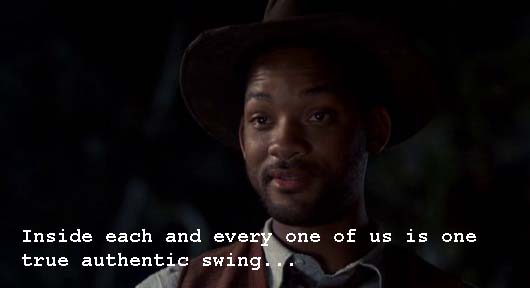
 

Photo Credit

Finding Your Authentic Swing

What about the inevitable shanks, worm-burners, wicked slices, massive hooks, and just plain misses?

BaggerVance


“Yep… Inside each and every one of us is one true authentic swing… Somethin’ we was born with… Somethin’ that’s ours and ours alone… Somethin’ that can’t be taught to ya or learned… Somethin’ that got to be remembered… Over time the world can, rob us of that swing… It get buried inside us under all our wouldas and couldas and shouldas… Some folk even forget what their swing was like…”

-Bagger Vance

The Legend of Bagger Vance is filled with good stuff.  It’s a movie that moseys along with a subtle, southern rhythm.  It conveys a depth of meaning without trying.  The movie challenges each viewer to look at themselves as much as the characters.

I do agree that our authentic swings can get buried under the wouldas, couldas, and shouldas of life.  They can just as easily be uncovered by the leaps, possibilities, why-not’s, and I’m-in’s.

That being said, I must disagree with Mr. Vance’s notion that we each have one true authentic swing.  I rather think we have more than one authentic swing, if we choose to search.  Not only that, we have a lot of clubs in our bag.  We have an almost infinite number of authentic-swing-and-club combinations to choose from when our time comes to stand over the ball, and deliver.

What about the inevitable shanks, worm-burners, wicked slices, massive hooks, and just plain misses?

The best among us are the ones who find a way to recover, and swing again.

Will Smith at his best…


Photo Credit

The Mystery of the Dots

Our lives can seem like a collection of random experiences, decisions, non-decisions, near-misses, lucky chances, chance encounters, crazy ideas…

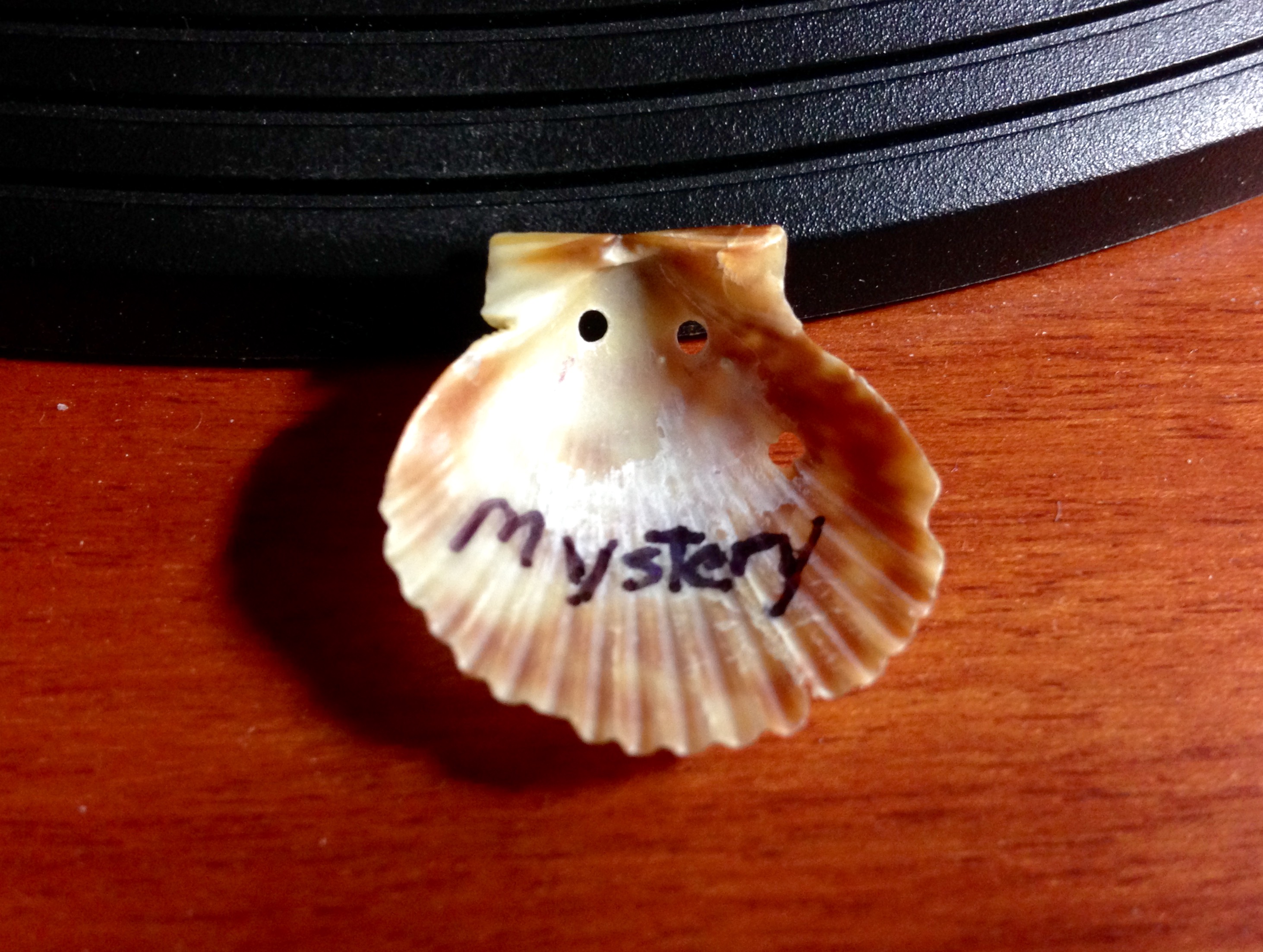
MysterySeashell

I recently participated in my first Church retreat.  It opened with an exercise where each participant drew a seashell out of a pile of seashells.  Written inside each shell was one word.  The facilitator then asked each of us to say how this one word connects with our lives.

My word was Mystery.

As I sat pondering the word, I couldn’t help thinking about all the dots in my life that have connected to bring me here.

Connect-the-dot puzzles are a great way to teach kids how to count, and see that there can be order in the apparent chaos of a bunch of dots on a page.

Our lives can seem like a collection of random experiences, decisions, non-decisions, near-misses, lucky chances, chance encounters, crazy ideas, mundane thoughts, risky ventures, explorations, challenges, victories, losses, successes, failures, limitations, beliefs, non-beliefs, triumphs, heartbreaks, new directions, people, places and things.

These are our dots.

We create some of the dots, but most of them are already there, waiting for us to connect.

Which dot comes next?  Do we choose, or is it chosen for us?  Is there a pattern, or at least some path, in all these dots?  I like to think we have something to do with deciding which dot comes next, but certainly not everything.

Nearly every major turning point in my life (good and bad, but mostly good) was unplanned.  Sure, I may have been prepared to capitalize, but the actual “dot” came out of nowhere, often by chance.

To paraphrase a quote from The Way (a movie I highly recommend, by the way), “You don’t choose a life, you live it.”  We all make plans, and try to map out where we’re headed.  The truth is, we don’t have as much control over things as we’d like to think.

Letting go of the illusion of control is a big step toward happiness.

The happiest people I know live their lives as a verb, rather than something to be controlled, or pondered in the past tense.  They are always seeking, always learning, always renewing.  They usually spend a lot of time serving others.  They don’t know which dot comes next, but they’re open to the possibilities.

I can see some big dots in my future, but I know there are a bunch I don’t see.  That’s the great mystery that makes life so awesome.

Finding the Next Higher Gear

That’s when I noticed my habit of shifting to a lower gear as the trail gets steeper ahead…

4-5-10-mountain-climbing

If you haven’t tried mountain biking, you don’t know what you’re missing.  It combines many of the best things in life:

Being outdoors, hard work, freedom, speed, some risk, and fun.

Like many sports, it’s also a great way to find your limits, and extend them a bit.

Mountain bike trails are either climbing or descending.  They may be smooth, rough, tight, rocky, rutted, or any combination of these.

Steep downhills have always scared me.  Way too fast for my taste.  That impossible battle with gravity, choosing the safest line, avoiding rocks, and leaning far enough back to avoid being pitched over the handlebars, make most steep downhills a game of survival for me.  Definitely outside my comfort zone.

I prefer climbing.  Give me a long, steep climb and I’m happy.  Tired, but happy.  Sure, gravity’s against me, but it’s not trying to throw me over the handlebars, or off the mountain side.  I get to focus on my pedaling rhythm, staying within myself, and seeing how fast I can climb the next steep hill.  It puts my mind in a quiet place.

Until someone goes around, gives a wave, and climbs out of sight!  He may be half my age, but that’s no excuse.  He’s found a way to put both himself and his bike in the next higher gear (or maybe a few higher gears).

That’s when I noticed my habit of shifting to a lower gear as the trail gets steeper ahead.  I haven’t reached the steeper section, and yet I’m already downshifting.  One could call this good preparation.

Or, fear.  Fear of being caught off-guard by the steeper trail.  Fear of actually finding my limits.  Fear that I can’t handle the next higher gear.  Fear that I’ll blow-up and have to stop, gasping for air.

Napolean Hill was right when he said, “the only limitation is that which one sets up in one’s own mind.”

As I watched that guy climb out of sight, I decided to experiment with the next higher gear.  Catching him wasn’t my goal.  That wasn’t going to happen.  Finding my limit became my new goal.  Whenever my habit said I should downshift, I purposely clicked to the next higher gear and left it there.  Suffice it to say, I found my limit a few times.

More often than not, I merely climbed faster, and clicked to even higher gears.

Since I was climbing, I had time to think.  The question that kept rolling around my head was whether I have the same habit of preemptively downshifting in other areas of my life.

Time to find out.


Photo Credit


Happiness, by Comparison

How much time he gains who does not look to see what his neighbour says or does or thinks, but only at what he does himself, to make it just and holy. –Marcus Aurelius

Comparison is the death of joy. –Mark Twain

Wheel-of-fortune-machines

A thought experiment for your consideration:

You’re in Vegas, playing a Wheel of Fortune slot machine.  You “invest” $20 in the machine, and on your third play, you hear the words, “Wheel.  Of.  Fortune!”  You hit the spin button (with your elbow, of course, for good luck).  The $500 bonus comes up!  High fives all around!  You decide to cash out.

While you tell your buddies about your big win, another patron sits at your machine.  She plays a few rounds, and suddenly, “Wheel. Of.  Fortune!” comes up for her.  Curious, you and your buddies watch to see what she gets.  This time, the spin hits the progressive jackpot.  She just won $1.4 million!

Are you still happy about your $500, or disappointed that you didn’t win the $1.4 million?

Let’s change the outcome a bit.  Imagine her spin yields a bonus of only $50.  Are you happier about your $500 than you were when she won $1.4 million?

Be honest.

In a world with billions of people, there’s always someone who:

wins more, runs faster, is taller, richer, prettier, better, loses more, runs slower, is shorter, uglier, or worse

than you.

How much time he gains who does not look to see what his neighbour says or does or thinks, but only at what he does himself, to make it just and holy. –Marcus Aurelius  

Happiness often becomes a game of teeter-totter.  Something we can only experience in comparison to someone else.  It’s a process fueled by envy.  Envy, which takes all the power we will give it.  It simultaneously feeds on the joy of others and rips at the happiness of its host in the process.

Imagine if your happiness had nothing to do with what happens to someone else?

Here’s the good news.  You get to try it anytime you want.


The Obstacles You Think You Know…Don’t Matter

Polynomials suck, but they aren’t the obstacle that matters most…

Polynomial Function

I used to hear one question a lot when I was a kid.

Whether an adult was asking me, or another kid my age, it was always the same:

What are you going to be when you grow up?

In second grade, I knew I wanted to be a doctor.  My friend wanted to be a fireman.  Another friend wanted to be a professional skateboarder.

By high school, I was still thinking doctor, or maybe veterinarian.  One of my friends planned to be an engineer, another wanted to teach, and one planned to go to the Air Force Academy and become a fighter pilot (he just retired from the Air Force a few years ago).

In my senior year in high school I ran into Algebra 2.  More specifically, factoring polynomials.  FOIL method.  Up to that point, math had made sense.  Plug the numbers into the formulas, and get your answer.  X equals 11, Y equals 9.  Pythagorean Theorem?  Piece of cake.  Word problems?  Easy.

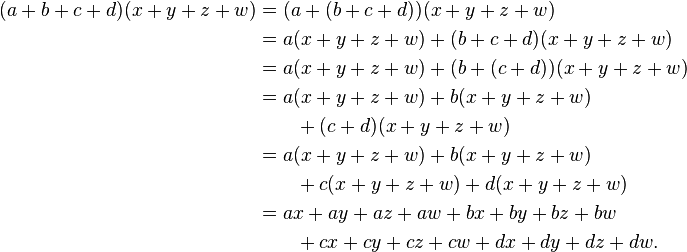
But, polynomials made no sense.  The magic of the FOIL method didn’t help.  First, Outside, Inside, Last?  Solving for multiple variables that cancel each other out in some mysterious way?  Arriving at an answer that looks as cryptic as the original question?  What does a polynomial look like if you draw one?  When will we ever use this in real life?  I’d say it was all Greek to me, but I didn’t know Greek either, or Latin.

I hadn’t even reached Calculus (the math all the other brainiacs were taking in their senior year), and I’d hit a wall.

Polynomial Example

I could see the handwriting on the chalkboard (teachers used to write on them before whiteboards were invented).  To become a doctor would require a science degree of some kind.  That science degree would require a ton of math well beyond polynomials…maybe even Calculus.  What comes after Calculus?!  And, what about Latin?  Doctors all seemed to use Latin.  How would I learn that?  It wasn’t even offered at my high school.  And, what about getting into medical school?  Did I have eight years to give up?  How would I pay for all of it?  This was going to be hard!

We each have a strategic thinking instinct.  The ability to prioritize, make deductions, create connections, and map out a direction.  Or, multiple directions.

Unfortunately, more often than not, we either ignore our strategic thinking capability, or we use it to map out why something is impossible.  We visualize all the obstacles while ignoring the path around, over, or through them.  We neatly stack all the obstacles into an impenetrable wall, rather than a series of hurdles to be taken one-at-a-time.

My doctor plans went down in flames…but, I was the one pointing the metaphorical plane into the ground.

Could I have found a way to understand polynomials?  Yes.  Could I have dealt with Calculus?  Yes.  What about Latin?  Yes.  What about getting into medical school?  Yes.  Did I have what it took to become a doctor?  Probably (we will never know).

Did I allow myself to realize any of this at the time?  No.  I was too busy jumping toward another goal that had fewer obstacles, or so I thought.  One that didn’t require Calculus.  One that I could get my head around, and see more clearly.

I now understand something I didn’t back when I was a high school senior.  I’m not sure I understood it by the time I was a college senior either.  Our biggest obstacle, the one that matters more than any of the obstacles we can see, the obstacle that trumps all others, is staring back at us in the mirror.  Find your way around, over, or through yourself, and you are well on your way to overcoming almost any other obstacle in your path…maybe even polynomials.

Want the answer to the crazy equation?  This might (or might not) be it


Photo Credits:  Here and Here


The Trouble with Gauges

Successful flying is much more than air speed…

cockpit-sopwith-1-1_2-strutter

One might argue that air speed is the most important factor in flying.  Not enough and you fall from the sky.  Too much, and your plane suffers catastrophic damage (and may fall from the sky).

I searched for at least three minutes (that’s a long time to be on a wild-Google-chase) to find an image of a simple cockpit instrument panel.  Notice anything?  Even this simple panel has a lot more than an air speed indicator.

In addition to air speed, the pilot can see engine rpm, oil temperature, water temperature, cylinder head temperature, fuel level, battery voltage, whether or not the plane is flying level, and the all-important altitude.

Successful flying is much more than air speed.  Otherwise, there’d only be one gauge.

Flying is much more than monitoring gauges.  Otherwise, what’s the point of windows?

Do you measure your life with one gauge, or a cluster of gauges?

Which gauge do you look at most?  Is it the right one?

Have you noticed where you’re heading, or are you too busy looking at your gauges?


Photo Credit: World of Aircraft Design


Taking Time to Grieve

Grieving is unavoidable, no matter how busy or tough we think we are.

When someone we love dies, we often hear about the grieving process.  We hear that we should take time to grieve.  It’s something we can’t skip.

Grieving is unavoidable, no matter how busy or tough we think we are.

I remember when my Grandma Anne died (over twenty years ago).  My cousin, Devin, told me about DAWA, the four stages of the grieving process that he’d learned as a policeman:

Denial—we deny that the person has died, or that this is really happening.  We may also deny that it’s impacting us emotionally, or deny that we even understand the mix of emotions that are welling-up inside of us.

Anger—we realize this is real.  We wonder what we could have done differently.  We wonder how something like this could have happened.  We may question the justice in the universe, or how God could allow this.  Bargaining phrases like, “if only…” come into our mind.

Withdrawal—sometimes the only way to cope with the reality of our loss, and the emotions we can’t control, is to withdraw.  This may be within ourselves, or to some place where we can be alone.  Denial is giving way to reality.  Anger is turning to sadness.  We look within ourselves for the strength to overcome our sadness.

Acceptance—we begin to get our head wrapped around what is happening.  We start to make peace with this new reality.  Acceptance doesn’t mean we’re “over it,” or that there isn’t an irreparable rip in the fabric of our soul.  It means we start to understand how to go forward with our life.

It’s easy to list these stages and assume grief is a simple process with a beginning, middle, and end.  It doesn’t work that way.  Some people never get through all the stages, or, they may cycle through one or more of the stages numerous times.  It’s a process without a true endpoint…only the hope of eventual acceptance.

The grieving process applies to more than our loved ones passing away.  It can apply to losing just about anything else we love (whether we realize it or not).

Maybe it’s a friend who we don’t get to see anymore, a hobby we can no longer participate in, moving into a new house (and leaving the old one behind), graduating from college and saying goodbye to our friends, losing that job we thought we’d have for many years to come.

It doesn’t matter if we’re the ones driving the change in our life, or if the change is thrust upon us without warning.  It doesn’t matter if our loss is a stepping stone that leads us to something even greater (which is often the case).

The loss is real.

And, so is the grieving process.

The Next Version

The first version may dramatically change, or create new markets. But, it can’t stop there.

intro_originalipod

Just when the caterpillar thought the world was over, it became a butterfly.  ~English Proverb

There’s always a next version.  The latest update.  The new and improved model.  That is, if you sell a product (or service) and hope to remain relevant.

The first version may dramatically change, or create new markets.  But, it can’t stop there.

When Microsoft came out with its first version of MS-DOS (Microsoft disc operating system for those of you born after 1983 or so), they didn’t stop developing what they had.  There was always a new version just around the corner, and then all the versions of Windows after that.

Consider how quickly Apple’s iPod improved, shrank, morphed, and spawned new products and categories (like the iPhone).  The first iPhone was awesome and changed everything.  But, Apple didn’t stop there.  They couldn’t.

Dr. Athey (one of my favorite professors) used to talk about the “ratchet effect” in technology.  With each successive improvement in speed, features, or capability, the expectation level is ratcheted-up, at least one notch.  Each improvement creates a new floor.  A platform for the next leap.

Stop improving, stop inventing, stop pushing, stop creating, stop leaping, and guess what.  Your product begins to wither and die.  What was once amazing becomes the norm.  The markets you created start to shrink.

The same ratchet effect applies to each of us.

I will never forget a conversation I had with Grandpa Clyde.  He was about 90 years old at the time.  He had just started using email, and asked me how he could send an email to more than one recipient.  I gave him some email pointers, but I got a whole lot more in return.  His questions demonstrated a key secret to a happy life:  Continuous exploration…seeking the next version.

What are you curious about?  What scares you?  What seems impossible?  These are the first things to explore.  Choose to take your first step.  Once you take the first step, the next one is easier.

What features will be in your next version?


Photo Credit:  ARS Technica


The Finest Gift

It was like a perfect slice of the sun walked in the room.

Bingo changed my life.  The Alamitos dorm held their annual bingo tournament in the Commons, and a friend told me I should go.  Sounded like fun to me.  What else was a college freshman to do just weeks before final exams?  But, we’d have to wait a few minutes for one of his friends who’d be joining us.

She can shop all over town, turn the gift shops upside down.
Finding something for her man with everything.

I noticed her eyes first.  Then her smile.  It was like a perfect slice of the sun walked in the room.

“Bob, this is Janet.  She lives in the girl’s wing on our floor.”  Suddenly, words were a little hard to find.  “She’s a CIS major too,” he said, breaking the silence.  Talking about your major was always a good ice breaker.

But it’s right behind her eyes and no matter what she buys
She’ll always be the finest gift she brings.

Playing bingo is similar to a movie from a first date perspective.  There’s not a lot of time for chit chat.  Not that this was a date.  After all, we just met.  I was starting to string words together again, just barely.  This was the one person who would change my life forever, but this was also bingo.  It all about the numbers.

I wasn’t thinking about anything except how to see her again.  Then it happened.  I got a BINGO!  The prize?  A week’s membership at the Jack LaLane Health Spa.  That was nice, but didn’t get me closer to seeing Janet again.  Lucky for me they had more memberships to hand out.  A few games later, with one of the memberships on the line, I could see that Janet was close to having bingo.  How awesome is that?

Every year it’s never missed, should be at the top of every list.
It can never be outdone, it’s the perfect gift for everyone.

I’m sure I was the most excited person in the room when Janet yelled, “BINGO!”  We had matching membership envelopes!  This was my opening.  We were only three or four weeks away from the end of spring quarter.  We’d be moving out of the dorms for the summer…Janet wouldn’t be living just down the hall.  I had to move fast.

It’s in everything you’ll see, scattered underneath our tree.
You can hear it in the carols that we sing.

The details are a bit fuzzy for me as I think about our visits to Jack LaLane’s.  I do remember sitting in the Jacuzzi (I presume, after we had done our workouts).  The more I talked with Janet, the more I knew she was THE ONE.  And yet, I only had a few weeks.  The abyss of summer break was fast approaching.  I had to stay focused, which was impossible whenever I was around her.

It’s the heart of love’s design and it appreciates with time.
And she’ll always be the finest gift she brings.

Janet and a group of her friends were planning a trip to the Griffith Park Observatory to celebrate the end of the school year.  I knew a few of her friends (some were neighbors on my wing).  But, I wasn’t exactly part of the Griffith Park trip plan.  What do you do in that situation  Invite yourself, of course.

We had a small convoy of cars that night.  I couldn’t believe I was in the passenger seat of Janet’s convertible as we approached the observatory.  This was like a date, but not quite.  We were part of a big group.  Everything was closed at the observatory (college students work the late schedule), but we walked around the grounds and checked out the stars for quite a while.  I remember how the lights reflected off Janet’s eyes more than anything else.

Our road trip wasn’t over.  We stopped at a Tommy’s Burgers on the way back.  My first chili burger, on my first (almost) date with Janet.

Every year it’s never missed, should be at the top of every list.
It can never be outdone, it’s the perfect gift for everyone.

Only six weeks later, we were in my parent’s Toyota 4×4 pickup, following my family down to Gonzaga Bay in Baja…about 100 miles south of San Felipe.  Why not go to the middle of nowhere in Baja, off road, with this (awesome) guy you met playing bingo?  Janet is an adventurer, to say the least.

Now it’s not in any store and she could never give me more
Then her promise of the finest gift she brings.

Three years later, we shared our first Christmas as a married couple.

Christmas_1988

Our adventure continues to this day.

The finest gift is truly the one I receive every day (including Christmas).

Her love.

I know her love’s the finest gift she brings.

Clint Black sure got it right:  http://youtu.be/wGe96bEL7B8