The first version of almost anything is an act of discovery. We’re learning in real time, usually without understanding what we’re building. We don’t yet know which parts will matter, which ones deserve less attention, or where the challenges are.
The first version is shaped by assumptions. Some accurate, others incomplete. It’s often held together by optimism and a willingness to learn as we go.
The first generation isn’t meant to be polished or permanent. Its purpose is proof of life.
Does this idea work at all? Do we enjoy pursuing it? Is there something here worth continuing once the novelty fades?
Many ideas never move beyond that first stage. Excitement gives way to routine. Maintenance enters the picture. It’s decision time.
Is this something I’m willing to own, or was I simply exploring an interesting possibility?
If the answer leans toward exploration alone, the idea stalls, usually forever. It never makes the leap from curiosity to commitment.
That leap matters.
William Hutchison Murray said it well, “Until one is committed, there is hesitancy…the moment one definitely commits oneself, then Providence moves too.”
The second generation begins at that moment of commitment.
If we choose to begin version two, everything changes.
We’re no longer experimenting or learning if this idea works. We’re deciding that it matters enough to carry forward.
We’re operating with experience now. We’ve seen where effort was misdirected and where the momentum came from. We understand which details carry lasting value and which ones only seemed important at first.
More importantly, we own it now.
That’s why the second generation feels heavier. The weight of responsibility belongs to us. We know too much to pretend otherwise.
An idea that survives long enough to earn a second version has already passed an important test. It has encountered reality and endured.
The first generation asks whether something can exist. The second generation answers whether it should continue.
From there, our work evolves. Spontaneous ideation turns into direction. The purpose becomes clearer than the feature set. Identity begins to emerge.
This is how we do it. This is what matters. This is what we’re willing to stand behind.
The second generation is the foundation for everything that follows…far more than the first. It establishes patterns, standards, and expectations for what comes next.
Tackling version one takes courage. But finishing that version is only part of the journey.
The deeper test lies in beginning again. This time with clearer eyes, better judgment, and full ownership of what we’re building.
We move from discovering what we could build to owning what’s truly worth building.
Every generation believes it’s living through extraordinary change.
And in a way, every generation is right.
Economic strain, political division, conflict, and rapid technological change appear in different forms, but the underlying tension remains the same.
Ray Dalio describes what he calls the Big Cycle. The rise and decline of nations shaped by debt, money, internal division, and shifting global power. He would say we’re late in that cycle, marked by high debt, widening wealth gaps, and growing competition among world powers.
Harry Dent approaches history through demographics, studying population growth, and generational spending patterns. From his view, today’s economic strain reflects aging populations, slower growth, and the unwinding of decades of expansion.
Different perspectives. Similar conclusions.
Neither claim to predict the future with precision. Debt cycles, demographic waves, generational moods, technological revolutions, and geopolitical tensions move simultaneously. Understanding these forces and their patterns helps us recognize the currents. How we live within them is still our responsibility.
I remember the OPEC oil embargo of the 1970s and gas lines stretching for blocks. I was in elementary school as interest rates climbed above twenty percent. I watched the Reagan Revolution reshape economic thinking and bring supply-side theory into the mainstream.
I lived through the Iranian Revolution in 1979, the taking of US hostages, and the subsequent spread of militant extremism across parts of the Muslim world over the next four decades. I watched an airplane strike the World Trade Center in real time.
I grew up under the shadow of the Cold War, when nuclear conflict felt possible at any moment. I saw the optimism that followed the fall of the Soviet Union and then watched China open to the world after decades of isolation. I remember the theories about how expanding capitalism in China might soften their communist approach to governing.
I witnessed the savings and loan collapse, multiple stock market crashes, the Great Recession, and a global pandemic that disrupted economies, institutions, and families alike. I watched how strongly governments grasp control when certainty disappears.
I saw personal computers and then the internet transform daily life, followed by the digital economy, smartphones, social media, and now artificial intelligence reshaping work itself.
I can think of countless other historical events that have happened in the span of one life. Each moment felt unprecedented. Each reshaped the world, sometimes positively, sometimes negatively.
And yet, life continued.
When history is written, it focuses almost entirely on macro events. The narratives are dominated by wars, collapses, elections, revolutions, and markets. What rarely appears are the countless individual lives unfolding quietly alongside these events.
History does not record families eating dinner together during times of high inflation. Nor does it record weddings that took place during recessions or children born during wars. It overlooks the laughter that survived fear and the quiet courage required to just keep going.
But these individual experiences of life form the definition of humanity.
For every name preserved in textbooks, millions of people were doing what people have always done. They worked. They loved. They raised children. They cared for neighbors. They hoped tomorrow might be a little better than today.
Macro forces shape conditions. They influence opportunity and may narrow our options. They may, unfortunately, end our life or the lives of someone we love. But they don’t define a life.
Inside every macro upheaval exists our “micro” life. The life lived within the headlines rather than dictated by them.
The world may determine interest rates. It does not decide whether we act with kindness. It may influence careers, but it does not control our integrity. It may introduce hardship, but it does not determine how we respond.
Our response is where freedom still lives.
Viktor Frankl understood this more clearly than almost anyone. After enduring unimaginable suffering in Nazi concentration camps, he observed that nearly all external freedoms can be taken from a person. One freedom remains intact. The ability to choose one’s attitude and response to circumstances.
Events may constrain us. They may demand adaptation. They will never own our human spirit.
In my office, I have a wall filled with photographs. Family gatherings. Wedding days. Trips taken together. Beautiful places. Ordinary moments that became lasting memories.
When I step back and look at this wall, patterns appear.
We worked hard.
We made time for one another.
We traveled together.
We celebrated milestones.
We were living out our hopes and dreams, and we still are.
My wall has no charts or financial forecasts. No macro trend lines. But it tells the story of what matters most.
None of these moments waited for ideal conditions. They unfolded alongside inflation, recessions, political change, and uncertainty. The photographs capture lives shaped by ordinary but important choices made amid extraordinary times.
As we traveled, we met families across many countries. Different customs. Different faiths. Different governments. Yet everywhere we went, the hopes sounded familiar. Parents wanting the best for their children. Families striving for opportunity. Communities longing to contribute and belong.
The differences emphasized by the world shrink quickly when people speak about those they love.
Human aspirations remain remarkably consistent.
History changes its outward form. The heart changes very little.
You will live through upheavals of your own. Some will be frightening. Some will be unfair. Some will test your trust in institutions or leaders.
Remember this.
You are not responsible for controlling history. You are responsible for how you live inside it.
You will not choose the history that surrounds you. You will choose the values you carry through it.
You choose how you treat people.
You choose how to adapt.
You choose how you show up for your family.
You choose whether uncertainty hardens you or deepens your compassion.
You choose whether fear leads or faith steadies you.
These are your choices. Always.
Humanity endures because ordinary people continue to build their lives amid uncertainty. They love, they work, they fail, they adapt, and they hope, even while larger forces move around them.
While empires rise and fall, families persist.
That is the quiet march you belong to. Rarely captured by historians yet carried forward by generations.
History happens around you.
Life happens within you.
Live your life well. Love deeply. Work honestly. Stay flexible. Hold your faith. Care for one another.
If you do that, you will live a meaningful life regardless of when you were born.
As I was finishing this post, I found these quotes from George Bernard Shaw. The words come from two different writings of his from the early 1900’s. Together they express something important about what it means to live well within whatever history hands us.
“This is the true joy in life, the being used for a purpose recognized by yourself as a mighty one; the being a force of Nature instead of a feverish, selfish little clod of ailments and grievances complaining that the world will not devote itself to making you happy. “
“I am of the opinion that my life belongs to the whole community, and as long as I live it is my privilege to do for it whatsoever I can. I want to be thoroughly used up when I die, for the harder I work the more I live. I rejoice in life for its own sake. Life is no ‘brief candle’ for me. It is a sort of splendid torch, which I have got hold of for the moment; and I want to make it burn as brightly as possible before handing it on to future generations.”
As we enter 2026, it’s tempting to look for a new system, a better plan, or the perfect moment to begin.
Most of the time, the real answer is simpler.
Just show up.
The secret to progress isn’t brilliance or motivation. It isn’t certainty or confidence. It’s presence.
Show up every day. Show up when it’s easy. Show up when it’s uncomfortable. Show up when you don’t know what comes next.
Show up and be present. Show up and handle your business. Show up and figure it out as you go. Show up for the people you love. Show up for the work that matters. Show up for yourself.
When you’re unsure what to do next, don’t overthink it. Show up and take the next step. Clarity usually follows movement.
The alternative is standing down. Waiting. Drifting. Quietly giving up ground you were meant to claim.
You’re stronger than that.
Progress is rarely dramatic. It’s built through consistency. Through ordinary days stacked on top of each other. Choosing to show up when no one is watching.
The hard things happen because you showed up. The meaningful things happen because you stayed. The impossible things only happen when you refuse to disappear.
There’s another truth hidden in showing up.
When you show up, you give others permission to do the same. Your presence becomes proof. Your consistency becomes encouragement. People notice. They realize they can take the next step too.
So how do you crush your goals in 2026?
You don’t wait for the perfect plan. You don’t wait to feel ready.
You show up. You make it happen.
Because that’s what you do. And this is how things get done.
We call it Artificial Intelligence, but large language models don’t think, reason, or understand in human terms.
A more accurate description might be Artificial Idea Iteration since these tools dramatically compress the cycles of research, drafting, testing, and revision.
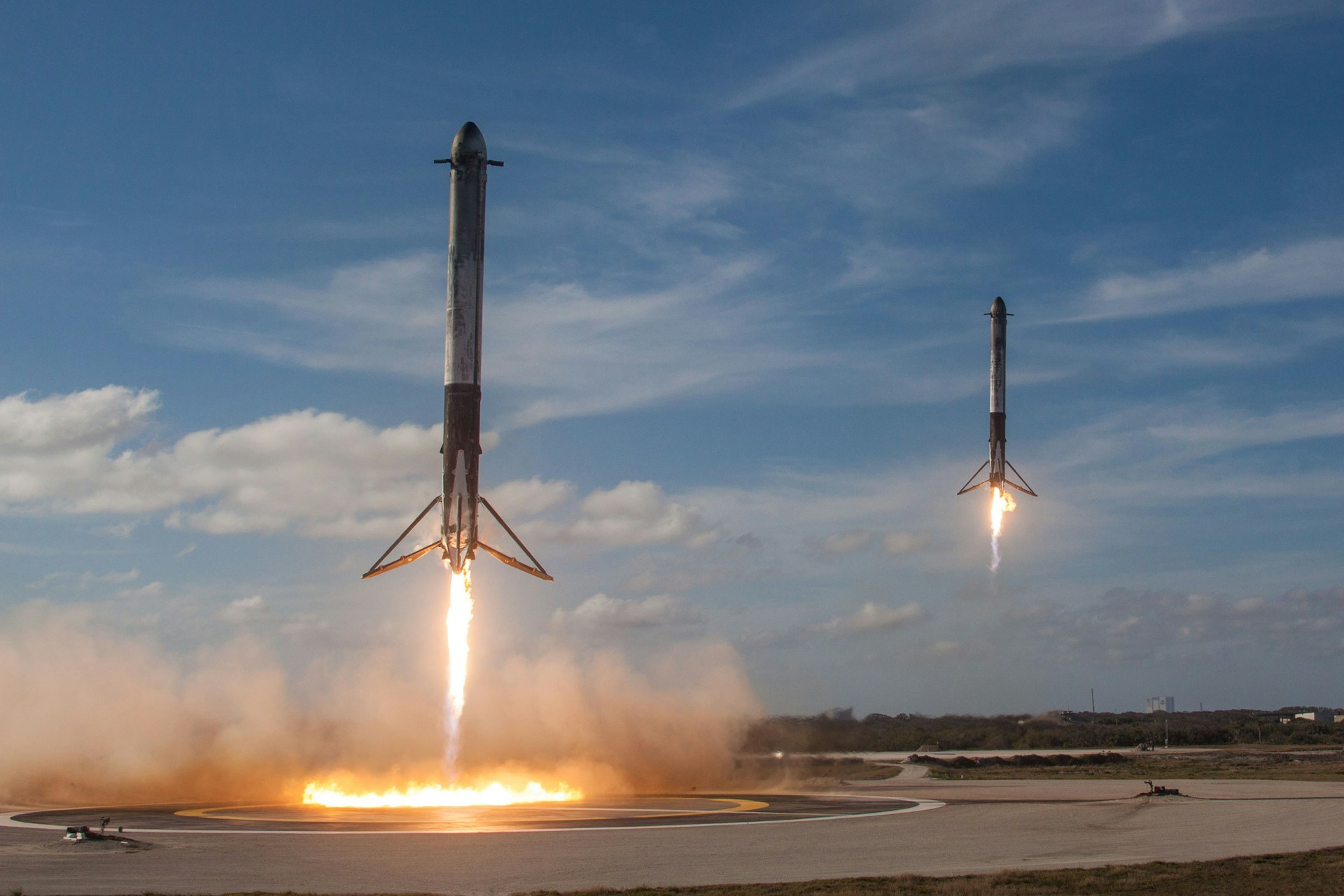
SpaceX didn’t transform spaceflight by having perfect ideas. They collapsed the time between ideas and reality. Failing fast, learning quickly, and iterating relentlessly.
AI creates the same dynamic for knowledge work, letting us move from intuition to articulation to revision in hours instead of weeks.
Engineers rely on wind tunnels to test aircraft designs before committing real materials and lives. AI does this for thinking.
Iteration itself isn’t new. What’s new is the scale for iteration that we now have at our fingertips. We can explore multiple paths, abandon weak directions quickly, and refine promising ones without the time, coordination, and risk that once kept ideas locked in our heads.
When iteration becomes inexpensive, we can take more intellectual risks and shift from trying to always be right to trying to always get better.
It’s ironic that as iteration is becoming cheaper and faster with AI tools, human judgment becomes more valuable. Someone still needs to know what’s worth developing, what deserves refinement, and when something is complete rather than exhausted.
The intelligence was never in the machine. AI simply gives us the capacity to develop ideas, test them against reality, and learn from the results at a scale and speed we’ve never had before.
Photo by SpaceX on Unsplash – when SpaceX proposed the idea of landing and reusing their rocket boosters after each launch, the idea seemed impossible. Now it’s happening about 3 times per week…and they’re just getting started.
We turn it over in our head. We ask a few more questions. We look for one more data point. We check with another person whose opinion we respect. We wait for the timing to feel right.
And still, we hesitate.
We tell ourselves we need more information. More time. More certainty.
Indecision usually grows from very human places. Fear of being wrong. Fear of being blamed. Fear of choosing a path that can’t be undone. Fear of embarrassment.
Add decision fatigue to the mix and postponement starts to feel reasonable.
Meanwhile, the cost of waiting accumulates quietly. Teams stall. Momentum fades. Confidence erodes. What began as a thoughtful pause turns into drift.
Most leadership decisions are made without perfect information. Progress rarely waits for certainty.
So, what is our hesitation really telling us?
Sometimes, it’s a clear no. A request pulls us away from what matters most. We don’t like what we see, but we’re not sure why. Maybe a partnership doesn’t sit right with our values. In these moments, extended thinking isn’t searching for clarity. It’s searching for a way to explain our decision.
Other times, we hesitate because the decision stretches us. It introduces uncertainty. It raises our visibility. It asks more of us than we feel ready to give. Growth decisions usually feel uncomfortable before they feel right.
At some point, the data stops improving and the waiting stops helping.
Start small. Take a step that tests the decision rather than locking it in. Forward motion reveals new information…something thinking alone can’t.
A decision that turns out to be wrong isn’t failure.
It’s feedback.
And feedback points us toward our next decision.
“Whenever you see a successful business, someone once made a courageous decision.” — Peter F. Drucker
Photo by ChatGPT’s new image generator, which is way better than prior versions of the tool.
Sure, we’ll have our story about how someone or something created the untenable situation that pushed us to quit.
We can talk about how continuing would have been a waste of our time and energy.
We can even describe how the emotional toll was so great that we needed to make the change before some type of permanent damage occurred.
All these reasons contain elements of truth. But, not the whole truth.
The whole truth lies in the balance of authority and responsibility.
Authority and responsibility live on opposite sides of life’s biggest equation. When we perceive that the authority we have matches up with the responsibility we’re carrying, we feel balanced. Satisfied.
But, get them out of whack, and our dissatisfaction begins to climb. Left unattended, the dissatisfaction we feel (subconsciously at first) will begin to overtake our patience. The cascade toward departure begins.
A world where we have ultimate authority and no responsibility would be nice. The “power” to do whatever we want without any ownership of the outcomes. Of course, this is a fantasy world.
Having authority over anything means having responsibility.
The key is the balance.
So, back to the quit or don’t quit decision:
If we stay the course, we’ll be forced to take ownership. We’ll need to assume authority and expend a ton of emotional energy. We can’t blame the “other.” When we decide not to quit, we’re deciding that it’s okay to be responsible for making the situation a success (however that gets defined in our heads).
Quitting is the easy way out of this “authority-responsibility” conundrum. It requires a lot less energy and eliminates our risk of failure. It doesn’t matter that the act of quitting may be an admission of failure in the first place. That’s just a sunk cost. The key is how much emotional energy we’ll have to expend in the future.
Why does any of this matter? We aren’t planning to quit any time soon. It’s not in our nature.
True, but what about everyone around you? What about the people who report to you? What about your teammates? What about your friends?
It turns out they’re working through this same authority-responsibility equation in their own lives.
And guess who has both the authority and responsibility to help them with balancing their equation.






 Grandpa Bob Encouraging Leadership
You must be logged in to post a comment.