Speedometers Steal Speed

“The cheetah is the fastest animal on earth.  It can reach speeds of up to 65 miles per hour as it pursues its prey.  Just look at its awesome speed, as it chases down that gazelle!” – Every Nature Program about Cheetahs

Do you think the cheetah has any idea how fast he’s going?

What about an eagle as it dives through the air to reach its prey?

Does the pelican think about his speed as he dives into the water to catch dinner?

Does the pole vaulter know how fast she’s running just before her jump?

What about the downhill mountain bike racer?

The answers to these questions are obvious.  For each to be effective, none are looking at a speedometer to determine their next move.  They aren’t referring to some magical heads-up-display to tell them how they’re doing.

In their critical moment, no measurements or brilliant strategic insights will impact the outcome.  They will succeed or fail based solely on how they perform, in the next moment.

The moment is all that matters.

Speedometers don’t make speed.  They provide external feedback and nothing else.

How often are you slowing down to check your speedometer, instead of focusing on your next critical moment?

Truth is, your moment is all that matters.  There’s plenty of time for feedback later when it’s not stealing your speed.

Microwaves and Slow Cookers

Ever burn popcorn in the microwave? If so, you know how quickly it can happen…

I recently heard someone make reference to their art not being microwaved.  Their art is the kind that comes from a slow-cooker.

An interesting concept.

The food (or drink) that we place in a microwave is already mostly prepared.  We aren’t interested in the process.  We just want it to be hot, and we’ve relied on someone else to handle the actual work of preparation.

With the slow cooker, it’s up to us.  We choose the ingredients.  We do the preparation.  Separately, the ingredients just sit there…waiting to be part of something.  But, blended properly, with the right amount of time and heat (energy), those separate ingredients (hopefully) combine to create something unique and tasty.

The microwave measures its cooking time in 30-second increments.  Hot dogs wrapped in a damp napkin take about a minute.  Popcorn takes three to four minutes.  Organic brown rice from Trader Joe’s takes four minutes.

Slow-cooking time is measured in hours.  Six hours is usually too short.  Eight to ten hours gets it right.

And, what about the accompaniments?  With a microwave cooking cycle, there’s only time to get your plate ready, find a clean fork, and maybe pour a glass of your favorite beverage.  Linear and task-focused.

Slow-cooking provides time for the cook to consider what goes best with the main dish.  What shall we have for dessert?  Would a loaf of fresh French bread go well with this stew?  The fullness of the dining experience is in play.

Neither method is perfect.

Ever burn popcorn in the microwave?  If so, you know how quickly it can happen.  Something so simple becomes a lump of smoking charcoal.

Slow-cooking disasters are equally possible.  Your reward for that ten-hour wait may be something that’s not even edible (at least for anyone who has taste buds).

Both methods have their place.  Both carry risk.

The question is how are you deciding which parts of your life to microwave, and which parts to slow-cook?

A tougher question might be:  Are you making the choice, or allowing someone else to make the choice for you?

Relax, You’re Doing Fine

Enjoy your time. Let someone else worry about all that other…

I saw this on a license plate frame.  When I first saw it, I didn’t give it much attention.  Then, as I sat at the red light, staring at those four simple words, I realized how freeing they are.

Relax, you’re doing fine.

You aren’t as far behind as you thought in the “race” of life.  In fact, life isn’t a race at all.  There’s no prize at the end for getting to the finish line faster than the other people.

You’re living in a great time.  Why is it so great?  Because it’s your time.  It doesn’t matter what else is happening.  The fact that things are actually happening, and you are here to see, participate, and have an impact is all that matters.  What impact?  That’s up to you.

What you do, how you do it, and the pace you choose are up to you.  I recommend you take advantage of your limited time on the planet.  Start moving, stay moving, always learn, and never stop teaching.  But, that’s just me.  It’s up to you and no one else.

Not as happy as you’d like to be?  Not as fulfilled as you’d like to be?  Worried that life is passing you by?  Worried that you aren’t as rich, pretty, strong, tall, smart, stylish, successful, or any other measure society places on us, as you’d like to be?

We all have the same seconds, minutes, and hours every day.  Our ability to define our time by the people we help, and the smiles we coax into the world are the only things we control.  The rest is going to happen with or without our involvement.

Enjoy your time.  Let someone else worry about all that other comparison stuff.

And, never forget:  Relax, you’re doing fine.

Failures have excuses…Successes have stories

The unfortunate truth is that some of us start making excuses long before the failure is complete…

unsplash_Samuel_Clara

The excuse:  “We were in trouble right from the start.  We started in the dark and two of our headlamps wouldn’t work.  It started raining as we approached the halfway mark.  The mud really slowed us down.  Then, Jeremy slipped and fell and muddied up all his gear.  We knew we couldn’t make it to the summit and back before sunset, so we decided to turn back.”

The story: “That hike was epic!  We started in the dark.  We had to share John’s headlamp because ours stopped working for some reason.  When the sun finally came up, it started raining.  Hard.  The mud made for slow going.  When Jeremy fell in that massive mud puddle, we just cracked up, wondering what else this hike would throw at us.  It took about ten minutes to get him cleaned up.  Once the storm passed, we had to double-time it to make it to the summit before dark.  We got there with plenty of time to spare.  It was awesome!”

The excuse:  “There was no way we could have made the goal.  The economy turned sour on us in the second quarter.  Some bozo from IT botched the server install, and it took nearly two months to get everything configured properly.  That didn’t leave enough time for the developers to deliver on schedule.  All in all, it’s amazing we’re still in business.”

The story:  “Can you believe it?  We were pulling all-nighters for weeks because some bozo from IT botched our server install.  But, we made the release date.  Customers loved it, and we hit our sales target.  Nobody thought that could happen in this economy.”

Have you ever noticed that failures have excuses, and successes have stories?

The unfortunate truth is that some of us start making excuses long before the failure is complete.  We run into a hurdle, lose our belief in the goal, or simply lose hope that we can achieve success.

So, we get busy preparing excuses.

Our failure must be justified.  First to ourselves, and then to everyone else.  It’s even better if we can find allies to help us create better excuses.  Excuse making often replaces the work that just might deliver success.

Are successes perfect?  Far from it.

Success rarely comes without adversity.  Success usually requires new tactics, mid-course corrections, and tons of hard work.  Overcoming the odds, leaping over the hurdles, finding creative solutions…these give power to the stories we tell about our success.

Imagine a world where adversity strengthens our success stories, rather than bolstering the excuses we make for our failures.

“If it is important to you, you will find a way.  If not, you will find an excuse.”  -Author Unknown

p/c: Unsplash.com, Samuel Clara

The Obstacles You Think You Know…Don’t Matter

Polynomials suck, but they aren’t the obstacle that matters most…

Polynomial Function

I used to hear one question a lot when I was a kid.

Whether an adult was asking me, or another kid my age, it was always the same:

What are you going to be when you grow up?

In second grade, I knew I wanted to be a doctor.  My friend wanted to be a fireman.  Another friend wanted to be a professional skateboarder.

By high school, I was still thinking doctor, or maybe veterinarian.  One of my friends planned to be an engineer, another wanted to teach, and one planned to go to the Air Force Academy and become a fighter pilot (he just retired from the Air Force a few years ago).

In my senior year in high school I ran into Algebra 2.  More specifically, factoring polynomials.  FOIL method.  Up to that point, math had made sense.  Plug the numbers into the formulas, and get your answer.  X equals 11, Y equals 9.  Pythagorean Theorem?  Piece of cake.  Word problems?  Easy.

But, polynomials made no sense.  The magic of the FOIL method didn’t help.  First, Outside, Inside, Last?  Solving for multiple variables that cancel each other out in some mysterious way?  Arriving at an answer that looks as cryptic as the original question?  What does a polynomial look like if you draw one?  When will we ever use this in real life?  I’d say it was all Greek to me, but I didn’t know Greek either, or Latin.

I hadn’t even reached Calculus (the math all the other brainiacs were taking in their senior year), and I’d hit a wall.

Polynomial Example

I could see the handwriting on the chalkboard (teachers used to write on them before whiteboards were invented).  To become a doctor would require a science degree of some kind.  That science degree would require a ton of math well beyond polynomials…maybe even Calculus.  What comes after Calculus?!  And, what about Latin?  Doctors all seemed to use Latin.  How would I learn that?  It wasn’t even offered at my high school.  And, what about getting into medical school?  Did I have eight years to give up?  How would I pay for all of it?  This was going to be hard!

We each have a strategic thinking instinct.  The ability to prioritize, make deductions, create connections, and map out a direction.  Or, multiple directions.

Unfortunately, more often than not, we either ignore our strategic thinking capability, or we use it to map out why something is impossible.  We visualize all the obstacles while ignoring the path around, over, or through them.  We neatly stack all the obstacles into an impenetrable wall, rather than a series of hurdles to be taken one-at-a-time.

My doctor plans went down in flames…but, I was the one pointing the metaphorical plane into the ground.

Could I have found a way to understand polynomials?  Yes.  Could I have dealt with Calculus?  Yes.  What about Latin?  Yes.  What about getting into medical school?  Yes.  Did I have what it took to become a doctor?  Probably (we will never know).

Did I allow myself to realize any of this at the time?  No.  I was too busy jumping toward another goal that had fewer obstacles, or so I thought.  One that didn’t require Calculus.  One that I could get my head around, and see more clearly.

I now understand something I didn’t back when I was a high school senior.  I’m not sure I understood it by the time I was a college senior either.  Our biggest obstacle, the one that matters more than any of the obstacles we can see, the obstacle that trumps all others, is staring back at us in the mirror.  Find your way around, over, or through yourself, and you are well on your way to overcoming almost any other obstacle in your path…maybe even polynomials.

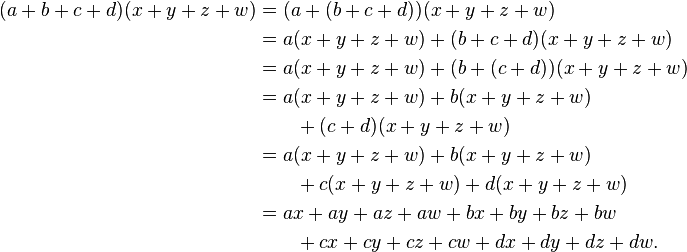
Want the answer to the crazy equation?  This might (or might not) be it


Photo Credits:  Here and Here


Two Standard Deviations

One hundred people who are working separately will never lift a thousand-pound boulder…

The following is an excerpt from my new book, Leadership Starts (and Ends) in Your Head…the rest is detail.

Chapter 4.  Maintain Two Standard Deviations

I had lots of statistics classes in college. We learned a ton of formulas for measuring things like economic order quantity, measuring cycle times, and the differences between mean, median, mode, and midrange. We learned how to calculate the probability of certain outcomes and how various outcomes relate, or don’t relate, to each other. These are all great, and each has its place.

One of my operations management classes (which came after finishing the statistics prerequisites) showed us a nice set of measurements and formulas for determining if something is “in control” or not. Funny thing is, I don’t remember the actual formulas, but I definitely remember the lessons.

If you take a series of measurements of something like cycle time (the time it takes to produce a widget, for example), you can plot these measurements on a graph. By calculating the average (which might actually be the mean, midrange, or mode—I can’t remember), you can then derive the standard deviation. If your cycle-time measurements in this example are all within two standard deviations of the average, then your system is, by definition, “in control.”

I’ve probably botched it in terms of the statistics, and that isn’t the important thing here. The key lesson is that everything you do as a manager should be within two standard deviations. The standard-deviation measurement is a metaphor for your behavior, your reactions to good and bad news, your response to competitive threats, and the way you conduct your life in general. By maintaining two standard deviations, people around you can rely upon that aspect of your character. They need to know, and rely upon knowing, that you will be measured in your response, your feedback, and your approach to business issues.

This means that you won’t be the type of manager who storms around the office, yelling at people when bad news arrives. You’re also not the person who runs around whooping it up and hugging everyone when good news comes your way. When a competitor makes a move that potentially damages your organization, you will exercise restraint in your emotional response.

Does this mean you become a robot? I sometimes say that I am a robot in a work setting, but I am joking when I say it. As a manager, you are by no means a robot. You can be happy, sad, angry, afraid, sick, and tired, or any other range of emotions. But you are the one in control of each of these emotions.

The two-standard-deviations rule provides a lot of leeway in your behavior, both positive and negative. You will become a more subtle and thoughtful operator if you keep two standard deviations in mind as you move through your day and your career.

Those who work with you, report to you, and rely on you will appreciate this two-standard-deviations philosophy. Volatility in a work setting stifles creativity. Who will take the risk of being creative when his or her manager is a powder keg, waiting to blow up at the first sign of a mistake? Creativity breeds innovation but also carries the risk of failure. A failure that no employee will risk if his or her manager’s response to failure is to blow up and start yelling.

Such an environment also stops the flow of honest and accurate information. Employees will adjust the flow of information to a volatile manager in an attempt to yield a positive response. The content of the information becomes secondary. The delivery becomes the primary concern for the employee. This leads to information being skewed, manipulated, or shielded from the unreasonable manager. Without an accurate information flow, decisions and strategies will not be as effective, and may be wrong altogether.

Employees take on the style and demeanor of their managers. Not just their direct managers, but all the way up the chain of management to the top of their organizations. While this adoption isn’t 100 percent, obviously, the adoption is quite evident.

A volatile or out-of-control manager will have an employee base that is similarly volatile. An environment that lacks trust will develop. Trust is the bedrock of any team. Without an environment of trust, the multiplying power of the strong team is eliminated. Without trust, working across organizational boundaries is nearly impossible. The organization becomes a group of disconnected islands, often lobbing shells at each other, instead of focusing on delivering results for the organization.

One hundred people who are working separately will never lift a thousand-pound boulder, but one hundred people working together and trusting each other will be able to lift it. Maintaining two standard deviations in your approach to management will lead to honest and accurate flows of information, promote a trusting environment, and leverage the power of a strong team of employees. Harnessing this power is the key to management success and the success of your organization.

Book_Order_Snap

© 2014 Bob Dailey.  All rights reserved.


What’s Wrong with Murphy’s Law

In 1949, Captain Murphy gave us his “law:”

If anything can go wrong, it will go wrong

Since then, a number of variants and other “laws” have emerged:

A dropped piece of bread will always land butter side down.

The line next to you will move more quickly than the one you’re in.

If all you have is a hammer, everything looks like a nail.

Success always occurs in private, and failure in full public view.

All things being equal, you lose.

As soon as you mention something…if it’s good, it stops; if it’s bad, it happens.

Anything is possible if you don’t know what you’re talking about.

A shortcut is the longest distance between two points.

There’s no time like the present to procrastinate.

What’s wrong with Murphy’s Law, and these other variants? On the surface, nothing. They each have kernels of truth and wisdom.

But, they ignore other possibilities:

Everything that can work, will work. Consider how many things worked as they were supposed to today. You probably don’t remember them, since they worked so well.

How often do you really drop a piece of bread?

Sure, your line may move slower today. That won’t be the case every time. If we consider our neighbor’s perspective, they’re enjoying the fact that their line is moving faster today than your line. Isn’t it nice to see someone have a small victory?

We all have more than a hammer. Remembering to look in our toolbox from time to time and dust off our other tools is the key to success.

Our successes and failures are always personal first.  The people who are willing to share in both are what matters.  The size of the audience doesn’t.

All things are rarely equal.  The level of equality at the start has little to do with whether you win or lose.

We get the things we visualize the most.  We have more control over what happens than we realize.

Some of the best discoveries came from people asking the dumb question, or looking at something with “untrained” eyes. The most potent resource in a company is the new employee who “doesn’t know anything.”

Unexplored shortcuts take you nowhere. Some shortcuts lead to entirely new destinations that you never thought possible.

Now is the perfect time to begin, or begin again.

The only thing we control in life is our attitude. Our attitude has more impact on our lives than any of these “laws.”

What would you do if you weren’t afraid?

Fear can motivate. Fear can paralyze. It can save your life. Unfortunately, it can also control your life.

“…let me assert my firm belief that the only thing we have to fear is…fear itself — nameless, unreasoning, unjustified terror which paralyzes needed efforts to convert retreat into advance.” –Franklin Delano Roosevelt (first inauguration address, 1933)

Fear can motivate. Fear can paralyze. It can save your life. Unfortunately, it can also control your life.

Here’s a list of fears to consider:

  • Failure
  • Embarrassment
  • Public Speaking
  • Death (I’m pretty sure a lot of people fear the first three more than death)
  • Not Being Accepted
  • Commitment
  • Flying
  • Disappointment
  • Success
  • Fame
  • Responsibility
  • the Unknown
  • the Dark
  • New Experiences
  • Being Blamed
  • Heights
  • Snakes
  • Spiders
  • Sharks
  • Geese
  • Open Spaces
  • Anywhere but Home
  • Confined Spaces

I know people who have each of these fears. I have some of them, and I’m sure you have some as well.

Fear is generated in our Lizard Brain . That primitive part of our brain that keeps us alive while we’re thinking about other stuff. Our Lizard Brain means well, and only has our best interest in mind. It’s the center of our survival instinct. It will do anything it can to help us avoid the things we fear. Unfortunately, it’s part of our brain that we barely control.

One way to gain control of our fear is to discover, and admit, that it exists. That, and admitting our fears impact the things we choose to do (or not do). It may help to discuss your fears with someone you trust, or to contemplate them on your own. Either way, understanding your fears is the first step toward controlling them.

Consider a ten-year-old, standing in right field. He knows that he’s in that position because he’s the worst player on the team. Fly balls rarely make it to right field in little league games, so he’s safe out there. What happens when the ball flies into right field? What’s the first thing on that ten-year-old’s mind? Probably something like, “Please don’t let me screw this up and drop the ball.” His first thought comes from a place of fear. Did he catch the ball? Did he make the right play once he had the ball? Maybe, but doubtful.

Imagine the same player who knows he’s in right field because he’s the only player who can make the throw all the way to third base. He has a gun for an arm, and he may be the best player on the team. What’s he thinking when the ball flies into right field? “I can’t wait to get that ball so I can make the play.   We are going to stop this rally and win the game!” Fear isn’t part of the equation. Did he catch the ball? Did he make the right play? Probably.

Fear creates completely different experiences for these ten-year-olds. The secret is that this applies at all ages, in nearly everything we do.

How many of your goals are “off limits” because you’re afraid? How many potential goals are eliminated by fear (your Lizard Brain), before you even know about them?

How often is fear your first response? How often do you talk yourself out of something that’s outside your comfort zone? It’s easy to do…avoiding fear is a powerful motivation.

Start small. Choose one thing that scares you and go after it. Embrace the negative energy of fear and turn retreat into advance. Each time you do this, your list of fears will shrink.

What would you do if you weren’t afraid?

Do it today!


Which wolf will win?

“Which wolf will win?” The boy asked his Grandfather.

wolf_photo

An old Navajo and his grandson went walking in the woods. The Navajo spoke to his grandson, teaching him of the plants to eat and the plants to avoid, teaching him how to read the story written in the dusty earth by the paw tracks of animals. When the old man saw that two wolves had traveled across their path, he knelt at the tracks and turned to his grandson to teach him of his spirit.

“Grandson, there are two wolves in your heart fighting for your attention. One wolf is snarling with rage, the other is howling in harmony with the moon and all living things. As you grow up the fight will grow stronger between these two wolves.”

“Which wolf will win?” The boy asked his Grandfather.

“The one you feed.”

I’ve seen this story a few times in my life and came across it again today. It’s a great reminder that each of us control the biggest decisions in life:

Help or Hinder

Build or Destroy

Admire or Envy

Harmonize or Rage

Encourage or Discourage

Explore or Avoid

Listen or Ignore

Care or Neglect

Seek or Hide

Love or Hate

Which wolf are you feeding?


Photo credit: http://www.medicineofthewolf.com