
Every generation believes it’s living through extraordinary change.
And in a way, every generation is right.
Economic strain, political division, conflict, and rapid technological change appear in different forms, but the underlying tension remains the same.
Ray Dalio describes what he calls the Big Cycle. The rise and decline of nations shaped by debt, money, internal division, and shifting global power. He would say we’re late in that cycle, marked by high debt, widening wealth gaps, and growing competition among world powers.
Harry Dent approaches history through demographics, studying population growth, and generational spending patterns. From his view, today’s economic strain reflects aging populations, slower growth, and the unwinding of decades of expansion.
Different perspectives. Similar conclusions.
Neither claim to predict the future with precision. Debt cycles, demographic waves, generational moods, technological revolutions, and geopolitical tensions move simultaneously. Understanding these forces and their patterns helps us recognize the currents. How we live within them is still our responsibility.
I remember the OPEC oil embargo of the 1970s and gas lines stretching for blocks. I was in elementary school as interest rates climbed above twenty percent. I watched the Reagan Revolution reshape economic thinking and bring supply-side theory into the mainstream.
I lived through the Iranian Revolution in 1979, the taking of US hostages, and the subsequent spread of militant extremism across parts of the Muslim world over the next four decades. I watched an airplane strike the World Trade Center in real time.
I grew up under the shadow of the Cold War, when nuclear conflict felt possible at any moment. I saw the optimism that followed the fall of the Soviet Union and then watched China open to the world after decades of isolation. I remember the theories about how expanding capitalism in China might soften their communist approach to governing.
I witnessed the savings and loan collapse, multiple stock market crashes, the Great Recession, and a global pandemic that disrupted economies, institutions, and families alike. I watched how strongly governments grasp control when certainty disappears.
I saw personal computers and then the internet transform daily life, followed by the digital economy, smartphones, social media, and now artificial intelligence reshaping work itself.
I can think of countless other historical events that have happened in the span of one life. Each moment felt unprecedented. Each reshaped the world, sometimes positively, sometimes negatively.
And yet, life continued.
When history is written, it focuses almost entirely on macro events. The narratives are dominated by wars, collapses, elections, revolutions, and markets. What rarely appears are the countless individual lives unfolding quietly alongside these events.
History does not record families eating dinner together during times of high inflation. Nor does it record weddings that took place during recessions or children born during wars. It overlooks the laughter that survived fear and the quiet courage required to just keep going.
But these individual experiences of life form the definition of humanity.
For every name preserved in textbooks, millions of people were doing what people have always done. They worked. They loved. They raised children. They cared for neighbors. They hoped tomorrow might be a little better than today.
Macro forces shape conditions. They influence opportunity and may narrow our options. They may, unfortunately, end our life or the lives of someone we love. But they don’t define a life.
Inside every macro upheaval exists our “micro” life. The life lived within the headlines rather than dictated by them.
The world may determine interest rates. It does not decide whether we act with kindness. It may influence careers, but it does not control our integrity. It may introduce hardship, but it does not determine how we respond.
Our response is where freedom still lives.
Viktor Frankl understood this more clearly than almost anyone. After enduring unimaginable suffering in Nazi concentration camps, he observed that nearly all external freedoms can be taken from a person. One freedom remains intact. The ability to choose one’s attitude and response to circumstances.
Events may constrain us. They may demand adaptation. They will never own our human spirit.
In my office, I have a wall filled with photographs. Family gatherings. Wedding days. Trips taken together. Beautiful places. Ordinary moments that became lasting memories.
When I step back and look at this wall, patterns appear.
We worked hard.
We made time for one another.
We traveled together.
We celebrated milestones.
We were living out our hopes and dreams, and we still are.
My wall has no charts or financial forecasts. No macro trend lines. But it tells the story of what matters most.
None of these moments waited for ideal conditions. They unfolded alongside inflation, recessions, political change, and uncertainty. The photographs capture lives shaped by ordinary but important choices made amid extraordinary times.
As we traveled, we met families across many countries. Different customs. Different faiths. Different governments. Yet everywhere we went, the hopes sounded familiar. Parents wanting the best for their children. Families striving for opportunity. Communities longing to contribute and belong.
The differences emphasized by the world shrink quickly when people speak about those they love.
Human aspirations remain remarkably consistent.
History changes its outward form. The heart changes very little.
You will live through upheavals of your own. Some will be frightening. Some will be unfair. Some will test your trust in institutions or leaders.
Remember this.
You are not responsible for controlling history. You are responsible for how you live inside it.
You will not choose the history that surrounds you. You will choose the values you carry through it.
You choose how you treat people.
You choose how to adapt.
You choose how you show up for your family.
You choose whether uncertainty hardens you or deepens your compassion.
You choose whether fear leads or faith steadies you.
These are your choices. Always.
Humanity endures because ordinary people continue to build their lives amid uncertainty. They love, they work, they fail, they adapt, and they hope, even while larger forces move around them.
While empires rise and fall, families persist.
That is the quiet march you belong to. Rarely captured by historians yet carried forward by generations.
History happens around you.
Life happens within you.
Live your life well. Love deeply. Work honestly. Stay flexible. Hold your faith. Care for one another.
If you do that, you will live a meaningful life regardless of when you were born.
As I was finishing this post, I found these quotes from George Bernard Shaw. The words come from two different writings of his from the early 1900’s. Together they express something important about what it means to live well within whatever history hands us.
“This is the true joy in life, the being used for a purpose recognized by yourself as a mighty one; the being a force of Nature instead of a feverish, selfish little clod of ailments and grievances complaining that the world will not devote itself to making you happy. “
“I am of the opinion that my life belongs to the whole community, and as long as I live it is my privilege to do for it whatsoever I can. I want to be thoroughly used up when I die, for the harder I work the more I live. I rejoice in life for its own sake. Life is no ‘brief candle’ for me. It is a sort of splendid torch, which I have got hold of for the moment; and I want to make it burn as brightly as possible before handing it on to future generations.”
h/t – Atkins Bookshelf
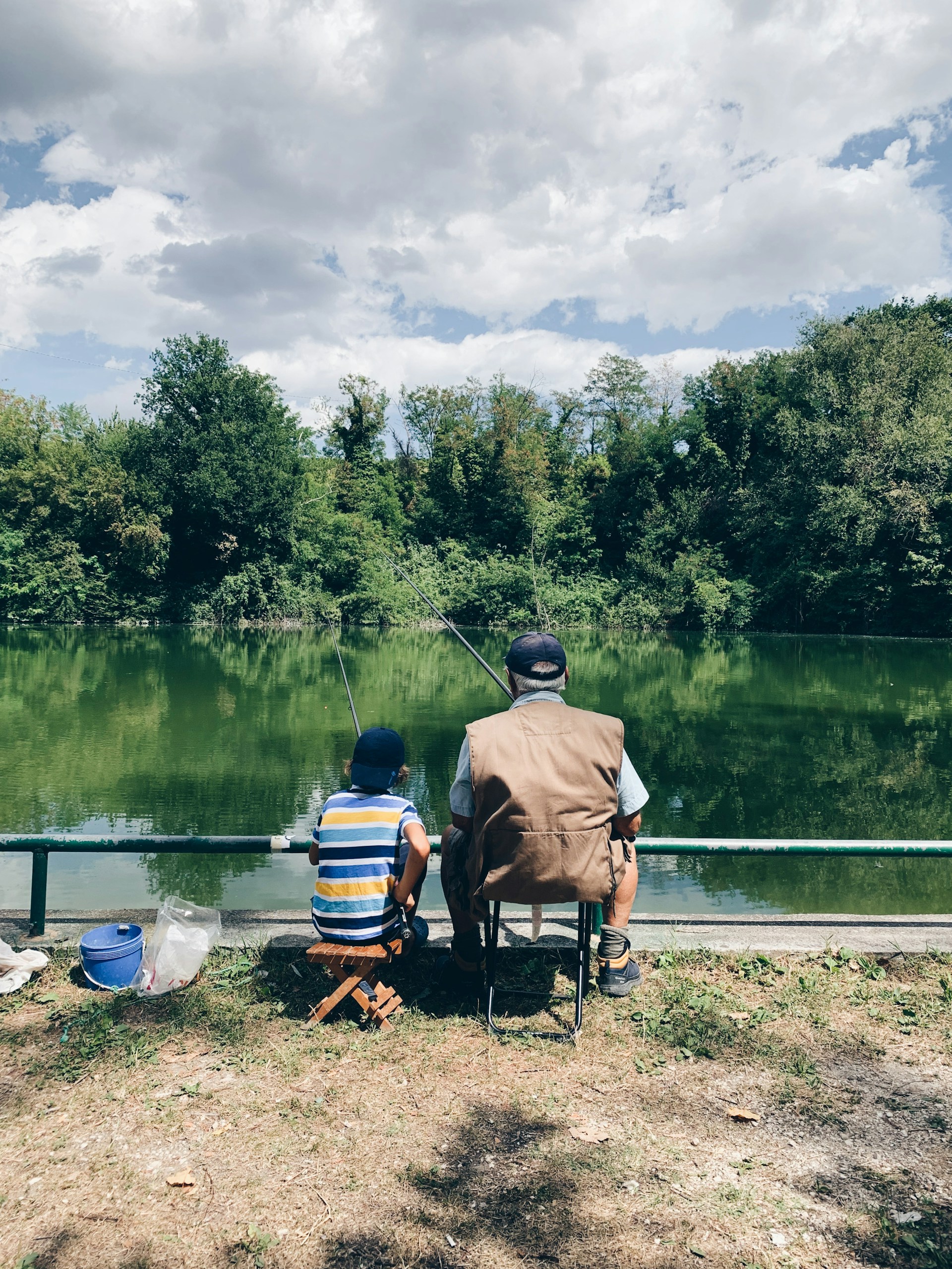
Photo by Federico Giampieri on Unsplash
If this post resonated with you, feel free to share it with someone who might appreciate it as well.
You can also listen to the Grandpa Bob Encouraging Leadership Podcast, where I share short reflections on leadership, life, and learning.
Thanks for reading!

 Grandpa Bob Encouraging Leadership
You must be logged in to post a comment.