When Leadership Becomes the Single Point of Failure

Some leaders wear the line outside their door like a badge of honor. People waiting with questions, approvals, decisions.

It feels like proof of trust. Proof of competence. Proof of necessity. If the team can’t move forward without your judgment, surely that means you are at the center of the work.

In many ways, you are.

But there’s a second truth hidden inside that scene. When every decision depends on you, you become the one point your organization can’t outrun.

The line reveals the fragility that forms when decisions stay in one place instead of growing across the organization.

At a certain level of responsibility, leadership effectiveness isn’t measured by the number of good decisions you make. It’s measured by whether the organization can make good decisions without you having to approve each one.

Leadership at this level is staying at the wheel while helping others learn to steer.

High-pressure operators know instinctively that a bad decision leaves a mark. A slow decision leaves a gap. Most organizations struggle more with waiting than with trying. That line at your door, day after day, is the quiet proof. The whole operation can only move as fast as the person at the center of its decisions.

There’s a time in every leader’s career when the instinct to take control is the right one. When the team is inexperienced, when stakes are high, when the risk is real and present, you become the center of gravity because someone has to be.

But later, if the business grows and the structure doesn’t change, this habit of control becomes limiting. What protected the organization early can start to quietly cap its potential, because your bandwidth is finite.

There’s a moment when the senior leader’s job shifts from “Do we have the right answer today?”to “Will we have the right judgment tomorrow?”

That shift feels slow. It feels inefficient. It feels like a luxury.

It isn’t.

It’s a protective move.

Teaching someone how to make a decision can feel like taking the long way around the problem. You could make the call in 30 seconds. Walking someone through the context and reasoning might take half an hour.

It’s natural to skip teaching and just decide. It feels faster. And today, it is.

But tomorrow it isn’t. Because they come back with the next decision. And the next. And the line gets longer.

Here’s a simple practice that changes the arc of your relationship without exposing the business to risk. When someone comes to you with a decision, don’t give the answer first. Ask them, “What would you do?”

You’re not surrendering the decision. You’re building their capacity to make it. You’re seeing how they think. You’re catching errors before they matter. You’re adding the perspective that builds judgment.

It is controlled delegation, not abandonment. Nothing is handed off recklessly.

When someone brings an answer that is close to right, you supply the context they don’t have, and then you say something specific and concrete:

“Next time this situation comes up, you can make that decision.”

Not in general. Not theoretically. For this exact decision, with a shared understanding of why it works.

Over time, the pattern shifts. Fewer decisions reach you. The ones that do are larger, higher consequence, more strategic. The team develops in the shadow of your reasoning, not separate from it. And the bench of judgment widens beneath you.

This is what protects the business from single-threaded leadership. Not a gesture toward empowerment, but a strategy of risk reduction.

Leaders don’t become less important by creating decision-makers. They become less fragile.

The organization becomes capable of sound judgment when you’re not there. The most durable form of control a leader creates.

If the business only works at full strength when you are present, you haven’t reduced the risk. You’ve concentrated it.

At the top levels of leadership, the question is rarely, “Can you decide?”Of course you can.

The real question is, “Can others decide well when you aren’t in the room?”

That’s the difference between being the operator and building the operation.

It begins quietly. A question reflected back. A recommendation explored. A context added. A decision shared. A leader shaped, one situation at a time.

The line at your door gets shorter and your organization gains strength. Not because you step away from accountability, but because you’ve built accountability into the people who stand in that line.

Leadership Homework

One question to sit with, without rationalizing it away:

If you disappeared for 30 days, what decisions would the organization be unable to make without you?

Not decisions they might make differently, different is acceptable. Decisions they could not make.

That answer will show you where the real bottleneck lives.

And where the next generation of leadership needs your attention.

Photo by Mal Collins on Unsplash – it’s time to help your team take flight.

100 Lessons for Playing (and Winning) the Long Game of Leadership

Ideas and wisdom often arrive with familiar roots.

My views on leadership come from my lived experiences and lessons I’ve learned from great builders and thinkers like Andrew Carnegie, Peter Drucker, Tom Peters, Ken Blanchard, Marshall Goldsmith, Zig Ziglar, Stephen Covey, Jack Welch, Seth Godin, Jeff Bezos, Gary Vaynerchuk, Tim Ferriss, Jocko Willink, James Clear, and countless others.

I’ve also worked with amazing managers and mentors over many decades, including a few who taught me what not to do.

Since I find myself often returning to these lessons, I thought it would be useful to write them down in a list for easier reference.

Leadership Foundations

1. Leadership begins in your mind long before it shows up in your actions.

2. Self-awareness is a leader’s first and most enduring responsibility. Know how your actions land, then lead on purpose.

3. Character outweighs credentials over the long haul.

4. Integrity compounds like interest. The longer you hold on to it, the more it grows.

5. Values are the compass that keep you on course when circumstances shift.

6. Humility is the strength to put others first.

7. Influence comes from trust, not job descriptions.

Vision and Direction

8. A leader’s vision must be big enough to inspire, but clear enough to act on today.

9. Clarity reduces fear. Ambiguity fuels it.

10. Momentum builds when people see the destination and believe they can reach it.

11. Vision is not just what you see. It’s what you help others see.

12. The clearer you are about the goal, the less room there is for fear to grow.

13. Purpose is the map. Storms are just temporary detours.

14. Belief in the destination turns small steps into powerful strides.

15. Every action should feel like part of the same bigger story.

16. Sometimes waiting is the boldest move you can make. Strategic patience is powerful (and extremely difficult).

People and Relationships

17. The right people in the right roles multiply results beyond what you can imagine.

18. A culture of respect will outlast a culture of urgency.

19. Listen like the person speaking might hand you the missing puzzle piece.

20. Pass the applause to others but keep the accountability close to your chest.

21. Trust is invisible, but when it’s gone, everything feels heavier.

22. Relationships need regular deposits of attention, not just withdrawals of effort.

23. Helping someone else win creates a tailwind for your own success.

Decision-Making

24. Good decisions blend facts, values, and the courage to act.

25. The first idea is often just the trailhead. Walk farther.

26. Energy without wisdom burns out. Wisdom without energy gathers dust.

27. Choose the option you can defend in the daylight and live with in the dark.

28. A quick, small decision can open doors a perfect plan never reaches.

29. It’s easier to fix a wrong turn early than to build a new road later.

30. Never cash in tomorrow’s credibility for today’s convenience.

Resilience and Adaptability

31. A setback is a classroom, not a graveyard.

32. Flexibility is a skill, not a personality trait. Practice it.

33. Change is the proving ground where talk becomes action. Priorities sharpen, assumptions get tested, and leadership shows up in decisions, owners, and dates. If nothing changes (no decision, no owner, no date) it was only talk.

34. Adapt your tactics, but never your core.

35. The best views are earned with effort you once thought impossible.

36. Challenges test your limits so you can discover you’re stronger than you ever imagined.

37. Sticking with it usually turns “almost” into “done.”

Growth and Learning

38. The best questions are the ones you don’t yet know how to answer.

39. The moment you stop learning, you stop leading. Sometimes before you notice.

40. Pride blocks the front door to growth. Curiosity leaves it wide open.

41. Ask for feedback before circumstances force it on you.

42. Teach your knowledge, always remembering that your actions teach your values.

43. Every conversation nudges someone closer to, or further from, their best self.

44. Failure carries lessons that success hides. Corollary: High water covers a lot of stumps.

Impact and Legacy

45. Success without significance is empty.

46. The influence you have on people’s lives will outlast your achievements.

47. Your legacy is written in the lives you touch, not in the titles you hold.

48. Leadership is something you borrow from the future. It must be returned in good condition.

49. The most meaningful titles are the ones people give you, not the ones on your nameplate.

50. Think in decades when deciding what to plant today.

51. Your success is multiplied when others stand taller because of you.

52. The best proof of leadership is when growth continues without your hand on the wheel.

53. Leave every place and every person better than they were when you arrived.

Communication & Culture

54. Say the quiet part kindly and clearly. Clarity without kindness bruises. Kindness without clarity confuses.

55. Stories travel farther (and faster) than memos. Stories move people. Memos inform them. Stories turn intention into action.

56. Consistency in small signals (tone, timing, follow-through) builds culture faster than slogans.

57. Meetings should create movement. Reserve live time for decisions and collaboration. End with owners and dates. If it’s just a podcast, send an email. If only two people need to talk, make it a call and give everyone else their time back.

58. Celebrate progress out loud so people know what “right” looks like.

59. Honesty scales when leaders go first. Name the hard thing and show how to address it.

60. Culture forms around what you tolerate as much as what you teach.

Execution & Accountability

61. Strategy stalls without a calendar. Put names and dates on intentions.

62. Start now. Ship one useful thing today. Ride the wave of momentum that follows.

63. Priorities aren’t what you say first. They’re what you do first.

64. When everything is urgent, nothing is important. Choose the one thing that unlocks the next three.

65. Inspect what you expect. Review, refine, and recommit in frequent loops.

66. Own the miss publicly and fix it quickly. Speed heals trust.

67. Scoreboards matter. People work smarter when progress (or lack thereof) is visible.

Faith, Purpose & Centering

68. Quiet time isn’t empty time. It’s where courage and wisdom refuel.

69. Purpose steadies the hands when the work gets heavy.

70. Gratitude turns pressure into perspective.

71. Servant leadership begins by asking, “Who needs strength from me today?”

72. Hope is a discipline. Practice it especially when results lag.

Leading Through Change & Uncertainty

73. Name the uncertainty. People handle the unknown better when it has boundaries.

74. Trade predictions for scenarios. Prepare for several futures, not just your favorite one.

75. Replan without blame. The map changes when the terrain does.

76. Communicate more than feels necessary. The vacuum of silence fills quickly with speculation.

77. Keep experiments small and reversible, so learning is fast and affordable.

78. Endurance is contagious. Your calm can be the team’s shelter in a hard storm.

Coaching & Talent Development

79. Grow people on purpose. Make development a standing agenda item.

80. Coach with questions that build judgment and ownership.

81. When you delegate the result, delegate the authority to achieve it. Authority and responsibility should be in balance.

82. Set intent and boundaries. Agree on check-ins. Then step back so the team can step up.

83. Size stretch work to the person’s readiness. Provide the right challenge, real help, and visible sponsorship. It’s okay if they reach the result by a different route than yours.

84. Build a bench before you need one. Succession begins on day one.

Supportive Organizational Behavior

85. Make it safe to disagree. Invite the view that challenges yours.

86. Credit ideas to their source. Recognition fuels contribution.

87. Write agendas as outcomes, not topics.

Systems Thinking & Process

88. Correct the mistake and improve the system that allowed it.

89. Turn recurring work into checklists and rhythms so excellence is repeatable. Then automate it.

90. Map the flow of work end to end. Prune any step that adds no value. Unblock the rest.

91. Measure what matters. Review it at a pace that improves the work.

Stakeholders & Customer Focus

92. Start with the customer and work back to today’s priorities.

93. Define success in customer outcomes, then align processes, metrics, and rewards.

94. Close the loop by telling people what changed and why.

Conflict & Courageous Conversations

95. Address tension early while the knot is small.

96. Separate the person from the problem. Aim at the issue, not the identity.

97. Put the real issue (the skunk) on the table. Agree on facts before you debate fixes.

Energy & Well-Being

98. Protect time for deep work and recovery so decisions are sharp.

99. Model healthy boundaries. Your example sets the team’s norms.

100. Choose a sustainable pace over heroic sprints. Consistency wins the long game.

Leadership is a skill to be learned and practiced over a lifetime. It grows through steady reflection, small improvements, course corrections, and new discoveries. These reminders pull us back to what matters when life and work get noisy.

Whether you lead a company, a classroom, a project, or a family, your influence reaches far beyond the moment.

The truest measure of leadership is the people we serve and the leaders they become.

Photo by Marcus Woodbridge on Unsplash – I love the idea of a lighthouse showing the way, standing firm and steady especially when the waves are their scariest.

Let the Ponies Run

Imagine owning a well-trained thoroughbred racehorse. Born and bred for speed, this horse thrives on competition and lives to run fast.

Every day, six days a week, this horse trains relentlessly. It has one purpose and one passion: running and winning races. Nothing else matters.

But on race day, you grow cautious. You worry, despite all the training, despite the horse’s proven skill, that it might not pace itself properly. So, you ask the jockey to override its instinct to run fast. You instruct the jockey to hold back the reins from the start.

As the race unfolds, your horse struggles against this restraint. Instead of feeling exhilarated, it grows frustrated. Its natural drive diminishes with each stride as the jockey pulls back, second-guessing the horse’s desire to run.

Finally, as the last turn approaches, the jockey releases the reins and shouts encouragement. It’s time to unleash all that pent-up speed.

But the horse no longer cares. He’s not even paying attention. He lost his competitive edge about a half mile ago as the jockey kept holding him back. Sure, the horse goes through the motions, picking up just enough speed to appear engaged, to show respect for the jockey’s urging. But the spark is gone.

This is a very fast horse, so even his partial effort makes for a close finish. But unfortunately, the horse doesn’t win the race. One he could have easily won if he hadn’t been held back from the start.

If you’re a manager, how often do you treat your employees like this horse? How often do you hold them back from doing the very thing you hired them to do? Do you second-guess their instincts, micromanage their decisions, and restrain their natural abilities out of fear, caution, or to protect your ego?

Consider how demoralizing it is for your team when you take away their autonomy. The freedom to run their own race. When employees lose the ability to make meaningful decisions, their enthusiasm, creativity, and ownership suffer. These are the very qualities that fuel success, and when suppressed, diminish the team’s potential and their performance.

Take a look around your organization. Are your people fully engaged, and running with purpose? Or have you inadvertently drained their passion and energy by holding them back?

There’s something else that’s easy to overlook. When you don’t allow your people to take on challenges, make decisions, and occasionally stumble, you’re not just holding them back today. You’re limiting who they can become tomorrow. Without the opportunity to stretch, fail, and grow, your employees can’t develop the judgment and endurance that leadership demands.

Playing it safe and keeping them on a tight rein risks weakening your bench strength and jeopardizing your organization’s ability to thrive in the future. We’re not just running one race; we’re running a never-ending series of tough races that stretch out long into the future.

Imagine how powerful your organization could be if you simply let your thoroughbreds—all the talent and skills you’ve carefully assembled—run their races the way they know best. Imagine letting them succeed and fail with your support, as part of your team, and not just your assistant waiting for you to make all the decisions.

It’s time to loosen the reins and let the ponies run. Because if you don’t, they might find somewhere else where they can.

Photo by Jeff Griffith on Unsplash

You Can’t Delegate Your Influence

A professional manager understands that managing is an active role. It requires proactive effort, not just sitting back and overseeing tasks. A good manager knows how to delegate responsibility and authority. It’s a key skill that helps multiply their impact and develop the next generation of leaders.

There’s no shortage of books and articles that dive deeply into the art of delegation. Many are worth reading and putting into practice. But here’s the thing: no matter how much you delegate, you can’t delegate your influence. That personal touch—the way you listen, share your perspective, and guide the conversation—is something only you can bring to the table.

Managers have a unique viewpoint. They understand the critical questions facing the organization in a way others often don’t. Their value lies in their ability to communicate directly, to really hear what’s being said (and often what isn’t), and to guide the organization toward the right path. That’s what makes their influence so crucial.

Now, picture this: a manager sends one of their team members to a meeting with internal customers. The goal? For the subordinate to represent the manager’s ability to listen, understand, and guide the discussion. Sure, it can work if that person has full decision-making authority and can make agreements that hold the manager accountable. But that’s rarely the case.

So, we come back to the reality: a manager has to prioritize where they spend their time and energy, making sure they’re showing up where their influence is most needed. It’s not just about sitting in meetings or making decisions on the fly—it’s about really understanding the dynamics in play, both spoken and unspoken.

A manager’s influence over the direction of projects, processes, and people can’t be handed off. At best, subordinates can carry a “shadow” of that influence. It might get the job done, but it’s not likely to push the organization in the bold direction it needs to go.

In the end, while delegation is a powerful tool, influence is personal. And if you’re serious about leading, you need to make sure you’re showing up where it counts.

Photo by Katja Anokhina on Unsplash

The Silent Threat of Delayed Management

Management is an active responsibility.  It requires timely decisions and actions.

When managers delay addressing issues, providing support, or offering guidance, it has detrimental effects on both employees and their organization. This form of extreme procrastination, delayed management, erodes trust, hinders efficiency, and can cause long-term damage.

Delayed management occurs when managers, consciously or subconsciously, avoid performing their duties. They may fear confrontation, they may be overwhelmed, or they might just be lazy. Unlike regular procrastination, delayed management specifically involves neglecting critical managerial responsibilities.

When managers delay, employees feel neglected and undervalued. This can lead to decreased motivation and trust. Employees might interpret the manager’s inaction as a lack of belief in their abilities or interest in their well-being. Delayed management stalls projects and misses opportunities.

Picture a small water leak in your walls that goes unnoticed for weeks. The water continues to seep, causing mold to spread and wood to rot. By the time you notice the damage, extensive repairs are necessary. Delayed management causes similar deterioration within an organization, where small issues fester and become major problems.

Managers may fear making the wrong decisions or confronting difficult situations, leading to a cycle of inaction. High workloads and stress can cause managers to feel overwhelmed, making it easier to delay tasks. Some managers assume that someone else will handle the problem, leading to inaction.

Each of these are reasons, not excuses, for delaying management.  For employees, none of these reasons matter.  The employees’ success relies on their managers doing their job…providing direction, feedback, and expending management energy on behalf of their employees.  There is no excuse for delaying management.

Managers should adopt proactive techniques such as regular check-ins with team members and timely feedback. Setting aside dedicated time each day for management tasks can help prevent delays. Effective delegation can distribute workload and empower team members, reducing the burden on managers. Implementing systems to hold managers accountable for their actions ensures they remain committed to their responsibilities. Regular performance reviews and feedback loops can help identify and address delayed management behavior early on.

Delayed management is a silent threat that undermines employee trust, hinders organizational efficiency, and causes long-term damage. Managers can foster a positive work environment and drive organizational success…but only if they do their job without delay. 

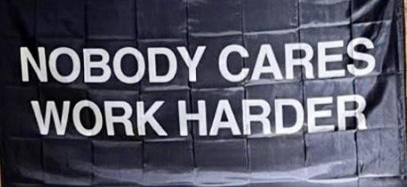
p/c – I saw this sign recently and loved its simple and direct message

The Power of Multiplying Yourself: Why Training and Supporting Your Team Leads to Success

The belief that doing everything yourself is faster can limit growth. Training and empowering your team leads to expanded capabilities, time for strategic initiatives, and a strong organizational culture.

p/c: Andrea Gian – Unsplash

“It’ll be faster for me to just handle this task now and get it done.”

“It’ll take me more time to train someone how to do this than it will take me to do it myself.”

“I’ll just take care of this task myself and get it out of the way.”

Sound familiar? 

It’s easy to fall into this trap of thinking that doing everything yourself is the most efficient way to get things done. This mindset not only limits your own growth and potential but also minimizes your team’s and your organization’s potential.

Investing your time in training and supporting your direct reports is not just beneficial—it’s essential for long-term success.

Here’s why:

  • Trust and Empowerment: When you take the time to train your team members, you show them that you trust their abilities. This trust fosters a sense of empowerment, motivating them to take on new challenges and responsibilities with confidence.
  • Expanded Capabilities: By preparing your team for their next levels of challenge, you expand their capabilities and push their limits outward. Consider this: Instead of just solving today’s problems, imagine if your team could handle tomorrow’s challenges without you needing to intervene. As they tackle new tasks and acquire new skills, they become stronger and more versatile contributors to the organization.
  • Time Management: While it may seem faster to handle tasks yourself in the short term, investing in training your team ultimately frees up your time for higher-level responsibilities. Imagine if you could focus on strategic initiatives, process improvement, and growth opportunities for the organization, rather than being bogged down in day-to-day tasks.
  • Cultural Impact: Creating a culture of learning and growth within your team not only boosts morale but also strengthens the entire organization. When your team members feel challenged and supported in their professional development, they’re more engaged and motivated to contribute their best work.
  • Preparation for Growth: By nurturing the skills and talents of your team members, you’re preparing the organization to adapt and grow. A team that is continuously learning and evolving is better equipped to handle the new challenges that are just around the corner (whether you see them coming, or not).

Neglecting your team’s development can have serious consequences. Employees who feel stagnant and unchallenged are more likely to become disengaged. Disengaged employees will leave, or worse, they’ll choose to stay and become seat warmers—adding nothing valuable to the organization.

People want to learn. They want to be challenged. They are most engaged when they’re pushing the boundaries of their capability, taking on new skills, and becoming more valuable to their organization.

The adage of “it’s faster to do it myself” is short-sighted and will limit your career growth.

Take the time to train and support your team. You will multiply your effectiveness and create a powerful culture of empowerment and continuous improvement within your organization.

Delegation isn’t Abdication

Delegation isn’t a “set it and forget it” task. As the leader, you aren’t abdicating the task and walking away…

How’s your delegation game? If you’re like most managers, I bet there’s room for improvement. As leaders, our ability to delegate effectively is a cornerstone of organizational success.

When done correctly, delegation is a powerful tool for growth, multiplying a leader’s effectiveness and unlocking the full potential of individuals and their organization.

Delegation isn’t a mere task transfer—a way to dump all the unpleasant tasks off your plate and onto someone else’s. True delegation involves entrusting the responsibility and authority needed for the team member to take emotional ownership of the assignment. This is the only way they’ll be able to make the decisions necessary for success.

Delegation isn’t a “set it and forget it” task. As the leader, you aren’t abdicating the task and walking away. It’s critical that you remove your ego from the equation, recognizing that your team member’s approach may differ from yours. Your job is to provide the necessary space and grace for team members to be successful. Moreover, you should offer support, insights, and resources to aid in their success without dictating every step.

Delegation is the linchpin for developing a pipeline of future leaders. Breaking employees free from routine tasks pushes them outside their comfort zones. They learn more about their organization and themselves. Their picture of the organization becomes clearer, and their connection to the organization strengthens.

Success breeds confidence. Not only is the leader’s effectiveness multiplied when their team members succeed, team members gain confidence to handle future challenges. When setbacks occur, leaders should provide guidance, help redirect efforts, and work collaboratively to identify lessons learned.

Managers who refrain from delegation or hoard the “secret sauce” of their roles create a bottleneck in leadership development. They will find themselves locked into their roles, unable to develop or contribute to other parts of the organization. Their failure to prepare team members for advancement creates a stagnant environment that hinders overall organizational agility. Without a culture of delegation, an organization will struggle to identify and nurture emerging talent.

One other thing about delegation: when you delegate an important task, it’s your job to champion your team member’s efforts within the organization. If you’re congratulated for their success, make sure your team members get recognized for doing the work. If things go poorly, own the failure and work with your team members to improve their chance of success the next time.

Delegation is not just a skill. It’s a long-term strategic commitment to nurturing and building tomorrow’s leaders.

How can you enhance your delegation practices today?

I have one favor to ask:  If you find this information useful, please forward and recommend it to someone else.  Thanks! 

What you delegate matters…

There isn’t a human being on this planet who can carry an entire organization themselves…

Whether you run a Fortune 500 company or a one-person shop, your ability to delegate will be the difference between success and failure.  Delegation may be to an employee or a trusted vendor.

Delegation allows you to multiply yourself.  It also provides an opportunity for your direct reports to grow within your company.

Right about now, you should be nodding and saying, “Obviously, Bob, tell me something I don’t know!”

So, you understand the importance of delegating.  Awesome!

Consider these questions about what you’re delegating, based on the way some managers and company owners I’ve worked with over the past 35 years view the topic:

  • When you delegate, are you focusing on your schedule, or on your direct reports’ growth?
  • Do you view delegation as the art of offloading tasks you don’t want to do, or tasks that are better suited to the expertise of one or more of your direct reports?
  • Do your direct reports own a specific role or job that’s critical to your organization, or are they merely one of your assistants, waiting for a list of today’s tasks to come from you?
  • If you draw a flowchart of how your organization functions, how many of the process lines route through your head where some type of decision or approval takes place before the process can move to its next step?
  • How many employees do you have waiting to talk to you? Do you feel empowered by how long the line out your door is each day?
  • When faced with a crisis, or a short-term deadline, do you pull back all that you’ve delegated so you can do everything yourself to make sure it’s right?
  • When you delegate the responsibility for a task to an employee, do you trust them enough to also delegate the authority they need to own that task? If not, why not?

I worked with a manager many years ago who told me how great it was that he had a line of people waiting to see him every time he came back to his office.  He said it was the first time he had felt important in his life.  Wrong answer, Mr. Important Guy!

I worked with another who told me that, “These people (referring to pretty much everyone in his department) don’t work well under pressure.  Whenever we have a tight deadline on a deliverable, I usually stay late and get it done myself.  That way I know it’s right.”  Wrong answer, Mr. Martyr!

There isn’t a human being on this planet who can carry an entire organization themselves…even though many try.  Sometimes, they even fool themselves (and others) into thinking they do it successfully.

The power of any organization comes from its ability to properly delegate, multiply its talent, and foster employee growth.  By the way, sometimes the cost of that growth is allowing your employees to make mistakes, or to successfully complete a task in a different way than you would have.

Get delegation right, and everyone wins.  Get it wrong, and your employees will stop learning.  Their motivation will wane and your organization will ultimately fail.

It’s only a matter of time.

Photo by Suzanne D. Williams on Unsplash