Why Oreos and Steaks Matter

I personally never saw the benefit of splitting my Oreos in half, and eating the middle first…

A kid’ll eat the middle of an Oreo cookie, and save the chocolate cookie outside for last…

I personally never saw the benefit of splitting my Oreos in half, and eating the middle first.  Seems like a lot of work.  In fact, the middle is boring without the chocolate cookie, in my humble opinion.

If dissecting the cookie isn’t the best, what’s the best way to eat an Oreo?

If you bite into an Oreo, it’s a challenge to not drop crumbs all over the place.  The cleanest and most effective way to eat an Oreo is in one bite.  Just pop the whole cookie in your mouth and let the taste celebration begin.  To add to the party, take a small sip of milk and let all that flavor mix around as you chew.  Enjoy.

The ideal number of Oreos to eat in one sitting is four…each with one bite, and each with a healthy sip of milk.  Oreo purists will argue that the ideal number is an entire column (purists know what a column is in this context), but that’s a bit much for me.  You’ll have some milk left in the glass after your four cookies, and that’s useful for rinsing everything out of your teeth as you contemplate the goodness of your Oreos.

I always thought it would be fun to eat a few Oreos before a dental hygienist appointment.  I wonder if anyone has actually gone through with this idea.

Steak.  It’s what’s for dinner.

For vegetarians, I apologize in advance…

The smell of steaks on the grill is a little slice of Heaven.  There’s something about the smell of a barbeque grill that permeates a neighborhood.  If your neighbor is cooking steaks, you know it, and you wish you were cooking your own.

Some of the best steakhouses age their beef for thirty, even sixty days.  They say that the longer the aging process, the more tender the meat will be.  I’m not quite so patient.  I’ll give it about three days of aging in the fridge before cooking.

I’ve tried many cuts of beef.  My favorite is the rib eye.  Rub a little olive oil on each side, and then season with Mansmith’s.  Grill it low and slow, about ten minutes on each side for the perfect medium-rare tenderness.  Let the meat rest for a few minutes, and then enjoy with a baked potato and some steamed or sautéed asparagus.  Talk about good eats!

I like nearly every food I’ve tried, except olives and horseradish.  A few favorites come to mind…Salmon.  Eggplant parmesan.  Hot apple pie (with ice cream).  Saag paneer.  Unagi.  Lasagna.  Date shakes.  Vegetarian lamb.  Chocolate chip ice cream.  Chili.  Oatmeal cookies.  Fried chicken.  Carrot cake.  Cornish pasties.  Bacon!

Food is much more than the sustenance we need to live.  It’s more than nutritional value (or lack thereof).  Foods have history.  Many are at the heart of our family traditions.

One thing all foods across the world have in common:  they are best when shared with the people we love.

Explore.  Taste.  Savor.  Share.  Love.  Enjoy!

Unmaking an Oreo:  http://youtu.be/cJyGoGPXTj4

Things I Learned in China

Our China trip is what I’d call the “TV highlights tour.”

If my count is correct, I’ve visited seventeen countries, so far.  There’s no better way to learn about a country than being on the ground in that country.  First-hand knowledge cuts away the spin, partial news coverage, opinion, conjecture, half-truths, urban legend, and other forms of information we carry as “truth” about our fellow travelers on this planet.

Visiting foreign countries is also an exercise in adjustment.  There’s jetlag, and the obvious language barriers to overcome (even in countries with English as their official language).  There are differing customs, different transportation rules and systems, differing levels of sanitation, new foods, new spices, hardly any ice (what’s up with that?), and living conditions that range from squalor to opulence.

Each country has its own rich history.  The local people we’ve met are proud of their country and their way of life.  They’re always curious about how we live in the US, our customs, our landmarks, our system of government.  They, like us, have a sprinkling of knowledge about the world outside of their country and are eager to gain a deeper understanding through their visitors’ perspectives.

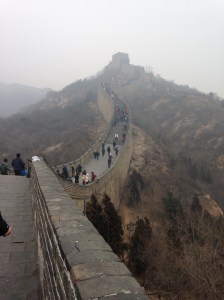
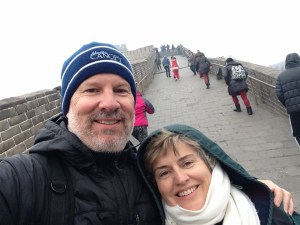
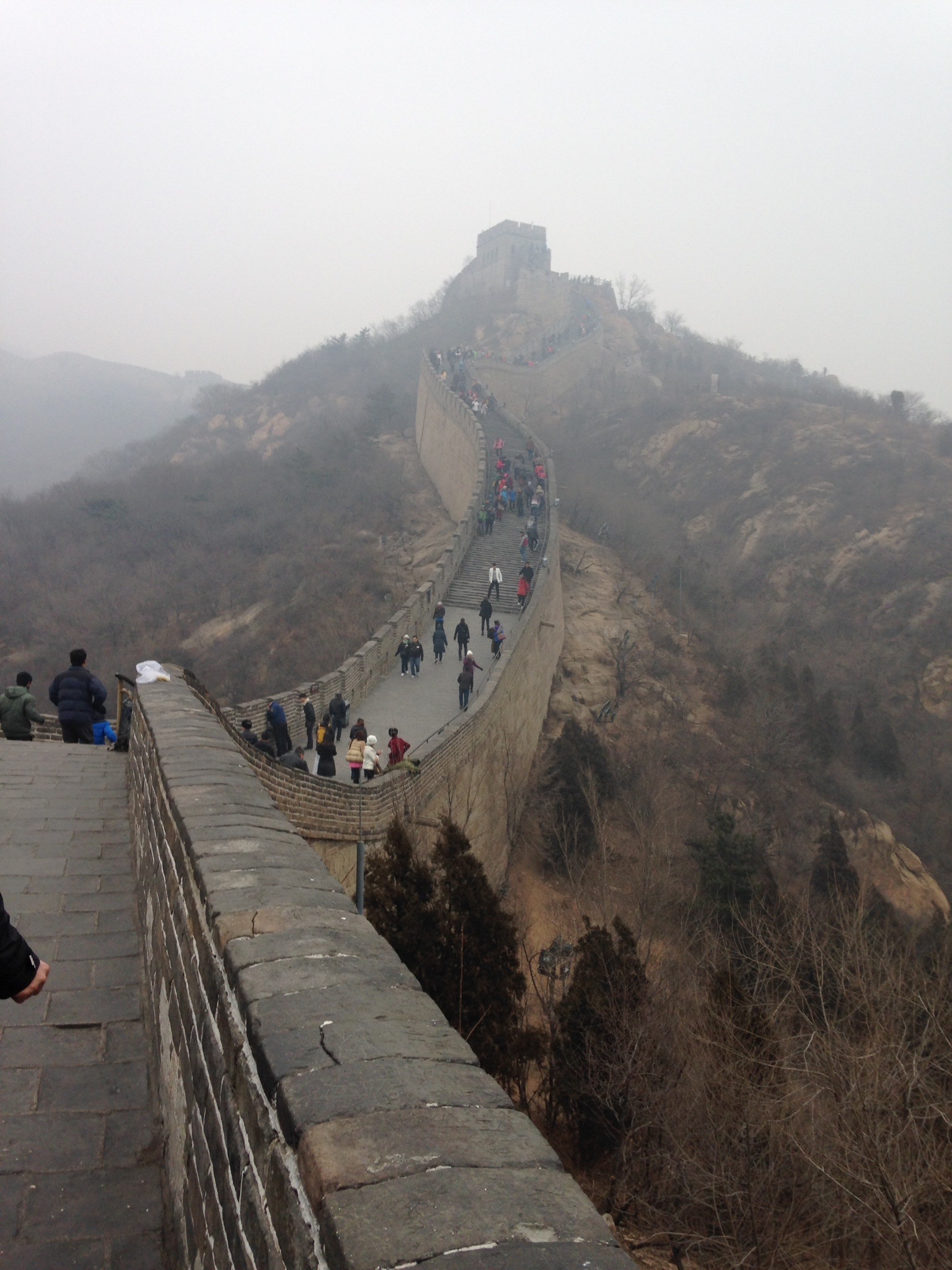
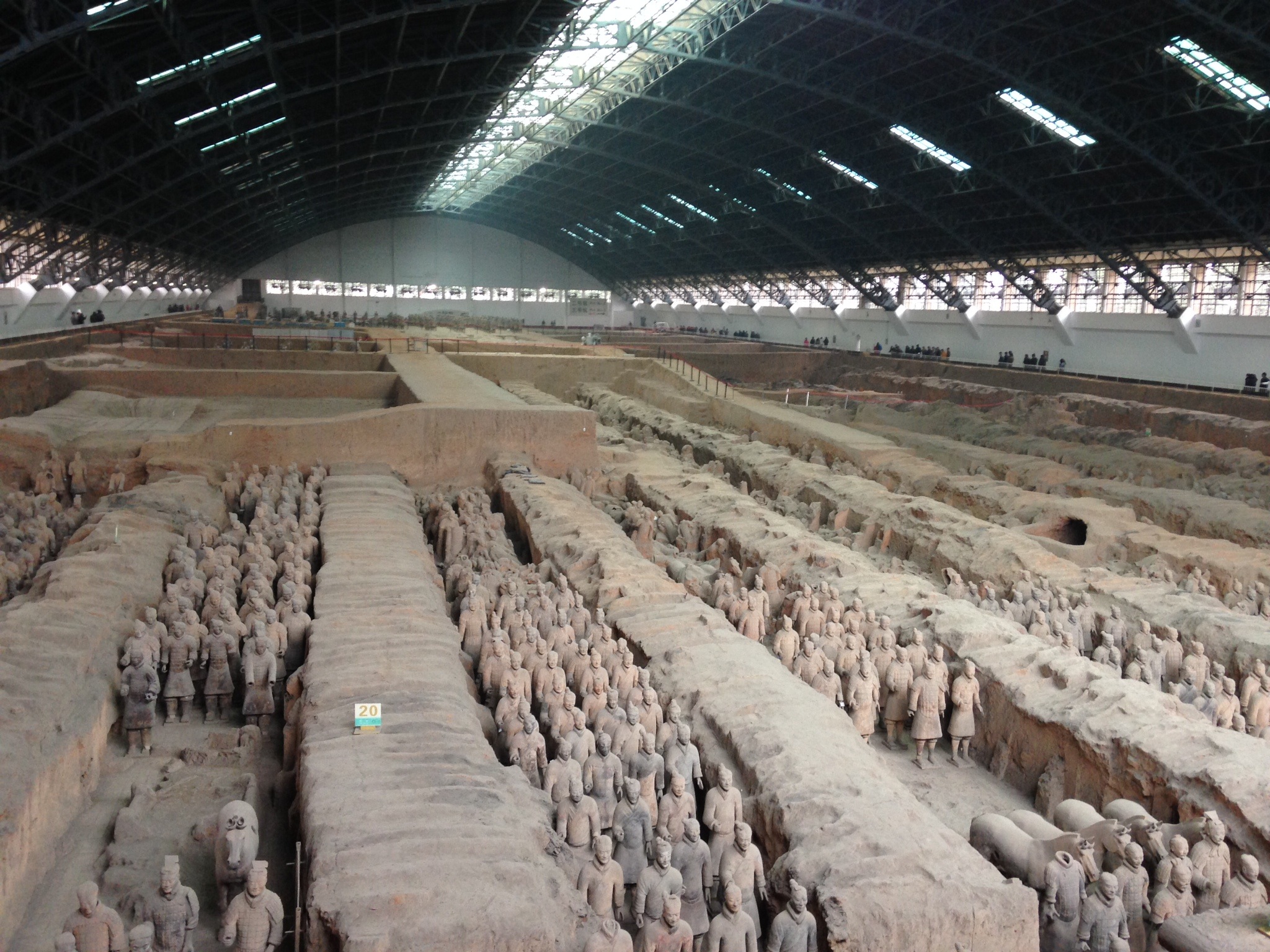
Our China trip is what I’d call the “TV highlights tour.”  If you were to queue a video montage of famous cities and landmarks in China, our tour hit many of them:  In Beijing, we visited The Forbidden City, Tiananmen Square, Lama Temple, The Great Wall, and the Olympic National Stadium (Bird’s Nest).  In Xi’an, we visited The Terra Cotta Warriors, and The (leaning) Wild Goose Pagoda.  In Shanghai, we visited The Bund (waterfront), The Shanghai Museum, and Nanjing Road.  We also took a river cruise on the Huang Po River that runs through Shanghai.  We rounded out our tour with a road trip to Suzhou (the “Venice of the Orient”).  We attended some dinner shows, featuring traditional music and dance, and incredible acrobatics.

China’s airports are awesome.  I dreaded the idea of taking two in-country flights in a seven-day period.  That wouldn’t be a picnic in the US, and I assumed (incorrectly) that it would be worse in China.  The customs process, the flight and baggage check-in, and the baggage claim processes were incredibly efficient.  Shanghai has two airports.  We flew into one, and out the other.  Both were huge, efficient, and well-planned.  It probably helps that all the airports we visited were built within the last 15 years, so they have all the latest design and technology concepts built-in.

We have over 400 photos and a couple hours of video, showing nearly every angle of the places we visited.  The lessons from our China trip run much deeper than what’s captured in our photos.

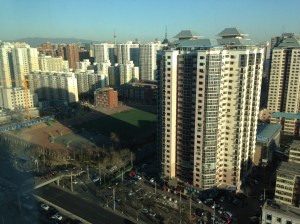
The massive urbanization that has occurred in China over the past twenty years is amazing.  Nearly 400 million people have moved from the countryside and into cities across China (that’s about 80 million more people than we have in the US).  Billions of square feet of real estate, massive new roadways, tunnels, bridges, railway systems, subway systems, sewer systems, electricity generation, and all the other infrastructure required to support this massive migration have been developed over the past two decades.  More accurately, all of it is still a work-in-process, since the migration continues.

In each city, the skyline is filled with skyscrapers and tower cranes.  I stopped counting tower cranes at about 50 (on our first day in China).  Everywhere we looked, commercial or residential skyscrapers were under construction.  Single-family houses are a rare sight, something we only saw in a small section of Shanghai.  People live mostly in high-rise apartment buildings.  “Pods” of 25 high-rise apartment buildings, spanning many city blocks, are common.  Imagine the entire Los Angeles basin filled with 30-plus-story buildings, instead of just the skyscrapers in the downtown section, and you start to get an idea of how massively sprawling Beijing, Shanghai, and even Xi’an are.

Some statistics may help illustrate just how massive China’s cities are.  The total population in China is 1.35 billion.  The total population in the US is 317.5 million.  The population in Beijing is about 21 million; Shanghai, 23 million; Xi’an, 9 million.  The population in New York, NY is 8.4 million; Los Angeles, 4 million; Chicago, 2.8 million.  One other interesting statistic:  there are more people in China who speak English than there are in the US.

Our guides in each city told us about the huge growth of their cities, and the dramatic improvements in the standard of living across China.  Their apartments average 500-700 square feet.  Our guide in Xi’an talked about how her first apartment, in 1990, didn’t have a bathroom or a kitchen, and yet she and her husband found a way to raise their new son in that environment.  Now she and her husband, and their 24-year old son, live in a 1,000 square foot, 3-bedroom apartment, with two bathrooms.  She beamed with pride while describing such a luxurious apartment and said that she hopes her son will be able to keep living there after she and her husband die.

The government owns all land in China.  Long-term leases allow people to make use of the land.  The lease duration is dependent upon the type of use.  For instance, for urban residential real estate development, lease durations of 75 years are available.  This allows a developer to build a residential apartment building, and then rent or sell the units to private parties.

Citizens used to get annual vouchers strictly allocating the amount of meat, butter, and other products they could buy per year.  Goods and services can now be purchased without government vouchers.  China’s huge economic growth makes goods and services much more readily available to its population.  The only requirement is having enough money to make the purchases.

Car license plates are rewarded by lottery.  If you are lucky enough to win the lottery, you then pay the fee (in the thousands of dollars) for the license plate.  Once you have the license plate, you can shop for a car.  A Canadian ex-pat in Shanghai told us there is a healthy black market for license plates, and that it isn’t uncommon for the plate to be as expensive as the car itself.

March, 2014 is a happy time across China.  The one-child policy that has been the law of the land since about 1979, is being softened.  Violating the one-child policy brings heavy fines to the parents, equaling about 2 ½ times their annual salary.  With the new, softer policy, if you or your spouse are only-children in your parent’s family, you can apply to have a second child, 3-4 years after your first child is born.

We heard consistently about one of the many unintended consequences of the one-child policy.  Consider that each child has two parents, and two sets of grandparents who make that one child the center of their universe.  That one child carries the hopes and dreams of their parents, and their grandparents.  With no siblings and very few (if any) cousins, sharing isn’t part of the child’s upbringing.  Spoiled, un-sharing children is the result, and represents the newest generation of young adults in China.

Ironic that a Communist system that purports to be about fully-shared (communal) ownership created a new generation of citizens who have little experience sharing anything, communally or otherwise.

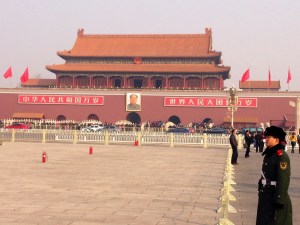
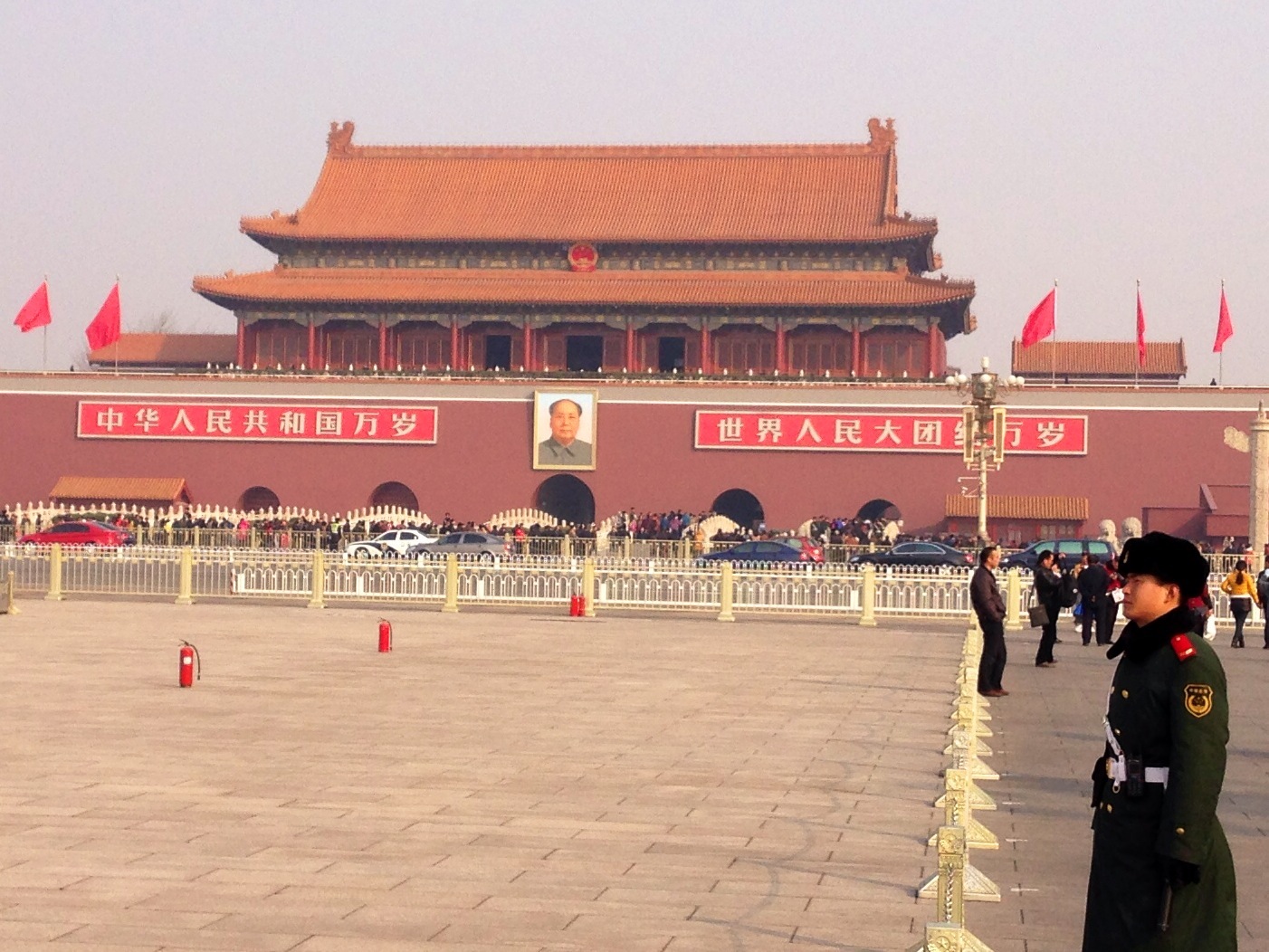
On our first full day in Beijing, we visited Tiananmen Square.  Our guide pointed out that Tiananmen Square is similar to The Mall in Washington, D.C.  It’s where their government officials from around the country meet for two weeks each year.  The square has numerous monuments to the history of new China (since Chairman Mao rose to power in 1949).

As we prepared to exit the bus, our guide’s voice changed tone.  She told us that there are cameras and listening devices everywhere in the square, and that many of the tourists we’d see are actually undercover police or government officials.  She asked us not to ask her where the tank was, or about the protest that took place there.  She officially doesn’t know anything about the protests.  She only knows about it from tourists like us, talking about what happened in 1989.

It’s true.  There are monuments and flags in Tiananmen Square, similar to our Mall in Washington, D.C.  But, that’s where the similarities stop.  As I looked at the monuments, mostly depicting Chairman Mao and the government’s control over the people of China, I couldn’t help contrast that theme to the theme of the monuments in Washington.

We have monuments to many of our Founders as well.  Each monument is not only a tribute to the person, but to a belief system that our greatness comes from freedom and liberty.  Ours is a government of the people, by the people, for the people…not a government whose greatness comes from its control over the governed.  Tiananmen Square is vast, treeless, and austere.  One can’t help but feel insignificant in comparison to the government buildings surrounding the square.

We asked about traveling outside of China.  Two of our three guides had done so.  Both had traveled to the US.  They aren’t allowed to travel with their family.  At least one family member must remain in China while the other is traveling abroad.  They are required to put about $15,000 in an escrow account prior to leaving China.  The funds are returned when the traveler returns.  They are warned that if they choose to remain in another country, their family members will be punished financially, and could lose their jobs.     

I learned quickly what it means to use a restricted and censored internet.  Email worked, but FaceBook, Twitter, YouTube, and Google are all heavily restricted, especially if accessed via a Wi-Fi connection.  I found that if I randomly flipped my phone out of airplane mode while in the cities, FaceBook would “work” about half the time.  I had 90 seconds to post an update or a quick photo.  Then, it would stop working.  Apparently, 90 seconds is the amount of time it took for the censoring protocol to find my phone and shut down the app’s update capability.

China is amazing.  The sheer scale of their development over the past two or three decades is unbelievable.  The people are warm and friendly (as long as they aren’t driving a car, motor scooter or bicycle where you’re trying to walk…pedestrians apparently do not have the right of way, even if your light is green).  The locals we met have the same hopes and dreams for their future that we do.  They want to have a rewarding job, enjoy their life, spend time with their families, and see their children (child) have a better life than they’ve had.

I’ve never visited a country that lacks most of the basic freedoms I take for granted.  China has rapidly “westernized” their economy and their culture, on the surface.  However, they are fundamentally walking a tightrope between the freedoms required to drive their economic growth, and the strict controls and structures of a Communist state.

I can’t help wondering what China will look like twenty years from now.  Will their urbanization continue at the same pace?  What will the “softer” one-child policy mean for the next generation of Chinese?  Will the quasi-freedoms associated with capitalist economic expansion propel the country toward real freedom in the future?  Can China continue to operate one way on the surface, while controlling its population with a velvet-covered fist, beneath that surface?

These questions about China’s future make me think of similar questions for the US.  What will we look like twenty or thirty years from now?  Will we enjoy the same freedoms and liberties that we have today?

Full story of Tank Man from a PBS FrontLine episode in 2006:  http://youtu.be/HNtA8RZ1FAA

No travelogue would be complete without some photos:

Tiananmen_Monument

mao_photo

Tiananmen Square

Great_Wall

Great_Wall_Selfie

The Great Wall

Beijing_Hotel_View

View from our hotel in Beijing

Terra_Cotta_Warriors

Terra Cotta Warriors

Bund_Panorama

Panorama of the Shanghai Waterfront (The Bund)

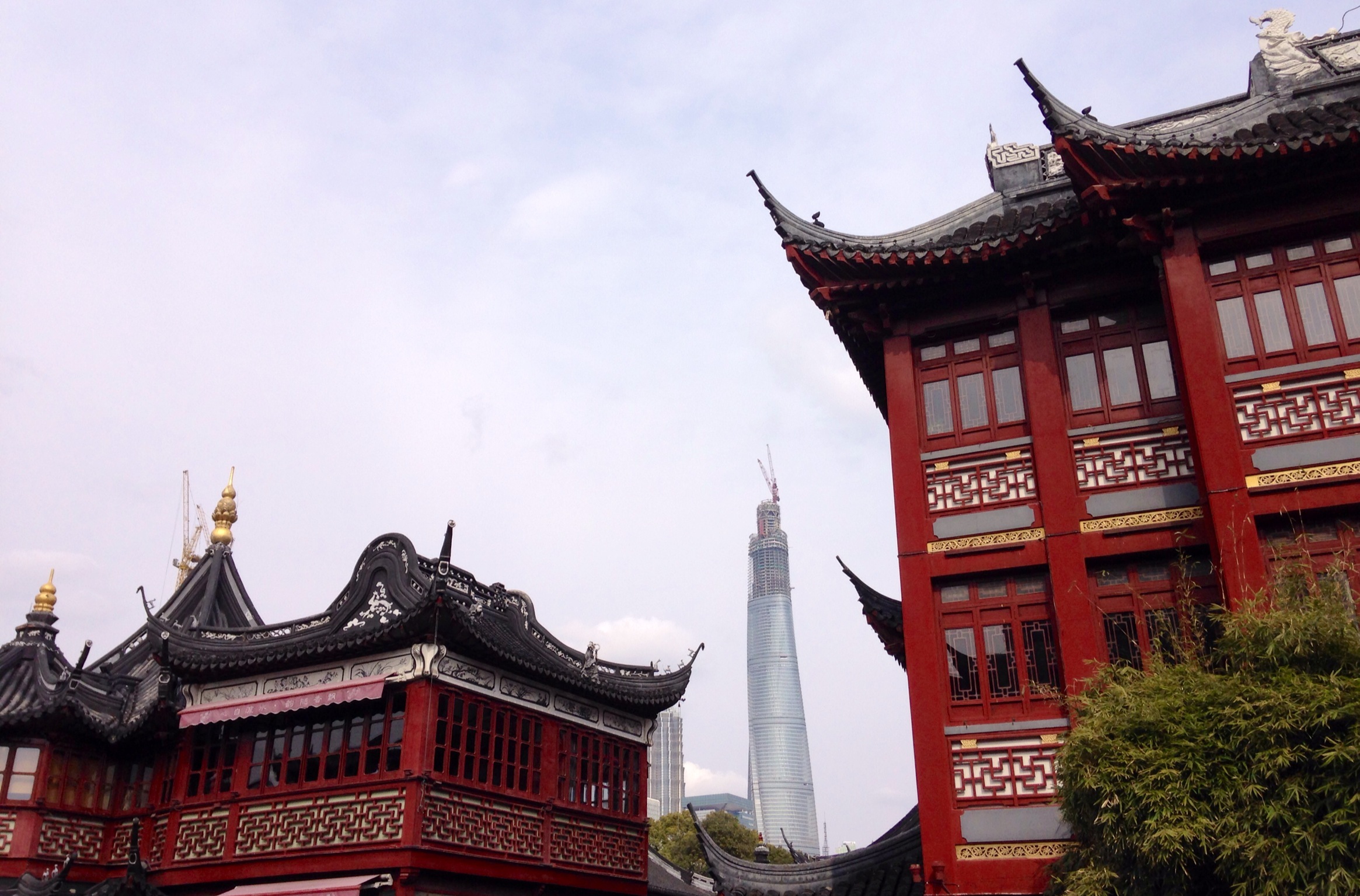
Old_New

Old and New in Shanghai (second tallest building in the world nearly completed)

Venice_Orient

Suzhou (Venice of the Orient)…branding is a little ahead of reality

Beyond the No Wake Zone

True adventure happens out past the buoys…

nowakezonebuoy_keaalliance

I get seasick easily, especially on sailboats (and fighter jets).  I’ve been on a few sailing trips.  They all had one thing in common.  Once we’re outside the no wake zone, my nausea starts.  Things go downhill from there until my head is buried under a towel and I try to sleep until we get to dry land.  Needless to say, I avoid sailing trips.

I don’t have a problem on cruise ships, except in rough seas.  Cruise ships are engineered to deliver a smooth ride for their passengers.  Most swells go unnoticed.  Passengers wake up in a new port almost every day, and the food and entertainment are usually spectacular.

Harbor cruises work for me.  I can handle cruising around inside the no wake zone, looking at all of the boats in their slips, the nice homes on the shoreline, and passing other boats as they make their way out to sea.  Christmas time, with all the lights and decorations is the best.  It’s relaxing and safe.  There are no swells to cause nausea and seasickness.

Every sailor knows the opportunity for new discovery lies beyond the no wake zone.  True adventure happens out past the buoys, past the breakwater, and out in the wind and waves.  Riding around in the harbor, or lazily enjoying a multi-course dinner on a cruise ship are fun and sometimes exotic.  But, neither compare to the adventure of plying the seas in a forty-foot sailboat, with your hand on the tiller.

What about the risks?  Staying on shore has risks.  Cruise ships certainly carry risk (and sometimes, viruses).  We may take comfort that others are managing our risks for us, but nothing is risk free.  Storms and rough seas will hit, no matter who drives the boat.  Understanding the risks, planning and preparing for them, and facing our challenges head-on is the only consistent winning strategy…at sea, and in life.

What about seasickness?  I remember talking with a sailor in Tahiti.  We had flown in for a vacation, and met my mother-, and father-in-law, who were sailing their boat across the South Pacific.  The sailor was a friend of theirs.  I mentioned my problem with seasickness, and how it would prevent me from making such a voyage.

He laughed and said, “The seasickness usually passes after three days at sea.  After that, it’s an adventure of a lifetime.”

He was right.

Balancing Attention

Attention is the currency we use for spending time…

serenity_edit

I’ve read countless articles and blog posts about work/life balance.  They generally focus on the rigors of managing a business in a 24-hour-a-day cycle.  Some are from the manager’s perspective, and others are from the worker’s point-of-view.

Most articles mention sacrifices.  How families, spouses, kids, friends, and even our own health and welfare, are forced into the back seat while our hero focuses on the challenges of his/her career path.  There’s usually some kernel of wisdom…justification for the decisions being made by all involved.

Achievement rarely happens without hard work, focus, determination, sacrifice, and making the (hopefully) right choices.  What are the right choices?  That varies for each person.

One thing that doesn’t vary for each person is the value of their time.  Time is the most precious and fleeting commodity in our lives.  We can’t control time.  We only control how we spend it.

Attention is the currency we use for spending time.  Like time, our attention is limited.  Unlike time, we control our attention.  We decide what deserves it, and what doesn’t.

Work/life balance isn’t really about the demands of the job.  It’s not about the oppressive boss who demands our continuous availability, or employees who need input and direction at all hours.  It’s definitely not about checking our email or social feed every fifteen minutes.

Regardless of its details, if there is such a thing as work/life balance, it comes down to two things:

  • Realizing that we decide where to focus our attention.
  • Whether we decide consciously or not, our actions make our attention decisions a reality.

Photo credit:  Diane Anderson (my wonderful mother-in-law), who focuses (pun intended) a lot of her attention on making beautiful art with her camera.

Everyday is a Surprise

It all started with an earache…

 “Bobby (what anyone who knew me before I was about 13 calls me), it all started with an earache.  The doctor gave me some ear drops.  The pain didn’t stop and seemed to get worse, so he gave me stronger drops.  That still didn’t work.  He ran some tests and told me it’s cancer, and I’m gonna die.  It was an earache, and then I was dying.  He says that I will probably just die in my sleep, so each time I wake up, it’s a surprise.”

Pete_Triumph

In Pete’s case, it took about four months for the cancer specialists to identify the type of cancer that is killing him.  He told me the name, and said it is very rare, untreatable, and fast moving.  I made a mental note to look up the cancer and learn more about it.  As I type this post, I have forgotten its name.

The fact that each of us will die is no surprise.  The timing is the surprising part.  That, and the name of the thing that ultimately causes our death.  There’s always a name.

I remember a conversation I had with Grandpa Clyde (my wife’s grandfather) at least ten years ago.  He was in his late-80’s at the time, showing me how to cook ribs properly on a barbeque.  I asked him what it was like to have lived as long as he had.  I will never forget his response.  “If you live long enough, you say goodbye to a lot of friends and family.  Most of the people I grew up with are dead and gone.  I stopped going to funerals a long time ago.  I spend my time making new friends, and enjoying this time I’ve been given with my family.”

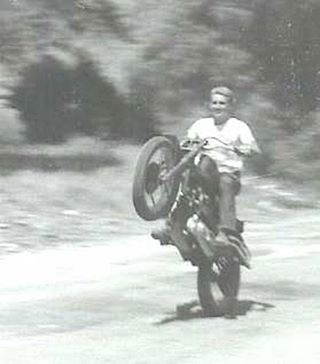
Growing up, Pete was one of my role models for a life worth living.  A firefighter, motorcycle tuner, racer, helmet painter, wheelie king, runner, water skier, speeding ticket magnet, traveler, and a Bluegrass fan.  Although I never actually saw it, he used to say that he also jumped rope, attended three world fairs, and a few other things that are probably better left unmentioned.  Pete never stopped making new friends, or appreciating his old friends.  He grabbed all that life has to offer, and then some.

Pete_Wheelie

Pete wears a patch over his right eye now.  The tumor has grown and prevents that eye from blinking.  He is in a lot of pain, and the pain medications cloud the passage of time.  This hasn’t stopped Pete from grabbing what life has left for him.  He is living each remaining day as a surprise.

In truth, each day is a surprise for all of us.  An opportunity to appreciate our family and friends.  An opportunity to make new friends, and enjoy what little time we’ve been given.

Defining Semi-Retirement

I’m definitely not retired, although I have let the term, semi-retired, roll around in my head. It seems accurate, for now.

PetersCanyonPhoto

For the first time in nearly 30 years, I’m living the life of a semi-retired person.  I’m not entirely sure what that means, but it all began about six weeks ago.  That’s when I parted company with my employer after a little over fourteen years of service.  I thoroughly enjoyed my time there.  I think we were great for each other.  I learned a lot, contributed lots of value, helped many people advance in their careers, and enjoyed the fruits of success.

I often counsel people to remember that in any organization, large or small, every day could be your last.  Many probably think I’m being a bit dramatic with this advice.  While not speaking literally (well, maybe I am), the main message is to be prepared for a sudden exit, either by your choice, or the company’s.

My departure was my choice and the process took a few months.  Heeding my own advice, my wife and I were well prepared.  We’ve saved and invested (sometimes wisely) for our entire life, lived simply, and recently wrote our last tuition check (a big milestone in any parent’s life).

My friends congratulated me on my early retirement, but I was quick to push back.

I’m definitely not retired, although I have let the term, semi-retired, roll around in my head.  It seems accurate, for now.  “Semi” opens the door to a world of options, and sets a high bar for what I’ll choose to do in the future.

What’s next?  I’m not sure, and I kinda like it like that.

Just Another PICNIC

I learned a new acronym recently: PICNIC

I learned a new acronym recently:

                PICNIC–Problem in chair, not in computer.

“Way” back in the early 90’s when one of my jobs was desktop support, I referred to the same phenomena as a “nut on the keyboard” problem.  At least 80% of the “computer problems” were actually human problems.

It’s the same thing with Cesar Millan, The Dog Whisperer.  Most “dog” problems are human problems waiting to be solved.  Cesar spends most of his time “whispering” to dog owners.  Cesar can’t call his show The Human Whisperer, even if that’s an accurate description of the service he provides.  To do so would alienate the audience that he’s trying to help.

The challenge with humans is that most of us would rather not admit that we are the problem.  It’s so much easier to blame the computer, the dog, the airline, the car, traffic, evil Republicans, evil Democrats, government, the economy, our manager, our parents, our kids, society, the system.  The list of excuses is infinite.

The good news is that the solution to most of these “problems” is in the chair.

We Are All Mountain Climbers

Until you face a climb yourself, you can never fully understand what it takes.

AlanAroras--Mt Everest 2013

There it is…Mount Everest from the air.  Each year, about 150-200  climbers attempt to reach its summit, 29,029 feet above sea level.  There are thousands of other mountain peaks in the world, but Everest is the highest, and most challenging.  Of course, from this angle it looks pretty tame.

That’s the thing about mountains.  Perspective is everything.  Until you face a climb yourself, you can never fully understand what it takes.  Watching others make the climb, or hearing their stories about what it was like, are no substitute for taking on the climb for yourself.

Look around you.  If you look closely, you’ll see that each of us are climbing a mountain.  Some mountains are short and easy, while others are as high or higher than our friend, Mr. Everest.

This is the point where I could wax on poetically about striving for the highest peaks in life, chasing ever higher summits, new vistas, and new challenges.  Yes, do all of that.  Don’t let anyone stop you…especially yourself.

No, I’m not going to talk about the standard, inspirational mountain stuff.  Instead, I’m going to talk about weight.

When embarking on a climb, is it better to carry twenty pounds, fifty pounds, or one-hundred pounds of gear on your back?  Obviously, all things being equal, less weight is better.  Gravity is not your friend.

How much weight are you carrying on your climb?  Only the essentials?  Anything extra?  Are you carrying baggage that won’t be used?  Why?  Carrying all that extra baggage isn’t helping you reach your summit.

What about your fellow climbers, especially those closest to you?  How much extra baggage are they carrying?  How much of it is yours?

The best strategy for extra baggage (and its unnecessary weight) is to avoid packing it in the first place.


Photo Credit:  Alan Arora, who owes me some details on how he was able to be in the cockpit jump seat of an Airbus A319 at the perfect time to capture such a beautiful shot of Mount Everest.

Curiosity and Zombies

Curiosity is better than shotguns…

Are you genuinely interested in how something works, why things happen, what people think?

Do you look at articles describing how some industry you’re not a part of is facing a new market or regulatory challenge?

Are you entertained to learn that Starbucks Frappuccinos and iced coffees may be changing ice cube usage customs in Europe?

Do you click on links to articles about Africapitalism and venture philanthropy?

Have you ever imagined what it would be like to “fly” off a cliff wearing a Wingsuit?

Do you wonder how the education systems of the US can be improved by the proliferation of MOOC’s and alternative learning services like Udacity, Khan Academy, and others?

Do you marvel at how a rocket engine made mostly of solid rubber can power a spaceship launch?

Do you look at things as they are, and imagine how they could be changed by process improvements, new inventions, or new technology?

Are you an “early adopter” of new ideas?

The ultimate question is:  Are you curious?

The happiest and most successful people I know are curious.  They choose to be explorers in a modern world.  Pursuing answers to what, where, who, how, and (of course) why is what makes them tick.  Their curiosity is the key to an engaged existence.

They may not find, nor like, all of the answers.  That doesn’t stop their insatiable curiosity to learn more.

Show me someone lacking curiosity for life, and I’ll show you the closest thing to a living, breathing member of the walking dead.  Who knew curiosity would be better than shotguns against zombies?