The Bargains We Make

I bargained with Life for a penny…

I came across this classic poem recently:

My Wage

I bargained with Life for a penny,

And Life would pay no more,

However I begged at evening

When I counted my scanty store.

For Life is a just employer,

He gives you what you ask.

But once you have set the wages,

Why, you must bear the task.

I worked for a menial’s hire,

Only to learn dismayed,

That any wage I had asked of Life,

Life would have willingly paid.

–by Jessie Belle Rittenhouse (1869-1948)

My Question for You

What is your bargain with Life?

Are you working for a penny, or something more?

How about your end of the deal?

Are you even keeping score?

If we get out of Life,

Only what we ask,

I say go for the Moon,

And reach for the stars.

But, are you willing to bear the task?

Your Talent Won’t Be Enough

Enough for what?

There are very few truly one-man (or one-woman) shops.  Show me a successful sole proprietor, and I’ll show you someone who leads, and relies upon, a team of talented individuals…whether they realize it or not.

How can this be?  Doesn’t the definition of sole proprietor mean that one person is the sole talent?  Well, sort of, but not quite.

Imagine that you’re an awesome flower arranger.  Your bouquets are exquisite.  Their beauty is unmatched.  You decide to take a risk and open your own flower shop.  Your confidence is high.  After all, your flower arrangements are incredible.  Customers will come from miles around to buy your arrangements.

A few weeks into the process of opening your new shop, you discover that flower shops don’t run on flower arrangements alone.  There are building leases to negotiate, furniture and fixtures to procure, point-of-sale systems to deploy, website interfaces to create (if you’d like to receive orders from some of the national flower delivery services), suppliers to line up, insurance coverage to purchase, merchant account services (if you plan to take credit cards), and payroll systems (for the one or two part-time employees you’ll be hiring, just for starters).

You’ll need to connect your talent with the talents of a wide array of other people, just to open your shop.

It’s the same thing in a larger company.  Your ability to build trusting relationships across your company, and across your industry, will have more to do with your long-term success than individual talent.  Creating a reservoir of trust with talented people, and relying on them, just as you’d rely on yourself, is critical to your success…and theirs.

Your talent, alone, won’t be enough.  Enough for what?  Enough to accomplish whatever your definition of success is.

Defining Semi-Retirement

I’m definitely not retired, although I have let the term, semi-retired, roll around in my head. It seems accurate, for now.

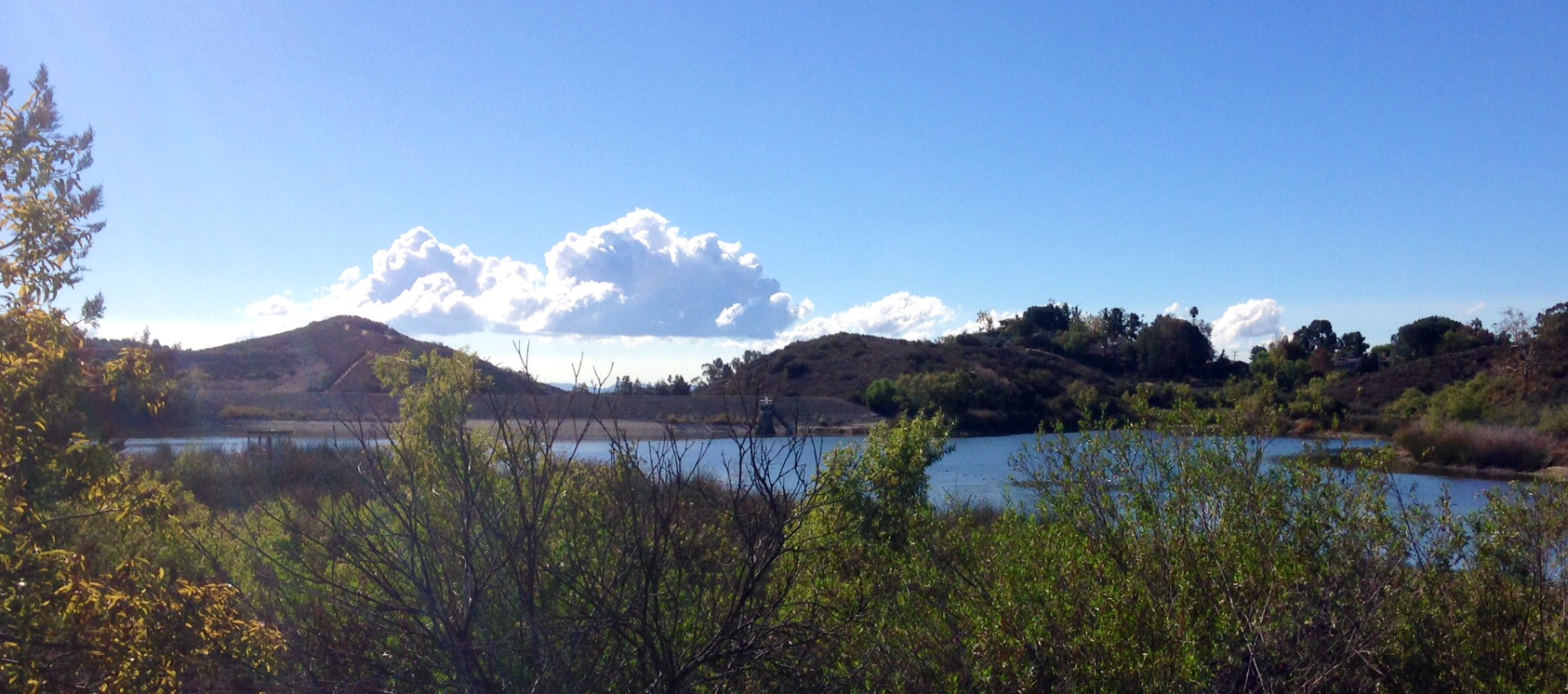
PetersCanyonPhoto

For the first time in nearly 30 years, I’m living the life of a semi-retired person.  I’m not entirely sure what that means, but it all began about six weeks ago.  That’s when I parted company with my employer after a little over fourteen years of service.  I thoroughly enjoyed my time there.  I think we were great for each other.  I learned a lot, contributed lots of value, helped many people advance in their careers, and enjoyed the fruits of success.

I often counsel people to remember that in any organization, large or small, every day could be your last.  Many probably think I’m being a bit dramatic with this advice.  While not speaking literally (well, maybe I am), the main message is to be prepared for a sudden exit, either by your choice, or the company’s.

My departure was my choice and the process took a few months.  Heeding my own advice, my wife and I were well prepared.  We’ve saved and invested (sometimes wisely) for our entire life, lived simply, and recently wrote our last tuition check (a big milestone in any parent’s life).

My friends congratulated me on my early retirement, but I was quick to push back.

I’m definitely not retired, although I have let the term, semi-retired, roll around in my head.  It seems accurate, for now.  “Semi” opens the door to a world of options, and sets a high bar for what I’ll choose to do in the future.

What’s next?  I’m not sure, and I kinda like it like that.

The Most Important Strategy Presentation You’ll Ever Make

Was this the most important strategy presentation you’ll ever make? It probably seemed like it, with all of the hard work and sleepless nights that went into it.

You’ve figured out how to ask real strategic questions .  You and your team have used those strategic questions to layout your strategy for next month, next year, maybe even the year after that.

You’re working on the big strategy presentation for your boss, and his boss.  You have 30-45 minutes to present.  It has to be perfect.  Your PowerPoint slides need to be crisp, concise, and informative.  Most of all, they must smoothly convey the sheer mastery of your team’s strategy.

You rehearse with your management team.  You adjust and tweak each word, each number, and every bullet point on your slides.  You gather as much supporting information as you can to support your conclusions.  You write out every question you can anticipate, and make sure you have a clear and effective response for each one.  You are ready.

Your company’s dress code is business casual, but it’s tradition that you wear a coat and tie for these annual strategy presentations.  Your preparation pays off.  You deliver a brilliant strategy presentation.  There are a few questions thrown your way, but you’ve anticipated every one of them.  Your boss, and his boss, are clearly impressed and excited to offer their support for your strategy.

You gather your team for a short post-presentation update meeting.  You congratulate your team for all of the work they’ve done on the presentation.  High fives all around!

Was this the most important strategy presentation you’ll ever make?  It probably seemed like it, with all of the hard work and sleepless nights that went into it.  But, it definitely wasn’t the most important.

Having your manager’s support for your strategy is a big deal.  But, your manager, and his manager, won’t do much to help you deliver on the brilliant strategic vision you and your team have laid out.

Remember all the time and energy that went into your perfect presentation?  Imagine if you spent even half of that time and energy preparing for, and presenting to, your customers and your employees.

The most important strategy presentation you’ll ever make is to the people who will deliver on your strategy…your customers, your direct reports, and everyone who works within your organization.

It’s not a one-time event that lasts 30-45 minutes.  It’s a never-ending conversation that should be happening with your customers, and across all levels of your organization…every day.

Remembering to Breathe

Nearly all sports are the same (at least on one level).

Nearly all sports are the same (at least on one level).  It doesn’t matter if that sport is soccer, baseball, golf, archery, skeet shooting, curling, downhill skiing, long distance running, ice skating, motorcycle racing, or competitive yodeling.

They each start with the same fundamentals:

  • Relax and stay loose
  • Calm your mind
  • Visualize success
  • Bend your knees
  • Don’t forget to breathe.

One could make a case that each of these fundamentals are of equal importance, but my money is on the last one.  Consciously remembering to breathe puts us in the right state of mind to remember the other fundamentals.

We each face challenges on a daily basis.  Some are small, and some are huge (at least from our perspective).  Here’s a strategy for tackling each of them:

  • Relax and stay loose
  • Calm your mind
  • Visualize success
  • Bend your knees
  • Remember to breathe!

Just Another PICNIC

I learned a new acronym recently: PICNIC

I learned a new acronym recently:

                PICNIC–Problem in chair, not in computer.

“Way” back in the early 90’s when one of my jobs was desktop support, I referred to the same phenomena as a “nut on the keyboard” problem.  At least 80% of the “computer problems” were actually human problems.

It’s the same thing with Cesar Millan, The Dog Whisperer.  Most “dog” problems are human problems waiting to be solved.  Cesar spends most of his time “whispering” to dog owners.  Cesar can’t call his show The Human Whisperer, even if that’s an accurate description of the service he provides.  To do so would alienate the audience that he’s trying to help.

The challenge with humans is that most of us would rather not admit that we are the problem.  It’s so much easier to blame the computer, the dog, the airline, the car, traffic, evil Republicans, evil Democrats, government, the economy, our manager, our parents, our kids, society, the system.  The list of excuses is infinite.

The good news is that the solution to most of these “problems” is in the chair.

We Are All Mountain Climbers

Until you face a climb yourself, you can never fully understand what it takes.

AlanAroras--Mt Everest 2013

There it is…Mount Everest from the air.  Each year, about 150-200  climbers attempt to reach its summit, 29,029 feet above sea level.  There are thousands of other mountain peaks in the world, but Everest is the highest, and most challenging.  Of course, from this angle it looks pretty tame.

That’s the thing about mountains.  Perspective is everything.  Until you face a climb yourself, you can never fully understand what it takes.  Watching others make the climb, or hearing their stories about what it was like, are no substitute for taking on the climb for yourself.

Look around you.  If you look closely, you’ll see that each of us are climbing a mountain.  Some mountains are short and easy, while others are as high or higher than our friend, Mr. Everest.

This is the point where I could wax on poetically about striving for the highest peaks in life, chasing ever higher summits, new vistas, and new challenges.  Yes, do all of that.  Don’t let anyone stop you…especially yourself.

No, I’m not going to talk about the standard, inspirational mountain stuff.  Instead, I’m going to talk about weight.

When embarking on a climb, is it better to carry twenty pounds, fifty pounds, or one-hundred pounds of gear on your back?  Obviously, all things being equal, less weight is better.  Gravity is not your friend.

How much weight are you carrying on your climb?  Only the essentials?  Anything extra?  Are you carrying baggage that won’t be used?  Why?  Carrying all that extra baggage isn’t helping you reach your summit.

What about your fellow climbers, especially those closest to you?  How much extra baggage are they carrying?  How much of it is yours?

The best strategy for extra baggage (and its unnecessary weight) is to avoid packing it in the first place.


Photo Credit:  Alan Arora, who owes me some details on how he was able to be in the cockpit jump seat of an Airbus A319 at the perfect time to capture such a beautiful shot of Mount Everest.

What the Flock is Going on Here!?!?

Which are you, predator or prey?

Lots of animals live and move in groups.  Cows, sheep, wildebeest, mackerel, geese, humans…just to name some examples.  We’ve come up with lots of names for these groupings:  herd, flock, school, gaggle, gang, company, industry trade group, union, political party.

Each of these groupings have one primary purpose:  defense.  There is safety in numbers, or so the saying goes.  Groups moving in unison appear larger to predators.  Their coordinated movements confuse and intimidate those who would otherwise do harm to the individuals in the group.

When predators attack, they pick the weakest and most vulnerable in the group to attack first.  That’s okay with the group, since protection of the group as a whole is paramount.  Any particular individual is less important than the survival of the entire group.

Predators often travel alone.  Eagles, bears, cheetahs, sharks, jaguars, Tesla…all loners.  Sure, some predators travel in groups.  Lions have their pride.  Wolves have their pack.  Orcas and dolphins have their pods.  The primary goal of a predator, whether alone or in a group, is offense.  They work in a coordinated effort to maximize return on their energy investment…capturing the most prey with the least amount of energy output.

Nothing is safe in the animal kingdom.  The food chain takes no prisoners.  The hunter often becomes the hunted.  The same is true in human enterprises.  In the (hopefully) never ending capitalist cycle of invention, construction, destruction, re-invention, and reconstruction, the roles of predator and prey can switch on a moment’s notice.

An instinctive drive for safety leads to new alliances.  Predators who would never think of joining a defensive flock are drawn in by the promise of safety from some new, common enemy.  Defense against the enemy becomes the rule of the day.  Thoughts of maximizing return on investment, or re-inventing the future, are replaced by a focus on defending the status quo of the flock.

In a uniquely human twist, the defensive flock may even take on a new mission.  The defensive flock goes on offense.  This flock actively seeks out the lone predators, the re-inventors.  They marshal all of their creative energy toward destroying predators before their new ideas wreak havoc on the flock.  Protection of the group is all that matters.  The individual is less important.

Which are you?  Predator or prey?  Loner, or flock member?  Are you a former predator, now seeking the safety of a new flock?  Are you defending the status quo, or throwing in with the crazies who are re-inventing the future?  Are you on offense, or defense?

Are you making this choice for yourself, or are you allowing the flock to make the decision for you?

Becoming a Chief Simplicity Officer

Looking for ways to become more customer-focused?

Can you name the most important thing that Amazon and Google have in common?

If you said simplicity, give yourself a gold star.  While they may have other things in common, the one thing that makes each a leader in their field is their simplicity.  And these are anything but simple companies!

Imagine the operational complexity at Amazon as you click around their site, looking for a Kindle book to read on your next flight, an inflatable kayak for your upcoming vacation, or the Reynold’s aluminum food wrappers your youth group needs for this weekend’s snack bar.

You don’t need to worry about which vendor partner, or warehouse has the goods you’re purchasing.  The server farms that power and deliver the website to your device never enter your mind.  The patchwork quilt of state and federal laws that Amazon must navigate aren’t your concern.  The logistics involved in instantaneously determining your price, shipping costs, and sales taxes are all handled by Amazon.  All you have to do is select the items from an incredibly easy search bar, and make sure the price is competitive (however you define the word competitive).

Navigating Amazon’s online store is simple.  The site even recommends accessories for your purchases.  Do you need a paddle or life preserver to go with your kayak?  Amazon has taken something incredibly complex and presented it to the customer in a simple way.  Do you prefer to use Amazon from your mobile device?  No problem, that’s simple too.

Google doesn’t say how many servers they have, but the number is thought to be well over a million, spread across the world in at least a dozen gigantic data centers.  Google’s data centers continuously consume at least 260 million watts of electricity.  How’s that for an electricity bill?

Google indexes over 20 billion web pages a day, and handles over 3 billion daily search queries.  They serve up millions of YouTube videos every day to millions of viewers.  Google provides millions of map queries and turn-by-turn directions to just about anywhere on the planet on a daily basis.

Want to do your search in German, Spanish, French, or any number of other languages?  No problem, just enter your search in the language of your choice and the search returns what you’re looking for in that language.

I spent a few minutes Googling these factoids, but as a consumer of Google’s services, I never have to know any of it.  Google works tirelessly to make sure their services are easy to consume.  Google’s home page is a feat of simplicity.  Enter the search you’re interested in, and it handles the rest.

How simple is your company?  To put it more succinctly, how simple is your company from your customer’s perspective?  How easy is it to access your services, to buy your products?  How much expertise does your customer need in order to work with your company?  How much of your company’s operational complexity gets exposed to your customer?

Customers have shown time and time again that they gravitate to the simplest solutions.  I’ve highlighted only two companies as beacons of simplicity.  I could have added Apple, McDonald’s, Geico, and countless others that have seen great success by making the complex simple for their customers.

Looking for ways to become more customer-focused?  Focus on becoming their Chief Simplicity Officer.

Simplicity equals Success.  Complicated equals Failure.  It’s that simple.

Curiosity and Zombies

Curiosity is better than shotguns…

Are you genuinely interested in how something works, why things happen, what people think?

Do you look at articles describing how some industry you’re not a part of is facing a new market or regulatory challenge?

Are you entertained to learn that Starbucks Frappuccinos and iced coffees may be changing ice cube usage customs in Europe?

Do you click on links to articles about Africapitalism and venture philanthropy?

Have you ever imagined what it would be like to “fly” off a cliff wearing a Wingsuit?

Do you wonder how the education systems of the US can be improved by the proliferation of MOOC’s and alternative learning services like Udacity, Khan Academy, and others?

Do you marvel at how a rocket engine made mostly of solid rubber can power a spaceship launch?

Do you look at things as they are, and imagine how they could be changed by process improvements, new inventions, or new technology?

Are you an “early adopter” of new ideas?

The ultimate question is:  Are you curious?

The happiest and most successful people I know are curious.  They choose to be explorers in a modern world.  Pursuing answers to what, where, who, how, and (of course) why is what makes them tick.  Their curiosity is the key to an engaged existence.

They may not find, nor like, all of the answers.  That doesn’t stop their insatiable curiosity to learn more.

Show me someone lacking curiosity for life, and I’ll show you the closest thing to a living, breathing member of the walking dead.  Who knew curiosity would be better than shotguns against zombies?