The days feel long, but our years disappear. I’ve been thinking about how easily “someday” turns into “back then.” We spend so much of life working toward what’s next that we sometimes forget we’re already living the moments we’ll one day remember with gratitude.
This truth reaches us at every age. Whether we shape our future with intention or let it unfold on its own, it arrives and quietly invites us to participate. This reflection is about the sweetness of now and noticing that these moments become the story we’re creating together.
Each day arrives on its own, small and full of potential. It doesn’t ask for much. Only our attention, our care, and our willingness to be here. The hours move like honey, slow and golden, rich with sweetness if we take time to notice. Yet the years rush by quietly. One morning we look up and realize the future we worked toward has become the past we cherish.
What we dreamed about for so long is happening now. This day, with its imperfections, interruptions, and small joys, is the life we once hoped to reach. It’s the tomorrow we imagined, already unfolding beneath our feet.
Time helps us see backward with gratitude and forward with wonder. We remember the faces and laughter that have softened into memory. We hold them gently, realizing how meaning hides in ordinary moments.
Each day is a life of its own. Complete, sacred, and fleeting. When we let its minutes open slowly, like sunlight through leaves, we find gratitude sweetening everything it touches. Our wonder grows in quiet places.
“Then” is always born of “now.” When we live this moment with attention, kindness, and a sense of awe, it never really fades. It simply changes shape, becoming the stories we tell, the lessons we pass along, and the love that lingers long after the moment has gone.
I saw The Secret Life of Walter Mitty on an airplane ride recently. At a significant moment in the story, we hear the line, “Beautiful things don’t ask for attention.”
The photographer in the story chooses not to take a coveted photo of the elusive snow leopard. Instead, he simply enjoys the beautiful moment with his own eyes.
Real beauty doesn’t need to perform. It’s authentic and humble, whether anyone stops to notice or not.
A person of character lives this way. They have no need to prove themselves. They show up with kindness, consistency, and honesty. The neighbor who shovels snow from an elderly woman’s driveway before dawn, leaving no trace. Or the teacher who stays late to help a struggling student, never mentioning it to anyone.
The beauty of their character reveals itself in the way they live each day.
Humility makes this possible. It allows a life to shine without glare, to influence others by being genuine. Like mountains that reflect the glow of sunrise or wildflowers blooming unseen in a meadow, people of quiet integrity embody a beauty that doesn’t depend on recognition.
In our culture that rewards noise and spectacle, this is easy to forget. We’re told to broadcast accomplishments and measure our worth by attention. Yet the most meaningful lives belong to those who live true to themselves, free from the need for applause.
The things that endure, whether in people or in nature, carry their beauty without fanfare. They simply are.
There’s a paradox in writing about something that exists most powerfully in silence. Maybe that’s the point. Celebrating this kind of beauty without claiming it for ourselves.
But we can learn to recognize it. To be shaped and inspired by it. And, in our quieter moments, we can strive to live it.
Photo by Patrick Schaudel on Unsplash – some of my fondest memories involve waking up in a tent on crisp mountain mornings, basking in the beautiful glow of the rising sun.
The glass slipper fits perfectly. The prince takes Cinderella’s hand. The castle doors swing open, and as the camera pans out over the kingdom, the narrator’s voice declares, “And they lived happily ever after.”
The end.
What comes next?
Did Cinderella and her prince travel the world together? Did they have children who drove them to the brink of exhaustion? Did she struggle to adjust to palace life? Did they face illness, loss, or financial strain? How did they support each other as they learned to build their life together?
“Happily ever after” is a blank canvas. It conjures a series of images in our head. Successes we dream of, milestones we hope to reach, adventures we’re planning, moments of pure joy we can almost taste.
For some, happily ever after is a corner office overlooking the city, business-class flights to international conferences, and coming home to a modern apartment where everything has its place.
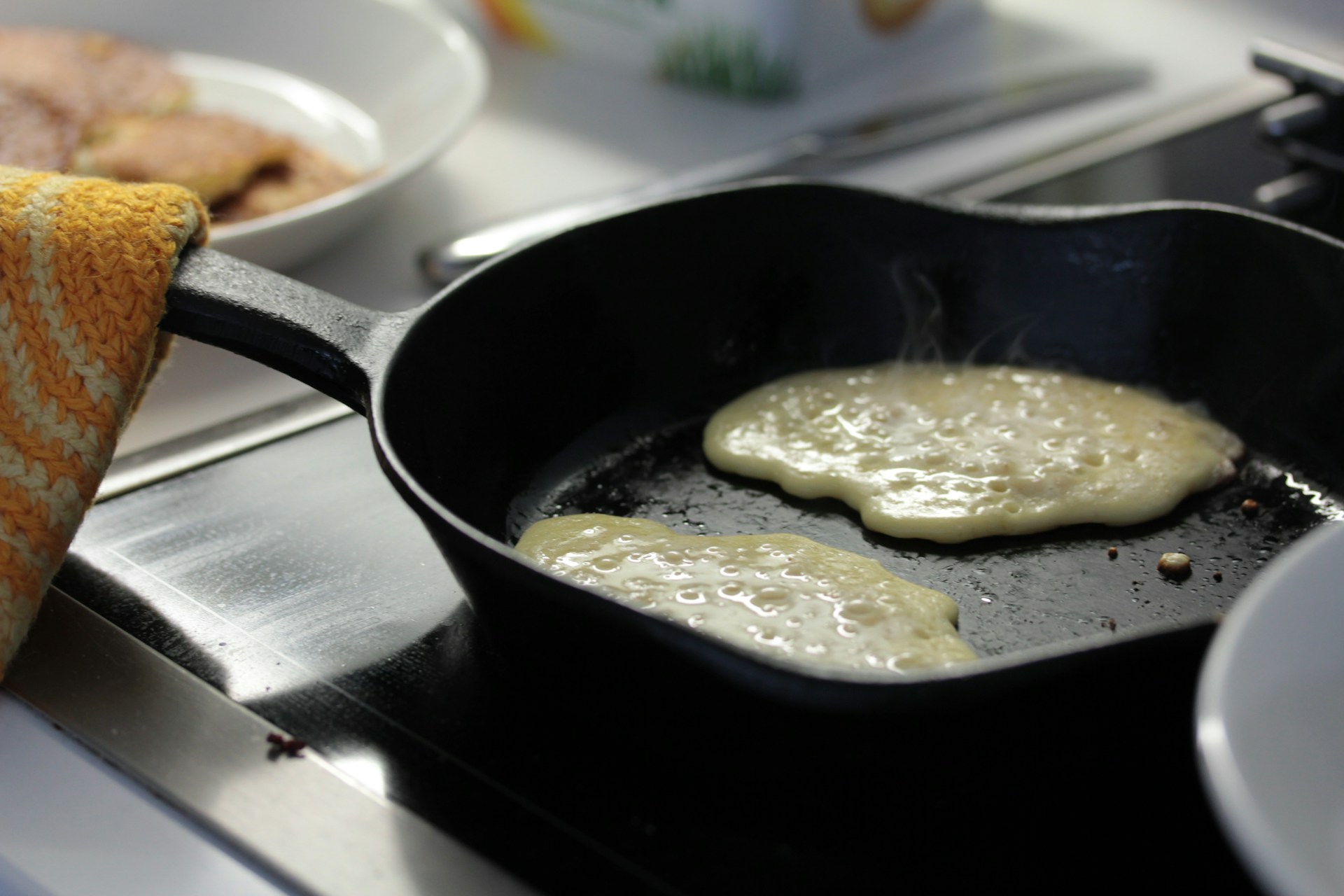
For others, it’s Saturday morning pancakes with kids mixing the batter in a cloud of flour dust or teaching their daughter to ride a bike. Quiet evenings on the porch planning their next camping trip.
Still others may crave a life of endless travel, vagabonding from place to place, sampling cuisine from every corner of the world as they go.
There are as many versions of happiness and fulfilment as there are people.
Social media tries to curate our happiness by showing us picture-perfect moments. Engagement photos against stunning backdrops, vacation snapshots from exotic locations (often peering over two perfectly poured wine glasses on a balcony), career announcements celebrating promotions and new ventures.
These snippets of other people’s lives create a happiness catalog. A collection of achievements and experiences that can feel like requirements for a well-lived life.
We may start believing that fulfillment looks like someone else’s Instagram story, someone else’s LinkedIn update, someone else’s holiday letter.
Seeking fulfillment by following someone else’s template is always a fool’s errand.
Sure, be inspired by someone else’s success. Maybe borrow a travel idea, or try something new. But their world operates differently than ours. Their values, circumstances, and dreams belong uniquely to them.
What brings them deep satisfaction might leave us feeling empty. What fills our hearts might seem trivial to them.
True fulfillment can only come from our own perspectives, our own values, and our own definition of what makes us, and those we love, happiest.
Real “happily ever after” is wonderfully messy and beautifully imperfect. It blends all the goals and aspirations we have with all the compromises and adjustments we’ve made along the way.
Goals that seemed essential in our twenties might be irrelevant in our forties. The dreams we never imagined decades ago can suddenly become our life’s new mission.
This evolution reflects an ongoing process of learning who we are and what truly matters to us. Independent of what we thought we would want…or what others told us we should want.
Happily ever after lives in the ongoing appreciation of what we’ve built and who we’ve become. Our story matters because it’s still unfolding and it’s authentically ours. It doesn’t need to resemble the someone else’s highlight reel.
The glass slipper that fits you perfectly will look nothing like Cinderella’s. Maybe it’s a hiking boot, flip-flops, a running shoe, or something very formal, made of fancy leather…or no shoes at all.
You choose.
And that’s exactly as it should be.
Photo by Ella Heineman on Unsplash – because one of my greatest joys is making breakfast for my kids and grandkids on a Saturday morning…a wonderful part of my happily ever after.
There’s a line in a Frank Sinatra song that asks if we’d like to, “…carry moonbeams home in a jar.” A crazy idea. Moonbeams can’t be contained or put in a jar, but their magic can be carried home just the same. What if we could carry home the kind of wonder and light that moonbeams represent?
Life throws challenges at us every day. Deadlines. Difficult conversations. The relentless tug-of-war between expectations and reality. Yet, amid the noise, we often stumble upon moments of beauty. Unexpected acts of kindness, moments of connection with strangers, or simply a sunrise or sunset that stops us in our tracks. These are moonbeams.
Have you ever met someone for the first time and felt their kindness so deeply that it stayed with you? Maybe it was a stranger who gave you directions with a smile, a colleague who truly listened, or someone who saw you struggling and extended their hand. These are glimpses of humanity’s greatness. Magic moments where we see the best of who we are reflected in someone else.
What if we made it our mission to carry that magic home with us?
It’s easy to bring home the worries of the day. Our frustrations, our stresses, our nagging self-doubt. But alongside these, we can also bring moonbeams: the small, bright moments of beauty, hope, and love that we encounter every day. We can share the wonder of a chance conversation, the joy of something new we learned, or the inspiration we felt when we saw someone overcoming adversity.
Carrying moonbeams is about being conscious of what we pass on to those we love. It’s about choosing to share curiosity instead of cynicism, gratitude instead of grumbling. It’s about being the explorer who brings back stories of the world’s beauty to share with those at home, inspiring them to see the magic in their own lives, too.
Imagine if we all carried moonbeams in our metaphorical jars. How much brighter would our homes, our communities, and our world become?
What if we could embrace the day with the motivated curiosity of an explorer. Purposely looking for the moonbeams—the fleeting magic of kindness, beauty, and connection.
Imagine carrying them home to share, not in jars, but in our words, our actions, and our presence.
Because moonbeams, once shared, have a way of multiplying.
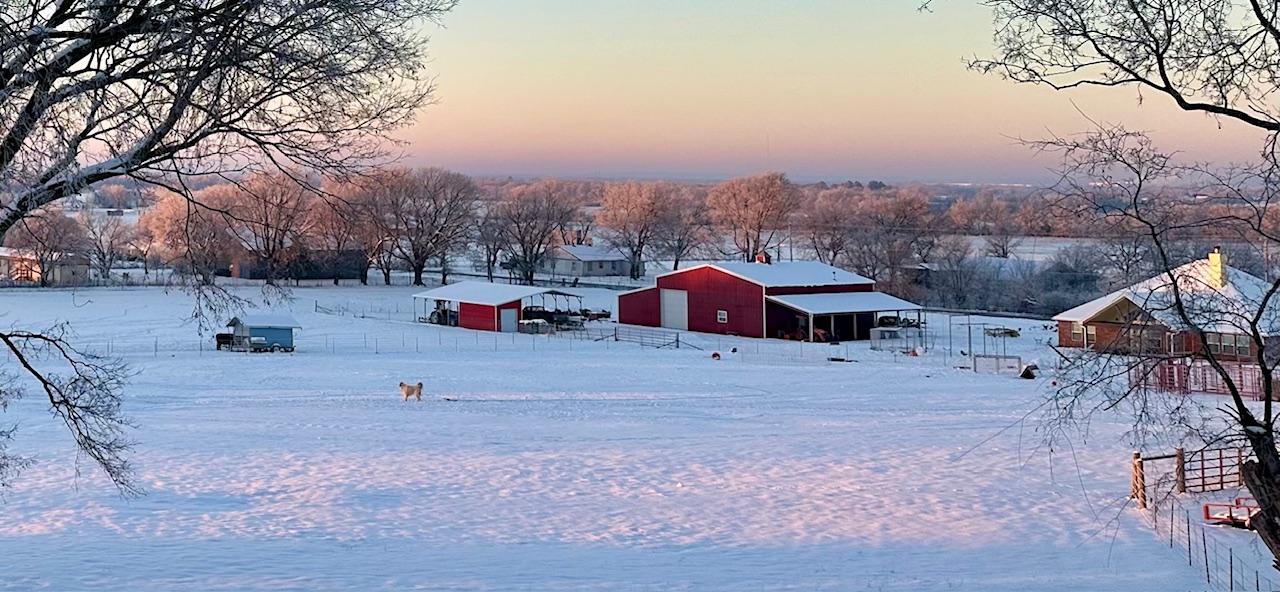
Photo by me, capturing a “moonbeam” of a sunrise view outside my kitchen window the other day
Most of my childhood outside of school is a blur of off-road riding and racing (and lots of water skiing, but that’s another story).
We were either preparing to ride, camping in the desert to ride, racing in the desert (although I didn’t race nearly as much as everyone else), or providing pit support for others who were racing.
By the time I was about 10 years old, Uncle Denby (my dad’s younger brother) had become a serious racer in Baja. By the time I was about to enter high school, he was racing for Team Honda in Baja. The Hilltoppers, the motorcycle club my dad and Uncle Denby belonged to (that I’d join a little later) put on annual Grand Prix races in Rosarito Beach.
Between the Baja racing, pre-running trips, adventure riding to Mike’s Sky Ranch and San Felipe, and numerous trips to Rosarito Beach to set up the race each year, we were in Baja a lot. I remember watching the Dallas “who shot JR” episode on a small television in a hotel bar in Rosarito Beach.
All of this meant I got to ride with Uncle Denby regularly. He was always ready. His bike was perfectly tuned. His gear was impeccably organized. He was dialed in. He expected everyone around him to be as dialed in as he was.
For most Baja rides, we had a scheduled time for departure. Maybe at first light, or 7:30am. To Uncle Denby, this meant we’d be putting our bikes in gear and leaving at the scheduled departure time. Not putting gas in our bikes, trying to find our goggles, or figuring out why our backpack wouldn’t fit right. He’d say, “Do all of that on your own time. If you need an hour to get ready, wake up early and get it done.”
Since I rarely knew where we were going, and Uncle Denby was usually leading the way, I quickly learned to be fully ready with my bike idling at departure time. I operate this way today, even though I haven’t ridden a motorcycle in decades.
Whoops are a fact of life in off-road riding. These are undulations in the trail caused by countless vehicles digging a little bit of dirt and relocating it to the top of the whoop behind it as they race by. Certain sections of the California desert where we used to ride are notorious for miles of 2-3 foot (or larger) whoops. Sections of Baja are similarly whooped-out.
I struggled with whoops. I don’t know anyone who likes riding whoops, but some people can fly through them. That wasn’t me. Lucky for me, Uncle Denby happened to come up behind me in a whoop section. He had stopped to help someone else, so I and many others in our group got ahead of him on the trail. Once he was back on his bike, it didn’t take him long to catch me.
This time, he didn’t pass. He stayed behind me for a couple of miles. Then he rolled on the throttle and went right by me, smooth as ever. When we regrouped for gas a while later, he came over and asked me what gear I was in when he came past. I was in third gear, maybe three-quarter throttle.
He said I was riding in too low of a gear. I needed to work on riding the next higher gear if I wanted to find a smooth way through the whoops. He told me he was watching me ride and getting exhausted for me. He could tell that I was working way too hard. Moving to the next higher gear at half-throttle would get me on top of the whoops with more speed and reduce my workload on the bike.
None of this was obvious to me, but second nature to Uncle Denby. Later that day, we came up to another (shorter) section of whoops. I eased into fourth gear and carried a lot more smoothness into the section. The whoops were still challenging, but not nearly as hard as before…and I was moving at a much higher pace. I was conserving energy and riding faster (and safer) by clicking up one gear.
Something else about that next higher gear…traction. Ride in too low of a gear, especially on a two-stroke, and your back tire has a tough time staying stuck to the ground. Forward motion is all about smooth and consistent traction. If your power isn’t making it to the ground, you’re not moving. A spinning rear tire isn’t taking you anywhere. Everything is working hard, but nothing is happening.
We had another riding day, this time out on the Rosarito Beach Grand Prix course. We rode most of the loop together. The course had lots of high-speed sections and fast turns. We were having a great time, riding wheel-to-wheel. Obviously, he could have left me in the dust, but he pushed me at my pace and showed me how to brake before the turns, and then accelerate out to maintain the most speed and control.
Yet another aspect of traction. No traction, no turning. If you’re on the brakes in the turn, you don’t have the same traction and control as you do if you’re accelerating out of the top of the turn. Timing when to get off the gas, when to brake, and when to accelerate made all the difference in the world.
Something else Uncle Denby taught me that day.
I was sad to hear that Uncle Denby passed away last night. He battled a tough disease for quite some time.
I will always treasure the lessons he taught me. He probably thought he was teaching his nephew how to ride a motorcycle faster and smoother.
But he was really teaching me how to dial myself in, how to find the next gear, and how to maintain proper traction in all situations.
Godspeed, Uncle Denby, and thank you for riding with me.
That elusive place or time where everything is perfect…
In Utopia, everyone is an ally. There’s no struggle to determine who will lead, and who will follow. There is no disagreement or dissention among the inhabitants. The definition of what’s important is known and accepted by all. All roles and activities in Utopia are complementary, and synchronized perfectly. Each person knows their role and is happy and content to remain in that role. There is no envy in Utopia. There are no outside influencers with contrary ideas. There are no existential threats to Utopia. In Utopia, there is no competition. Humans live and work in complete harmony and happiness.
Cue the sound of a record scratching!
Put at least three humans together, and watch the non-Utopian dynamics unfold.
The group may be focused on delivering food to the homeless, winning a pick-up basketball game, planning a party, or running a Fortune 500 company. It doesn’t matter whether there are three members in the group, three hundred, or three thousand. The realities of human nature prevent Utopian agreement and synchronicity among the participants. It’s a good thing. Imagine how few new discoveries would happen if everyone were trapped in Utopia.
And yet, many spend their lives searching for it. That elusive place or time where everything is perfect. They bounce from one relationship to another, from one city to another, from one company to another…never quite finding their version of Utopia. A deepening sense of urgency, even profound disappointment, creeps into their subconscious as their fruitless search continues.
Utopia isn’t a place, a time, or a group. It’s what you make for yourself and those you love. It’s how you treat others. It’s how you treat yourself. Utopia is where you are each day, if you get out the way and allow yourself to enjoy it.
One could argue that this view of personal Utopia is, in a word, Utopian, and therefore impossible.
That may be true, and this argument will continue long after my time on the planet.
In the meantime, I’ll focus on enjoying my Utopia while others continue their search.
How’s your search going? Have you found the awesomeness you’ve been seeking?
There are a lot of awesome nouns (people, places, things) out there. A whole bunch of awesome verbs. And, don’t forget about all the awesome adjectives. String these together in almost infinite patterns, and you have the makings of a lot of awesomeness.
The sound of steaks sizzling on the grill, a beautiful sunset, the sparkle in someone’s eye when you’ve taught them something they never knew, the quiet stillness of a starting line just before the starter’s gun goes off, the aroma of a perfect cup of coffee as the sun comes up, the crackle of a campfire, watching your daughter roast a marshmallow to perfection.
The search for awesomeness should be an easy one. It’s all around us.
Sadly, for some, finding awesomeness is impossible.
That’s because they don’t realize that awesomeness isn’t about what’s outside. It’s not about what we see, touch, or hear. It isn’t what we smell or taste. It isn’t even about who is with us.
Our thoughts drive who we are, what we’ll be, where we’re going, and how we look at the world. To find and experience awesomeness, we must first open ourselves to gratitude and appreciation. Without gratitude and appreciation, all of the awesomeness in this world (and beyond) are merely nouns, verbs, and adjectives, waiting to be combined.
The search for awesomeness starts and ends within each of us. Gratitude is our compass. Appreciation is our map.
[This post marks the first anniversary of my blog. My goal was to publish one post per week, and limit their length to no more than 500 words. This is my 58th post, and I think only one went over my self-imposed word limit (but, it was one of my favorites).
I’m grateful and appreciative that you have taken the time to read my posts. I hope you found them encouraging, informative, and maybe a little thought provoking.]






You must be logged in to post a comment.