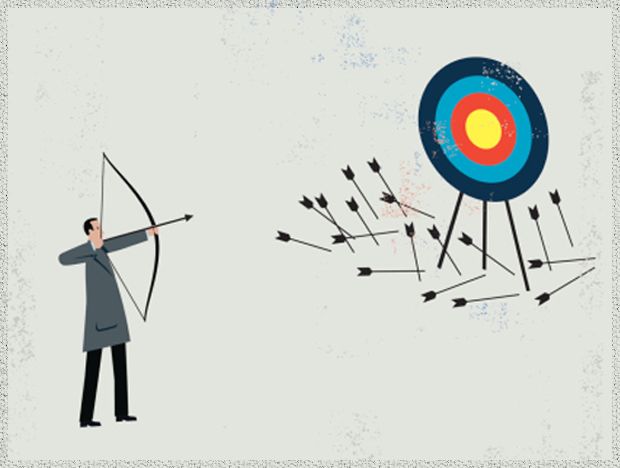
Failures have excuses…Successes have stories

The unfortunate truth is that some of us start making excuses long before the failure is complete…

unsplash_Samuel_Clara

The excuse:  “We were in trouble right from the start.  We started in the dark and two of our headlamps wouldn’t work.  It started raining as we approached the halfway mark.  The mud really slowed us down.  Then, Jeremy slipped and fell and muddied up all his gear.  We knew we couldn’t make it to the summit and back before sunset, so we decided to turn back.”

The story: “That hike was epic!  We started in the dark.  We had to share John’s headlamp because ours stopped working for some reason.  When the sun finally came up, it started raining.  Hard.  The mud made for slow going.  When Jeremy fell in that massive mud puddle, we just cracked up, wondering what else this hike would throw at us.  It took about ten minutes to get him cleaned up.  Once the storm passed, we had to double-time it to make it to the summit before dark.  We got there with plenty of time to spare.  It was awesome!”

The excuse:  “There was no way we could have made the goal.  The economy turned sour on us in the second quarter.  Some bozo from IT botched the server install, and it took nearly two months to get everything configured properly.  That didn’t leave enough time for the developers to deliver on schedule.  All in all, it’s amazing we’re still in business.”

The story:  “Can you believe it?  We were pulling all-nighters for weeks because some bozo from IT botched our server install.  But, we made the release date.  Customers loved it, and we hit our sales target.  Nobody thought that could happen in this economy.”

Have you ever noticed that failures have excuses, and successes have stories?

The unfortunate truth is that some of us start making excuses long before the failure is complete.  We run into a hurdle, lose our belief in the goal, or simply lose hope that we can achieve success.

So, we get busy preparing excuses.

Our failure must be justified.  First to ourselves, and then to everyone else.  It’s even better if we can find allies to help us create better excuses.  Excuse making often replaces the work that just might deliver success.

Are successes perfect?  Far from it.

Success rarely comes without adversity.  Success usually requires new tactics, mid-course corrections, and tons of hard work.  Overcoming the odds, leaping over the hurdles, finding creative solutions…these give power to the stories we tell about our success.

Imagine a world where adversity strengthens our success stories, rather than bolstering the excuses we make for our failures.

“If it is important to you, you will find a way.  If not, you will find an excuse.”  -Author Unknown

p/c: Unsplash.com, Samuel Clara

Are You Willing?

All that matters is learning what you believe in…

“I know this now.  Every man gives his life for what he believes.  Every woman gives her life for what she believes.  Sometimes people believe in little or nothing, and yet they give their lives to that little or nothing.  One life is all we have and we live it as we believe in living it and then it’s gone.  But to surrender what you are and to live without belief is more terrible than dying—even more terrible than dying young.”  –Joan of Arc

Joan of Arc lived less than twenty years.  Yet she fought for her beliefs and made a huge impact on history.  She died for her beliefs at an age when many are just beginning their life’s journey.

She knew what she believed in.  She knew what it meant to sacrifice for her beliefs.  Ask anyone who serves or served in the military, a first responder who runs into a burning building to save others, or a newly formed priest who has answered God’s call.  These are just a few examples.  Each of them know what it means to sacrifice for their beliefs.

Sometimes our beliefs emerge quietly without our knowledge.  We go through life, making seemingly inconsequential decisions about what we will and won’t do.  We decide who our friends are, and how much we will let them into our lives.  We decide when to listen.  We decide how honest we will be with the world around us.

We establish habits for living our life, and we go on our merry way.

Do you know what you believe in?  Really?  Do you know what you believe to be true?  Do you know what is important in your life?

Have you made the quiet time in your life that’s necessary to consider these questions?

What if it turns out that the things you believe in aren’t manifested in the way you live?  Are you willing to change your habits?  Are you willing to eliminate the things that don’t support your beliefs?  Will you support your beliefs in the way you live, and the way you work with others?  Are you willing to make your beliefs the centerpiece of your actions in everything you do?

Joan of Arc was right.  One life is all we have, and then it’s gone.

Where are you in that one life?  Is it too late to examine your beliefs and change the way you live?

The answer is clear  But, it won’t become obvious until we make quiet time in our lives to reflect.  When we do, we find it’s never too late to examine our beliefs and change our life.

Every day is a new beginning if we choose to make it so.  It doesn’t matter what happened in the past.  It doesn’t matter who wronged you.  It doesn’t matter if you had a terrible childhood.  It doesn’t matter if you’ve missed opportunities in the past.  It certainly doesn’t matter if you failed in the past.

All that matters is learning what you believe in.  Then, deciding what to do with that new knowledge, starting today.

The only question is:  Are you willing to find out?


Beliefs and Values

h/t:  Matthew Kelly

The Vocabulary of Christmas

MerryChristmas

I’m fascinated with the way our vocabulary morphs as we approach Christmas.  Consider how often you hear these words other than this time of year:

Jingle Bells

Rudolph

Reindeer

Santa

Elves

Cinnamon Sticks

Tidings

Nutcracker

Jack Frost

Mulling Spice

Christmas Island

Jolly

Jack Frost

Snowman

Stockings

Baking

Chestnuts

Trimmings

Joy

Twinkles

Tinsel

Sugarplums

Merry

Noel

Caroling

Village

Christmas Tree Lot

Chimney

Crèche

Gingerbread

Frankincense

Welch Cakes

Wishes

Myrrh

Fruitcake

Holly

Manger

Nativity

Goodies

Home (as in “for the holidays”)

Frightful (as in the weather outside)

North Pole

Workshop

Ornaments

Traditions

Partridge

Cornish Pasties

Poinsettias

Rejoice

Scrooge

Sleigh

Wise Men

Yuletide

These words trigger great memories, but none would matter without family and friends to make them special.

May we each create wonderful new memories with our family and friends this Christmas season.

There are no self-driving…

Auto-pilot and self-driving systems have one thing in common: they know where they’re going…

Airplanes have auto-pilot.  Cars are getting closer to self-driving.  In fact, I just saw a headline about a police officer pulling over a self-driving Google car (not sure who gets the ticket in that situation).

As Aldous Huxley said in his 1931 book, it’s a brave new world.

Auto-pilot and self-driving systems have one thing in common:  they know where they’re going.  Actually, the systems don’t know.  The operator who is (ostensibly) in control knows the starting point, and the destination.

Real life doesn’t work that way.

There are no self-driving:

Friendships.  We don’t know when a new friendship will start, we surely don’t know where it’s going, and we hope it never ends.  The journey is what makes it so good.  Have you put any of your friendships in self-drive mode?  It’s a conscious decision, even when you act like you didn’t notice.  Here’s the good news.  In most friendships, you can switch out of self-drive mode and restart the journey.  Your only decision is when to flip that switch.

Projects.  We usually know when a project starts, and when it’s supposed to end.  We have plans, resources, and our schedules.  We (should) know what defines success in a project, and what the end result needs to be.  That’s all the ingredients a project needs to switch to auto-pilot.  Right?  Not so fast!  Show me a project that’s out of control, off schedule, costing more than expected, and I’ll show you a project that went on auto-pilot while nobody was looking.

Parenting.  We know when parenting starts, and that’s about it.  Parents understand that every day with their kids is an adventure.  It’s an adventure they hope never ends.  There are days when they’d like to go on auto-pilot, but those are the days when they should be most engaged.

Companies.  It doesn’t matter what size they are, or how long they’ve been around.  If people inside a company start to “mail it in,” stop caring, assume someone else is asking the tough questions, assume someone else is making the hard choices; that’s the beginning of the end.  It may take some time, but the end is baked-in the moment self-drive mode is engaged.  It’s just a question of when, and it’s never pretty when the end arrives.

Marriages.  We certainly know when marriages begin.  Sadly, some marriages have ended, yet the people involved don’t even realize it.  Why?  Self-drive.  One or both have engaged the self-drive button and decided that they’re just along for the ride.  Only together can a married couple steer, accelerate, hit the brakes, seek out new routes, find shortcuts, or just enjoy the scenery.  It takes constant work, endless attention, and unending love to share this most important steering wheel.  There’s no room for self-drive in the front seat of a marriage.

Self-drive may seem easier, but its sole focus is the start and the end.  These are only two points on the journey.

The part in the middle is the real reward.  Engage self-drive and you will miss it.


Yo Ho, Yo Ho, A Pirate’s Life for Me!

What makes this ride so popular? Definitely not the speed. Is it the “escape” into another world? Maybe. But, is it really an escape?

Disneyland-POTC_sign

If you’re like me, you know the only way to turn at the end of Main Street USA is left.  Left, toward Adventureland, and New Orleans Square.  Sure, you could go for one of the “speed” rides like Space Mountain over in Tomorrowland.  Buzz Lightyear (Astro Blasters) is a good one.  Or, maybe Thunder Mountain.  The Matterhorn is re-opened, if you like to have your spine compressed (not sure why they didn’t fix that problem during the most recent refresh).

But, the best rides are definitely in Adventureland.  The Jungle Cruise, Indiana Jones, Pirates of the Caribbean, and the Haunted Mansion.  Don’t even get me started on how awesome Tom Sawyer’s Island is.

The Jungle Cruise is all about the puns.  Indiana Jones is (mild) sensory overload and a neat cave walk to and from the ride.  The Haunted Mansion is a cross between Tim Burton’s vision of the world, and old school special effects that are still cool.

The best of all is Pirates!

First you’re in a New Orleans bayou.  Crickets are chirping, a few frogs are croaking quietly, and fireflies dart about.  It’s dark, quiet, and lazy.  The swamp guy sits on his porch, smoking a corn cob pipe.  The sound of slow banjo picking comes from his house.  Do swamp guys have CD’s?  Electricity?  Does he have a banjo-playing friend in the house?  Then, total darkness, a quick drop, and we enter a pirate’s lair.  It’s clearly seen better days.  Tons of treasure gather dust and cob webs.

I’ve never known what a New Orleans bayou has to do with being in a pirate’s lair, but over the years, I’ve learned it doesn’t matter.  “Dead men tell no tales!”  Just as you figure out that all the riches and treasures in the world didn’t do these dead pirates any favors, a foggy curtain projects an apparition of Davy Jones, warning us about the cursed lives of pirates.  Our boat ignores the warning and carries us into this cursed world.

We enter a pitched battle between a pirate ship with cannons blazing, and the shore defenses firing back.  It’s a desperate battle with explosions and lots of yelling.  Somehow the shots never hit anything vital, or do they?  The battle rages on, but we pass safely under the line of fire.

The harbor comes into view.  Not just any harbor, but a “Yo Ho, Yo Ho, a pirate’s life for me,” harbor from long ago.  Pirates are drinking and singing.  Some of the less fortunate are dunked endlessly in a well.  A vain search for Captain Jack Sparrow.  Others are sold as brides.  We see drunk pirates singing to themselves and no one in particular, scheming ways to find more treasure.

The scene shifts again to a prison where the only hope of escape lies in convincing a dog to give up the keys.  The dog never budges, but always looks like he might.  Hopefulness mixed with despair.  If only the prisoners would realize that their only salvation is to find a new strategy, a new direction.  Of course, they never make this connection.  We slowly pass under a collapsing ceiling, and back into the harbor.

The town is ablaze, but nobody cares.  We know the flames spell disaster, but that’s lost on everyone in the scene.  They continue to drink, sing, and chase each other in a search for the next moment.  Some fire randomly across the water at their friends.  “Yo Ho, Yo Ho, a pirate’s life for me!”

The dichotomy of the celebratory singing and the evil that humans do to one another isn’t the point…or, maybe it is.  All the while, our boat floats lazily through the scene.

We begin our slow climb out of this cursed world as Jack Sparrow tell us to, “Drink up you laddies!  Yo Ho!”

What makes this ride so popular?  Definitely not the speed.  Is it the “escape” into another world?  Maybe.  But, is it really an escape?

Each of us can relate to being the pirate.  We’ve been dunked in the proverbial well…sometimes we do the dunking.  We’ve fired aimlessly at our enemies (and our friends) at one time or another.  Oblivious to the pain we may cause.  We’ve focused solely on the now.  Ignored the future.  We’ve looked for treasure.  Maybe we’ve found it…and yet, our search continues.

Are we nothing more than passengers on the boat, passing lazily through the scenes of life, yet never connecting to any of it?  Hopefully not.

A pirate’s life, indeed.  Time to get in line for the next ride!


Speed bumps and walls…

…have a few things in common. Both force us to pay attention, slow down, and (sometimes) change course…

speed-bump-warning-sign

…have a few things in common.  Both force us to pay attention, slow down, and (sometimes) change course.  In many ways, speed bumps are merely walls that are short enough to get over with minimal effort.

Unlike speed bumps, walls are there to stop us, contain us, to protect something we’re not supposed to see, or maybe provide protection to something we don’t want others to see.

Is that nasty cold you have a speed bump or a wall?

How about the job you had until last week?  Is losing that job a speed bump or a wall?

Is the macro-economic forecast for 2% or less in U.S. Gross Domestic Product growth a speed bump or a wall?

Is bad weather (however you define the term bad) a speed bump or wall?

The death of a loved one?  Speed bump or wall?

The diagnosis you received from your doctor that has you wondering how long you have to live this life you love.  Speed bump?  Wall?

Meeting the person of your dreams and falling in love.  Speed bump or wall?  Surprise!  Good news introduces speed bumps and walls, just like bad news.  Of course, good news can also knock down walls.

When the news first hits, it almost always looks like a wall.  Only after further reflection, maybe some quiet meditation, a hard workout(s), discussions with our friends and family, enjoying a bowl of our favorite ice cream, watching some sunrises and sunsets, or all of these, do the walls start to look shorter.

As the walls lose their height, they may disappear from sight, or take the shape of speed bumps that we can handle.

Some walls are high and stay that way.  If we can’t climb over, we learn to change direction and find a way around.

What if we can’t climb over, can’t change direction, and the high walls continue to surround us?  Should we give up?

No way!

We build our expansive life inside the new walls and never drop our quest to escape…even if we have to dismantle the walls one brick (or chisel strike) at a time.

Do you remember that guy who gave up?  Neither can anyone else.  –Author Forgotten

Keeping the Wonder

Expertise means knowing. Knowing usually repels wonder…

In the beginning, before we’re experts, the following are easy questions to ask:

  • I wonder if this will work.
  • I wonder how this works.
  • I wonder who can help me if this doesn’t work.
  • I wonder what’ll happen when this works.

Once we become the expert, our expertise means:

  • This will work.
  • I know how it works.
  • I’m the one that people come to when it doesn’t work.
  • I’ve seen this work a million times, so I know exactly what’ll happen when it does work.

In the beginner’s mind there are many possibilities, in the expert’s mind there are few. –Shunryu Suzuki

Expertise means knowing.  Knowing usually repels wonder.

But, powerful things can happen when expertise is mixed with wonder, instead of being separated from it:

  • I wonder if there’s a better way to make this work.
  • I wonder if I can eliminate this entire step and get the same result another way.
  • I wonder who I can help learn more about how this works.
  • I wonder how my customer views the way this works.

The expert who keeps their wonder is willing to search for new ways, new answers, and even new questions, in a quest for continuous improvement.

That same expert might even wonder (pun intended) if their expertise can solve an entirely new set of problems.

True innovation is almost always impossible without its main ingredient:  wonder.

The more you know, the more you know you don’t know.  –Aristotle


The Rear-View Mirror

Rear-view mirrors are nice, but the real action is in the opposite direction…

For years, I seemed to pick cars that were too short.  The rear-view mirrors were always right at my eye level.  At first, that sounds about right.  But, the mirrors actually blocked my view out the front windshield.

I had two choices:

Duck down and look under the mirror to see the road ahead,

or,

Remove the mirror.

Not wanting to scrunch down, or have to remember that what I could see was actually the view out the back window, I decided to remove the mirror from my view.

A bit drastic, but I was okay with it.  I could always use the side mirrors to see behind me.  Besides, I mostly used the rear-view mirror to scan for cops (it’s easier to spot their profile, or their lights, using the rear-view mirror).  Since I wasn’t in the habit of breaking laws, it wasn’t a big sacrifice to lose that wide-angle backward view.

Most of what I was interested in was in front of me anyway.  Removing the mirror let me stay focused on what was coming, rather than where I’d been.  Occasionally, I’d glance to the empty spot where the mirror used to be, mostly out of habit.

A habit born of the desire to glean value from where I’d been, but mostly to know if something was about to catch me.  It didn’t matter that I wasn’t doing anything worthy of being caught.  But, still, it was there.  The unknown pursuer.  The quick glance to the rear-view would help me see when it was coming.  It never was.

Fast-forward twenty years or so, and my car (actually a truck) is bigger.  The rear-view mirror doesn’t block my view out the front.  It provides a nice panorama out the back.  I don’t use it much (the side mirrors are still my go-to).  When I do use it, I’m not interested in seeing my pursuer.  I’m not as concerned about who may be back there (unless it’s a knucklehead weaving through traffic, ignoring everyone’s safety).

My rear-view mirror lets me quickly see where I’ve been, and that’s enough.  The real action is still in front of me, so I’m glad my mirror doesn’t block that view.

Otherwise, it would have to go.

Rear_View

There’s a crack in the gutter where a flower grows…

They’re not supposed to be there. It should be impossible for them to grow…

Pandora is awesome.  I was listening to my Happy Radio channel the other day when this song called Hey, Hey, Hey came on.  It had a catchy tune, and some of the words seemed nice when I chose to listen closely.  It was my first time hearing it, but I knew it had been around a while.

Somewhere in the middle of the song I hear:

There’s a crack in the gutter where a flower grows

Reminding me that everything is possible
Yeah, reminding me that nothing is impossible
You gotta live for the one that you love you know
You gotta love for the life that you live you know

Singing hey, hey, hey
No matter how life is today
There’s just one thing that I got to say
I won’t let another moment slip away

That got my attention.

How many times have you seen a plant (sometimes a weed, but that’s really in the eye of the beholder) growing out of a crack in the sidewalk, or the gutter?  How about the tree that figures out how to grow from within a cracked boulder?

They’re not supposed to be there.  It should be impossible for them to grow.  Yet, there they are.  Thriving in the most inhospitable of environments.

Each of us have the same ability to overcome adversity.  To be the flower growing in the crack in the gutter.  To grow and thrive in our little corner of the world, making a small but important difference to those around us.

Life is a journey, and it can be a struggle.  But, it’s also a triumph, and an opportunity to make our mark in places nobody (including ourselves) would ever expect.


Here’s the whole song…and, yeah, it’s been around since 2010.  Only took me five years to notice it (not good for my hipster cred):  Hey, Hey, Hey


Closing Your Eyes to See More Clearly

Have you ever tried brushing your teeth with your eyes closed, or in total darkness? I’m sure you’re asking, “How hard can that be?”

Have you ever tried brushing your teeth with your eyes closed, or in total darkness?  I’m sure you’re asking, “How hard can that be?”

Give it a shot and you’ll find out.

Would you be able to find the toothpaste?  How about your toothbrush?  The sink?  Now for the tough part.  Can you put the right amount of toothpaste on the toothbrush?

Maybe you mastered all of that, and even brushed the proper amount of time.  Are you sure you’re spitting in the sink?  Did you put the toothbrush back where it belongs?  How about the toothpaste?

You (should) brush at least twice a day.  Multiply that by your lifetime of days, and that’s a lot of practice.  Your brain should do it automatically…and it does until you eliminate one sense (sight in this case).  Then it gets a lot harder.

So hard that you may find all your attention focused on that one simple task.  For that moment, you will be fully present.  No distractions.  Only a laser focus on trying to figure out how to get the right amount of toothpaste on the toothbrush without making a mess.

Our brains are amazing.  The biggest consumer of calories within our bodies.  So, over millions of years of development, our brains have found ways to disengage (in the interest of energy conservation).  Once our brain establishes a pattern for an activity, it flips the “auto-pilot” switch and rests.

Think about all things you do in a day without thinking.  Or, maybe all the things you do while thinking too much.  What if you approached each one a little differently?

Commute to work a completely different way.  Shop in the opposite direction (admit it, when you go to “your” grocery store, you usually go in the same direction).  Put your shoes on starting with the other foot.

Put a penny next to your smart phone.  Pick it up instead of your phone when you get that urge to check your messages.  A penny for your thought.  Maybe you can give those pennies to a charity.  Since this is for your favorite charity, what if you put a $20 bill there instead?  That habit of yours may actually help someone else.

Which brings us back to the original premise.  Brushing your teeth in the dark.  Try it.  You just might see things a bit more clearly.


Here’s the kicker.  If you brush in the dark for about a week, it will become second nature to you, and (you guessed it) your brain will once again go on auto-pilot.  Time to switch it up again!