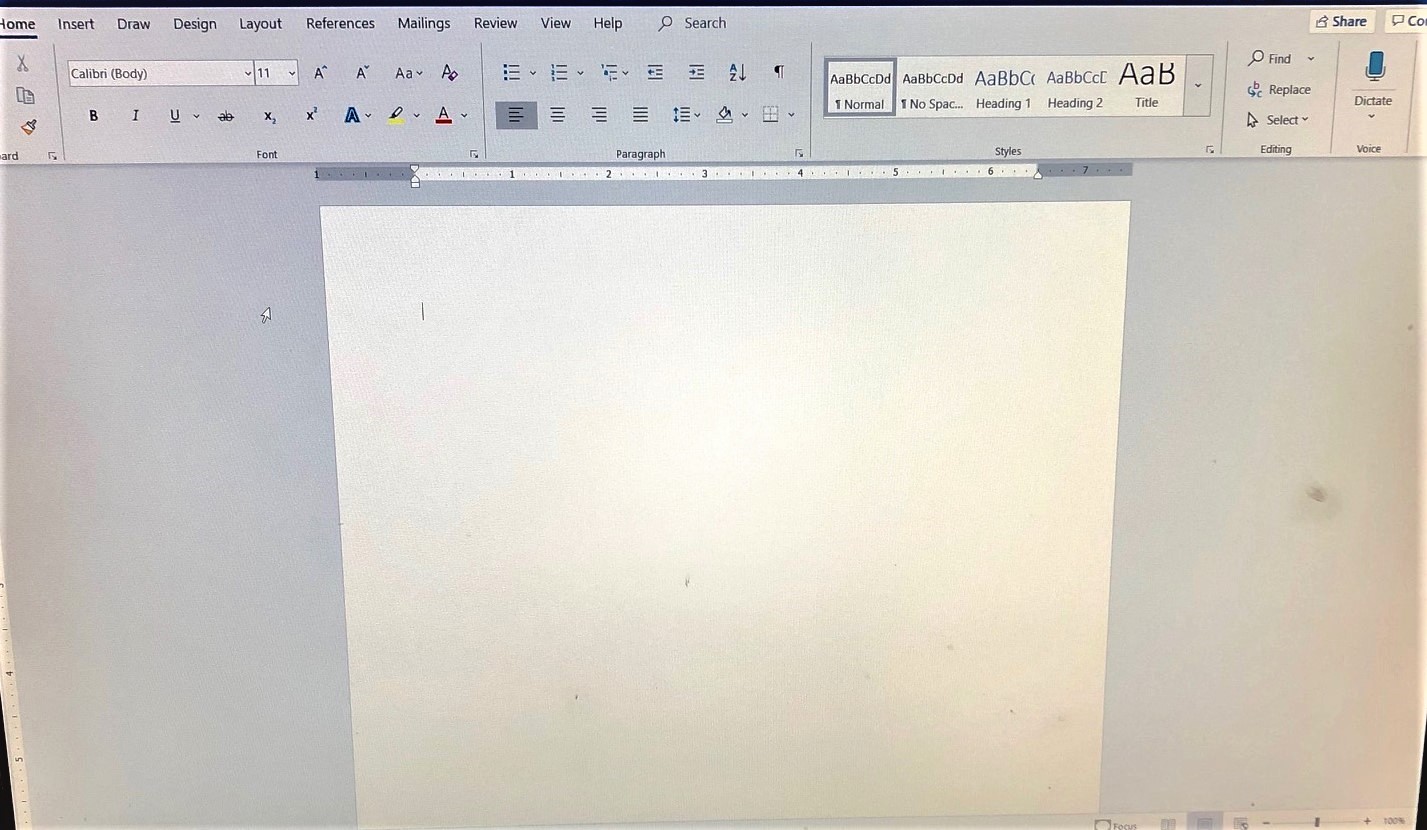
Anything You Write…

What will you write today?

“Anything you write can be fixed, except for the pristine perfection of the blank page.” –Neil Gaiman

Our future is the ultimate blank page.  The cursor blinks patiently, endlessly.  Waiting for us to write something.

That cursor doesn’t care what we’ve written in the past.  It doesn’t really care what we’ll write in the future.  Still it blinks…waiting.

Writers sometimes talk about writer’s block.  The intimidating view of a blank page that beckons them to write something…anything.

I agree with Seth Godin, that there’s no such thing as writer’s block.  Rather, there’s fear that what I’m writing won’t be as perfect as I want it to be.  It won’t be accepted by my readers.  It may be shunned, castigated, or otherwise flamed by someone I don’t even know.

So, my lizard brain protects me by making sure I don’t write a thing.

The same is true in life.  What we write into our life today may not be perfect.  It may not make sense to anyone.  It may be wrong.

That’s okay.  As Mr. Gaiman says, we can fix it.

Today’s page will be written, whether we do the writing or not.

What will you write today?


Photo Credit:  Bob’s computer screen before and after writing this post


What We Don’t Know

What do I know?  I know that I don’t know much, even though I know a lot.

Consider everything you know…

All the things you’ve learned since you were born.

All the things you’ve forgotten…in the last five years.

The capital of Vermont.  Montpelier.  I remember that one from 5th grade, even though I’ve never been to Vermont or Montpelier.  I like the way it sounds, and the word Montpelier always makes me think of potato peelers.

“I” always comes before “E,” except after “C” and in weird words like weird.

Over ninety-eight percent of the population of Australia lives within 25 miles of the country’s coastline.  I learned that from a tour guide.  I assume it’s true.

Now, consider everything you don’t know.

Like, how to sew.  Or, how to find top dead center on a Volkswagen engine.  What about the method for calculating the orbital decay of a satellite?  The percentage of nitrogen and oxygen in our atmosphere?

How about the exact weather forecast for a month from now?  What your customers will want or need or expect one year, two years, five years from now?  The truth is, they probably don’t know either.

I’d venture to say that what we don’t know is “Infinity minus One” larger than what we do know.  Sounds hopeless.

But it’s the unknowns that make our little journey interesting.  Discovering the secrets of an unknown is the reward for our curiosity.

How does cruise control work?

How and when did someone decide it was a good idea to pick certain red berries, dry them in the sun, then put them over a fire for just the right amount of time (whatever that is), then grind up what’s left and run hot water over it to make coffee?

Where does castor oil come from?

Curiosity and the humility to admit our ignorance, in pursuit of new knowledge is the key to learning.

Understanding that our decisions will never have the luxury of complete or perfect knowledge.  We’ll never know everything before making the decision.

In fact, taking that risk and making the (uninformed) decision is another way we learn.  If our decision is wrong, we learn from it (hopefully) and make a new decision that is less wrong.

Knowledge is power, and ignorance is bliss.  Both are right.

But I believe ignorance can have more power.  The power to try.  The power to seek.  The power to chase the unknown.

What do I know?  I know that I don’t know much, even though I know a lot.

Knowing that I don’t know drives me to ask the dumb question(s), to search for answers, to seek the unknown, to leap, to discover, to practice, and most of all, to never stop learning.

Photo by Raj Eiamworakul on Unsplash


Letting Go

You are not what has happened to you…

“If there are pieces of your past that are weighing you down, it’s time to leave them behind.  You are not what has happened to you.  You are someone unimaginably greater than you have ever considered, and maybe it’s time to consider all the possibilities that are within you.”  –Matthew Kelly

How much baggage are you carrying from your past?

The mistakes you’ve made.  The opportunities you missed.  The disappointments.  The tragedies.  The could’ve beens and the should’ve beens.  The people you still won’t forgive.

Letting go doesn’t mean forgetting your past.  It doesn’t mean ignoring the lessons you’ve learned.

It means forgiving yourself and forgiving others.  It means loving the amazing person you’ve become and letting go of the person you or anyone else thought you should have become.

Each of us is a work-in-progress.  We have an opportunity every day to define our future.  But, it’s impossible to choose our future while burdened with all the weight of our past.

It’s time to let go.  Drop the weight.  Drop the guilt.  Drop the anger.  Drop the regrets that quietly gnaw at your core.

Let go and prepare yourself for the awesome future that you choose.

As Matthew Kelly says, “You are someone unimaginably greater than you have ever considered.”

Photo by Gianandrea Villa on Unsplash


My Leadership Prayer

God, please grant me,

The faith and judgment to make sound decisions, and

The courage to change those decisions when they’re wrong.

The everlasting hope that, together, our organization can and will be successful.

The fortitude to seek continuous improvement in everything we do.


Integrity and a just heart to do the right thing, even when no one is looking.

A charitable approach to my employees, my customers and my competitors.

The ability to focus on the vital few while ignoring the distracting many, and

The prudence to deploy our limited capital wisely.


Oh, loving God,

Allow me to work from a place of humility, forsaking my prideful thoughts.

Help me look to others for motivation, not as a source of jealous envy.

Give me the self-control to reject greed, striving for what is needed and nothing more.

Show me that the trappings and status of my position are temporary and undeserved.


Always remind me that my life’s mission is to serve others before myself,

Helping my organization grow by focusing on the growth of every team member.

Remind me to provide life-giving feedback and questions that encourage rather than belittle,

To view mistakes and failures as opportunities for learning and improvement.

Help me understand that all of us are smarter and more creative than one of us.


Give me the strength and endurance to persevere through times of trouble.

Give me the vision to see beyond today,

To always strive for a better tomorrow.

Help me to become a positive example for others in my thoughts, in my words, and in my actions.

I invite You into each and every minute of my life.

Grant me the peace that comes from Your eternal and infinite love, now and forever.

Amen


Photo by David Monje on Unsplash


Are You a Time Billionaire?

If you live to the end of your 90th year, you will have lived 2,838,240,000 seconds…

I heard the term, Time Billionaire, a few weeks ago on the Tim Ferris Podcast (which I highly recommend, by the way).

There are 31,500,000 seconds in a year.

If you live to the end of your 90th year, you will have lived 2,838,240,000 seconds.

Each of us is a time billionaire.  We have billions of seconds at our disposal.

To date, I’ve used about 1.67 billion of my seconds.  If I’ve slept for a third of my life (wouldn’t 8 hours per night be nice?), I’ve been awake and actively (?) living for 1.1 billion seconds.  I have roughly 770 million more active seconds remaining (if I live to be 90).

How many billions of seconds have you used?  How many do you have left?

It’s easy to answer the first question, impossible to answer the second one.

One thing is certain.  If you’re reading this post, you’ve already used billions of your seconds, and you probably have millions more.

The most important question is:  What do you want to do with your remaining seconds?

Love.  Work.  Play.  Explore.  Rest.  Watch.  Avoid.  Climb.  Run.  Accumulate.  Distract.  Hate.  Support.  Waste.  Invest.  Achieve.  Overcome.  Reach.  Reduce.  Enhance.  Ignore.  Engage.  Imagine.  Share.  Write.  Read.  Produce.  Consume.  Hide.  Encourage.  Recover.  Experiment.  Challenge.  Destroy.  Create.  Build.  Live!

We decide how we use our seconds (even when we choose not to decide, or let someone else decide for us).

None of us gets a second helping of seconds.  It’s worth investing some valuable seconds to consider what to do with the rest of our seconds before they’re gone.


Photo by Aron Visuals on Unsplash

24 Hours From Now…

The unsolvable problem that unexpectedly hit you in the face today…

the world will look different

you’ve had a chance to process

the crisis is in the past

you’ve slept on it

the embarrassment is behind you

you survived.

They say hindsight is 20/20 and it’s usually true.

The unsolvable problem that unexpectedly hit you in the face today will be a little less scary 24 hours from now.

This doesn’t mean the problem will magically go away on its own, although it might.  It does mean that 24 hours from now you’ll begin to see solutions that weren’t visible yesterday.

Time is on your side, even when it seems like nothing else is.


Photo by Xavier Coiffic on Unsplash

Desire and Appreciation

When was the last time you purposely spent time appreciating your life and the people you love? 

“…people are programmed to desire, not to appreciate.” –Matt Ridley

Imagine if we had the ability to appreciate as much as we desire.

Imagine if the things we appreciated were all that we desire.

We might not get as much accomplished, but we’d probably be a little happier.  Maybe, a little more content.

As infants, we’re 99.99% desire.  It’s the only way we can survive, connect, learn, and thrive.

As we grow, our desires get more advanced.  We visualize, fantasize, dream, and hope.  We talk about the things we’re going to do, the places we’ll see, the people we’ll meet, the mountains we’ll climb.

In all of this, there’s little time for appreciation.  We don’t have time to reflect.  We’re too busy fulfilling our dreams, finding the next challenge, quenching our desire.

When was the last time you purposely spent time appreciating your life and the people you love?

When was the last time you purposely spent time appreciating yourself and the positive impact you have on the world?

Maybe it’s time.

Desire, with all its motivation and energy, is critical to our success.

But appreciation brings meaning to that success.  It makes our success (however we define it) matter.

Photo by ian dooley on Unsplash

Grandma’s Hot Chocolate

There’s something special about grandma’s hot chocolate.

It doesn’t matter that she boils water and pours in the envelope of instant powder like the rest of us.

It’s what she does while the water’s boiling.  The questions she asks while stirring-in the powder.  The way she stops stirring to listen to your answers.

Grandmas have that way of listening, even to the stuff we’re not saying.

It’s the way she adds the right amount of milk to “thicken it up a bit.”  Nobody else gets it exactly right like grandma.  She knows just the way you like it.  In fact, she’s the only one who does.

It’s counting out the right number of baby marshmallows.  Enough to sweeten things, but not so many that they get in the way.

It’s the way she squeezes your shoulder as she places the cup on your placemat.

It’s the way she sits to enjoy it with you.

That first sip is such a treat.  Is it the taste of the chocolate, or seeing grandma’s warm smile across the table that makes it so good?

It doesn’t matter.  Your loving journey to the bottom of this cup of wonder is just beginning.

Funny how the simplest things in life are transformed when they’re mixed with grandma’s love.

A love she teaches us to bring to the simple things in our own lives each and every day.

Photo by Salome Alexa on Unsplash

Overcoming the Weed-Out

In the tenth week as we handed-in our last project and prepared to take the final exam, there were only 9 of us…

They’re called weed-out classes.  The classes in every major designed to weed-out the pretenders, the students who can’t hack it, the ones who just don’t have what it takes.

They usually come around the third year…just when you think you’re pretty good at this stuff, and after you’ve committed two-plus years of your life to this major.

There were a couple of doozies in my major, Computer Information Systems.  But, none compared to CIS 324—Database Programming.  On the first day of class, Dr. Stumpf said he wouldn’t be surprised if we’d be in the computer lab 40-60 hours per week, just to complete the four main programming projects.  We’d also have a mid-term and a final that covered all the database theory we were supposed to be learning while completing the projects.

To make things tougher, each project picked up where the last one left off.  So, if you stumbled on the first project, you were setting yourself up for a potentially unrecoverable torture test in the second, third, and fourth projects.

It didn’t matter that you had other classes, or that you had a life that included working 30-40 hours per week.  This was CIS 324.  The weed-out class.

There were 26 of us in class that first day.  I remember the number because two people wanted to add the class, and Dr. Stumpf was concerned because we only had 24 chairs in the classroom.  That wouldn’t be a problem for long.

Five weeks and two projects later, there were 18 of us in class.  The others had dropped.

Seven weeks and three projects later, we were down to 11.  This was long before Survivor, but students voted themselves off the island nearly every week.

Dr. Stumpf took it all in stride.  This type of attrition was normal.  The students who didn’t make it would try again next quarter, or they’d re-evaluate their choice of major and never be back.

In the tenth week as we handed-in our last project and prepared to take the final exam, there were only 9 of us.  By now, we knew each other well.  We had spent many hours together in one of the computer labs (this was a bit before the days when you could use your PC to connect remotely).  We were in every class, pulling for each other.

We were part of this small band of students about to make it through Dr. Stumpf’s CIS 324 class.

Looking back at those ten weeks, I don’t remember much detail about the projects.  I remember the long nights in the computer lab, the endless diagrams, and lines of code.  There was an amazing vending machine just outside the lab that dispensed ice cream bars for 30 cents apiece.  I lived on ice cream bars and Mountain Dew that quarter.

I remember coming to each class, especially on the days our projects were due, wondering who’d be there and who’d be gone.  I remember Dr. Stumpf congratulating each of us when we handed in our final exams on the last day of class.

Since CIS 324, I’ve faced lots of “weed-out” tests, whether I knew it or not.  I’ve taken on projects that were way over my head.  I’ve asked myself to deliver “the impossible” more than a few times.

Were these real-life weed-out situations harder than my CIS 324 experience?  Definitely.  And, many lasted a lot longer than ten weeks.

But, the experience of overcoming my first weed-out test made it easier to pass the next one.  And, passing the second weed-out made it easier to pass the third.

Overcoming all these weed-out tests had five things in common:

  1. If I focused on the ultimate and final deliverable on the first day, I would have given up. The only way to eat an elephant is one bite at a time.  It’s the same with overwhelming challenges.  Break them down to their next indicated step and take that step with confidence and an open mind. That will lead to the next step…
  1. It’s easy to feel alone in these weed-out tests. But, I was never alone, even when it felt that way.  I found allies, sounding boards, mentors, people willing to join my cause, people I could trust.  These people made all the difference.
  1. Related to the above: Never forget the people who helped when you needed it most.  Make sure they know how grateful you are for their help.  Be there for them.  They’re facing weed-out tests of their own and can use your help.
  1. No matter how unique you think your weed-out situation is, it isn’t. Someone else has probably faced a similar challenge and lived to tell about it.  Take the time to review what others have learned and apply it to the test you’re facing.
  1. Don’t let your success on this test go to your head. Sure, it’s a great achievement.  Have a nice dinner to celebrate.  Enjoy the accomplishment.  But, stay humble.  Humility is the foundation for overcoming your next big, scary weed-out test.

Friedrich Nietzsche said, “That which does not kill us, makes us stronger.”

When we take the time to temper that strength with humility, we’re preparing ourselves to take on the next weed-out challenge that’s surely coming our way.

Photo by Jonny Caspari on Unsplash


Never Hit on 13!

“Son, I’d just stay on that if I were you.  Your job is to make the dealer bust.  We’re countin’ on you to get this right.”

My new “mentor” spoke with a confidence borne of the many decades of experience showing on his weathered face.

I didn’t realize it, but the open seat I filled at the Blackjack table was the third-base seat.  That meant I was the last player to get cards before the dealer.

He continued, since he must have figured this young fella sitting next to him could use some more of his wisdom.  He could tell this was my first time playing Blackjack in Vegas.  “If the dealer has a six or less, you make sure she gets the 10 card that’s sittin’ in that shoe.  Do you realize how many 10 cards there are in that thing?  Each one is a bust card for her.”

I hadn’t thought of it that way until he mentioned it.  There are a ton of 10 cards in each deck…16 to be exact.  And, if you add in the 8’s and 9’s, which are also bust cards for the dealer if she has a 14 or higher, that’s 24 cards out of 52 that are bust cards (nearly half).

I couldn’t believe I should stay on 13.  The dealer was showing a 2 of clubs.

Two people had already hit and busted.  My mentor’s wife stayed with her 18.  My mentor stayed with his 20.  Now all eyes were on me and my 13.

My $5 chip wasn’t the only money at risk.  My mentor and his wife each had $25 chips up and they were counting on me to make the right choice.

Sure, there’s a bunch of 10 cards in there, but there’s also a bunch of non-10 cards.  And, the dealer may have a 9 facing down, so that’s 11.  A sure path to 21 and a rousing defeat for everyone at the table.

13 seemed a long way from 21 and not a very powerful way to win.  It sure would be great if I drew a 7 or an 8 and could defend against the dealer’s next hit card.

What to do?

My new mentor could sense my quandary.  He could see that this newbie had no idea how this game was played.  “Son, remember your job. Make her bust.”

I decided to stay on my 13.  The dealer turned over her down card.  It was a King.  She had 12.  She hit and pulled a 10.  Bust!

“Are you gonna let that $10 ride?  Seems like you have the hang of that seat.  Time to see what it can do for ya.”

Another decision.  I looked at the other players and saw them putting up their new chips.  My mentor and his wife were letting their $50 ride.

I left my chips up and waited for my cards.  This time, the cards were in my favor and I had 20.  My mentor had 12, and his wife had 17.  The dealer was showing a 6.

“Looks like I’m in the third-base seat for this hand, since you’ve got a 20,” he said as he motioned that he’d be staying.  I followed suit and stayed with my 20.

The dealer turned over her down card to reveal a Queen.  She had 16 and was required to hit.  Another Queen showed up.  Dealer bust, again!

This “13 strategy” was showing some strength.

“Are you gonna let that ride again?”

Feeling a bit more comfortable with my situation, it was an easy decision to let my $20 ride for the next hand.  Mr. Mentor and his wife let their $100 ride.  They were on a roll!

This was more than I’d ever bet in Vegas.  A whole $20!  And my new friends each had $100 on the line!  I could feel my heartbeat racing as the cards were dealt.

My mentor’s wife received a pair of Aces. My mentor had 17.  I had 12.  The dealer was showing a 4.  This was a perfect setup for my new-found strategy.

The first two players each hit on their hands and received low cards.  Both were still in and stayed.  My mentor’s wife split her Aces and placed a new $100 chip on the table.  The next card was an 8.  She stayed with that hand.  Her other Ace received a 10.  Blackjack!  The dealer paid her $150 in chips for that hand and moved on to Mr. Mentor.  He stayed with his 17.

It was all up to me.  That’s when things went sideways.

I started obsessing on the number 7.  What if I stay and the dealer pulls a 7 out of the shoe?  That would give her 21 (this all assumes that her down card is a 10, of course).  If she gets a 21, she’d beat me and everyone else at the table.

But, if I got that 7, I’d have 19 and be sitting pretty against whatever she had.

Somehow, in the heat of that moment, I forgot about holding on 13 (or 12) if the dealer is showing a 6 or less.  I just knew that the next card was a 7.  That 7 was mine to take and I’d be saving the entire table from oblivion.

“Hit me!”

The dealer slid the card from the shoe.  The world started moving in slow-motion.  She slid the card over to my hand and turned it over.  It was a 10!  I busted.  There went my $20!

It gets worse.

The dealer turned over her down card to reveal a King.  She had 14 and was required to hit.  You guessed it.  That 7 card came up for her.  She now had 21.

I had snatched defeat from the jaws of victory for myself and my fellow players.  That 10 that I took should have busted the dealer, but it busted me and then everyone else at the table.

Ashamed, I looked at my fellow players, shaking my head and saying I was sorry for blowing it for them.  Here was a group of strangers I’d only met a few minutes earlier and I’d let each of them down.

My mentor didn’t miss a beat.  He tossed another $25 chip on the table and said, “Those cards don’t care about you.  They don’t get nervous.  They don’t care what happens.  They play by their rules and that’s it.  You knew your rules and ignored them…and that’s how this casino was built.  You’re not the only one who forgets his rules when it matters most.”

I learned the importance of knowing my rules and playing by them.  Every time.  In every situation.

I don’t go to Vegas often.  Whenever I go, I find time to play Blackjack, always from the third-base seat.


Note:  The preceding may or may not have happened exactly as described.  Either way, the lesson is clear.  Rules matter…especially your rules.  Know your rules before you play.  Play by your rules when you play.  Don’t lose sight of your rules when things get rough or when things look hopeless.  If you stay true to your rules, you’ll win far more often than you lose.

Photo by Michał Parzuchowski on Unsplash