Nothing You Love is Lost

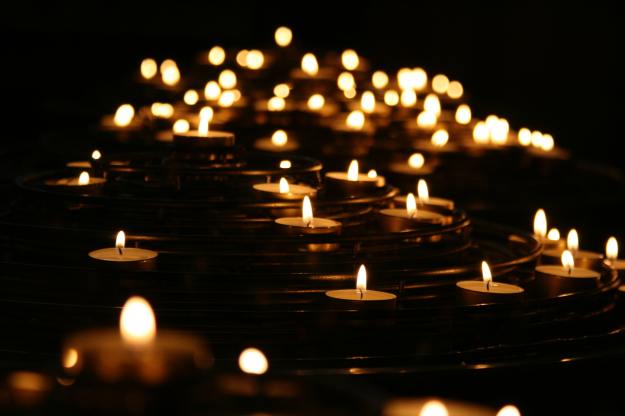
“Nothing you love is lost.  Not really.  Things, people – they always go away, sooner or later. 

You can’t hold them any more than you can hold moonlight.  But, if they’ve touched you, if they’re inside you, then they’re still yours. 

The only things you ever really have are the ones you hold inside your heart.”

– Bruce Coville (h/t James Clear for sharing)

I’m working on a project for my kids and grandkids that has me writing answers to a series of about 75 questions.  It’ll be an autobiography of sorts…a collection of memories and stories about life from my perspective.

While answering a question that asked me to describe a typical school day, I eventually got to my life in high school. 

I found myself thinking about the first person who I’d known well that died. 

Mr. McNally, my freshman pre-algebra and senior year chemistry teacher, was killed by a drunk driver who ran a red light and broadsided his vehicle.

I hadn’t thought about Mr. McNally for many years, but the moment I thought about my time in high school, all the wonderful memories about him came flooding back.  I could see his witty smile; the lab coat he always wore in the chemistry lab. I remembered where I sat in the chem lab and the goofy glasses we had to wear when conducting experiments.     

His untimely death was devastating news for our school and all of us who knew him.  Mr. McNally was loved by his students.  He was one of the special teachers in my life.  The kind that not only teaches their subjects extremely well but had a profound impact on my growth as a person.

The unfortunate truth about life is that as the years go by, you’ll have to say goodbye to countless special people.  Family members. Friends.  Teachers. 

Some will die, some will move away.  In each case, we will lament that it was too soon.  Their departure leaves a shadow on our soul where once they belonged.    

I think the most powerful part of Coville’s quote is the way it highlights the transience of love and our relationships.  We can’t grasp or possess the moonlight, but we can admire it and the feeling it gives us.  Similarly, we can’t possess the people or experiences we love.  We can only cherish the memories and the impact they’ve had on us, and hope that we were able to return a positive impact to them.

Coville’s quote encourages us to appreciate the moments and connections we have while we have them.  Knowing that if they end, the love we shared with them and their significance endures, enriching our lives. 

May the memories you have of your loved ones remain with you always, and may those memories be a source of light and inspiration even as your journey continues without them. 

I have one favor to ask. If you enjoyed this post, please forward it to others.

p/c – Mike Labrum – Unsplash.com

Exiting the Tomb of Pessimism

“We must strive to exit our tomb of pessimism.”  I heard this phrase echo through the Cathedral during the Easter Vigil homily, a little over a week ago. 

As Catholics, we celebrate the resurrection of Jesus Christ every Easter…His triumphant exit from the tomb, three days after his crucifixion.

In a much smaller way, we have a daily invitation to cast off our heavy shroud of negativity.  To exit our tomb of pessimism. 

To break the shackles of hopelessness and redirect our thoughts toward a brighter horizon.    

If everything great begins with a thought or an idea, imagine channeling this power toward an optimistic future, filled with amazing possibilities. 

It’s easy to stay in this tomb of our own making, looking through the bars at all the people out there who are clearly happier, more successful, and have all the things we yearn for.    

The truth is none of them matter.  They have no impact on us…except to show us some possibilities, some ideas, and some pathways that worked for them.    

We have the power to rewrite our own narrative, to pivot our lives toward a more hopeful outlook.  The choice is ours alone. 

Escaping the tomb of pessimism demands courage and resolve. It requires us to confront our deepest fears and insecurities, to challenge the status quo of negativity that has held us captive and kept us comforted for so long.

Yet, it is only by confronting these challenges that we can find the promise of transformation.  Only through the struggle that we can discover a new sense of purpose.

Will you remain ensnared in the confines of pessimism, or will you seize the opportunity to step into the light, and walk away from your tomb of pessimism?    

The choice is yours.

Choose wisely.

p/c – Jelle de Gier – Unsplash

A Season for Renewal

True renewal is a deliberate act of self-reclamation…

p/c: a recent sunset at our little homestead

Prayer to Saint Joseph the Worker

O Glorious Saint Joseph, model of all those who are devoted to labor,

obtain for me the grace to work in a spirit of penance for the expiation of my many sins;

to work conscientiously, putting the call of duty above my natural inclinations;

to work with thankfulness and joy, considering it an honor to employ and develop by means of labor the gifts received from God;

to work with order, peace, moderation, and patience, never shrinking from weariness and trials;

to work above all with purity of intention and detachment from self, keeping unceasingly before my eyes death and the account that I must give of time lost, talents unused, good omitted, and vain complacency in success, so fatal to the work of God.

All for Jesus, all through Mary, all after thy example, O Patriarch, Saint Joseph. Such shall be my watch-word in life and in death. Amen.  – Pope St. Pius X

In life’s journey, we may find ourselves off course or losing track of our original path. We may even fail ourselves or those we love. It is in these moments that we are being called to profound self-discovery and renewal. 

Renewal is not a passive occurrence.  As the prayer to Saint Joseph states, it requires us “to work conscientiously, putting the call of duty above [our] natural inclinations.”  True renewal is a deliberate act of self-reclamation.  We have a duty to ourselves and those we love to put in the work that leads to our self-transformation. 

It isn’t easy (nothing worthwhile ever is).  It involves adapting, finding new ways, and being intentional about embracing change. 

When we realize that ours is always a season of renewal, that we can “work in a spirit of penance for the expiation of [our] many sins,” then we will be able “to work with order, peace, moderation, and patience, never shrinking from [the] weariness and trials” of our self-improvement. 

May the spirit of renewal be our guide, not diverting us from our journey but enhancing it.  May we find the resilience within us to adapt, renew, and move forward with a fresh sense of purpose and determination.

The Gentle Shepherd

This poem is dedicated to the Gentle Shepherds God brings to each of us as we make our way along His path… 

Photo by Jelle de Gier on Unsplash

Our pastor recently announced that he’ll be leaving our parish after serving here for 10 years.  Needless to say, he has had a profoundly positive impact on all of us, and he will be dearly missed. 

During his homily last Sunday, announcing that he’ll be returning home to Spain in a few short months, I kept hearing the words, Gentle Shepherd, in my mind. 

I realized these words were describing the amazing and loving man who was speaking to his flock about trusting God and the path He has for each of us.  

Inspired by Father Sergio’s loving service to our parish and his homily last Sunday, this poem is dedicated to the Gentle Shepherds God brings to each of us as we make our way along His path:     

The Gentle Shepherd

Graced with the compassionate love of God,

Through valleys of darkness, and deserts of despair,

He humbly guides his flock.

He is the Gentle Shepherd.

With fidelity to God and His Church,

Our shepherd shares with us the Word of God,

Unwrapping its sacred mysteries for all to hear.

He is the Gentle Shepherd.

Strengthened by our loving God,

He brings great tidings of joy and mercy,

Of God’s forgiveness and redemption.

He is the Gentle Shepherd.

He trusts and serves the Lord,

His purposes and His desires,

By loving and protecting each of his flock.

He is the Gentle Shepherd.

May the Lord’s blessings always shine down upon our Gentle Shepherd.

-Bob Dailey, 2022

The Dance of Light and Dark

I originally wrote this poem eight or nine years ago.  It was an exercise in using contrasting words, contrasting rhythms, active and passive voices, sensory symbolism, and a few other style toys that I thought would be fun to try (for a hobbyist writing nerd).

As often happens when I write, the theme I had in mind when I started was quickly overtaken by other ideas.  The words and symbolism began pointing the way.  A new theme slowly emerged.

Then, just as I was gaining momentum, some shiny objects interrupted, and I set this poem aside.  A whole bunch of amazing life events started happening and years (eight or nine to be exact) came and went.

This poem sat on the hard drive of what would become my “old” computer.  When I moved over to the new computer, somehow all the data didn’t get transferred properly to the new computer (or to any of the cloud storage locations I use today).

I forgot about the poem until a couple of weeks ago when I was looking for a fictional story I’d written.  After some searching, I realized the only place it could be was on that old computer that we hadn’t turned on in years (and that we kept for some reason).  Imagine my surprise when I was able to boot it up and look around on the hard drive for some of my old (nearly lost) work.

I found that fictional story I was looking for (maybe I’ll publish it in some form in the future), along with a bunch of other work I had forgotten…including this poem.  Again, shiny objects intervened, and I didn’t get around to re-reading this poem until today.  The toys I’d been playing with so many years ago were just lying about where this big kid had left them.

I picked up my writing toys and continued playing with the words, the styles, and the symbols.  The theme that was there so many years ago was showing itself but in a new way that I hadn’t quite seen in the past.  Again, the words and symbols pointed the way (just like Mr. Cox told us in eleventh grade English class).

I hope you enjoy it.  Let me know what you think in the comments.


The Dance of Light and Dark

Lengthening shadows descend across the forest floor.

The perpetual dance as day gives way to night.

Glorious palettes of color and light,

Surrendering to shadows in the growing darkness.


The air grows cold with the smell of decay.

Death wins a battle in its forever war on life.


Your heartbeat echoes behind your ears.

A quiet rhythm of life.

You hear the mournful wail of a distant companion, howling for a moon not yet risen.


Stars shine like pinholes through a curtain.

The moon rises in the distance, casting new light in the dark.


While creatures of the night toil in the shadows,

Hunting and evading, hiding and pouncing, dying and surviving.

They don’t know what their future holds.

Pain or comfort.

Life or death.


Trees moan quietly as they sway against the wind’s unending assault.

Each is alone in the crowd to persevere as they must.

These trees know without knowing that morning will come.

A distant dream in the long cold night that’s just beginning.


Morning brings new light.

An eternity of hope.

Wistful breezes carry the freshness of this glorious day.

The sun lends its brilliant glow to all that it touches.


A new day, with promises to make.

Promises to fulfill.

Promises of life, of love, of laughter, and joy.


This dance of light and dark,

Of hope and despair,

Of life and death.

An eternity before,

An eternity after.

This dance is our journey.

This dance is each of us.


Photo by Casey Horner on Unsplash


DAWA, Coronavirus, and Normal

I remember thinking how simple it all sounded, and I was relieved to know I had a model to follow. What I didn’t know at the time is that this simple model is anything but simple…
 

Denial.

Anger.

Withdrawal.

Acceptance.

I first learned about these stages of grief when Grandma Anne died (over 30 years ago).  My cousin, who was a newly minted police officer at the time, described how he received training on this model in the police academy.

I remember thinking how simple it all sounded, and I was relieved to know I had a model to follow.  What I didn’t know at the time is that this simple model is anything but simple.

Models provide a basis for understanding a concept or an idea…and that’s helpful.  Models make the complex seem simple.  But models rarely capture the layers of detail or the often-gut-wrenching processes they describe.

Today, the DAWA model is a bit outdated.  Additional “stages” have been added over the years to the original model.  Stages like shock, bargaining, depression, and testing are layered into discussions of the grieving process nowadays.

How does all of this relate to the Coronavirus?

Thanks to Coronavirus, we are suddenly sharing a grief experience with every person on the planet, at the same time.  Every single one of us has lost something extremely important because of Coronavirus.

The normal that we knew, the normal that we understood, the normal that we took for granted…died over the last 30-60 days.  If you could ask all 6 billion-plus people on Earth when, exactly, normal died, their answers would vary by a few days or few weeks.  But nobody would deny that their normal is gone.

When we grieve or face a major crisis in our lives, we come together with others, we gather closer to the people we love, we comfort each other with hugs and shared laughter.  We cry together.  We cook together.  We share meals.  We share stories about what we’ve lost.  We might go to an inspirational concert and hold hands while we sway and sing along with tears streaming down our faces.

We love to be with people, even if we describe ourselves as introverts or “not a people person.”

Unfortunately, that part of normal has also died (at least for a while).

While it doesn’t look like it (because our beloved normal is gone), we are all grieving.  Every one of us.

Make no mistake about it.  Something we loved, something we treasure, and something we counted on has died.  We are grieving our loss, even as events unfold in front of us that may make things worse before they get better.

We probably don’t think we have time right now to grieve.  But, we’re each somewhere on the DAWA continuum of denial, anger, withdrawal, or acceptance.  In fact, we’re bouncing around on that continuum today.

We’ve lost our normal, and we’re being forced to live in a new normal.  This new normal will probably give way to yet another new normal a few months from now.  None of us know what any of this will look like.  That mystery is an unfortunate part of our new normal (as crazy as it may sound).

It’s normal to be in denial.  It’s normal to be angry.  It’s normal to withdraw or try to escape.  It’s also normal, and necessary, to find acceptance.

Acceptance doesn’t mean giving up.  It means that the energy we’ve been using to fight the new normal can be channeled toward making the best of what’s in front of us.

Sure, we all miss our beloved normal from the past.  We’d prefer to have our old normal back in our lives.  But we must find a way to accept, to allow ourselves to rest, and let go of our longing.

The good news is that we’ve each had normal die before.  We’ve had to adjust to new normals throughout our life and we’re generally pretty good at it:

  • Moving from one school to another and making new friends
  • Graduating high school or college
  • Starting our first “real” job
  • Leaving our first job
  • Starting our second job
  • Meeting the person of our dreams that we plan to spend the rest of our life with
  • Divorcing that person
  • Experiencing the death of a loved one
  • Becoming a parent (or a grandparent)
  • Starting your own business
  • Selling that business
  • Losing a house and everything we own in a fire
  • The knee injury that forced you to stop playing your favorite game
  • Having your house destroyed in a tornado

These are all examples of events in our lives that require us to let go of the old normal and embrace the new normal.  Sometimes the new normal is because of something amazingly good, and other times it’s caused by something amazingly bad.

I’m not sure I’ve reached the acceptance stage in my own grieving process.  I tell myself that I’m there, but I know it’s not always true.  As I work through the process and prepare myself for what lies ahead, I like to keep this list of ideas in mind:

  • Take things one day at a time
  • Prayer is your instant connection to someone who loves you completely
  • Celebrate your victories, no matter how small
  • Give yourself a break
  • Be grateful and enjoy what you have
  • Forgive yourself for not knowing exactly what to do (none of us know, which is true a lot more than we’d like to admit)
  • Only allow yourself to worry about the future for a few minutes each day and move on. I’d say to stop worrying completely since worrying is a non-productive use of energy, but I know it’s not possible to eliminate it completely.
  • Check-in once each day for the news on Coronavirus, and what the latest government directions are (social distancing, masks or no masks, etc.). By now, you know the symptoms, what you’re supposed to be doing to prevent the spread, and what you’re supposed to do if you or someone close to you become symptomatic.  The rest is probably not super useful, and you can catch-up on all of it during your once-a-day check in.
  • Be kind to others. Your kindness will go a long way and may lead to more kindness in your “downstream.”  Even a smile to a stranger letting them know we’re all in this together is helpful.  By the way, your eyes show your smile, even if your mask doesn’t.
  • Realize that you are grieving, and so is everyone else. We will each have good days and bad days in our grief journey.
  • Take time to gather with your friends and family members by phone, video conference, or even a nice email note.  These are your people.  Embrace them remotely.

We are living through future history.  The events happening around us and to us today will be discussed, debated, and written about for decades to come.  Our lives are forever changed, and the changes are continuing to unfold.

We can use our energy to reach back to the past with all that we have, searching for the normal that’s gone.

Or, we can channel our energy to reach toward the future, creating the best possible new normal for ourselves and our loved ones.

While I grieve for the past, I choose to reach for the future.

Photo by Mike Labrum on Unsplash

Serve others first…

Tim Ferriss asks a question of most of his podcast guests:

“If you had a billboard that millions of people would see every day, what would you put on that billboard?”

Tim’s guests have given answers ranging from the comedic to the serious.  Some have talked about a cause that is their passion, or an inspirational passage they’d like people to see.

Each time I hear the question, I come up with the same three words:

Serve others first.

Serving others first means:

  • taking others’ needs and desires into account before our own
  • looking out for their best interest first
  • our decisions are more thoroughly considered because we’ll be taking time to think about how our decisions impact others
  • trying to make someone else’s job easier and more rewarding
  • showing someone gratitude for the work they’re doing
  • minding our manners (as my mom used to say when I was a kid)
  • listening to, and respecting others (even if we disagree with them)
  • looking for ways to improve a situation rather than making things worse
  • being the first to forgive.

It’s easy to focus on our own interests and challenges first.  It’s easy to think everything happening in the world is directed toward us, personally.  This “me first” mindset is hard-wired into our DNA…our DNA is selfish about 99.99% of the time.

The tougher path?

It’s the one that leads to serving others first.  It goes against our wiring, which takes significant effort.

None of us will be perfect on this path.  We’ll stumble, and we may even wander a bit.  But, we can be a blessing for others along our journey, and that’s what we should be seeking.

The good news is that following this path gets easier with practice.

Photo by Adrià Crehuet Cano on Unsplash


What a Wonderful World

Sadness can find us with little or no effort…

Sadness can find us with little or no effort…sometimes on a daily basis.

I see trees of green,
red roses too.
I see them bloom,
for me and you.
And I think to myself,
what a wonderful world.

Sadness, defined as anything that’s the opposite of joy:

Emotional pain

Feelings of disadvantage

Loss

Despair

Grief

Anger

Helplessness

Disappointment

Sorrow

Frustration

Guilt

I see skies of blue,
And clouds of white.
The bright blessed day,
The dark sacred night.
And I think to myself,
What a wonderful world

Oddly, we sometimes seek out sadness for our own purposes.  Maybe we need an excuse for not being the person we know we can be.  Maybe we find comfort in burdening others with our pain.

The colors of the rainbow,
So pretty in the sky.
Are also on the faces,
Of people going by,
I see friends shaking hands.
Saying, “How do you do?”
They’re really saying,
“I love you”.

When sadness in its many forms pays a visit, we have two fundamental questions to ask ourselves:

  • What will we allow inside?
  • How long will we allow it to stay?

It’s easy to say that we get to decide.  That doesn’t mean it’s easy to kick sadness out once it arrives for a visit.

I hear babies cry,
I watch them grow,
They’ll learn much more,
Than I’ll ever know.

What to do?  Here’s a list that I have to remind myself of from time to time:

  • Tune your mind to find joy in the simple things
  • Seek out and cherish love in your life
  • Offer forgiveness to yourself and others
  • Share your time and attention with others
  • Seek opportunities to serve others first
  • Observe life with a sense of awe and gratitude.

Joy won’t find us the way sadness can.  Joy only shows itself when we take action to greet it warmly with open arms and outstretched hands.

And I think to myself,
What a wonderful world.

Yes, I think to myself,
What a wonderful world.

Oh Yeah.

Photo by Clay Banks on Unsplash

The Value of Goodwill

Do you serve others first?

How much is your goodwill worth?

The accounting definition of goodwill describes it as the established reputation of a business, quantifiable by taking the fair market value of the tangible assets of a company, subtracting that amount from the full purchase price, blah, blah, blah.

The accounting definition is important, but the goodwill I’m interested in is your personal goodwill, which is measured with the answers to these questions (in no particular order):

  • Do you have a personal reputation as a good person?
  • Are you a person who can be trusted?
  • Are you reliable?
  • Do you work with others based on honesty and integrity first, above all else?
  • When people describe you to others, do they do so fondly or derisively?
  • Are you a person who people want to be around?
  • Do you repel people, or gather people?
  • Do you have a track record of acting fairly in all situations?
  • Do you serve others first?
  • When the proverbial chips are down and everything is going wrong, can others rely on you to rise above the chaos, identify root causes, and get to work solving the problems?
  • Are you known as the person who runs from trouble?
  • Are you the one who looks to blame rather than solve?

The answers to these questions will matter more to your long-term success than any college degree or career accomplishment you may achieve.

Your actions and attitudes will show people your answers more vividly than anything you say.

It’s easy to say words like honesty, integrity, trustworthiness, or empathy.  The real test is how you act and what you choose to do, whether or not other people are watching.

Show me a team of people who don’t value their own personal goodwill or that of their teammates, and I’ll show you a team that fails 99 times out of 100.

The most important choices you’ll make in life are the ones that either add value to, or take value away from your personal goodwill.

Choose wisely.  Your happiness and success depend on it.

Photo by Jukan Tateisi on Unsplash

That’s all great. But, what does your customer think?

The customer is the only reason we exist…

  • “We had an awesome meeting yesterday. We finalized our growth plans for next year.  We’ll be presenting them to the CFO next week.”
  • “That conference was amazing. The speakers really hit the nail on the head about what’s coming in our industry.”
  • “We finished all the employee reviews before the deadline. We start every year with this fire drill!  I’m glad that’s behind us!”
  • “This new software update will finally fix our scheduling problems.”
  • “The year-end financials are done, and our tax filing is happening on time this year.”
  • “Our new branding colors are excellent. They really pop on our mobile app!”
  • “The holiday party committee met, and we’ve got our recommendations for the venue and party theme this year. When can we meet to finalize the plans so we can put money down on the venue?”

What do all of these have in common?

They’re all statements I’ve heard, or said, during my professional career.  I could’ve rattled off 30 more sentences just like these.  All would have represented important activities, milestones, discoveries, inventions, process improvements, or events within the companies I’ve managed (or owned).

But, none of them represented what our customers think.  The customer, in this case, is the person or company that’s paying us for our products and services.

None of the sentences describe us communicating directly with our customers or our prospective customers.

None of them focus on why our customers use our products and services.

None provide a greater understanding of how our customers relate to us.

None help us understand how important we are (or aren’t) in their life.

Are we just a faceless machine that delivers something our customer needs at this moment?  Are we merely a utility to them?

If we disappeared tomorrow, would they miss us?

Do they know who we are as a company?  Do they know anything about our values?  Do we know what our values are at this company?

Do they care about our branding colors, or that we’re having a nice holiday party this year?  Probably not.

Even when we fail to ask, our customers have powerful ways to tell us how we’re doing:

  • When they continue paying us, we know that they value what we’re doing today. They haven’t found anyone else who does it better, cheaper, or both.  They haven’t found anyone that they think cares more about them than we do.  We’ve won today.
  • When they call or write to complain or ask for something new and improved, we can infer that they care enough to ask. They trust that we’ll listen.  Our response lets them know whether their trust is well-placed, or not.

Winning today is nice.  Winning tomorrow, next week, next month, and next year is far more important when it comes to customers.

While we take care of all the tasks associated with keeping our organization afloat, it’s easy to forget why our organization exists in the first place:  to serve our customers and attract new ones.

The customer is the only reason we exist.

Something to keep in mind the next time you put off calling your customer back until after you’ve finalized your company’s holiday party plans.

P.S.  This riff about customers applies to our internal customers as well.  After all, our internal customers are often the ones who deliver service to our external customers.  If we fail to serve our internal customers, you can easily guess what’s going to happen to our external customers.


Photo by Tyler Nix on Unsplash