The Questions We Ask When Someone Dies Are the Wrong Ones!

The questions we ask when someone dies miss what really matters…

  • How old was he?
  • How did he die?
  • Did he suffer at the end?
  • Was his family with him?
  • Various versions of:  Who is he leaving behind?  How are they doing?

These are all worthwhile questions.  They show how much we care.

They also provide a small glimpse into our future, and the future of the people we love and care about.  We will each take our final breath someday.  It’s just a question of when and how.

These questions do more to quench the morbid curiosity we have about our own future than to learn about the life of the person who just died.

We used to receive a local monthly newspaper.  I was always fascinated by the stories in the obituary section.  Each person had a story.  An arc through time.  Milestones.  Achievements.  Lives they touched.  But, these were merely stories someone else had written to encapsulate an entire lifetime into a few paragraphs of highlights.

It’s impossible to capture someone’s life in a few paragraphs or even an entire book.

Our lives aren’t just a series of events and milestones.  They’re an almost infinite collection of moments.

Moments that often seem trivial when they happen, but are anything but trivial.  These moments would probably never make the “highlight reel.”  These are the moments that (with the benefit of hindsight) are turning points in our life, and the lives of the people we touch.

Our lives are also a feeling.  An energy.  An impression we leave behind.  It’s not tangible, and it can’t be seen or touched.  But, it touches everyone around us.  It’s something they can only describe with a far-away look in their eyes when we’re gone.

The questions we ask when someone dies miss what really matters.

I’d like to add some new ones:

  • What are the moments you shared with him that you remember most?
  • What stories did he tell you?
  • Which stories had the most impact on you?
  • How did he make you feel when you were around him?
  • How did he impact the direction your life is going?
  • What did you learn from him and the way he lived his life?
  • What type of energy did he bring to your life?
  • What impression did he make on you?
  • What comes to your mind whenever you think about him, now that he’s gone?

And, one final question to consider while we’re still here:

How will those that you love and care about answer these questions after you’re gone?


Later…

Later only matters in the present.

Later creates room for compromises.

Later lives for tomorrow.

Later keeps lists.

Later allows us to avoid.

Later tells us why we’re preparing.

Later delays forgiveness.

Later is born from hope.

Later connects without really connecting.

Later captures what we imagine.

We often try to create what happens later by our actions today.

Later provides direction.

Later reduces today’s expectations.

Later can hijack the present.

Later is the carrier of our dreams.

Later gains power when it remains vague.

Later simplifies execution.

Later is where many careers will find their stride.

Later is where the craziest ideas go to die.

Later tells us it’s okay to delay.

Later is where big ideas find their future.

Later makes it okay to add complexity.

Later drags us reluctantly forward.

Later makes today easier.

Later makes today harder.

Later isn’t guaranteed.  It can easily turn into never if we allow it.

Later only matters in the present. By the time we get to later, there’s a new later that will once again seem more important than our new present.

There’s more to say on this subject.  I’ll probably get to it later…

The Puzzles We Build

In our house, whenever we started a puzzle, it was an “all-hands-on-deck” affair…


jigsaw-puzzle_pieces

When was the last time you assembled a puzzle?

Did you do it yourself, or did you have help?

How long did it take to assemble?  Minutes?  Hours?  Days?

In our house, whenever we started a puzzle, it was an “all-hands-on-deck” affair.  We’d all start working it.  Some of us would focus on organizing the pieces to make them visible.  Others would dive right in and start putting pieces together.

I worked the edges.  It’s the only thing that helped me get my bearings on the puzzle.  Start with the flat sides and establish a border…then work into the middle.  Working from the middle, out, was way too random for me.

“Hey, does anyone want some hot chocolate?” always seemed like a good question for me to ask after about a half-hour of diligent work.  With marshmallows.  Without looking up, I’d get some slow yesses and a few grunts.  By the time I came back with the hot chocolate, I was always amazed at the progress.

I’d get back to working the edges.

Each of us had our specialty and our own pace.  Some of us were easily distracted (me).  My wife would stay focused for hours…one piece at a time.

“Hey, who’s up for a break from the puzzle?  Maybe we can hit it again in a couple of hours with fresh eyes.”  I was always a proponent of fresh eyes.

But, then we’d get most of the edges completed.  I’d get my own personal rhythm, and I could start to see the patterns.  The puzzle started to take shape.  First, in my mind and then on the table.  My perspective on the puzzle and my ability to add value to it changed as the image emerged from all the pieces.

I don’t know if my wife and daughters (or anyone else who’d stop by and get sucked into the assembly project) went through the same evolution in their perspective as I did.

Our latest puzzle is a new business (actually, an existing business that we recently purchased).  Once again, our family is building a puzzle together.  This time, it’s not at the dining room table with a clear picture of the final product.  In fact, new pieces are being added to this puzzle all the time.

Once again, we’re each approaching the puzzle in our own way.  Center-out.  Edges-in.

Distractions?  Definitely.

Is an image beginning to emerge?  Yes.

The best (and most challenging) aspect of this puzzle is that it’s never finished.  It grows and evolves.  It occasionally leaves us feeling a bit perplexed.  But, it also takes beautiful shape before our eyes as we continue to build, one piece at a time.

Anyone up for some hot chocolate?  We’re gonna be here a while!


Speedometers Steal Speed

“The cheetah is the fastest animal on earth.  It can reach speeds of up to 65 miles per hour as it pursues its prey.  Just look at its awesome speed, as it chases down that gazelle!” – Every Nature Program about Cheetahs

Do you think the cheetah has any idea how fast he’s going?

What about an eagle as it dives through the air to reach its prey?

Does the pelican think about his speed as he dives into the water to catch dinner?

Does the pole vaulter know how fast she’s running just before her jump?

What about the downhill mountain bike racer?

The answers to these questions are obvious.  For each to be effective, none are looking at a speedometer to determine their next move.  They aren’t referring to some magical heads-up-display to tell them how they’re doing.

In their critical moment, no measurements or brilliant strategic insights will impact the outcome.  They will succeed or fail based solely on how they perform, in the next moment.

The moment is all that matters.

Speedometers don’t make speed.  They provide external feedback and nothing else.

How often are you slowing down to check your speedometer, instead of focusing on your next critical moment?

Truth is, your moment is all that matters.  There’s plenty of time for feedback later when it’s not stealing your speed.

Beware of the Edge

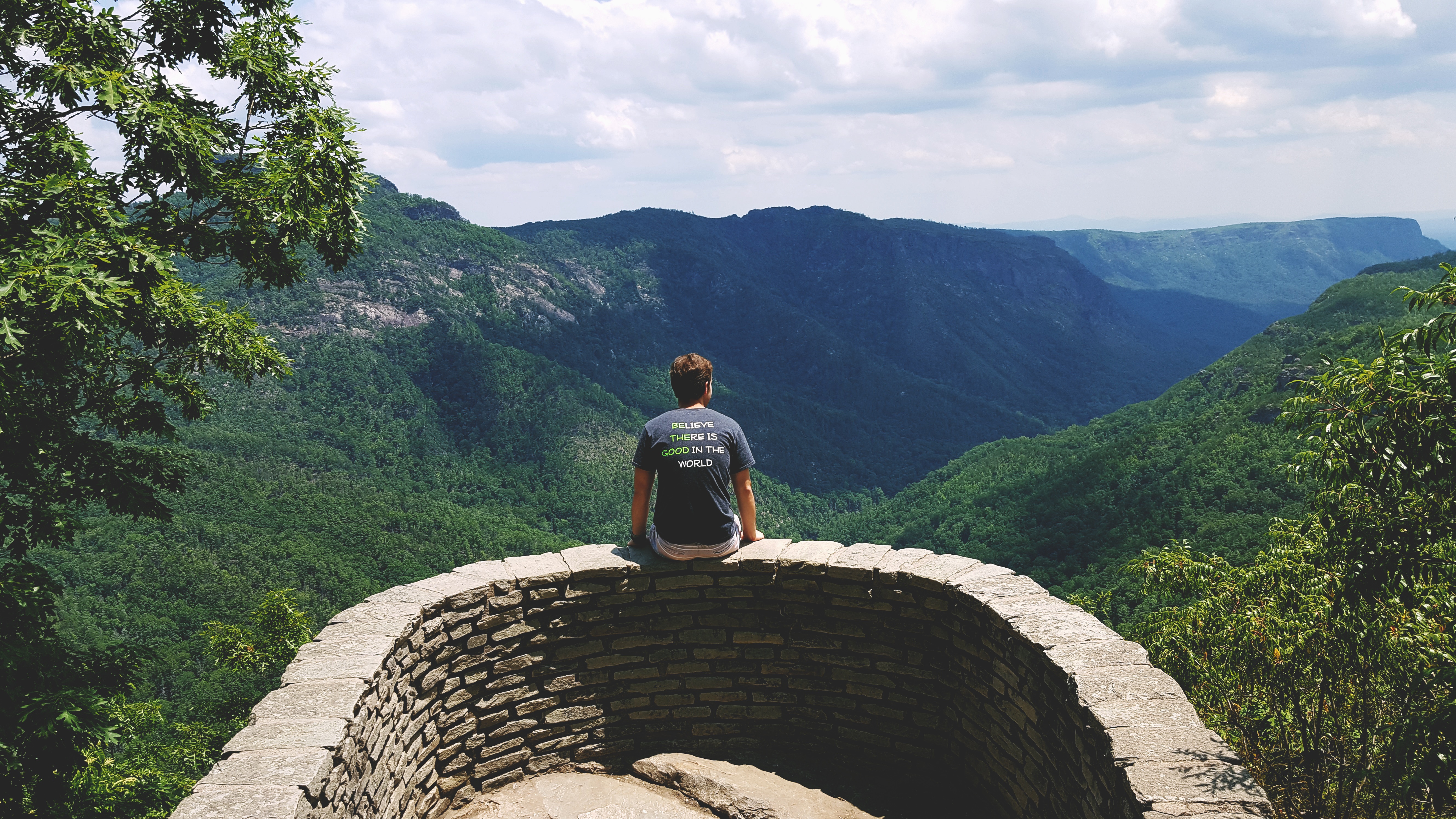
The edge is like the proverbial flame that draws the moth…

sitting-at-the-edge-of-a-cliff

I recently heard about a sign at the top of Mount Vesuvius.  It reads, “Beware of the edge.”

That’s the only safety precaution in the area.  No guardrails.  Just a sign.

I can hear it now:

“Your honor, I submit that my client had no idea he could plummet to his death by stepping over the edge of that volcano.  If only there’d been a guardrail to prevent his untimely death.”

Or,

“Your honor, we acknowledge that there was a sign that said, “Beware of the edge,” but my client must have thought he was safe as long as he stayed inside the guardrails.  Since there were no guardrails on the mountain, he was clearly misled into a false sense of safety and security…just before his fall.”

How many of us really need a sign, or a guardrail, to tell us to stay away from the edge?  Can’t we see the danger on our own, without the sign?

The truth is, probably not.

Why not?

Simple.  The edge is where the action is.  We know it’s dangerous.  We know our mind will play an imaginary leap that only our subconscious sees when we look over the edge.  We secretly like the butterflies we get in our stomach.

The edge brings sharp focus.  It’s where our imagination is most alive!

Sometimes, the edge represents the end of a long journey.  A challenging climb.  Our view over the edge reminds us of the distance we’ve traveled.  The work we’ve put in to get there.

The edge is like the proverbial flame that draws the moth.  The edge reminds us of how fragile our life is.  One step away from real danger.

How do we approach the edge, and take in its energy, while avoiding the danger that lurks just one step beyond?

It’s a question we each have to answer for ourselves.

But, here’s hoping we don’t discover the answer as we tumble over the edge.

Relax, You’re Doing Fine

Enjoy your time. Let someone else worry about all that other…

I saw this on a license plate frame.  When I first saw it, I didn’t give it much attention.  Then, as I sat at the red light, staring at those four simple words, I realized how freeing they are.

Relax, you’re doing fine.

You aren’t as far behind as you thought in the “race” of life.  In fact, life isn’t a race at all.  There’s no prize at the end for getting to the finish line faster than the other people.

You’re living in a great time.  Why is it so great?  Because it’s your time.  It doesn’t matter what else is happening.  The fact that things are actually happening, and you are here to see, participate, and have an impact is all that matters.  What impact?  That’s up to you.

What you do, how you do it, and the pace you choose are up to you.  I recommend you take advantage of your limited time on the planet.  Start moving, stay moving, always learn, and never stop teaching.  But, that’s just me.  It’s up to you and no one else.

Not as happy as you’d like to be?  Not as fulfilled as you’d like to be?  Worried that life is passing you by?  Worried that you aren’t as rich, pretty, strong, tall, smart, stylish, successful, or any other measure society places on us, as you’d like to be?

We all have the same seconds, minutes, and hours every day.  Our ability to define our time by the people we help, and the smiles we coax into the world are the only things we control.  The rest is going to happen with or without our involvement.

Enjoy your time.  Let someone else worry about all that other comparison stuff.

And, never forget:  Relax, you’re doing fine.

Are You Willing?

All that matters is learning what you believe in…

“I know this now.  Every man gives his life for what he believes.  Every woman gives her life for what she believes.  Sometimes people believe in little or nothing, and yet they give their lives to that little or nothing.  One life is all we have and we live it as we believe in living it and then it’s gone.  But to surrender what you are and to live without belief is more terrible than dying—even more terrible than dying young.”  –Joan of Arc

Joan of Arc lived less than twenty years.  Yet she fought for her beliefs and made a huge impact on history.  She died for her beliefs at an age when many are just beginning their life’s journey.

She knew what she believed in.  She knew what it meant to sacrifice for her beliefs.  Ask anyone who serves or served in the military, a first responder who runs into a burning building to save others, or a newly formed priest who has answered God’s call.  These are just a few examples.  Each of them know what it means to sacrifice for their beliefs.

Sometimes our beliefs emerge quietly without our knowledge.  We go through life, making seemingly inconsequential decisions about what we will and won’t do.  We decide who our friends are, and how much we will let them into our lives.  We decide when to listen.  We decide how honest we will be with the world around us.

We establish habits for living our life, and we go on our merry way.

Do you know what you believe in?  Really?  Do you know what you believe to be true?  Do you know what is important in your life?

Have you made the quiet time in your life that’s necessary to consider these questions?

What if it turns out that the things you believe in aren’t manifested in the way you live?  Are you willing to change your habits?  Are you willing to eliminate the things that don’t support your beliefs?  Will you support your beliefs in the way you live, and the way you work with others?  Are you willing to make your beliefs the centerpiece of your actions in everything you do?

Joan of Arc was right.  One life is all we have, and then it’s gone.

Where are you in that one life?  Is it too late to examine your beliefs and change the way you live?

The answer is clear  But, it won’t become obvious until we make quiet time in our lives to reflect.  When we do, we find it’s never too late to examine our beliefs and change our life.

Every day is a new beginning if we choose to make it so.  It doesn’t matter what happened in the past.  It doesn’t matter who wronged you.  It doesn’t matter if you had a terrible childhood.  It doesn’t matter if you’ve missed opportunities in the past.  It certainly doesn’t matter if you failed in the past.

All that matters is learning what you believe in.  Then, deciding what to do with that new knowledge, starting today.

The only question is:  Are you willing to find out?


Beliefs and Values

h/t:  Matthew Kelly

The Rear-View Mirror

Rear-view mirrors are nice, but the real action is in the opposite direction…

For years, I seemed to pick cars that were too short.  The rear-view mirrors were always right at my eye level.  At first, that sounds about right.  But, the mirrors actually blocked my view out the front windshield.

I had two choices:

Duck down and look under the mirror to see the road ahead,

or,

Remove the mirror.

Not wanting to scrunch down, or have to remember that what I could see was actually the view out the back window, I decided to remove the mirror from my view.

A bit drastic, but I was okay with it.  I could always use the side mirrors to see behind me.  Besides, I mostly used the rear-view mirror to scan for cops (it’s easier to spot their profile, or their lights, using the rear-view mirror).  Since I wasn’t in the habit of breaking laws, it wasn’t a big sacrifice to lose that wide-angle backward view.

Most of what I was interested in was in front of me anyway.  Removing the mirror let me stay focused on what was coming, rather than where I’d been.  Occasionally, I’d glance to the empty spot where the mirror used to be, mostly out of habit.

A habit born of the desire to glean value from where I’d been, but mostly to know if something was about to catch me.  It didn’t matter that I wasn’t doing anything worthy of being caught.  But, still, it was there.  The unknown pursuer.  The quick glance to the rear-view would help me see when it was coming.  It never was.

Fast-forward twenty years or so, and my car (actually a truck) is bigger.  The rear-view mirror doesn’t block my view out the front.  It provides a nice panorama out the back.  I don’t use it much (the side mirrors are still my go-to).  When I do use it, I’m not interested in seeing my pursuer.  I’m not as concerned about who may be back there (unless it’s a knucklehead weaving through traffic, ignoring everyone’s safety).

My rear-view mirror lets me quickly see where I’ve been, and that’s enough.  The real action is still in front of me, so I’m glad my mirror doesn’t block that view.

Otherwise, it would have to go.

Rear_View

There’s a crack in the gutter where a flower grows…

They’re not supposed to be there. It should be impossible for them to grow…

Pandora is awesome.  I was listening to my Happy Radio channel the other day when this song called Hey, Hey, Hey came on.  It had a catchy tune, and some of the words seemed nice when I chose to listen closely.  It was my first time hearing it, but I knew it had been around a while.

Somewhere in the middle of the song I hear:

There’s a crack in the gutter where a flower grows

Reminding me that everything is possible
Yeah, reminding me that nothing is impossible
You gotta live for the one that you love you know
You gotta love for the life that you live you know

Singing hey, hey, hey
No matter how life is today
There’s just one thing that I got to say
I won’t let another moment slip away

That got my attention.

How many times have you seen a plant (sometimes a weed, but that’s really in the eye of the beholder) growing out of a crack in the sidewalk, or the gutter?  How about the tree that figures out how to grow from within a cracked boulder?

They’re not supposed to be there.  It should be impossible for them to grow.  Yet, there they are.  Thriving in the most inhospitable of environments.

Each of us have the same ability to overcome adversity.  To be the flower growing in the crack in the gutter.  To grow and thrive in our little corner of the world, making a small but important difference to those around us.

Life is a journey, and it can be a struggle.  But, it’s also a triumph, and an opportunity to make our mark in places nobody (including ourselves) would ever expect.


Here’s the whole song…and, yeah, it’s been around since 2010.  Only took me five years to notice it (not good for my hipster cred):  Hey, Hey, Hey


Closing Your Eyes to See More Clearly

Have you ever tried brushing your teeth with your eyes closed, or in total darkness? I’m sure you’re asking, “How hard can that be?”

Have you ever tried brushing your teeth with your eyes closed, or in total darkness?  I’m sure you’re asking, “How hard can that be?”

Give it a shot and you’ll find out.

Would you be able to find the toothpaste?  How about your toothbrush?  The sink?  Now for the tough part.  Can you put the right amount of toothpaste on the toothbrush?

Maybe you mastered all of that, and even brushed the proper amount of time.  Are you sure you’re spitting in the sink?  Did you put the toothbrush back where it belongs?  How about the toothpaste?

You (should) brush at least twice a day.  Multiply that by your lifetime of days, and that’s a lot of practice.  Your brain should do it automatically…and it does until you eliminate one sense (sight in this case).  Then it gets a lot harder.

So hard that you may find all your attention focused on that one simple task.  For that moment, you will be fully present.  No distractions.  Only a laser focus on trying to figure out how to get the right amount of toothpaste on the toothbrush without making a mess.

Our brains are amazing.  The biggest consumer of calories within our bodies.  So, over millions of years of development, our brains have found ways to disengage (in the interest of energy conservation).  Once our brain establishes a pattern for an activity, it flips the “auto-pilot” switch and rests.

Think about all things you do in a day without thinking.  Or, maybe all the things you do while thinking too much.  What if you approached each one a little differently?

Commute to work a completely different way.  Shop in the opposite direction (admit it, when you go to “your” grocery store, you usually go in the same direction).  Put your shoes on starting with the other foot.

Put a penny next to your smart phone.  Pick it up instead of your phone when you get that urge to check your messages.  A penny for your thought.  Maybe you can give those pennies to a charity.  Since this is for your favorite charity, what if you put a $20 bill there instead?  That habit of yours may actually help someone else.

Which brings us back to the original premise.  Brushing your teeth in the dark.  Try it.  You just might see things a bit more clearly.


Here’s the kicker.  If you brush in the dark for about a week, it will become second nature to you, and (you guessed it) your brain will once again go on auto-pilot.  Time to switch it up again!