The Four Most Important Letters in Leadership: L-O-V-E

It’s no coincidence that these letters spell out love…

It doesn’t matter whether we’re talking about business, politics, sports, charities, social clubs, or just about any other area where human beings come together to accomplish something.  The most important determining factor in an organization’s success is the quality of its leadership.

What makes a strong leader?  Is it the one with the loudest voice?  The guy who makes the best speeches?  The one who puts in the most hours?  Is it the dude ordering people around the most?

Of course, it’s none of these.

The best leaders focus on the four most important letters in leadership:  L-O-V-E

L—Listen and Learn.  Strong leaders are curious.  They never stop asking questions.  They have two ears and one mouth so they can listen twice as much as they talk.  A strong leader listens to employees, customers, competitors, “the market,” and any other source of information available.  A true leader is constantly learning, and knows he doesn’t have all the answers.

O—Observe and Organize.  Leaders make time to observe what’s really happening.  They don’t rely solely on the stories people tell.  They measure the reality.  Leaders organize for success.  They delegate responsibility and authority to others within their organization.  They define processes that multiply their efforts, and the efforts of those they lead.  Ronald Reagan coined the phrase, “trust, but verify,” and strong leaders live by this maxim to ensure their organization is as efficient and scalable as possible.

V—Visualize.  Where are we going?  How will we get there?  These are the two biggest questions leaders face.  The leader’s ability to visualize the future, define and articulate the mission, and steer toward success will make or break their organization.  Look too far into the future, and they may fail to see the short-term obstacles and challenges.  Look too closely at the short-term obstacles, and they may steer their organization off-course and miss its ultimate objective.  Visualization isn’t an independent activity.  The strong leader makes time to help others take emotional ownership of the vision and connect it to what they do each day.

E—Encourage and Execute.  Ultimately, success is all about execution.  A strong leader knows that nothing happens without the people he’s leading.  Encouraging others to give their maximum effort in pursuit of the organization’s vision and goals is the primary role of the leader.  Encouragement comes from the leader’s words and actions.  People will watch and listen to see if their leader’s values and moral compass are something they can support.  They will learn quickly whether their leader cares about their well-being, as well as that of the organization.  A strong leader is sincere in defining what it will take to succeed, and excels at encouraging their team to make it a reality.

It’s no coincidence that these letters spell out love.  It’s the attitude a strong leader brings to their work each and every day.


Shameless plug:  If you want to improve your leadership game, check out my new book, Leadership Starts (and Ends) in Your Head…the rest is detail.


The Obstacles You Think You Know…Don’t Matter

Polynomials suck, but they aren’t the obstacle that matters most…

Polynomial Function

I used to hear one question a lot when I was a kid.

Whether an adult was asking me, or another kid my age, it was always the same:

What are you going to be when you grow up?

In second grade, I knew I wanted to be a doctor.  My friend wanted to be a fireman.  Another friend wanted to be a professional skateboarder.

By high school, I was still thinking doctor, or maybe veterinarian.  One of my friends planned to be an engineer, another wanted to teach, and one planned to go to the Air Force Academy and become a fighter pilot (he just retired from the Air Force a few years ago).

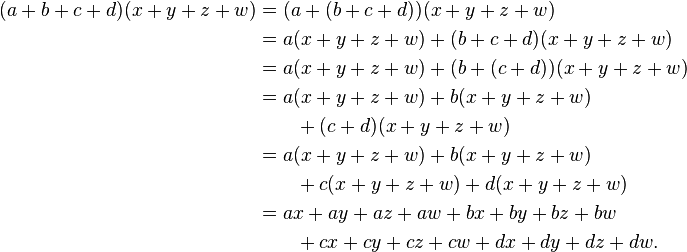
In my senior year in high school I ran into Algebra 2.  More specifically, factoring polynomials.  FOIL method.  Up to that point, math had made sense.  Plug the numbers into the formulas, and get your answer.  X equals 11, Y equals 9.  Pythagorean Theorem?  Piece of cake.  Word problems?  Easy.

But, polynomials made no sense.  The magic of the FOIL method didn’t help.  First, Outside, Inside, Last?  Solving for multiple variables that cancel each other out in some mysterious way?  Arriving at an answer that looks as cryptic as the original question?  What does a polynomial look like if you draw one?  When will we ever use this in real life?  I’d say it was all Greek to me, but I didn’t know Greek either, or Latin.

I hadn’t even reached Calculus (the math all the other brainiacs were taking in their senior year), and I’d hit a wall.

Polynomial Example

I could see the handwriting on the chalkboard (teachers used to write on them before whiteboards were invented).  To become a doctor would require a science degree of some kind.  That science degree would require a ton of math well beyond polynomials…maybe even Calculus.  What comes after Calculus?!  And, what about Latin?  Doctors all seemed to use Latin.  How would I learn that?  It wasn’t even offered at my high school.  And, what about getting into medical school?  Did I have eight years to give up?  How would I pay for all of it?  This was going to be hard!

We each have a strategic thinking instinct.  The ability to prioritize, make deductions, create connections, and map out a direction.  Or, multiple directions.

Unfortunately, more often than not, we either ignore our strategic thinking capability, or we use it to map out why something is impossible.  We visualize all the obstacles while ignoring the path around, over, or through them.  We neatly stack all the obstacles into an impenetrable wall, rather than a series of hurdles to be taken one-at-a-time.

My doctor plans went down in flames…but, I was the one pointing the metaphorical plane into the ground.

Could I have found a way to understand polynomials?  Yes.  Could I have dealt with Calculus?  Yes.  What about Latin?  Yes.  What about getting into medical school?  Yes.  Did I have what it took to become a doctor?  Probably (we will never know).

Did I allow myself to realize any of this at the time?  No.  I was too busy jumping toward another goal that had fewer obstacles, or so I thought.  One that didn’t require Calculus.  One that I could get my head around, and see more clearly.

I now understand something I didn’t back when I was a high school senior.  I’m not sure I understood it by the time I was a college senior either.  Our biggest obstacle, the one that matters more than any of the obstacles we can see, the obstacle that trumps all others, is staring back at us in the mirror.  Find your way around, over, or through yourself, and you are well on your way to overcoming almost any other obstacle in your path…maybe even polynomials.

Want the answer to the crazy equation?  This might (or might not) be it


Photo Credits:  Here and Here


The Trouble with Gauges

Successful flying is much more than air speed…

cockpit-sopwith-1-1_2-strutter

One might argue that air speed is the most important factor in flying.  Not enough and you fall from the sky.  Too much, and your plane suffers catastrophic damage (and may fall from the sky).

I searched for at least three minutes (that’s a long time to be on a wild-Google-chase) to find an image of a simple cockpit instrument panel.  Notice anything?  Even this simple panel has a lot more than an air speed indicator.

In addition to air speed, the pilot can see engine rpm, oil temperature, water temperature, cylinder head temperature, fuel level, battery voltage, whether or not the plane is flying level, and the all-important altitude.

Successful flying is much more than air speed.  Otherwise, there’d only be one gauge.

Flying is much more than monitoring gauges.  Otherwise, what’s the point of windows?

Do you measure your life with one gauge, or a cluster of gauges?

Which gauge do you look at most?  Is it the right one?

Have you noticed where you’re heading, or are you too busy looking at your gauges?


Photo Credit: World of Aircraft Design


Your Employees Don’t Work for You

Who works for whom?

The following is an excerpt from my book, Leadership Starts (and Ends) in Your Head…the rest is detail.

Chapter 3.  Employees Don’t Work for You

Ask employees to list the things they “work for.” I guarantee managers will not be at the top of that list, if they make the list at all. The following is generally what employees are working for:

  • To earn a paycheck
  • To make a living for myself and/or my family
  • To experience the challenge
  • To grow
  • To have fun with my coworkers
  • To create something bigger than myself
  • To be a part of an organization that shares my values

Ironically, if you ask a lot of managers to describe their organizations, they will often tell you how many people they have working for them. Really? How is it that employees are working for a whole list of things other than managers, yet managers list how many people are working for them? How can this basic premise of the relationship between management and employees be so disconnected?

Is it just semantics to say that employees don’t work for their managers; they report to their managers? Quite the contrary. It’s critical for managers to realize that their employees merely report to them. Employees take direction, seek motivation, look for clarity, look for support, and often look for permission or forgiveness from their managers. But they don’t work for their managers.

Great managers actually work for their employees. The managers’ focus should be creating environments where their employees, and by extension, their businesses can be successful. This means that managers are, first and foremost, service providers to their employees. Managers are responsible for ensuring that any obstacles to great performance are removed from their employees’ paths. These obstacles may come from outside the organization, or, as is often the case, the biggest obstacles will come from within.

What are some obstacles to great performance? It can be as simple as the climate control in the office. It may be too cold or too hot for employees to concentrate on their work. Employees may be struggling to get their jobs done with faulty or worn-out tools. How about the work environment that has an employee who disrupts the rest of the team or isn’t pulling his or her weight? All of these are examples of issues managers need to be aware of. Not only that, managers need to take swift action to eliminate these barriers to performance, in service to their employees.

And that’s just it, if managers are paying attention to the needs of their employees, they will be able to move quickly to help their employees succeed. After all, an employee’s success is the key to the organization’s success, and, in turn, the manager’s success.


Book_Order_Snap


© 2014 Bob Dailey.  All rights reserved.


Exceeding Your Vision

The following is not an excerpt from my new book, Leadership Starts (and Ends) in Your Head…the rest is detail.  But, I’d be remiss if I didn’t mention it here (and highly recommend it).


Vision

-What do you want to be when you grow up?

-Now that you’ve graduated, what are your plans?

-Congratulations on your marriage.  Here’s to a long and happy life!  Where are you two planning to live?

-I heard about your new job.  That’s great!  What are your prospects for career growth there?

-I heard you don’t really like your job?  What would you do if money wasn’t an object?

Each of these questions are about goals and vision.  Where do you see yourself today and in the future?  What defines success for you and how will you get there?  What path are you on and will it get you where you want to go?

But, what happens when you reach your future?  Will you know you’ve arrived?  What happens when your vision for the future comes true?

You achieve, even exceed, everything you had in mind when you started.  You exceed your vision.

Sounds like a good problem to have.

Consider the retiree who has no idea what to do with his/her time now that work doesn’t occupy their day.  The stay-at-home mom whose kids are all grown up and moved away.  The thirty-two-year-old internet entrepreneur who just sold his company for $500 million.  They have reached their goal line, that place they’ve dreamed about.

Their vision led them here, but what’s next?

I’m reminded of a quote by Walt Disney:  “All of our dreams can come true, if we have the courage to pursue them.”

For most, the courageous part is the pursuit.  For others, courage is their willingness to find new dreams when the first ones come true.

As we go through our lives, chasing goals, climbing mountains, and living the dream, it might be worthwhile to extend our vision.  Look past our first set of goals; the ones that occupy most of our time.

Look toward the greater goals, and broader definitions of our dreams.  Seek the true definition of our potential.  Our ultimate purpose.

Consult not your fears but your hopes and your dreams. Think not about your frustrations, but about your unfulfilled potential. Concern yourself not with what you tried and failed in, but with what it is still possible for you to do.  -Pope John XXIII


© 2014 Bob Dailey.  All rights reserved. 


Two Standard Deviations

One hundred people who are working separately will never lift a thousand-pound boulder…

The following is an excerpt from my new book, Leadership Starts (and Ends) in Your Head…the rest is detail.

Chapter 4.  Maintain Two Standard Deviations

I had lots of statistics classes in college. We learned a ton of formulas for measuring things like economic order quantity, measuring cycle times, and the differences between mean, median, mode, and midrange. We learned how to calculate the probability of certain outcomes and how various outcomes relate, or don’t relate, to each other. These are all great, and each has its place.

One of my operations management classes (which came after finishing the statistics prerequisites) showed us a nice set of measurements and formulas for determining if something is “in control” or not. Funny thing is, I don’t remember the actual formulas, but I definitely remember the lessons.

If you take a series of measurements of something like cycle time (the time it takes to produce a widget, for example), you can plot these measurements on a graph. By calculating the average (which might actually be the mean, midrange, or mode—I can’t remember), you can then derive the standard deviation. If your cycle-time measurements in this example are all within two standard deviations of the average, then your system is, by definition, “in control.”

I’ve probably botched it in terms of the statistics, and that isn’t the important thing here. The key lesson is that everything you do as a manager should be within two standard deviations. The standard-deviation measurement is a metaphor for your behavior, your reactions to good and bad news, your response to competitive threats, and the way you conduct your life in general. By maintaining two standard deviations, people around you can rely upon that aspect of your character. They need to know, and rely upon knowing, that you will be measured in your response, your feedback, and your approach to business issues.

This means that you won’t be the type of manager who storms around the office, yelling at people when bad news arrives. You’re also not the person who runs around whooping it up and hugging everyone when good news comes your way. When a competitor makes a move that potentially damages your organization, you will exercise restraint in your emotional response.

Does this mean you become a robot? I sometimes say that I am a robot in a work setting, but I am joking when I say it. As a manager, you are by no means a robot. You can be happy, sad, angry, afraid, sick, and tired, or any other range of emotions. But you are the one in control of each of these emotions.

The two-standard-deviations rule provides a lot of leeway in your behavior, both positive and negative. You will become a more subtle and thoughtful operator if you keep two standard deviations in mind as you move through your day and your career.

Those who work with you, report to you, and rely on you will appreciate this two-standard-deviations philosophy. Volatility in a work setting stifles creativity. Who will take the risk of being creative when his or her manager is a powder keg, waiting to blow up at the first sign of a mistake? Creativity breeds innovation but also carries the risk of failure. A failure that no employee will risk if his or her manager’s response to failure is to blow up and start yelling.

Such an environment also stops the flow of honest and accurate information. Employees will adjust the flow of information to a volatile manager in an attempt to yield a positive response. The content of the information becomes secondary. The delivery becomes the primary concern for the employee. This leads to information being skewed, manipulated, or shielded from the unreasonable manager. Without an accurate information flow, decisions and strategies will not be as effective, and may be wrong altogether.

Employees take on the style and demeanor of their managers. Not just their direct managers, but all the way up the chain of management to the top of their organizations. While this adoption isn’t 100 percent, obviously, the adoption is quite evident.

A volatile or out-of-control manager will have an employee base that is similarly volatile. An environment that lacks trust will develop. Trust is the bedrock of any team. Without an environment of trust, the multiplying power of the strong team is eliminated. Without trust, working across organizational boundaries is nearly impossible. The organization becomes a group of disconnected islands, often lobbing shells at each other, instead of focusing on delivering results for the organization.

One hundred people who are working separately will never lift a thousand-pound boulder, but one hundred people working together and trusting each other will be able to lift it. Maintaining two standard deviations in your approach to management will lead to honest and accurate flows of information, promote a trusting environment, and leverage the power of a strong team of employees. Harnessing this power is the key to management success and the success of your organization.

Book_Order_Snap

© 2014 Bob Dailey.  All rights reserved.


The Smartest Person in the Room…

The smartest person in the room isn’t who you think it is…

albert_einstein

Isn’t who you think it is.

Isn’t the one who spends most of the meeting talking.

Isn’t the one who thinks everyone will benefit from their wisdom and experience.

Isn’t the one worried about their image as a go-getter.

Isn’t the one trying to answer every question.

Isn’t the one who knows everything.

The smartest person knows they don’t have all the answers.

The smartest person knows they don’t have all the right questions.

The smartest person is constantly learning, and always curious.

The smartest person spends most of their time listening.

The smartest person always surrounds themselves with other smart people.

The smartest person never worries about who gets the credit.

The smartest person in the room doesn’t care who the smartest person is.


Inspiration is great, but…

????????????????????????????????????????

When was the last time you were truly inspired?

Maybe you saw an inspirational movie, an awesome TED talk, or read an inspiring book. Maybe you had a great meeting with your boss. Maybe you have a brilliant idea that will change the world.

Inspiration can come from just about anywhere.

Inspiration is great, but is it enough? Does inspiration alone drive us to take action, to move toward our new future? Maybe, but probably not.

Inspiring thoughts quickly fade. Without action, inspiration is just another passing thought…soon forgotten.

Remaining in the status quo usually seems safer than taking action.

It’s almost a cliché: The journey of a thousand miles begins with the first step. Inspiration is nothing until it’s coupled with your willingness to take action. To take the first step, and then the next.

Action is the fulfillment of inspiration, and often inspires others in the process.

What action are you taking today to pursue the things that inspire you?

What’s Wrong with Murphy’s Law

In 1949, Captain Murphy gave us his “law:”

If anything can go wrong, it will go wrong

Since then, a number of variants and other “laws” have emerged:

A dropped piece of bread will always land butter side down.

The line next to you will move more quickly than the one you’re in.

If all you have is a hammer, everything looks like a nail.

Success always occurs in private, and failure in full public view.

All things being equal, you lose.

As soon as you mention something…if it’s good, it stops; if it’s bad, it happens.

Anything is possible if you don’t know what you’re talking about.

A shortcut is the longest distance between two points.

There’s no time like the present to procrastinate.

What’s wrong with Murphy’s Law, and these other variants? On the surface, nothing. They each have kernels of truth and wisdom.

But, they ignore other possibilities:

Everything that can work, will work. Consider how many things worked as they were supposed to today. You probably don’t remember them, since they worked so well.

How often do you really drop a piece of bread?

Sure, your line may move slower today. That won’t be the case every time. If we consider our neighbor’s perspective, they’re enjoying the fact that their line is moving faster today than your line. Isn’t it nice to see someone have a small victory?

We all have more than a hammer. Remembering to look in our toolbox from time to time and dust off our other tools is the key to success.

Our successes and failures are always personal first.  The people who are willing to share in both are what matters.  The size of the audience doesn’t.

All things are rarely equal.  The level of equality at the start has little to do with whether you win or lose.

We get the things we visualize the most.  We have more control over what happens than we realize.

Some of the best discoveries came from people asking the dumb question, or looking at something with “untrained” eyes. The most potent resource in a company is the new employee who “doesn’t know anything.”

Unexplored shortcuts take you nowhere. Some shortcuts lead to entirely new destinations that you never thought possible.

Now is the perfect time to begin, or begin again.

The only thing we control in life is our attitude. Our attitude has more impact on our lives than any of these “laws.”

But, was it the Most You Could Do?

It’s easy to do your least…

Hillsdale_Eagle

How often do you hear (or say), “It was the least I could do,” in response to someone’s gratitude. Rather than saying, “You are welcome,” or “It was my pleasure,” the gesture’s value is minimized, since it was the least we could do.

It’s easy to do the least. The least amount of work to keep our job. The least amount of studying to ace (or merely pass) the final exam. The minimum exercise to stay in shape (or close enough). The smallest charitable donation to show our support. The minimum level of quality to pass inspection.

The challenge is in defining the most. What is the most you can do?

How about putting in a level of effort and commitment to not just keep your job, but to redefine what your job can be? What’s the level of effort you can put into your studies to not just pass the exam, but to master the topic for your lifetime? What are the limits of your strength and endurance, and where can those limits take you? What can you do to not only support your favorite charity, but multiply your support by engaging others?

When was the last time you focused on the quality of your work, even when you knew few (if any) would see it? The truth is at least one person always sees the work you do. You.

If something is worth your time and attention, treat it that way. Maximize your involvement. Contribute the best version of yourself to the cause. Go all-in, every time.

When you always bring the best version of yourself, the definition of “your best” continually improves.