Beware of the Edge

The edge is like the proverbial flame that draws the moth…

sitting-at-the-edge-of-a-cliff

I recently heard about a sign at the top of Mount Vesuvius.  It reads, “Beware of the edge.”

That’s the only safety precaution in the area.  No guardrails.  Just a sign.

I can hear it now:

“Your honor, I submit that my client had no idea he could plummet to his death by stepping over the edge of that volcano.  If only there’d been a guardrail to prevent his untimely death.”

Or,

“Your honor, we acknowledge that there was a sign that said, “Beware of the edge,” but my client must have thought he was safe as long as he stayed inside the guardrails.  Since there were no guardrails on the mountain, he was clearly misled into a false sense of safety and security…just before his fall.”

How many of us really need a sign, or a guardrail, to tell us to stay away from the edge?  Can’t we see the danger on our own, without the sign?

The truth is, probably not.

Why not?

Simple.  The edge is where the action is.  We know it’s dangerous.  We know our mind will play an imaginary leap that only our subconscious sees when we look over the edge.  We secretly like the butterflies we get in our stomach.

The edge brings sharp focus.  It’s where our imagination is most alive!

Sometimes, the edge represents the end of a long journey.  A challenging climb.  Our view over the edge reminds us of the distance we’ve traveled.  The work we’ve put in to get there.

The edge is like the proverbial flame that draws the moth.  The edge reminds us of how fragile our life is.  One step away from real danger.

How do we approach the edge, and take in its energy, while avoiding the danger that lurks just one step beyond?

It’s a question we each have to answer for ourselves.

But, here’s hoping we don’t discover the answer as we tumble over the edge.

Are You Willing?

All that matters is learning what you believe in…

“I know this now.  Every man gives his life for what he believes.  Every woman gives her life for what she believes.  Sometimes people believe in little or nothing, and yet they give their lives to that little or nothing.  One life is all we have and we live it as we believe in living it and then it’s gone.  But to surrender what you are and to live without belief is more terrible than dying—even more terrible than dying young.”  –Joan of Arc

Joan of Arc lived less than twenty years.  Yet she fought for her beliefs and made a huge impact on history.  She died for her beliefs at an age when many are just beginning their life’s journey.

She knew what she believed in.  She knew what it meant to sacrifice for her beliefs.  Ask anyone who serves or served in the military, a first responder who runs into a burning building to save others, or a newly formed priest who has answered God’s call.  These are just a few examples.  Each of them know what it means to sacrifice for their beliefs.

Sometimes our beliefs emerge quietly without our knowledge.  We go through life, making seemingly inconsequential decisions about what we will and won’t do.  We decide who our friends are, and how much we will let them into our lives.  We decide when to listen.  We decide how honest we will be with the world around us.

We establish habits for living our life, and we go on our merry way.

Do you know what you believe in?  Really?  Do you know what you believe to be true?  Do you know what is important in your life?

Have you made the quiet time in your life that’s necessary to consider these questions?

What if it turns out that the things you believe in aren’t manifested in the way you live?  Are you willing to change your habits?  Are you willing to eliminate the things that don’t support your beliefs?  Will you support your beliefs in the way you live, and the way you work with others?  Are you willing to make your beliefs the centerpiece of your actions in everything you do?

Joan of Arc was right.  One life is all we have, and then it’s gone.

Where are you in that one life?  Is it too late to examine your beliefs and change the way you live?

The answer is clear  But, it won’t become obvious until we make quiet time in our lives to reflect.  When we do, we find it’s never too late to examine our beliefs and change our life.

Every day is a new beginning if we choose to make it so.  It doesn’t matter what happened in the past.  It doesn’t matter who wronged you.  It doesn’t matter if you had a terrible childhood.  It doesn’t matter if you’ve missed opportunities in the past.  It certainly doesn’t matter if you failed in the past.

All that matters is learning what you believe in.  Then, deciding what to do with that new knowledge, starting today.

The only question is:  Are you willing to find out?


Beliefs and Values

h/t:  Matthew Kelly

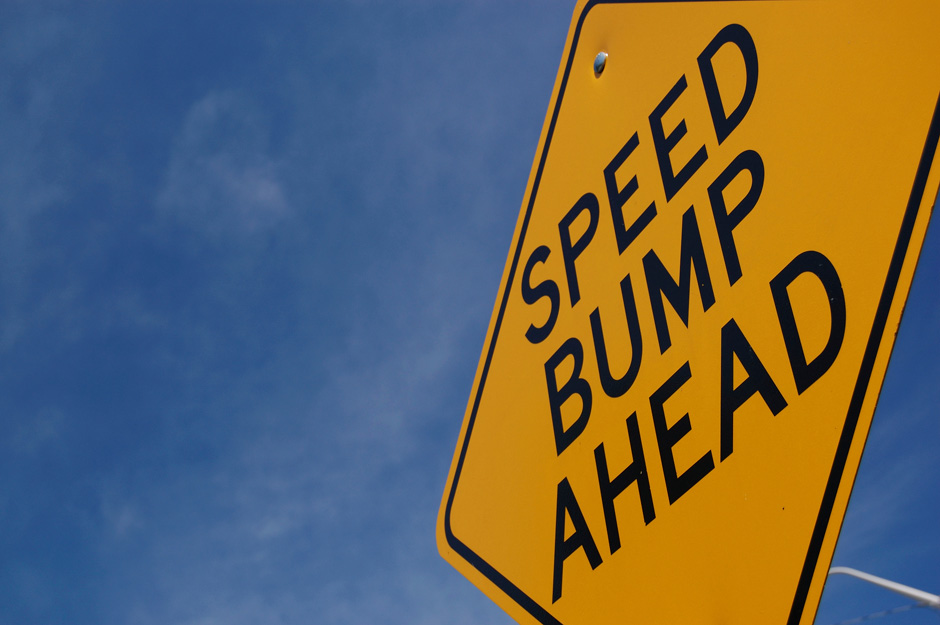
Speed bumps and walls…

…have a few things in common. Both force us to pay attention, slow down, and (sometimes) change course…

speed-bump-warning-sign

…have a few things in common.  Both force us to pay attention, slow down, and (sometimes) change course.  In many ways, speed bumps are merely walls that are short enough to get over with minimal effort.

Unlike speed bumps, walls are there to stop us, contain us, to protect something we’re not supposed to see, or maybe provide protection to something we don’t want others to see.

Is that nasty cold you have a speed bump or a wall?

How about the job you had until last week?  Is losing that job a speed bump or a wall?

Is the macro-economic forecast for 2% or less in U.S. Gross Domestic Product growth a speed bump or a wall?

Is bad weather (however you define the term bad) a speed bump or wall?

The death of a loved one?  Speed bump or wall?

The diagnosis you received from your doctor that has you wondering how long you have to live this life you love.  Speed bump?  Wall?

Meeting the person of your dreams and falling in love.  Speed bump or wall?  Surprise!  Good news introduces speed bumps and walls, just like bad news.  Of course, good news can also knock down walls.

When the news first hits, it almost always looks like a wall.  Only after further reflection, maybe some quiet meditation, a hard workout(s), discussions with our friends and family, enjoying a bowl of our favorite ice cream, watching some sunrises and sunsets, or all of these, do the walls start to look shorter.

As the walls lose their height, they may disappear from sight, or take the shape of speed bumps that we can handle.

Some walls are high and stay that way.  If we can’t climb over, we learn to change direction and find a way around.

What if we can’t climb over, can’t change direction, and the high walls continue to surround us?  Should we give up?

No way!

We build our expansive life inside the new walls and never drop our quest to escape…even if we have to dismantle the walls one brick (or chisel strike) at a time.

Do you remember that guy who gave up?  Neither can anyone else.  –Author Forgotten

Where are You Aiming?

What if getting ready isn’t the first step?

“If you aim at nothing, you will hit it every time.”  -Zig Ziglar

Ready.  Aim.  Fire.

That’s the standard way to shoot at a target.  How many people actually follow these steps?

How many have you seen following other sequences:

Ready.  Fire.  Aim.

Fire.  Fire.  Fire.

Aim.  Aim.  Aim.  Aim.

Ready…  Ready…  Ready… (now what?)

Ready.  Aim.  Aim.  Aim.  Aim.  Aim.  Fire?  Fire?

Life is a series of choices.  A series of challenges.  A series of what if’s.

It’s impossible to know the true definition of “ready” in a life of endless possibility.  One can spend a lifetime “getting ready” for an outcome that may, or may not, happen.  The truth is, we are never fully ready.

What if getting ready isn’t the first step?  What if pursuing excellence is?

Excellence in whatever we do.  Excellence in the way we look at life.  Excellence in our contribution.  Excellence in the way we treat others.  Excellence in our expectations of ourselves and others.  When excellence is the target, the other steps become clear.

Pursue excellence.  Ready.  Aim.  Fire.  Adjust.  Pursue excellence.  Repeat.

Does excellence mean perfection?  No.  Pursuing perfection is a fool’s errand.  The good news is that by pursuing excellence we get a glimpse of perfection from time to time.

The target isn’t the real reward anyway.  That comes from the pursuit itself.


The End of the Beginning

I should mention one detail: I wasn’t Catholic…

sistine-chapel-ceiling

There I was, about to enjoy my Chipotle for lunch, listening to some financial news, when the commercial came on.  The Catholic Channel was covering the papal election over on channel 129.

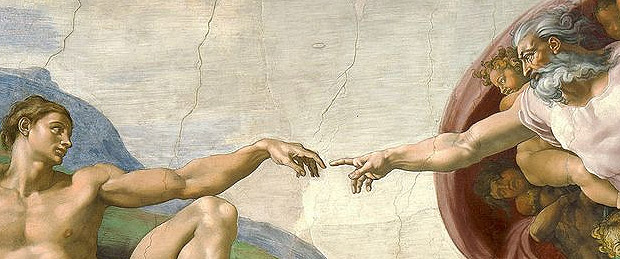
That’s right, I thought.  They’re electing a new Pope today.  Funny, we had just visited Vatican City a few months before Pope Benedict announced his retirement.  What a beautiful place!  It was huge.  Michelangelo’s paintings in the ceiling of the Sistine Chapel were breathtaking.  The views of Rome from the top of the dome in St. Peter’s were spectacular.

What do they talk about on that channel when there isn’t a papal election, I wondered.  I switched over to 129.  My timing wasn’t bad.  The two hosts were all fired up.  A new Pope had been elected!  Their excitement was overwhelming.  “We have a new Vicar of Christ, and he’s about to make his first appearance,” one of them said.  They were waiting for him to come out and make his first appearance in the window above St. Peter’s Square.

As I sat there, listening to them talk about this new Vicar, I realized I had tears running down my face.  Tears of happiness.  “We” had a new Pope!  A new Holy Father to shepherd us in the Way of Christ.

I should mention one detail:  I wasn’t Catholic.

Why was I so excited about this new Pope?  Why was my heart filled with new joy and warmth at the thought of this new Pope and the energy he’d be bringing to the Church?

I drove back to work, wondering for a minute what this all meant.  I quickly turned my thoughts to something else.  I switched my radio over to The Blend, and acted like nothing had happened.

As I drove home from work later that day, I switched back to 129 to hear more about the new Pope.

I let almost a year go by without taking any action, or telling anyone about my new-found favorite station.

It’s not like the news that I had suddenly felt a spiritual (religious?) connection to the Catholic Church would be unwelcome in my family.  My wife and daughters are Catholic.  My daughters both graduated college with theology and philosophy degrees.  My in-laws are Catholic.  Many of our friends are Catholic.  I’ve been an active volunteer at our Church for years.  I had always been connected to the Catholic Church, but never had a spiritual connection.  I never truly believed.

Now, for the first time in my life, I believed.  An emptiness I didn’t know I had was suddenly filled.

I remember going to a weekend camp when I was about eight years old.  Big David (who was a few years older than Little David, who also lived on our street) invited me to attend his camp in the mountains.  That sounded pretty great to me, and I’m sure my parents were happy to have a weekend break from one of their rambunctious sons.

I didn’t know it at the time, but it was a Bible camp.  This would be my first introduction to anything religious, since my family wasn’t religious.  We arrived and were assigned to our cabins and counselors.  I don’t remember my counselor’s name, but I do remember one of the first questions he asked me.  “Bobby, have you accepted Jesus into your heart?”

Who was Jesus?  What does he mean to accept Him?  Why was I the only one he asked?  What is this place?  I spent an awkward weekend, being a volunteer kitchen helper (each cabin was in charge of service for one meal), listening to lectures from the Bible, and being asked at least once a day if I was ready to accept Jesus into my heart.  Needless to say, my first introduction to Jesus didn’t go well.

I had a few more introductions over the years, and finally was introduced more formally by my (soon-to-be, at the time) wife, Janet.  I learned a lot about the Catholic Church as I prepared to be married in one.  And yet, I still didn’t know who Jesus was.  I kept having the same questions I had when I was eight.  Besides, I had things pretty well figured out, and going to church was a lot of commitment.

It’s interesting to me that the number forty comes up a lot in the Bible.  Jesus spent forty days in the desert, fasting, and praying (and being tempted by Satan) after he was baptized.  Only then was he fully ready to begin his public ministry.  The Israelites spent forty years in the desert before they could return home.  Noah’s Ark was put to use after it rained for forty days and nights.  Moses spent forty days and forty nights on the mountain with God.  Jesus was with his disciples for forty days after his resurrection.

From my first (messy) introduction to Jesus until this past weekend when I was baptized into the Catholic Church, I count forty years, almost to the day.  I’m sure it’s a coincidence.  Just like my random decision to switch over to channel 129 that day.  Or, the way my daughter added some Christian music to my iPod.  Those songs kept coming up over and over each time I went for a run.  I got to know those songs pretty well.  So well that I actually started thinking about their meaning, even before that day our new Pope was elected.

My baptism, confirmation, and first communion last Saturday night were the culmination of an almost year-long preparation process.  The process included classes every Sunday, after Mass.  It also included a ton of reading that I assigned to myself.  Books about the Rosary, the Saints, Saint Paul the Apostle (the Saint I chose as my Confirmation Saint), and the Holy Land.  I also did lots of reading from the Bible itself, as well as the Catechism of the Catholic Church.

Funny thing is that throughout this process, I couldn’t wait for each Sunday to come.  I couldn’t wait to learn more about my faith, my Church’s history, and the love that Jesus has for each of us.  What was an unreasonable commitment to my younger self has become an integral part of who I am today.

After forty years, I’m coming to the end of the beginning of my relationship with God.

Looking back, I can see so many places where God was with me, even as I ignored Him, or spoke against Him.  He was patient.  He knew I’d eventually find Him right where He’s always been…beside me.


Finding Your Authentic Swing

What about the inevitable shanks, worm-burners, wicked slices, massive hooks, and just plain misses?

BaggerVance


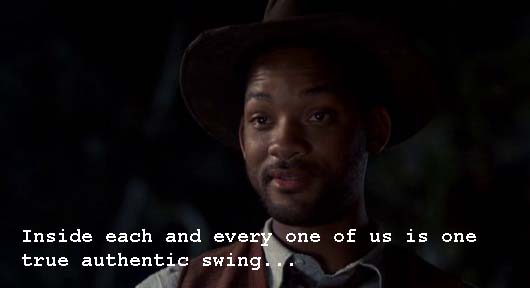
“Yep… Inside each and every one of us is one true authentic swing… Somethin’ we was born with… Somethin’ that’s ours and ours alone… Somethin’ that can’t be taught to ya or learned… Somethin’ that got to be remembered… Over time the world can, rob us of that swing… It get buried inside us under all our wouldas and couldas and shouldas… Some folk even forget what their swing was like…”

-Bagger Vance

The Legend of Bagger Vance is filled with good stuff.  It’s a movie that moseys along with a subtle, southern rhythm.  It conveys a depth of meaning without trying.  The movie challenges each viewer to look at themselves as much as the characters.

I do agree that our authentic swings can get buried under the wouldas, couldas, and shouldas of life.  They can just as easily be uncovered by the leaps, possibilities, why-not’s, and I’m-in’s.

That being said, I must disagree with Mr. Vance’s notion that we each have one true authentic swing.  I rather think we have more than one authentic swing, if we choose to search.  Not only that, we have a lot of clubs in our bag.  We have an almost infinite number of authentic-swing-and-club combinations to choose from when our time comes to stand over the ball, and deliver.

What about the inevitable shanks, worm-burners, wicked slices, massive hooks, and just plain misses?

The best among us are the ones who find a way to recover, and swing again.

Will Smith at his best…


Photo Credit

The Mystery of the Dots

Our lives can seem like a collection of random experiences, decisions, non-decisions, near-misses, lucky chances, chance encounters, crazy ideas…

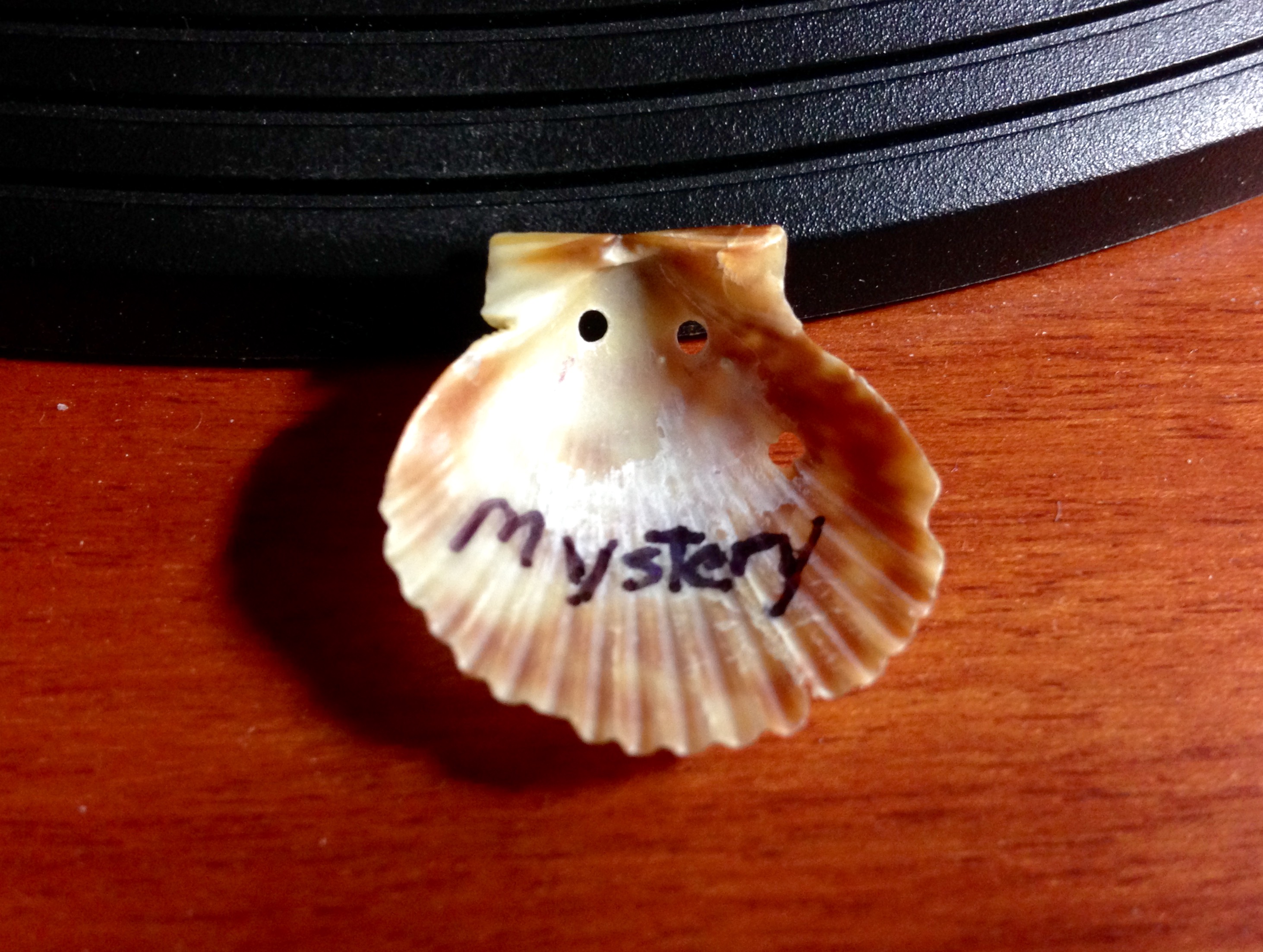
MysterySeashell

I recently participated in my first Church retreat.  It opened with an exercise where each participant drew a seashell out of a pile of seashells.  Written inside each shell was one word.  The facilitator then asked each of us to say how this one word connects with our lives.

My word was Mystery.

As I sat pondering the word, I couldn’t help thinking about all the dots in my life that have connected to bring me here.

Connect-the-dot puzzles are a great way to teach kids how to count, and see that there can be order in the apparent chaos of a bunch of dots on a page.

Our lives can seem like a collection of random experiences, decisions, non-decisions, near-misses, lucky chances, chance encounters, crazy ideas, mundane thoughts, risky ventures, explorations, challenges, victories, losses, successes, failures, limitations, beliefs, non-beliefs, triumphs, heartbreaks, new directions, people, places and things.

These are our dots.

We create some of the dots, but most of them are already there, waiting for us to connect.

Which dot comes next?  Do we choose, or is it chosen for us?  Is there a pattern, or at least some path, in all these dots?  I like to think we have something to do with deciding which dot comes next, but certainly not everything.

Nearly every major turning point in my life (good and bad, but mostly good) was unplanned.  Sure, I may have been prepared to capitalize, but the actual “dot” came out of nowhere, often by chance.

To paraphrase a quote from The Way (a movie I highly recommend, by the way), “You don’t choose a life, you live it.”  We all make plans, and try to map out where we’re headed.  The truth is, we don’t have as much control over things as we’d like to think.

Letting go of the illusion of control is a big step toward happiness.

The happiest people I know live their lives as a verb, rather than something to be controlled, or pondered in the past tense.  They are always seeking, always learning, always renewing.  They usually spend a lot of time serving others.  They don’t know which dot comes next, but they’re open to the possibilities.

I can see some big dots in my future, but I know there are a bunch I don’t see.  That’s the great mystery that makes life so awesome.

The Obstacles You Think You Know…Don’t Matter

Polynomials suck, but they aren’t the obstacle that matters most…

Polynomial Function

I used to hear one question a lot when I was a kid.

Whether an adult was asking me, or another kid my age, it was always the same:

What are you going to be when you grow up?

In second grade, I knew I wanted to be a doctor.  My friend wanted to be a fireman.  Another friend wanted to be a professional skateboarder.

By high school, I was still thinking doctor, or maybe veterinarian.  One of my friends planned to be an engineer, another wanted to teach, and one planned to go to the Air Force Academy and become a fighter pilot (he just retired from the Air Force a few years ago).

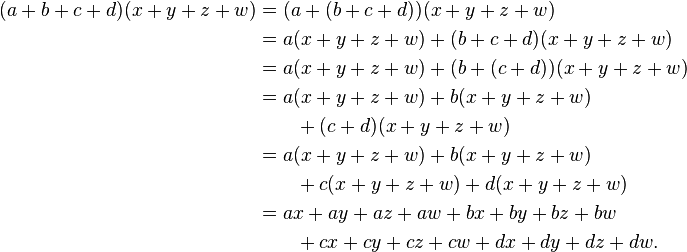
In my senior year in high school I ran into Algebra 2.  More specifically, factoring polynomials.  FOIL method.  Up to that point, math had made sense.  Plug the numbers into the formulas, and get your answer.  X equals 11, Y equals 9.  Pythagorean Theorem?  Piece of cake.  Word problems?  Easy.

But, polynomials made no sense.  The magic of the FOIL method didn’t help.  First, Outside, Inside, Last?  Solving for multiple variables that cancel each other out in some mysterious way?  Arriving at an answer that looks as cryptic as the original question?  What does a polynomial look like if you draw one?  When will we ever use this in real life?  I’d say it was all Greek to me, but I didn’t know Greek either, or Latin.

I hadn’t even reached Calculus (the math all the other brainiacs were taking in their senior year), and I’d hit a wall.

Polynomial Example

I could see the handwriting on the chalkboard (teachers used to write on them before whiteboards were invented).  To become a doctor would require a science degree of some kind.  That science degree would require a ton of math well beyond polynomials…maybe even Calculus.  What comes after Calculus?!  And, what about Latin?  Doctors all seemed to use Latin.  How would I learn that?  It wasn’t even offered at my high school.  And, what about getting into medical school?  Did I have eight years to give up?  How would I pay for all of it?  This was going to be hard!

We each have a strategic thinking instinct.  The ability to prioritize, make deductions, create connections, and map out a direction.  Or, multiple directions.

Unfortunately, more often than not, we either ignore our strategic thinking capability, or we use it to map out why something is impossible.  We visualize all the obstacles while ignoring the path around, over, or through them.  We neatly stack all the obstacles into an impenetrable wall, rather than a series of hurdles to be taken one-at-a-time.

My doctor plans went down in flames…but, I was the one pointing the metaphorical plane into the ground.

Could I have found a way to understand polynomials?  Yes.  Could I have dealt with Calculus?  Yes.  What about Latin?  Yes.  What about getting into medical school?  Yes.  Did I have what it took to become a doctor?  Probably (we will never know).

Did I allow myself to realize any of this at the time?  No.  I was too busy jumping toward another goal that had fewer obstacles, or so I thought.  One that didn’t require Calculus.  One that I could get my head around, and see more clearly.

I now understand something I didn’t back when I was a high school senior.  I’m not sure I understood it by the time I was a college senior either.  Our biggest obstacle, the one that matters more than any of the obstacles we can see, the obstacle that trumps all others, is staring back at us in the mirror.  Find your way around, over, or through yourself, and you are well on your way to overcoming almost any other obstacle in your path…maybe even polynomials.

Want the answer to the crazy equation?  This might (or might not) be it


Photo Credits:  Here and Here


The Next Version

The first version may dramatically change, or create new markets. But, it can’t stop there.

intro_originalipod

Just when the caterpillar thought the world was over, it became a butterfly.  ~English Proverb

There’s always a next version.  The latest update.  The new and improved model.  That is, if you sell a product (or service) and hope to remain relevant.

The first version may dramatically change, or create new markets.  But, it can’t stop there.

When Microsoft came out with its first version of MS-DOS (Microsoft disc operating system for those of you born after 1983 or so), they didn’t stop developing what they had.  There was always a new version just around the corner, and then all the versions of Windows after that.

Consider how quickly Apple’s iPod improved, shrank, morphed, and spawned new products and categories (like the iPhone).  The first iPhone was awesome and changed everything.  But, Apple didn’t stop there.  They couldn’t.

Dr. Athey (one of my favorite professors) used to talk about the “ratchet effect” in technology.  With each successive improvement in speed, features, or capability, the expectation level is ratcheted-up, at least one notch.  Each improvement creates a new floor.  A platform for the next leap.

Stop improving, stop inventing, stop pushing, stop creating, stop leaping, and guess what.  Your product begins to wither and die.  What was once amazing becomes the norm.  The markets you created start to shrink.

The same ratchet effect applies to each of us.

I will never forget a conversation I had with Grandpa Clyde.  He was about 90 years old at the time.  He had just started using email, and asked me how he could send an email to more than one recipient.  I gave him some email pointers, but I got a whole lot more in return.  His questions demonstrated a key secret to a happy life:  Continuous exploration…seeking the next version.

What are you curious about?  What scares you?  What seems impossible?  These are the first things to explore.  Choose to take your first step.  Once you take the first step, the next one is easier.

What features will be in your next version?


Photo Credit:  ARS Technica


#tbt – Throwback Thursdays

Each #tbt post gives us a glimpse of potential yet to be fulfilled…

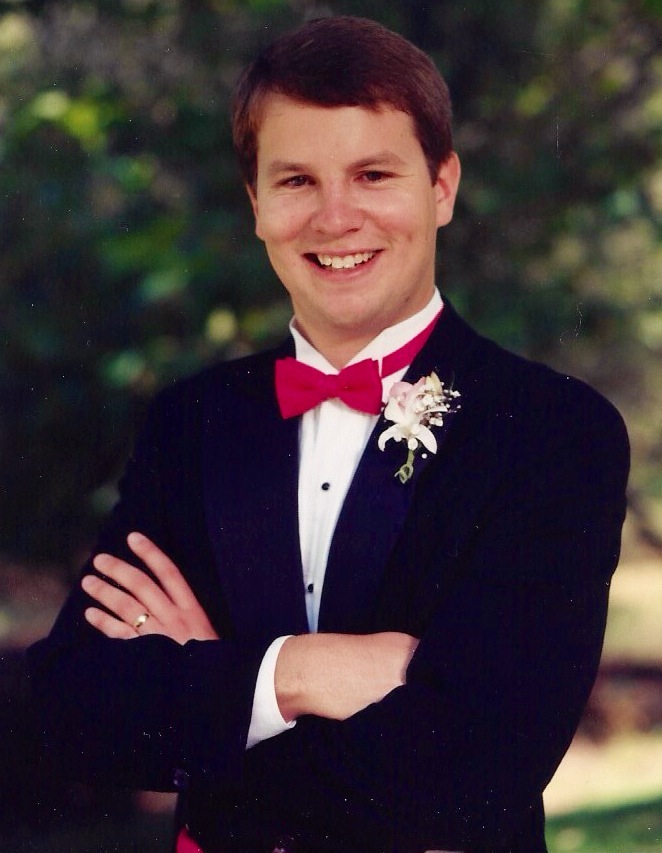
It’s fun to see how long (and not grey) our friend’s hair was twenty or thirty years ago…especially if that person has little or no hair now (like me).  It’s neat to see our faces before years of experience (and sun damage) have made their mark.  The clothing styles are always good for a laugh…nice OP shorts, Magnum!

#tbt posts provide a window into who we were, and the things we thought were important.  As we look at a #tbt photo, we know how things turn out for this “stranger” in the picture.  The person in that old photo has years of decisions to make, countless lessons to learn, and many hearts to touch.  Each #tbt post gives us a glimpse of potential yet to be fulfilled.

Look in the mirror.  You get to see your future #tbt photo every day.

What potential do you have that has yet to be fulfilled?  Whose hearts will you touch?  Will you make sound decisions?  What will you learn along the way?  None of us know for certain.

One thing is certain.  Many of the things that seem important today won’t be so important in twenty or thirty years.

Wedding-Day

Your humble writer, on his wedding day in July, 1988.