You can tell people what to do, and sometimes that’s the right call. Yet, direction without participation creates compliance instead of commitment.
When people understand the purpose, see where they fit, and have a voice in the direction, they’ll take emotional ownership.
The best leaders invite that ownership by asking questions that open doors to insight. What are we missing? What would you try? Where do you see the risk? These questions are invitations to shape the work and the results.
When a product manager asks her team, “How would you approach this?” instead of presenting a finished plan, the solutions that emerge are sharper, and the team building them gets stronger.
Humans are built for both independence and belonging, desires that often pull in different directions. Wise leaders guide this tension well. They give people space to grow while connecting them to something larger than themselves.
To bring others on the journey is to build together. Growth is shared. Trust expands. When the path gets steep, they’ll keep climbing with purpose.
They remember the reasons, because they helped shape the path.
Photo by Powrock Mountain Guides on Unsplash – Unsplash has a ton of amazing hiking photos, mountain climbing photos, pictures of maps, legos, and winding paths. All would have represented the themes of this post admirably. But this photo caught my eye.
How do you see it connecting to this post? What makes this photo stand out? How hard do you think it is to hike across to that gleaming white mountain in the distance?
Imagine owning a well-trained thoroughbred racehorse. Born and bred for speed, this horse thrives on competition and lives to run fast.
Every day, six days a week, this horse trains relentlessly. It has one purpose and one passion: running and winning races. Nothing else matters.
But on race day, you grow cautious. You worry, despite all the training, despite the horse’s proven skill, that it might not pace itself properly. So, you ask the jockey to override its instinct to run fast. You instruct the jockey to hold back the reins from the start.
As the race unfolds, your horse struggles against this restraint. Instead of feeling exhilarated, it grows frustrated. Its natural drive diminishes with each stride as the jockey pulls back, second-guessing the horse’s desire to run.
Finally, as the last turn approaches, the jockey releases the reins and shouts encouragement. It’s time to unleash all that pent-up speed.
But the horse no longer cares. He’s not even paying attention. He lost his competitive edge about a half mile ago as the jockey kept holding him back. Sure, the horse goes through the motions, picking up just enough speed to appear engaged, to show respect for the jockey’s urging. But the spark is gone.
This is a very fast horse, so even his partial effort makes for a close finish. But unfortunately, the horse doesn’t win the race. One he could have easily won if he hadn’t been held back from the start.
If you’re a manager, how often do you treat your employees like this horse? How often do you hold them back from doing the very thing you hired them to do? Do you second-guess their instincts, micromanage their decisions, and restrain their natural abilities out of fear, caution, or to protect your ego?
Consider how demoralizing it is for your team when you take away their autonomy. The freedom to run their own race. When employees lose the ability to make meaningful decisions, their enthusiasm, creativity, and ownership suffer. These are the very qualities that fuel success, and when suppressed, diminish the team’s potential and their performance.
Take a look around your organization. Are your people fully engaged, and running with purpose? Or have you inadvertently drained their passion and energy by holding them back?
There’s something else that’s easy to overlook. When you don’t allow your people to take on challenges, make decisions, and occasionally stumble, you’re not just holding them back today. You’re limiting who they can become tomorrow. Without the opportunity to stretch, fail, and grow, your employees can’t develop the judgment and endurance that leadership demands.
Playing it safe and keeping them on a tight rein risks weakening your bench strength and jeopardizing your organization’s ability to thrive in the future. We’re not just running one race; we’re running a never-ending series of tough races that stretch out long into the future.
Imagine how powerful your organization could be if you simply let your thoroughbreds—all the talent and skills you’ve carefully assembled—run their races the way they know best. Imagine letting them succeed and fail with your support, as part of your team, and not just your assistant waiting for you to make all the decisions.
It’s time to loosen the reins and let the ponies run. Because if you don’t, they might find somewhere else where they can.
Thought leaders play a critical role in any organization. Sometimes, they have titles like CEO, COO, CIO, etc. Other times, the real thought leaders are deep within the organization—formally or informally influencing the speed and direction of progress. Often, it’s a mix of both (most ideal, in my opinion).
It doesn’t take long working with people (in business or everyday life) to recognize some common personality types. See if any of these sound familiar:
The Opportunist – “What’s in it for me?”
The Rule Follower – “What will our boss think?”
The Naysayer – “Let me tell you all the ways this won’t work.”
The Over-Analyzer – “Shouldn’t we think about this more?”
The Idea Generator – ”What about this new approach to the problem?”
The Go-Getter – “Why are we sitting here doing nothing… let’s move!”
The Rebel – “Who cares what the boss thinks?”
The Doer – “We’ve got all we need, so let’s start.”
The Supporter – “How can I help you with your goals?”
The Invisible Worker – “I don’t want to get noticed.”
The Minimalist – “How can I get by doing the least amount of work?”
The Escape Artist – “If this goes wrong, I wasn’t here.”
Which one is best?
That depends on the situation.
I tend to gravitate toward those who accept responsibility, take risks, and aggressively seek solutions. I like working with people who act first, ask for forgiveness later, and push organizations toward innovation and progress.
But even the most action-driven person benefits from a counterbalance. Someone who asks the tough questions, who sees the risks, who insists on analyzing every angle. Their input can temper an ambitious plan, provide a broader perspective, and uncover blind spots the team might otherwise miss.
Too many cautious over-analyzers, and an organization stalls. But completely ignoring their input? That’s a recipe for reckless decision making.
Look around your organization, your circle of friends, and the people you admire. How many of them fit into one or more of these categories? More importantly, which one(s) fits you?
And if you’re building a team for your next big project, who do you want on that team? Who will give your project the highest chance of success?
The key to a successful team isn’t about having just one type of person. It’s about striking the right balance. Recognizing that the strengths and weaknesses of each personality type will allow you to build a team that works effectively together, balancing momentum with careful consideration.
The best teams blend different perspectives and working styles to make smarter decisions and drive lasting progress.
Choose wisely, because the right mix can be the difference between failure and success.
“You can have everything in life you want, if you will just help enough other people get what they want.” – Zig Ziglar
I remember a friend of mine who was promoted from being a very successful salesman to being the branch manager for a large insurance company. It is amazing to think this was almost 30 years ago.
He told me that he’d finally get to tell people what to do, and he looked forward to that. Plus, he’d get to take long lunches and charge the lunches to his expense account.
I knew that if that was his approach to his new manager role, he’d probably fail miserably…and quickly. I told him as much.
I suggested that he start by meeting with his new team members one-on-one. Just because he’d worked alongside many of them before didn’t mean he knew them well enough as their manager. I encouraged him to take the time to understand each of their roles, how they saw their future, and what they hoped to see change at the company.
I said it would help him get to know them and, even more importantly, show them he valued them and wanted them to succeed. And if he let them know that he needed their help, too, it would go a long way. This wasn’t just his chance to lead, it was a chance to connect directly with each team member.
He thought that was a waste of his time. He had been a very successful salesman, knew how the company operated, and already knew what made the branch tick. He told me that he knew what needed to be fixed and he’d hit the ground running to get those changes implemented.
I saw him again about three or four months later. When I asked him how his new job was going, he just shook his head. “Not good. Nobody is listening to me. I’ve had a couple of people quit already, and I think some others are out looking for new jobs. Our sales are way down. My boss is asking me what I’m going to do about it.”
I didn’t say, “I told you so,” but that’s what I was thinking. A few months later, he was demoted back to sales, but at the lower pay structure in place for new hires. Not long after that, he left the company.
I’ve been blessed with multiple opportunities to take over business operations in fields where I had little or no expertise or experience. Sometimes, from outside looking in, I had some ideas about how things should operate, but I always kept it to myself when I arrived.
Even in situations where I thought I knew all the answers, I purposely and methodically asked as many questions as possible. I took my own advice to meet with as many employees as possible, asking them about their job, how they do it, why they do it, where they hope to be in the future, the problems they are having, the things the company is doing wrong, the things the company is doing right. There are no wrong answers in these types of discussions.
It is truly amazing how much a new manager can learn from the people already in place, especially if that manager genuinely wants those people to be successful. It also helps to be extremely curious and thirsty to learn as many details about an operation as possible.
The most successful managers I’ve known have operated this way. They ask questions and listen carefully to the answers. They work as hard as they can to help each of their team members get what they want (as Zig so eloquently said).
If you’re stepping into a leadership role with the mindset of lording authority over others, expecting everyone to follow your lead just because you’re in charge, you might have short-term success, but it won’t last. Real leadership is about seeking ways to enrich others and the organization before yourself. And in doing so, you build an environment of trust where people thrive and truly enjoy their work.
Helping others succeed isn’t just a management tactic. It’s the only way to real success.
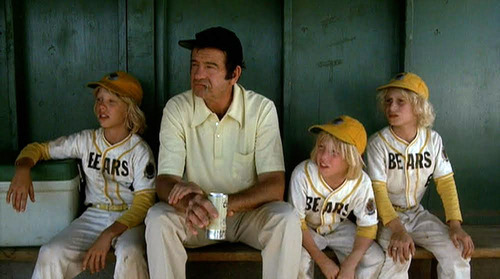
Park league baseball season came to an end recently. We had four grandsons between the ages of 8 and 10 playing on teams. The teams had a few “veteran” players, but for most of the players this was their first experience playing organized baseball. They had a lot to learn…and we saw amazing improvements in all the players in one short season.
It’s clear that the lessons they learned can extend far beyond the field, if we are willing to pay attention.
Panicking When the Ball Comes
My most vivid memory from the season is seeing the panic for many of the kids when the ball would come their way. Will they catch the ball? Where will they throw it once they have it? Do they know why they’re throwing it in a particular direction? Will the player they’re throwing to catch the ball?
The drama was real. It was clear that a lot of the kids didn’t expect the ball to come toward them. I saw a few kids jump away from the ball to avoid fielding it.
As a spectator, it’s easy to see what’s happening. It’s easy to assume that surely, we’d field the ball properly, and immediately know where to go with the play.
It’s not always as easy as it looks. Unexpected situations arise, and our response (or lack thereof) can significantly impact what happens next. Learning to stay calm and doing some pre-thinking about our actions (before the play) will significantly improve our chance of success.
Understanding Game Situations
Many young players struggle with understanding the game situation—who’s on base, how many outs are there, what’s the best play to make when the ball comes to them, and how to act strategically.
This lack of situational awareness highlights a crucial lesson: the importance of context and awareness in decision-making. Understanding the bigger picture allows for more informed and effective actions. The coaches encouraged the kids to think ahead (pre-thinking) and consider various outcomes. Whether the kids listened and embraced their advice was another thing entirely.
Are you thinking about your “game” situation? The macro and micro aspects of the challenges you and your organization are facing. Are you thinking ahead and considering various outcomes as part of your decision-making process?
Learning the Basics: Throwing and Catching
It’s not uncommon for young players to throw the ball the wrong way or miss it entirely. These fundamental skills require practice and patience. This aspect of the game underscores the importance of mastering basics before tackling more complex tasks. In any field, solid foundational skills are essential for success. Nearly every pursuit or profession has basic foundational skills that need to be mastered along the way toward more advanced skills. A football analogy fits well here…it’s important to understand the blocking and tackling part of the game before you can advance to running with the ball.
Position-Specific Skills and Aspiration
In youth park league baseball, most of the hits stay in the infield. This leaves the outfielders without much to do. I heard lots of outfielders wishing they could play an infield position like second base, or catcher. None of them understood what those positions entailed, but they knew that those positions had more action.
A few of them took the time to learn about the infield positions from their coach. They showed their interest and willingness to work their way to the infield. This shows the value of preparation and skills development. It’s important to work on the necessary skills before aiming for a specific role, whether in sports or any other endeavor. It also emphasizes the value of seeing a goal and then taking the concrete steps to learn, grow, and achieve that goal.
Strikeouts Aren’t Failures
Consider that an excellent hitter in the big leagues gets a hit about 30% of the time. They may get walked occasionally, but the rest of their at bats result in fly outs, ground outs, or strikeouts.
We saw a ton of strikeouts this past season. I was always impressed with the kids who struck out and immediately came back to the dugout to ask their coach what they should be doing to avoid striking out next time. Each strikeout was a learning opportunity…but only if the player saw it that way.
We saw a few kids melt down in disappointment and embarrassment. One kid from an opposing team stomped off the field and took himself out of the game (an extremely negative response to be sure).
When things go wrong, or we don’t get the result we want, that’s the time to buckle down and learn why it happened. Consider ways to improve so the results can improve next time. It’s only a failure if you give up.
Teamwork and Collective Goals
We are all self-centered. As we mature, we usually learn how to control our self-centeredness or at least how to channel it productively. Ten-year-old kids are no different. Their focus is on their own performance. Whether or not they’re hitting the ball. Whether or not they made the right play.
They often forget that the goal is for their team to win. They can help the team achieve that goal by having a strong performance, but also by helping and supporting their teammates. This is a powerful reminder of the importance of teamwork and the collective effort required to achieve a common goal. It’s easy to get caught up in individual performance, but true success usually comes from working together and supporting each other. Collaboration and shared successes build strong teams. Strong teams create successful outcomes.
Consistency Matters
Ask an excellent bowler, pitcher, batter, shooter (basketballs or bullets), pole vaulter, or pickle ball player how they deliver such excellent results. They’ll mention practice, dedication, and a strong mental approach. Eventually they’ll talk about consistency. Each of these pursuits (and countless others) require consistency above all else. The exact motions, body positions, eye contact, and calmness of breath that they can count on happening whether they consciously think about it or not.
Their practice process is all about achieving repeatable actions that their body remembers…every time. They also know that they aren’t swinging for the fences every time they’re at bat, not trying to set the world record or do something extraordinary with every outing.
They are working to become a steady and consistent performer at the highest level possible…and always reaching a little higher.
Consistency, patience, and incremental progress should be the goals…repeatable excellent outcomes will happen as a result of achieving these goals.
Park league baseball is a ton of fun. The drama is real. Teams experienced the “thrill of victory and the agony of defeat” throughout the season. We saw players improving and gaining confidence as the season unfolded.
I don’t know where the teams ended up in the standings at the end of the season.
I know the kids learned a lot and hopefully they’ll incorporate some of what they learned well beyond the game.
In the dim glow of his studio, the sculptor stood before a vast expanse of pristine clay, lost in thought. His mind danced with visions of what he would create—a masterpiece that would captivate hearts and minds, a testament to his skill and vision. Yet, before his hands could shape the clay, there were crucial steps to take, like preparing the raw material before the artistry could begin.
As he contemplated the sculpture taking form in his mind’s eye, he pondered the perspectives he would bring to his creation. Each angle, each curve held significance, and he knew that his vision would resonate differently with each observer. He envisioned the awe in their eyes, the whispers of admiration as they saw his work.
But this sculpture would be unlike any he had attempted before—it would be monumental, stretching skyward in grandeur. The clay alone would not suffice; he would need the finest materials that could withstand the test of time. Yet, the cost of these materials weighed heavily on his mind. It was a venture that would require more than just his own resources.
Thus, he embarked on a journey to seek investors—patrons who believed in his vision and were willing to invest in its realization. With their support, he would procure the materials necessary to bring his creation to life. But it was not just financial backing he sought; he needed a team of skilled artisans who would join him on this sculpting journey.
Finding the right team was no small feat. Each member would bring their own expertise and perspective, enriching the project with their unique talents. Yet, it was not just a matter of talent—they would need to share his passion and commitment, willing to sacrifice their own pursuits to see the vision through.
And so, he set out to assemble his team, each member drawn by the promise of being part of something extraordinary. Yet, he knew that their dedication could not go unrewarded. He would provide for them, ensuring they had the means to sustain themselves as they poured their hearts and souls into the project.
With each detail meticulously planned, he secured a space large enough to accommodate the monumental sculpture, a blank canvas upon which his vision would take shape. And in his heart, he held onto the hope that there would be a patron waiting in the wings, eager to claim his creation as their own. A customer.
As he surveyed the clay before him, he saw not just a mound of earth, but the embodiment of possibility—the first step in a journey that would culminate in something truly extraordinary.
With determination burning bright in his eyes, the sculptor began to mold the clay, each touch infused with passion and purpose. He knew that before the sculpture could stand tall, it must first be brought to life in the fertile soil of his imagination.
Sound familiar?
If you launch a new idea, a new project, a new company, or a new rocket…you’re the sculptor. You alone see your vision. To see this new vision come to life, you will need to gather others, inspire them, challenge them, and ultimately organize your new team toward the goal of making your vision a reality.
It won’t be easy. Great things never are. You’ll risk failure at every turn. You’ll have to overcome challenges you never knew existed.
But you’ll never achieve meaningful success in your project (whatever it is) without taking the risk, making the clay, gathering your team, and ultimately bringing your vision to life.
I have one favor to ask: If you like this content and think someone else will like it as well, please forward this post to them.
In the tenth week as we handed-in our last project and prepared to take the final exam, there were only 9 of us…
They’re called weed-out classes. The classes in every major designed to weed-out the pretenders, the students who can’t hack it, the ones who just don’t have what it takes.
They usually come around the third year…just when you think you’re pretty good at this stuff, and after you’ve committed two-plus years of your life to this major.
There were a couple of doozies in my major, Computer Information Systems. But, none compared to CIS 324—Database Programming. On the first day of class, Dr. Stumpf said he wouldn’t be surprised if we’d be in the computer lab 40-60 hours per week, just to complete the four main programming projects. We’d also have a mid-term and a final that covered all the database theory we were supposed to be learning while completing the projects.
To make things tougher, each project picked up where the last one left off. So, if you stumbled on the first project, you were setting yourself up for a potentially unrecoverable torture test in the second, third, and fourth projects.
It didn’t matter that you had other classes, or that you had a life that included working 30-40 hours per week. This was CIS 324. The weed-out class.
There were 26 of us in class that first day. I remember the number because two people wanted to add the class, and Dr. Stumpf was concerned because we only had 24 chairs in the classroom. That wouldn’t be a problem for long.
Five weeks and two projects later, there were 18 of us in class. The others had dropped.
Seven weeks and three projects later, we were down to 11. This was long before Survivor, but students voted themselves off the island nearly every week.
Dr. Stumpf took it all in stride. This type of attrition was normal. The students who didn’t make it would try again next quarter, or they’d re-evaluate their choice of major and never be back.
In the tenth week as we handed-in our last project and prepared to take the final exam, there were only 9 of us. By now, we knew each other well. We had spent many hours together in one of the computer labs (this was a bit before the days when you could use your PC to connect remotely). We were in every class, pulling for each other.
We were part of this small band of students about to make it through Dr. Stumpf’s CIS 324 class.
Looking back at those ten weeks, I don’t remember much detail about the projects. I remember the long nights in the computer lab, the endless diagrams, and lines of code. There was an amazing vending machine just outside the lab that dispensed ice cream bars for 30 cents apiece. I lived on ice cream bars and Mountain Dew that quarter.
I remember coming to each class, especially on the days our projects were due, wondering who’d be there and who’d be gone. I remember Dr. Stumpf congratulating each of us when we handed in our final exams on the last day of class.
Since CIS 324, I’ve faced lots of “weed-out” tests, whether I knew it or not. I’ve taken on projects that were way over my head. I’ve asked myself to deliver “the impossible” more than a few times.
Were these real-life weed-out situations harder than my CIS 324 experience? Definitely. And, many lasted a lot longer than ten weeks.
But, the experience of overcoming my first weed-out test made it easier to pass the next one. And, passing the second weed-out made it easier to pass the third.
Overcoming all these weed-out tests had five things in common:
If I focused on the ultimate and final deliverable on the first day, I would have given up. The only way to eat an elephant is one bite at a time. It’s the same with overwhelming challenges. Break them down to their next indicated step and take that step with confidence and an open mind. That will lead to the next step…
It’s easy to feel alone in these weed-out tests. But, I was never alone, even when it felt that way. I found allies, sounding boards, mentors, people willing to join my cause, people I could trust. These people made all the difference.
Related to the above: Never forget the people who helped when you needed it most. Make sure they know how grateful you are for their help. Be there for them. They’re facing weed-out tests of their own and can use your help.
No matter how unique you think your weed-out situation is, it isn’t. Someone else has probably faced a similar challenge and lived to tell about it. Take the time to review what others have learned and apply it to the test you’re facing.
Don’t let your success on this test go to your head. Sure, it’s a great achievement. Have a nice dinner to celebrate. Enjoy the accomplishment. But, stay humble. Humility is the foundation for overcoming your next big, scary weed-out test.
Friedrich Nietzsche said, “That which does not kill us, makes us stronger.”
When we take the time to temper that strength with humility, we’re preparing ourselves to take on the next weed-out challenge that’s surely coming our way.
As in the small rock that somehow slipped into your hiking boot.
Can you give your boot a quick wiggle and move that pebble out from under your foot? Maybe, but guess what. It’ll find it’s way back under your heal in no time. They always do.
Does it matter that you’re making great time up the mountain, and have lots of momentum on your side? Nope. That little pebble demands attention.
That’s the way of the small irritant. It’s there and it won’t be leaving on its own. It will start to cause damage, become more distracting, and take more of your attention. Try as you might, there’s no way to ignore it.
The only thing you can do is stop and take off your pack, then take off your boot and dump that little pebble out.
Eliminate the irritant and get refocused on the trail ahead.
Sure, it’s annoying to stop. But, the alternative is far worse.
They may not make the news, but they make a difference…
“Ladies and gentlemen, I’d like to request that for those of you where Phoenix is your final destination, you remain seated to allow those passengers with connections to other flights to make their exit as quickly as possible. We apologize for our flight delay and hope you can help us with this situation.”
What happened next was truly amazing, and a little inspiring.
But first, a little backstory.
We were on a full flight from Orange County to Phoenix. For me, the same flight I take home every-other-week. After we’d all boarded by group, and dealt with the overhead bin space getting filled to capacity, everyone was seated and buckled-in. The Captain came on, “Ladies and gentlemen, this is the Captain. We’re waiting for a maintenance check and some paperwork to be completed. I should have another update in 15 minutes.” And so, it began…
The Captain came on every 15 minutes to let us know that there was some progress, but that we weren’t ready to leave the gate. Luckily, this process only lasted an hour (I’ve seen this type of delay last a lot longer), and then we were ready to depart.
As I Iooked up from my movie (hey, I suddenly had more than the usual 54 minutes for this flight, so I was pretty settled-in to a nice movie even before we took off), I could see people around me checking their phones, assessing the delay time, and trying to figure out if they could still make their connection in Phoenix.
Other than ordering my standard Cran-Apple beverage, I didn’t pay much attention to anything but my movie until we were on final approach. Noise-cancelling earbuds sure are nice.
That’s when the request came: “Ladies and gentlemen, I’d like to request that for those of you where Phoenix is your final destination, you remain seated to allow those passengers with connections to other flights to make their exit as quickly as possible. We apologize for our flight delay and hope you can help us out. Please ask your neighbor if they’re connecting and if they are, let’s try to do everything we can to help them get off the plane and make it to their connection.”
As we taxied, I asked my neighbor if he was connecting. “Yep, I’m heading to Des Moines.” I overheard a few others were headed to Minneapolis. One couple was heading for Albuquerque.
A plane full of passengers who’d basically ignored each other for the entire flight were talking and strategizing about how to help the “connectors” get off the plane. The conversations were happening all around me.
The true test came when we came to a complete stop at the gate. Would this new-found camaraderie lead to a change in the normal “airplane exit” behavior? Indeed, it did.
Row by row, the “connectors” were identified and shuffled to the aisle. We didn’t know anything about these passengers, other than their status as a “connector.” It turns out that some of them had stowed their bags in overhead bins that were many rows behind their seat (remember the full flight, full bin issue). This meant that their luggage had to be retrieved and shuttled forward through a very crowded plane. No problem. The requests were carried back, the bags identified, and then quickly shuttled forward by passing the bag from one passenger to another. An amazing feat of cooperation.
The “connectors” were exiting, bags in hand. Cries of “Save travels,” or “Good luck,” were heard all over the plane. As quickly as the exit process had started, the last of the “connectors,” who happened to be seated in the last row, made his way off the plane.
The exit aisle was empty, and we all sat, looking around to make sure we hadn’t missed anyone. The plane was still about two-thirds full.
The flight attendant came on, “That was amazing! Thank you all for helping your fellow passengers make their connections.” Satisfied smiles and little nods between passengers acknowledged what we’d just accomplished.
I don’t know if everyone made their connections, but I do know that they had a fighting chance because a group of people they didn’t know banded together and got them off that plane.
Scan the news and you’ll find examples of this happening every day. Complete strangers coming to the aid of other strangers, sometimes risking their lives in the process.
There are countless groups of strangers who come together to serve another, less fortunate, group of strangers. They may not make the news, but they make a difference.
For those brief moments, strangers become neighbors. They become honorary members of our family. Our focus is on solving the problem, rendering aid, lending a hand, or merely providing comfort.
We love them as we love ourselves.
It doesn’t matter that we don’t know the people we’re helping. They need our help and that’s all we need to know.
But, I’ve seen lots of metaphorical cows stuck in deep metaphorical mud.
“How did that cow get there?”
“Why wasn’t the mud bog fenced off?”
“Who was supposed to turn off the sprinklers before this place got all muddy?”
“Why do we have cows in this area anyway?”
“Can you believe that this cow just walked right into that mud and got herself stuck?”
“What was that cow thinking?”
“I told you this could happen, and now it has!”
“There’s no way you’re gonna pin this on me. I never told that cow to go there.”
“We’ll need some pretty heavy equipment to get this cow out, and that’s going to be expensive.”
I’ve never seen a real cow stuck in real mud.
But, I’ve seen lots of metaphorical cows stuck in deep metaphorical mud.
The dialogue about the cow usually revolves around how the cow got there, who should have prevented it, who’s to blame, and the costs.
The one thing that’s usually missing from the conversation is how we’re going to get that cow out of the mud, clean her up, and send her on her way.
All the talking in the world isn’t going to get that cow out of the mud. In fact, the longer the cow is stuck, the more risk there is that the cow will get seriously hurt.
That cow will remain there until you take action. Enlist the help of others. Then, work creatively and diligently to get that cow out of the mud.
There’s plenty of time to discuss all the why’s, how’s, and whose at fault…after you save the cow.










 Grandpa Bob Encouraging Leadership
You must be logged in to post a comment.