It’s Only a Hundred Years

The life we build is rarely planned, and only takes shape in retrospect…

“I’m 15 for a moment
Caught in between 10 and 20
And I’m just dreaming
Counting the ways to where you are”

I’ve come to realize that life can be divided into quarters, each (hopefully) lasting 25 years.  Every quarter has its own unique challenges, and opportunities.  Some things we care deeply about in one quarter don’t matter as much in the next.  Each quarter carries mystery, and revelation.

“I’m 33 for a moment
Still the man, but you see I’m a ‘they’
A kid on the way, babe.
A family on my mind”

Experience reveals the nature of our mysteries.  A total mystery in one quarter often becomes a given in the next.  I have a good friend who likes to say, “I’m gonna be one smart mutha, just before I die.”  I suppose that’s the irony of life.  Just as you’re totally prepared to live it, it’s over.

“I’m 45 for a moment
The sea is high
And I’m heading into a crisis
Chasing the years of my life”

It may be a revelation to some that we are never totally prepared.  We never know everything (and don’t remember it even if we do).  We rarely understand all that is happening around us.  The life we build is rarely planned, and only takes shape in retrospect.

“Half time goes by
Suddenly you’re wise
Another blink of an eye
67 is gone
The sun is getting high
We’re moving on…”

This doesn’t mean that we throw all caution to the wind, ignoring what others have learned, bouncing from one experience to another.  Life carries a ton of mysteries, but we can (and should) learn from those who have gone before us.  Those who faced similar mysteries, similar challenges.

“15 there’s still time for you
22 I feel her too
33 you’re on your way
Everyday’s a new day…”

Each of us has something to share with our fellow travelers.  We can shed light on their mystery.  Show a way.  Lead by example.  Reveal truths that we can clearly see.

“I’m 99 for a moment
And dying for just another moment
And I’m just dreaming
Counting the ways to where you are”

In the process, we reveal new truths for ourselves, see with new eyes, and listen with new attention.  That’s the journey.  Enjoy every minute of it.

“When you only got a hundred years to live.”  -John Ondrasik, Five for Fighting


ASSUME…The Most Powerful Word in Leadership

Assuming a leadership role is much more than merely accepting the new position.

Bad-News-Bears

I remember the first time I saw someone dissect the word, assume.

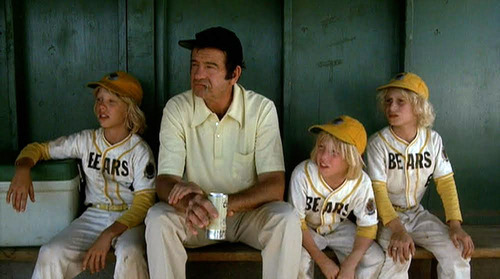
It was in The Bad News Bears (the Walter Matthau version in 1976).  The Bear’s coach, who would later be replaced by Coach Buttermaker (played by Matthau), was lecturing the team on his philosophy of coaching.  He wrote the word ASSUME on a chalkboard.  He said they should never assume.  “Whenever you ASSUME, you make an ASS out of YOU and ME.”

To my pre-teen mind, this sentence was amazing on two fronts.  It showed that a cuss word can be buried inside a regular word.  Quite a revelation.  It also showed that one should never assume anything in life, because, well, you know the rest of the sentence.

Since then, I’ve learned there’s a lot more to the word ASSUME.  In fact, it is the essence of becoming a leader.

Consider some phrases that describe a new leadership position:

-She took on the new team lead position.

-He received a promotion to supervisor.

-She was hired to replace the manager who just left.

-They created a new management position for him.

-We are happy to announce we’ve brought on Jeff Smith, who will be our new General Manager.

Sure, all of these describe important leadership roles.  There’s some person filling each slot.  We know whose name is in which box on the org chart.

But, can we assume they are a leader?  Maybe, maybe not.  Remember what happens when we assume.

Leaders are those who assume the mindset and perspective needed to actually lead others.  When a leader assumes their role, they’re stepping into the ownership position.  They own their role.  They own the direction.  They own the outcomes.  They spend their time on offense, rather than preparing their defense.

More importantly, when they assume their leadership role, they become the servant to those they lead.  They realize that nothing happens without the people they’re leading.  They look for opportunities to multiply their efforts and the efforts of those they lead.

Assuming a leadership role is much more than merely accepting the new position.  In fact, it often has nothing to do with your current position in the organization.  You can (and should) be a leader long before you’re granted the position by someone else.

Look around your organization.  Who are the true leaders?  You’ll probably notice that they’re the ones who have fully assumed the role.


The Power of Excuses

Excuses are what we say to ourselves long before we use them on…

“If you really want to do something, you will find a way.  If you don’t, you will find an excuse.”  -Jim Rohn

Excuses have the power to stop almost anything.

Excuses are what we say to ourselves long before we use them on anyone else.

Excuses offer protection from responsibility.

Excuses help us cling to the status quo.

Excuses eliminate the need to take a risk.

Excuses stop us from reaching out to others when they need us most.

Excuses rob us of our potential.

A well-crafted excuse can justify a lifetime of inaction, with only one sentence.

Excuses are easy to find, and even easier to use.

The sad irony about excuses is that their power only impacts the person giving the excuse.

Everyone else knows the truth about your excuse, even if they have their own excuse for ignoring it.

Discuss or Defend?

The search for alignment, a conclusion, a decision, or an all-out victory often trumps everything else…

Discussing involves active listening.  Curiosity.  Openness.  It requires genuine interest in ideas, even if they contradict your own.

Defending involves taking and holding a position.  Looking for openings to argue against another idea.  Preparing your response, while you should be listening.

Discussing takes time.  Discussing requires courtesy, respect, and patience.  Defending, not so much.

Most discussions we see on TV, or hear on the radio, aren’t discussions at all.  They’re exercises in defending.  Questions and answers are metered out in an attempt to defend one position or another.

It’s often the same in a business setting.

The search for alignment, a conclusion, a decision, or an all-out victory often trumps everything else, including a meaningful exchange of ideas.

How often do you defend, instead of discuss?  Be honest.  We’re just discussing here…no need to get all defensive.

What if you went through an entire day without defending?  Think you could do it?


Be the Candle

There’s a place in Baja, on the Sea of Cortez side, about 100 miles south of San Felipe…

“It is better to light a candle than to curse the darkness.”  – Confucius (Kung Fu Tzu)

There’s a place in Baja, on the Sea of Cortez side, about 100 miles south of San Felipe called Gonzaga Bay.  You can drive there pretty easily (by Baja standards) nowadays.  But, 30 years ago, it was quite an adventure to get there.  Your reward for all that off road adventure (other than the journey itself)?  An off-the-grid community of small “houses” on a beautiful bay with whatever supplies you were able to bring with you.

Beyond the stark beauty of the bay, the warm water, fresh ocean breezes, and perfect cocktail conditions, the thing I remember most was the darkness.  The stars were so close you could almost touch them.  On a moonless night, you couldn’t see your hand in front of your face.

But, light one candle and the scene changed.  The light from that one candle would penetrate the darkness.  The terrain glowed in the light.  Bushes and rocks cast shadows in the night.  The darkness was no match for the light from just one candle.

Darkness is all around us.  That darkness may even come from within.  We can choose to let the darkness consume us and everything we do.

Or, we can be the candle.

Where are You Aiming?

What if getting ready isn’t the first step?

“If you aim at nothing, you will hit it every time.”  -Zig Ziglar

Ready.  Aim.  Fire.

That’s the standard way to shoot at a target.  How many people actually follow these steps?

How many have you seen following other sequences:

Ready.  Fire.  Aim.

Fire.  Fire.  Fire.

Aim.  Aim.  Aim.  Aim.

Ready…  Ready…  Ready… (now what?)

Ready.  Aim.  Aim.  Aim.  Aim.  Aim.  Fire?  Fire?

Life is a series of choices.  A series of challenges.  A series of what if’s.

It’s impossible to know the true definition of “ready” in a life of endless possibility.  One can spend a lifetime “getting ready” for an outcome that may, or may not, happen.  The truth is, we are never fully ready.

What if getting ready isn’t the first step?  What if pursuing excellence is?

Excellence in whatever we do.  Excellence in the way we look at life.  Excellence in our contribution.  Excellence in the way we treat others.  Excellence in our expectations of ourselves and others.  When excellence is the target, the other steps become clear.

Pursue excellence.  Ready.  Aim.  Fire.  Adjust.  Pursue excellence.  Repeat.

Does excellence mean perfection?  No.  Pursuing perfection is a fool’s errand.  The good news is that by pursuing excellence we get a glimpse of perfection from time to time.

The target isn’t the real reward anyway.  That comes from the pursuit itself.


Years of Experience

The school of hard knocks never issues a diploma, but it does yield a lifetime of experience…

knowledge-vs-experience

“I’ve been with this company for 35 years.”

“I’ve been in this industry since it started.”

“I remember when we used typewriters to fill out those forms.”

“I’ve forgotten more about this, than that new guy will ever know.”

“I’m not sure how things are supposed to work.  I just started a couple of years ago.”

“I hope they give me a raise soon.  I’m the only person who knows how to process all the claim types.”

“There’s no way someone will ever figure out how to replace me.  I wouldn’t even remember all the steps if I had to tell someone.  It’s automatic for me.”

Experience counts.  There’s no replacement for the lessons learned by doing, succeeding, failing, recovering, making it up as you go, reinventing, punting, switching directions, and trying again.

There’s no shortcut to learning how a business or industry ebbs and flows throughout a year, or through the ups and downs of the economic cycle.  A business that’s a no-brainer during the up-cycle can, and will, turn into a nightmare in a down-cycle.  A person who can lead a business through an entire up and down cycle can’t help but learn all the ins and outs of that business (and its industry).

But, what’s the true value of all that experience?  Nope, that’s not it…

The real value comes when you teach and mentor others.  It’s relatively easy to master something for yourself.  The real challenge, and deepest learning, is in teaching others.  Not just the raw facts and steps to something, but connecting and passing on the passion that you have and watching your “student” define their own passion about the topic.

Consider your years of experience doing something.  Maybe you’ve been in a particular job for twenty years.  Can you honestly say that you’ve had twenty real years of experience, or twenty one-year experiences?

What’s the difference?

The difference is whether you’ve merely stacked the same one-year experiences on top of one another, or built and connected a compounding level of expertise in your twenty years.  It means looking back at the (hopefully) countless people you’ve helped along the way to become the best versions of themselves.  It means that you’ve found ways to multiply yourself and your impact by working with, and teaching, others.

The school of hard knocks never issues a diploma, but it does yield a lifetime of experience.  That experience only counts if you take the time to pass it on to someone else.


Image Credit

The Most Powerful Feature on Your Phone

Smart phones have unbelievable power. I recently read that the Apollo 11 spacecraft that landed on the moon had…

Smart phones have unbelievable power.  I recently read that the Apollo 11 spacecraft that landed on the moon had 1,300 times less computing power than an iPhone.  And, I bet the iPhone takes better pictures than most of Apollo 11’s cameras.

Continuous connectivity, access to all the information the internet has to offer, games, and the ability to talk to family and friends from almost anywhere (it is a phone after all).  All great features.  But there’s an even more powerful feature.

Airplane mode.

It’s not just for flying.

Next time you’re asked to silence your cell phone, try airplane mode instead.

Going for a run, bike ride, or a workout at the gym?  Airplane mode.  Your music will play just fine.  Better yet, how about listening to the rhythm of your own thoughts?

Having dinner?  Airplane mode.  Enjoy the sanctity of good food and good company (that would be the people at the dinner table with you).

Watching your kid’s game?  Airplane mode.  Try out the video capture capabilities of your phone without being interrupted by some alert.

Playing Risk with your kids?  Airplane mode.  Worldwide domination demands your undivided attention.

Walking on the beach with someone you love.  Airplane mode.  Hold their hand instead of your phone.

Continuous connectivity is amazing.

Airplane mode controls the very definition of “continuous.”  That’s real power.

Use it wisely and enjoy being present.

The End of the Beginning

I should mention one detail: I wasn’t Catholic…

sistine-chapel-ceiling

There I was, about to enjoy my Chipotle for lunch, listening to some financial news, when the commercial came on.  The Catholic Channel was covering the papal election over on channel 129.

That’s right, I thought.  They’re electing a new Pope today.  Funny, we had just visited Vatican City a few months before Pope Benedict announced his retirement.  What a beautiful place!  It was huge.  Michelangelo’s paintings in the ceiling of the Sistine Chapel were breathtaking.  The views of Rome from the top of the dome in St. Peter’s were spectacular.

What do they talk about on that channel when there isn’t a papal election, I wondered.  I switched over to 129.  My timing wasn’t bad.  The two hosts were all fired up.  A new Pope had been elected!  Their excitement was overwhelming.  “We have a new Vicar of Christ, and he’s about to make his first appearance,” one of them said.  They were waiting for him to come out and make his first appearance in the window above St. Peter’s Square.

As I sat there, listening to them talk about this new Vicar, I realized I had tears running down my face.  Tears of happiness.  “We” had a new Pope!  A new Holy Father to shepherd us in the Way of Christ.

I should mention one detail:  I wasn’t Catholic.

Why was I so excited about this new Pope?  Why was my heart filled with new joy and warmth at the thought of this new Pope and the energy he’d be bringing to the Church?

I drove back to work, wondering for a minute what this all meant.  I quickly turned my thoughts to something else.  I switched my radio over to The Blend, and acted like nothing had happened.

As I drove home from work later that day, I switched back to 129 to hear more about the new Pope.

I let almost a year go by without taking any action, or telling anyone about my new-found favorite station.

It’s not like the news that I had suddenly felt a spiritual (religious?) connection to the Catholic Church would be unwelcome in my family.  My wife and daughters are Catholic.  My daughters both graduated college with theology and philosophy degrees.  My in-laws are Catholic.  Many of our friends are Catholic.  I’ve been an active volunteer at our Church for years.  I had always been connected to the Catholic Church, but never had a spiritual connection.  I never truly believed.

Now, for the first time in my life, I believed.  An emptiness I didn’t know I had was suddenly filled.

I remember going to a weekend camp when I was about eight years old.  Big David (who was a few years older than Little David, who also lived on our street) invited me to attend his camp in the mountains.  That sounded pretty great to me, and I’m sure my parents were happy to have a weekend break from one of their rambunctious sons.

I didn’t know it at the time, but it was a Bible camp.  This would be my first introduction to anything religious, since my family wasn’t religious.  We arrived and were assigned to our cabins and counselors.  I don’t remember my counselor’s name, but I do remember one of the first questions he asked me.  “Bobby, have you accepted Jesus into your heart?”

Who was Jesus?  What does he mean to accept Him?  Why was I the only one he asked?  What is this place?  I spent an awkward weekend, being a volunteer kitchen helper (each cabin was in charge of service for one meal), listening to lectures from the Bible, and being asked at least once a day if I was ready to accept Jesus into my heart.  Needless to say, my first introduction to Jesus didn’t go well.

I had a few more introductions over the years, and finally was introduced more formally by my (soon-to-be, at the time) wife, Janet.  I learned a lot about the Catholic Church as I prepared to be married in one.  And yet, I still didn’t know who Jesus was.  I kept having the same questions I had when I was eight.  Besides, I had things pretty well figured out, and going to church was a lot of commitment.

It’s interesting to me that the number forty comes up a lot in the Bible.  Jesus spent forty days in the desert, fasting, and praying (and being tempted by Satan) after he was baptized.  Only then was he fully ready to begin his public ministry.  The Israelites spent forty years in the desert before they could return home.  Noah’s Ark was put to use after it rained for forty days and nights.  Moses spent forty days and forty nights on the mountain with God.  Jesus was with his disciples for forty days after his resurrection.

From my first (messy) introduction to Jesus until this past weekend when I was baptized into the Catholic Church, I count forty years, almost to the day.  I’m sure it’s a coincidence.  Just like my random decision to switch over to channel 129 that day.  Or, the way my daughter added some Christian music to my iPod.  Those songs kept coming up over and over each time I went for a run.  I got to know those songs pretty well.  So well that I actually started thinking about their meaning, even before that day our new Pope was elected.

My baptism, confirmation, and first communion last Saturday night were the culmination of an almost year-long preparation process.  The process included classes every Sunday, after Mass.  It also included a ton of reading that I assigned to myself.  Books about the Rosary, the Saints, Saint Paul the Apostle (the Saint I chose as my Confirmation Saint), and the Holy Land.  I also did lots of reading from the Bible itself, as well as the Catechism of the Catholic Church.

Funny thing is that throughout this process, I couldn’t wait for each Sunday to come.  I couldn’t wait to learn more about my faith, my Church’s history, and the love that Jesus has for each of us.  What was an unreasonable commitment to my younger self has become an integral part of who I am today.

After forty years, I’m coming to the end of the beginning of my relationship with God.

Looking back, I can see so many places where God was with me, even as I ignored Him, or spoke against Him.  He was patient.  He knew I’d eventually find Him right where He’s always been…beside me.


The Truth about Grudges

The easy thing to do is turn each injustice into a grudge…

It doesn’t take long in life for injustice to come your way.

Your mommy takes your toy away before you’re finished with it.  Injustice!  How do you deal with it?  Maybe you cry, or throw a hissy fit.  Chances are, since your attention span at 18 months is pretty short, you’ll forget about the injustice and get another toy.

Life isn’t fair, and neither are some people.  Things go wrong.  Plans get up-ended.  Promises aren’t always kept.  A friend or family member may offend us.  Someone we love may destroy themselves with addiction.  We might be the victim of a heinous crime.

Live long enough, and the injustices (both real and imaginary) will pile up.  What to do?  Crying may be appropriate.  And there’s nothing like the emotional release of a good hissy fit every now and then.  But, after that, then what?

The easy thing to do is turn each injustice into a grudge.  That way, you can stack the latest grudge on top of the others you’re carrying.  If your grudges become disorganized, you can spend some quality time dwelling on them and get them reorganized.  If they get too heavy, enlisting the help of others to carry some of your grudges is always helpful.

The burden of a grudge is carried by the victim.  The perpetrator, whether real or not, carries no such burden.  The perpetrator may carry regret, but they feel none of the weight of your grudge.

In our quest to never forget the lessons of an injustice, we wrap these lessons inside the grudge.  It’s a package deal.

For this reason, letting go, forgiving, can seem impossible.  Forgiveness runs counter to our natural instincts.  But forgiveness is about much more than survival.  It’s about finding a way to thrive with a clear focus on the things in life that really matter.

Letting go of a grudge doesn’t mean ignoring the lesson.  It means freeing yourself from the weight that only you are carrying.