Self-Talk

Consider the amazing power that something quieter than a whisper (the silence of our own thoughts) has over each of us.

It’s not what you say out of your mouth that determines your life.  It’s what you whisper to yourself that has the most power. –Robert T. Kiyosaki

The first person to give you feedback is yourself…in the form of self-talk.  You have 24/7 access to your internal talk track.  Your messaging is unfiltered and brutally honest.

Does unfiltered and honest mean accurate?  Does it mean valuable?  Not necessarily.

The truth is that no matter how incorrect your self-talk is, or how much you try to ignore it, you are your most trusted advisor.  You have the most power over yourself (for better or worse).

Negative self-talk is easy.  Bad news travels fast, especially when it doesn’t have to travel.

Positive self-talk is harder, and sometimes difficult to believe.  Our positive self-talk can sound a bit crazy, which makes it easier to discount.

Status quo is powered by doubt in our positive self-talk.

The most successful people I know face challenges with self-talk.  They happen to believe their positive self-talk just a little more than the negative.

The negative is right there, trying to hold them back.  Somehow they’ve found a way to focus on the positive, finding ways to push past their wave of doubt.

They’ve usually found kindred spirits who can help strengthen their positive self-talk.  A support network that reinforces their crazy ideas.  The best support network doesn’t fully buy-in to the crazy.  They merely create an environment where it’s okay to explore the crazy.  To bring it out in the open and let it breathe a little.

And, that’s the real secret of self-talk.  We all have negative and positive self-talk rolling around in our heads.  But, if we can allow the positive to get a little breathing room, that’s usually all it takes to win the internal battle against the negative.

Here’s the challenge:  The war between negative and positive is never over.  You have to win it one battle at a time.

Note to Self

I will do these things as a promise to myself…

Maybe it’s all the close calls, existential threats, newly-invented liabilities, newly-minted regulations, new competitors, old competitors, angry customers, happy customers, former customers, new customers, potential opportunities, new ideas, new methods, better mouse traps, and everything else that comes our way in business (no matter the size).

Maybe it’s the fight-or-flight instinct that gets honed to a fine edge through years of experience.  Knowing when to hold ‘em, and when to fold ‘em…but always allowing room for doubt.  Knowing when the silent customer is more important than the loudest one.  Knowing that the employee you don’t see is just as important as the one you do see.  Knowing we always have a competitor, whether we realize it or not.

Maybe it’s that standard defensive posture that every business assumes at times, even when it knows that only a strong offense will win the day.  Understanding that this isn’t a game we get to win every day.

Maybe it’s just fear of failure, or more likely, fear of success.

Whatever it is that stops me from getting the most enjoyment from this business…now is the time to let it go.

Life is way too short to let the small stuff get in the way.

Here’s my promise to myself:

  • I will go on offense, every day
  • I will acknowledge my fears, but only if it helps create a stronger offense
  • I will focus on the next step forward, and let the past remain there
  • I will create opportunities for those around me
  • I will love and serve
  • I will let go
  • I will enjoy each day as the gift that it is.

I will do these things as a promise to myself, knowing that I’m not the One who is in control.

Speedometers Steal Speed

“The cheetah is the fastest animal on earth.  It can reach speeds of up to 65 miles per hour as it pursues its prey.  Just look at its awesome speed, as it chases down that gazelle!” – Every Nature Program about Cheetahs

Do you think the cheetah has any idea how fast he’s going?

What about an eagle as it dives through the air to reach its prey?

Does the pelican think about his speed as he dives into the water to catch dinner?

Does the pole vaulter know how fast she’s running just before her jump?

What about the downhill mountain bike racer?

The answers to these questions are obvious.  For each to be effective, none are looking at a speedometer to determine their next move.  They aren’t referring to some magical heads-up-display to tell them how they’re doing.

In their critical moment, no measurements or brilliant strategic insights will impact the outcome.  They will succeed or fail based solely on how they perform, in the next moment.

The moment is all that matters.

Speedometers don’t make speed.  They provide external feedback and nothing else.

How often are you slowing down to check your speedometer, instead of focusing on your next critical moment?

Truth is, your moment is all that matters.  There’s plenty of time for feedback later when it’s not stealing your speed.

Microwaves and Slow Cookers

Ever burn popcorn in the microwave? If so, you know how quickly it can happen…

I recently heard someone make reference to their art not being microwaved.  Their art is the kind that comes from a slow-cooker.

An interesting concept.

The food (or drink) that we place in a microwave is already mostly prepared.  We aren’t interested in the process.  We just want it to be hot, and we’ve relied on someone else to handle the actual work of preparation.

With the slow cooker, it’s up to us.  We choose the ingredients.  We do the preparation.  Separately, the ingredients just sit there…waiting to be part of something.  But, blended properly, with the right amount of time and heat (energy), those separate ingredients (hopefully) combine to create something unique and tasty.

The microwave measures its cooking time in 30-second increments.  Hot dogs wrapped in a damp napkin take about a minute.  Popcorn takes three to four minutes.  Organic brown rice from Trader Joe’s takes four minutes.

Slow-cooking time is measured in hours.  Six hours is usually too short.  Eight to ten hours gets it right.

And, what about the accompaniments?  With a microwave cooking cycle, there’s only time to get your plate ready, find a clean fork, and maybe pour a glass of your favorite beverage.  Linear and task-focused.

Slow-cooking provides time for the cook to consider what goes best with the main dish.  What shall we have for dessert?  Would a loaf of fresh French bread go well with this stew?  The fullness of the dining experience is in play.

Neither method is perfect.

Ever burn popcorn in the microwave?  If so, you know how quickly it can happen.  Something so simple becomes a lump of smoking charcoal.

Slow-cooking disasters are equally possible.  Your reward for that ten-hour wait may be something that’s not even edible (at least for anyone who has taste buds).

Both methods have their place.  Both carry risk.

The question is how are you deciding which parts of your life to microwave, and which parts to slow-cook?

A tougher question might be:  Are you making the choice, or allowing someone else to make the choice for you?

Beware of the Edge

The edge is like the proverbial flame that draws the moth…

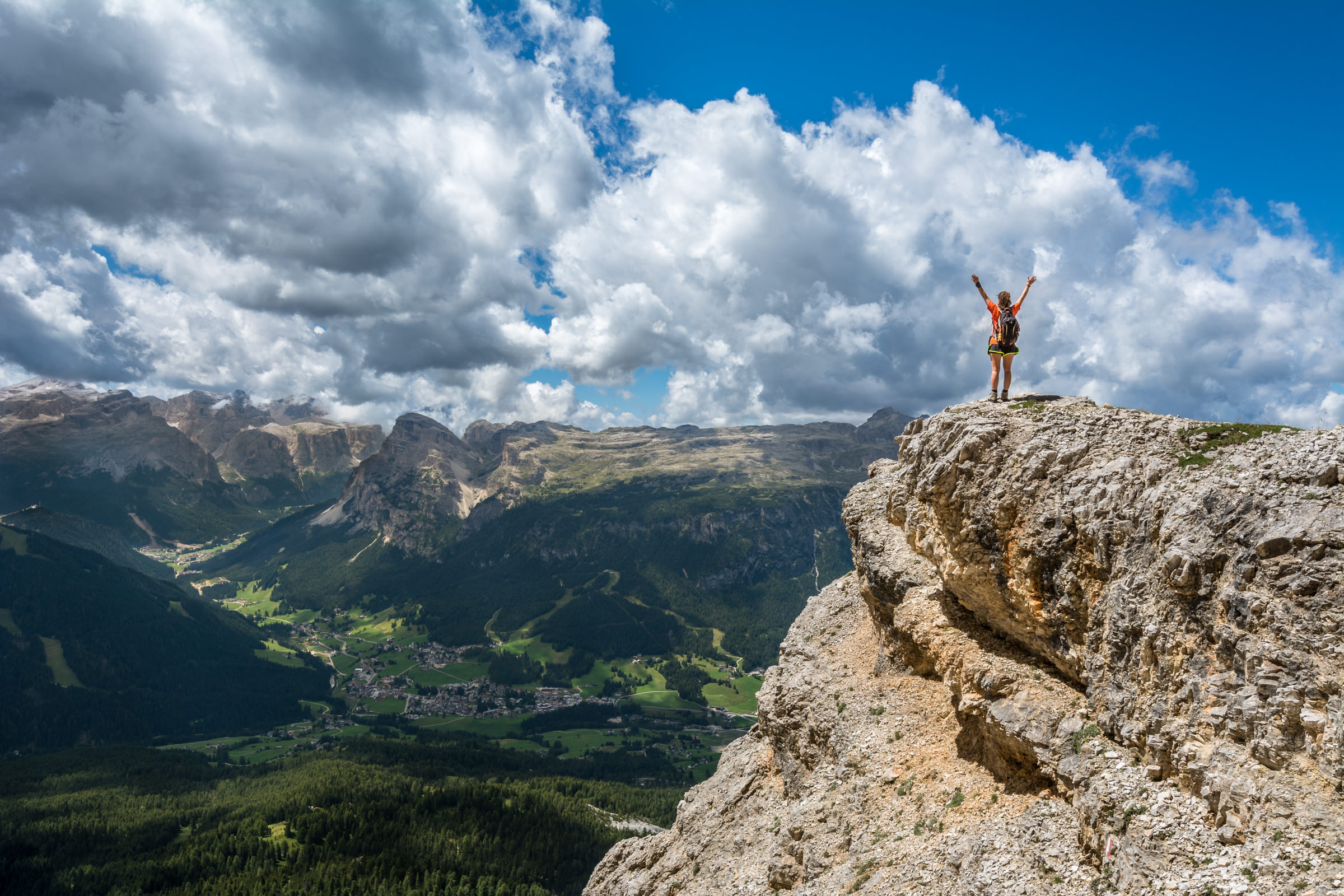
sitting-at-the-edge-of-a-cliff

I recently heard about a sign at the top of Mount Vesuvius.  It reads, “Beware of the edge.”

That’s the only safety precaution in the area.  No guardrails.  Just a sign.

I can hear it now:

“Your honor, I submit that my client had no idea he could plummet to his death by stepping over the edge of that volcano.  If only there’d been a guardrail to prevent his untimely death.”

Or,

“Your honor, we acknowledge that there was a sign that said, “Beware of the edge,” but my client must have thought he was safe as long as he stayed inside the guardrails.  Since there were no guardrails on the mountain, he was clearly misled into a false sense of safety and security…just before his fall.”

How many of us really need a sign, or a guardrail, to tell us to stay away from the edge?  Can’t we see the danger on our own, without the sign?

The truth is, probably not.

Why not?

Simple.  The edge is where the action is.  We know it’s dangerous.  We know our mind will play an imaginary leap that only our subconscious sees when we look over the edge.  We secretly like the butterflies we get in our stomach.

The edge brings sharp focus.  It’s where our imagination is most alive!

Sometimes, the edge represents the end of a long journey.  A challenging climb.  Our view over the edge reminds us of the distance we’ve traveled.  The work we’ve put in to get there.

The edge is like the proverbial flame that draws the moth.  The edge reminds us of how fragile our life is.  One step away from real danger.

How do we approach the edge, and take in its energy, while avoiding the danger that lurks just one step beyond?

It’s a question we each have to answer for ourselves.

But, here’s hoping we don’t discover the answer as we tumble over the edge.

Relax, You’re Doing Fine

Enjoy your time. Let someone else worry about all that other…

I saw this on a license plate frame.  When I first saw it, I didn’t give it much attention.  Then, as I sat at the red light, staring at those four simple words, I realized how freeing they are.

Relax, you’re doing fine.

You aren’t as far behind as you thought in the “race” of life.  In fact, life isn’t a race at all.  There’s no prize at the end for getting to the finish line faster than the other people.

You’re living in a great time.  Why is it so great?  Because it’s your time.  It doesn’t matter what else is happening.  The fact that things are actually happening, and you are here to see, participate, and have an impact is all that matters.  What impact?  That’s up to you.

What you do, how you do it, and the pace you choose are up to you.  I recommend you take advantage of your limited time on the planet.  Start moving, stay moving, always learn, and never stop teaching.  But, that’s just me.  It’s up to you and no one else.

Not as happy as you’d like to be?  Not as fulfilled as you’d like to be?  Worried that life is passing you by?  Worried that you aren’t as rich, pretty, strong, tall, smart, stylish, successful, or any other measure society places on us, as you’d like to be?

We all have the same seconds, minutes, and hours every day.  Our ability to define our time by the people we help, and the smiles we coax into the world are the only things we control.  The rest is going to happen with or without our involvement.

Enjoy your time.  Let someone else worry about all that other comparison stuff.

And, never forget:  Relax, you’re doing fine.

Failures have excuses…Successes have stories

The unfortunate truth is that some of us start making excuses long before the failure is complete…

unsplash_Samuel_Clara

The excuse:  “We were in trouble right from the start.  We started in the dark and two of our headlamps wouldn’t work.  It started raining as we approached the halfway mark.  The mud really slowed us down.  Then, Jeremy slipped and fell and muddied up all his gear.  We knew we couldn’t make it to the summit and back before sunset, so we decided to turn back.”

The story: “That hike was epic!  We started in the dark.  We had to share John’s headlamp because ours stopped working for some reason.  When the sun finally came up, it started raining.  Hard.  The mud made for slow going.  When Jeremy fell in that massive mud puddle, we just cracked up, wondering what else this hike would throw at us.  It took about ten minutes to get him cleaned up.  Once the storm passed, we had to double-time it to make it to the summit before dark.  We got there with plenty of time to spare.  It was awesome!”

The excuse:  “There was no way we could have made the goal.  The economy turned sour on us in the second quarter.  Some bozo from IT botched the server install, and it took nearly two months to get everything configured properly.  That didn’t leave enough time for the developers to deliver on schedule.  All in all, it’s amazing we’re still in business.”

The story:  “Can you believe it?  We were pulling all-nighters for weeks because some bozo from IT botched our server install.  But, we made the release date.  Customers loved it, and we hit our sales target.  Nobody thought that could happen in this economy.”

Have you ever noticed that failures have excuses, and successes have stories?

The unfortunate truth is that some of us start making excuses long before the failure is complete.  We run into a hurdle, lose our belief in the goal, or simply lose hope that we can achieve success.

So, we get busy preparing excuses.

Our failure must be justified.  First to ourselves, and then to everyone else.  It’s even better if we can find allies to help us create better excuses.  Excuse making often replaces the work that just might deliver success.

Are successes perfect?  Far from it.

Success rarely comes without adversity.  Success usually requires new tactics, mid-course corrections, and tons of hard work.  Overcoming the odds, leaping over the hurdles, finding creative solutions…these give power to the stories we tell about our success.

Imagine a world where adversity strengthens our success stories, rather than bolstering the excuses we make for our failures.

“If it is important to you, you will find a way.  If not, you will find an excuse.”  -Author Unknown

p/c: Unsplash.com, Samuel Clara

There are no self-driving…

Auto-pilot and self-driving systems have one thing in common: they know where they’re going…

Airplanes have auto-pilot.  Cars are getting closer to self-driving.  In fact, I just saw a headline about a police officer pulling over a self-driving Google car (not sure who gets the ticket in that situation).

As Aldous Huxley said in his 1931 book, it’s a brave new world.

Auto-pilot and self-driving systems have one thing in common:  they know where they’re going.  Actually, the systems don’t know.  The operator who is (ostensibly) in control knows the starting point, and the destination.

Real life doesn’t work that way.

There are no self-driving:

Friendships.  We don’t know when a new friendship will start, we surely don’t know where it’s going, and we hope it never ends.  The journey is what makes it so good.  Have you put any of your friendships in self-drive mode?  It’s a conscious decision, even when you act like you didn’t notice.  Here’s the good news.  In most friendships, you can switch out of self-drive mode and restart the journey.  Your only decision is when to flip that switch.

Projects.  We usually know when a project starts, and when it’s supposed to end.  We have plans, resources, and our schedules.  We (should) know what defines success in a project, and what the end result needs to be.  That’s all the ingredients a project needs to switch to auto-pilot.  Right?  Not so fast!  Show me a project that’s out of control, off schedule, costing more than expected, and I’ll show you a project that went on auto-pilot while nobody was looking.

Parenting.  We know when parenting starts, and that’s about it.  Parents understand that every day with their kids is an adventure.  It’s an adventure they hope never ends.  There are days when they’d like to go on auto-pilot, but those are the days when they should be most engaged.

Companies.  It doesn’t matter what size they are, or how long they’ve been around.  If people inside a company start to “mail it in,” stop caring, assume someone else is asking the tough questions, assume someone else is making the hard choices; that’s the beginning of the end.  It may take some time, but the end is baked-in the moment self-drive mode is engaged.  It’s just a question of when, and it’s never pretty when the end arrives.

Marriages.  We certainly know when marriages begin.  Sadly, some marriages have ended, yet the people involved don’t even realize it.  Why?  Self-drive.  One or both have engaged the self-drive button and decided that they’re just along for the ride.  Only together can a married couple steer, accelerate, hit the brakes, seek out new routes, find shortcuts, or just enjoy the scenery.  It takes constant work, endless attention, and unending love to share this most important steering wheel.  There’s no room for self-drive in the front seat of a marriage.

Self-drive may seem easier, but its sole focus is the start and the end.  These are only two points on the journey.

The part in the middle is the real reward.  Engage self-drive and you will miss it.


Yo Ho, Yo Ho, A Pirate’s Life for Me!

What makes this ride so popular? Definitely not the speed. Is it the “escape” into another world? Maybe. But, is it really an escape?
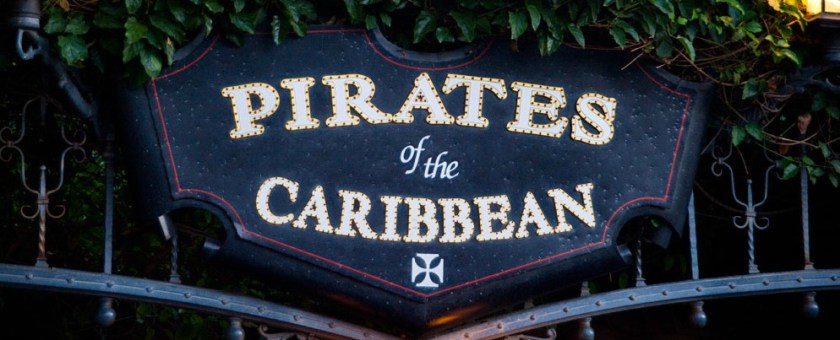
Disneyland-POTC_sign

If you’re like me, you know the only way to turn at the end of Main Street USA is left.  Left, toward Adventureland, and New Orleans Square.  Sure, you could go for one of the “speed” rides like Space Mountain over in Tomorrowland.  Buzz Lightyear (Astro Blasters) is a good one.  Or, maybe Thunder Mountain.  The Matterhorn is re-opened, if you like to have your spine compressed (not sure why they didn’t fix that problem during the most recent refresh).

But, the best rides are definitely in Adventureland.  The Jungle Cruise, Indiana Jones, Pirates of the Caribbean, and the Haunted Mansion.  Don’t even get me started on how awesome Tom Sawyer’s Island is.

The Jungle Cruise is all about the puns.  Indiana Jones is (mild) sensory overload and a neat cave walk to and from the ride.  The Haunted Mansion is a cross between Tim Burton’s vision of the world, and old school special effects that are still cool.

The best of all is Pirates!

First you’re in a New Orleans bayou.  Crickets are chirping, a few frogs are croaking quietly, and fireflies dart about.  It’s dark, quiet, and lazy.  The swamp guy sits on his porch, smoking a corn cob pipe.  The sound of slow banjo picking comes from his house.  Do swamp guys have CD’s?  Electricity?  Does he have a banjo-playing friend in the house?  Then, total darkness, a quick drop, and we enter a pirate’s lair.  It’s clearly seen better days.  Tons of treasure gather dust and cob webs.

I’ve never known what a New Orleans bayou has to do with being in a pirate’s lair, but over the years, I’ve learned it doesn’t matter.  “Dead men tell no tales!”  Just as you figure out that all the riches and treasures in the world didn’t do these dead pirates any favors, a foggy curtain projects an apparition of Davy Jones, warning us about the cursed lives of pirates.  Our boat ignores the warning and carries us into this cursed world.

We enter a pitched battle between a pirate ship with cannons blazing, and the shore defenses firing back.  It’s a desperate battle with explosions and lots of yelling.  Somehow the shots never hit anything vital, or do they?  The battle rages on, but we pass safely under the line of fire.

The harbor comes into view.  Not just any harbor, but a “Yo Ho, Yo Ho, a pirate’s life for me,” harbor from long ago.  Pirates are drinking and singing.  Some of the less fortunate are dunked endlessly in a well.  A vain search for Captain Jack Sparrow.  Others are sold as brides.  We see drunk pirates singing to themselves and no one in particular, scheming ways to find more treasure.

The scene shifts again to a prison where the only hope of escape lies in convincing a dog to give up the keys.  The dog never budges, but always looks like he might.  Hopefulness mixed with despair.  If only the prisoners would realize that their only salvation is to find a new strategy, a new direction.  Of course, they never make this connection.  We slowly pass under a collapsing ceiling, and back into the harbor.

The town is ablaze, but nobody cares.  We know the flames spell disaster, but that’s lost on everyone in the scene.  They continue to drink, sing, and chase each other in a search for the next moment.  Some fire randomly across the water at their friends.  “Yo Ho, Yo Ho, a pirate’s life for me!”

The dichotomy of the celebratory singing and the evil that humans do to one another isn’t the point…or, maybe it is.  All the while, our boat floats lazily through the scene.

We begin our slow climb out of this cursed world as Jack Sparrow tell us to, “Drink up you laddies!  Yo Ho!”

What makes this ride so popular?  Definitely not the speed.  Is it the “escape” into another world?  Maybe.  But, is it really an escape?

Each of us can relate to being the pirate.  We’ve been dunked in the proverbial well…sometimes we do the dunking.  We’ve fired aimlessly at our enemies (and our friends) at one time or another.  Oblivious to the pain we may cause.  We’ve focused solely on the now.  Ignored the future.  We’ve looked for treasure.  Maybe we’ve found it…and yet, our search continues.

Are we nothing more than passengers on the boat, passing lazily through the scenes of life, yet never connecting to any of it?  Hopefully not.

A pirate’s life, indeed.  Time to get in line for the next ride!


Speed bumps and walls…

…have a few things in common. Both force us to pay attention, slow down, and (sometimes) change course…

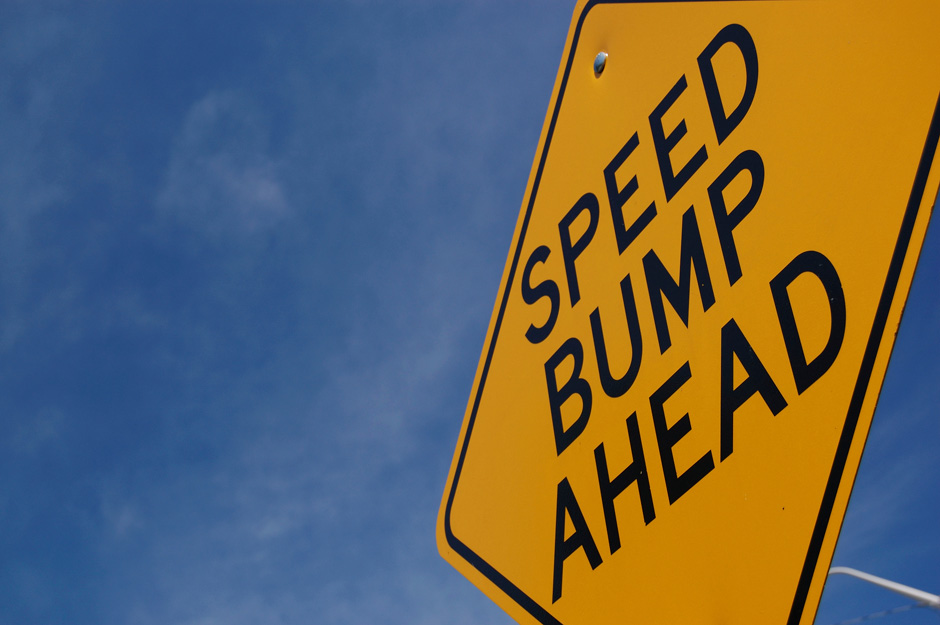
speed-bump-warning-sign

…have a few things in common.  Both force us to pay attention, slow down, and (sometimes) change course.  In many ways, speed bumps are merely walls that are short enough to get over with minimal effort.

Unlike speed bumps, walls are there to stop us, contain us, to protect something we’re not supposed to see, or maybe provide protection to something we don’t want others to see.

Is that nasty cold you have a speed bump or a wall?

How about the job you had until last week?  Is losing that job a speed bump or a wall?

Is the macro-economic forecast for 2% or less in U.S. Gross Domestic Product growth a speed bump or a wall?

Is bad weather (however you define the term bad) a speed bump or wall?

The death of a loved one?  Speed bump or wall?

The diagnosis you received from your doctor that has you wondering how long you have to live this life you love.  Speed bump?  Wall?

Meeting the person of your dreams and falling in love.  Speed bump or wall?  Surprise!  Good news introduces speed bumps and walls, just like bad news.  Of course, good news can also knock down walls.

When the news first hits, it almost always looks like a wall.  Only after further reflection, maybe some quiet meditation, a hard workout(s), discussions with our friends and family, enjoying a bowl of our favorite ice cream, watching some sunrises and sunsets, or all of these, do the walls start to look shorter.

As the walls lose their height, they may disappear from sight, or take the shape of speed bumps that we can handle.

Some walls are high and stay that way.  If we can’t climb over, we learn to change direction and find a way around.

What if we can’t climb over, can’t change direction, and the high walls continue to surround us?  Should we give up?

No way!

We build our expansive life inside the new walls and never drop our quest to escape…even if we have to dismantle the walls one brick (or chisel strike) at a time.

Do you remember that guy who gave up?  Neither can anyone else.  –Author Forgotten