Who Will Hold the Boulder? (a short parable)

There once was a village named Smithville, tucked neatly beneath a mountain. Life was simple until the mayor spotted a massive boulder teetering on the slope. Experts confirmed the obvious. The massive boulder might fall and crush the town.

In a flash of civic urgency, the mayor declared: “We must secure the boulder!” And so they did. With ropes, pulleys, and sheer determination, ten villagers at a time held the lines to keep the boulder in place. They rotated shifts around the clock. It became routine, then tradition, then law.

Children sang, “Hold the boulder, hold the boulder, we must resolve to hold that boulder!” before school each morning. A cabin was built for the rope holders. A trail crew was hired to keep the path safe for the endless march of workers. Rope suppliers prospered since the intricate rope system required constant maintenance. Soon, nearly half the town’s budget went to “boulder security.”

Still, the village flourished. Visitors came to marvel at the rope-wrapped rock. “Come see our mighty gravity defying boulder!” proclaimed their glossy posters. A bond was passed to fund a visitor center and tour buses. Hotels filled. Restaurants boomed. Property values soared near “Boulder View Estates.”

One day, a newcomer named Brunswick questioned the logic of leaving the boulder where it was. “Why not break the boulder into smaller, harmless pieces?” The council laughed at his question.

The mayor beamed with pride, “Our boulder isn’t a threat. It’s our livelihood! Besides, we have a rope system to protect us.”

The townspeople nodded, waving their SAVE OUR BOULDER signs in support.

Who could argue with prosperity?

Brunswick left shaking his head.

Years later, despite the ropes, despite the cables, despite the slogans, the inevitable happened. That winter, the boulder grew heavier than ever with snow and ice. Villagers had trouble reaching the ropes, as storms blocked the trail. Shifts went unfilled. Fewer villagers meant fewer ropes to hold the boulder.

“The forecasters said it wouldn’t be this bad,” the mayor reassured them, as though the weather itself had broken its promise.

Workers tugged and shouted, trying to keep their grip. Fingers numbed, feet slipped, and a few gave up entirely.  The remaining ropes snapped one by one. The sound echoed through the valley like rifle shots. The mountain itself seemed to groan.

Then came the moment. The final rope gave way with a thunderous crack. The boulder lurched forward, dragging what remained of the cable nets with it.

As it tumbled down the mountain, the ground shook violently. Houses rattled, dishes shattered, and children screamed.

The mighty rock careened toward the valley, smashing trees like twigs and carving deep scars into the earth. Clouds of dust rose as if the mountain were on fire. Each bounce sent shockwaves through Smithville, knocking people off their feet. The villagers ran in terror, listening to the deafening roar as the great stone rolled ever closer.

When it finally came to rest, the devastation was complete. The visitor center lay in ruins. Boulder View Estates was flattened into rubble. Streets were cracked, and smoke rose from shattered chimneys.

Yet by some miracle, no one was hurt. The thunder of the falling boulder gave everyone time to flee. Amid the destruction, whispers of a miracle could be heard all over the battered town. 

As the dust cleared, townsfolk began to consider their plans for rebuilding. Some sketched designs for a grand new visitor center. This one would tell the story of The Great Fall.

A five-year plan was drafted to study rope alternatives, complete with a Rope Oversight Committee and quarterly progress reports.

Bureaucracy bloomed again, strong as ever.

Though no one mentioned the missing boulder.

Story behind the image – I used Google’s new Nano Banana image generator for this image. I asked it to produce a large and evil boulder sitting on top of a mountain, held by ropes, overlooking a nice town that it’s threatening…in a cartoonish style. This is the first image it produced. It missed the part about the ropes, but I like the over-the-top (see what I did there?) theme of this rendering. And that boulder may appear in a few more stories in the future.

© 2025 Bob Dailey. Licensed under Creative Commons BY-NC-ND 4.0.

Let the Ponies Run

Imagine owning a well-trained thoroughbred racehorse. Born and bred for speed, this horse thrives on competition and lives to run fast.

Every day, six days a week, this horse trains relentlessly. It has one purpose and one passion: running and winning races. Nothing else matters.

But on race day, you grow cautious. You worry, despite all the training, despite the horse’s proven skill, that it might not pace itself properly. So, you ask the jockey to override its instinct to run fast. You instruct the jockey to hold back the reins from the start.

As the race unfolds, your horse struggles against this restraint. Instead of feeling exhilarated, it grows frustrated. Its natural drive diminishes with each stride as the jockey pulls back, second-guessing the horse’s desire to run.

Finally, as the last turn approaches, the jockey releases the reins and shouts encouragement. It’s time to unleash all that pent-up speed.

But the horse no longer cares. He’s not even paying attention. He lost his competitive edge about a half mile ago as the jockey kept holding him back. Sure, the horse goes through the motions, picking up just enough speed to appear engaged, to show respect for the jockey’s urging. But the spark is gone.

This is a very fast horse, so even his partial effort makes for a close finish. But unfortunately, the horse doesn’t win the race. One he could have easily won if he hadn’t been held back from the start.

If you’re a manager, how often do you treat your employees like this horse? How often do you hold them back from doing the very thing you hired them to do? Do you second-guess their instincts, micromanage their decisions, and restrain their natural abilities out of fear, caution, or to protect your ego?

Consider how demoralizing it is for your team when you take away their autonomy. The freedom to run their own race. When employees lose the ability to make meaningful decisions, their enthusiasm, creativity, and ownership suffer. These are the very qualities that fuel success, and when suppressed, diminish the team’s potential and their performance.

Take a look around your organization. Are your people fully engaged, and running with purpose? Or have you inadvertently drained their passion and energy by holding them back?

There’s something else that’s easy to overlook. When you don’t allow your people to take on challenges, make decisions, and occasionally stumble, you’re not just holding them back today. You’re limiting who they can become tomorrow. Without the opportunity to stretch, fail, and grow, your employees can’t develop the judgment and endurance that leadership demands.

Playing it safe and keeping them on a tight rein risks weakening your bench strength and jeopardizing your organization’s ability to thrive in the future. We’re not just running one race; we’re running a never-ending series of tough races that stretch out long into the future.

Imagine how powerful your organization could be if you simply let your thoroughbreds—all the talent and skills you’ve carefully assembled—run their races the way they know best. Imagine letting them succeed and fail with your support, as part of your team, and not just your assistant waiting for you to make all the decisions.

It’s time to loosen the reins and let the ponies run. Because if you don’t, they might find somewhere else where they can.

Photo by Jeff Griffith on Unsplash

Anything You Write…

What will you write today?

“Anything you write can be fixed, except for the pristine perfection of the blank page.” –Neil Gaiman

Our future is the ultimate blank page.  The cursor blinks patiently, endlessly.  Waiting for us to write something.

That cursor doesn’t care what we’ve written in the past.  It doesn’t really care what we’ll write in the future.  Still it blinks…waiting.

Writers sometimes talk about writer’s block.  The intimidating view of a blank page that beckons them to write something…anything.

I agree with Seth Godin, that there’s no such thing as writer’s block.  Rather, there’s fear that what I’m writing won’t be as perfect as I want it to be.  It won’t be accepted by my readers.  It may be shunned, castigated, or otherwise flamed by someone I don’t even know.

So, my lizard brain protects me by making sure I don’t write a thing.

The same is true in life.  What we write into our life today may not be perfect.  It may not make sense to anyone.  It may be wrong.

That’s okay.  As Mr. Gaiman says, we can fix it.

Today’s page will be written, whether we do the writing or not.

What will you write today?


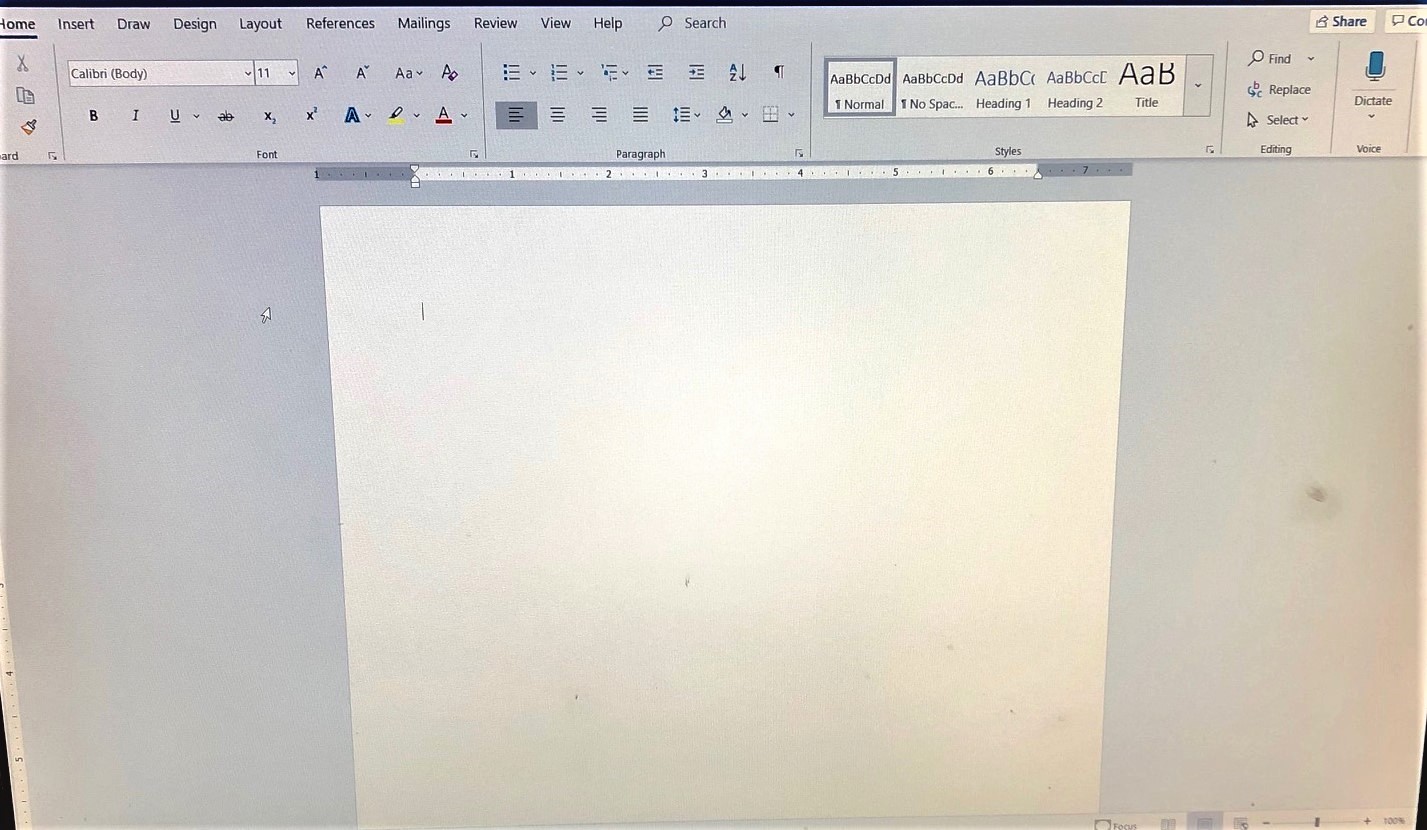
Photo Credit:  Bob’s computer screen before and after writing this post


The Book on Pushups

…the most important choice each of us can make is the choice to step into the game. 

Surely, reading a book on pushups is the best way to learn how to do them.

The proper techniques.  The most effective forms.

When should you do your pushups?  How often each week?

While doing your pushups, what should your mind be doing?

What’s the proper number of pushups per set?  How many sets should you do?

What are all the available variations of pushups?

Why should you do pushups in the first place?

Are there any risks associated with doing pushups?  What about the rewards?

What if the author also provides weekly blog posts and podcasts about pushups…or YouTube videos of people doing pushups?

All of this is helpful. None will match what you learn by doing your first pushup.

That first one will be awkward.  It’ll shock your system.  It’ll be much harder than you imagined after seeing all those happy people doing them on YouTube.

Your technique will be terrible.  Your body will scream in protest.  Your wrists will ache, your shoulders will burn, you’ll probably feel muscles in your lower back you haven’t felt in a while.

Now that you’ve done that first one, what about the next ten?  The next hundred?  Will you make this a habit?  Will you do pushups every day, every-other-day?

Maybe you’ll decide they’re too hard and just skip them altogether…

It’s the same with most things in life.  Reading about it, talking about it, or watching it provide only one dimension of understanding.

Doing is an entirely different thing.

Doing brings the risk of failure, the risk of embarrassment.

Doing requires discipline and endurance for the journey you’ve chosen.

Doing requires personal drive and motivation to push through the awkward (and sometimes painful) beginning.

It’s easy to sit on the sidelines of life, casually watching and listening to what everyone else is doing.  But, the most important choice each of us can make is the choice to step into the game.

Step in and do the thing you’ve been watching.

It’s the only way to truly learn.


Photo by Lopez Robin on Unsplash


Never Hit on 13!

“Son, I’d just stay on that if I were you.  Your job is to make the dealer bust.  We’re countin’ on you to get this right.”

My new “mentor” spoke with a confidence borne of the many decades of experience showing on his weathered face.

I didn’t realize it, but the open seat I filled at the Blackjack table was the third-base seat.  That meant I was the last player to get cards before the dealer.

He continued, since he must have figured this young fella sitting next to him could use some more of his wisdom.  He could tell this was my first time playing Blackjack in Vegas.  “If the dealer has a six or less, you make sure she gets the 10 card that’s sittin’ in that shoe.  Do you realize how many 10 cards there are in that thing?  Each one is a bust card for her.”

I hadn’t thought of it that way until he mentioned it.  There are a ton of 10 cards in each deck…16 to be exact.  And, if you add in the 8’s and 9’s, which are also bust cards for the dealer if she has a 14 or higher, that’s 24 cards out of 52 that are bust cards (nearly half).

I couldn’t believe I should stay on 13.  The dealer was showing a 2 of clubs.

Two people had already hit and busted.  My mentor’s wife stayed with her 18.  My mentor stayed with his 20.  Now all eyes were on me and my 13.

My $5 chip wasn’t the only money at risk.  My mentor and his wife each had $25 chips up and they were counting on me to make the right choice.

Sure, there’s a bunch of 10 cards in there, but there’s also a bunch of non-10 cards.  And, the dealer may have a 9 facing down, so that’s 11.  A sure path to 21 and a rousing defeat for everyone at the table.

13 seemed a long way from 21 and not a very powerful way to win.  It sure would be great if I drew a 7 or an 8 and could defend against the dealer’s next hit card.

What to do?

My new mentor could sense my quandary.  He could see that this newbie had no idea how this game was played.  “Son, remember your job. Make her bust.”

I decided to stay on my 13.  The dealer turned over her down card.  It was a King.  She had 12.  She hit and pulled a 10.  Bust!

“Are you gonna let that $10 ride?  Seems like you have the hang of that seat.  Time to see what it can do for ya.”

Another decision.  I looked at the other players and saw them putting up their new chips.  My mentor and his wife were letting their $50 ride.

I left my chips up and waited for my cards.  This time, the cards were in my favor and I had 20.  My mentor had 12, and his wife had 17.  The dealer was showing a 6.

“Looks like I’m in the third-base seat for this hand, since you’ve got a 20,” he said as he motioned that he’d be staying.  I followed suit and stayed with my 20.

The dealer turned over her down card to reveal a Queen.  She had 16 and was required to hit.  Another Queen showed up.  Dealer bust, again!

This “13 strategy” was showing some strength.

“Are you gonna let that ride again?”

Feeling a bit more comfortable with my situation, it was an easy decision to let my $20 ride for the next hand.  Mr. Mentor and his wife let their $100 ride.  They were on a roll!

This was more than I’d ever bet in Vegas.  A whole $20!  And my new friends each had $100 on the line!  I could feel my heartbeat racing as the cards were dealt.

My mentor’s wife received a pair of Aces. My mentor had 17.  I had 12.  The dealer was showing a 4.  This was a perfect setup for my new-found strategy.

The first two players each hit on their hands and received low cards.  Both were still in and stayed.  My mentor’s wife split her Aces and placed a new $100 chip on the table.  The next card was an 8.  She stayed with that hand.  Her other Ace received a 10.  Blackjack!  The dealer paid her $150 in chips for that hand and moved on to Mr. Mentor.  He stayed with his 17.

It was all up to me.  That’s when things went sideways.

I started obsessing on the number 7.  What if I stay and the dealer pulls a 7 out of the shoe?  That would give her 21 (this all assumes that her down card is a 10, of course).  If she gets a 21, she’d beat me and everyone else at the table.

But, if I got that 7, I’d have 19 and be sitting pretty against whatever she had.

Somehow, in the heat of that moment, I forgot about holding on 13 (or 12) if the dealer is showing a 6 or less.  I just knew that the next card was a 7.  That 7 was mine to take and I’d be saving the entire table from oblivion.

“Hit me!”

The dealer slid the card from the shoe.  The world started moving in slow-motion.  She slid the card over to my hand and turned it over.  It was a 10!  I busted.  There went my $20!

It gets worse.

The dealer turned over her down card to reveal a King.  She had 14 and was required to hit.  You guessed it.  That 7 card came up for her.  She now had 21.

I had snatched defeat from the jaws of victory for myself and my fellow players.  That 10 that I took should have busted the dealer, but it busted me and then everyone else at the table.

Ashamed, I looked at my fellow players, shaking my head and saying I was sorry for blowing it for them.  Here was a group of strangers I’d only met a few minutes earlier and I’d let each of them down.

My mentor didn’t miss a beat.  He tossed another $25 chip on the table and said, “Those cards don’t care about you.  They don’t get nervous.  They don’t care what happens.  They play by their rules and that’s it.  You knew your rules and ignored them…and that’s how this casino was built.  You’re not the only one who forgets his rules when it matters most.”

I learned the importance of knowing my rules and playing by them.  Every time.  In every situation.

I don’t go to Vegas often.  Whenever I go, I find time to play Blackjack, always from the third-base seat.


Note:  The preceding may or may not have happened exactly as described.  Either way, the lesson is clear.  Rules matter…especially your rules.  Know your rules before you play.  Play by your rules when you play.  Don’t lose sight of your rules when things get rough or when things look hopeless.  If you stay true to your rules, you’ll win far more often than you lose.

Photo by Michał Parzuchowski on Unsplash


Always Better

Seeking better every day yields a compounding effect that far surpasses the value of merely being best for one day…

We’re taught at an early age to do our best.  That we should strive to be the best.

Being the best is a great accomplishment.

Best student.  Best musician.  Best cook.  Best athlete.  Best employee.  Best boss.  Best entrepreneur.  Best leader.  Best parent.  Best friend.

There are at least three problems with best:

  1. Best is often a subjective comparison to the subset that’s around you. There’s a phrase, “big fish in a small pond,” that represents this well.  You’re the best runner in your school.  But, when it comes time to run against another school, your best isn’t good enough.  You finish second in the race.  Every time the subset gets larger, best gets redefined.
  1. Best is a fleeting moment in time. You might be the best today, but what about tomorrow?  Next week?  Next year?
  1. The value of best goes down quickly. Does it matter to your 48-year-old self that you were the best student (however that was measured) back in high school?  Sure, it’s a proud accomplishment from your past, but does it really impact your life 30 years later?

I propose an alternative to being the best:  being always better.

Consider the challenge and reward of always better:

  • No matter what measuring stick you use, if the goal is to always be better than yesterday, the challenge is clear, and the improvement is measurable.
  • There’s no place to hide when the goal is always better. No excuses for not improving, even just a little bit, from yesterday, last year, ten years ago.
  • Always better pits you against your past self. The subset never changes.  It’s you.
  • If the definition of success is to always be better than before, you get to celebrate success every day that you improve.

What if you don’t improve today?  That’s okay, we all have setbacks.  Setbacks remind us not to take our improvements for granted.  We get to see how great it is to come back to where we were, and then take another step toward our better self after that.

Seeking better every day yields a compounding effect that far surpasses the value of merely being best for one day.

Ask these questions of yourself:

  • What am I doing to improve today?
  • Am I focused on learning from my mistakes, or imagining a new way, and charting an improved course today?
  • Do I realize that each day is an opportunity to be better than yesterday?
  • Am I willing to challenge my own status quo, my comfort zone, today?
  • Am I a better student, musician, cook, athlete, employee, boss, entrepreneur, leader, parent, friend, or whatever else you find most important, than I was yesterday? If not, why not?

Ironically, if you work on always being better, there’s a good chance you’ll become the best.  But you won’t care, because the reward you seek comes from the never-ending quest to be always better.

God gave us all weaknesses.  It’s a blessing to find out what they are so we get a chance to turn them into our strengths.

Photo by Fancycrave on Unsplash


If you look…

Do you expect failure, or success?

…for things that are frustrating

…for people to disappoint you

…for what’s missing

…for situations that are hopeless

That’s exactly what you’ll find.

If you look…

…for opportunities to be thankful

…for people to surprise you

…for what’s included

…for situations with a path to success

That’s exactly what you’ll find.

It’s easy to be disappointed.  Easy to be frustrated.  Even easier to want more.

Are you seeking the good, or just the opposite?

Do you expect failure, or success?

Your expectations and perspective create the outcome.

Are you a manager?  A parent?  A coach?

Guess what…the people who count on you the most will quickly learn what you’re looking for.  If you’re looking for success, they will deliver it.  Looking for failure?  They will deliver that.

You find what you seek.  The choice is yours.


Photo by Dmitry Ratushny on Unsplash


The Cow Stuck in the Mud

I’ve never seen a real cow stuck in real mud.

But, I’ve seen lots of metaphorical cows stuck in deep metaphorical mud.

“How did that cow get there?”

“Why wasn’t the mud bog fenced off?”

“Who was supposed to turn off the sprinklers before this place got all muddy?”

“Why do we have cows in this area anyway?”

“Can you believe that this cow just walked right into that mud and got herself stuck?”

“What was that cow thinking?”

“I told you this could happen, and now it has!”

“There’s no way you’re gonna pin this on me.  I never told that cow to go there.”

“We’ll need some pretty heavy equipment to get this cow out, and that’s going to be expensive.”


I’ve never seen a real cow stuck in real mud.

But, I’ve seen lots of metaphorical cows stuck in deep metaphorical mud.

The dialogue about the cow usually revolves around how the cow got there, who should have prevented it, who’s to blame, and the costs.

The one thing that’s usually missing from the conversation is how we’re going to get that cow out of the mud, clean her up, and send her on her way.

All the talking in the world isn’t going to get that cow out of the mud.  In fact, the longer the cow is stuck, the more risk there is that the cow will get seriously hurt.

That cow will remain there until you take action.  Enlist the help of others.  Then, work creatively and diligently to get that cow out of the mud.

There’s plenty of time to discuss all the why’s, how’s, and whose at fault…after you save the cow.

Stop talking, stop pointing blame, stop finding excuses.

Get to work and rescue that cow!


Photo Credit:  Joshua De @unsplash.com


Lessons from SpaceTeam!

Do the commands have any rhyme or reason?  Does it really matter?  This is a crisis! 

I’ve never been much of a gamer.  The idea of more computer time at night, after spending an entire work day on a computer has little appeal for me.

Until I saw, or more accurately, heard, SpaceTeam.  My little cousins were gathered in a circle, yelling out commands to each other, swiping their devices, and pushing toward the elusive goal of HYPERSPACE.

Set the Duotronic Capacitor to 2!

They’re all on a malfunctioning spaceship, attempting to escape from a black hole.  The only way they will survive is to work together.

It’s called a collaborative shouting game for phones and tablets.

Commands whiz across each players’ device, but here’s the tricky part:  their fellow players are the only ones who can carry out those commands.  And, there’s a time crunch since the black hole is pulling at the ship the entire time!

Calibrate the Hypersonic Thrusters to 3!

Each player has to see their own commands, yell out those commands for their fellow players to execute, and also be listening to the other players’ commands that they can execute on their device.

Disengage the Warp Transponders!

As I watched them play, I thought the game looked like a fun way to practice reading, and learn about team work…and have some fun.

Then, they asked me to play.

My first thought was, “I’m not much of a gamer.  I probably have something else I should be doing.”  But, when do I get an opportunity to play a game with my cousins (who range in age from 5 to 11 years old)…especially where they’re teaching me how to play.

Remember to remove the slime!

Did I mention the slime?  As the game progresses, minor problems start to impact your device.  The game controls come unhinged and swing on the screen.  Slime oozes across the controls.  The slime can be cleared by swiping it away, but that distracts from reading your commands.  It also distracts from hearing your teammates’ commands and executing them as quickly as possible.

This game is a lot harder than it looks!  Like most things in life, spectating is much easier than playing.

Set the Flux Beam to 2!

Luckily, my team is strong and capable.  While I’m distracted with slime and repairing my control screen, they’re executing commands flawlessly.  I can hear the patience in their voices as they repeat their commands.  A sense of calm hovers over us amidst the yelling of commands.  We just might make it to HYPERSPACE!

Disengage the Tripolimer Conduits!

Do the commands have any rhyme or reason?  Does it really matter?  This is a crisis!  We don’t have time!  Our survival is at stake!

Sci-fi fans will recognize many of the words, but that won’t help you.  Your ability to quiet your mind, focus on your screen, and listen to your teammates will determine your success.  That and your teammates’ ability to do the same thing.

You win as a team and lose as a team.  Sound familiar?

If one player is weaker than the others, it’s up to the team to deal with it by executing what they can as quickly and efficiently as possible.

Deploy the Solar Sail!

Do you work with and trust others to achieve your goals?

Do you find a sense of calm and confidence when relying on your teammates to perform?

Are you dealing with “slime” in your life as you work to achieve your goals?

Are you called upon to deliver results without enough time, even when things are a little chaotic and difficult?

Do you allow yourself to be lifted-up by your team when you fall short of their expectations?

SpaceTeam will give you practice on all of these questions…and it’s lots of fun!

HYPERSPACE!

How’d we do?  I’m pretty sure I was the weak link.  We made it to HYPERSPACE anyway.  It pays to be on a strong team!  We didn’t get to play a second round because the evil Schedule Monster emerged from the shadows to remind us about the event we were attending.

I look forward to playing again!


Photo by NASA on Unsplash


Every Job Has a Suck Ratio (along with everything else)

It’s hard to see the suck from the outside…

Nearly every pursuit in life has some portion that sucks.  This is especially true for jobs.

It may be a short “phase” at the beginning caused by your lack of knowledge or experience. “I have no idea what I’m doing, so every day is torture!  I can’t wait until I get the hang of this new job.”

It may be a valuable sacrifice required to fully embrace the benefits of a new opportunity. “The position is exactly what I’m looking for.  The only problem is the 90-minute commute…each way.”

Maybe there’s 1% you don’t like that comes along with 99% you love.  “This company is amazing!  I wish the people I work with would realize it.”

What if the suck is more than 1%?

What if it’s 30% of the experience?  80% of the experience?

The ratio of suck versus awesome determines happiness.  As the suck goes up, happiness goes down.

Humans are more sensitive to the suck than the awesome.  We thrive on the negative.  Bad news travels fastest.  We assume and discount good news, so we don’t put much effort into spreading it…even to ourselves.

Measuring the suck is arbitrary and subjective.  Something that sucked only 1% last week may suck 95% today when that 90-minute commute causes you to miss your daughter’s award ceremony.

Are you considering a job change?  Just thinking about it means you’ve decided that the suck ratio is getting too high in your current job.  So, a new opportunity or a new direction seems like a good idea.

The new opportunities have their own suck, whether you choose to see it or not.  Sure, they have things you appreciate, but it’s easy to overvalue the good stuff and minimize the parts that suck.

It’s human nature to see only the “good” stuff that’s happening over there…and see only the things that suck, happening here.

The grass usually isn’t greener over there (wherever “there” is).  It’s usually just another shade of green that looks greener today.  The suck ratio is in play over there just as much as it is where you’re standing.

Does this mean we should never change jobs or career paths?  Hardly.  But, it’s important to keep some things in mind:

  • Every job has a suck ratio.


  • It’ll take a lot longer than you think to get good at your new job. Even longer before you become great at it.  Until then, it’s suck ratio will be higher than you like.


  • It’s hard to see the suck from the outside. Suck only shows itself once you’re on the inside when it’s too late.


  • Don’t measure the suck every day. Suck measures are only accurate over the long-term.

It’s easy to find something that sucks today if we look hard enough.  It’s just as easy to find something that’s awesome.

The effort we put into the search for suck or awesome dictates the one we find the most.  That’s true for jobs, too.


Photo by James Pond on Unsplash