Defining Semi-Retirement

I’m definitely not retired, although I have let the term, semi-retired, roll around in my head. It seems accurate, for now.

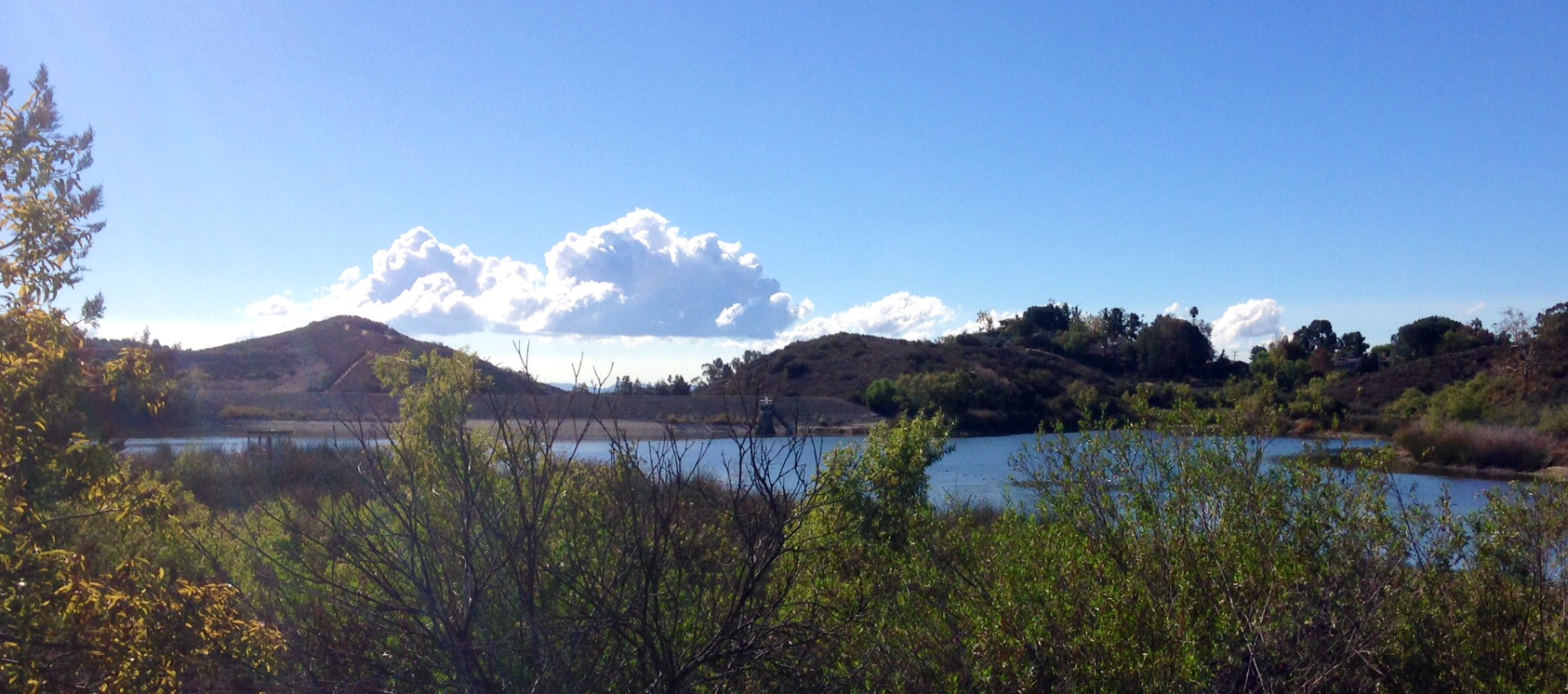
PetersCanyonPhoto

For the first time in nearly 30 years, I’m living the life of a semi-retired person.  I’m not entirely sure what that means, but it all began about six weeks ago.  That’s when I parted company with my employer after a little over fourteen years of service.  I thoroughly enjoyed my time there.  I think we were great for each other.  I learned a lot, contributed lots of value, helped many people advance in their careers, and enjoyed the fruits of success.

I often counsel people to remember that in any organization, large or small, every day could be your last.  Many probably think I’m being a bit dramatic with this advice.  While not speaking literally (well, maybe I am), the main message is to be prepared for a sudden exit, either by your choice, or the company’s.

My departure was my choice and the process took a few months.  Heeding my own advice, my wife and I were well prepared.  We’ve saved and invested (sometimes wisely) for our entire life, lived simply, and recently wrote our last tuition check (a big milestone in any parent’s life).

My friends congratulated me on my early retirement, but I was quick to push back.

I’m definitely not retired, although I have let the term, semi-retired, roll around in my head.  It seems accurate, for now.  “Semi” opens the door to a world of options, and sets a high bar for what I’ll choose to do in the future.

What’s next?  I’m not sure, and I kinda like it like that.

The Most Important Strategy Presentation You’ll Ever Make

Was this the most important strategy presentation you’ll ever make? It probably seemed like it, with all of the hard work and sleepless nights that went into it.

You’ve figured out how to ask real strategic questions .  You and your team have used those strategic questions to layout your strategy for next month, next year, maybe even the year after that.

You’re working on the big strategy presentation for your boss, and his boss.  You have 30-45 minutes to present.  It has to be perfect.  Your PowerPoint slides need to be crisp, concise, and informative.  Most of all, they must smoothly convey the sheer mastery of your team’s strategy.

You rehearse with your management team.  You adjust and tweak each word, each number, and every bullet point on your slides.  You gather as much supporting information as you can to support your conclusions.  You write out every question you can anticipate, and make sure you have a clear and effective response for each one.  You are ready.

Your company’s dress code is business casual, but it’s tradition that you wear a coat and tie for these annual strategy presentations.  Your preparation pays off.  You deliver a brilliant strategy presentation.  There are a few questions thrown your way, but you’ve anticipated every one of them.  Your boss, and his boss, are clearly impressed and excited to offer their support for your strategy.

You gather your team for a short post-presentation update meeting.  You congratulate your team for all of the work they’ve done on the presentation.  High fives all around!

Was this the most important strategy presentation you’ll ever make?  It probably seemed like it, with all of the hard work and sleepless nights that went into it.  But, it definitely wasn’t the most important.

Having your manager’s support for your strategy is a big deal.  But, your manager, and his manager, won’t do much to help you deliver on the brilliant strategic vision you and your team have laid out.

Remember all the time and energy that went into your perfect presentation?  Imagine if you spent even half of that time and energy preparing for, and presenting to, your customers and your employees.

The most important strategy presentation you’ll ever make is to the people who will deliver on your strategy…your customers, your direct reports, and everyone who works within your organization.

It’s not a one-time event that lasts 30-45 minutes.  It’s a never-ending conversation that should be happening with your customers, and across all levels of your organization…every day.

Are You Asking Strategic Questions?

If your company stopped delivering its products and services, who would miss it?

It’s strategic planning season.  Companies of all shapes and sizes are dusting off their strategic plans from last year, looking into their crystal balls and determining what they’re going to do next year.  How can we extend our products or services within our marketplace?  What will it take for us to keep up (catch up) with our competition?  How can we squeeze an extra point of profitability from our existing revenue streams?  Can we raise our prices a few percentage points without losing too many customers?  Do we need this many people?

If the previous paragraph sounds familiar, your organization isn’t doing strategic planning.

Strategic planning isn’t just an annual event.  Strategic questions don’t come from a defensive posture.  They shouldn’t be about tweaking at the margin.  Strategic questions definitely shouldn’t focus on ways to play “catch up.”  These questions may be important, but they aren’t strategic.  They’re tactical.

If your company stopped delivering its products and services, who would miss it?

What do your customers, or prospective customers, really want?  What are they trying to accomplish?  Your organization’s value comes from helping customers hit their strategic targets.  Otherwise, you’re merely a commodity, a convenience to be discarded whenever possible.

Many organizations fool themselves into believing they do strategic planning.  Sadly, they’re only going through the motions, “challenging themselves” to answer the easy, tactical questions…year after year.

That is, until their customers find another way to meet their strategic goals.

Remembering to Breathe

Nearly all sports are the same (at least on one level).

Nearly all sports are the same (at least on one level).  It doesn’t matter if that sport is soccer, baseball, golf, archery, skeet shooting, curling, downhill skiing, long distance running, ice skating, motorcycle racing, or competitive yodeling.

They each start with the same fundamentals:

  • Relax and stay loose
  • Calm your mind
  • Visualize success
  • Bend your knees
  • Don’t forget to breathe.

One could make a case that each of these fundamentals are of equal importance, but my money is on the last one.  Consciously remembering to breathe puts us in the right state of mind to remember the other fundamentals.

We each face challenges on a daily basis.  Some are small, and some are huge (at least from our perspective).  Here’s a strategy for tackling each of them:

  • Relax and stay loose
  • Calm your mind
  • Visualize success
  • Bend your knees
  • Remember to breathe!

The Perils of Over-thinking

Here’s a little over-thinking on the topic of touch-free paper towel dispensers…

To demonstrate how over-thinking can produce results that are the opposite of stated goals, here’s a little over-thinking on the topic of touch-free paper towel dispensers.

There are two main goals associated with touch-free towel dispensers in public restrooms:

  • Dispense a pre-defined quantity of paper towel, minimizing paper use.
  • Allow patrons to get their towels without coming in contact with someone else’s germs.

Simple, right?  Well, not so fast.

How much paper does a patron need to achieve proper hand drying?  If we use inches of dispensed paper as the measure, is three inches of paper enough?  Six?  Twelve?  What’s too much?  If the goal is to minimize waste, one could set the dispenser to only three inches.  Theoretically, this would minimize paper use.  But, if it’s not enough, the patron will stand there and dispense another three inches.  Possibly, another six inches.

To get the additional inches of paper towel necessary to achieve proper drying, the patron must wait for the machine to cycle.  This second-and-a-half cycle time can seem like an eternity.  After all, we’ve all got other things to do with our time.  The patron vigorously swipes their hand under the machine.  After one or two wand-like swipes that yield no additional paper, they often resort to hitting the machine where the sensor should be.  Oops, there goes that goal of not touching someone else’s germs.

Which setting will yield the least overall paper use (our first goal)?  The first-level thinker would say the lowest setting will do the trick.  But, we’ve established that the lowest setting is probably not enough. The patron will merely wait for at least one more cycle to get the paper they need.

The second-level thinker would say that dispensing more from the beginning will yield less overall paper use and waste.  If the proper amount is dispensed from the beginning, the patron will be less likely to wait for another cycle.  Don’t even get me started on battery use differences associated with the two options.

Why does any of this matter?  Why think so deeply about touch-free towel dispensers?

To illustrate how easy it is to get wrapped up in meaningless minutia and forget about providing the patron (our customer) with an excellent experience.  How much minutia are you focusing on while ignoring your customer’s experience?

Just Another PICNIC

I learned a new acronym recently: PICNIC

I learned a new acronym recently:

                PICNIC–Problem in chair, not in computer.

“Way” back in the early 90’s when one of my jobs was desktop support, I referred to the same phenomena as a “nut on the keyboard” problem.  At least 80% of the “computer problems” were actually human problems.

It’s the same thing with Cesar Millan, The Dog Whisperer.  Most “dog” problems are human problems waiting to be solved.  Cesar spends most of his time “whispering” to dog owners.  Cesar can’t call his show The Human Whisperer, even if that’s an accurate description of the service he provides.  To do so would alienate the audience that he’s trying to help.

The challenge with humans is that most of us would rather not admit that we are the problem.  It’s so much easier to blame the computer, the dog, the airline, the car, traffic, evil Republicans, evil Democrats, government, the economy, our manager, our parents, our kids, society, the system.  The list of excuses is infinite.

The good news is that the solution to most of these “problems” is in the chair.

We Are All Mountain Climbers

Until you face a climb yourself, you can never fully understand what it takes.

AlanAroras--Mt Everest 2013

There it is…Mount Everest from the air.  Each year, about 150-200  climbers attempt to reach its summit, 29,029 feet above sea level.  There are thousands of other mountain peaks in the world, but Everest is the highest, and most challenging.  Of course, from this angle it looks pretty tame.

That’s the thing about mountains.  Perspective is everything.  Until you face a climb yourself, you can never fully understand what it takes.  Watching others make the climb, or hearing their stories about what it was like, are no substitute for taking on the climb for yourself.

Look around you.  If you look closely, you’ll see that each of us are climbing a mountain.  Some mountains are short and easy, while others are as high or higher than our friend, Mr. Everest.

This is the point where I could wax on poetically about striving for the highest peaks in life, chasing ever higher summits, new vistas, and new challenges.  Yes, do all of that.  Don’t let anyone stop you…especially yourself.

No, I’m not going to talk about the standard, inspirational mountain stuff.  Instead, I’m going to talk about weight.

When embarking on a climb, is it better to carry twenty pounds, fifty pounds, or one-hundred pounds of gear on your back?  Obviously, all things being equal, less weight is better.  Gravity is not your friend.

How much weight are you carrying on your climb?  Only the essentials?  Anything extra?  Are you carrying baggage that won’t be used?  Why?  Carrying all that extra baggage isn’t helping you reach your summit.

What about your fellow climbers, especially those closest to you?  How much extra baggage are they carrying?  How much of it is yours?

The best strategy for extra baggage (and its unnecessary weight) is to avoid packing it in the first place.


Photo Credit:  Alan Arora, who owes me some details on how he was able to be in the cockpit jump seat of an Airbus A319 at the perfect time to capture such a beautiful shot of Mount Everest.

The Last Mile

The telecommunication provider has a tremendous amount of control over everything in their network…except the last mile, where the end customer is.

The last mile describes the final leg of a telecommunications network.  It’s the part that actually reaches the end customer.  It’s often the most difficult and uncontrollable link in the network.  This is where most of the bottlenecks occur.  The simplest of networking processes can be complicated by the wiring and equipment in the customer’s home.

Telecommunication networks exist to serve end customers.  Without the end customer, there’d be no one to pay the bill, or finance the network’s creation and maintenance.  The telecommunication provider has a tremendous amount of control over everything in their network…except the last mile, where the end customer is.

The customer’s experience comes from the last mile.  They don’t need to know or understand the engineering and infrastructure that goes into operating the massive network.  They don’t care about the traditions and history of the telecommunications provider.  They only care about the cost, speed, and ease of use they experience in their home.

The same is true for nearly any business.  The last mile drives the story your customers will tell.  How much attention are you paying to the last mile?

What the Flock is Going on Here!?!?

Which are you, predator or prey?

Lots of animals live and move in groups.  Cows, sheep, wildebeest, mackerel, geese, humans…just to name some examples.  We’ve come up with lots of names for these groupings:  herd, flock, school, gaggle, gang, company, industry trade group, union, political party.

Each of these groupings have one primary purpose:  defense.  There is safety in numbers, or so the saying goes.  Groups moving in unison appear larger to predators.  Their coordinated movements confuse and intimidate those who would otherwise do harm to the individuals in the group.

When predators attack, they pick the weakest and most vulnerable in the group to attack first.  That’s okay with the group, since protection of the group as a whole is paramount.  Any particular individual is less important than the survival of the entire group.

Predators often travel alone.  Eagles, bears, cheetahs, sharks, jaguars, Tesla…all loners.  Sure, some predators travel in groups.  Lions have their pride.  Wolves have their pack.  Orcas and dolphins have their pods.  The primary goal of a predator, whether alone or in a group, is offense.  They work in a coordinated effort to maximize return on their energy investment…capturing the most prey with the least amount of energy output.

Nothing is safe in the animal kingdom.  The food chain takes no prisoners.  The hunter often becomes the hunted.  The same is true in human enterprises.  In the (hopefully) never ending capitalist cycle of invention, construction, destruction, re-invention, and reconstruction, the roles of predator and prey can switch on a moment’s notice.

An instinctive drive for safety leads to new alliances.  Predators who would never think of joining a defensive flock are drawn in by the promise of safety from some new, common enemy.  Defense against the enemy becomes the rule of the day.  Thoughts of maximizing return on investment, or re-inventing the future, are replaced by a focus on defending the status quo of the flock.

In a uniquely human twist, the defensive flock may even take on a new mission.  The defensive flock goes on offense.  This flock actively seeks out the lone predators, the re-inventors.  They marshal all of their creative energy toward destroying predators before their new ideas wreak havoc on the flock.  Protection of the group is all that matters.  The individual is less important.

Which are you?  Predator or prey?  Loner, or flock member?  Are you a former predator, now seeking the safety of a new flock?  Are you defending the status quo, or throwing in with the crazies who are re-inventing the future?  Are you on offense, or defense?

Are you making this choice for yourself, or are you allowing the flock to make the decision for you?

Wanna Learn Something? Think Like a Teacher!

You try to listen and stay focused. Your mind wanders a bit. You force it back in line. After all, there may be something useful here that you can apply to your work…

You’re sitting in a training class.  The instructor is describing some new set of management concepts or the latest system enhancements.  You try to listen and stay focused.  Your mind wanders a bit.  You force it back in line.  After all, there may be something useful here that you can apply to your work.

Later, someone asks you how the class went.  You shrug your shoulders, reporting that you learned a couple of new things.  You then have trouble describing what you’ve learned.  Not an inspiring endorsement.

Imagine the same training class.  But, now you’re there to learn the material well enough to present the same class to another group next week.

You don’t get to pick and choose what applies to your work.  You need to learn the subject in its entirety.  Preparing to teach a subject requires active learning.  You’ll watch how the material is presented, the visual aids and examples the presenter uses, and the way the presenter moves around the room.  Nothing less than full mastery of the information will suffice.  Anything less could lead to failure when it’s your turn to teach.

Do yourself a favor.  Prepare like a teacher, learn like a teacher, and think like a teacher.  The truth is, you will be teaching this class next week…to yourself, as you try to remember and apply what you learned in the class.