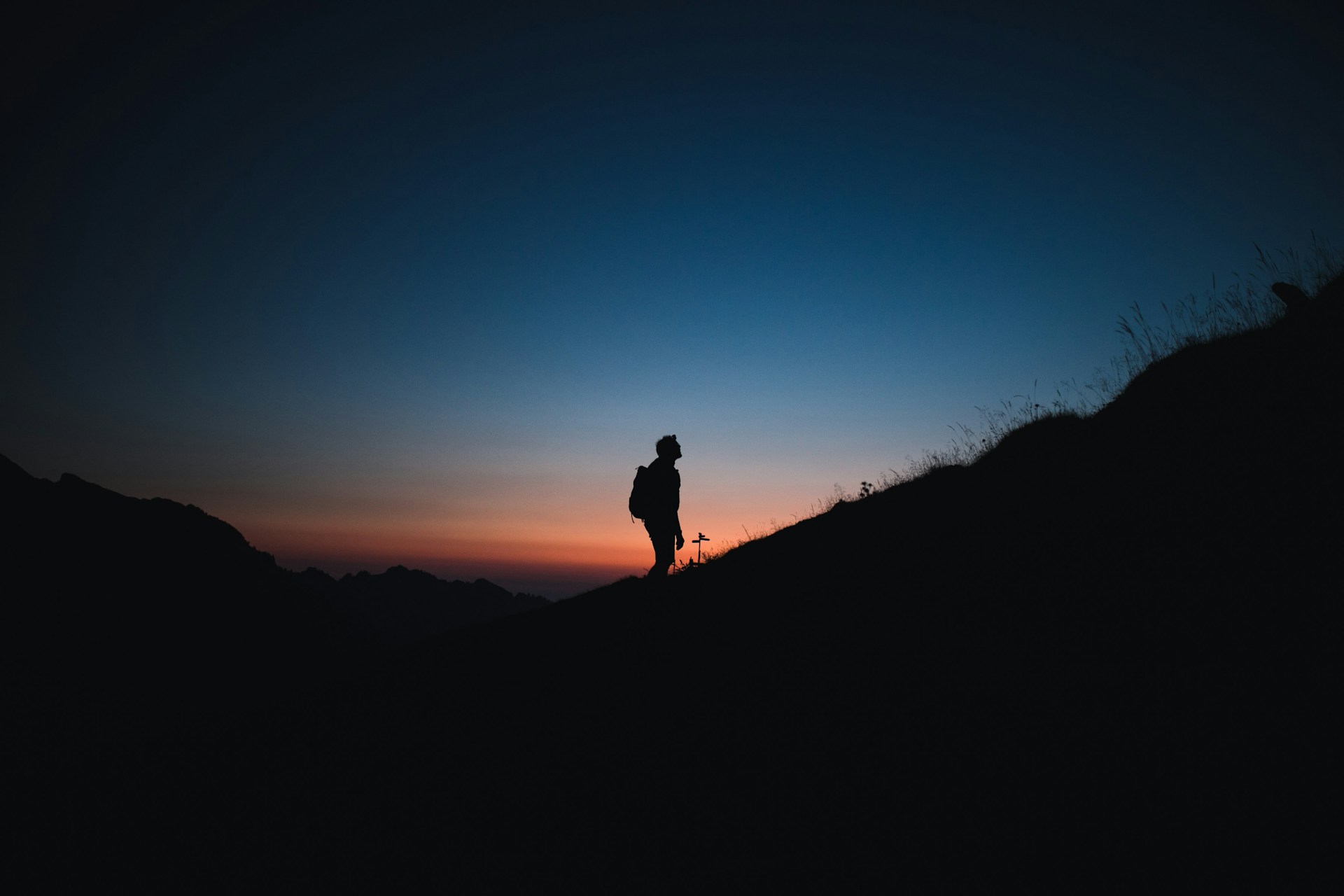
The Rocks, A Higher Gear, and Campfires

In 2013, I wrote a short post called We Are All Mountain Climbers.

The idea was simple. If you look closely at life, you’ll see that everyone is climbing something.

A career. A relationship. A difficult time in their lives. A personal challenge.

Life has a way of placing mountains in front of us. Or maybe…we’re just good at finding them.

As I wrote back then, the climb only makes sense from the inside. Watching others or hearing their stories are no substitute for taking it on yourself.

There was another part of the metaphor that mattered even more.

Many of us start the climb with backpacks full of things that make our journey harder than it needs to be. Old resentments. Lingering disappointments. Criticism that stuck with us longer than it should have. Sometimes we even carry baggage that belongs to someone else.

Years later, I came across a Buddhist parable that gave a new wrapper to this idea. It described people walking through life carrying large boulders. Anger. Ego. Grudges. The suffering didn’t come from the boulders themselves. It came from choosing to pick them up.

In 2015, I wrote about riding my mountain bike.

Whenever a hill approached, I had a habit of shifting into an easier gear before the climb even began. It felt like preparation. It felt like the smart thing to do.

One day I tried something different. Instead of downshifting, I shifted to a higher gear and pushed harder.

To my surprise, I climbed much faster than before, without bonking like I thought might happen.

Sometimes growth means discovering we’re stronger than we realize.

That experience raised questions I still ask myself.

Where else in life do I downshift before the hill arrives?

Am I protecting myself from difficulty…or underestimating what I’m capable of?

Recently, I read a post by Tim Ferriss about the “self-help trap.” He described sitting around a campfire one evening with a small group of close friends, the kind of unhurried night where the conversation slows down enough for truths to surface. He found himself thinking about the fire, and then realizing the fire wasn’t the point. The people sitting around it were.

He described how easily we can become so absorbed in optimizing ourselves, tracking progress, chasing improvement, climbing toward our next summit, that we lose sight of why we started climbing in the first place.

Summits will eventually fade. Our achievements will blur with time. Recognition disappears quicker than we expect.

Perhaps the real work of self-improvement is simpler than we think.

The rocks we’re carrying were never necessary.

The hills we fear are usually smaller than we imagine, or remember.

And the fire, the one worth tending, isn’t the one powering our ambition. It’s the one we gather around with the people we love.

Photo by Marc Zimmer on Unsplash

Note to Self

I will do these things as a promise to myself…

Maybe it’s all the close calls, existential threats, newly-invented liabilities, newly-minted regulations, new competitors, old competitors, angry customers, happy customers, former customers, new customers, potential opportunities, new ideas, new methods, better mouse traps, and everything else that comes our way in business (no matter the size).

Maybe it’s the fight-or-flight instinct that gets honed to a fine edge through years of experience.  Knowing when to hold ‘em, and when to fold ‘em…but always allowing room for doubt.  Knowing when the silent customer is more important than the loudest one.  Knowing that the employee you don’t see is just as important as the one you do see.  Knowing we always have a competitor, whether we realize it or not.

Maybe it’s that standard defensive posture that every business assumes at times, even when it knows that only a strong offense will win the day.  Understanding that this isn’t a game we get to win every day.

Maybe it’s just fear of failure, or more likely, fear of success.

Whatever it is that stops me from getting the most enjoyment from this business…now is the time to let it go.

Life is way too short to let the small stuff get in the way.

Here’s my promise to myself:

  • I will go on offense, every day
  • I will acknowledge my fears, but only if it helps create a stronger offense
  • I will focus on the next step forward, and let the past remain there
  • I will create opportunities for those around me
  • I will love and serve
  • I will let go
  • I will enjoy each day as the gift that it is.

I will do these things as a promise to myself, knowing that I’m not the One who is in control.

We Are All Mountain Climbers

Until you face a climb yourself, you can never fully understand what it takes.

AlanAroras--Mt Everest 2013

There it is…Mount Everest from the air.  Each year, about 150-200  climbers attempt to reach its summit, 29,029 feet above sea level.  There are thousands of other mountain peaks in the world, but Everest is the highest, and most challenging.  Of course, from this angle it looks pretty tame.

That’s the thing about mountains.  Perspective is everything.  Until you face a climb yourself, you can never fully understand what it takes.  Watching others make the climb, or hearing their stories about what it was like, are no substitute for taking on the climb for yourself.

Look around you.  If you look closely, you’ll see that each of us are climbing a mountain.  Some mountains are short and easy, while others are as high or higher than our friend, Mr. Everest.

This is the point where I could wax on poetically about striving for the highest peaks in life, chasing ever higher summits, new vistas, and new challenges.  Yes, do all of that.  Don’t let anyone stop you…especially yourself.

No, I’m not going to talk about the standard, inspirational mountain stuff.  Instead, I’m going to talk about weight.

When embarking on a climb, is it better to carry twenty pounds, fifty pounds, or one-hundred pounds of gear on your back?  Obviously, all things being equal, less weight is better.  Gravity is not your friend.

How much weight are you carrying on your climb?  Only the essentials?  Anything extra?  Are you carrying baggage that won’t be used?  Why?  Carrying all that extra baggage isn’t helping you reach your summit.

What about your fellow climbers, especially those closest to you?  How much extra baggage are they carrying?  How much of it is yours?

The best strategy for extra baggage (and its unnecessary weight) is to avoid packing it in the first place.


Photo Credit:  Alan Arora, who owes me some details on how he was able to be in the cockpit jump seat of an Airbus A319 at the perfect time to capture such a beautiful shot of Mount Everest.