Cage Fights, Roulette and the Law of Large Numbers

When you enter the octagon (speaking metaphorically, but maybe literally), it’s just you and your opponent…

unsplash-joshua-clay-1

When you enter the octagon (speaking metaphorically, but maybe literally), it’s just you and your opponent. Only your strength, skill, speed, luck, stamina, cunning, toughness and courage will help you find victory.

If you play roulette, the chance that the ball will land on red or black is the same…a little over 47%. Remember the green 0 is in there to mess things up.

But, what if you only have the time and money to play roulette for ten spins?  Will the distribution of red and black numbers come out to just over 47% each?  Maybe, but probably not.

What if you could spin the wheel 1,000 times?  Would the distribution of red and black approach 47% each?  That’s much more likely.  In fact, the Law of Large Numbers says as much.

What about that cage fight?  Theoretically, you have a 50% chance of winning, all things being equal.

Of course, all things are never equal in a cage fight (or real life).

The other guy is meaner, stronger, faster, and more skilled.  You didn’t sleep well last night, you have that nagging knee injury that always shows itself at the wrong time.  You don’t punch very hard, and you’ve heard that he has a great ground game.  You have no idea what having a great ground game means, but it sounds dangerous, and that was the sound of the bell.

How’s that 50% chance looking?  More like 5%, or maybe 1%.

What if you could fight the guy 1,000 times?  Would your chances improve?  Would you ever approach the 50% mark?  Would you survive to find out?  Probably not.

The good news is we don’t have to count on the Law of Large Numbers.  And, while it’s nice to say that we can count on ourselves, it’s even better to know that we can count on our family, friends, associates, co-workers, teammates, competitors (yes, indeed), and countless others to help us achieve our victories.

You don’t have family, friends, associates, co-workers, teammates, competitors or countless others who can help you?

Then, your cage match is going to be all about how you become one or more of these things for someone else.  Look around for who you can help.  Who can you befriend?  Who can you support?  Who can you encourage?

In life, the largest number in the Law of Large Numbers is you and your tireless and relentless effort to make a difference for someone else.

Each of us has our own cage match to fight, often with ourselves.  Wouldn’t it be great to see what you can do to help someone else win theirs?

Trust me.  You’ll find your own path to victory along the way.

P.S.  There’s not much anyone can do to help you win at roulette, but I always recommend 32 red.


Photo Credit:  Unsplash, Joshua Clay


Anyone But Me

It’s easiest to let someone else.

  • unsplash-benjamin-child“Who wants to start?”
  • “Any volunteers?”
  • “We need to think outside the box.  Do you have any ideas we can pursue?”
  • “Who’s gonna drive innovation for our company?”
  • “Did you see what they just did?  Who’s heading up our response?”
  • “I’m sure glad he’s running with that project.  I wouldn’t get anywhere near that thing!”
  • “Who’s next?”
  • “You’re kidding me!  She’s leading our brainstorming session?”
  • “I sure hope they figure this thing out.  We need answers and we need them fast!”
  • “I can’t believe we’re doing this.  Who came up with this idea?”
  • “They’re idiots to think this will matter.”

It’s easy to hide.  Easy to complain.  Easy to snipe from a distance.

It’s easiest to let someone else.

The hard thing is stepping up.

Volunteering.

Risking failure.

Taking charge.

Risking embarrassment.

Choosing to lead.

Risking success.

Turning “anyone but me” into “why not me” is the first step…and the hardest one of all.


Photo Credit:  Unsplash–Benjamin Child

I Should’ve Laughed More

Grandpa Clyde used to say, “You had to laugh…”

A photo by frank mckenna. unsplash.com/photos/EgB1uSU5tRA

Grandpa Clyde used to say, “You had to laugh!” whenever he told stories about something that had happened.

I’m not sure he was laughing when the thing was actually happening, but he knew you had to laugh when he looked back on it.

How many tough situations, crises, or plain old everyday events do you experience in a day, a week, a month…a lifetime?

What if we could pull ourselves out of these situations just long enough to hear the story we would tell?  It won’t get us out of the situation, but might help us find the reason to laugh.


Photo:  www.unsplash.com, Frank McKenna


Failures have excuses…Successes have stories

The unfortunate truth is that some of us start making excuses long before the failure is complete…

Source: Failures have excuses…Successes have stories

Solving Interesting Problems and Finding Failure Along the Way

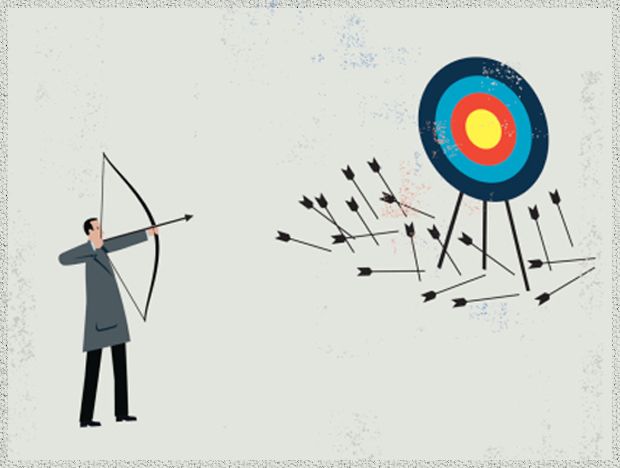
What’s the easiest way to avoid failure?

Failure_Target

There I was, listening to a Tim Ferris podcast, featuring Seth Godin (a great combination, by the way).

Seth said a lot.  When it came to our education system, he said it’s geared toward making compliant workers to serve the industrial complex.  I can’t help but agree with that assessment.

He said our education system should instead focus on two things:

  1. Teaching our children how to solve interesting problems (where the answers can’t be Googled),

and,

  1. Teaching our children how to lead.

As I listened, I completely agreed.

And then, only one day later, I was presented with an interesting problem.

Kip was telling me about a problem he likes to ask his programming candidates.  He gave me the problem with a look that said, “Surely you’ll be interested in this problem, and you’ll be able to figure it out.”

Wrongo!

As he explained the problem, my mind wasn’t looking for a solution.  Instead, I started wondering why I’d spend time on this problem, could I Google it (you can), how long would I have to struggle with it before he’d give me the answer, and what would an HR person say about asking this particular question (ever focused on compliance).

Meanwhile, he stood there expecting me to attack the problem, to ask follow-up questions, to start searching for a solution.  I gave him nothing.

Disappointed, he realized I wasn’t working the problem.  He gave me a hint, trying to get me to engage.  No dice.  I wasn’t tackling the problem.  I wasn’t even curious.  I waited for the answer.  In fact, I noticed I was thinking about something else (probably having to do with where we’d be eating lunch).  I hadn’t even tried.

Here’s the problem (it’s called the three light bulb question):

A windowless room has 3 light bulbs. You are outside the room with 3 switches, each controlling one of the lightbulbs. If you can only enter the room one time, how can you determine which switch controls which light bulb?

An interesting problem.  One I had chosen to not solve.

A problem that a younger version of myself would have loved.  It requires logic, imagination, a willingness to fail, and enough confidence to know, really know, that I can find the solution.

Here’s a small hint.  You’ll need to use all of your senses to find the answer.

For me, the question that’s more interesting than the light bulb problem is why I chose (almost automatically) to give up before trying to solve it.

I can tell myself it’s because I’m not a programming candidate, or that I don’t have to prove myself by solving the puzzle.  But, these aren’t the reasons.

Could be a lack of confidence.  Somewhere, deep in my subconscious (or maybe right on the surface), I didn’t know that I could solve the problem.  Queue the white flag.

That’s not the root cause.  In that same subconscious place, my mind saw an opportunity to fail.

Failure is not an option.

Failure is embarrassing.

Failure exposes our weaknesses.

How could it be that the younger version of myself would have tackled this problem with gusto, but the more experienced version sees an opportunity for failure and runs the other way?

I’ve purposely faced failure countless times in my life.  I remember being the guy who “poked the bear.”  I loved the unsolvable problem.  My job often involved turning around “unsolvable” situations.  Failure lurked around every corner, but it seemed normal to me.

There must be something else happening.

The narrative.  That’s the message we tell ourselves (and others) about our core beliefs.  It describes what makes us tick, our mission, why we do all the crazy things we choose to do.  It doesn’t matter if the narrative is always true.  It’s our narrative, and it drives the way we perceive our place in the world.

Years of status meetings, monthly reports, strategy reviews, and all the rest taught me to avoid failure.  Don’t miss the goal.  Give yourself some wiggle room.  Make sure you have buy-in from everyone before launching that new idea.  Don’t take any unnecessary risks.  Don’t go out on a limb…you might fall.  We have shareholders who expect a return.

Without realizing it, I allowed my narrative to morph.  Failure avoidance found its way in.

What’s the easiest way to avoid failure?

Don’t take up the challenge.  Avoid the risks.  Don’t poke that bear.  Let someone else try.  Say “No.”

But, failures teach us the most valuable lessons in life.  The quickest way to stop learning is to avoid failures.

The truth is, avoiding failure is the biggest failure of all.

Something I’ll remember the next time I’m faced with an interesting problem, or an opportunity to fail (which are often the same things).

Want the answer to the three light bulb question?

Here’s one more hint.  Your sense of touch will come into play.

By now, I’m sure you’ve figured it out.  If not, here it is:

Turn on two switches (call them A and B) on and leave them on for a few minutes.  Then turn one of them off (switch B) and enter the room.

I’ll let you figure out the rest.

Are You Really Outside Your Comfort Zone?

When you find yourself outside your comfort zone, what’s your goal?

ComfortZone

In the 80’s, the message was, “Dress for Success.”  Dress at least one level up, make a great impression, get promoted.  The concept focused on impressing the gatekeeper (your boss, or your boss’s boss), moving up, achieving success.  “Upwardly mobile” was a phrase people used to describe themselves.  Inherent in this approach was the thought that your success was dictated by how far up you climbed in one organization.

In the 90’s, the message was, “Be nimble, move fast, deliver quality.”  Tom Peters really came into focus in the 90’s with his thoughts on the “nanosecond” 90’s.  Big companies needed to find ways to “bob and weave,” to adjust to the ever-changing market dynamics.  We all searched for ways to shift paradigms, boost quality, and invent new ways of streamlining processes.

One by-product of this nimble and fast-moving behavior was rapid employee movement.  Corporate downsizing, upsizing, and reorganizations, along with an even faster corporate merger and acquisition pace, made remaining in one organization for a lifetime as remote as winning the lottery.

Dress for Success was out.  Upward mobility was out.  The era of the entrepreneur was upon us (even though it had been with us since the dawn of civilization).  The corporate version, the “intrapreneur,” became a big thing.  This was the person in the meeting who was slightly quirky, a bit edgy and imaginative, and didn’t mind “poking the bear” a bit.  He or she operated with a flair that the corporate mindset both embraced and slightly feared.  This was the person that would help the corporation remain relevant in the face of fast-moving competition, but might upset the apple cart along the way.

Somewhere in the late 90’s or early 2,000’s I started hearing that we should “think outside the box.”  “Think Different” became Apple’s calling card.  It was only that type of thinking that would yield meaningful results.  Anything else was just window dressing, or “lipstick on a pig.”  Look at the top 10 companies in terms of market value (both public and private) and it’s hard to argue with this sentiment.

But, even those “renegade” companies struggle to stay “different” over the long term.  What once seemed new, even revolutionary, becomes the new norm.  Soon, there’s a clamor for the next version, the new invention, the new product, the next “thing.”

What’s the answer to all of this?  Organizations and entrepreneurs try to operate “outside of their comfort zone.”  Yeah!  That’s the ticket.  If we can get everyone pushing outside their comfort zone, maybe that will result in something different, and cajole some new ideas into fruition.

But, the truth is that none of us like it outside our comfort zone.  Most companies and shareholders prefer their comfort zone as well.

We constantly seek our comfort zone, even as we talk about pushing ourselves outside of it.  If we happen to venture out and actually operate for a while in the hinterlands, our deep subconscious goal is to regain our footing, by seeking approval or acceptance of our crazy ideas back in the comfort zone.

We may get used to operating in a new zone and call that our new comfort zone…but, it’s still our (new) comfort zone.  This is one definition of progress.

People have varying perspectives on what’s comfortable.  The free climber is happiest and most “alive” when climbing a 3,000-foot rock face without ropes.  Another person’s comfort zone is speaking in front of a large audience.  Still another person’s idea of comfort is analyzing reams of financial data about the performance of their company.

What is your comfort zone?  When are you the most at ease?

What are you doing to operate outside that zone?

When you find yourself outside your comfort zone, what’s your goal?  To return to the safety of the comfort zone, or to extend your reach to an even more uncomfortable spot?

Look closely and be honest with yourself.  You’re probably spending most of your time inside your comfort zone or trying to find your way back there.

It’s up to you to determine whether this is okay, or not.


Self-Talk

Consider the amazing power that something quieter than a whisper (the silence of our own thoughts) has over each of us.

It’s not what you say out of your mouth that determines your life.  It’s what you whisper to yourself that has the most power. –Robert T. Kiyosaki

The first person to give you feedback is yourself…in the form of self-talk.  You have 24/7 access to your internal talk track.  Your messaging is unfiltered and brutally honest.

Does unfiltered and honest mean accurate?  Does it mean valuable?  Not necessarily.

The truth is that no matter how incorrect your self-talk is, or how much you try to ignore it, you are your most trusted advisor.  You have the most power over yourself (for better or worse).

Negative self-talk is easy.  Bad news travels fast, especially when it doesn’t have to travel.

Positive self-talk is harder, and sometimes difficult to believe.  Our positive self-talk can sound a bit crazy, which makes it easier to discount.

Status quo is powered by doubt in our positive self-talk.

The most successful people I know face challenges with self-talk.  They happen to believe their positive self-talk just a little more than the negative.

The negative is right there, trying to hold them back.  Somehow they’ve found a way to focus on the positive, finding ways to push past their wave of doubt.

They’ve usually found kindred spirits who can help strengthen their positive self-talk.  A support network that reinforces their crazy ideas.  The best support network doesn’t fully buy-in to the crazy.  They merely create an environment where it’s okay to explore the crazy.  To bring it out in the open and let it breathe a little.

And, that’s the real secret of self-talk.  We all have negative and positive self-talk rolling around in our heads.  But, if we can allow the positive to get a little breathing room, that’s usually all it takes to win the internal battle against the negative.

Here’s the challenge:  The war between negative and positive is never over.  You have to win it one battle at a time.

Note to Self

I will do these things as a promise to myself…

Maybe it’s all the close calls, existential threats, newly-invented liabilities, newly-minted regulations, new competitors, old competitors, angry customers, happy customers, former customers, new customers, potential opportunities, new ideas, new methods, better mouse traps, and everything else that comes our way in business (no matter the size).

Maybe it’s the fight-or-flight instinct that gets honed to a fine edge through years of experience.  Knowing when to hold ‘em, and when to fold ‘em…but always allowing room for doubt.  Knowing when the silent customer is more important than the loudest one.  Knowing that the employee you don’t see is just as important as the one you do see.  Knowing we always have a competitor, whether we realize it or not.

Maybe it’s that standard defensive posture that every business assumes at times, even when it knows that only a strong offense will win the day.  Understanding that this isn’t a game we get to win every day.

Maybe it’s just fear of failure, or more likely, fear of success.

Whatever it is that stops me from getting the most enjoyment from this business…now is the time to let it go.

Life is way too short to let the small stuff get in the way.

Here’s my promise to myself:

  • I will go on offense, every day
  • I will acknowledge my fears, but only if it helps create a stronger offense
  • I will focus on the next step forward, and let the past remain there
  • I will create opportunities for those around me
  • I will love and serve
  • I will let go
  • I will enjoy each day as the gift that it is.

I will do these things as a promise to myself, knowing that I’m not the One who is in control.

The Puzzles We Build

In our house, whenever we started a puzzle, it was an “all-hands-on-deck” affair…


jigsaw-puzzle_pieces

When was the last time you assembled a puzzle?

Did you do it yourself, or did you have help?

How long did it take to assemble?  Minutes?  Hours?  Days?

In our house, whenever we started a puzzle, it was an “all-hands-on-deck” affair.  We’d all start working it.  Some of us would focus on organizing the pieces to make them visible.  Others would dive right in and start putting pieces together.

I worked the edges.  It’s the only thing that helped me get my bearings on the puzzle.  Start with the flat sides and establish a border…then work into the middle.  Working from the middle, out, was way too random for me.

“Hey, does anyone want some hot chocolate?” always seemed like a good question for me to ask after about a half-hour of diligent work.  With marshmallows.  Without looking up, I’d get some slow yesses and a few grunts.  By the time I came back with the hot chocolate, I was always amazed at the progress.

I’d get back to working the edges.

Each of us had our specialty and our own pace.  Some of us were easily distracted (me).  My wife would stay focused for hours…one piece at a time.

“Hey, who’s up for a break from the puzzle?  Maybe we can hit it again in a couple of hours with fresh eyes.”  I was always a proponent of fresh eyes.

But, then we’d get most of the edges completed.  I’d get my own personal rhythm, and I could start to see the patterns.  The puzzle started to take shape.  First, in my mind and then on the table.  My perspective on the puzzle and my ability to add value to it changed as the image emerged from all the pieces.

I don’t know if my wife and daughters (or anyone else who’d stop by and get sucked into the assembly project) went through the same evolution in their perspective as I did.

Our latest puzzle is a new business (actually, an existing business that we recently purchased).  Once again, our family is building a puzzle together.  This time, it’s not at the dining room table with a clear picture of the final product.  In fact, new pieces are being added to this puzzle all the time.

Once again, we’re each approaching the puzzle in our own way.  Center-out.  Edges-in.

Distractions?  Definitely.

Is an image beginning to emerge?  Yes.

The best (and most challenging) aspect of this puzzle is that it’s never finished.  It grows and evolves.  It occasionally leaves us feeling a bit perplexed.  But, it also takes beautiful shape before our eyes as we continue to build, one piece at a time.

Anyone up for some hot chocolate?  We’re gonna be here a while!


Speedometers Steal Speed

“The cheetah is the fastest animal on earth.  It can reach speeds of up to 65 miles per hour as it pursues its prey.  Just look at its awesome speed, as it chases down that gazelle!” – Every Nature Program about Cheetahs

Do you think the cheetah has any idea how fast he’s going?

What about an eagle as it dives through the air to reach its prey?

Does the pelican think about his speed as he dives into the water to catch dinner?

Does the pole vaulter know how fast she’s running just before her jump?

What about the downhill mountain bike racer?

The answers to these questions are obvious.  For each to be effective, none are looking at a speedometer to determine their next move.  They aren’t referring to some magical heads-up-display to tell them how they’re doing.

In their critical moment, no measurements or brilliant strategic insights will impact the outcome.  They will succeed or fail based solely on how they perform, in the next moment.

The moment is all that matters.

Speedometers don’t make speed.  They provide external feedback and nothing else.

How often are you slowing down to check your speedometer, instead of focusing on your next critical moment?

Truth is, your moment is all that matters.  There’s plenty of time for feedback later when it’s not stealing your speed.