Stop Expecting Less…

From yourself. Expect to learn, grow, contribute, follow through, and occasionally surprise yourself.

From your relationships. Cultivate depth, honesty, presence, and care. Treasure the people who know you well, but don’t let your full life become a closed circle.

From your curiosity. Keep asking questions. Keep learning things you don’t understand. Stay willing to be a beginner.

From your body. Expect your body to do what it reasonably can, but don’t be afraid to push against its limits. Protect your strength, mobility, endurance, and ability to do things for yourself.

From your work. The things you choose to work on should be useful, meaningful, interesting, and worth doing well.

From your courage. Admit when you’re wrong, try things you might fail at, and choose the less comfortable path when it’s the right one.

From your attention. Decide what deserves your attention instead of surrendering it to whatever is loudest, newest, or easiest.

From your ability to contribute. Always look for ways to be useful. Teach, encourage, help, listen, solve a problem, share what you know, give your time, or carry part of the load.

From what’s still ahead. Don’t assume the most interesting parts of life have already happened. Leave room for new work, new friendships, new places, new ideas, and versions of yourself you haven’t met yet.

From your standards. Don’t let convenience or laziness redefine what you consider good enough, especially in the areas you care about most.

From your sense of wonder. Keep noticing beauty, craftsmanship, nature, music, ideas, people. Familiarity can make remarkable things seem ordinary if you let it.

From your sense of possibility. Don’t become too quick to decide what can’t happen, what won’t work, or what’s no longer for you. Some doors close. Others are easy to overlook because you’ve stopped checking them.

From the life you have now. Don’t wait for everything to be settled before you fully engage with your life. There will always be another problem to solve. Problems aren’t interruptions to the life you’re trying to get to. They’re part of the life you’re living.

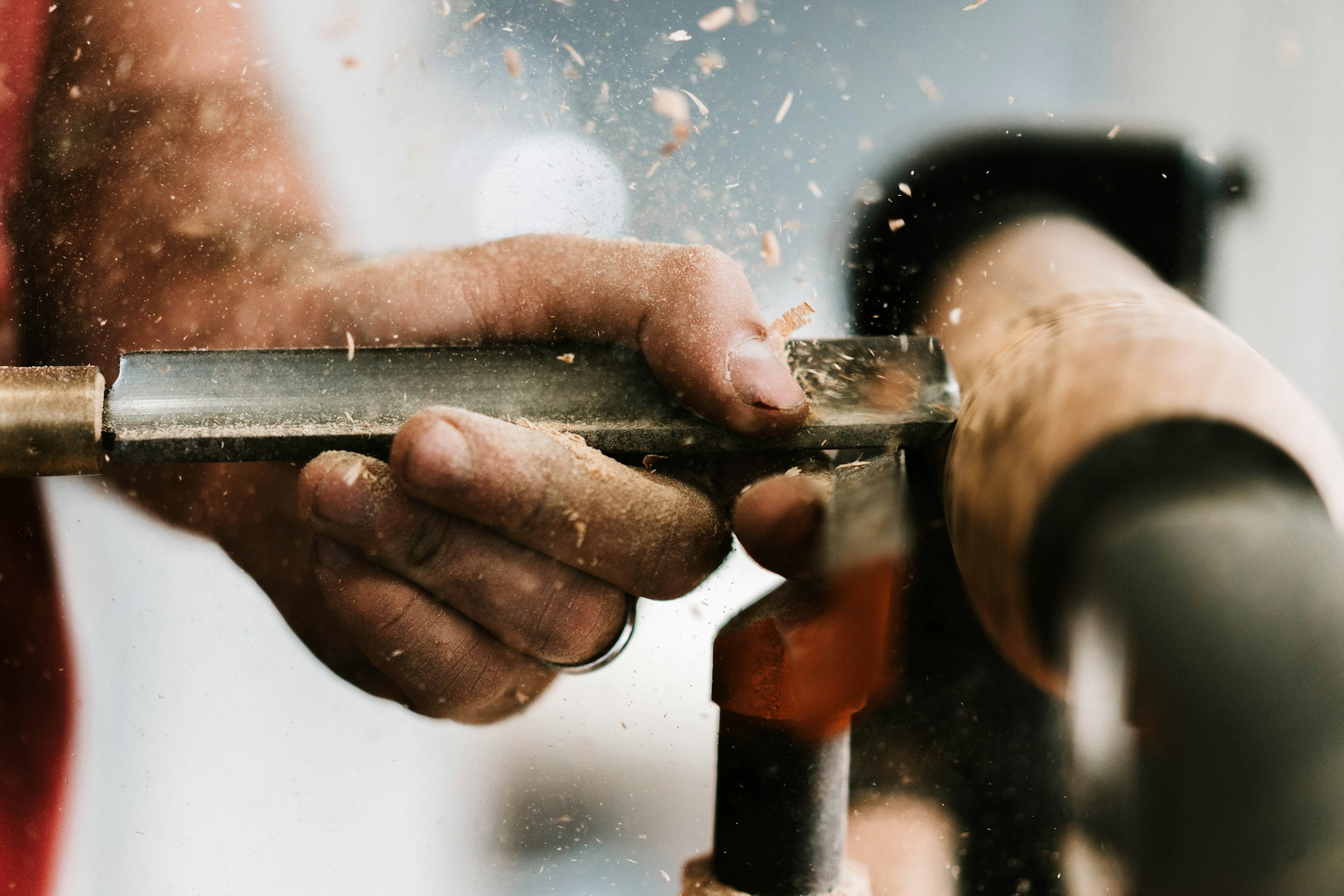
Photo by Austin Ramsey on Unsplash – With every revolution, something new is revealed.

Create Anyway

There’s a big difference between having an opinion about what’s broken and taking responsibility for making something better.

We live in a time when commentary is easy.

We can criticize from the sidelines. We can point out what’s wrong. We can explain why the system is broken, why the leaders failed, why the plan won’t work, or why the people in charge should have known better.

And much of that criticism may be true.

Something really may be broken. People may have failed. The system may need to change.

But is criticism going to be our only contribution?

Creating rather than complaining is an act of disciplined hope. It says I can see what’s wrong, but I’m still willing to work.

Complaining usually says, “Someone should fix this.”

Creating says, “I can improve one piece of this.”

That shift moves us from the sidelines onto the field.

Some problems aren’t ours to carry. We shouldn’t excuse the people who caused them. We don’t pretend the risks aren’t real or the damage doesn’t exist.

But we refuse to stop at frustration.

We must ask better questions.

What can I build? What can I repair? What can I encourage? What can I organize? What can I make clearer, stronger, more honest, more useful, more human?

And what can I do even if I didn’t create the problem?

That’s leadership.

Leadership isn’t only authority or title, position, budget, or permission.

Leadership is seeing a gap and stepping into it.

It’s making the call no one wants to make. Writing the note. Cleaning up the mess. Telling the truth. Taking the first small step.

We don’t have to fix everything to make something better.

That’s important to understand, because the size of the problem can become an excuse for doing nothing.

If I can’t fix the whole system, why bother? If I can’t change the whole culture, why try?

But that’s spectator thinking.

Builders think differently. Builders understand that every useful thing starts smaller than the problem it hopes to address.

A bridge starts with a first beam. A book starts with a first sentence.

A movement starts with a first conversation.

A better future starts when someone decides their contribution will be more than complaint.

It says I may not be responsible for the whole problem, but I am responsible for what I do next.

It says tomorrow can be better than today, and I’m willing to put something in motion.

The invitation is simple.

Don’t let your only contribution be commentary.

Find one thing you can improve.

One process. One relationship. One decision. One conversation. One neglected corner of the work.

Start there. Build there. Serve there.

The system may still be broken. The leaders may still have failed.

But the future belongs to the ones who choose to create anyway.

Photo by Alex Gruber on Unsplash – The future is shaped by people willing to begin.