The days feel long, but our years disappear. I’ve been thinking about how easily “someday” turns into “back then.” We spend so much of life working toward what’s next that we sometimes forget we’re already living the moments we’ll one day remember with gratitude.
This truth reaches us at every age. Whether we shape our future with intention or let it unfold on its own, it arrives and quietly invites us to participate. This reflection is about the sweetness of now and noticing that these moments become the story we’re creating together.
Each day arrives on its own, small and full of potential. It doesn’t ask for much. Only our attention, our care, and our willingness to be here. The hours move like honey, slow and golden, rich with sweetness if we take time to notice. Yet the years rush by quietly. One morning we look up and realize the future we worked toward has become the past we cherish.
What we dreamed about for so long is happening now. This day, with its imperfections, interruptions, and small joys, is the life we once hoped to reach. It’s the tomorrow we imagined, already unfolding beneath our feet.
Time helps us see backward with gratitude and forward with wonder. We remember the faces and laughter that have softened into memory. We hold them gently, realizing how meaning hides in ordinary moments.
Each day is a life of its own. Complete, sacred, and fleeting. When we let its minutes open slowly, like sunlight through leaves, we find gratitude sweetening everything it touches. Our wonder grows in quiet places.
“Then” is always born of “now.” When we live this moment with attention, kindness, and a sense of awe, it never really fades. It simply changes shape, becoming the stories we tell, the lessons we pass along, and the love that lingers long after the moment has gone.
We know about Maslow’s Hierarchy of Needs and how our wants and desires are like a pyramid that goes from our basic needs up to our desire for self-actualization. The Pareto Principle reminds us that 80% of our results come from 20% of our efforts, helping us focus on what truly moves the needle. Saint Ignatius’s Spiritual Exercises guide us through discernment, teaching us to distinguish between what brings life and what drains it.
But there’s another framework worth considering: the evolution of what we consider important throughout our lives.
As kids, we know what’s most important. It usually revolves around attention, followed by winning at whatever we are doing, which we think will get us more of that attention we crave. Everything feels urgent. Every disappointment feels permanent. The world revolves around us, and that’s exactly as it should be for a child learning to navigate life.
Teenagers start to focus on freedom, independence, and figuring out what they’re going to do when they grow up (whatever that means). They often reject what their parents value. Sometimes for good reasons, sometimes solely because rebellion feels necessary for finding their own path. What matters most is breaking free from the constraints that feel suffocating, even when those constraints were designed to protect them.
As young adults, we’re getting started, establishing our independent life, our financial foundations, our career foundations…at least we’re trying to get these things established. We’re in acquisition mode: getting the job, the apartment (maybe a house), the relationship, the respect (something we crave more than attention at this stage). We often dismiss advice from older generations, convinced they don’t understand how different the world is now.
Then something interesting happens.
As the decades flow by, what was important a few years ago, isn’t. We start to think about how to serve others, help our kids flourish, help their kids flourish. The shift is gradual but profound. From getting to giving, from proving ourselves to improving the lives of others.
Major life events accelerate this evolution. A health scare makes us realize that all the success in the world doesn’t matter if we’re not here to enjoy the fruits of our labor. The birth of a child or grandchild suddenly makes legacy more important than achievement. The loss of a parent reminds us that time is finite, and relationships are irreplaceable.
Sometimes the shift happens more quietly. Earlier this week, two co-workers were discussing the NBA finals and asked me what I thought of Game 2. I had to admit that I haven’t followed basketball since the Magic Johnson era of the Lakers. As we talked, it became clear to me that I haven’t followed any sports—except for the Savannah Bananas baseball team’s shenanigans—in many years.
What captures my attention now? I’m drawn to watching people live their best lives in rural settings, building homesteads for themselves and their families. I find myself rooting for others to succeed in their chosen vocations, nothing more, nothing less. It’s not that sports became unimportant because they were bad. They just became less important than something else that feeds my soul more deeply.
As we get older, preserving our health, and the freedom that comes with it, moves toward the top of our priority list. Interesting how the freedom we sought as teenagers is still important to us in our senior years, but for different reasons. Then, we wanted freedom and thought we were ready for responsibility.
Now, we want freedom to focus on what truly matters. Freedom to be present for the people we love, freedom to contribute in meaningful ways, freedom from the noise that once seemed so important.
There’s a beautiful irony in how we often spend the first half of our lives accumulating things, achievements, and accolades, only to spend the second half learning to let go of what doesn’t serve us. We chase complexity when we’re young and value simplicity as we mature.
Questions worth considering:
– What would happen if we could skip ahead and see what our 70-year-old self considers important? What about our 80-year-old self? Would we make different choices today knowing what they know?
– Why do we have to learn the hard way that some of the things we chase don’t matter? Is there wisdom in the struggle, or are we just stubborn?
– How can we be more intentional about evolving our priorities on our terms instead of waiting for time to do it?
– What if we could honor the lessons each life stage provides without completely losing face and dismissing what came before?
The evolution of importance isn’t about getting it right or wrong at any particular stage. It’s recognizing that growth means what we value will shift.
That’s not a bug in the system. It’s a feature. The teenager’s desire for freedom isn’t foolish. It’s necessary for their development. The young adult’s focus on building a foundation isn’t shallow. It’s essential for future stability.
Perhaps the real wisdom comes in staying curious about what matters most. Knowing that the answer will keep evolving. And maybe, just maybe, we can learn to trust that each stage of life has something valuable to teach us about what’s truly important.
The key is staying awake to the lessons, even when they challenge what we thought we knew for certain.
Almost everyone claims to be busy. Many will even describe their endless to-do list—what they’ve done, what they’re doing, and what’s next—justifying their busyness.
Lots of articles explore different types of busyness. One that stands out for me, Busyness 101: Why Are We SO BUSY in Modern Life?, lists the following types:
-Busyness as a badge of honor and trendy status symbol
-Busyness as job security
-Busyness as Fear of Missing Out (FOMO)
-Busyness as a byproduct of the digital age
-Busyness as a time filler
-Busyness as a necessity
-Busyness as escapism
The last one stands out to me: busyness as escapism.
When we’re constantly busy, we get to avoid the hard things in life. No time to reflect on priorities. No time to find smarter ways to work. No time to focus on meaningful goals…ours or our organization’s.
Busyness lets us sacrifice our other responsibilities. We convince ourselves that our sacrifices are necessary, without questioning what they truly cost us or those around us. And we tell ourselves that once we’re “less busy,” we’ll focus on the important things we’ve been neglecting. The problem? We rarely become “less busy” (at least, from our perspective).
But the busiest effective people operate differently. These individuals aren’t just busy for the sake of it. They work with intention, with purpose. They prioritize. They seek smarter ways to work. They focus on meaningful goals rather than just checking off task lists.
These are the people who not only get things done but get the right things done. And they do it faster than everyone else. Why? Because they’re too busy to be distracted by nonsense and trivialities. They tackle the big things first, and often, the smaller things take care of themselves.
When I managed large organizations, I valued these employees the most. They weren’t just productive, but they were leaders. They inspired everyone around them to be more effective. Whenever a new project or opportunity arose, I sought them out. I knew they’d prioritize the new project well and deliver great results.
The difference between being busy and being effectively busy comes down to mindset. The most productive people don’t just fill their days. They own them.
Next time you catch yourself saying, “I’m so busy,” pause and think. Are your tasks productive and effective, or just occupying your time?
You may find that you’re not as busy as you thought.
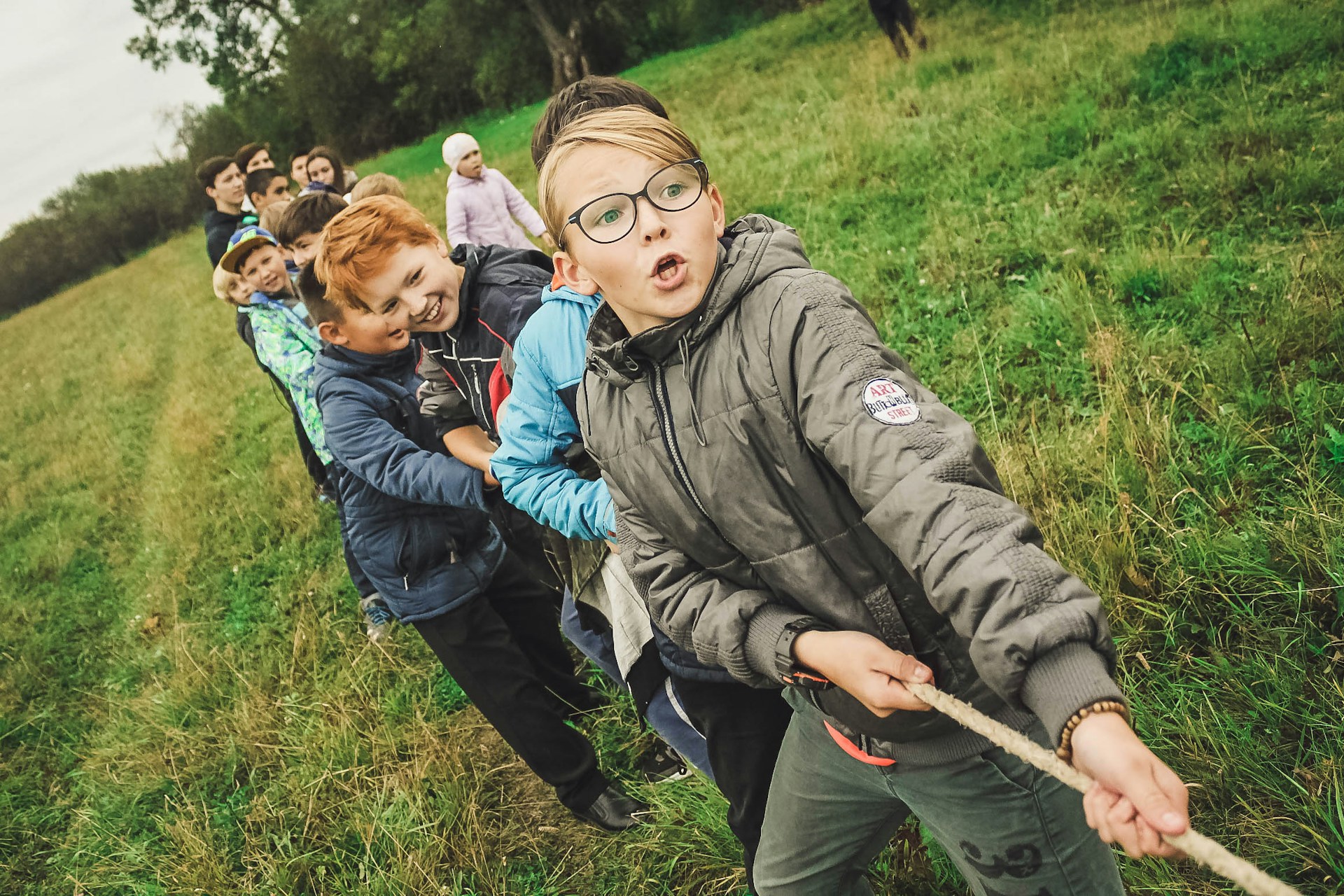
Photo by Anna Samoylova on Unsplash…my eye is on the girl in pink who’s walking away from the rope (I bet you didn’t notice her at first)
Emotional energy is the most important personal resource for a leader. Leadership is demanding. Leading is a verb and that action requires a tremendous amount of energy, emotional energy.
If your emotional energy reserves are low, your leadership will suffer.
What is Emotional Energy?
Emotional energy is your internal fuel tank. It’s what keeps you motivated, resilient, and mentally strong. For leaders, high emotional energy is essential. It fuels your ability to inspire and guide your team. When you’re full of energy, you’re more positive, proactive, and effective.
Emotional Energy Drains
Several things can sap your emotional energy:
Troubles at Home: Personal issues and family conflicts can weigh heavily on your mind, leaving you drained.
Doing Too Much at Once: Multitasking and overcommitting can lead to burnout.
Feeling Like a Failure: Constant self-doubt and feelings of inadequacy can deplete your energy.
Worrying About Small Stuff: Focusing too much on minor details that don’t matter will waste your energy.
Emotional Energy Boosters
To keep your emotional energy high, think and act strategically:
Prioritize energizing activities: Engage in things that make you happy and relaxed, like hobbies, exercise, and spending time with loved ones.
Eliminate Energy Drains: Identify tasks and responsibilities that drain you and find ways to reduce or eliminate them. Delegate when possible and don’t be afraid to say no.
Practice self-care in your daily habits: Make time to get enough sleep, eat well, and have quiet time for your brain to relax. Purposely practice gratitude, take breaks, and prioritize good boundaries around your work-life schedule (this last one will take some effort, but the payback is huge).
Create a supportive environment: Surround yourself with positive people both at work and home. Foster open communication and a culture of mutual respect and understanding. Recognize and celebrate achievements…when was the last time you wrote a personal email or sent a handwritten card to someone congratulating them on an achievement or milestone?
Emotional Energy and Leadership
When your emotional energy is high, you’ll handle challenges better, inspire your team more, and maintain a positive outlook. Your positive energy will ripple across your team and multiply the potential for the entire organization.
What will you do today to protect and recharge your emotional energy?
More importantly, how will you use it to transform your leadership approach tomorrow?
p/c – yours truly at a small lake in Hillsdale, Michigan. An energizing place for some quiet time.
You must be logged in to post a comment.