Each of us has a natural speed. A rhythm that feels comfortable. Some of us move fast, always pushing, never stopping. Others take a slow, methodical approach. And some avoid movement altogether.
Occasionally, we can shift gears and speed up for a short-term need. But the comfort of our standard speed usually draws us back.
Dialing up is hard. It’s difficult to imagine doing more than we’re doing now. It’s harder still to visualize the better outcomes that could come from pushing ourselves and our organizations beyond the status quo.
Even worse is when we deliberately slow our pace to fit in. To blindly match our rhythm to those around us, in our workplace, our social circles, our environment. The groups we allow to shape us.
The slow, almost imperceptible tick-tock of our internal metronome feels safe, especially if it’s set to someone else’s rhythm. It’s predictable. It gives us a (false) sense of control when we have no control at all.
We tell ourselves that changing our settings would bring chaos. Better to stay safe and avoid the challenge.
If we’re willing to turn our settings down to accommodate others, why not turn them up to pursue our own goals?
Why not push beyond our comfort zone to improve, to evolve? Why not try to inspire those around us to ramp up?
The things we don’t change are the things we’re actively choosing. Doing nothing is a choice.
Life moves at a relentless pace, largely outside our control. What we can control is our response. We can set our internal rhythm to match what’s happening or set it to create what we want to happen.
Here’s a brutal truth: The outside world doesn’t grant or deny us anything. It keeps moving, with or without us.
It’s up to us to set our own tempo—not for the group, not for the organization, but for ourselves and the people who matter most.
“…climbing 10% of the mountain ten times is not as useful as climbing to the top once.” – Adam Mastroianni
This quote reminds me of the old adage about project resourcing: sometimes projects can’t be completed faster merely by adding more people to it. After all, the story goes, nine women can’t make a baby in a month.
Does this climbing quote ignore our preparation? Route scouting, equipment testing, and countless workouts that make the summit climb possible. Not to mention the like-minded team we built to support the climb.
Maybe it’s not about preparation. Maybe it’s about the false-starts, the simulated progress, the big talk and no action that we engage in to make it seem like we’re climbing when we’re not. We think we’re fooling everyone, but we’re only fooling ourselves as we take the comfortable way out and choose not to climb at all.
It’s easy to climb 10% of the mountain or achieve 10% of the goal. It’s easy to get 50%. 60%. Even 75%. But as the challenges compound near the top, we let doubts creep in. The grinding effort becomes exhausting. We lose sight of the summit or forget why we’re climbing in the first place.
We make excuses. We can come back another day and try again. The summit will always be there, and maybe next time…
That’s just it. We’re rarely “ready” for the climbs that matter, whether in business, fitness, or life’s hardships. Waiting for the perfect time often means waiting forever.
You have the power to choose the summit run every time. Committing 100% effort, even when you feel 60% ready. Trusting that you’ll figure out the rest along the way.
Life’s summits rarely wait for us to feel ready. The question is: will you take the first step…and then push beyond 10%, all the way to the top?
There’s nothing like your own bed, your own pillow, and nice warm blankets when it’s time to sleep. To confirm this truism, try backpacking for a few nights in freezing conditions. Your lightweight sleeping pad and mummy sack might keep you alive, but they’re no match for the comfort of home.
Or spend a couple of weeks living out of a suitcase, hopping from one hotel bed to another. It’s rare for a hotel bed to be anything but “hammock-shaped” with giant pillows that defy logic and offer little comfort.
We all love to be comfortable. Ask most people, and they’ll tell you they’d rather sit at home in their jammies in their favorite chair, watching their favorite movie with their go-to snacks and drink in hand.
Comfort is easy. It requires little effort, and even less thought.
It’s safe, predictable, and free of fear. We know exactly how to achieve it, and we stay there because it feels good.
That’s the problem. Comfort is about staying. It’s about achieving sameness.
Growth doesn’t happen in comfort. The magic begins when we step outside our cozy bubble.
Trying new things, exploring unfamiliar places, or learning new skills rarely feels comfortable at first. It’s awkward and often frustrating. But with time, practice, and patience, we adjust. The uncomfortable becomes comfortable. We expand our boundaries. We redefine what normal feels like.
We grow.
Comfort is incredible. It’s that perfect combination of warmth, ease, and familiarity. It offers a necessary break from life’s challenges. But if we make it our ultimate goal, it lulls us into complacency. It encourages us to settle, to avoid risks, to stop growing.
Celebrate the moments of comfort when they come. Appreciate them for what they are—a place to rest and recharge. But don’t let comfort hold you back.
Your mood when you wake up. Waking up on the wrong side of the bed is your choice. You alone decide how you’ll approach each new day.
Your morning routine. What’s included or excluded? How much time are you providing for yourself in the morning? Are you rushing, or welcoming the day at the pace of your choosing?
The tone of interactions you have with others. Are you smiling when you’re talking (whether in person or by phone)? Are you looking for faults in others, or the good in others? The energy you bring is your choice.
Your career choice. Unhappy at work? What are you doing to change it? Are you changing your situation, or just complaining. Not sure if you should work in your chosen profession? What are you doing to figure it out? If this profession isn’t for you, what concrete steps are you taking to prepare to work in another profession? You decide all of it.
Whether you choose to manage your day, or let it manage you.
The places you visit and frequent.
Your hobbies. Do you even have a hobby, or are you too “busy” for anything that brings you joy or peace outside of work?
Your friends. Are they lifting you up or bringing you down? Jim Rohn said, “You are the average of the five people you spend the most time with.” Choose wisely.
The organizations you choose to join or support.
This list only scratches the surface.
It’s easiest to let someone, or something, else make the decisions for you. But remember—choosing not to decide is a decision, and you own it.
So, what kind of day will you have? What kind of life will you live?
Pick any project—it doesn’t matter if it’s something you’ve assigned to yourself or something your boss has given you. It could be a huge, long-term project, or something that should take less than a week.
Chances are, that project will turn out to be harder than expected. It will require effort that nobody saw during the planning process (whether planning consisted of a 5-minute conversation, or a multi-month series of meetings and discussions).
Here’s something else about projects: even when we’re given full ownership, most of us will try to find ways to make sure we’re not fully responsible for the outcome.
But no matter what, the project remains. We own it. We also own the goal of getting it done right.
“The man who moves a mountain begins by carrying away small stones.” – Chinese Proverb
Progress is made through consistent effort, one step at a time. Then another. Then another. It’s the steps toward the goal that matter, almost as much as the goal itself.
What if some of the steps we take are the wrong ones? What if we have to go back and redo some of our work? What if somebody sees us make mistakes along the way?
Each of these are (almost) guaranteed to happen.
Embrace it. Learn from it. Carry on.
Keep stepping forward. Learn along the way and give yourself permission to take a step (or two) back from time to time.
A professional manager understands that managing is an active role. It requires proactive effort, not just sitting back and overseeing tasks. A good manager knows how to delegate responsibility and authority. It’s a key skill that helps multiply their impact and develop the next generation of leaders.
There’s no shortage of books and articles that dive deeply into the art of delegation. Many are worth reading and putting into practice. But here’s the thing: no matter how much you delegate, you can’t delegate your influence. That personal touch—the way you listen, share your perspective, and guide the conversation—is something only you can bring to the table.
Managers have a unique viewpoint. They understand the critical questions facing the organization in a way others often don’t. Their value lies in their ability to communicate directly, to really hear what’s being said (and often what isn’t), and to guide the organization toward the right path. That’s what makes their influence so crucial.
Now, picture this: a manager sends one of their team members to a meeting with internal customers. The goal? For the subordinate to represent the manager’s ability to listen, understand, and guide the discussion. Sure, it can work if that person has full decision-making authority and can make agreements that hold the manager accountable. But that’s rarely the case.
So, we come back to the reality: a manager has to prioritize where they spend their time and energy, making sure they’re showing up where their influence is most needed. It’s not just about sitting in meetings or making decisions on the fly—it’s about really understanding the dynamics in play, both spoken and unspoken.
A manager’s influence over the direction of projects, processes, and people can’t be handed off. At best, subordinates can carry a “shadow” of that influence. It might get the job done, but it’s not likely to push the organization in the bold direction it needs to go.
In the end, while delegation is a powerful tool, influence is personal. And if you’re serious about leading, you need to make sure you’re showing up where it counts.
When faced with overwhelming and unwieldy tasks, the metaphor about “eating the elephant” reminds us that the only way to tackle it is one bite at a time.
Whether it’s a major project, a personal goal, or a tough decision, the key is to start. Too often, we fool ourselves and others by dancing around the elephant, procrastinating or overplanning.
This dance—making elaborate plans, seeking endless advice, or justifying delays—can feel productive but only serves as a distraction. Real progress begins with that first bite.
Start somewhere, however small, and build momentum from there.
I’m working on an autobiography of sorts. It’s a compilation of my answers to a series of questions. There are about 75 of them that act as prompts. Here are some examples:
Tell me about your childhood home.
What were your school days like?
What was your favorite fashion trend when you were a kid?
How did you meet your spouse?
The idea is that my kids and grandkids and anyone else who’s interested can learn more about my life as they read through my answers to these questions. It’s been a fun project that I’ve been working on over the past 3-4 months.
I just finished answering this question and thought I’d share my answer here:
Can you share a favorite quote or saying of yours?
Life is a journey, not a destination.
I’m not sure who said this first. It’s something I said for years before learning that it was a famous quote from someone else. Turns out there are posters and artwork that you can buy that highlight this quote. Maybe I saw the quote decades ago and it lived in my subconscious mind until later in life.
I don’t have anything against goal setting or visualizing a future and going after it. But it’s important to avoid having tunnel vision in your pursuit of goal achievement since you may miss other opportunities and experiences that introduce themselves along the way.
I’m reminded of a drawing of a stickperson on a ladder. They are locked in on their goal: reaching the top of that ladder before anyone else. This person even jumps over someone and kicks another person off the ladder in their effort to reach the top first. When this person finally reaches the top, they find that the ladder doesn’t actually lead anywhere. Their ladder is standing in the air and not leaning against anything.
The lesson is to make sure the ladder you’re climbing is going somewhere you really want to go.
When you reach your goal, no matter how lofty and difficult it was to achieve, you are merely at a new starting point or more accurately, you’ve made it to one of an infinite number of stops in your life-long journey.
The real goal should be to maximize your enjoyment of the journey itself. To appreciate the small things that happen, the surprises, the diversions, the successes and the failures, the people you meet, and the places you get to experience along the way.
Life is that thing that happens while you’re busy making other plans.
This one is closely related to the first quote. Life is a series of “nows” that are happening in real-time. You can make plans, point yourself in a particular direction, and even tell yourself that you’re in control of all the things that are happening in your life (spoiler alert – you’re not in control of all the things, you only control your response to all the things).
The time to start something new or something that will improve your life is always six months ago. While you’re busy talking about your future, it’s already happening. That thing you’re thinking about doing today but procrastinating while you do more planning will become that thing you should have done six months ago.
Plans are valuable, and you should have a broad plan with some key pillars that you can stand on throughout your life. It’s equally important to avoid hiding behind the planning phases of your life and forgetting to live your life purposely. It turns out that life’s happening anyway, so you might as well live it proactively and not reactively.
These are the good times.
The shortened version of this among friends is, “Good times.” Meaning these are the good times we’ll look back on fondly when we get older. No matter how screwed up something is, or how hard the thing you’re doing right now is, or how much you just failed… all of it will be lumped into your mind and memory as “good times” from your past.
In fact, some of your worst life experiences or life failures might even become the fondest memories you share in the future. You might reflect on how great something was, or how it was good that you had that failure or that heartbreak so you could apply what you learned later in life.
It’s unfortunate that we usually don’t realize this when these things are happening to us in the present.
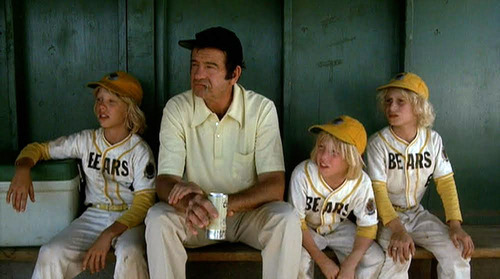
Park league baseball season came to an end recently. We had four grandsons between the ages of 8 and 10 playing on teams. The teams had a few “veteran” players, but for most of the players this was their first experience playing organized baseball. They had a lot to learn…and we saw amazing improvements in all the players in one short season.
It’s clear that the lessons they learned can extend far beyond the field, if we are willing to pay attention.
Panicking When the Ball Comes
My most vivid memory from the season is seeing the panic for many of the kids when the ball would come their way. Will they catch the ball? Where will they throw it once they have it? Do they know why they’re throwing it in a particular direction? Will the player they’re throwing to catch the ball?
The drama was real. It was clear that a lot of the kids didn’t expect the ball to come toward them. I saw a few kids jump away from the ball to avoid fielding it.
As a spectator, it’s easy to see what’s happening. It’s easy to assume that surely, we’d field the ball properly, and immediately know where to go with the play.
It’s not always as easy as it looks. Unexpected situations arise, and our response (or lack thereof) can significantly impact what happens next. Learning to stay calm and doing some pre-thinking about our actions (before the play) will significantly improve our chance of success.
Understanding Game Situations
Many young players struggle with understanding the game situation—who’s on base, how many outs are there, what’s the best play to make when the ball comes to them, and how to act strategically.
This lack of situational awareness highlights a crucial lesson: the importance of context and awareness in decision-making. Understanding the bigger picture allows for more informed and effective actions. The coaches encouraged the kids to think ahead (pre-thinking) and consider various outcomes. Whether the kids listened and embraced their advice was another thing entirely.
Are you thinking about your “game” situation? The macro and micro aspects of the challenges you and your organization are facing. Are you thinking ahead and considering various outcomes as part of your decision-making process?
Learning the Basics: Throwing and Catching
It’s not uncommon for young players to throw the ball the wrong way or miss it entirely. These fundamental skills require practice and patience. This aspect of the game underscores the importance of mastering basics before tackling more complex tasks. In any field, solid foundational skills are essential for success. Nearly every pursuit or profession has basic foundational skills that need to be mastered along the way toward more advanced skills. A football analogy fits well here…it’s important to understand the blocking and tackling part of the game before you can advance to running with the ball.
Position-Specific Skills and Aspiration
In youth park league baseball, most of the hits stay in the infield. This leaves the outfielders without much to do. I heard lots of outfielders wishing they could play an infield position like second base, or catcher. None of them understood what those positions entailed, but they knew that those positions had more action.
A few of them took the time to learn about the infield positions from their coach. They showed their interest and willingness to work their way to the infield. This shows the value of preparation and skills development. It’s important to work on the necessary skills before aiming for a specific role, whether in sports or any other endeavor. It also emphasizes the value of seeing a goal and then taking the concrete steps to learn, grow, and achieve that goal.
Strikeouts Aren’t Failures
Consider that an excellent hitter in the big leagues gets a hit about 30% of the time. They may get walked occasionally, but the rest of their at bats result in fly outs, ground outs, or strikeouts.
We saw a ton of strikeouts this past season. I was always impressed with the kids who struck out and immediately came back to the dugout to ask their coach what they should be doing to avoid striking out next time. Each strikeout was a learning opportunity…but only if the player saw it that way.
We saw a few kids melt down in disappointment and embarrassment. One kid from an opposing team stomped off the field and took himself out of the game (an extremely negative response to be sure).
When things go wrong, or we don’t get the result we want, that’s the time to buckle down and learn why it happened. Consider ways to improve so the results can improve next time. It’s only a failure if you give up.
Teamwork and Collective Goals
We are all self-centered. As we mature, we usually learn how to control our self-centeredness or at least how to channel it productively. Ten-year-old kids are no different. Their focus is on their own performance. Whether or not they’re hitting the ball. Whether or not they made the right play.
They often forget that the goal is for their team to win. They can help the team achieve that goal by having a strong performance, but also by helping and supporting their teammates. This is a powerful reminder of the importance of teamwork and the collective effort required to achieve a common goal. It’s easy to get caught up in individual performance, but true success usually comes from working together and supporting each other. Collaboration and shared successes build strong teams. Strong teams create successful outcomes.
Consistency Matters
Ask an excellent bowler, pitcher, batter, shooter (basketballs or bullets), pole vaulter, or pickle ball player how they deliver such excellent results. They’ll mention practice, dedication, and a strong mental approach. Eventually they’ll talk about consistency. Each of these pursuits (and countless others) require consistency above all else. The exact motions, body positions, eye contact, and calmness of breath that they can count on happening whether they consciously think about it or not.
Their practice process is all about achieving repeatable actions that their body remembers…every time. They also know that they aren’t swinging for the fences every time they’re at bat, not trying to set the world record or do something extraordinary with every outing.
They are working to become a steady and consistent performer at the highest level possible…and always reaching a little higher.
Consistency, patience, and incremental progress should be the goals…repeatable excellent outcomes will happen as a result of achieving these goals.
Park league baseball is a ton of fun. The drama is real. Teams experienced the “thrill of victory and the agony of defeat” throughout the season. We saw players improving and gaining confidence as the season unfolded.
I don’t know where the teams ended up in the standings at the end of the season.
I know the kids learned a lot and hopefully they’ll incorporate some of what they learned well beyond the game.
Emotional energy is the most important personal resource for a leader. Leadership is demanding. Leading is a verb and that action requires a tremendous amount of energy, emotional energy.
If your emotional energy reserves are low, your leadership will suffer.
What is Emotional Energy?
Emotional energy is your internal fuel tank. It’s what keeps you motivated, resilient, and mentally strong. For leaders, high emotional energy is essential. It fuels your ability to inspire and guide your team. When you’re full of energy, you’re more positive, proactive, and effective.
Emotional Energy Drains
Several things can sap your emotional energy:
Troubles at Home: Personal issues and family conflicts can weigh heavily on your mind, leaving you drained.
Doing Too Much at Once: Multitasking and overcommitting can lead to burnout.
Feeling Like a Failure: Constant self-doubt and feelings of inadequacy can deplete your energy.
Worrying About Small Stuff: Focusing too much on minor details that don’t matter will waste your energy.
Emotional Energy Boosters
To keep your emotional energy high, think and act strategically:
Prioritize energizing activities: Engage in things that make you happy and relaxed, like hobbies, exercise, and spending time with loved ones.
Eliminate Energy Drains: Identify tasks and responsibilities that drain you and find ways to reduce or eliminate them. Delegate when possible and don’t be afraid to say no.
Practice self-care in your daily habits: Make time to get enough sleep, eat well, and have quiet time for your brain to relax. Purposely practice gratitude, take breaks, and prioritize good boundaries around your work-life schedule (this last one will take some effort, but the payback is huge).
Create a supportive environment: Surround yourself with positive people both at work and home. Foster open communication and a culture of mutual respect and understanding. Recognize and celebrate achievements…when was the last time you wrote a personal email or sent a handwritten card to someone congratulating them on an achievement or milestone?
Emotional Energy and Leadership
When your emotional energy is high, you’ll handle challenges better, inspire your team more, and maintain a positive outlook. Your positive energy will ripple across your team and multiply the potential for the entire organization.
What will you do today to protect and recharge your emotional energy?
More importantly, how will you use it to transform your leadership approach tomorrow?
p/c – yours truly at a small lake in Hillsdale, Michigan. An energizing place for some quiet time.









 Grandpa Bob Encouraging Leadership
You must be logged in to post a comment.