Self-Talk

Consider the amazing power that something quieter than a whisper (the silence of our own thoughts) has over each of us.

It’s not what you say out of your mouth that determines your life.  It’s what you whisper to yourself that has the most power. –Robert T. Kiyosaki

The first person to give you feedback is yourself…in the form of self-talk.  You have 24/7 access to your internal talk track.  Your messaging is unfiltered and brutally honest.

Does unfiltered and honest mean accurate?  Does it mean valuable?  Not necessarily.

The truth is that no matter how incorrect your self-talk is, or how much you try to ignore it, you are your most trusted advisor.  You have the most power over yourself (for better or worse).

Negative self-talk is easy.  Bad news travels fast, especially when it doesn’t have to travel.

Positive self-talk is harder, and sometimes difficult to believe.  Our positive self-talk can sound a bit crazy, which makes it easier to discount.

Status quo is powered by doubt in our positive self-talk.

The most successful people I know face challenges with self-talk.  They happen to believe their positive self-talk just a little more than the negative.

The negative is right there, trying to hold them back.  Somehow they’ve found a way to focus on the positive, finding ways to push past their wave of doubt.

They’ve usually found kindred spirits who can help strengthen their positive self-talk.  A support network that reinforces their crazy ideas.  The best support network doesn’t fully buy-in to the crazy.  They merely create an environment where it’s okay to explore the crazy.  To bring it out in the open and let it breathe a little.

And, that’s the real secret of self-talk.  We all have negative and positive self-talk rolling around in our heads.  But, if we can allow the positive to get a little breathing room, that’s usually all it takes to win the internal battle against the negative.

Here’s the challenge:  The war between negative and positive is never over.  You have to win it one battle at a time.

The Puzzles We Build

In our house, whenever we started a puzzle, it was an “all-hands-on-deck” affair…


jigsaw-puzzle_pieces

When was the last time you assembled a puzzle?

Did you do it yourself, or did you have help?

How long did it take to assemble?  Minutes?  Hours?  Days?

In our house, whenever we started a puzzle, it was an “all-hands-on-deck” affair.  We’d all start working it.  Some of us would focus on organizing the pieces to make them visible.  Others would dive right in and start putting pieces together.

I worked the edges.  It’s the only thing that helped me get my bearings on the puzzle.  Start with the flat sides and establish a border…then work into the middle.  Working from the middle, out, was way too random for me.

“Hey, does anyone want some hot chocolate?” always seemed like a good question for me to ask after about a half-hour of diligent work.  With marshmallows.  Without looking up, I’d get some slow yesses and a few grunts.  By the time I came back with the hot chocolate, I was always amazed at the progress.

I’d get back to working the edges.

Each of us had our specialty and our own pace.  Some of us were easily distracted (me).  My wife would stay focused for hours…one piece at a time.

“Hey, who’s up for a break from the puzzle?  Maybe we can hit it again in a couple of hours with fresh eyes.”  I was always a proponent of fresh eyes.

But, then we’d get most of the edges completed.  I’d get my own personal rhythm, and I could start to see the patterns.  The puzzle started to take shape.  First, in my mind and then on the table.  My perspective on the puzzle and my ability to add value to it changed as the image emerged from all the pieces.

I don’t know if my wife and daughters (or anyone else who’d stop by and get sucked into the assembly project) went through the same evolution in their perspective as I did.

Our latest puzzle is a new business (actually, an existing business that we recently purchased).  Once again, our family is building a puzzle together.  This time, it’s not at the dining room table with a clear picture of the final product.  In fact, new pieces are being added to this puzzle all the time.

Once again, we’re each approaching the puzzle in our own way.  Center-out.  Edges-in.

Distractions?  Definitely.

Is an image beginning to emerge?  Yes.

The best (and most challenging) aspect of this puzzle is that it’s never finished.  It grows and evolves.  It occasionally leaves us feeling a bit perplexed.  But, it also takes beautiful shape before our eyes as we continue to build, one piece at a time.

Anyone up for some hot chocolate?  We’re gonna be here a while!


Are You Willing?

All that matters is learning what you believe in…

“I know this now.  Every man gives his life for what he believes.  Every woman gives her life for what she believes.  Sometimes people believe in little or nothing, and yet they give their lives to that little or nothing.  One life is all we have and we live it as we believe in living it and then it’s gone.  But to surrender what you are and to live without belief is more terrible than dying—even more terrible than dying young.”  –Joan of Arc

Joan of Arc lived less than twenty years.  Yet she fought for her beliefs and made a huge impact on history.  She died for her beliefs at an age when many are just beginning their life’s journey.

She knew what she believed in.  She knew what it meant to sacrifice for her beliefs.  Ask anyone who serves or served in the military, a first responder who runs into a burning building to save others, or a newly formed priest who has answered God’s call.  These are just a few examples.  Each of them know what it means to sacrifice for their beliefs.

Sometimes our beliefs emerge quietly without our knowledge.  We go through life, making seemingly inconsequential decisions about what we will and won’t do.  We decide who our friends are, and how much we will let them into our lives.  We decide when to listen.  We decide how honest we will be with the world around us.

We establish habits for living our life, and we go on our merry way.

Do you know what you believe in?  Really?  Do you know what you believe to be true?  Do you know what is important in your life?

Have you made the quiet time in your life that’s necessary to consider these questions?

What if it turns out that the things you believe in aren’t manifested in the way you live?  Are you willing to change your habits?  Are you willing to eliminate the things that don’t support your beliefs?  Will you support your beliefs in the way you live, and the way you work with others?  Are you willing to make your beliefs the centerpiece of your actions in everything you do?

Joan of Arc was right.  One life is all we have, and then it’s gone.

Where are you in that one life?  Is it too late to examine your beliefs and change the way you live?

The answer is clear  But, it won’t become obvious until we make quiet time in our lives to reflect.  When we do, we find it’s never too late to examine our beliefs and change our life.

Every day is a new beginning if we choose to make it so.  It doesn’t matter what happened in the past.  It doesn’t matter who wronged you.  It doesn’t matter if you had a terrible childhood.  It doesn’t matter if you’ve missed opportunities in the past.  It certainly doesn’t matter if you failed in the past.

All that matters is learning what you believe in.  Then, deciding what to do with that new knowledge, starting today.

The only question is:  Are you willing to find out?


Beliefs and Values

h/t:  Matthew Kelly

Speed bumps and walls…

…have a few things in common. Both force us to pay attention, slow down, and (sometimes) change course…

speed-bump-warning-sign

…have a few things in common.  Both force us to pay attention, slow down, and (sometimes) change course.  In many ways, speed bumps are merely walls that are short enough to get over with minimal effort.

Unlike speed bumps, walls are there to stop us, contain us, to protect something we’re not supposed to see, or maybe provide protection to something we don’t want others to see.

Is that nasty cold you have a speed bump or a wall?

How about the job you had until last week?  Is losing that job a speed bump or a wall?

Is the macro-economic forecast for 2% or less in U.S. Gross Domestic Product growth a speed bump or a wall?

Is bad weather (however you define the term bad) a speed bump or wall?

The death of a loved one?  Speed bump or wall?

The diagnosis you received from your doctor that has you wondering how long you have to live this life you love.  Speed bump?  Wall?

Meeting the person of your dreams and falling in love.  Speed bump or wall?  Surprise!  Good news introduces speed bumps and walls, just like bad news.  Of course, good news can also knock down walls.

When the news first hits, it almost always looks like a wall.  Only after further reflection, maybe some quiet meditation, a hard workout(s), discussions with our friends and family, enjoying a bowl of our favorite ice cream, watching some sunrises and sunsets, or all of these, do the walls start to look shorter.

As the walls lose their height, they may disappear from sight, or take the shape of speed bumps that we can handle.

Some walls are high and stay that way.  If we can’t climb over, we learn to change direction and find a way around.

What if we can’t climb over, can’t change direction, and the high walls continue to surround us?  Should we give up?

No way!

We build our expansive life inside the new walls and never drop our quest to escape…even if we have to dismantle the walls one brick (or chisel strike) at a time.

Do you remember that guy who gave up?  Neither can anyone else.  –Author Forgotten

There’s a crack in the gutter where a flower grows…

They’re not supposed to be there. It should be impossible for them to grow…

Pandora is awesome.  I was listening to my Happy Radio channel the other day when this song called Hey, Hey, Hey came on.  It had a catchy tune, and some of the words seemed nice when I chose to listen closely.  It was my first time hearing it, but I knew it had been around a while.

Somewhere in the middle of the song I hear:

There’s a crack in the gutter where a flower grows

Reminding me that everything is possible
Yeah, reminding me that nothing is impossible
You gotta live for the one that you love you know
You gotta love for the life that you live you know

Singing hey, hey, hey
No matter how life is today
There’s just one thing that I got to say
I won’t let another moment slip away

That got my attention.

How many times have you seen a plant (sometimes a weed, but that’s really in the eye of the beholder) growing out of a crack in the sidewalk, or the gutter?  How about the tree that figures out how to grow from within a cracked boulder?

They’re not supposed to be there.  It should be impossible for them to grow.  Yet, there they are.  Thriving in the most inhospitable of environments.

Each of us have the same ability to overcome adversity.  To be the flower growing in the crack in the gutter.  To grow and thrive in our little corner of the world, making a small but important difference to those around us.

Life is a journey, and it can be a struggle.  But, it’s also a triumph, and an opportunity to make our mark in places nobody (including ourselves) would ever expect.


Here’s the whole song…and, yeah, it’s been around since 2010.  Only took me five years to notice it (not good for my hipster cred):  Hey, Hey, Hey


ASSUME…The Most Powerful Word in Leadership

Assuming a leadership role is much more than merely accepting the new position.

Bad-News-Bears

I remember the first time I saw someone dissect the word, assume.

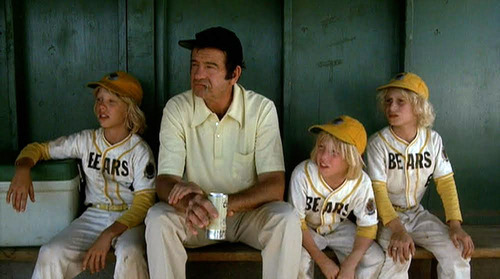
It was in The Bad News Bears (the Walter Matthau version in 1976).  The Bear’s coach, who would later be replaced by Coach Buttermaker (played by Matthau), was lecturing the team on his philosophy of coaching.  He wrote the word ASSUME on a chalkboard.  He said they should never assume.  “Whenever you ASSUME, you make an ASS out of YOU and ME.”

To my pre-teen mind, this sentence was amazing on two fronts.  It showed that a cuss word can be buried inside a regular word.  Quite a revelation.  It also showed that one should never assume anything in life, because, well, you know the rest of the sentence.

Since then, I’ve learned there’s a lot more to the word ASSUME.  In fact, it is the essence of becoming a leader.

Consider some phrases that describe a new leadership position:

-She took on the new team lead position.

-He received a promotion to supervisor.

-She was hired to replace the manager who just left.

-They created a new management position for him.

-We are happy to announce we’ve brought on Jeff Smith, who will be our new General Manager.

Sure, all of these describe important leadership roles.  There’s some person filling each slot.  We know whose name is in which box on the org chart.

But, can we assume they are a leader?  Maybe, maybe not.  Remember what happens when we assume.

Leaders are those who assume the mindset and perspective needed to actually lead others.  When a leader assumes their role, they’re stepping into the ownership position.  They own their role.  They own the direction.  They own the outcomes.  They spend their time on offense, rather than preparing their defense.

More importantly, when they assume their leadership role, they become the servant to those they lead.  They realize that nothing happens without the people they’re leading.  They look for opportunities to multiply their efforts and the efforts of those they lead.

Assuming a leadership role is much more than merely accepting the new position.  In fact, it often has nothing to do with your current position in the organization.  You can (and should) be a leader long before you’re granted the position by someone else.

Look around your organization.  Who are the true leaders?  You’ll probably notice that they’re the ones who have fully assumed the role.


What’s it Gonna Take?

The biggest cost often isn’t in dollars…

Questions that (should) open our thinking to new possibilities:

  • Why?
  • Why not?
  • How might we?
  • Why don’t we?

Questions that point us toward solutions:

  • Which strategy fits best?
  • What if we…?
  • How do we get started?
  • How can we make this work?

The real question to be answered before anything actually happens:

What’s it gonna take?

What’s it gonna take to:

  • Start?
  • Find the girl (or boy) of my dreams?
  • Buy this house?
  • Get the job I want?
  • Forgive?
  • Get this project moving?
  • Get this person hired?
  • Run a marathon?
  • Find the real meaning in life?
  • See the Eiffel Tower?  Iceland?  The Northern Lights?
  • Stop pretending we have it all figured out?

Each decision, each action, and each direction you choose carries a cost.

That cost will be in dollars, time, energy, commitment, pride, comfort, or a combination of these.  There’s also the opportunity cost associated with choosing one direction over another.

The biggest cost often isn’t in dollars.  It’s in our pride and comfort.

How much time will you give to an idea?  What if you’re wrong?  Are you willing to risk embarrassment?  Is it worth thousands of dollars to see the Eiffel Tower?  Are you willing to step outside your comfort zone to try something new?

There’s no such thing as a free decision.  And, the decision not to decide carries its own costs.

The challenge is understanding what it’s gonna take, and having the willingness to pay.

The Power of Excuses

Excuses are what we say to ourselves long before we use them on…

“If you really want to do something, you will find a way.  If you don’t, you will find an excuse.”  -Jim Rohn

Excuses have the power to stop almost anything.

Excuses are what we say to ourselves long before we use them on anyone else.

Excuses offer protection from responsibility.

Excuses help us cling to the status quo.

Excuses eliminate the need to take a risk.

Excuses stop us from reaching out to others when they need us most.

Excuses rob us of our potential.

A well-crafted excuse can justify a lifetime of inaction, with only one sentence.

Excuses are easy to find, and even easier to use.

The sad irony about excuses is that their power only impacts the person giving the excuse.

Everyone else knows the truth about your excuse, even if they have their own excuse for ignoring it.

Where are You Aiming?

What if getting ready isn’t the first step?

“If you aim at nothing, you will hit it every time.”  -Zig Ziglar

Ready.  Aim.  Fire.

That’s the standard way to shoot at a target.  How many people actually follow these steps?

How many have you seen following other sequences:

Ready.  Fire.  Aim.

Fire.  Fire.  Fire.

Aim.  Aim.  Aim.  Aim.

Ready…  Ready…  Ready… (now what?)

Ready.  Aim.  Aim.  Aim.  Aim.  Aim.  Fire?  Fire?

Life is a series of choices.  A series of challenges.  A series of what if’s.

It’s impossible to know the true definition of “ready” in a life of endless possibility.  One can spend a lifetime “getting ready” for an outcome that may, or may not, happen.  The truth is, we are never fully ready.

What if getting ready isn’t the first step?  What if pursuing excellence is?

Excellence in whatever we do.  Excellence in the way we look at life.  Excellence in our contribution.  Excellence in the way we treat others.  Excellence in our expectations of ourselves and others.  When excellence is the target, the other steps become clear.

Pursue excellence.  Ready.  Aim.  Fire.  Adjust.  Pursue excellence.  Repeat.

Does excellence mean perfection?  No.  Pursuing perfection is a fool’s errand.  The good news is that by pursuing excellence we get a glimpse of perfection from time to time.

The target isn’t the real reward anyway.  That comes from the pursuit itself.


The Power of Elevated Thinking

Imagine the value of the person who looks for ways to help, instead of…

MarianneWilliamsonQuote


“The last IT guy had a diagram of the network, but since he left, I haven’t updated it to reflect the changes we’ve made.”

“The system was setup before I got here.  It’s not a good fit, but I’ve just been making do since I took it over.”

“This process ran pretty smoothly last year.  I don’t think the new guy has a clue about how it should work this year. This has failure written all over it.”

“I’ve seen it all in my time.  They’ve tried a bunch of new ideas to make things more efficient, but they never work.  I try to tell them they’re wasting their time, but nobody listens to me.”

“I wonder when the VP is going to notice how screwed-up this project is.  Everyone knows it’s a disaster, but him.”

“The more things change, the more they stay the same around here.”

How many times have you heard (or said) versions of these quotes?

It’s easy to point to problems with “the system.” It’s easy to blame the other guy, the other department, your boss, your employee, the customer(!).

Avoiding ownership is the easy way out.  It’s also the quickest way to ensure mediocrity and failure for yourself and your organization.

Imagine the possibilities if just one person in these hypothetical situations chose to elevate their thinking.  Imagine if they decided to own the search for the right solution.  What if they actively participated in making someone else’s solution a success?  Imagine the value of the person who looks for ways to help, instead of looking for ways to criticize.

There’s nothing stopping you from being that person…except maybe yourself.


By the way, have you read my book?  100’s have already (thank you!).  If you’re one of them, please do me a favor and tell your friends about it.  If not, it’s time to take ownership, and get yourself a copy!

All of my proceeds are going to two awesome groups who embraced the opportunity to take ownership of a problem:  Mothers Fighting for Others, and the Scleroderma Research Foundation.


Photo Credit