Why Manners Matter

“Manners are of more importance than laws. Upon them, in a great measure, the laws depend. The law touches us but here and there, and now and then. Manners are what vex or soothe, corrupt or purify, exalt or debase, barbarize or refine us, by a constant, steady, uniform, insensible operation, like that of the air we breathe in.” – Edmund Burke

-Why do we say Please and Thank You? 

-Why do we hold the door for the next person? 

-Why do we show respect for our elders? 

-Why don’t we interrupt someone when they’re speaking (at least, most of the time)?

Mostly because we were taught these behaviors by our parents, or someone in authority, when we were growing up.  We may have learned by being told explicitly, or by watching others that we admire acting in these ways. 

As Burke points out, manners are more important than laws.  They are fundamental in establishing the boundaries of our behavior, of integrating us within our community.

Manners show our respect for those around us.  They create a standard for how we work with others.    

Consider the manners (customs) that are in play where you work.  It doesn’t matter if you work in construction, nursing, information technology, or any other field.  If you work with people (which you always do whether they are your co-workers, your customers, or both), your manner of behavior will be critical to your success. Good manners create a positive environment, build strong relationships, and foster a culture of respect and professionalism.

Since we are creatures of habit, it’s easy to establish either a habit for lacking manners, or for having them.  The disciplined decision to operate your life within the bounds of good manners is a decision that will pay consistent dividends.  Good manners can be the foundation for a disciplined approach across all areas of your life.  When we are polite and considerate, we remind ourselves of our values and our commitment to treating others (and ourselves) with dignity.

The simple act of saying “Please” and “Thank You” (and meaning it) shows our vulnerability to others, and at the same time, our appreciation for what they have done for us.  Powerful ways to remind us of our humility and gratitude many times each day. 

Edmund Burke observed, “Example is the school of mankind, and they will learn at no other.”  Our behavior and proper manners will be a teacher to those around us, whether we intend it or not.  Our actions, grounded in good manners, can inspire those around us to adopt similar behaviors.

It’s easy for each new generation to look at the rules and traditions of prior generations (manners) as archaic, overly formalized, and irrelevant in their “new modern era.”   They may rationalize away the need for good manners on this basis.  However, dismissing the importance of manners can lead to a breakdown in social cohesion. Our challenge is to adapt the principles to modern contexts while preserving the core values of respect and consideration.

Manners are a timeless currency that never loses value—so spend them generously and watch how rich life can become.

p/c Robert Collins on Unsplash

Leadership Pitfalls: Don’t Be a Don Henry

Early in my career, during my time as an internal auditor, I learned a lot about people. I spent countless hours observing and interacting with individuals at all levels of organizations, from front-line employees to CEOs. This unique vantage point taught me a foundational lesson: the success of any organization usually hinges on the character and behavior of its leaders.

In our small audit teams, we developed a shorthand to quickly convey our impressions of the people we interviewed. We’d use these labels —like Adam Henry and Don Henry— to help summarize complex personalities in a few words. After interview meetings, we might describe our interviewee as a good guy, a solid operator, an Adam Henry, a Don Henry, or perhaps someone who was DUP, or DUC.

Let me translate those last four:

  • Adam Henry – Asshole
  • Don Henry – Dickhead
  • DUP – Definitely Unpleasant (not quite an Adam Henry)
  • DUC – Definitely Unclear (meaning they seemed like an idiot)

What’s the difference between an Adam Henry and a Don Henry? While both are problematic, the distinction lies in their approach and the impact on those around them. Adam might be uncooperative and arrogant, but Don takes it a step further—using their position to intimidate others and make them feel as dumb as possible.  Don loves to belittle people and fosters a toxic environment that stifles collaboration and creativity.

Were our shorthand judgments fair? They may not have been, but they were usually quite accurate based on our interactions. Remember, most people are on their “best” behavior when talking to an auditor (even though most of us would rather not talk to auditors). Imagine if they weren’t on their best behavior.

These judgments, though informal, often reflected deeper truths about the individuals we encountered. A company with too many Don Henrys, for instance, might struggle with low morale, high turnover, and a lack of innovation—challenges that will cripple long-term success.

There was nothing special about us, as auditors, making these assessments of the people we were interviewing. All of us make these assessments as we work with other people. These same assessments are being made about us by other people all the time.

Is this person a good guy, a strong operator, a pleasant person, a team player? Or are they on the opposite end of the spectrum? Should I trust this person to have my best interests at heart, or are they solely in this for their own gain at all costs?

Companies of all sizes, no matter the industry, are made up of human beings, working as a group (hopefully as a team, but not always) to achieve key goals (hopefully the organization’s goals).

If the people who manage a company are Adam Henrys, or worse—Don Henrys, that organization will have difficulty succeeding. They might succeed in the short term, but over a multi-year time horizon, these negative traits in the people managing the business will lead to poor morale, declining creativity, declining teamwork, and declining execution.

Recognizing and addressing “Don Henry” behaviors is crucial for any organization aiming for sustained success. Leaders who prioritize their team’s well-being, encourage collaboration, and foster a positive work environment are far more likely to achieve lasting results.

The next time you’re interacting with colleagues, ask yourself: Am I being an Adam Henry, a Don Henry, or something better?

p/c – Ben White, Unsplash.com

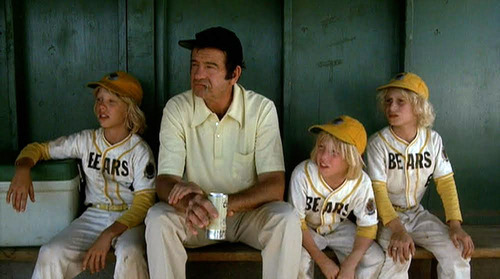
Hand me the ball…Life Lessons from Park League Baseball

Park league baseball season came to an end recently.  We had four grandsons between the ages of 8 and 10 playing on teams.  The teams had a few “veteran” players, but for most of the players this was their first experience playing organized baseball.  They had a lot to learn…and we saw amazing improvements in all the players in one short season.   

It’s clear that the lessons they learned can extend far beyond the field, if we are willing to pay attention. 

Panicking When the Ball Comes

My most vivid memory from the season is seeing the panic for many of the kids when the ball would come their way. Will they catch the ball?  Where will they throw it once they have it?  Do they know why they’re throwing it in a particular direction?  Will the player they’re throwing to catch the ball?

The drama was real.  It was clear that a lot of the kids didn’t expect the ball to come toward them.  I saw a few kids jump away from the ball to avoid fielding it.

As a spectator, it’s easy to see what’s happening.  It’s easy to assume that surely, we’d field the ball properly, and immediately know where to go with the play. 

It’s not always as easy as it looks.  Unexpected situations arise, and our response (or lack thereof) can significantly impact what happens next.  Learning to stay calm and doing some pre-thinking about our actions (before the play) will significantly improve our chance of success.

Understanding Game Situations

Many young players struggle with understanding the game situation—who’s on base, how many outs are there, what’s the best play to make when the ball comes to them, and how to act strategically.

This lack of situational awareness highlights a crucial lesson: the importance of context and awareness in decision-making. Understanding the bigger picture allows for more informed and effective actions. The coaches encouraged the kids to think ahead (pre-thinking) and consider various outcomes.  Whether the kids listened and embraced their advice was another thing entirely.

Are you thinking about your “game” situation?  The macro and micro aspects of the challenges you and your organization are facing.  Are you thinking ahead and considering various outcomes as part of your decision-making process? 

Learning the Basics: Throwing and Catching

It’s not uncommon for young players to throw the ball the wrong way or miss it entirely. These fundamental skills require practice and patience. This aspect of the game underscores the importance of mastering basics before tackling more complex tasks. In any field, solid foundational skills are essential for success. Nearly every pursuit or profession has basic foundational skills that need to be mastered along the way toward more advanced skills.  A football analogy fits well here…it’s important to understand the blocking and tackling part of the game before you can advance to running with the ball. 

Position-Specific Skills and Aspiration

In youth park league baseball, most of the hits stay in the infield.  This leaves the outfielders without much to do.  I heard lots of outfielders wishing they could play an infield position like second base, or catcher.  None of them understood what those positions entailed, but they knew that those positions had more action. 

A few of them took the time to learn about the infield positions from their coach.  They showed their interest and willingness to work their way to the infield.  This shows the value of preparation and skills development. It’s important to work on the necessary skills before aiming for a specific role, whether in sports or any other endeavor. It also emphasizes the value of seeing a goal and then taking the concrete steps to learn, grow, and achieve that goal. 

Strikeouts Aren’t Failures

Consider that an excellent hitter in the big leagues gets a hit about 30% of the time.  They may get walked occasionally, but the rest of their at bats result in fly outs, ground outs, or strikeouts. 

We saw a ton of strikeouts this past season.  I was always impressed with the kids who struck out and immediately came back to the dugout to ask their coach what they should be doing to avoid striking out next time.  Each strikeout was a learning opportunity…but only if the player saw it that way. 

We saw a few kids melt down in disappointment and embarrassment.  One kid from an opposing team stomped off the field and took himself out of the game (an extremely negative response to be sure). 

When things go wrong, or we don’t get the result we want, that’s the time to buckle down and learn why it happened.  Consider ways to improve so the results can improve next time.  It’s only a failure if you give up. 

Teamwork and Collective Goals

We are all self-centered.  As we mature, we usually learn how to control our self-centeredness or at least how to channel it productively.  Ten-year-old kids are no different.  Their focus is on their own performance.  Whether or not they’re hitting the ball.  Whether or not they made the right play. 

They often forget that the goal is for their team to win.  They can help the team achieve that goal by having a strong performance, but also by helping and supporting their teammates.  This is a powerful reminder of the importance of teamwork and the collective effort required to achieve a common goal. It’s easy to get caught up in individual performance, but true success usually comes from working together and supporting each other. Collaboration and shared successes build strong teams.  Strong teams create successful outcomes.

Consistency Matters

Ask an excellent bowler, pitcher, batter, shooter (basketballs or bullets), pole vaulter, or pickle ball player how they deliver such excellent results.  They’ll mention practice, dedication, and a strong mental approach.  Eventually they’ll talk about consistency.  Each of these pursuits (and countless others) require consistency above all else.  The exact motions, body positions, eye contact, and calmness of breath that they can count on happening whether they consciously think about it or not. 

Their practice process is all about achieving repeatable actions that their body remembers…every time.  They also know that they aren’t swinging for the fences every time they’re at bat, not trying to set the world record or do something extraordinary with every outing. 

They are working to become a steady and consistent performer at the highest level possible…and always reaching a little higher.

Consistency, patience, and incremental progress should be the goals…repeatable excellent outcomes will happen as a result of achieving these goals. 

Park league baseball is a ton of fun.  The drama is real.  Teams experienced the “thrill of victory and the agony of defeat” throughout the season.  We saw players improving and gaining confidence as the season unfolded.

I don’t know where the teams ended up in the standings at the end of the season. 

I know the kids learned a lot and hopefully they’ll incorporate some of what they learned well beyond the game.

Stepping Stones or Defining Moments? The Choice is Yours

Life is filled with stepping stones—moments that can either define us or simply become a small part of our journey.

When faced with challenges or opportunities, we can see them as just another step or as a moment for growth and clarity. Carl Jung once said, “I am not what happened to me, I am what I choose to become.”

I recently re-watched a documentary about the Navy SEALs.  Every Navy SEAL candidate faces grueling hardships: physical exhaustion, frigid cold water, mental strain, and the constant threat of failure.

Some candidates see each challenge as an opportunity, a chance to push beyond their perceived limits and grow stronger. They embrace the pain, keep their focus.  They find strength in their determination and their fellow candidates. These candidates transform the hardships into defining moments, emerging on the other side as Navy SEALs.

Others, however, let the same hardships overwhelm them. Fear, frustration, and exhaustion cloud their resolve. The challenges, instead of being opportunities for growth, become insurmountable barriers. These candidates wash out, not because they lacked physical capability, but because they couldn’t shift their mindset to see the hardships as stepping stones rather than obstacles.

None of us are born with skills.  It’s easy to watch some Youtube videos and think woodworking is totally doable.  Any new woodworker can attest to the uneven cuts, the wobbly joints, and the frustrations that can come from trying this new hobby.  But, by learning from the mistakes, honing skills through practice and even more failures, projects begin to go more smoothly.  The final products are less uneven and wobbly…and the process becomes much more enjoyable.    

Learning and growth come from our willingness to take lessons from every experience. Reflecting on each attempt, seeking feedback, and choosing to improve.  It’s the decision to learn from every encounter that turns these stepping stones into personal and professional development milestones.

However, clouding our experiences with fear, frustration, anger, or other limiting emotions can lead us to ignore the growth opportunities these experiences present. When we let negative emotions dominate, we risk missing out on valuable lessons that can propel us forward.

It’s difficult, but essential, to manage our emotions and maintain a positive outlook to fully benefit from the lessons we can learn. 

The stepping stones in our lives are all potential defining moments. It’s up to us to decide whether we let them pass by or seize the opportunity to let them shape us. We can turn every step into a defining part of our journey.

It’s not just about the stones we step on but how we choose to step on them that defines our path.

p/c – Joshua Earle, Unsplash.com

Six Months Ago…

I wish I had started eating healthier six months ago.


I wish I had started exercising six months ago.


I wish I had talked to my son’s teacher about the trouble he’s having with math six months ago.


I wish I had discussed my future career goals with my boss six months ago.


I wish I had started that podcast I’ve been thinking about six months ago.


I wish I had stopped wasting three hours per day watching YouTube videos six months ago.


I wish I had started adding principal payments to my mortgage payment six months ago.


I wish I had upped my 401k savings percentage six months ago.


I wish I had planted flowers in my garden six months ago.


I wish I had started playing catch with my daughter six months ago.


I wish I had started horseback riding lessons six months ago.


The best time to start anything good, or stop anything that’s not so good, is always six months ago.


What will your list look like six months from today?

More importantly, what will you do today, so you won’t have a list like this six months from now?

p/c – Glenn Carsten, Unsplash.com

The What If Game

Powering your day...

I recently saw this advice:

Asking what if about your past is a waste of time.  Asking what if about your future is tremendously productive. – Kevin Kelly

It’s easy to focus on what could have been, what you should have done, what someone did or didn’t do to you (or for you), and all the mistakes you’ve made.

It’s even easier to let all that stuff in the past dictate what you’ll do in the future.  Our past has tons of built-in excuses.  Excuses that help us stick with the status quo, protect us against taking new risks, prevent us from trying something new, or exploring where we’ve never been. 

Our lizard brains love the barriers that the past can provide.  Like a protective cocoon…one we never have to leave.

What if you choose your future without the limitations or excuses of your past? 

That’s the harder and much more rewarding path.  You might fail.  You might be embarrassed.  You’ll surely make new mistakes. 

But you might succeed, and you’ll probably discover something you never knew you were seeking.

You can accept the lessons of your past as you drop the past from your thinking. 

When was the last time you did something for the first time? 

Did you take more than 30 seconds to answer that question? 

What if you purposely pursue the surprises that come from diving headfirst into new experiences and adventures?

It’s time to find out.    

Photo: My grandson, Charlie, boogie boarding for the first time (about 5 years ago). May we each experience the same joy when we’re trying something for the first time.

Embracing the Unknown: Why Young Entrepreneurs Can Thrive

I follow a small handful of Youtubers.  Most of the channels I watch focus on small business owners in various industries, or folks who are building an independent lifestyle…mostly off-grid. 

I love to watch them create something valuable and useful out of nothing but an idea and their belief that they can do it.  Sometimes they succeed on their first try, other times they need to adjust and try again.  I admire their willingness to push themselves way outside their comfort zone in pursuit of the way they want to live.      

This past weekend, I watched as the twenty-year-old daughter of someone I follow took the plunge to start her own coffee house.  She has 1-2 years of experience being a barista and talked about how much she loved that job, her teammates, and her customers. 

She told a nice story about how her mom met her dad 20-plus years ago.  He and his band came to perform at the coffee house where her mom worked as a barista.  She said that she would be investing her life savings in this new venture. 

She started by leasing a 1,900 square-foot space that had all the bones to become a great coffee house location. She and her mom set about visualizing and planning the space, identifying the equipment she’d need, and how they’d work together to remodel the space.  They talked about where the small kitchen would go, how the prep tables would be organized, where the coffee counter and espresso machines would go, how the space would be decorated for comfort and a relaxing vibe. 

As I watched them walk around visualizing, the experienced business manager in me started thinking about all the paperwork she’d need to file.  The health code permits, the special equipment she’d need, the certifications that may be required to serve food, the creation of a business and DBA, opening bank accounts, capitalizing, and accounting for the business…sales and income tax filings. 

I wondered how many customers she’d need to serve each day to generate an adequate cash flow and profit.  Had she identified her suppliers?  Did she know the supply costs yet?  How many employees would she need to hire to cover all the shifts?  Was she ready to establish a payroll process for her new employees, establish HR systems, purchase the various insurance coverages she’d need, including worker’s compensation coverage. 

Cut to the next scene in their video, and they’re filing the DBA paperwork, and starting to file the health code paperwork and forms.  It turns out that there is a healthy server certification that she’ll need to obtain (which includes a ton of study materials and a written test). 

She was undeterred.  She plowed straight into the process, all the while renovating and remodeling the space along with the help of friends and family. It was truly a labor of love for her.  After 3-4 weeks of work, the place was starting to take shape. 

What happens next?  I’ll be tuning in next week to find out.        

There’s a prevailing stereotype that youth and inexperience are synonymous with recklessness and abandon.

How can this 20-year-old possibly know enough to successfully launch her new coffee business? 

Look more closely and it may be that her lack of experience and knowledge are the catalyst for her leap into entrepreneurship.  She knows that she doesn’t want to work for someone else, and she loved her experience being a barista.  Why not create her own coffee house?   

One of the paradoxes of entrepreneurship is that knowledge, while valuable, can sometimes become a barrier to action. Older generations, armed with years of experience and a deep understanding of the intricacies involved in starting and running a business, may find themselves paralyzed by the fear of failure, or an unwillingness to put in all the work they know lies ahead. Knowing what they know, they can easily talk themselves out of almost anything.

On the other hand, young entrepreneurs often possess an infectious optimism and a sense of invincibility that propels them forward. Unencumbered by the weight of past failures or the mounting responsibilities of adulthood, they approach new ventures with a boldness that can be both exhilarating and inspiring. Their willingness to take risks stems not from ignorance, but from a belief that they can overcome any obstacle that stands in their way.

They are adaptable, more willing to pivot and change course when facing unexpected challenges. They haven’t yet become set in their ways or entrenched in established routines, allowing them to embrace change with a sense of excitement rather than fear. They view setbacks not as roadblocks, but as opportunities for growth and learning.

Young entrepreneurs understand the value of learning by doing. They’re not afraid to dive into the nitty-gritty of running a business, knowing that experience is the best teacher.

Will any of it be easy?  No.

Will she have moments of self-doubt, and fear of failing?  Yes. 

Will she overcome the wall of worry and doubt, plus all the challenges associated with owning and running a successful business?  Maybe, but I know she has what it takes to make it successful. 

Would I open a coffee house at this point in my life?  Nope. 

But I love that she’s pursuing her dream.  I love that her parents are there to help.  I can already see that they’re being supportive, but also letting her drive the process, take the risks, and make the decisions. 

If she were to ask for my advice, I’d tell her to consider the following (in no particular order):

  • Create or join a network of trusted allies and service providers.  Join the local Chamber of Commerce, a BNI chapter, or a group that has other business owners as members.  You’ll get to meet other entrepreneurs, compare notes with them, and many of them will provide services and expertise that you can use.
  • Focus on the customer’s experience in everything you do.  Advocate for your customers and they will advocate for you.
  • Start your marketing and awareness campaign long before the day you open your business.  While you’re remodeling the interior or your space, take the time to remodel and brand the exterior.  Put up “coming soon” signs.  Try to generate as much anticipation in your surrounding neighborhood as possible…again, long before opening day. 
  • If possible, ensure that your business has at least 3 months (or more) of operating capital in the bank at any time.  The more, the better.  You never know when something unexpected might happen…a big expense or capital investment opportunity, or maybe a cyclical downturn in your business. 
  • Remember that leaders always eat last.  This means you’ll probably have some lean times, financially.  Keeping your business healthy and paying your employees must come first.  It’s quite possible that you won’t be pulling anything that looks like a paycheck from your business for 6-12 months.  Prepare for this and realize it’s completely normal.   
  • As you hire employees, whether they’re part-time or full-time, make sure they know your values, why your coffee house is special, why they are fortunate to be part of your team and that you feel blessed and fortunate to have them on your team. 
  • Advocate for your employees, but don’t be afraid to quickly let go of employees who aren’t embracing your company culture. You need to employ believers in your mission…anything less is unacceptable.  I don’t remember who said it but hire slowly and fire fast.  Both are extremely difficult to do in practice but will pay off with amazing results if you’re able to do it. 

p/c – Nathan Lemon – Unsplash

Want to see what happens next with Belle’s coffee house?

Turning Hope into Action: A Path to Achievement

Hope is extremely powerful.  Its power rates right up there with the power of love. It’s the whisper of aspiration that accompanies our desires and dreams. We hope for success, for love, for fulfillment.

But hope alone is not enough. Hope is not an action—it is merely the spark that ignites the flame of possibility. To transform hope into reality, we must take tangible steps toward our goals.

Consider these hopes (I could list 20 more examples):

“I hope I can pass this class.”

“I hope I find someone I want to spend the rest of my life with.”

“I hope I get to my appointment on time.”

“I hope I can get promoted at work.”

These statements reflect our desires.  Our aspirations.  But they do not guarantee outcomes. Hope, though powerful, cannot materialize our wishes on its own.

Hope is most powerful when it energizes our ideas, motivating us to translate our hopes into concrete plans and steps.    

The journey from hope to action is challenging. It requires us to believe in our possibilities and commit to making them happen. It requires us to confront our own inertia, to overcome self-doubt, and to navigate the uncertainties of the future. It demands courage—the willingness to take risks, to persevere in the face of setbacks, and to embrace the unknown.

Will our actions always lead to success?  Can we get everything we hope for? 

Of course not.  Life is filled with obstacles and disappointments. However, by taking proactive steps toward our aspirations, we increase the likelihood of realizing our dreams. Actions propel us forward, opening doors to opportunities we never imagined possible.

While hope is undeniably powerful, it is action that transforms hope into reality. We can’t merely hope for a better future.  We must actively strive to create it.

In the end, it is only through action that we shape our destiny and manifest the life we envision.    

p/c – Tommy Lisbin – Unsplash.com

Planting Your Ideas…and Cultivating Them in an Environment of Trust and Collaboration

Imagine presenting your boss with a blank canvas, expecting them to sketch out the details of your plan—not impressive.

Instead, consider offering a detailed outline of your proposed actions, complete with timelines and expected outcomes. This approach allows your boss to review your thoroughness and provide feedback, while still enabling you to take the lead on the initiative.

As you consistently demonstrate the quality and reliability of your ideas, your boss may rely less on reviewing your plans in detail, knowing they align with your track record of success. This trust opens the door for you to play a more significant role in decision-making and strategy development.

Bosses appreciate having the opportunity to refine and improve upon existing ideas rather than starting from scratch. They usually don’t have the time or are unwilling to take the time to create from scratch. That’s your job.

By presenting well-researched proposals supported by data and evidence, you provide a solid foundation for collaboration. Offering multiple options allows your boss to feel involved in the decision-making process while subtly guiding them toward your preferred solution.

Timing matters. Choose moments when your boss is receptive and avoid times of stress or distraction. By seeking feedback and actively listening to your boss’s input, you demonstrate a willingness to collaborate, adapt, and learn.

Your goal is always to build a relationship of trust and collaboration. When this happens, your ideas have an opportunity to thrive and contribute to your organization’s innovation and growth.

You can walk around with your blank canvas, wondering why your ideas never get attention. Or, you can raise your hand, and share your ideas in a way that multiplies your boss’s (and your) effectiveness.  I choose the second option every time. 

p/c – Jonny Caspari, Unsplash.com

I have one favor to ask. If you enjoyed this post and found it useful, please forward it to someone else. Thanks!

Making the Clay: A parable about how projects come to life.

p/c WAI – John Cargile

In the dim glow of his studio, the sculptor stood before a vast expanse of pristine clay, lost in thought. His mind danced with visions of what he would create—a masterpiece that would captivate hearts and minds, a testament to his skill and vision. Yet, before his hands could shape the clay, there were crucial steps to take, like preparing the raw material before the artistry could begin.

As he contemplated the sculpture taking form in his mind’s eye, he pondered the perspectives he would bring to his creation. Each angle, each curve held significance, and he knew that his vision would resonate differently with each observer. He envisioned the awe in their eyes, the whispers of admiration as they saw his work.

But this sculpture would be unlike any he had attempted before—it would be monumental, stretching skyward in grandeur. The clay alone would not suffice; he would need the finest materials that could withstand the test of time. Yet, the cost of these materials weighed heavily on his mind. It was a venture that would require more than just his own resources.

Thus, he embarked on a journey to seek investors—patrons who believed in his vision and were willing to invest in its realization. With their support, he would procure the materials necessary to bring his creation to life. But it was not just financial backing he sought; he needed a team of skilled artisans who would join him on this sculpting journey.

Finding the right team was no small feat. Each member would bring their own expertise and perspective, enriching the project with their unique talents. Yet, it was not just a matter of talent—they would need to share his passion and commitment, willing to sacrifice their own pursuits to see the vision through.

And so, he set out to assemble his team, each member drawn by the promise of being part of something extraordinary. Yet, he knew that their dedication could not go unrewarded. He would provide for them, ensuring they had the means to sustain themselves as they poured their hearts and souls into the project.

With each detail meticulously planned, he secured a space large enough to accommodate the monumental sculpture, a blank canvas upon which his vision would take shape. And in his heart, he held onto the hope that there would be a patron waiting in the wings, eager to claim his creation as their own.  A customer.

As he surveyed the clay before him, he saw not just a mound of earth, but the embodiment of possibility—the first step in a journey that would culminate in something truly extraordinary.

With determination burning bright in his eyes, the sculptor began to mold the clay, each touch infused with passion and purpose. He knew that before the sculpture could stand tall, it must first be brought to life in the fertile soil of his imagination.

Sound familiar? 

If you launch a new idea, a new project, a new company, or a new rocket…you’re the sculptor.  You alone see your vision.  To see this new vision come to life, you will need to gather others, inspire them, challenge them, and ultimately organize your new team toward the goal of making your vision a reality. 

It won’t be easy.  Great things never are.  You’ll risk failure at every turn.  You’ll have to overcome challenges you never knew existed.    

But you’ll never achieve meaningful success in your project (whatever it is) without taking the risk, making the clay, gathering your team, and ultimately bringing your vision to life. 

I have one favor to ask: If you like this content and think someone else will like it as well, please forward this post to them.